What happened at the Red Sea?
Exodus 14:21-31
21 Then Moses stretched out his hand over the sea, and all that night the LORD drove the sea back with a strong east wind and turned it into dry land. The waters were divided,
22 and the Israelites went through the sea on dry ground, with a wall of water on their right and on their left.
23 The Egyptians pursued them, and all Pharaoh’s horses and chariots and horsemen followed them into the sea.
24 During the last watch of the night the LORD looked down from the pillar of fire and cloud at the Egyptian army and threw it into confusion.
25 He jammed the wheels of their chariots so that they had difficulty driving. And the Egyptians said, “Let’s get away from the Israelites! The LORD is fighting for them against Egypt.”
26 Then the LORD said to Moses, “Stretch out your hand over the sea so that the waters may flow back over the Egyptians and their chariots and horsemen.”
27 Moses stretched out his hand over the sea, and at daybreak the sea went back to its place. The Egyptians were fleeing toward it, and the LORD swept them into the sea.
28 The water flowed back and covered the chariots and horsemen—the entire army of Pharaoh that had followed the Israelites into the sea. Not one of them survived.
29 But the Israelites went through the sea on dry ground, with a wall of water on their right and on their left.
30 That day the LORD saved Israel from the hands of the Egyptians, and Israel saw the Egyptians lying dead on the shore.
31 And when the Israelites saw the mighty hand of the LORD displayed against the Egyptians, the people feared the LORDand put their trust in him and in Moses his servant.
New International Version (NIV)
The answer
At the Red Sea, God miraculously divided the waters so Israel could escape on dry ground, then brought the waters back over Pharaoh’s pursuing army. When Moses stretched out his hand, Yahweh drove the sea back with a strong east wind. Israel crossed through the sea with the waters forming a wall on both sides (Exodus 14:21-22).
The Egyptians pursued them, but God threw their army into confusion and hindered their chariots. When Moses again stretched out his hand, the sea returned and covered Pharaoh’s forces; none of those who pursued Israel into the sea survived (Exodus 14:23-28).
This was both Israel’s deliverance and God’s judgment on its oppressors. Israel saw God’s great power, feared Yahweh, and believed in Him and His servant Moses (Exodus 14:29-31). Later Scripture remembers the event as God dividing the waters to make an everlasting name for Himself (Isaiah 63:12).
Answered from Scripture · reviewed November 11, 2026
At the Red Sea, God performed the foundational miracle of Israel's redemption, parting the deep waters with a strong east wind to provide dry ground for His people. Pursued by Pharaoh's elite host, Israel passed through safely while the collapsing waters utterly drowned the Egyptian army. This climactic intervention established God as the divine Warrior and Savior of His people for all generations.
The Great Crossing
God parts the waters and Israel crosses on dry land
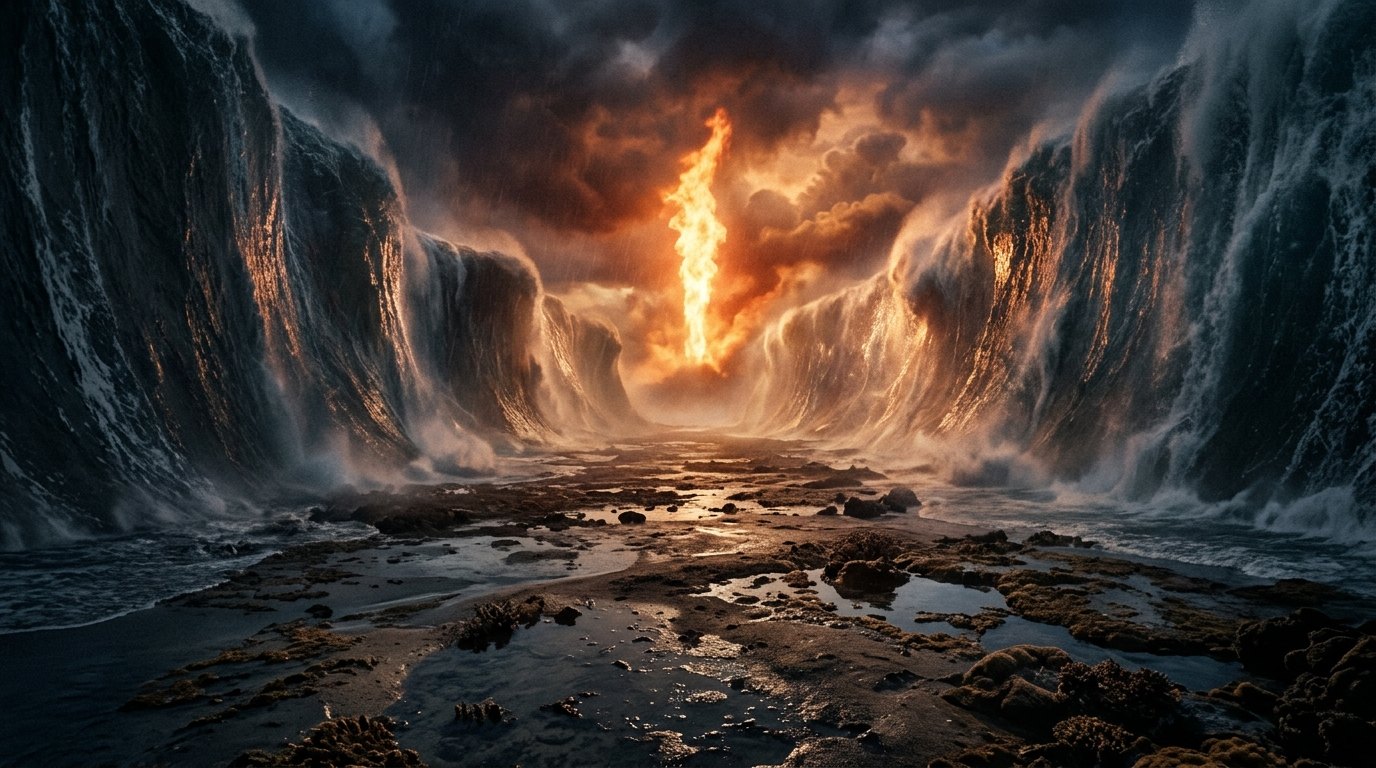
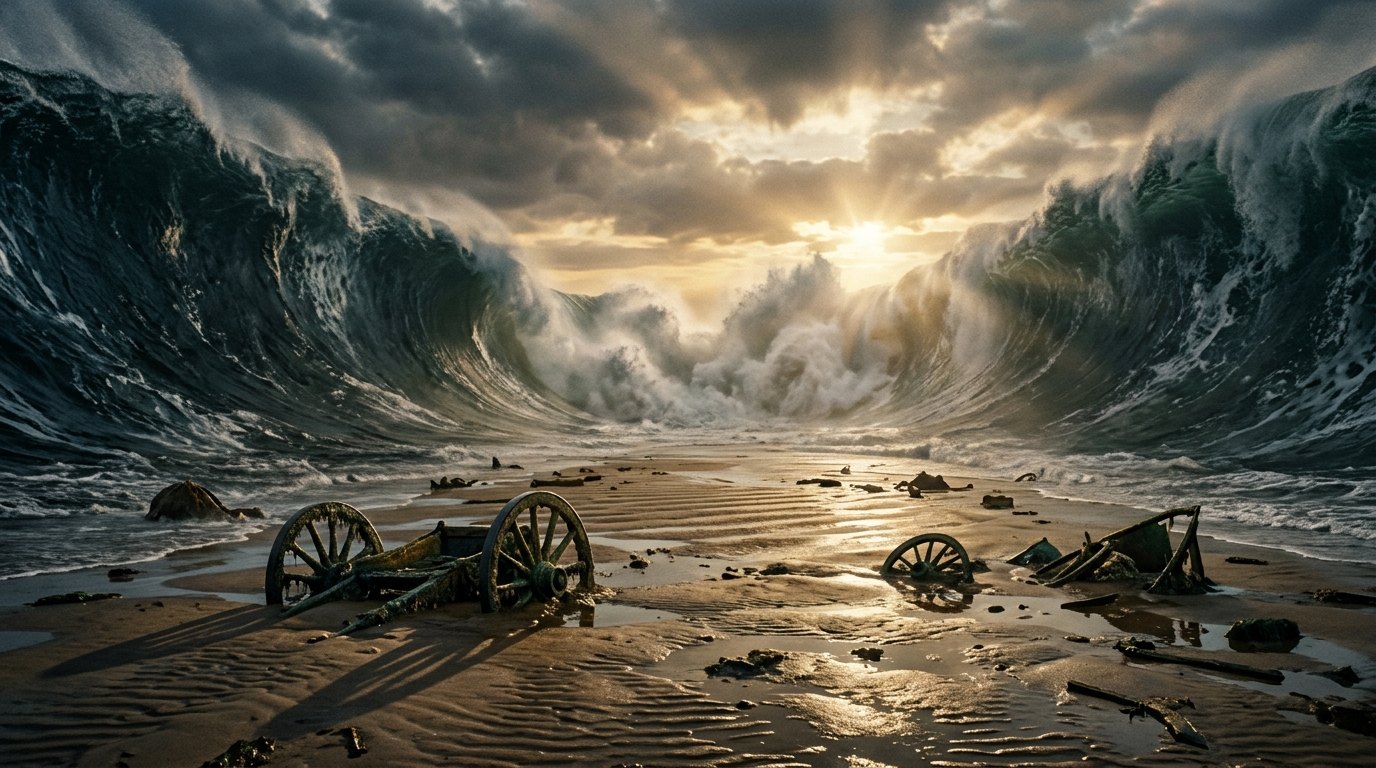
Then Moses stretched out his hand over the sea, and all that night the LORD drove the sea back with a strong east wind and turned it into dry land. The waters were divided,
Exodus 14:21 (NIV)
It documents the direct miraculous intervention of God driving the sea back with a night-long east wind to expose dry seabed.
When Moses stretched out his hand over the sea, the Lord swept back the waters through a strong east wind all night, cleaving an impossible highway through the churning depths (Exodus 14:21). Nature yielded immediately to its Maker. Where death and despair seemed unavoidable under the shadow of Pharaoh's approaching armies, the living God transformed the deep sea bed into stable ground. Israel looked upon two colossal, standing walls of water on their right hand and on their left as they entered the corridor of deliverance (Exodus 14:22). They traversed the seabed safely throughout the dark hours, guided by the fiery presence of God, while the terrified nation stepped out into an unprecedented pathway of miracle. The narrative underscores this supernatural journey by repeating that the children of Israel walked through the midst of the sea upon completely dry ground flanked by water walls (Exodus 14:29). This physical crossing became the eternal type of covenantal deliverance. The New Testament looks back on this event as an image of spiritual transition, recording that Israel was effectively baptized into Moses in the cloud and in the sea (1 Corinthians 10:1-2), an enduring testimony to faith walking safely where sight sees only ruin (Hebrews 11:29).
| Passage | What it says | Fulfilled |
|---|---|---|
| Exodus 14:21 | Moses stretches his hand over the sea, and God divides the waters by a fierce east wind all night. | 1 Corinthians 10:1-2 |
| Exodus 14:22 | Israel journeys into the seabed on dry ground between two standing walls of water. | Hebrews 11:29 |
| Exodus 14:29 | The narrative reiterates that the children of Israel walked safely on dry ground flanked by walls of water. | Hebrews 11:29 |
Judgment on Egypt
The Lord throws Pharaoh's army into confusion and destroys them
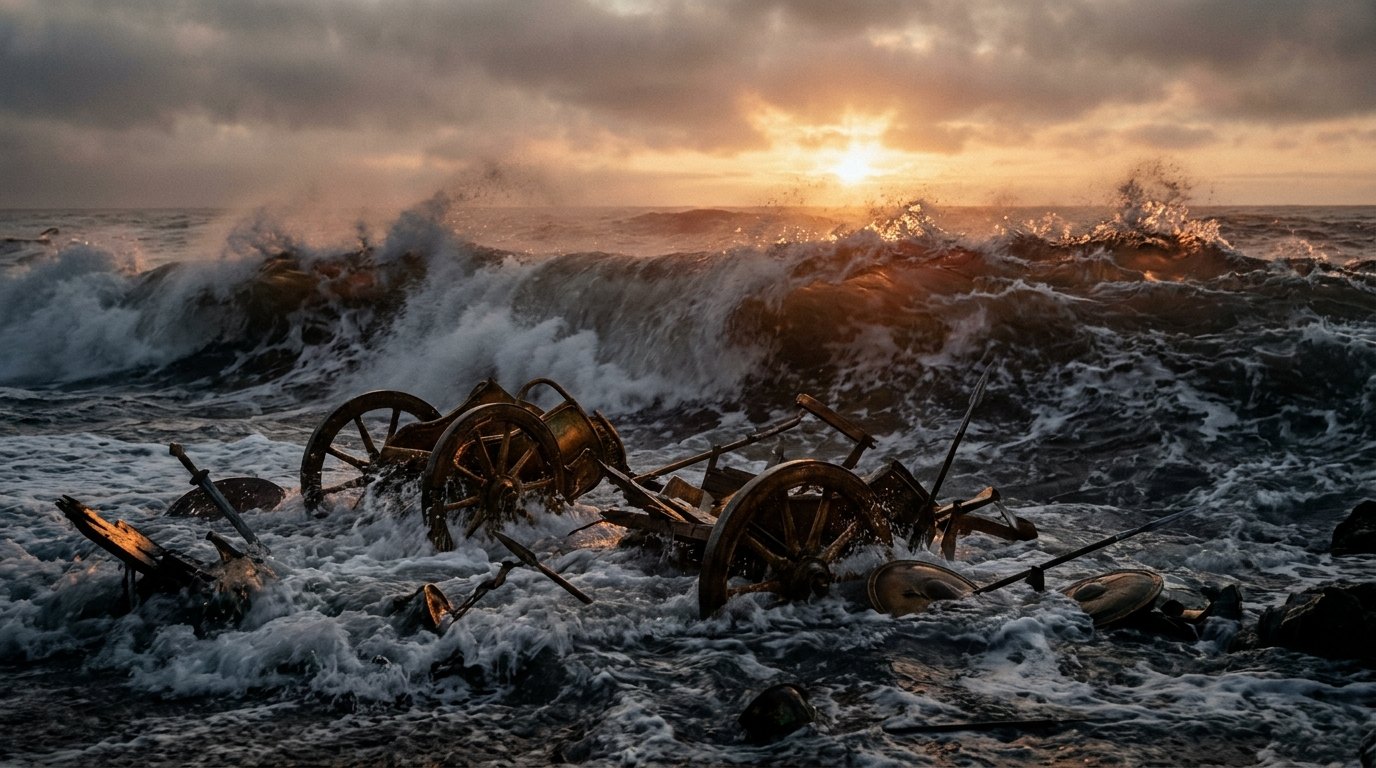
He jammed the wheels of their chariots so that they had difficulty driving. And the Egyptians said, “Let’s get away from the Israelites! The LORD is fighting for them against Egypt.”
Exodus 14:25 (NIV)
It records the terrified realization of the Egyptians that Yahweh Himself is fighting against them for Israel.
Blind in their pride, Pharaoh's elite cavalry and chariots charged headlong into the dry seabed, thinking they could capture their former slaves before daybreak (Exodus 14:23). But as the morning watch broke, Yahweh gazed down upon the Egyptian forces through the towering pillar of cloud and fire, throwing the entire army into absolute frenzy and panic (Exodus 14:24). He locked and twisted their chariot wheels so they could drag along only with agonizing difficulty, forcing the terrified soldiers to scream out the dreadful truth that the Lord was fighting for Israel against Egypt (Exodus 14:25). God then instructed Moses to stretch out his hand across the waters once more (Exodus 14:26). As the sun rose, the suspended walls collapsed at the command of the Creator; the sea returned to its normal torrent and swept the entire fleeing army away in the surging surge (Exodus 14:27). Chariots, riders, horses, and the entirety of Pharaoh’s imperial host were submerged completely under the deep waters, until not a single enemy of God's covenant people survived the wrath of the Almighty (Exodus 14:28).
| Passage | What it says |
|---|---|
| Exodus 14:23 | Pharaoh's chariots, horses, and horsemen pursue Israel straight into the divided sea. |
| Exodus 14:24 | God looks down through the pillar of fire and cloud, throwing the Egyptian host into sheer panic. |
| Exodus 14:25 | The Lord clogs their chariot wheels, prompting Egypt to confess that Yahweh fights for Israel. |
| Exodus 14:26 | God commands Moses to stretch out his hand again so the water returns upon the Egyptians. |
| Exodus 14:27 | At dawn the sea returns to its strength, and the Lord sweeps the fleeing Egyptians into the waves. |
| Exodus 14:28 | The collapsing waters cover Pharaoh's entire army so that not a single soldier survives. |
Salvation and Awe
Israel is delivered and puts their faith in God
And when the Israelites saw the mighty hand of the LORD displayed against the Egyptians, the people feared the LORDand put their trust in him and in Moses his servant.
Exodus 14:31 (NIV)
It shows the spiritual outcome of the deliverance: profound fear of the Lord and belief in Him and His servant Moses.
When the morning sun fully illumined the eastern horizon, Israel witnessed the utter ruin of the empire that had enslaved them, looking out upon the lifeless bodies of Pharaoh's warriors strewn across the seashore (Exodus 14:30). In a single morning, centuries of brutal bondage, helpless weeping, and bitter labor were brought to an absolute end by the outstretched arm of the Lord. Standing upon the shoreline, the delivered multitude beheld the tremendous power that God had unleashed against Egypt (Exodus 14:31). The immediate result was a profound, holy reverence: the people feared the Lord, their hearts anchored in genuine trust toward the God of their fathers, and they believed without reservation in Yahweh and His appointed servant Moses. Fear of human tyranny was replaced by the holy, saving fear of the living God, laying the bedrock for Israel's covenant life at Sinai and producing an outburst of triumphant praise.
| Passage | What it says |
|---|---|
| Exodus 14:30 | The Lord delivers Israel that day, and they behold the dead Egyptian soldiers along the shoreline. |
| Exodus 14:31 | Seeing God's mighty work, Israel fears the Lord and trusts in Him and His servant Moses. |
The Enduring Witness
Scripture remembers the sea as the pattern of salvation

who sent his glorious arm of power to be at Moses’ right hand, who divided the waters before them, to gain for himself everlasting renown,
Isaiah 63:12 (NIV)
It celebrates God's glorious arm cleaving the waters to purchase an everlasting name for Himself.
God's redemption at the Red Sea became the standard pattern of divine salvation throughout the rest of biblical history. Moses celebrated the mighty blast of God's nostrils that gathered the waves into heaps (Exodus 15:8), and Joshua later reminded the nation that God had dried up the Jordan just as He had split the Red Sea (Joshua 4:23). The psalmists regularly summon the congregation of the righteous to praise Him who turned the sea into dry land (Psalms 66:6), who crushed chaos and dragons in the waters (Psalms 74:13), and who led His flock through mighty torrents by the hand of Moses and Aaron (Psalms 77:16-20). The scriptures celebrate how the waters stood up like a heap (Psalms 78:13), how the sea fled at the presence of the Lord (Psalms 114:1-5), and how He rebuked the waters to make an everlasting name for Himself (Psalms 106:7-11; Psalms 136:13-15; Nehemiah 9:11). The prophet Isaiah repeatedly evokes this miracle, promising that God's holy arm will cleave waters again to gather His redeemed remnant from across the earth (Isaiah 11:15-16; Isaiah 51:9-10; Isaiah 63:12). In the New Testament, Stephen highlights this wondrous work (Acts 7:36), Paul expounds it as a type of baptism (1 Corinthians 10:1-2), the writer to the Hebrews praises the faith that dared to cross the sea (Hebrews 11:29), and the book of Revelation reveals the ultimate redeemed host standing by the heavenly sea of glass, singing the timeless song of Moses and of the Lamb (Revelation 15:2-3).
| Passage | What it says |
|---|---|
| Exodus 15:8 | The song celebrates the breath of God's nostrils that gathered the floods into solid heaps. |
| Joshua 4:23 | Joshua identifies God's drying up of the Jordan River as repeating His historic drying of the Red Sea. |
| Psalms 66:6 | The psalmist calls for joyful worship because God turned the sea into dry land for His people. |
| Psalms 74:13 | God's victory at the sea is praised as crushing sea monsters and chaos through divine strength. |
| Nehemiah 9:11 | The post-exilic prayer recounts how God split the sea and cast pursuers into depths like a stone. |
| Isaiah 63:12 | God led Moses by His glorious arm and divided the water to make an everlasting name. |
| Psalms 77:16-20 | The waters saw God and were afraid as He led His flock through the mighty waters by Moses and Aaron. |
| Psalms 78:13 | God divided the sea and let them pass through, making the waters stand up like a heap. |
| Psalms 106:7-11 | God rebuked the Red Sea and it dried up, saving Israel and covering their adversaries completely. |
| Psalms 114:1-5 | The sea looked and fled at the presence of the God of Jacob. |
| Psalms 136:13-15 | Thanks is given to the Lord who divided the Red Sea and swept Pharaoh into its waters. |
| Isaiah 11:15-16 | The Lord will dry up the tongue of Egypt's sea to make a highway for His remnant. |
| Isaiah 51:9-10 | The prophet calls on God's arm that dried up the great deep to make a pathway for the redeemed. |
| Acts 7:36 | Stephen testifies that Moses led Israel out, performing wonders and signs at the Red Sea. |
| 1 Corinthians 10:1-2 | Paul records that the fathers were under the cloud and passed through the sea, baptized into Moses. |
| Hebrews 11:29 | By faith the people crossed the Red Sea as on dry land, while the Egyptians drowned trying to follow. |
| Revelation 15:2-3 | Conquerors of the beast stand beside the sea of glass singing the song of Moses and of the Lamb. |
Trapped at the Shore
Trapped between Pharaoh's army and the sea
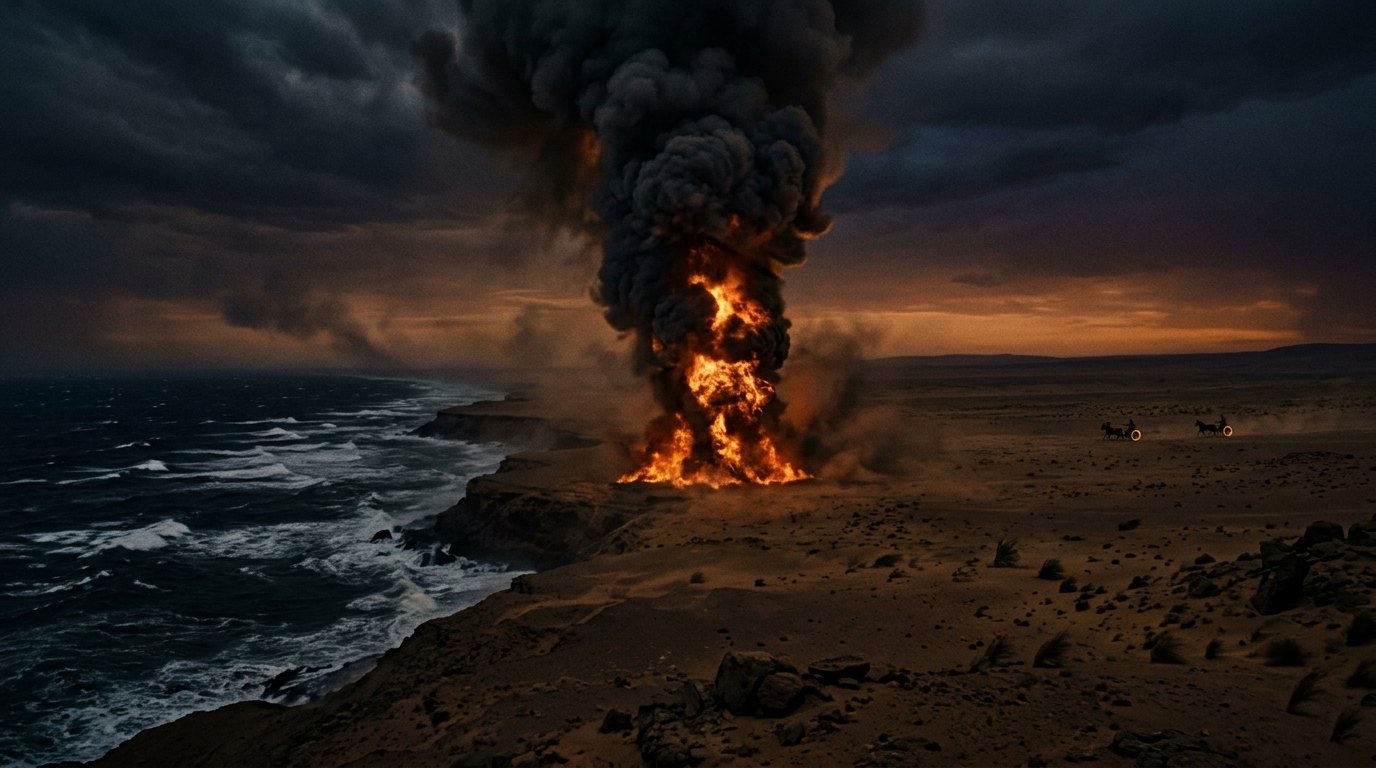
The LORD will fight for you; you need only to be still.”
Exodus 14:14 (NIV)
Moses declares God's sovereign covenant defense of His people before the waters part.
The Lord will fight for you, and you have only to be silent. In Exodus 14:14, Moses utters these foundational words to a panicked nation caught against impassable waters. God had deliberately rerouted Israel along the wilderness way toward the Red Sea rather than the direct coastal highway, avoiding immediate warfare with the Philistines as noted in Exodus 13:17-18. Turning back to camp before Pi-hahiroth, between Migdol and the sea, appeared militarily foolish, but Exodus 14:1-4 reveals God's explicit design: to lure Pharaoh into a fatal trap and display His glory over Egypt's arrogant might.
Pharaoh marshaled six hundred elite chariots along with all the cavalry of Egypt to seize his escaped slaves (Exodus 14:5-9). Hemmed in by rugged topography, the vast water, and the approaching war host, the Israelites succumbed to sheer panic, crying out bitterly that slavery in Egypt would have been preferable to death in the wilderness (Exodus 14:10-12). In response, Moses urged the trembling congregation to stand firm and witness God's deliverance (Exodus 14:13-14).
God commanded Moses to stop crying out, raise his staff over the waters, and tell the people to go forward, promising that Pharaoh's final ruin would bring everlasting honor to the Lord (Exodus 14:15-18). Before the sea split, divine intervention shielded the vulnerable multitude: the angel of God and the pillar of cloud shifted position from the vanguard to the rear, standing between the camp of Egypt and the camp of Israel (Exodus 14:19-20). Throughout the night, this heavenly barrier cast deep obscurity and confusion over the Egyptian forces while pouring illumination upon Israel, keeping the predators at bay until the hour of deliverance.
| Passage | What it says |
|---|---|
| Exodus 13:17-18 | God leads the people by the desert road toward the Red Sea rather than through Philistine country. |
| Exodus 14:1-4 | The Lord commands Israel to camp before the sea so Pharaoh will pursue them and God will be glorified. |
| Exodus 14:5-9 | Pharaoh and his army take six hundred chosen chariots to overtake Israel encamped by the sea. |
| Exodus 14:10-12 | Israel cries out in fear to the Lord, claiming it would have been better to serve the Egyptians. |
| Exodus 14:13-14 | Moses tells the terrified people to stand firm and see the salvation of the Lord, who will fight for them. |
| Exodus 14:15-18 | The Lord commands Moses to raise his staff over the sea to divide it, hardening Pharaoh's heart. |
| Exodus 14:19-20 | The angel of God and the pillar of cloud move behind Israel, giving light to them but darkness to Egypt. |
The Song by the Sea
The song of Moses and Miriam praises deliverance
Then Moses and the Israelites sang this song to the LORD: “I will sing to the LORD, for he is highly exalted. Both horse and driver he has hurled into the sea. “The LORD is my strength and my defense; he has become my salvation. He is my God, and I will praise him, my father’s God, and I will exalt him.
Exodus 15:1-2 (NIV)
Israel erupts in victory worship, recognizing Yahweh alone as their strength and salvation.
The Lord is my strength and my song, and he has become my salvation. As recorded in Exodus 15:1-2, Moses and the redeemed sons of Israel lifted this opening anthem from the eastern bank after watching the waters close over their oppressors. This foundational hymn of praise celebrates Yahweh not merely as a helper, but as a triumphant divine warrior who hurled horse and rider into the chaotic depths of the sea (Exodus 15:1-3).
Egypt's elite officers and iron-clad cavalry—the supreme military power of the ancient Mediterranean world—perished entirely under the crashing waves, sinking to the seabed like lead and heavy stones (Exodus 15:4-5). The enemy had arrogantly boasted in their plunder, swearing to draw the sword and repossess the fugitives, but at a single breath from God's nostrils the churning waters overwhelmed them (Exodus 15:9-10).
Deliverance concluded in uninhibited worship. Miriam the prophetess, accompanied by the women of Israel, took tambourines and led a celebratory dance, echoing the great refrain that God had triumphed gloriously (Exodus 15:19-21). This seaside song established the eternal pattern of biblical worship: God acts decisively in history to judge wicked oppressors, redeem His helpless people by sovereign grace, and evoke eternal praise from every tongue.
| Passage | What it says |
|---|---|
| Exodus 15:1-3 | Moses and Israel sing to the Lord, exalting Him as a warrior who threw horse and rider into the sea. |
| Exodus 15:4-5 | Pharaoh's chariots and officers are cast into the sea, sinking to the bottom like a stone. |
| Exodus 15:9-10 | The enemy boasted of overtaking Israel, but God blew with His wind and the sea covered them. |
| Exodus 15:19-21 | Miriam leads the women with tambourines and dancing, praising the Lord for triumphing over Egypt. |
Where in the Bible
| Book | Passages |
|---|---|
| Exodus | 23 · Exodus 14:21, Exodus 14:22, Exodus 14:29, Exodus 14:23, Exodus 14:24, Exodus 14:25, Exodus 14:26, Exodus 14:27, Exodus 14:28, Exodus 14:30, Exodus 14:31, Exodus 15:8, Exodus 13:17-18, Exodus 14:1-4, Exodus 14:5-9, Exodus 14:10-12, Exodus 14:13-14, Exodus 14:15-18, Exodus 14:19-20, Exodus 15:1-3, Exodus 15:4-5, Exodus 15:9-10, Exodus 15:19-21 |
| Joshua | 1 · Joshua 4:23 |
| Nehemiah | 1 · Nehemiah 9:11 |
| Psalms | 7 · Psalms 66:6, Psalms 74:13, Psalms 77:16-20, Psalms 78:13, Psalms 106:7-11, Psalms 114:1-5, Psalms 136:13-15 |
| Isaiah | 3 · Isaiah 63:12, Isaiah 11:15-16, Isaiah 51:9-10 |
| Acts | 1 · Acts 7:36 |
| 1 Corinthians | 1 · 1 Corinthians 10:1-2 |
| Hebrews | 1 · Hebrews 11:29 |
| Revelation | 1 · Revelation 15:2-3 |
The story in order
- God leads Israel toward the sea (c. 1446 BC) · Exodus 13:17-18 · God chose a path that would lead to His great deliverance.
- Israel trapped between sea and army (c. 1446 BC) · Exodus 14:1-4 · God orchestrated the situation to display His glory.
- Israel cries out in fear (c. 1446 BC) · Exodus 14:10-12 · The people despaired, forgetting God's promises.
- Moses encourages Israel to trust (c. 1446 BC) · Exodus 14:13-14 · Faith looks to God's intervention, not the circumstances.
- God parts the Red Sea (c. 1446 BC) · Exodus 14:21 · A strong east wind created a path through the waters.
- Israel crosses on dry ground (c. 1446 BC) · Exodus 14:22 · God provided a miraculous way for His people to escape.
- Egypt pursues into the sea (c. 1446 BC) · Exodus 14:23 · Pharaoh's army followed Israel into the divided waters.
- God confuses the Egyptian army (c. 1446 BC) · Exodus 14:24 · Panic seized the Egyptians as God intervened.
- God destroys the Egyptian army (c. 1446 BC) · Exodus 14:27-28 · The sea returned, drowning Pharaoh and his host.
- Israel sees God's salvation (c. 1446 BC) · Exodus 14:30-31 · Deliverance led to awe and trust in the Lord.
- Song of Moses celebrates victory (c. 1446 BC) · Exodus 15:1-3 · Praise for God as a mighty warrior.
- Jordan River crossing parallels Red Sea (c. 1406 BC) · Joshua 4:23 · The Red Sea event became a pattern for future deliverances.
The Red Sea as a Pattern of Salvation
| Event | Significance | Passage |
|---|---|---|
| Parting of the Red Sea | God's powerful deliverance of His people from bondage. | Exodus 14:21 |
| Crossing on dry ground | Salvation and passage to freedom through God's intervention. | Exodus 14:22 |
| Drowning of Egyptians | Destruction of the oppressor and finality of salvation. | Exodus 14:28 |
| Baptism into Moses | Identification with God's people and their deliverance. | 1 Corinthians 10:1-2 |
| Sea of glass | Triumph over evil, standing with God in salvation. | Revelation 15:2-3 |
God's Power Over the Waters
| Action | Result | Passage |
|---|---|---|
| God's breath gathers floods | Waters become solid heaps. | Exodus 15:8 |
| God rebukes the sea | The sea dries up. | Psalms 106:7-11 |
| The sea sees God and flees | Waters are divided. | Psalms 114:1-5 |
| God's arm dries the deep | A pathway is made for the redeemed. | Isaiah 51:9-10 |
| God's wind divides waters | Floods are gathered into heaps. | Exodus 15:8 |
Contrast: Israel's Salvation vs. Egypt's Destruction
| Israel | Egypt | Passage |
|---|---|---|
| Walked on dry ground | Drowned in the waves. | |
| Delivered by the Lord | Destroyed by the Lord. | Exodus 14:30 |
| Feared the Lord and trusted Him | Pursued in defiance, then panicked. | |
| Sang praises of deliverance | Lost their army and their lives. | Exodus 15:1-3 |
Key words
- Salvation (ישועה (yeshu'ah))
- Deliverance from bondage and destruction by God's power. · Exodus 14:30
- Warrior (גִּבּוֹר (gibbor))
- God depicted as a divine fighter who secures victory for His people. · Exodus 15:3
- Fear (יראה (yir'ah))
- Reverential awe and respect for God's power and holiness. · Exodus 14:31
- Trust (בטח (batah))
- Confident reliance on God and His promises. · Exodus 14:31
- Wind (רוּחַ (ruach))
- God's powerful breath used to divide waters and bring judgment. · Exodus 14:21
The crossing of the Red Sea reveals a God who makes a way where there is no human way forward. Standing still to see His salvation remains the posture of faith, knowing the Lord fights victoriously for those He redeems.
39 passages, each cited once.
Scripture cited
- Exodus 14:21-31
- Isaiah 63:12