What is a tithe in the Bible?

Malachi 3:8-10
8 “Will a mere mortal rob God? Yet you rob me. “But you ask, ‘How are we robbing you?’ “In tithes and offerings.
9 You are under a curse—your whole nation—because you are robbing me.
10 Bring the whole tithe into the storehouse, that there may be food in my house. Test me in this,” says the LORD Almighty, “and see if I will not throw open the floodgates of heaven and pour out so much blessing that there will not be room enough to store it.
New International Version (NIV)
The answer
A tithe is a tenth: one-tenth of produce, livestock, or other increase, set apart for God. It is more specific than an offering, which may describe other gifts as well. Biblically, tithing acknowledged God as the giver and owner of everything and honored Him with what He had provided.
Before the law of Moses
- Abram (Abraham): After God delivered his enemies into his hand, Abram gave Melchizedek, the priest of God Most High, a tenth of all (Genesis 14:18-20).
- Jacob: He vowed to give God a tenth of everything God gave him (Genesis 28:20-22).
These accounts show that dedicating a tenth was practiced before Israel received the law at Sinai.
Under Israel’s law
- It belonged to God: The tithe included seed and fruit from the land and the tenth animal from herds and flocks. God declared it His own and holy to Him (Leviticus 27:30-32).
- It supported the Levites: God gave Israel’s tithe to Levi’s descendants in return for their service at the Tent of Meeting, since they did not receive a territorial inheritance like the other tribes (Numbers 18:21-24).
- It served worship and care for others: Deuteronomy 14:22-29 describes a tithe eaten before God with rejoicing, concern for the Levite, and provision every third year for Levites, foreigners, the fatherless, and widows.
Withholding what God required was therefore spiritual unfaithfulness, not merely poor budgeting. Malachi 3:8-10 calls it robbing God and commands Israel to bring the whole tithe into the storehouse so that there would be food in His house.
For Christians
Jesus rebuked people who tithed meticulously while neglecting justice, mercy, and faith; giving a tenth never excuses a disobedient heart (Matthew 23:23). The New Testament also teaches that each person should give deliberately and cheerfully, not grudgingly or under compulsion (2 Corinthians 9:7).
On present application, one reading treats ten percent as a continuing standard for Christian giving. Another reading regards Israel’s detailed tithing system as no longer binding and treats the tenth as a helpful biblical pattern rather than a fixed rule. Both readings must take seriously the New Testament’s demand for willing, sincere generosity rather than mere compliance with a number.
Answered from Scripture · reviewed November 11, 2026
In Scripture, a tithe is literally a tenth: the first ten percent of one's increase returned to the Lord as holy unto Him. From the patriarchs before the law, through the Mosaic ordinances for the sanctuary and the poor, to the prophets and the teachings of Jesus, God establishes the tithe as an act of worship, obedience, and trust in His provision.
Before the Law
The Patriarchs Offer the Tenth to God
And praise be to God Most High, who delivered your enemies into your hand.” Then Abram gave him a tenth of everything.
Genesis 14:20 (NIV)
Abraham tithes to Melchizedek long before the Sinai covenant, establishing the tenth as a voluntary act of worship to God Most High.
Long before Moses received the commandments on Mount Sinai, the patriarchs recognized that the tenth part of one's increase belonged rightly to God. In Genesis 14:20, after rescuing Lot and defeating the alliance of northern kings, Abram meets Melchizedek, king of Salem and priest of God Most High. Scripture records that Abram gave him a tithe of all, acknowledging that the Creator of heaven and earth had delivered his enemies into his hand. Melchizedek brings out bread and wine and pronounces a blessing, and Abram responds not out of legal compulsion, but in reverent adoration and worship (Genesis 14:18-20). The tenth was an unforced testimony that Abram's wealth came not from the spoils of Sodom, but from the hand of the Lord alone.
Generations later, Abram's grandson Jacob continues this sacred pattern. Fleeing from his brother Esau into the wilderness, Jacob encounters God in a vision of a ladder reaching to heaven. Upon waking at Bethel, Jacob vows a solemn vow, declaring in Genesis 28:20-22 that if the Lord preserves him, provides him bread to eat and clothing to wear, and brings him safely home, then the Lord will be his God, and of all that God gives him, he will surely give a tenth unto Him. The tithe here stands as a covenantal pledge of allegiance, anchoring a wanderer's hope in the sure faithfulness of God.
| Passage | What it says |
|---|---|
| Genesis 14:18-20 | Abram gives a tenth of all the spoils of battle to Melchizedek, priest of God Most High. |
| Genesis 28:20-22 | Jacob vows at Bethel that if God will be with him, he will surely give a tenth of all to Him. |
Holy to the Lord
The Law Defines the First Tenth

“ ‘A tithe of everything from the land, whether grain from the soil or fruit from the trees, belongs to the LORD; it is holy to the LORD.
Leviticus 27:30 (NIV)
God explicitly declares that the entire tenth of the land's yield belongs to Him and is holy.
When God formed Israel into a covenant nation at Sinai, what had been an ancient patriarchal practice was formally inscribed into the divine law. In Leviticus 27:30, the Lord establishes the foundational definition of the ordinance: all the tithe of the land is the Lord's; it is holy unto the Lord. The tithe did not belong to the worshiper to allocate as a personal donation; it was already the Lord's property, set apart by divine ownership before the harvest began. The law laid claim to the seed of the field, the fruit of the orchard, and every tenth animal that passed under the shepherd's counting rod (Leviticus 27:30-33). If a man desired to redeem the produce of the land with money, he was required to add a fifth to its value, underscoring the sacred gravity of God's holy portion.
This legal command reflected an enduring spiritual reality celebrated throughout the wisdom literature. Solomon echoes the principle in Proverbs 3:9-10, urging Israel to honor the Lord with your substance and with the firstfruits of all increase. Faithful surrender of the first and best portion was never considered a loss, for the text promises that barns will be filled with plenty and vats will overflow with fresh wine. Tithing established a tangible rhythm of trust, proclaiming that the earth is the Lord's and that His people flourish only as they yield the first tenth back to its true Owner.
| Passage | What it says |
|---|---|
| Leviticus 27:30-33 | The tenth part of the seed, fruit, and herd is holy to the Lord and cannot be redeemed without penalty. |
| Proverbs 3:9-10 | Honoring the Lord with the firstfruits of all increase brings overflowing barns and vats. |
Sustaining the Sanctuary
The Tithe Supports Levites and Priests
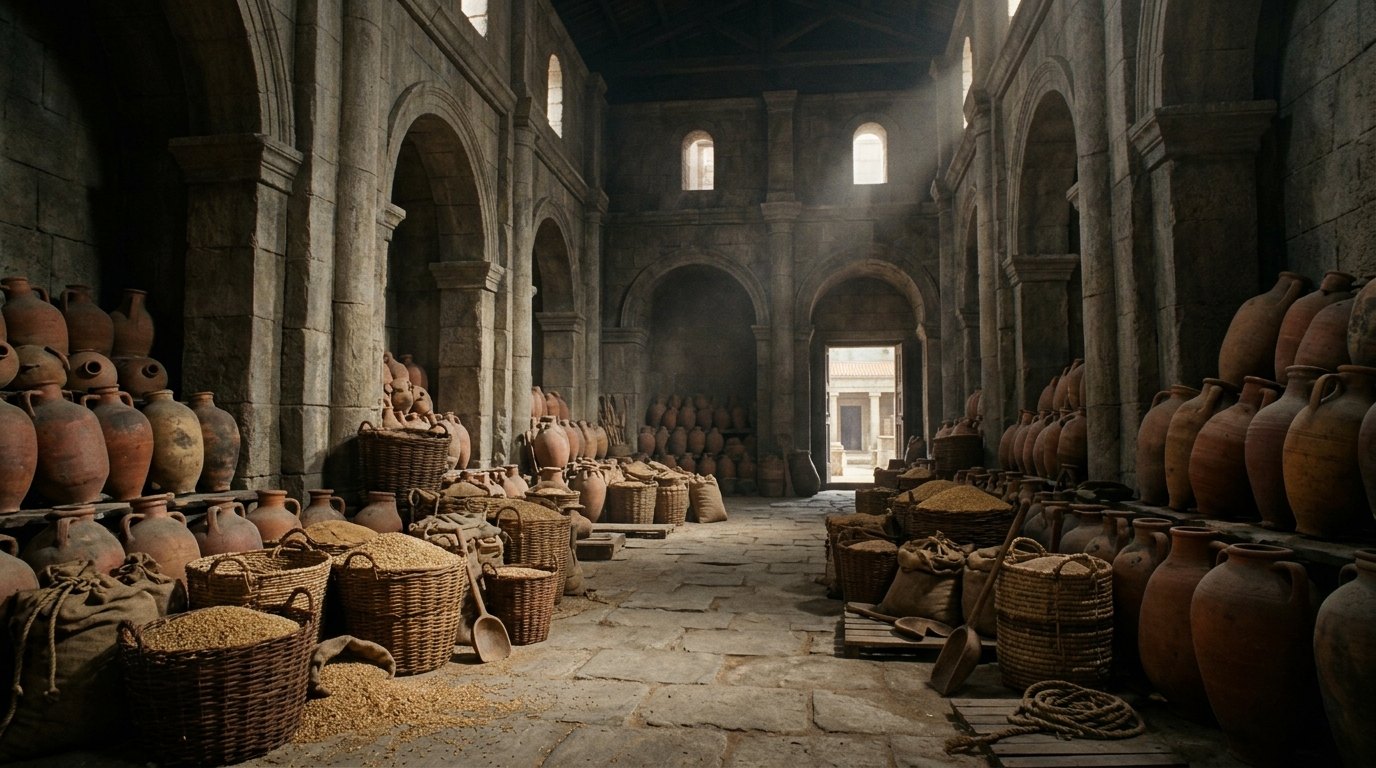
“I give to the Levites all the tithes in Israel as their inheritance in return for the work they do while serving at the tent of meeting.
Numbers 18:21 (NIV)
God grants the tithe to the Levites as their divine inheritance in return for their tabernacle ministry.
Because the tribe of Levi was set apart for sacred service and received no territorial allotment in Canaan, God ordained the tithe as their physical sustenance. Numbers 18:21 declares, I have given the children of Levi all the tithes in Israel as an inheritance in return for their service in the tabernacle. The congregation brought their tithes to the Levites, who in turn gave a tithe of that tithe—the very best tenth—to Aaron the high priest (Numbers 18:25-32). Samuel cautioned that when Israel demanded an earthly monarch, that king would exact his own tithes to fund worldly power (1 Samuel 8:14-17), but God's sanctuary tithe was designed purely to uphold spiritual worship and holy ministry.
Whenever Israel drifted from God, the support of the sanctuary collapsed, and spiritual renewal always brought the restoration of the tithe. During King Hezekiah's great revival, the monarch commanded the people to support the priests and Levites, and the people responded so abundantly that heaps of grain, wine, and oil piled up for months (2 Chronicles 31:4-12). Centuries later, after the return from Babylon, Nehemiah discovered that the Levites had abandoned their temple posts to farm their own fields because their portions had ceased. Nehemiah vigorously confronted the rulers, restored the storerooms, and reestablished the covenant (Nehemiah 10:37-39; Nehemiah 12:44; Nehemiah 13:10-12), ensuring the community did not neglect the house of our God.
| Passage | What it says |
|---|---|
| Numbers 18:21-24 | The children of Levi receive every tithe in Israel for their service at the tent of meeting. |
| Numbers 18:25-32 | The Levites present a tithe of the tithe as a wave offering to Aaron the high priest. |
| Nehemiah 10:37-38 | The restored community commits to bringing the tithes of the ground to the Levites at the temple chambers. |
| Nehemiah 12:44 | Men are appointed over the storerooms to collect the legal portions for the priests and Levites. |
| Nehemiah 13:10-12 | Nehemiah restores the neglected tithes to ensure the temple singers and Levites can remain in their duties. |
| 2 Chronicles 31:4-12 | Hezekiah commands the people to give the portion of the priests and Levites, producing heaps of abundance. |
| 1 Samuel 8:14-17 | Samuel warns Israel that an earthly king will demand a tithe of their seed, vineyards, and flocks. |
| Nehemiah 10:39 | The people covenant to bring grain, wine, and oil to the storerooms and not neglect God's house. |
Festivals and Compassion
Community Rejoicing and the Third-Year Tithe
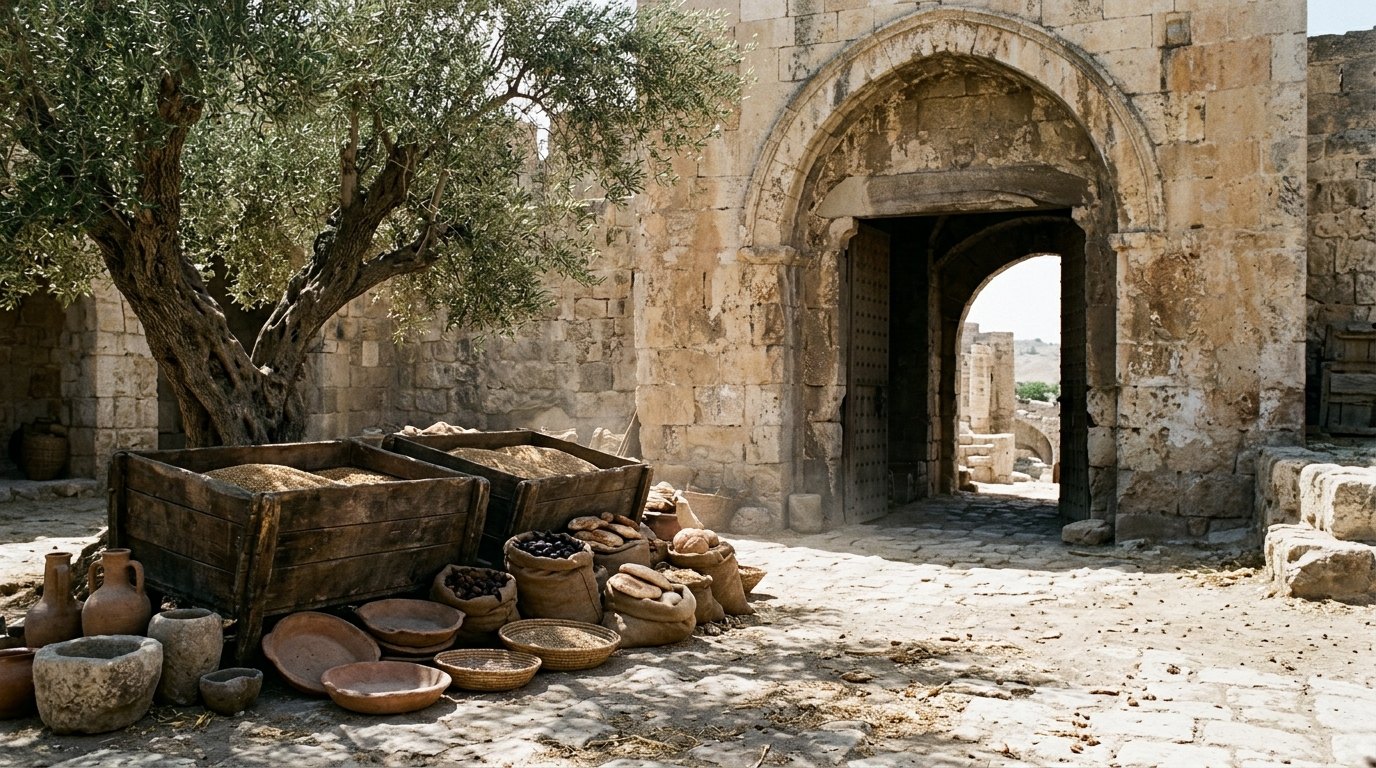
At the end of every three years, bring all the tithes of that year’s produce and store it in your towns, so that the Levites (who have no allotment or inheritance of their own) and the foreigners, the fatherless and the widows who live in your towns may come and eat and be satisfied, and so that the LORDyour God may bless you in all the work of your hands.
Deuteronomy 14:28-29 (NIV)
The triennial tithe provides direct sustenance for the vulnerable: the Levite, stranger, fatherless, and widow.
In Deuteronomy, the tithe served not only to maintain the sanctuary workers but also to foster joyous family festivals and care for the vulnerable. Moses instructed Israel to transport their tithes to the central sanctuary that God would choose, where they were to eat their grain, wine, and oil in sacred celebration before the Lord (Deuteronomy 12:5-7, 11-12, 17-19). If the journey was too distant to carry bulky produce, the worshiper could convert the tithe into silver, travel unburdened, and purchase whatever food their heart desired to feast in holy fellowship (Deuteronomy 14:22-27). This festive meal taught every household to learn to fear the Lord your God always, experiencing His abundance through shared praise and generous community meals.
Alongside this annual festival rhythm, God instituted a distinct relief measure every third year. Deuteronomy 14:28-29 commands that the entire tithe of that year's increase be deposited within the town gates, so that the Levite, the foreigner, the fatherless, and the widow may come and eat and be satisfied. In Deuteronomy 26:12-15, the worshiper came before God after distributing this third-year tithe, swearing that the holy portion had been faithfully shared with those in need, and praying for God's continued blessing upon the land. Through this provision, God bound worship directly to active compassion, ensuring that obedience to the tithe shielded the helpless and honored the Father of the fatherless.
| Passage | What it says |
|---|---|
| Deuteronomy 12:5-7 | Israelites bring their tithes and offerings to eat before the Lord at the place He chooses, rejoicing in all their labor. |
| Deuteronomy 12:17-19 | The sacred tithe may not be consumed at home, but within the sanctuary courts together with the Levite. |
| Deuteronomy 14:22-27 | Yearly tithes are consumed before God in reverent joy, or converted to money if the sanctuary journey is too long. |
| Deuteronomy 14:28-29 | Every third year the entire tithe is laid up within local towns for the Levite, foreigner, orphan, and widow. |
| Deuteronomy 26:12-15 | After distributing the third-year tithe, the worshiper declares obedience and asks God's blessing on Israel. |
| Deuteronomy 12:11-12 | Israel is instructed to bring tithes and special gifts to the place the Lord chooses for His name. |
Prophetic Rebuke
Robbing God and the Storehouse Promise
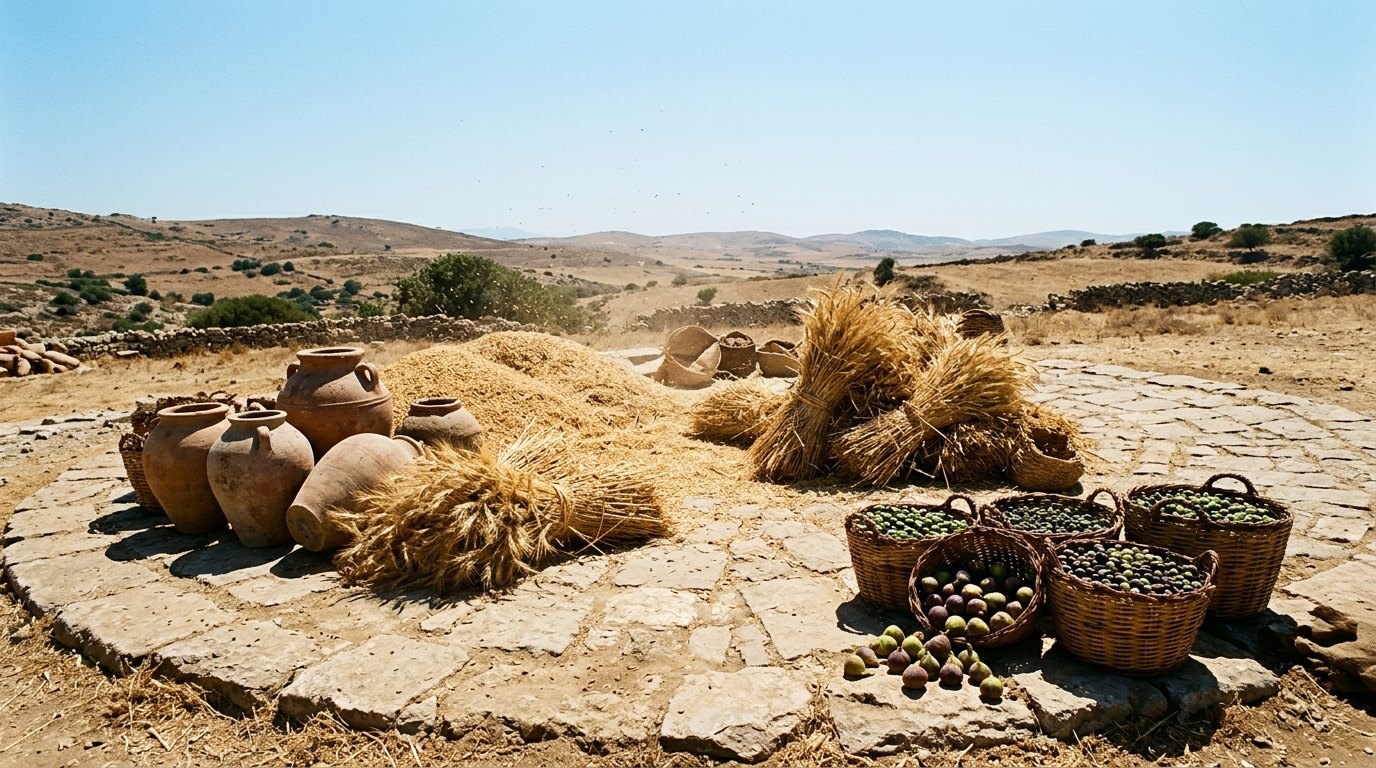
Bring the whole tithe into the storehouse, that there may be food in my house. Test me in this,” says the LORD Almighty, “and see if I will not throw open the floodgates of heaven and pour out so much blessing that there will not be room enough to store it.
Malachi 3:10 (NIV)
God invites His people to test His faithfulness by bringing the whole tithe so His house is supplied.
In Malachi 3:10, God extends an unprecedented invitation to His people: bring the full tithe into the storehouse and test His covenant faithfulness. Where God elsewhere commands mankind not to put Him to the test, here He invites Israel to discover whether He will not open the very windows of heaven and pour out blessing beyond measure. This tender promise, however, emerges from a piercing background of divine indictment. Earlier in Amos 4:4-5, the prophet Amos exposes the religious hypocrisy of the northern kingdom, where citizens brought their tithes every three days yet reveled in their empty, self-serving piety without genuine repentance. God despises religious form devoid of personal submission.
Centuries later, Malachi addresses a returnee community marked by spiritual lethargy and contempt for God's altar. In Malachi 1:13-14, the Lord fiercely rebukes priests and people who present blind, lame, and diseased animals, scorning the pure reverence due His great name. This pattern of spiritual theft culminates in Malachi 3:8-9, where the Lord delivers His solemn charge: "Will man rob God? Yet you are robbing me." When the people inquire how they have defrauded their Maker, God names their failure plainly: "In your tithes and contributions." By withholding the holy portion belonging to God's sanctuary, the entire nation fell under a devastating curse upon their land and labor.
Yet judgment yields immediately to mercy in Malachi 3:10-12. When Israel renders the complete tithe so that food may fill God's house, the Lord pledges to rebuke the devourer, protect their harvest, and transform them into a delightsome land celebrated among all nations.
| Passage | What it says |
|---|---|
| Amos 4:4-5 | Amos sarcastically rebukes empty, prideful ritualism where tithes are brought without true repentance. |
| Malachi 1:13-14 | The Lord condemns bringing blemished, sick sacrifices instead of the honor due His name. |
| Malachi 3:8-9 | God identifies withholding the tenth and contributions as robbing Him, bringing a curse upon the land. |
| Malachi 3:10-12 | God promises open windows of heaven, rebuke of the devourer, and fruitfulness if the whole tithe is brought. |
New Testament Witness
Christ and the Apostles on Giving

“Woe to you, teachers of the law and Pharisees, you hypocrites! You give a tenth of your spices—mint, dill and cumin. But you have neglected the more important matters of the law—justice, mercy and faithfulness. You should have practiced the latter, without neglecting the former.
Matthew 23:23 (NIV)
Jesus affirms the practice of tithing while rebuking the neglect of justice, mercy, and faithfulness.
In Matthew 23:23, Jesus cuts to the heart of true righteousness: these you ought to have done, without neglecting the others. Addressing the scribes and Pharisees, Christ upholds the meticulous tithing of garden herbs like mint, anise, and cumin, yet He exposes their fatal error in bypassing the weightier matters of the law—justice, mercy, and faithfulness. Luke 11:42 echoes this exact rebuke against hypocritical exactitude that neglects the love of God. External compliance can never substitute for inward integrity, a truth made vivid in Luke 18:9-14, where a Pharisee boasts that he gives tithes of all he gets, yet walks away condemned while a humble, contrite tax collector goes home justified before God.
Scripture consistently teaches that our material wealth belongs wholly to its Creator. In Matthew 22:21, Jesus commands His hearers to render to Caesar what is Caesar's, and to God the things that are God's. The author of Hebrews builds upon this foundational reality in Hebrews 7:1-10, demonstrating that when Abraham gave a tenth to Melchizedek, even Levi paid tithes in him, revealing the eternal superiority of Christ's unending priesthood.
In the apostolic church, this pattern of dedicated giving matures into comprehensive, joyful stewardship. Citing the ancient sanctuary service, Paul shows in 1 Corinthians 9:13-14 and 1 Timothy 5:17-18 that those who preach the gospel should receive their living from the gospel, with faithful elders worthy of double honor. Christian giving is systematic and proportionate, laid aside on the first day of the week as God has prospered (1 Corinthians 16:1-2). As demonstrated by the impoverished Macedonians in 2 Corinthians 8:1-5, believers give themselves first to the Lord, giving cheerfully and bountifully rather than reluctantly or under compulsion, for God loves a cheerful giver (2 Corinthians 9:6-7).
| Passage | What it says |
|---|---|
| Matthew 22:21 | Jesus commands giving Caesar Caesar's things and rendering to God the things that belong to God. |
| Matthew 23:23 | Jesus upholds tithing herb spices while commanding not to omit the weightier matters of the law. |
| Luke 11:42 | Jesus condemns religious hypocrisy that scrupulously tithes mint and rue while neglecting the love of God. |
| Luke 18:9-14 | The self-righteous Pharisee boasts of tithing all his gains, but the penitent tax collector is justified. |
| Hebrews 7:1-10 | Levi paid tithes through Abraham to Melchizedek, demonstrating the superiority of Christ's eternal priesthood. |
| 1 Corinthians 9:13-14 | Paul notes that temple workers eat from temple offerings, just as ministers of the gospel should live from the gospel. |
| 2 Corinthians 9:6-7 | Believers are instructed to give cheerfully, bountifully, and intentionally, knowing God loves a cheerful giver. |
| 1 Corinthians 16:1-2 | Paul instructs the Corinthian church to set aside money systematically on the first day of the week in proportion to income. |
| 2 Corinthians 8:1-5 | The Macedonian churches exemplify sacrificial, joyful giving beyond their means out of devotion to the Lord. |
| 1 Timothy 5:17-18 | Elders who direct church affairs and preach are worthy of double honor and financial support. |
Where in the Bible
| Book | Passages |
|---|---|
| Genesis | 2 · Genesis 14:18-20, Genesis 28:20-22 |
| Leviticus | 1 · Leviticus 27:30-33 |
| Numbers | 2 · Numbers 18:21-24, Numbers 18:25-32 |
| Deuteronomy | 6 · Deuteronomy 12:5-7, Deuteronomy 12:17-19, Deuteronomy 14:22-27, Deuteronomy 14:28-29, Deuteronomy 26:12-15, Deuteronomy 12:11-12 |
| 1 Samuel | 1 · 1 Samuel 8:14-17 |
| 2 Chronicles | 1 · 2 Chronicles 31:4-12 |
| Nehemiah | 4 · Nehemiah 10:37-38, Nehemiah 12:44, Nehemiah 13:10-12, Nehemiah 10:39 |
| Proverbs | 1 · Proverbs 3:9-10 |
| Amos | 1 · Amos 4:4-5 |
| Malachi | 3 · Malachi 1:13-14, Malachi 3:8-9, Malachi 3:10-12 |
| Matthew | 2 · Matthew 22:21, Matthew 23:23 |
| Luke | 2 · Luke 11:42, Luke 18:9-14 |
| 1 Corinthians | 2 · 1 Corinthians 9:13-14, 1 Corinthians 16:1-2 |
| 2 Corinthians | 2 · 2 Corinthians 9:6-7, 2 Corinthians 8:1-5 |
| 1 Timothy | 1 · 1 Timothy 5:17-18 |
| Hebrews | 1 · Hebrews 7:1-10 |
The story in order
- Abram tithes to Melchizedek (c. 2000 BC) · Genesis 14:18-20 · The first recorded instance of tithing before the Law.
- Jacob vows to tithe (c. 1950 BC) · Genesis 28:20-22 · A personal vow to give a tenth to God.
- Law defines the tithe (c. 1450 BC) · Leviticus 27:30-33 · The tenth is holy to the Lord.
- Tithes support Levites (c. 1450 BC) · Numbers 18:21-24 · The tithe is given for Levitical service.
- Third-year tithe for the needy (c. 1450 BC) · Deuteronomy 14:28-29 · A tithe for the Levite, foreigner, orphan, and widow.
- Hezekiah restores tithe collection (c. 725 BC) · 2 Chronicles 31:4-12 · Abundance results from faithful tithing.
- Nehemiah restores neglected tithes (c. 430 BC) · Nehemiah 13:10-12 · Ensuring support for temple workers.
- Amos rebukes empty ritualism (c. 750 BC) · Amos 4:4-5 · Warning against tithing without true repentance.
- Malachi condemns robbing God (c. 400 BC) · Malachi 3:8-9 · Withholding tithes brings a curse.
- Jesus upholds tithing (AD 30) · Matthew 23:23 · Tithing is commanded alongside weightier matters.
- Paul on supporting ministers (c. AD 55) · 1 Corinthians 9:13-14 · Ministers of the gospel should live from the gospel.
- Paul instructs systematic giving (c. AD 55) · 1 Corinthians 16:1-2 · Set aside money regularly based on income.
- Macedonians exemplify sacrificial giving (c. AD 56) · 2 Corinthians 8:1-5 · Giving joyfully and sacrificially out of devotion.
- Melchizedek's priesthood superior (c. AD 65) · Hebrews 7:1-10 · Levi paid tithes, showing Christ's superior priesthood.
Key words
- Tithe (ma'aser, מַעֲשֵׂר)
- A tenth part of one's income or produce, given to God. · Genesis 14:20
- Firstfruits (re'shith, רֵאשִׁית)
- The first and best of the harvest or produce, offered to God. · Proverbs 3:9
- Holy (qadosh, קָדוֹשׁ)
- Set apart for God's exclusive use; consecrated. · Leviticus 27:30
- Storehouse (bayith ha-'otsar, בַּיִת הָאוֹצָר)
- A place where tithes and offerings were kept for distribution. · Nehemiah 10:38
- Cheerful Giving (hilaros didomi, ἵλαρὸς δίδωμι)
- Giving willingly, joyfully, and generously, not under compulsion. · 2 Corinthians 9:7
Recognizing the tithe in Scripture reframes every possession as a trust from God, where returning the first tenth honors Him as the source of all increase. Giving systematically and joyfully to God's work is not an onerous tax, but a life lived under the open windows of heaven.
32 passages, each cited once.
How the major Christian traditions read this
All Christian traditions agree that God owns all things, and that believers are called to give faithfully, cheerfully, and generously to support the church's ministry and care for those in need (Psalm 24:1; 2 Corinthians 9:7).
Catholic
In Catholic teaching, God owns everything, and the faithful are morally obligated to assist with the material needs of the Church according to their ability (Galatians 6:6). While the Old Testament required a literal ten percent to support the Levitical priesthood (Leviticus 27:30; Numbers 18:21), the New Covenant does not prescribe a mandatory mathematical percentage. Instead, the Church identifies supporting the needs of the Church and the poor as a precept, calling every believer to give sacrificial, proportioned support as their means allow, rather than binding consciences to a strict tenth (1 Corinthians 16:2; 2 Corinthians 8:12-14).
Scripture: Leviticus 27:30, Numbers 18:21, Galatians 6:6, 1 Corinthians 16:2, 2 Corinthians 8:12-14
Orthodox
In the Orthodox tradition, tithing is received as a sacred biblical precedent practiced by Abraham and codified in the Law (Genesis 14:20; Leviticus 27:30), but it is not imposed as a legalistic requirement or rigid percentage. Christ called us to righteousness exceeding that of the scribes and Pharisees, fulfilling the Law through total consecration of our lives and resources (Matthew 5:20). Almsgiving is a spiritual discipline, an expression of mercy, and an act of worship. Faithful stewards give sacrificially and joyfully to sustain the parish and assist the poor, using the tenth as a worthy guide rather than an external tax (2 Corinthians 9:7).
Scripture: Genesis 14:20, Leviticus 27:30, Matthew 5:20, 2 Corinthians 9:7
Lutheran
We teach that the ceremonial and civil statutes of the Mosaic Law, including the mandatory tenth given to the Levites, were fulfilled in Christ and are not binding upon New Testament believers (Colossians 2:16-17). Enforcing a tenth as an absolute divine command would confuse Law and Gospel and burden consciences where Christ has set us free (Galatians 5:1). Instead, Christians are moved by the Gospel to support pastors and advance the ministry willingly and generously (1 Corinthians 9:14). Giving ten percent remains a commendable, practical baseline for Christian stewardship, but it cannot be demanded as a legal mandate (2 Corinthians 9:7).
Scripture: Colossians 2:16-17, Galatians 5:1, 1 Corinthians 9:14, 2 Corinthians 9:7
Reformed & Presbyterian
We distinguish between the moral, ceremonial, and civil law of the Old Testament. The specific judicial tax supporting the Levitical priesthood ended with the Old Covenant state (Numbers 18:21). However, the moral principle underlying tithing—that God's worship and ministry must be honorably maintained from our firstfruits—remains perpetual (Proverbs 3:9; 1 Corinthians 9:13-14). Because Abraham tithed before Sinai (Genesis 14:20), many among us view a tenth as a wise, enduring baseline for stewardship. Nevertheless, under the New Covenant, giving must be proportional, cheerful, and uncoerced, resting on grace rather than legalistic compulsion (1 Corinthians 16:2; 2 Corinthians 9:7).
Scripture: Genesis 14:20, Numbers 18:21, Proverbs 3:9, 1 Corinthians 9:13-14, 2 Corinthians 9:7
Anglican & Episcopal
In Anglican practice, we affirm that the ceremonial parts of the Law of Moses do not bind Christian men, yet no Christian is free from obedience to God's moral commandments. While church canons historicly recognized tithes to support clergy and parished maintenance, scripture in the New Covenant calls us to voluntary, proportionate generosity (1 Corinthians 16:2). The tithe represents an ancient, God-given pattern seen from Abraham onward (Genesis 14:20). We hold that providing for God's ministers and relieving the needy is a duty of love and thanksgiving, best fulfilled by regular, deliberate giving according to one's income (2 Corinthians 9:6-7).
Scripture: Genesis 14:20, 1 Corinthians 16:2, 2 Corinthians 9:6-7
Baptist
We hold that scriptural giving under the New Covenant is voluntary, proportional, and cheerful (2 Corinthians 9:7). While the Mosaic covenant bound Israel to give tenths of their produce to the Levitical storehouse (Malachi 3:10), Christ fulfilled that covenant. Many Baptist pastors teach that the tithe serves as an enduring minimum or biblical starting point, pointing to Abraham's example prior to the Law (Genesis 14:20). Other Baptists emphasize that New Testament believers are guided entirely by grace rather than percentages (1 Corinthians 16:2). In all cases, regular giving to the local church is commanded to sustain pastors and proclaim the gospel (1 Corinthians 9:14).
Scripture: Genesis 14:20, Malachi 3:10, 1 Corinthians 9:14, 1 Corinthians 16:2, 2 Corinthians 9:7
Methodist & Wesleyan
In the Wesleyan tradition, stewardship touches the whole of Christian holiness and discipleship. John Wesley urged believers to gain all they can, save all they can, and give all they can. We recognize that while the Old Testament prescribed a specific tenth (Leviticus 27:30), the Gospel summons us to a higher standard: complete surrender of our possessions to God's glory (Luke 12:33). The tenth is an excellent, time-tested rule of thumb and an instructive scriptural benchmark, but our giving must not stop there. We are called to systematic, joyful, and sacrificial relief of the poor and support of the church (2 Corinthians 8:7-9).
Scripture: Leviticus 27:30, Luke 12:33, 2 Corinthians 8:7-9
Pentecostal & Charismatic
We frequently emphasize the ongoing spiritual authority of the tithe as instituted before the Mosaic Law (Genesis 14:20) and reaffirmed in Scripture (Malachi 3:10; Matthew 23:23). We teach that the first ten percent of one's increase belongs to the Lord and should be brought into the storehouse—the local church—to support ministry. Tithing is seen as an act of faith that invites God's blessing, protection, and provision over a believer's life. Offerings are given above and beyond the tithe. By faithfully honoring the Lord with the firstfruits, believers demonstrate obedience and open the way for the Spirit's abundant blessing (Proverbs 3:9-10).
Scripture: Genesis 14:20, Proverbs 3:9-10, Malachi 3:10, Matthew 23:23
Non-denominational & Evangelical
Across non-denominational and evangelical churches, two main viewpoints exist regarding the tithe. Many pastors preach that tithing ten percent to the local church is God's foundational standard, citing Abraham's pre-Law gift (Genesis 14:20) and the principle in Malachi 3:10. Others teach that the Old Covenant tithe has yielded completely to New Testament grace giving, which is governed not by an exact percentage, but by personal conviction, proportionality, and joy (2 Corinthians 9:7). Across both groups, all agree that every believer must intentionally, faithfully, and sacrificialy support the local church and the spread of the Gospel (Galatians 6:6).
Scripture: Genesis 14:20, Malachi 3:10, Galatians 6:6, 2 Corinthians 9:7
Where they differ
Whether ten percent is biblically binding today
- Catholic
- Not binding as a percentage; believers give according to their means.
- Orthodox
- A spiritual guide and precedent, not an absolute legal requirement.
- Lutheran
- Not binding; Old Testament ceremonial and civil laws ended in Christ.
- Reformed & Presbyterian
- A moral baseline or principle, but not a strict legal mandate.
- Anglican & Episcopal
- A helpful historical standard, but Christian giving is voluntary and proportionate.
- Baptist
- Widely taught as a starting guideline, but not a legal obligation.
- Methodist & Wesleyan
- A minimum guideline surpassed by total Christian stewardship and generosity.
- Pentecostal & Charismatic
- Generally taught as a continuing, binding obligation of faith today.
- Non-denominational & Evangelical
- Variously held as an ongoing baseline or superseded by grace giving.
Scripture: Leviticus 27:30, Galatians 5:1, 2 Corinthians 9:7
Pre-Mosaic tithing as a universal covenant
- Catholic
- Shows an ancient devotional practice, not an unchangeable universal law.
- Orthodox
- Reflects an enduring spiritual rhythm of offering firstfruits to God.
- Lutheran
- Historical narrative that does not establish a universal moral command.
- Reformed & Presbyterian
- Indicates an enduring moral principle grounded outside the Mosaic economy.
- Anglican & Episcopal
- Exemplifies noble patriarchal piety, providing guidance for Christian worship.
- Baptist
- Often cited to show tithing predates Sinai and remains relevant.
- Methodist & Wesleyan
- Demonstrates early gratitude to God, fulfilled in radical gospel giving.
- Pentecostal & Charismatic
- Demonstrates a permanent spiritual principle binding on all Abraham's seed.
- Non-denominational & Evangelical
- Frequently appealed to as evidence that tithing transcends Mosaic Law.
Scripture: Genesis 14:18-20, Genesis 28:20-22, Hebrews 7:4-10
Your pastor can tell you where your church stands.
Scripture cited
- Malachi 3:8-10
- Leviticus 27:30-33
- Numbers 18:21-24
- Deuteronomy 14:22-29
- Genesis 14:18-20
- Genesis 28:20-22
- Matthew 23:23
- 2 Corinthians 9:6-8