What is Christian nationalism, and what does the Bible say?
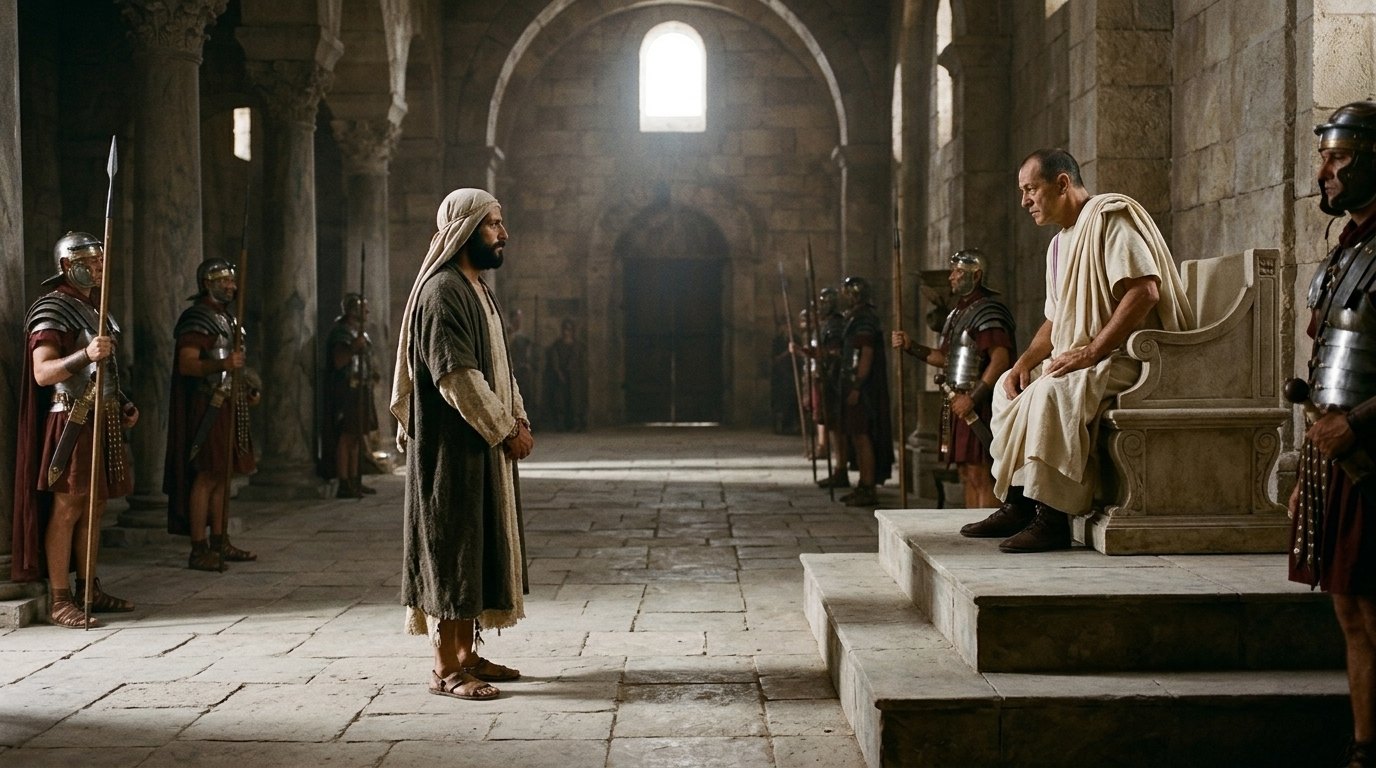
John 18:36
36 Jesus said, “My kingdom is not of this world. If it were, my servants would fight to prevent my arrest by the Jewish leaders. But now my kingdom is from another place.”
New International Version (NIV)
The answer
Christian nationalism is a political ideology that identifies a nation with Christianity, treats that nation as God’s chosen instrument, and gives the state special authority over religion; the Bible contradicts its central claims. Christ’s kingdom is distinct from earthly governments, God alone is sovereign, and Christians are commanded to love and serve people beyond their own nation.
Christ’s kingdom is not an earthly kingdom
Jesus told Pilate, “My Kingdom is not of this world” (John 18:36). When the crowd tried to make him a political king, Jesus withdrew (John 6:15). The kingdom of God does not come through military conquest or political enforcement; it “cometh not with observation” (Luke 17:20-21).
The kingdom is nevertheless real and eternal. God promised a kingdom that would “never be destroyed” (Daniel 2:44) and an everlasting dominion that would not pass away (Daniel 7:14). Its character is “righteousness, and peace, and joy in the Holy Ghost” (Romans 14:17), and its members are being prepared to inherit the saints’ inheritance in light (Colossians 1:12-14).
The state is God-ordained but not God-possessed
Romans 13:1-7 teaches that civil rulers are “ordained of God” and may use the sword to punish wrongdoing. Thus, the state has legitimate authority. But that does not make the nation identical with Christ’s kingdom or authorize it to enforce religious allegiance.
Jesus’ refusal to organize a worldly kingdom is decisive (John 18:36). Christians must render what belongs to Caesar to Caesar and what belongs to God to God (Matthew 22:21). The church therefore does not need the state to establish Christ’s kingdom.
The first commandment—“Thou shalt have no other gods before me” (Exodus 20:3-5)—commands exclusive worship of God. It does not establish a general rule that the state must punish other religions. Conversely, it does not give Christians a duty to cooperate with the state in compelling people to worship God. Christians must obey God, and they must not make the state enforce His worship.
God has not chosen one nation as His kingdom
The gospel is for “all the world” and “every creature” (Mark 16:15). Jesus is “the Lamb of God, which taketh away the sin of the world” (John 1:29). Paul says God is “of all nations” and justifies all who call on Him (Romans 3:29-30). These truths leave no place for a nation claiming exclusive covenantal status or special divine favor as the vehicle of Christ’s kingdom.
At the same time, the Bible does not despise nations. God created humanity from one blood and appointed national boundaries (Acts 17:26-27), and calls every nation to give Him glory (Psalm 96:7-8). Nations can do good and remain responsible for their wrongdoing (Romans 13:3-4; Amos 3:1-2). Christians may love their country and serve its legitimate institutions without making their citizenship an expression of Christian identity.
The “neighbor” crosses every boundary
The Good Samaritan shows that the neighbor is whoever needs love, even when that person lies outside the covenant people (Luke 10:37). This is a central corrective to Christian nationalism: the love of neighbor cannot be restricted to those of one nation, ethnicity, religion, or political allegiance.
James 2:8-9 condemns showing partiality toward the rich over the poor within the Christian assembly. It should not be misrepresented as a direct command about relationships between nations. It does, however, expose the same underlying sin whenever people or nations regard themselves as superior and treat less privileged people with contempt.
The line to keep
- The state has legitimate authority: Romans 13:1-7.
- Christ’s kingdom is not the state: John 18:36.
- The gospel goes beyond one nation: Mark 16:15; Romans 3:29-30.
- Love must extend to the neighbor: Luke 10:37.
- Worship belongs to God, not to the state: Exodus 20:3-5; Matthew 22:21.
Christian nationalism is therefore not simply “Christian politics” or a concern for a nation’s moral health. It becomes unbiblical when it makes a particular nation God’s chosen kingdom, identifies the state with Christ’s kingdom, privileges one nation’s interests above the welfare of others, or uses the state to enforce Christianity. Churches differ over particular political judgments and how Christians should engage public life, but Scripture is clear that Christ’s kingdom is not the kingdom of any nation, and the gospel must be borne outward to all peoples.
Answered from Scripture · reviewed November 11, 2026
Scripture explicitly separates the spiritual, everlasting reign of Jesus Christ from any earthly political regime, demonstrating that God's kingdom cannot be established through civic power or national dominance. While civil government is ordained by God to maintain temporal order and justice, the Bible rejects any attempt to fuse a modern nation's identity with the covenant people of God. Understanding this distinction preserves the church's true allegiance to Christ and empowers believers to love their neighbours across every cultural and political boundary.
The Spiritual Kingdom
Christ’s Kingdom Is Not of This World
Jesus said, “My kingdom is not of this world. If it were, my servants would fight to prevent my arrest by the Jewish leaders. But now my kingdom is from another place.”
John 18:36 (NIV)
Jesus explicitly declares to Pilate that His royal authority does not originate from or advance through worldly political or military mechanisms.
In John 18:36, Jesus answered Pontius Pilate with words that forever shatter any ambition to merge God's kingdom with political empire: "My kingdom is not of this world." If His royal authority derived from human factions, Christ noted, His servants would have taken up swords to defend Him. Yet throughout His ministry, Jesus steadfastly refused to advance His reign through civic or military force. When the crowd sought to seize Him by violence to make Him an earthly monarch, John 6:15 records that He withdrew alone to the mountain. He corrected the Pharisees in Luke 17:20-21, declaring that the kingdom of God does not arrive with visible political observation, but resides within the hearts transformed by His reign. As Paul writes in Romans 14:17, the kingdom of God is not external dominance or material privilege, but righteousness, peace, and joy in the Holy Spirit. Through the cross, believers are already rescued from the domain of darkness and transferred into the kingdom of the beloved Son (Colossians 1:12-14).
Centuries earlier, the prophet Daniel foresaw this exact divide. Human empires rise, expand, and inevitably collapse, but in Daniel 2:44, the God of heaven establishes a kingdom that will crush and outlast every earthly throne. In Daniel 7:14, the Son of Man is granted an everlasting dominion that every tribe and language will serve. Because this kingdom is spiritual, its battles cannot be waged through political coercion or physical intimidation. Paul explains in 2 Corinthians 10:3-5 that although we live in the flesh, our weapons are not carnal but divinely powerful to pull down ideological strongholds and bring every thought captive to Christ. Our ultimate struggle is never against flesh and blood or civic adversaries, but against spiritual powers of darkness (Ephesians 6:12).
| Passage | What it says |
|---|---|
| John 18:36 | Christ tells Pilate His kingdom is not of this world, meaning His servants do not fight with worldly arms to install Him. |
| John 6:15 | Jesus withdraws to the mountain alone when the crowds attempt to take Him by force to make Him an earthly king. |
| Luke 17:20-21 | Jesus instructs the Pharisees that the kingdom of God does not come with observable signs or political conquest, but is within. |
| Romans 14:17 | Paul explains that God's kingdom consists not in external consumption or civic power, but in righteousness, peace, and Holy Spirit joy. |
| Colossians 1:12-14 | Believers are already transferred out of darkness into the spiritual kingdom of God's beloved Son through redemption and forgiveness. |
| Daniel 2:44 | The God of heaven sets up an unshakeable, eternal kingdom that will crush and outlast all human empires. |
| Daniel 7:14 | The Son of Man receives an everlasting dominion that all peoples, nations, and languages shall serve forever. |
| 2 Corinthians 10:3-5 | We do not wage war according to the flesh, for weapons of our warfare are not carnal but spiritual. |
| Ephesians 6:12 | Our wrestling is not against flesh and blood, but against spiritual powers of darkness in the heavenly places. |
The Civil Magistrate
The State Is Ordained but Not Divine
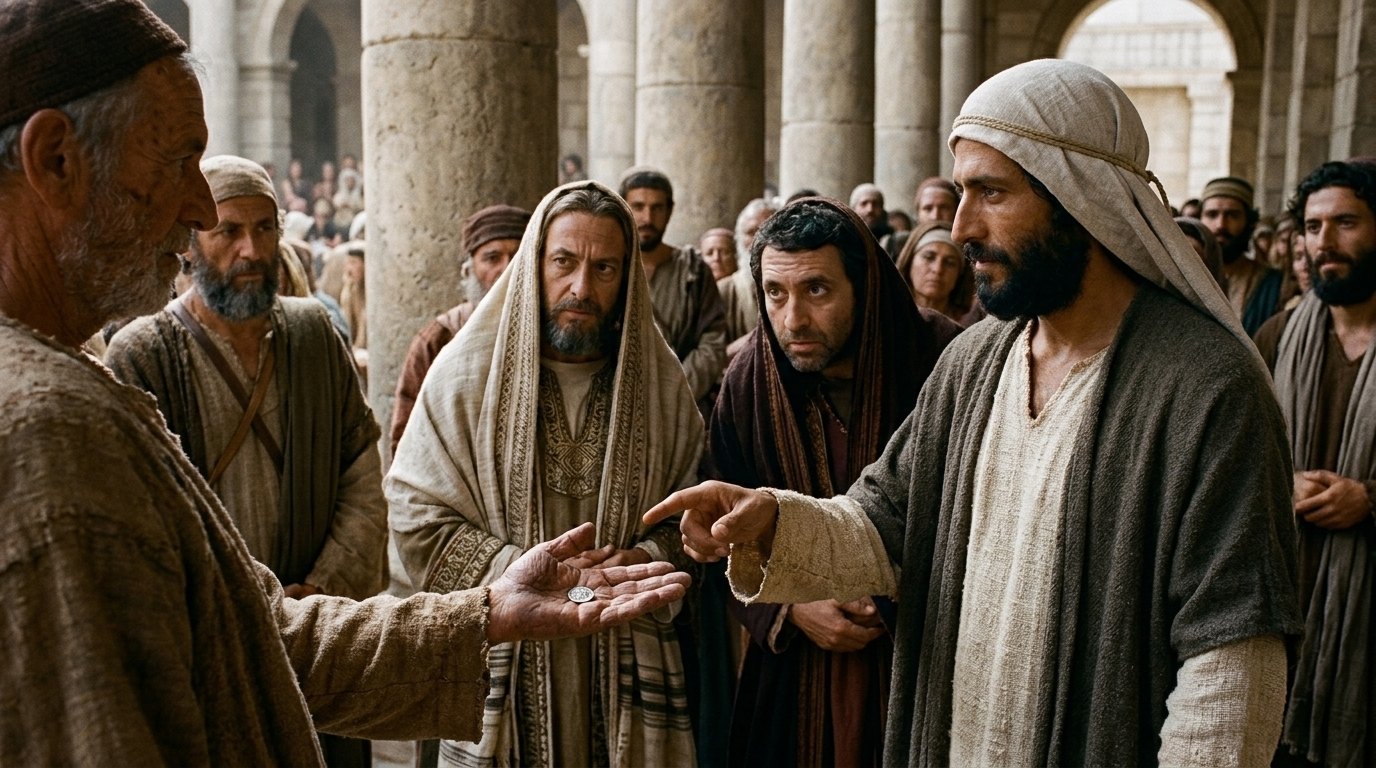
“Caesar’s,” they replied. Then he said to them, “So give back to Caesar what is Caesar’s, and to God what is God’s.”
Matthew 22:21 (NIV)
Jesus distinguishes civic duties from the divine worship and total allegiance that belong solely to Almighty God.
Holding up a silver denarius, the Lord Jesus established the divine limits of human governance in Matthew 22:21: "Render therefore to Caesar the things that are Caesar’s, and to God the things that are God’s." By distinguishing the coin bearing the emperor's image from the human soul bearing the image of God, Christ affirmed civic responsibility while strictly forbidding the deification of the state. Civil government is indeed ordained by God. In Romans 13:1-7, Paul instructs believers to submit to governing authorities, identifying the magistrate as God's servant appointed to restrain evil, administer temporal justice, and maintain civic peace. Peter similarly charges the church in 1 Peter 2:13-17 to honor the emperor and submit to governors for the Lord’s sake, showing that godliness works through respectful citizenship.
Yet the state's authority is neither absolute nor sacred. The moment an earthly power oversteps its God-given boundary to demand what belongs to the Lord alone, obedience to God takes absolute precedence. When the Sanhedrin commanded the apostles to cease preaching Christ, Peter boldly declared in Acts 5:29, "We must obey God rather than men." The first commandment (Exodus 20:3-5) strictly forbids granting ultimate allegiance, worship, or spiritual devotion to any human government or nation. Rather than seeking to capture the levers of power for ecclesiastical dominance, believers follow the instruction of 1 Timothy 2:1-4 to offer supplications and prayers for rulers so that we may live quiet, peaceable, and godly lives. Christians remain subject to governing authorities ready for every good deed (Titus 3:1), knowing with absolute peace that the king’s heart is merely a watercourse directed by the sovereign hand of God (Proverbs 21:1).
| Passage | What it says |
|---|---|
| Matthew 22:21 | Jesus commands giving Caesar Caesar's things, while reserving exclusively for God what bears His divine image. |
| Romans 13:1-7 | Governing authorities are appointed by God as ministers of justice to restrain evil, bearing the sword for temporal public order. |
| 1 Peter 2:13-17 | Christians are commanded to honor the emperor and submit to governors for the Lord's sake while fearing God alone. |
| Acts 5:29 | Peter and the apostles establish that God must be obeyed rather than any earthly government when civil edicts command sin. |
| Exodus 20:3-5 | The first commandment demands undivided worship of Yahweh alone, forbidding the deification of any human institution or state. |
| 1 Timothy 2:1-4 | Supplications and prayers are to be made for kings and all in authority, that we may lead quiet, godly lives. |
| Titus 3:1 | Believers are instructed to be subject to rulers and authorities, to be obedient, and ready for every good work. |
| Proverbs 21:1 | The king's heart is a stream of water in the hand of the Lord, who turns it wherever He wills. |
The True Covenant
God’s Chosen People Transcends Earthly Borders
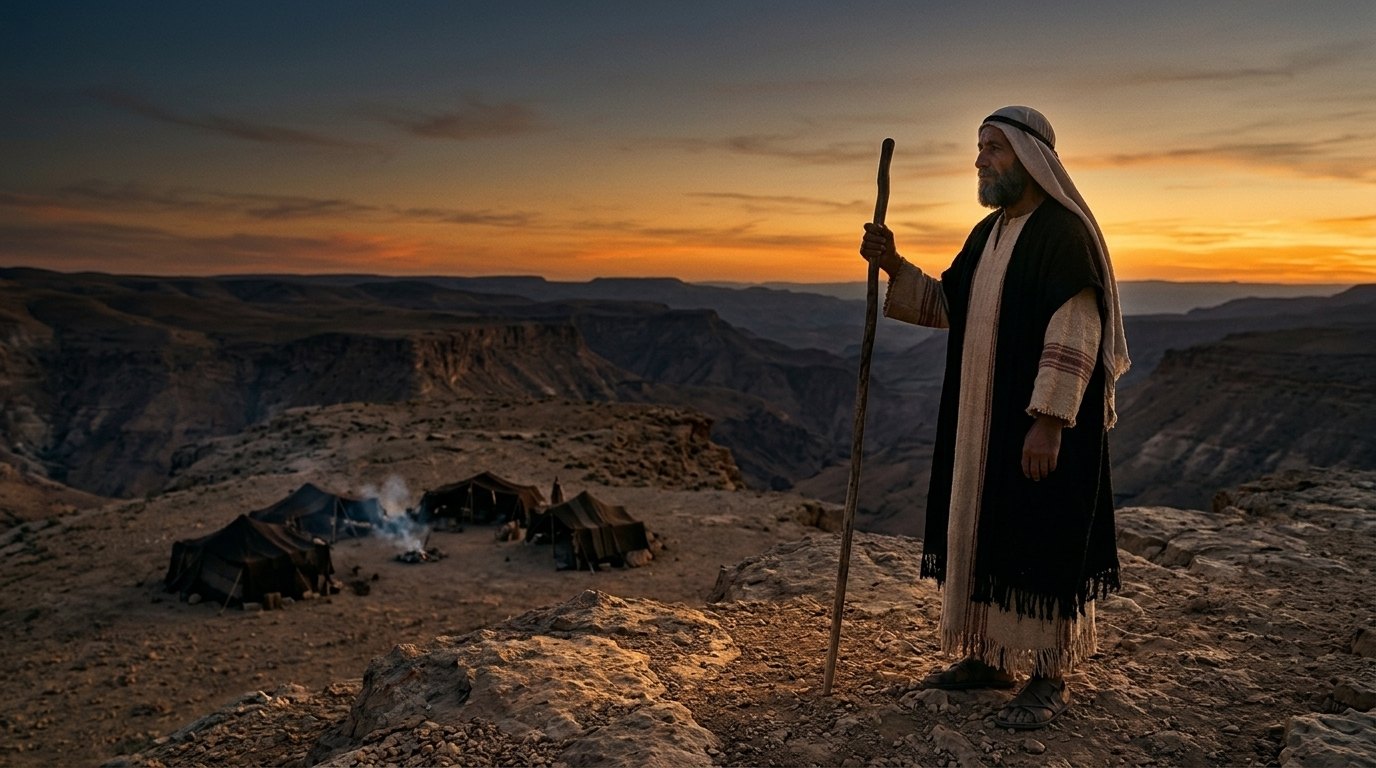
But you are a chosen people, a royal priesthood, a holy nation, God’s special possession, that you may declare the praises of him who called you out of darkness into his wonderful light.
1 Peter 2:9 (NIV)
The title of God's holy nation belongs entirely to the redeemed body of Christ, not to any modern geopolitical entity.
No modern geopolitical nation can claim to be God's chosen covenant people. In 1 Peter 2:9, Scripture assigns every covenantal title of ancient Israel exclusively to the multinational body of Christ: "You are a chosen race, a royal priesthood, a holy nation, a people for his own possession." This holy nation is not defined by borders, flags, or earthly constitutions, but by the redeeming blood of Jesus Christ. For this reason, the apostle Paul writes in Philippians 3:20 that our true citizenship is in heaven, from which we eagerly await the return of our Savior. Like the patriarchs of old who confessed they were strangers and pilgrims on the earth seeking a better, heavenly country (Hebrews 11:13-16), followers of Christ hold their earthly national attachments with a loose and provisional grip.
God created every race and nation from one common blood, setting their dwelling places so that men might seek Him and find Him (Acts 17:26-27). Salvation has never been the exclusive possession of one earthly group, for God justifies both circumcised and uncircumcised by the exact same faith (Romans 3:29-30). Through the cross, Jesus abolished the wall of hostility between divided peoples, forging one new humanity and reconciling every believer into a single spiritual temple (Ephesians 2:14-19). We have not assembled at an earthly capital, but at Mount Zion, the city of the living God and the heavenly Jerusalem (Hebrews 12:22). For as Hebrews 13:14 reminds us, here we have no lasting city, but we seek the city that is to come—culminating in the glorious vision of Revelation 7:9-10, where a redeemed multitude from every tribe, tongue, and nation worships the Lamb.
| Passage | What it says |
|---|---|
| 1 Peter 2:9 | Peter identifies the multinational church of Jesus Christ as God's chosen generation, royal priesthood, and holy nation. |
| Philippians 3:20 | Paul reminds believers that their true and primary citizenship is in heaven, from which they await the Savior. |
| Hebrews 11:13-16 | The faithful acknowledge they are strangers and pilgrims on earth, seeking a better, heavenly country prepared by God. |
| Acts 17:26-27 | God created all nations from one blood and set their boundaries so that people might seek Him and find Him. |
| Romans 3:29-30 | God is not the God of one ethnic or national group only, but justifies all people through faith in Christ. |
| Revelation 7:9-10 | John sees the redeemed multitude gathered before the throne from every nation, tribe, people, and language worshipping the Lamb. |
| Ephesians 2:14-19 | Christ broke down the dividing wall of hostility, reconciling Jew and Gentile into one new holy temple and household. |
| Hebrews 12:22 | Believers have come to Mount Zion, the heavenly Jerusalem, an innumerable company of angels, and God's true city. |
| Hebrews 13:14 | Here we have no lasting earthly city, but we earnestly seek the eternal city that is to come. |
Neighbor Love
Gospel Love Breaks Through National Boundaries
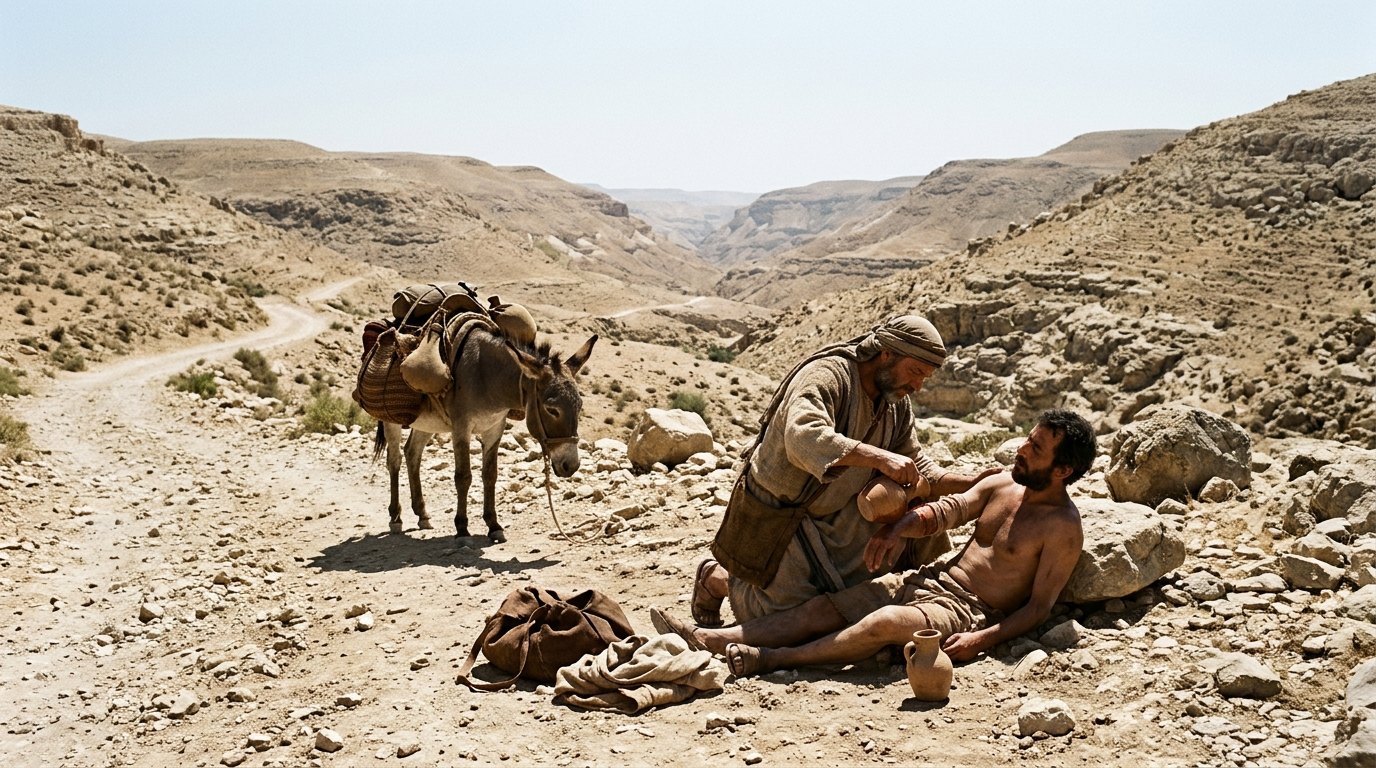
But he wanted to justify himself, so he asked Jesus, “And who is my neighbor?” In reply Jesus said: “A man was going down from Jerusalem to Jericho, when he was attacked by robbers. They stripped him of his clothes, beat him and went away, leaving him half dead. A priest happened to be going down the same road, and when he saw the man, he passed by on the other side. So too, a Levite, when he came to the place and saw him, passed by on the other side. But a Samaritan, as he traveled, came where the man was; and when he saw him, he took pity on him. He went to him and bandaged his wounds, pouring on oil and wine. Then he put the man on his own donkey, brought him to an inn and took care of…
Luke 10:29-37 (NIV)
Jesus defines our neighbor through the merciful Samaritan, dismantling ethnic and nationalistic barriers to biblical charity.
When a lawyer sought to restrict his moral responsibility by asking who his neighbor was, Jesus answered in Luke 10:29-37 with the Parable of the Good Samaritan. By portraying a despised ethnic and religious outsider as the exemplar of righteousness, Christ tore down every nationalistic boundary around divine charity: mercy knows no borders or political walls. While worldly nationalism promotes suspicion toward the stranger and privileges the insider, the gospel calls Christians to sacrificial love that reaches outward to all people. Christ charged His disciples in the Great Commission to proclaim the gospel to every creature (Mark 16:15) and to make disciples of all nations (Matthew 28:18-20).
Within the body of Christ, earthly distinctions are subordinated to our union in the Lord. In Galatians 3:28, Paul declares that there is neither Jew nor Greek, slave nor free, male nor female, for all are one in Christ Jesus. In Colossians 3:11, he reiterates that national and cultural barriers like barbarian or Scythian disappear before the reality that Christ is all and in all. Even when living under foreign and hostile rulers, the people of God are instructed not to despise their neighbors or violently overthrow the civic order, but to seek the peace and welfare of the city where they dwell and pray for it (Jeremiah 29:7). Walking in the steps of our Lord means rejecting tribal hostility and obeying the radical command of Matthew 5:43-48 to love our enemies and pray for those who persecute us, reflecting our heavenly Father who sends rain on the just and unjust alike.
| Passage | What it says |
|---|---|
| Luke 10:29-37 | Jesus uses a despised outsider to illustrate that active, self-sacrificing love must extend across racial, religious, and political divides. |
| Mark 16:15 | The Great Commission sends the church to preach the good news of salvation to every creature in all the world. |
| Galatians 3:28 | In Christ there is neither Jew nor Greek, for all believers are made one new spiritual body in Him. |
| Matthew 5:43-48 | Jesus commands His followers to love their enemies and pray for their persecutors, demonstrating the character of the heavenly Father. |
| Matthew 28:18-20 | The risen Christ commands disciples to be made of all earthly nations, baptizing and teaching them His commands. |
| Colossians 3:11 | In Christ there is no Greek or Jew, barbarian or Scythian, but Christ is all and in all. |
| Jeremiah 29:7 | Exiles are commanded to seek the welfare and peace of the earthly city where God sends them and pray for it. |
False Security and Trust
Salvation Belongs to the Lord, Not Earthly Might
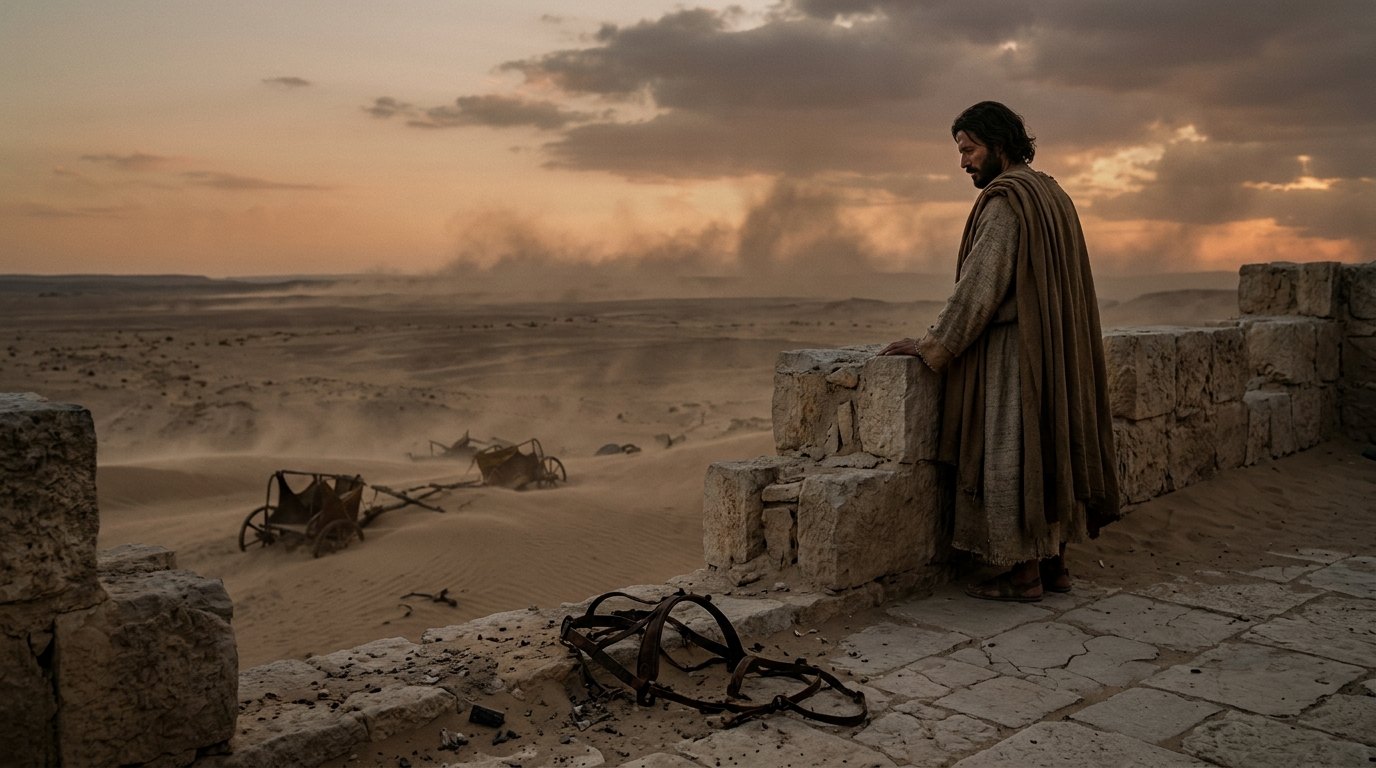
Do not put your trust in princes, in human beings, who cannot save. When their spirit departs, they return to the ground; on that very day their plans come to nothing.
Psalms 146:3-4 (NIV)
It flatly forbids placing ultimate hope, identity, or trust in earthly rulers and mortal political power.
The psalmist delivers an absolute warning against putting ultimate confidence in civil rulers: "Put not your trust in princes, nor in the son of man, in whom there is no help" (Psalm 146:3-4). When mortal leaders perish, their breath departs, their bodies return to the dust, and all their earthly schemes perish with them. Scripture repeatedly warns believers against looking to secular leadership, political dominance, or military strength as the true instruments of deliverance, for enduring salvation belongs exclusively to God.
This principle appears throughout Israel's historical testimony. While neighbouring empires measured authority through military machinery, David proclaimed the distinctive foundation of God's people: "Some trust in chariots, and some in horses: but we will remember the name of the Lord our God" (Psalm 20:7). Victory and security do not proceed from mechanical or political supremacy. Even when acknowledging that a people walking in obedience experience blessing, the psalmist clarifies that earthly force remains powerless to deliver: "There is no king saved by the multitude of an host: a mighty man is not delivered by much strength" (Psalm 33:12-16). Divine favour cannot be captured by nationalistic prowess or civic coercion.
The prophet Isaiah sets human kingdoms in their proper cosmic perspective before the Creator: "Behold, the nations are as a drop of a bucket, and are counted as the small dust of the balance" (Isaiah 40:15-17). Before God Almighty, every earthly empire and political alliance is less than nothing. To equate the kingdom of Christ with any earthly superpower or political movement is to trade the eternal weight of God's sovereignty for the fleeting dust of human power. True allegiance belongs solely to the King of kings.
| Passage | What it says |
|---|---|
| Psalms 20:7 | Some trust in chariots and some in horses, but we trust in the name of the Lord our God. |
| Psalms 33:12-16 | Blessed is the nation whose God is the Lord, yet no king is saved by the size of an army. |
| Psalms 146:3-4 | Do not put trust in earthly princes or mortal man, in whom there is no salvation. |
| Isaiah 40:15-17 | The nations are like a drop in a bucket and dust on the scales before the Almighty God. |
Where in the Bible
| Book | Passages |
|---|---|
| Exodus | 1 · Exodus 20:3-5 |
| Psalms | 3 · Psalms 20:7, Psalms 33:12-16, Psalms 146:3-4 |
| Proverbs | 1 · Proverbs 21:1 |
| Isaiah | 1 · Isaiah 40:15-17 |
| Jeremiah | 1 · Jeremiah 29:7 |
| Daniel | 2 · Daniel 2:44, Daniel 7:14 |
| Matthew | 3 · Matthew 22:21, Matthew 5:43-48, Matthew 28:18-20 |
| Mark | 1 · Mark 16:15 |
| Luke | 2 · Luke 17:20-21, Luke 10:29-37 |
| John | 2 · John 18:36, John 6:15 |
| Acts | 2 · Acts 5:29, Acts 17:26-27 |
| Romans | 3 · Romans 14:17, Romans 13:1-7, Romans 3:29-30 |
| 2 Corinthians | 1 · 2 Corinthians 10:3-5 |
| Galatians | 1 · Galatians 3:28 |
| Ephesians | 2 · Ephesians 6:12, Ephesians 2:14-19 |
| Philippians | 1 · Philippians 3:20 |
| Colossians | 2 · Colossians 1:12-14, Colossians 3:11 |
| 1 Timothy | 1 · 1 Timothy 2:1-4 |
| Titus | 1 · Titus 3:1 |
| Hebrews | 3 · Hebrews 11:13-16, Hebrews 12:22, Hebrews 13:14 |
| 1 Peter | 2 · 1 Peter 2:13-17, 1 Peter 2:9 |
| Revelation | 1 · Revelation 7:9-10 |
The story in order
- God establishes His eternal kingdom (c. 6th century BC) · Daniel 2:44 · God's kingdom will crush all human empires.
- Jesus declares His kingdom not of this world (AD 30) · John 18:36 · Kingdom not established by worldly force.
- Jesus withdraws from forced earthly kingship (c. AD 30) · John 6:15 · Rejects attempts to make Him an earthly king.
- Kingdom of God is within (c. AD 30) · Luke 17:20-21 · Not observable or through political conquest.
- Give to Caesar and God (c. AD 30) · Matthew 22:21 · Distinguishes civil and divine authority.
- Governing authorities appointed by God (c. AD 55) · Romans 13:1-7 · Ministers of justice for public order.
- Obey God rather than men (c. AD 33) · Acts 5:29 · Civil edicts commanding sin are disobedience to God.
- Christian citizenship is in heaven (c. AD 60) · Philippians 3:20 · Primary allegiance is to the heavenly kingdom.
- Honor the emperor, fear God (c. AD 60) · 1 Peter 2:13-17 · Submit to government, but obey God first.
- Church is a spiritual nation (c. AD 60) · 1 Peter 2:9 · A chosen generation, royal priesthood, holy nation.
- Seek welfare of earthly city (c. 597 BC) · Jeremiah 29:7 · Pray for and seek peace of exile city.
- Love enemies (c. AD 30) · Matthew 5:43-48 · Demonstrates character of heavenly Father.
- Great Commission to all nations (c. AD 30) · Matthew 28:18-20 · Discipleship mandate for all earthly nations.
- Redeemed from every nation (c. AD 95) · Revelation 7:9-10 · Worship of God by people from all tribes.
Key words
- Kingdom of God (basileia tou theou (βασιλεία τοῦ θεοῦ))
- God's sovereign rule, not limited to earthly political structures, but present in the hearts of believers and ultimately established in eternity. · Luke 17:20-21
- Civil Magistrate (exousia (ἐξουσία))
- Governing authorities appointed by God to maintain order and justice in the temporal realm. · Romans 13:1-7
- Citizenship (politeuma (πολίτευμα))
- The primary allegiance and belonging of a believer, which is in heaven. · Philippians 3:20
- Love your neighbor (agape (ἀγάπη))
- Active, self-sacrificing love that extends across all social, racial, and political divides. · Luke 10:29-37
- Spiritual Warfare (palé (πάλη))
- The conflict believers face against unseen spiritual forces of darkness. · Ephesians 6:12
Believers are summoned to honor earthly authorities and contribute faithfully to the common good, but their ultimate citizenship and eternal worship belong exclusively to the Lamb. By refusing to confuse political triumph with the advance of the gospel, Christians bear pure witness to the coming kingdom of Jesus Christ. Holding fast to God's Word protects the heart from misplaced trust in worldly power and anchors our hope in His unshakeable reign.
37 passages, each cited once.
How the major Christian traditions read this
All major Christian traditions confess that Jesus Christ is Lord of all nations, whose eternal kingdom transcends every earthly government, and that no nation can replace the Church as God's chosen people (John 18:36; 1 Peter 2:9).
Catholic
The Church teaches the social kingship of Christ, affirming that civil society and secular rulers are bound to respect the natural moral law and Christ’s sovereignty over human affairs (Romans 13:1; Revelation 1:5). However, we firmly reject chauvinistic nationalism that elevates the state above God or confuses any secular realm with the mystical body of Christ. True patriotism is a virtue under the fourth commandment, obliging citizens to love their homeland and seek the common good (Jeremiah 29:7). Yet, the Church's mission is universal, gathered from every tribe and tongue, never to be subordinated to earthly political power (Matthew 28:19; John 18:36).
Scripture: Romans 13:1, Revelation 1:5, Jeremiah 29:7, Matthew 28:19, John 18:36
Orthodox
Orthodoxy historically views church and state in a relationship of symphonia—harmony and mutual cooperation—where civil rulers govern justly while honoring the Church's spiritual fatherhood, as seen in early Christian empires. Yet we strongly condemn phyletism (ethno-religious nationalism) as a heresy, affirming that national identity must never supersede our unity in Christ (Galatians 3:28). Christ alone is our King, and His kingdom is not of this world (John 18:36). While we bless our nations and pray for their protection and leaders (1 Timothy 2:1-2), the Church alone is the holy nation, an assembly gathered into the heavenly Fatherland (1 Peter 2:9).
Scripture: Galatians 3:28, John 18:36, 1 Timothy 2:1-2, 1 Peter 2:9
Lutheran
We look to the doctrine of the Two Kingdoms, which sharply distinguishes God’s spiritual realm from His temporal realm (Augsburg Confession 28). In the left-hand kingdom, God rules all people through civil magistrates, the sword, and natural law to maintain order and justice (Romans 13:1-4). In the right-hand kingdom, Christ rules believers inwardly through the Gospel and the sacraments (John 18:36). Confounding the two by trying to establish Christ’s kingdom through civil legislation or claiming divine election for an earthly nation corrupts both the Gospel and civil government. Christians serve as faithful citizens, rendering to Caesar what is Caesar’s while worshiping God alone (Matthew 22:21).
Scripture: Romans 13:1-4, John 18:36, Matthew 22:21
Reformed & Presbyterian
We confess that Christ holds all authority in heaven and on earth (Matthew 28:18). Civil magistrates are ordained servants of God who are accountable to His moral law to administer justice and protect the peace of the commonwealth (Romans 13:3-4; Psalm 2:10-12). While some historic Reformed expressions pursued a Christian commonwealth where the magistrate defended both tables of the law, we deny that any modern nation is in a special covenant like ancient Israel. The covenant people of God are exclusively the Church of Jesus Christ (1 Peter 2:9-10). Believers seek to influence society toward righteousness without confusing the sword of the state with the spiritual keys of the kingdom (2 Corinthians 10:4).
Scripture: Matthew 28:18, Romans 13:3-4, Psalms 2:10-12, 1 Peter 2:9-10, 2 Corinthians 10:4
Anglican & Episcopal
Anglicanism historically recognized the Christian magistrate as possessing lawful authority to care for the realm and maintain true religion, as reflected in an established national church under the sovereign. However, this historic settlement never equates the state with the kingdom of God itself (John 18:36). Civil rulers bear the sword for justice and public order (Romans 13:1-4), while the Church administers word and sacrament. We reject any nationalism that fosters idolatrous pride, division, or oppression. Christians are called to be loyal, pray for leaders, and labor for the flourishing of their society, knowing our primary citizenship is in heaven (Philippians 3:20; 1 Peter 2:13-17).
Scripture: John 18:36, Romans 13:1-4, Philippians 3:20, 1 Peter 2:13-17
Baptist
From our earliest days, Baptists have stood resolutely for soul competency and religious liberty, insisting upon the absolute separation of church and state (Matthew 22:21). The conscience belongs to God alone and must never be coerced by civil authorities in matters of faith (Romans 14:12). We firmly reject Christian nationalism: the state possesses no biblical mandate to enforce religious doctrine, nor is any geopolitical entity God's chosen nation today. Christ's kingdom is established not by political power, but through the preaching of the cross and the voluntary regeneration of hearts (John 18:36; 2 Corinthians 5:20). Believers are ambassadors of Christ, functioning as salt and light (Matthew 5:13-16).
Scripture: Matthew 22:21, Romans 14:12, John 18:36, 2 Corinthians 5:20, Matthew 5:13-16
Methodist & Wesleyan
We believe that Christians are called to spread scriptural holiness throughout the land, engaging society to lift the oppressed and pursue public righteousness (Micah 6:8; Matthew 25:35-40). While we honour civil rulers and support constitutional government (Methodist Articles 23; Romans 13:1-7), we reject any ideology that fuses Christian faith with national power or cultural superiority. No nation holds an exclusive claim on God’s favour. God’s grace is offered freely to all humanity, and Christ commands us to love our global neighbours as ourselves (Luke 10:29-37). Our allegiance belongs ultimately to Christ’s universal kingdom of peace, love, and reconciliation.
Scripture: Micah 6:8, Matthew 25:35-40, Romans 13:1-7, Luke 10:29-37
Pentecostal & Charismatic
We believe the power of the kingdom of God is demonstrated through the Holy Spirit's supernatural work in the hearts of men, not through political dominance or secular authority (Zechariah 4:6; 1 Corinthians 2:4-5). While we urge believers to pray for government leaders and stand boldly for biblical morality in public life (1 Timothy 2:1-3; Proverbs 14:34), we reject the error of relying on earthly government to advance Christ's cause. Spiritual battles cannot be won with political weapons (2 Corinthians 10:3-4). Our urgent priority is the Great Commission, proclaiming the Gospel with signs following to every tribe, tongue, and nation before the Lord returns (Acts 1:8).
Scripture: Zechariah 4:6, 1 Corinthians 2:4-5, 1 Timothy 2:1-3, 2 Corinthians 10:3-4, Acts 1:8
Non-denominational & Evangelical
We look directly to the Word of God as our authority, which teaches that Christians are citizens of heaven living as pilgrims and strangers on earth (Philippians 3:20; 1 Peter 2:11). While Scripture commands us to pray for our leaders, obey lawful governance, and act as salt and light (Romans 13:1-2; Matthew 5:13-14), it condemns elevating national identity or political agendas above Christ. The kingdom of God advances purely through the Gospel of grace, not through political coercion (John 18:36; Romans 1:16). We owe our ultimate love, allegiance, and hope to Jesus Christ alone, who died to redeem people from every nation (Revelation 5:9).
Scripture: Philippians 3:20, 1 Peter 2:11, Romans 13:1-2, John 18:36, Revelation 5:9
Where they differ
The state's authority in religious matters
- Catholic
- Civil rulers must recognize moral truth while respecting authentic religious freedom.
- Orthodox
- Idealizes symphonic cooperation between church and state without confusing their roles.
- Lutheran
- Restricts civil rule strictly to worldly peace, leaving conscience to the Gospel.
- Reformed & Presbyterian
- The magistrate upholds public order and justice under God's moral law.
- Anglican & Episcopal
- Historically allows the Christian magistrate care over the national church's temporal establishment.
- Baptist
- Demands absolute separation of church and state, denying state authority over conscience.
- Methodist & Wesleyan
- Affirms civic duty and religious liberty without state enforcement of religious doctrine.
- Pentecostal & Charismatic
- Views the state purely as civil authority, powerless in spiritual transformation.
- Non-denominational & Evangelical
- Denies the state any role in governing Christian faith or doctrine.
Scripture: Romans 13:1-4, Matthew 22:21
How Christ's kingdom transforms society
- Catholic
- Through the Church infusing natural social structures with grace and virtue.
- Orthodox
- Through liturgical worship, repentance, and sanctification leavening national culture.
- Lutheran
- Separately through lawful vocations in the world and Gospel proclamation in church.
- Reformed & Presbyterian
- Through applying God's moral law to every sphere of cultural life.
- Anglican & Episcopal
- Through Christian civic participation and the steady moral influence of national institutions.
- Baptist
- Through individual conversion and voluntary Christian witness, never political power.
- Methodist & Wesleyan
- Through spreading holiness, compassionate social action, and uplifting the vulnerable.
- Pentecostal & Charismatic
- Through the Holy Spirit's supernatural power, evangelism, and spiritual warfare.
- Non-denominational & Evangelical
- Through biblical preaching, making disciples, and godly living in daily life.
Scripture: John 18:36, 2 Corinthians 10:4, Matthew 5:13-16
Your pastor can tell you where your church stands.
Scripture cited
- John 18:36
- Luke 17:20-21
- Colossians 1:12-14
- John 6:15
- Romans 14:17
- Daniel 2:44
- Daniel 7:14