What is the book of Exodus about?

Exodus 3:7-10
7 The LORD said, “I have indeed seen the misery of my people in Egypt. I have heard them crying out because of their slave drivers, and I am concerned about their suffering.
8 So I have come down to rescue them from the hand of the Egyptians and to bring them up out of that land into a good and spacious land, a land flowing with milk and honey—the home of the Canaanites, Hittites, Amorites, Perizzites, Hivites and Jebusites.
9 And now the cry of the Israelites has reached me, and I have seen the way the Egyptians are oppressing them.
10 So now, go. I am sending you to Pharaoh to bring my people the Israelites out of Egypt.”
New International Version (NIV)
The answer
Exodus is the book of God's rescue and covenant. It tells how Israelites enslaved in Egypt cried out, how the LORD heard them and sent Moses, how He brought them out with a mighty hand and an outstretched arm, and how He bound them to Himself at Sinai as a kingdom of priests and a holy nation. A people enslaved, a God who hears, a mighty deliverance, and a covenant that shapes Israel into the worshiping community through which the rest of the Bible unfolds — that single arc carries the whole book.
The arc of the book
1. Israel groans under Egypt (chapter 1). A new Pharaoh who did not know Joseph reduces the Hebrews to hard labor and orders the killing of Hebrew boys. Yet Israel keeps multiplying "exceedingly" under the oppressor's nose, and the chapter closes with the cry of God's people rising to Him (Exodus 2:23-24).
2. God raises up Moses and calls him (chapters 2-4). A Levite baby is hidden in the Nile, drawn out by Pharaoh's daughter, and named Moses. Years later God meets him at the burning bush and says, "I have surely seen the affliction of my people who are in Egypt, and have heard their cry… I have come down to deliver them out of the hand of the Egyptians, and to bring them up out of that land to a good and large land, to a land flowing with milk and honey" (Exodus 3:7-8). Those two verses name the center of the book.
3. Plagues, Passover, and the Red Sea (chapters 5-15). Moses stands before Pharaoh; ten plagues break Egypt's hold; Passover is instituted; Israel crosses the Red Sea on dry ground while the Egyptian army is destroyed. This becomes the defining act of Old Testament salvation, cited again and again by the prophets and the psalmists (Nehemiah 9:9; Psalm 106:44).
4. Journey to Sinai (chapters 15:22-19:2). Israel travels through the wilderness, learning to trust God for water, manna, and quail, and meeting Jethro along the way.
5. Covenant, law, and tabernacle (chapters 19-40). At Sinai God gives the Ten Commandments, the covenant code, and instructions for the tabernacle. Israel becomes "a kingdom of priests and a holy nation" (Exodus 19:6) and the tabernacle is built and filled with the glory of God, "so that I may dwell among them" (Exodus 25:8; cf. 40:34-35).
The big themes woven through
- God hears the cry of the afflicted. From Exodus 2:24 through the Psalms this becomes a refrain (Exodus 3:7, 9; Psalm 145:19; Psalm 34:6). The God of Scripture is not distant from suffering; He shows up to save.
- Deliverance by blood and power. Passover's lamb and the Red Sea are foundational pictures of salvation that the New Testament directly applies to Christ (1 Corinthians 5:7).
- Covenant and law. Once Israel is rescued, she is taught how to live before the God who rescued her. The law follows rescue, not the other way around.
- God's presence dwelling with His people. The tabernacle fills the second half of the book: God's goal is not just to free a people but to live among them.
- Moses as mediator. Moses stands between Israel and God, speaks God's words to the people, and is the figure to whom the prophets compare Christ (Deuteronomy 18:15; Acts 7:37).
If you want a short Old Testament summary: Genesis shows creation ruined and a people promised; Exodus shows that promise rescued from slavery; Leviticus teaches the rescued people how to worship; Numbers covers the wilderness road; Deuteronomy restates the covenant on the edge of the land.
Where to keep reading next
- The call at the bush (Exodus 3) — the heart of the book in seven verses.
- The Passover (chapter 12) — the salvation event everything else points back to.
- The Decalogue (chapters 20-23) — how the rescued people live.
- The tabernacle glory (chapter 40) — the climax, God dwelling in the camp.
Answered from Scripture · reviewed November 8, 2026
Exodus is the foundational account of God's redemptive power and covenant love, recording how He heard the groaning of His enslaved people and brought them out of Egypt with a mighty hand. Far more than a drama of political liberation, the book moves purposefully from the brick pits of bondage to the glory of the tabernacle, where the holy God comes to dwell in the midst of a redeemed nation. Across its forty chapters, Exodus establishes the enduring biblical pattern of salvation: God delivers His people by blood and power, binds them to Himself in covenant obedience, and makes His home among them.
Bondage and Groaning
God Hears the Cry of His Suffering People
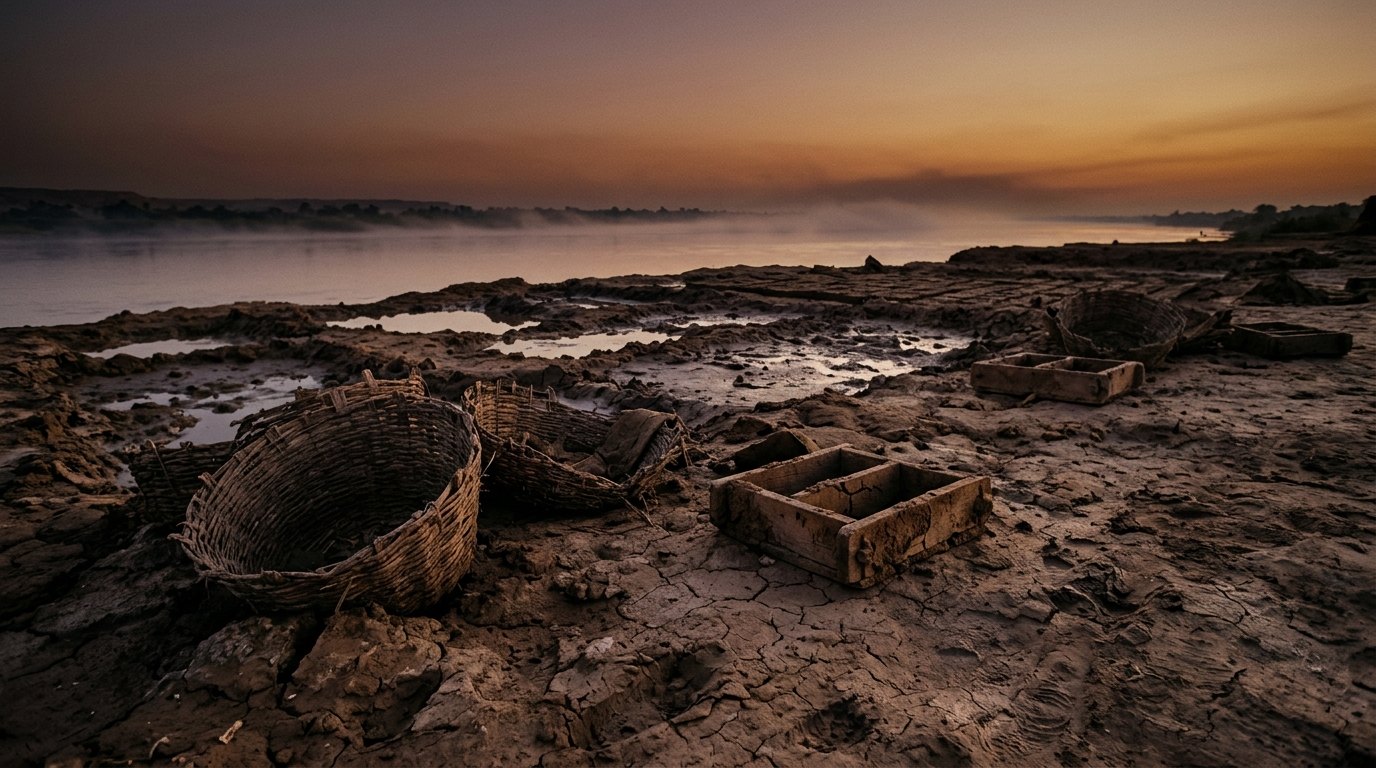
God heard their groaning and he remembered his covenant with Abraham, with Isaac and with Jacob.
Exodus 2:24 (NIV)
This verse reveals that God's dramatic intervention is rooted directly in His eternal covenant memory and compassionate hearing of human groaning.
The opening chapters of Exodus root the entire drama of redemption in a simple, astonishing reality: God heard their groaning and remembered His covenant (Exodus 2:24). The book begins not with Israel's triumphs, but with their crushing misery. A new king arose over Egypt who had forgotten Joseph (Exodus 1:8), imposing brutal servitude and attempting systematic genocide by drowning every newborn Hebrew boy in the Nile (Exodus 1:22). Yet Pharaoh's hostility could not outstrip God's purpose; the more the taskmasters afflicted them, the more the chosen people multiplied (Exodus 1:12). This suffering was not an unforeseen tragedy. Centures earlier, the Lord had revealed to Abraham that his descendants would serve a foreign nation in affliction for four centuries before He judged that nation and brought them out (Genesis 15:13-14). Under the weight of relentless slave labor, Israel sighed, and their desperate plea rose up to heaven (Exodus 2:23). When Exodus records that God saw and took notice of their affliction (Exodus 2:25), it marks the turning point of Israel's history. Generations later, Nehemiah would celebrate how the Lord looked on the affliction of their fathers in Egypt and heard their cry at the sea (Nehemiah 9:9). The psalmist echoed this comfort, singing that God continually regarded their distress whenever He heard their sorrowful cry (Psalms 106:44). Stephen likewise reaffirmed that when the appointed time of the promise drew near amidst horrific persecution, God did not leave His people abandoned (Acts 7:17-19). The agony of the brick pits was the setting through which the living God revealed Himself as the faithful Keeper of His ancient word.
| Passage | What it says |
|---|---|
| Exodus 1:8 | A new king arises over Egypt who did not know Joseph, initiating ruthless subjugation. |
| Exodus 1:12 | The more the Egyptians afflict the Israelites, the more God's people multiply and spread. |
| Exodus 1:22 | Pharaoh commands every newborn Hebrew son to be cast into the Nile River. |
| Exodus 2:23 | The children of Israel sigh under their harsh bondage and their desperate cry rises to God. |
| Exodus 2:24 | God hears their groaning and remembers His ancient covenant with Abraham, Isaac, and Jacob. |
| Exodus 2:25 | God looks upon the afflicted children of Israel and takes special notice of their plight. |
| Nehemiah 9:9 | Nehemiah recounts how God saw the affliction of the fathers in Egypt and heard their cry. |
| Psalms 106:44 | The psalmist testifies that the Lord regarded Israel's affliction whenever He heard their sorrowful cry. |
| Genesis 15:13-14 | God foretold Israel's four hundred years of affliction in Egypt and promised subsequent deliverance. |
| Acts 7:17-19 | Stephen recounts how the time of the promise drew near amidst brutal Egyptian oppression. |
The Call of Moses
The God of the Burning Bush Comes Down
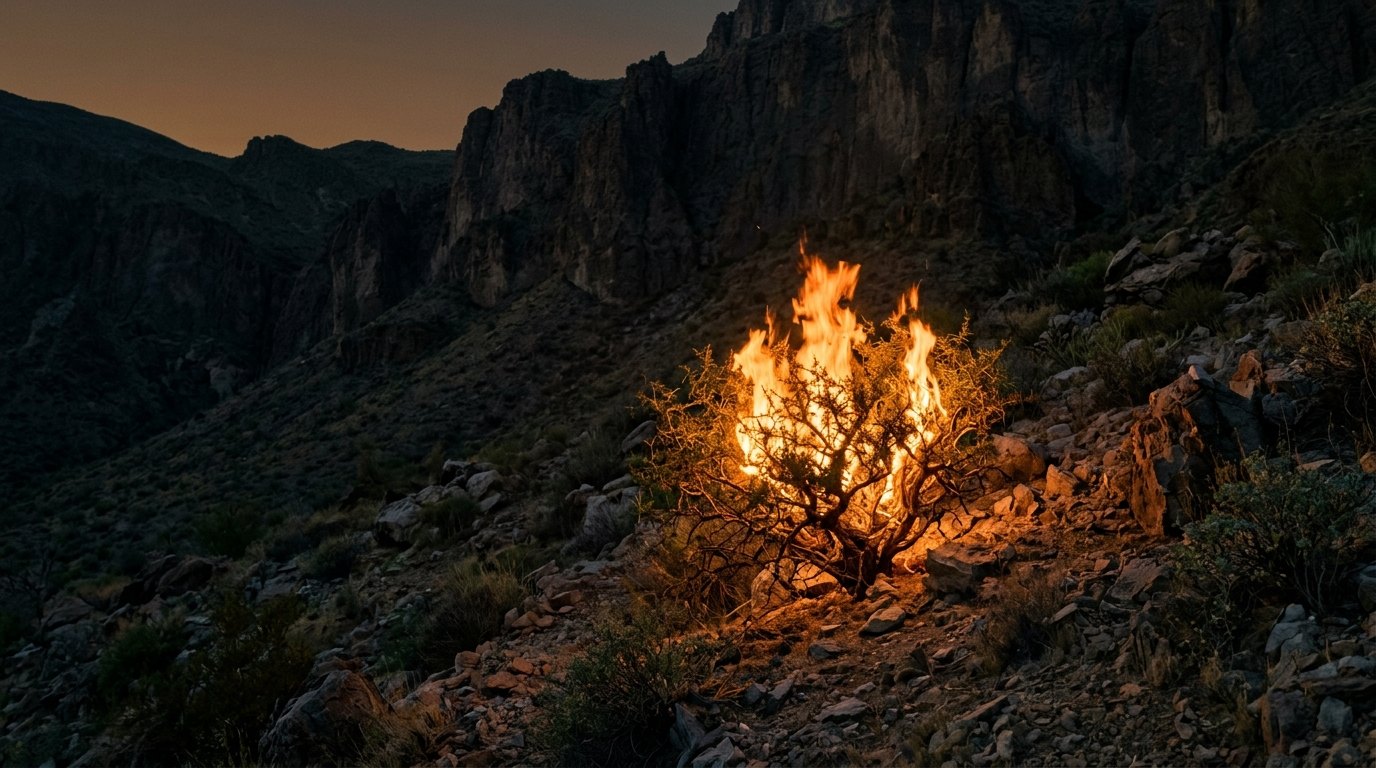
The LORD said, “I have indeed seen the misery of my people in Egypt. I have heard them crying out because of their slave drivers, and I am concerned about their suffering. So I have come down to rescue them from the hand of the Egyptians and to bring them up out of that land into a good and spacious land, a land flowing with milk and honey—the home of the Canaanites, Hittites, Amorites, Perizzites, Hivites and Jebusites.
Exodus 3:7-8 (NIV)
These verses state the central programmatic thesis of the entire book: Yahweh sees, hears, knows, and comes down to rescue His people.
At the heart of Moses' commission lies God's personal descent to save: 'I have surely seen the affliction of My people... and I have come down to deliver them' (Exodus 3:7-8). God prepared His mediator through remarkable providence, preserving the infant drawn from the Nile by Pharaoh's daughter (Exodus 2:10). Decades later, at the backside of the desert, the Angel of the Lord appeared to Moses in a bush that burned with fire yet was not consumed (Exodus 3:2). In that holy encounter, God revealed His transcendent, self-existent memorial name, declaring Himself to be 'I AM WHO I AM' (Exodus 3:14). When Moses trembled at his own inadequacy, the Lord equipped him with miraculous signs to confirm his authority (Exodus 4:1-5) and promised to be with his mouth to teach him what to say (Exodus 4:12). The Lord then unfolded His grand purpose in the sevenfold 'I will' promises of Exodus 6:6-8, pledging to bring Israel out, redeem them with an outstretched arm, take them as His own people, and give them the promised inheritance. Stephen testified before the Sanhedrin that this very Moses, whom the people once rejected, was sent by God's hand at the bush to be their ruler and deliverer (Acts 7:30-35). Exodus demonstrates that human redemption does not originate in political rebellion or human resourcefulness, but in the sovereign initiative of the eternal God who stoops down to rescue His own.
| Passage | What it says |
|---|---|
| Exodus 2:10 | Pharaoh's daughter draws the infant from the river and names him Moses. |
| Exodus 3:2 | The Angel of the Lord appears to Moses in a blazing bush that is not consumed. |
| Exodus 3:7 | The Lord declares He has surely seen the affliction of His people and knows their sorrows. |
| Exodus 3:8 | God announces He has come down to rescue Israel and bring them into a fertile land. |
| Exodus 3:14 | God reveals His eternal, self-existent memorial name to Moses as 'I AM WHO I AM.' |
| Exodus 4:12 | The Lord promises to be with Moses' mouth and teach him what he shall speak. |
| Exodus 4:1-5 | God equips Moses with signs so Israel will believe that the Lord appeared to him. |
| Exodus 6:6-8 | The Lord renews His covenant promises with the sevenfold 'I will' declarations of redemption. |
| Acts 7:30-35 | Stephen witnesses to Moses being sent by God as ruler and deliverer via the bush. |
Deliverance and Passover
Judgment on Egypt and Redemption by Blood
The blood will be a sign for you on the houses where you are, and when I see the blood, I will pass over you. No destructive plague will touch you when I strike Egypt.
Exodus 12:13 (NIV)
The blood of the unblemished lamb marks the threshold of salvation, turning away the destroyer's wrath.
The night of the exodus reveals that salvation comes only through substitutionary sacrifice: 'When I see the blood, I will pass over you' (Exodus 12:13). God declared that the ten plagues would compel the Egyptians to know that He is Yahweh (Exodus 7:5). The culminating judgment required Israel to reset their calendar, marking the month of their redemption as the beginning of months (Exodus 12:1-2). Each household had to take an unblemished male lamb of the first year (Exodus 12:5), an ordinance fulfilled when Christ appeared as the spotless Lamb whose precious blood redeemed the lost (1 Peter 1:19). The blood of the lamb was smeared on the two doorposts and the lintel (Exodus 12:7), embodying the enduring truth that without the shedding of blood there is no forgiveness of sins (Hebrews 9:22). Moses summoned the elders to strike the lintels with hyssop dipped in blood, ensuring the destroyer could not enter their homes (Exodus 12:21-23). The command that not one bone of the lamb could be broken (Exodus 12:46) was fulfilled precisely when Roman soldiers spared Jesus' legs on the cross (John 19:36). By faith, Moses instituted this Passover sprinkling so that the destroyer of the firstborn would not touch them (Hebrews 11:28), pointing to Christ, our Passover Lamb, who was sacrificed for us (1 Corinthians 5:7). Following this redemption by blood came redemption by power: Moses stretched out his hand, the sea parted before an east wind (Exodus 14:21), and the Lord saved Israel out of the hand of Pharaoh (Exodus 14:30). Paul saw in that sea crossing a baptism into Moses (1 Corinthians 10:1-2), leading to Moses' victory song on the shore (Exodus 15:1), which echoes in eternity as the song of the Lamb (Revelation 15:3).
| Passage | What it says | Fulfilled |
|---|---|---|
| Exodus 7:5 | God declares the Egyptians will know He is Yahweh when He stretches out His hand. | |
| Exodus 12:5 | Israel is instructed to select a lamb without blemish, a male of the first year. | 1 Peter 1:19 |
| Exodus 12:7 | The blood of the slain lamb must be applied to the doorposts and the lintel. | Hebrews 9:22 |
| Exodus 12:13 | The Lord promises that when He sees the applied blood, He will pass over that house. | 1 Corinthians 5:7 |
| Exodus 14:21 | Moses stretches out his hand, and the Lord drives back the sea by a strong east wind. | 1 Corinthians 10:1-2 |
| Exodus 14:30 | The Lord saves Israel that day out of the hand of the Egyptians beside the sea. | |
| Exodus 15:1 | Moses and the children of Israel sing a victory song to the Lord for His triumph. | Revelation 15:3 |
| Exodus 12:1-2 | God reorders the calendar of Israel around the month of their redemption from Egypt. | |
| Exodus 12:21-23 | Moses directs the elders to strike the doorposts with blood so the destroyer passes over. | |
| Exodus 12:46 | The Passover lamb must be eaten in one house without breaking any of its bones. | John 19:36 |
| 1 Corinthians 5:7 | Paul proclaims that Christ, our Passover lamb, has been sacrificed for us. | |
| Hebrews 11:28 | By faith Moses kept the Passover and the sprinkling of blood to avert destruction. |
Wilderness Provision
Bread from Heaven and Water from the Rock
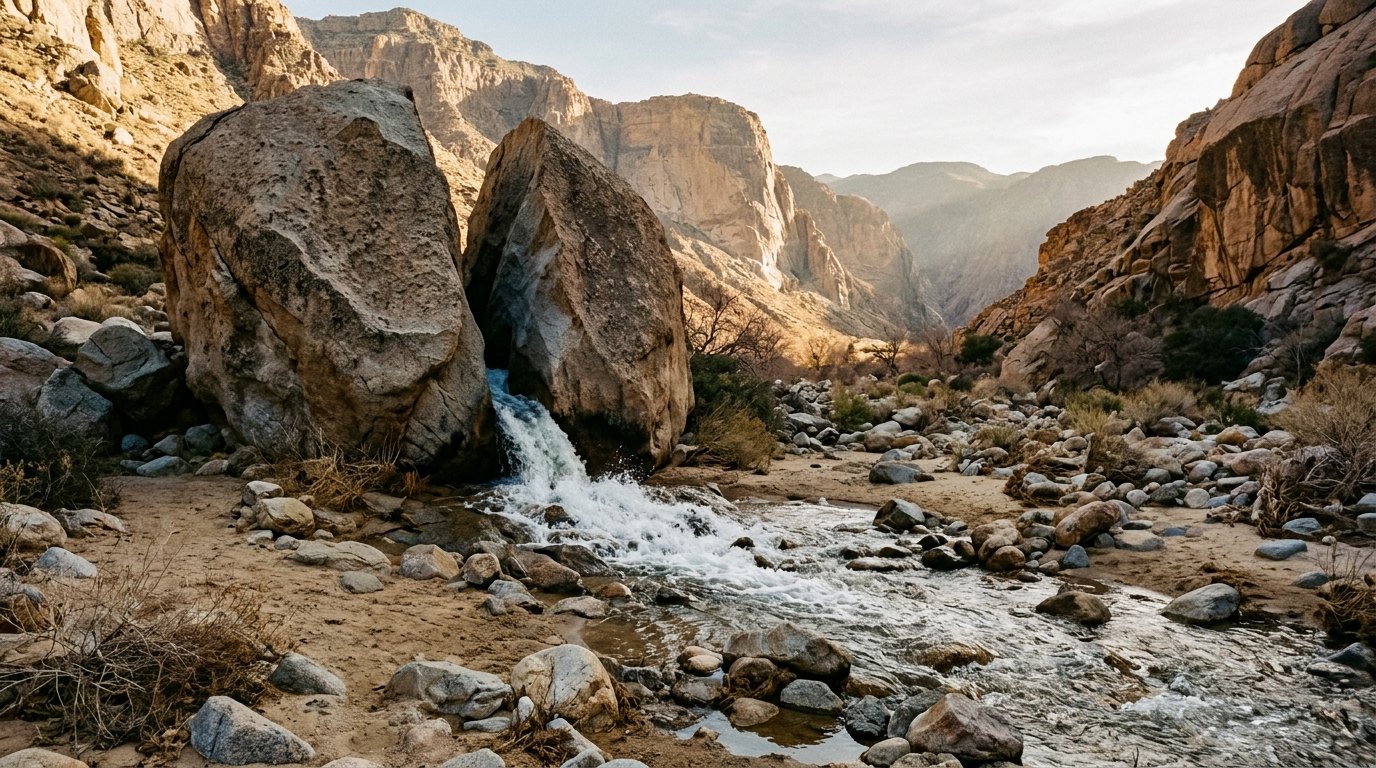
Then the LORD said to Moses, “I will rain down bread from heaven for you. The people are to go out each day and gather enough for that day. In this way I will test them and see whether they will follow my instructions.
Exodus 16:4 (NIV)
God disciplines and feeds His redeemed assembly by raining daily bread straight from heaven.
In the arid wasteland, God sustained His newly redeemed nation by tangible miracles: 'Behold, I will rain bread from heaven for you' (Exodus 16:4). When the people arrived at the bitter springs of Marah and grumbled in thirst, the Lord instructed Moses to throw a piece of wood into the waters, and the bitter became sweet (Exodus 15:25). Soon after, the congregation faced starvation in the wilderness of Sin, and God responded with daily provision, covering the camp with dew that left fine flakes of manna on the desert floor (Exodus 16:14-18). This heavenly bread was given to test whether they would trust and obey His instruction on a daily basis (Exodus 16:4). Centuries later, Jesus revealed the true antitype of this desert sustenance: His Father gives the true Bread from heaven, for Christ Himself is the Bread of Life who satisfies the hungry soul forever (John 6:32-35). When the camp lacked water at Rephidim, the Lord commanded Moses to take his staff and strike the flint rock at Horeb in the presence of the elders; as the rock was struck, life-giving water gushed out to quench the thirst of the multitude (Exodus 17:6). The apostle Paul directly identified this mystery, declaring that the spiritual Rock that accompanied Israel through the desert was none other than Christ Himself (1 Corinthians 10:3-4). When Amalek attacked the weary pilgrims, Moses held up the staff of God until sunset, securing victory and erecting an altar named Yahweh-Nissi, the Lord Is My Banner (Exodus 17:15). In every trial, God showed that His redeemed people do not live by bread alone, but by every word that proceeds from His mouth.
| Passage | What it says | Fulfilled |
|---|---|---|
| Exodus 15:25 | Moses casts a tree into the bitter waters of Marah, and the water is made sweet. | |
| Exodus 16:4 | The Lord promises to rain bread from heaven to test whether the people will walk in His law. | John 6:31-35 |
| Exodus 17:6 | Moses strikes the rock at Horeb before the elders, and drinking water pours forth for the congregation. | 1 Corinthians 10:4 |
| Exodus 17:15 | Moses builds an altar after victory over Amalek and names it Yahweh-Nissi, the Lord is my banner. | |
| Exodus 16:14-18 | The Lord provides manna daily, teaching dependence and gathering according to need. | |
| John 6:32-35 | Jesus reveals Himself as the true Bread from heaven that gives eternal life. | |
| 1 Corinthians 10:3-4 | Paul records that the spiritual Rock that followed Israel in the desert was Christ. |
Sinai and the Law
A Holy Nation Bound in Solemn Covenant

Now if you obey me fully and keep my covenant, then out of all nations you will be my treasured possession. Although the whole earth is mine, you will be for me a kingdom of priests and a holy nation.’ These are the words you are to speak to the Israelites.”
Exodus 19:5-6 (NIV)
This charter defines Israel's identity and mission as a treasured possession, a kingdom of priests, and a holy nation.
At the foot of the trembling mountain, the Lord announces Israel’s supreme calling in Exodus 19:5-6, declaring that if they keep His covenant, they will be His treasured possession, a kingdom of priests, and a holy nation. In Exodus 19:5, God establishes this covenant status on the basis of grace, while Exodus 19:6 consecrates the entire assembly to represent Him before all nations. Deliverance from Egypt was never an end in itself; it was the gracious prelude to holy communion with the living God.
The moral architecture of this covenant begins in Exodus 20:1-2, where the Lord grounds all moral obligation in redemption: He is the God who brought them out of the land of slavery. In Exodus 20:3-17, the Ten Commandments unfold this redemption into comprehensive worship and neighbour-love, forbidding idolatry, Sabbath desecration, murder, theft, and covetousness. The covenant statutes extend to the vulnerable, warning in Exodus 22:22-23 that God unfailingly hears the cry of afflicted widows and fatherless children. Israel accepts these demands in Exodus 24:7, pledging absolute obedience to everything the Lord spoke.
Yet sinful humanity cannot stand before a holy God apart from atoning sacrifice. In Exodus 24:8, Moses sprinkles the blood of the covenant upon the people, sealing their relationship to the Lord. As Hebrews 9:19-22 explains, this dedication with sacrificial blood pointed forward to the true cleansing accomplished through Christ’s blood. Because of that superior sacrifice, 1 Peter 2:9 reveals that the church now shares these very titles, serving as a royal priesthood to proclaim His praises.
| Passage | What it says |
|---|---|
| Exodus 19:5 | The Lord promises that if Israel obeys His voice and keeps His covenant, they will be His special treasure. |
| Exodus 19:6 | Israel is consecrated to become a kingdom of priests and a holy nation unto the Lord. |
| Exodus 20:1-2 | God speaks the Ten Commandments, grounding all moral duty in His prior act of rescuing them from Egypt. |
| Exodus 22:22-23 | The law warns that if Israel afflicts widows or fatherless children, God will surely hear their cry. |
| Exodus 24:7 | Moses reads the Book of the Covenant and the people pledge solemn obedience to all the Lord spoke. |
| Exodus 24:8 | Moses sprinkles the sacrificial blood upon the people, sealing the covenant made at Sinai. |
| Exodus 20:3-17 | God speaks the Ten Commandments setting forth devotion to Him and love toward neighbor. |
| Hebrews 9:19-22 | The first covenant was dedicated with blood, foreshadowing purification through Christ's offering. |
| 1 Peter 2:9 | Peter applies the Exodus titles of royal priesthood and holy nation to God's redeemed people. |
The Tabernacle Glory
God Dwells in the Midst of His People
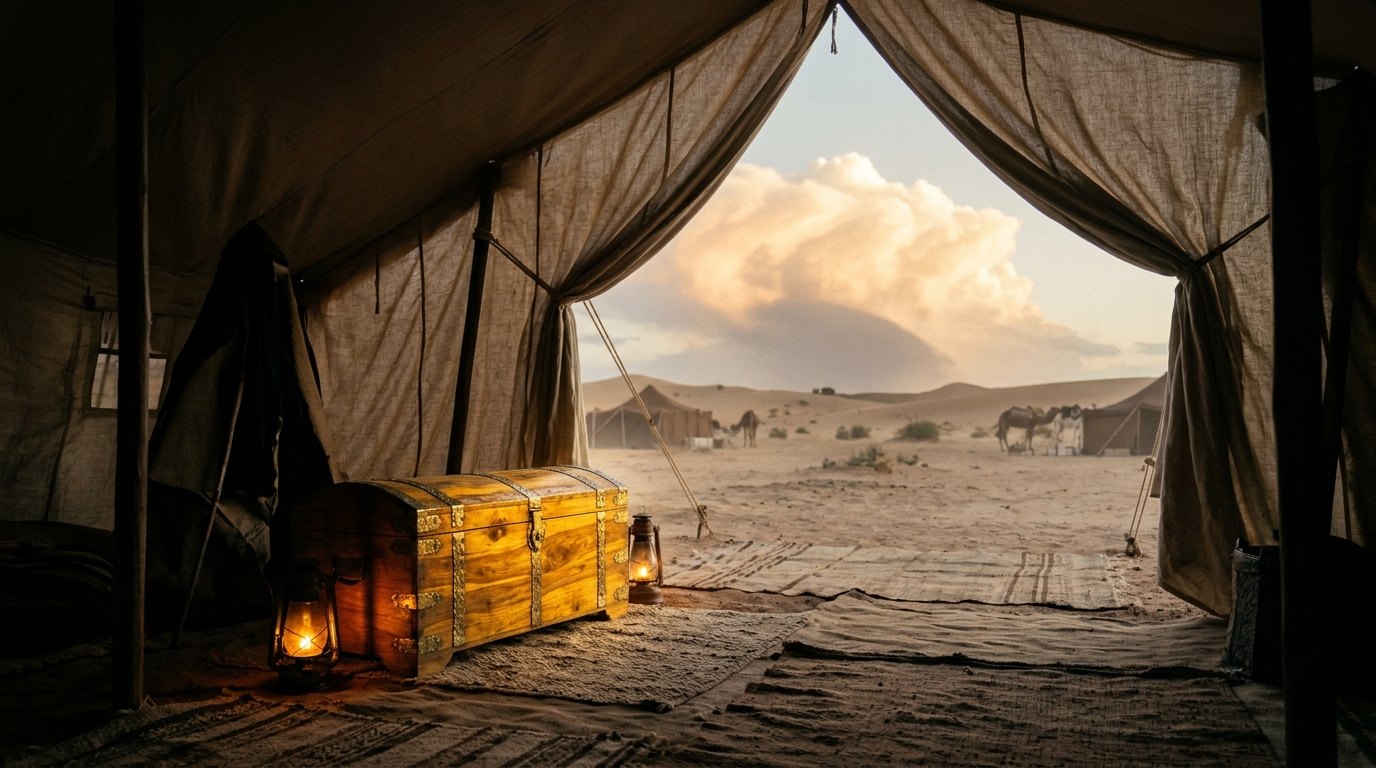
“Then have them make a sanctuary for me, and I will dwell among them.
Exodus 25:8 (NIV)
The ultimate aim of the entire Exodus deliverance is that the holy Creator may dwell in the midst of His redeemed people.
The ultimate goal of Israel's deliverance is revealed in Exodus 25:8, where the Lord commands His people to construct a sanctuary so that He may dwell in their midst. In Exodus 25:22, God appoints the mercy seat between the golden cherubim as the meeting place where He will speak to Moses, a type fulfilled when Christ was put forward as our propitiatory mercy seat (Romans 3:25) and opened bold access to the throne of grace (Hebrews 4:16). This holy presence is rooted in Exodus 29:43-46, where God consecrates the tent so that Israel may know He is the Lord who brought them out of Egypt to dwell among them.
When Moses ascends to receive the law anew, the Lord proclaims His sovereign character in Exodus 34:6-7, revealing Himself as merciful, gracious, and slow to anger, yet by no means clearing the guilty. This union of radiant grace and unbending truth finds its absolute embodiment in the Incarnation, where grace and truth came through Jesus Christ (John 1:17).
When the craftsmanship is complete, Exodus 40:34 records the glorious climax: the cloud covers the tent of meeting and the glory of the Lord fills the tabernacle. The radiance is so overwhelming that in Exodus 40:35, Moses cannot even enter the tent. This earthly dwelling was a copy and shadow of the true heavenly tabernacle (Hebrews 8:1-5). It pointed to the day when the Word became flesh and tabernacled among us (John 1:14), anticipation that will reach its final consummation when the dwelling of God is forever with man in the new creation (Revelation 21:3).
| Passage | What it says | Fulfilled |
|---|---|---|
| Exodus 25:8 | The Lord instructs Israel to construct a sanctuary so that He may dwell among them. | John 1:14, Revelation 21:3 |
| Exodus 25:22 | The Lord promises to meet and speak with Moses from above the mercy seat between the cherubim. | Romans 3:25, Hebrews 4:16 |
| Exodus 34:6-7 | The Lord proclaims His name before Moses as merciful, gracious, longsuffering, yet by no means clearing the guilty. | John 1:17 |
| Exodus 40:34 | The cloud covers the tent of meeting, and the glory of the Lord fills the completed tabernacle. | John 1:14 |
| Exodus 40:35 | Moses is unable to enter the tent of meeting because the glory of the Lord saturates the sanctuary. | |
| Exodus 29:43-46 | God sanctifies the tent of meeting so He may dwell among Israel as their God. | |
| John 1:14 | The Word became flesh and tabernacled among us, and we beheld His glory. | |
| Hebrews 8:1-5 | The earthly tabernacle served as a copy and shadow of the heavenly sanctuary. | |
| Revelation 21:3 | The dwelling place of God is fully realized with man in the new creation. |
Apostasy and Intercession
Rebellion at Sinai Meets Sovereign Mercy and Covenant Renewal
But now, please forgive their sin—but if not, then blot me out of the book you have written.”
Exodus 32:32 (NIV)
Moses stands in the breach as intercessor, willing to be blotted out for Israel's atonement.
The height of Israel's covenant privilege stands beside the tragedy of human fickleness in Exodus 32:1-6, where the newly delivered nation fashions a golden calf and worships an idol at the foot of the mountain. In the face of righteous divine judgment, Exodus 32:32 records the supreme cry of pastoral intercession, as Moses pleads for the people’s pardon, asking that his own name be blotted out from God’s book if atonement cannot be made. Moses’ willingness to sacrifice himself in Exodus 32:30-32 demonstrates the depth of priestly love and foreshadows the true Mediator who would actually bear the curse to deliver His transgressing people.
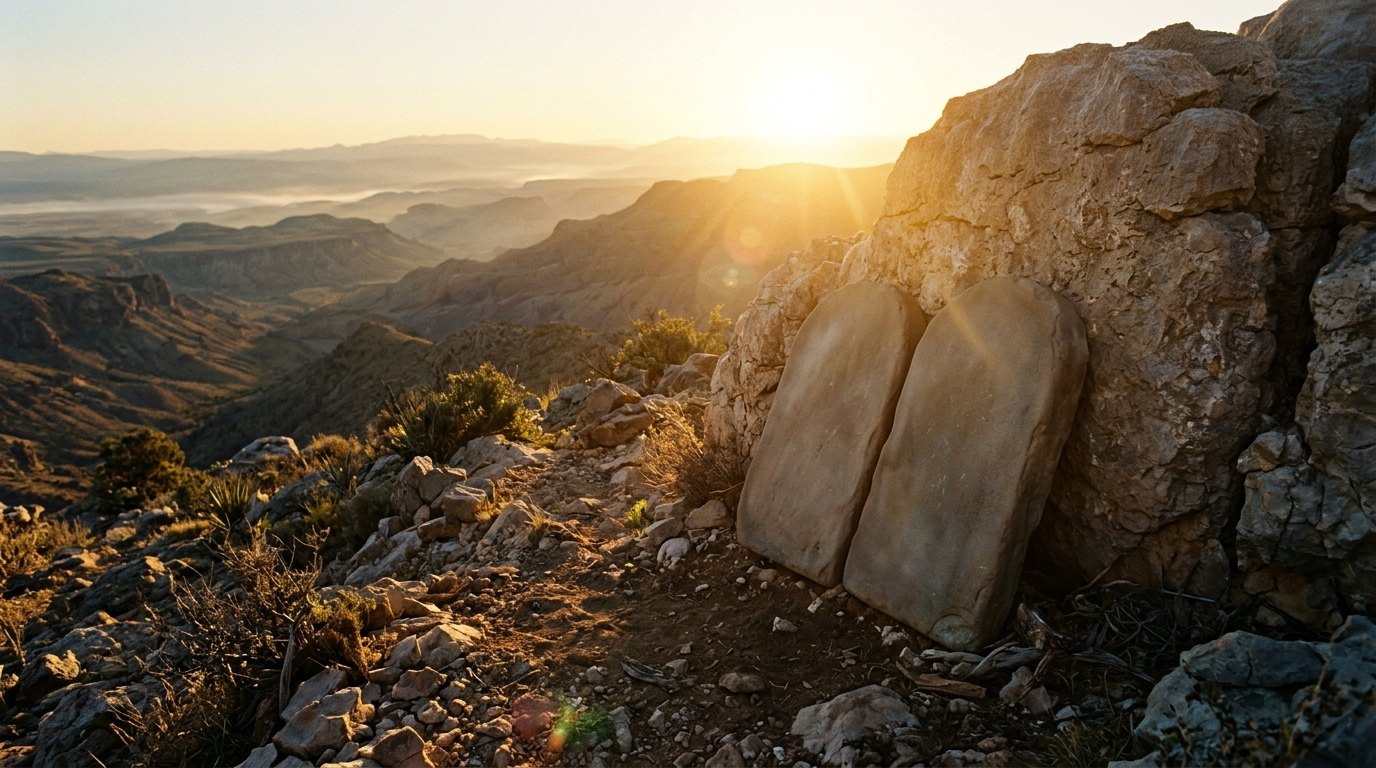
God responds to Moses’ desperate supplication in Exodus 33:14-16, assuring him that His presence will go with Israel, for it is nothing other than God’s abiding presence that distinguishes them from all other peoples on the face of the earth. In sovereign grace, the Lord commands the carving of two new stone tablets in Exodus 34:1-4, graciously renewing the covenant Israel had shattered.
When Moses descends the mountain with the renewed covenant in Exodus 34:29-35, his face shines with reflected glory after communing directly with the Lord, requiring him to wear a veil before the people. As the apostle Paul explains in 2 Corinthians 3:12-18, this fading outward glory pointed toward the far greater and permanent glory of the New Covenant, where believers gaze with unveiled faces upon the glory of the Lord and are transformed into His image from one degree of glory to another.
| Passage | What it says |
|---|---|
| Exodus 32:1-6 | Israel breaks the covenant by fashioning and worshiping the golden calf at Sinai's foot. |
| Exodus 32:30-32 | Moses offers his own life to make atonement for the people's grievous sin. |
| Exodus 33:14-16 | God promises His presence will go with Israel, distinguishing them from all other peoples. |
| Exodus 34:1-4 | The Lord commands two new stone tablets to replace those broken, renewing the covenant. |
| Exodus 34:29-35 | Moses' face shines with reflected glory after communing with the Lord on the mountain. |
Where in the Bible
| Book | Passages |
|---|---|
| Genesis | 1 · Genesis 15:13-14 |
| Exodus | 47 · Exodus 1:8, Exodus 1:12, Exodus 1:22, Exodus 2:23, Exodus 2:24, Exodus 2:25, Exodus 2:10, Exodus 3:2, Exodus 3:7, Exodus 3:8, Exodus 3:14, Exodus 4:12, Exodus 4:1-5, Exodus 6:6-8, Exodus 7:5, Exodus 12:5, Exodus 12:7, Exodus 12:13, Exodus 14:21, Exodus 14:30, Exodus 15:1, Exodus 12:1-2, Exodus 12:21-23, Exodus 12:46, Exodus 15:25, Exodus 16:4, Exodus 17:6, Exodus 17:15, Exodus 16:14-18, Exodus 19:5, Exodus 19:6, Exodus 20:1-2, Exodus 22:22-23, Exodus 24:7, Exodus 24:8, Exodus 20:3-17, Exodus 25:8, Exodus 25:22, Exodus 34:6-7, Exodus 40:34, Exodus 40:35, Exodus 29:43-46, Exodus 32:1-6, Exodus 32:30-32, Exodus 33:14-16, Exodus 34:1-4, Exodus 34:29-35 |
| Nehemiah | 1 · Nehemiah 9:9 |
| Psalms | 1 · Psalms 106:44 |
| John | 2 · John 6:32-35, John 1:14 |
| Acts | 2 · Acts 7:17-19, Acts 7:30-35 |
| 1 Corinthians | 2 · 1 Corinthians 5:7, 1 Corinthians 10:3-4 |
| Hebrews | 3 · Hebrews 11:28, Hebrews 9:19-22, Hebrews 8:1-5 |
| 1 Peter | 1 · 1 Peter 2:9 |
| Revelation | 1 · Revelation 21:3 |
The story in order
- Israel enslaved in Egypt (c. 1800 BC) · Exodus 1:8 · A new king oppresses Joseph's descendants, initiating brutal subjugation.
- God hears Israel's groaning (c. 1450 BC) · Exodus 2:24 · God remembers His covenant and hears the cry of His suffering people.
- Moses called by the burning bush (c. 1450 BC) · Exodus 3:2 · God appears in fire, revealing His name and commissioning Moses.
- The Passover instituted (c. 1450 BC) · Exodus 12:1-2 · God reorders Israel's calendar around their redemption by blood.
- Israel delivered from Egypt (c. 1450 BC) · Exodus 14:30 · The Lord saves Israel from the Egyptians by the Red Sea.
- Wilderness provision: Manna (c. 1450 BC) · Exodus 16:4 · God rains bread from heaven to test His people's obedience.
- Wilderness provision: Water from rock (c. 1450 BC) · Exodus 17:6 · Moses strikes the rock, and water pours forth for the congregation.
- Covenant at Sinai (c. 1450 BC) · Exodus 19:5 · God makes Israel a holy nation, bound by His law and covenant.
- Golden Calf Apostasy (c. 1450 BC) · Exodus 32:1-6 · Israel rebels, worshipping a golden calf at the foot of Sinai.
- Tabernacle construction begins (c. 1450 BC) · Exodus 25:8 · Israel is instructed to build a sanctuary for God to dwell among them.
- Glory fills the Tabernacle (c. 1450 BC) · Exodus 40:34 · The cloud covers the tent, and the glory of the Lord fills the sanctuary.
Key words
- Yahweh (YHWH, יהוה)
- The eternal, self-existent God, revealed as 'I AM WHO I AM'. · Exodus 3:14
- Passover (pesach, פֶּסַח)
- The night God passed over Israelite homes marked with lamb's blood, sparing them from the final plague. · Exodus 12:13
- Covenant (berit, בְּרִית)
- A solemn, binding agreement between God and His people, marked by promises and obligations. · Exodus 19:5
- Holy Nation (goy qadosh, גּוֹי קָדוֹשׁ)
- Israel set apart by God to be His special possession, reflecting His holiness. · Exodus 19:6
- Tabernacle (mishkan, מִשְׁכָּן)
- The portable sanctuary God commanded Israel to build, where His presence would dwell among them. · Exodus 25:8
Exodus reveals that our God is never deaf to the affliction of His people, nor is He powerless against the empires that oppress them. The redemption wrought through the blood of the Passover lamb and the parted waters points directly to the greater exodus accomplished by Jesus Christ. In every wilderness trial and covenant command, Exodus invites us to trust the God who delivers us from bondage so that He might dwell with us forever.
61 passages, each cited once.
Scripture cited
- Psalms 145:19
- Psalms 106:44
- Psalms 34:6
- Nehemiah 9:9