What is the book of Hebrews about?
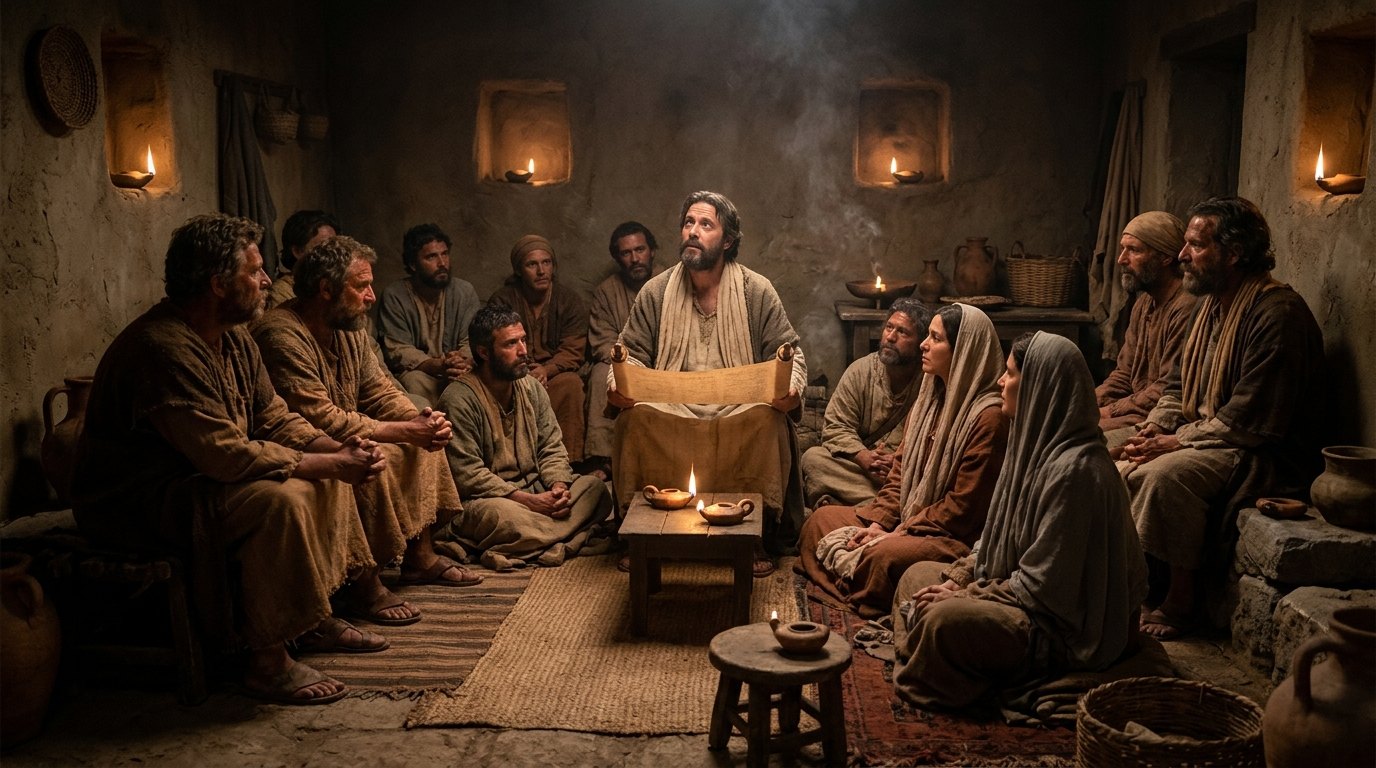
Hebrews 1:1-4
1 In the past God spoke to our ancestors through the prophets at many times and in various ways,
2 but in these last days he has spoken to us by his Son, whom he appointed heir of all things, and through whom also he made the universe.
3 The Son is the radiance of God’s glory and the exact representation of his being, sustaining all things by his powerful word. After he had provided purification for sins, he sat down at the right hand of the Majesty in heaven.
4 So he became as much superior to the angels as the name he has inherited is superior to theirs.
New International Version (NIV)
The answer
The book of Hebrews is about God’s final revelation through Jesus Christ and the call to hold on to him by faith. It explains who Jesus is, what his sacrificial death accomplished, and how believers should live in response.
The letter begins with the central contrast: God formerly spoke through the prophets “at many times and in various ways,” but now “has at the end of these days spoken to us by his Son” (Hebrews 1:1-2). Jesus is the radiance of God’s glory, the exact image of his being, the one who upholds all things, who purified us from sin, and who now sits at God’s right hand (Hebrews 1:3). He is therefore the complete and final revelation of God, superior to the angels and to the former prophetic system (Hebrews 1:4-14).
Why Jesus came
Jesus came because humanity needed a high priest who could deal with sin and weakness. Although God does not spare angels, he helps Abraham’s offspring; for this reason Jesus became like his brothers, so that he might be “a merciful and faithful high priest” who makes atonement for the people’s sins (Hebrews 2:14-17). Through his death and resurrection, he has defeated the devil, delivered those enslaved by fear of death, and become the author of eternal salvation (Hebrews 2:9-10, 14-15; Hebrews 5:9-10).
What the letter calls readers to do
Hebrews repeatedly urges attention, trust, endurance, and faithfulness:
- Attend to God’s word. Because God has spoken through his Son, “we ought to pay greater attention to the things that were heard, lest perhaps we drift away” (Hebrews 2:1).
- Draw near with boldness. Through Jesus’ blood, believers have a new and living way into the holy place, so they should approach “with a true heart in fullness of faith” (Hebrews 10:19-22).
- Do not grow weary. The central image is a race: believers should run “with perseverance,” looking to Jesus, “the author and perfecter of faith” (Hebrews 12:1-2).
- Endure hardship and keep doing good. The letter instructs believers not to forsake gathering together, to provoke one another to love and good works, and to pursue peace and holiness (Hebrews 10:24-25; Hebrews 12:14).
- Receive God’s discipline as sons. Trials are not evidence of abandonment; God disciplines those he loves so that they can share in his holiness (Hebrews 12:5-11).
Faith and God’s promises
Hebrews 11 traces a great cloud of witnesses who lived by faith—Abel, Enoch, Noah, Abraham, and Sarah—showing that faith is the way God’s people receive his promises (Hebrews 11:1-8). The letter grounds this confidence in God’s immutable promise: his word cannot lie, and hope in Christ is an “anchor of the soul,” entering into the presence of God behind the veil (Hebrews 6:17-20).
The warning and the closing call
Hebrews is not merely encouragement; it carries serious warning. Those who reject God’s Son and insult the Spirit of grace face judgment (Hebrews 10:26-31). The letter also contrasts Mount Sinai with Mount Zion and the heavenly Jerusalem, where Jesus is the mediator of a new covenant (Hebrews 12:18-24). Christians therefore receive “a Kingdom that can’t be shaken” and serve God “with reverence and awe” (Hebrews 12:28).
Its closing chapter turns exhortation into everyday practice: continue brotherly love, show hospitality, remember those who suffer, honor marriage, avoid the love of money, share and do good, and remain faithful to Jesus, who “is the same yesterday, today, and forever” (Hebrews 13:1-8, 16, 18).
In one sentence: Hebrews argues that God has spoken finally in Jesus, that Jesus has opened the way to God and dealt with sin, and that his people should therefore trust him, endure to the end, and live faithfully in his kingdom.
Answered from Scripture · reviewed November 10, 2026
The book of Hebrews is a majestic proclamation of God's final, supreme revelation through His Son, Jesus Christ. Written to believers tempted to drift or retreat under pressure, it shows how every shadow of the old covenant finds its permanent substance and perfection in Christ. To understand Hebrews is to see Jesus as our ultimate Prophet, eternal King, and faithful High Priest who secures an unshakable kingdom.
The Final Word
God Has Spoken His Definitive Word in His Son
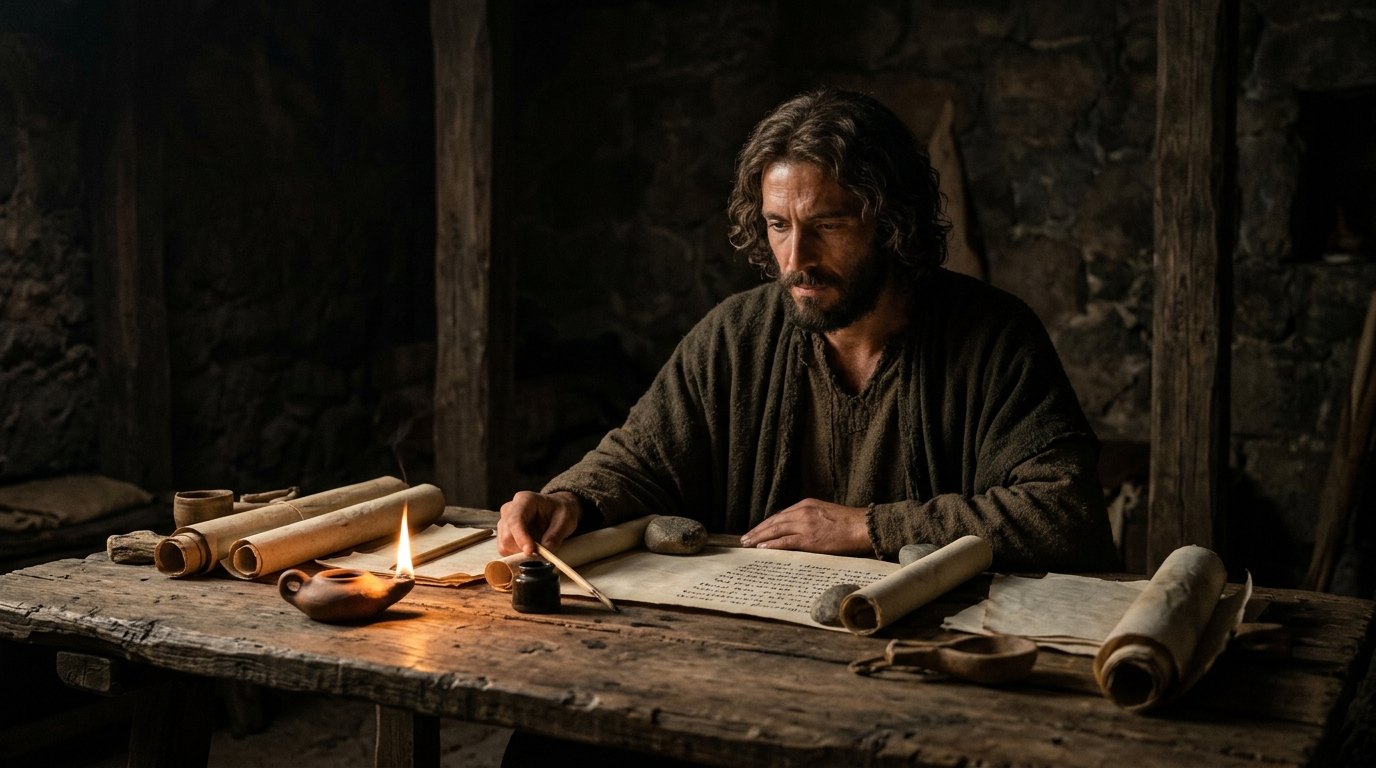
In the past God spoke to our ancestors through the prophets at many times and in various ways, but in these last days he has spoken to us by his Son, whom he appointed heir of all things, and through whom also he made the universe. The Son is the radiance of God’s glory and the exact representation of his being, sustaining all things by his powerful word. After he had provided purification for sins, he sat down at the right hand of the Majesty in heaven.
Hebrews 1:1-3 (NIV)
It establishes Christ as the radiance of God's glory, the Creator, sustainer, and final revelation surpassing all former prophetic speech.
The epistle opens not with a casual greeting but with a thunderous declaration of divine finality: God has spoken decisively and fully through His Son. As Hebrews 1:1-3 proclaims, the partial, multifaceted disclosures given through the ancient prophets have reached their climax in Christ, who is the exact representation of God's nature and the radiant beam of His uncreated glory. Jesus is not merely another messenger in the line of prophetic heralds; He is the Creator who spoke galaxies into being, the King who sustains all things by the word of His power, and the Redeemer who personally purged our sins before taking His seat at the right hand of the Majesty on high.
Because the Son reigns supreme, He possesses a name and an inheritance that outshines every celestial being. In Hebrews 1:4-14, the author weaves a tapestry of royal Psalms to demonstrate that the angels, majestic as they are, are merely ministering spirits sent to serve the redeemed, while the Son receives their universal worship and rules upon an everlasting throne. Therefore, Hebrews 2:1-4 issues the epistle's first urgent warning: believers must anchor themselves firmly to what they have heard, lest they slowly drift away from so great a salvation confirmed by eyewitnesses and authenticated by the Holy Spirit.
| Passage | What it says |
|---|---|
| Hebrews 1:1-3 | God, who spoke through the prophets in fragments, has spoken completely through His Son, who upholds creation and purged sins. |
| Hebrews 1:4-14 | Jesus possesses a name far superior to the angels, who worship Him as the eternal Lord and ministering spirits serving believers. |
| Hebrews 2:1-4 | A solemn warning urges believers not to drift from the great salvation first declared by the Lord and confirmed by signs. |
The Merciful High Priest
Christ Took on Flesh to Defeat Death and Sin
Since the children have flesh and blood, he too shared in their humanity so that by his death he might break the power of him who holds the power of death—that is, the devil— and free those who all their lives were held in slavery by their fear of death. For surely it is not angels he helps, but Abraham’s descendants. For this reason he had to be made like them, fully human in every way, in order that he might become a merciful and faithful high priest in service to God, and that he might make atonement for the sins of the people.
Hebrews 2:14-17 (NIV)
It reveals the necessity of the incarnation: Christ shared human blood and flesh to destroy the devil and become a merciful High Priest.
To rescue fallen humanity, the eternal Son did not come in untouchable, distant glory; Christ took on genuine human flesh and blood to taste death for every soul. Hebrews 2:14-17 highlights the absolute necessity of the incarnation, explaining that the devil held the human race in lifelong bondage through the dread of physical and eternal demise. By stepping directly into mortal fragility, Jesus disarmed Satan at the cross, transforming the grave from a terrifying prison into the threshold of everlasting triumph.
This sovereign descent fulfills man's intended dominion over the created order, as Hebrews 2:5-9 contemplates the paradox of Jesus being made lower than the angels for a short season, only to be crowned with transcendent honor. In Hebrews 2:10-13, the pioneer of our salvation is forged into perfection through His trials, standing unashamed to claim flawed disciples as His own brothers before the Father. Because He experienced genuine suffering, hunger, and temptation without yielding to sin, Hebrews 2:14-18 assures us that Jesus is a faithful and tender High Priest, intimately equipped to rush to the aid of all who are battered by temptation.
| Passage | What it says |
|---|---|
| Hebrews 2:5-9 | Jesus was crowned with glory and honor after tasting death for everyone, bringing mankind's destined dominion to fruition. |
| Hebrews 2:10-13 | The Captain of salvation was made perfect through suffering, unashamed to call those He sanctifies His brothers. |
| Hebrews 2:14-18 | By death Christ rendered Satan powerless, freed slaves of fear, and became a merciful, faithful High Priest able to aid the tempted. |
Superior to Moses
Jesus Builds the House and Offers True Sabbath Rest
Therefore, since the promise of entering his rest still stands, let us be careful that none of you be found to have fallen short of it. For we also have had the good news proclaimed to us, just as they did; but the message they heard was of no value to them, because they did not share the faith of those who obeyed. Now we who have believed enter that rest, just as God has said, “So I declared on oath in my anger, ‘They shall never enter my rest.’ ” And yet his works have been finished since the creation of the world.
Hebrews 4:1-3 (NIV)
It shows that the promised rest of God remains open, entered only by personal faith rather than mere physical lineage.
Turning to Israel's foundational leader, the author reveals that Jesus surpasses Moses as the Son who owns and builds the house. While Moses served faithfully as an honored servant within God's household as recorded in Numbers 12:7, Hebrews 3:1-6 shows that Christ is the divine Architect who rules over God's people. This contrast summons a somber wilderness recollection: Hebrews 3:7-19 quotes Psalms 95:7-11 to recount how the Exodus generation hardened their hearts through unbelief, dropping lifeless in the sands and failing to enter the earthly rest of Canaan.
Hebrews 4:1-3 makes plain that this promise of rest was never exhausted by ancient borders or physical conquests. Though Joshua led Israel across the Jordan as recalled in Joshua 22:4, Hebrews 4:1-11 explains that a truer, spiritual Sabbath rest remains open for all who rest from self-righteous labor, pointing directly to the spiritual rest promised in Matthew 11:28. To discern our inner allegiance, Hebrews 4:12-16 presents the Word of God as a two-edged blade that exposes every motive, while simultaneously inviting us to approach the throne of grace with unwavering boldness.
| Passage | What it says | Fulfilled |
|---|---|---|
| Hebrews 3:1-6 | While Moses served faithfully as a servant in God's house, Christ reigns faithfully over God's house as a Son. | Numbers 12:7 |
| Hebrews 3:7-19 | Israel's unbelief in the wilderness barred them from Canaan, warning believers against an evil, unbelieving heart that departs from God. | Psalms 95:7-11 |
| Hebrews 4:1-11 | Joshua did not give the ultimate rest, for a Sabbath rest remains for the obedient people of God in Christ. | Joshua 22:4, Matthew 11:28 |
| Hebrews 4:12-16 | God's living word pierces the soul, yet believers may boldly approach grace because our High Priest sympathizes with our weakness. |
Order of Melchizedek
An Eternal Priesthood That Surpasses Aaron
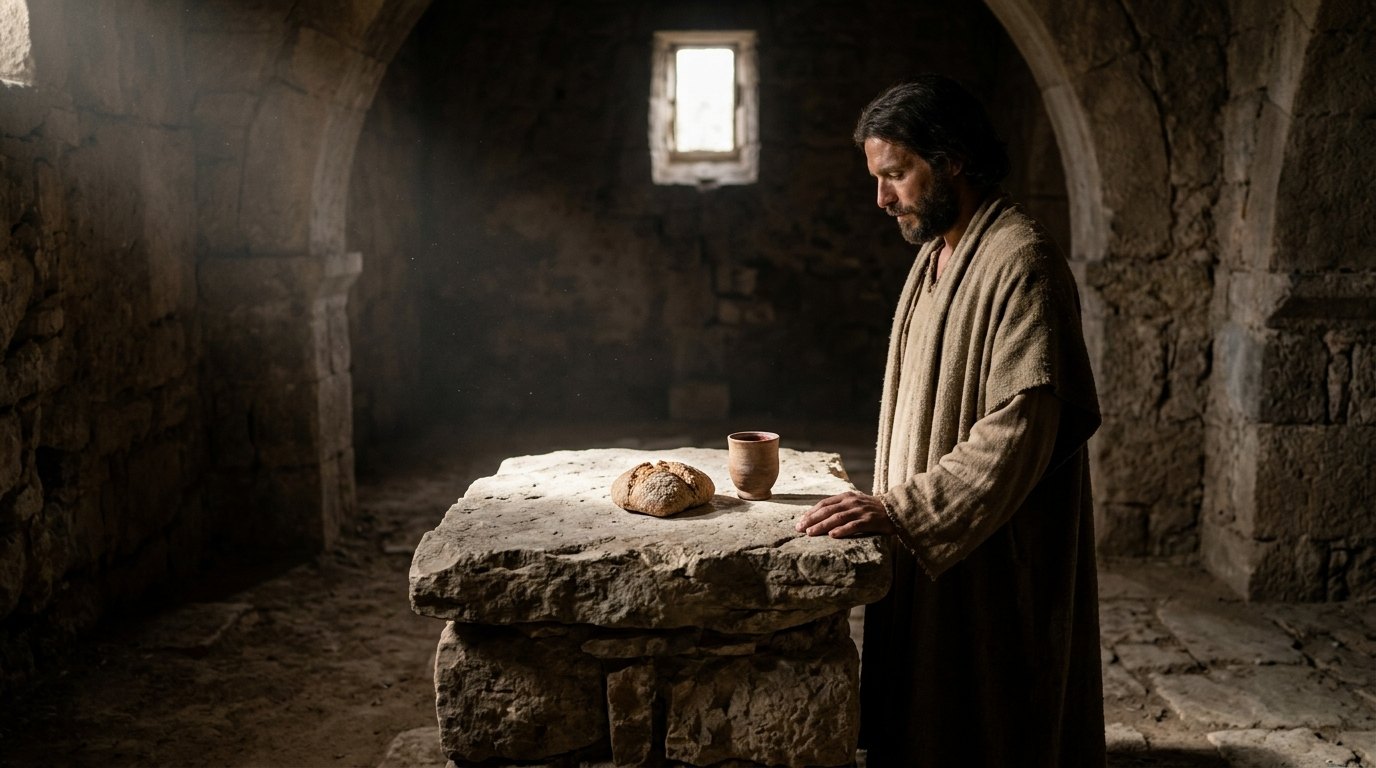
Now there have been many of those priests, since death prevented them from continuing in office; but because Jesus lives forever, he has a permanent priesthood. Therefore he is able to save completely those who come to God through him, because he always lives to intercede for them.
Hebrews 7:23-25 (NIV)
It contrasts mortal Levitical priests with Jesus, whose permanent priesthood enables Him to save completely all who come to God.
The architectural center of Hebrews unfolds around an ancient mystery: Christ holds an indestructible, perpetual priesthood after the order of Melchizedek. Under the old dispensation, priests died and left their duties unfinished, but Hebrews 7:23-25 proclaims that Jesus lives forever, enabling Him to save to the uttermost everyone who draws near to God. Hebrews 5:1-10 shows that Jesus did not seize this dignity for Himself; rather, the Father consecrated Him through deep agonies, fulfilling Psalms 2:7 and the royal priestly decree of Psalms 110:4.
After rebuking spiritual stagnation in Hebrews 5:11-14 and urging steadfast maturity in Hebrews 6:1-12, the author points to God's immutable oath to Abraham in Genesis 22:16-17. Through that pledge, Hebrews 6:13-20 anchors our souls behind the heavenly curtain where Jesus has entered on our behalf. Finally, Hebrews 7:1-10 recalls Genesis 14:18-20, showing how Abraham bowed to Melchizedek, proving that this ancient, unrecorded lineage outranks the Levitical code. As Hebrews 7:11-28 concludes, the weak Levitical succession is retired by the sworn oath of Psalms 110:4, leaving us with an immaculate High Priest who offers unending intercession.
| Passage | What it says | Fulfilled |
|---|---|---|
| Hebrews 5:1-10 | Appointed by God rather than self-exalted, Christ learned obedience through suffering and was designated High Priest after Melchizedek's order. | Psalms 2:7, Psalms 110:4 |
| Hebrews 6:13-20 | God's sworn oath to Abraham provides an unshakeable anchor for the soul entering within the veil where Jesus has gone. | Genesis 22:16-17 |
| Hebrews 7:1-10 | Abraham paid tithes to Melchizedek, demonstrating that this king-priest without recorded genealogy is greater than Levi. | Genesis 14:18-20 |
| Hebrews 7:11-28 | The weak Levitical law is superseded by Christ's indestructible life and divine oath, securing a perpetual, blameless intercessor. | Psalms 110:4 |
| Hebrews 5:11-14 | Rebukes spiritual dullness and calls believers to move beyond milk to mature discernment. | |
| Hebrews 6:1-12 | Warns against falling away from Christ and urges full assurance of hope through faith and patience. |
A Better Covenant
Christ's Perfect Blood Purges the Heavenly Sanctuary
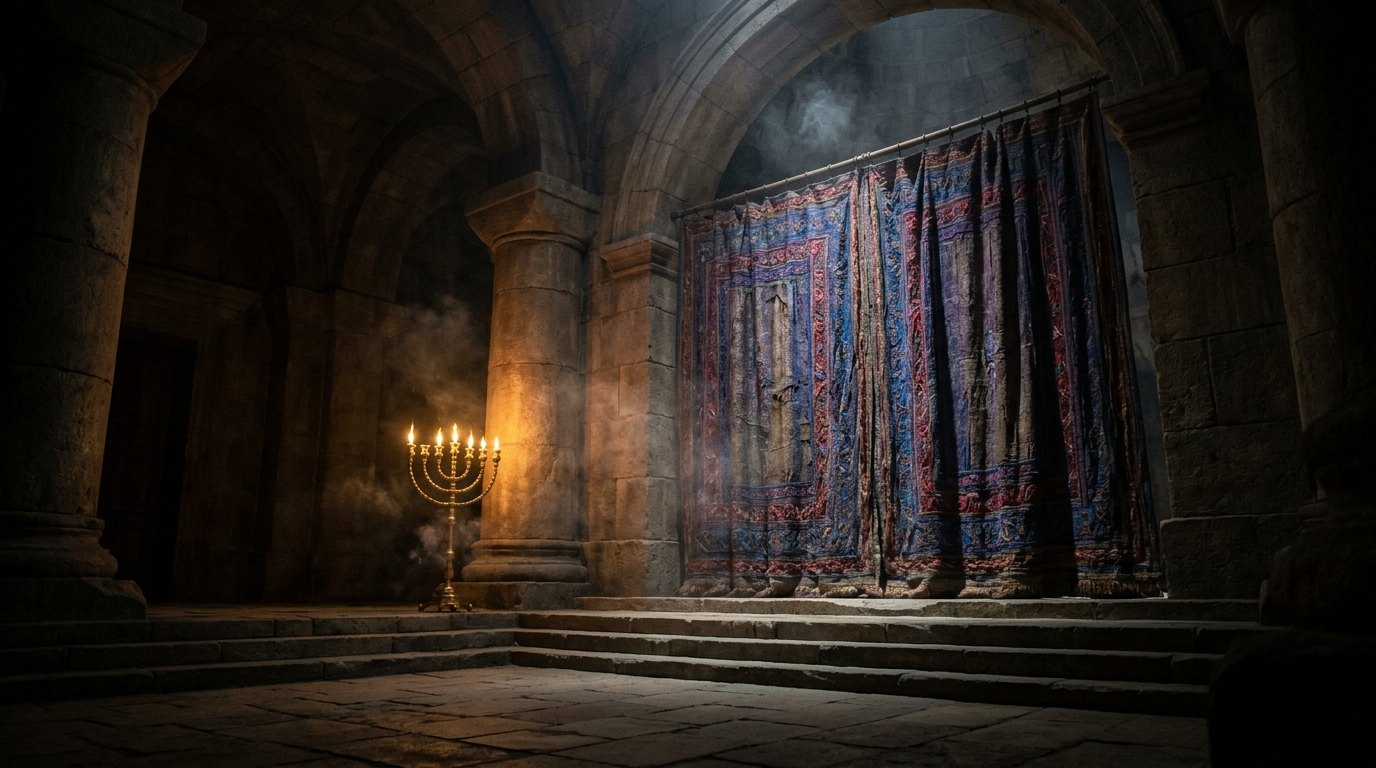
But when Christ came as high priest of the good things that are now already here, he went through the greater and more perfect tabernacle that is not made with human hands, that is to say, is not a part of this creation. He did not enter by means of the blood of goats and calves; but he entered the Most Holy Place once for all by his own blood, thus obtaining eternal redemption. The blood of goats and bulls and the ashes of a heifer sprinkled on those who are ceremonially unclean sanctify them so that they are outwardly clean. How much more, then, will the blood of Christ, who through the eternal Spirit offered himself unblemished to God, cleanse our consciences from acts that lead to…
Hebrews 9:11-14 (NIV)
It contrasts animal blood with Christ offering Himself through the eternal Spirit to cleanse the conscience from dead works.
The heartbeat of Hebrews beats strongest in Hebrews 9:11-14, where the author draws a definitive line between earthly rituals and heavenly realities: Christ offered Himself unblemished to God through the eternal Spirit, purifying our consciences from dead works to serve the living God. The Levitical system pointed beyond itself; its repetitive sacrifices were merely copies of true celestial things. In Hebrews 8:1-6, Christ serves as the mediator of a far better covenant enacted on better promises, fulfilling the earthly pattern shown on the mountain (Exodus 25:40). Hebrews 8:7-13 quotes the promise of Jeremiah 31:31-34, proving that God intended a new covenant written directly on human hearts, thereby setting aside the old order as obsolete.
While the earthly tabernacle held the golden lampstand and the ark, its priests could never open unhindered access to God's presence, as detailed in Hebrews 9:1-10 and typified in Leviticus 16:1-34. The high priest stepped past the heavy veil only once a year, carrying blood not his own. In sharp contrast, Hebrews 9:11-28 proclaims that Jesus entered the true Most Holy Place once for all time with His own shed blood, sealing the covenant foretold in Exodus 24:8. The recurring Day of Atonement served only as an annual reminder of guilt, but Hebrews 10:1-18 explains how Psalm 40:6-8 finds fulfilment in Christ's bodily obedience: by one single offering He has perfected forever those who are being sanctified.
| Passage | What it says | Fulfilled |
|---|---|---|
| Hebrews 8:1-6 | Jesus ministers in the true heavenly tabernacle as mediator of a better covenant founded upon superior promises. | Exodus 25:40 |
| Hebrews 8:7-13 | The Jeremiah prophecy of a new covenant written on hearts renders the first covenant obsolete. | Jeremiah 31:31-34 |
| Hebrews 9:1-10 | The earthly tabernacle and its repetitive rituals could never truly clear the worshipper's conscience. | Leviticus 16:1-34 |
| Hebrews 9:11-28 | Christ entered heaven with His own blood once for all, taking away sin and awaiting His return for salvation. | Exodus 24:8 |
| Hebrews 10:1-18 | Animal sacrifices only recalled sin yearly, whereas Christ offered one single sacrifice forever, perfecting those who are sanctified. | Psalms 40:6-8 |
Cloud of Witnesses
Faith Endures Trials by Looking to Jesus
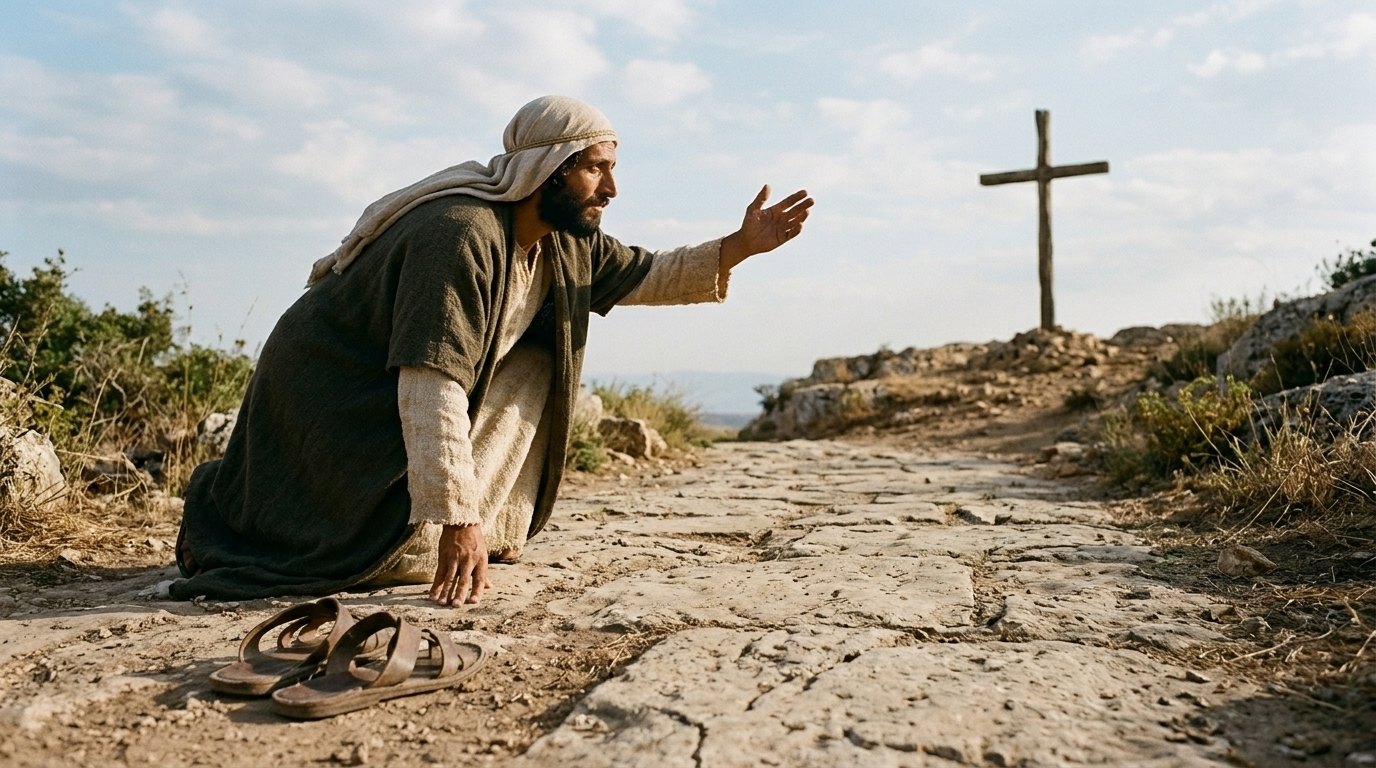
Therefore, since we are surrounded by such a great cloud of witnesses, let us throw off everything that hinders and the sin that so easily entangles. And let us run with perseverance the race marked out for us, fixing our eyes on Jesus, the pioneer and perfecter of faith. For the joy set before him he endured the cross, scorning its shame, and sat down at the right hand of the throne of God.
Hebrews 12:1-2 (NIV)
It summons believers to strip off every encumbrance and run the race looking directly to Jesus, who endured the cross.
The call to perseverance culminates in Hebrews 12:1-2, urging us to run our assigned race fixing our eyes on Jesus, the pioneer and perfecter of faith, who for the joy set before Him endured the cross and sat down at God's right hand. Because Christ's blood grants bold access to the heavenly sanctuary, Hebrews 10:19-25 charges the church to draw near in full assurance of faith, hold fast their confession without wavering, and stir up one another to love and good deeds.
Turning back to empty shadows carries grave peril. Hebrews 10:26-39 warns that despising the blood of the covenant invites fearful judgment, reminding believers of their past endurance when they joyfully accepted the seizure of their property because they possessed a better and lasting inheritance. Hebrews 11:1-40 then unveils the great cloud of witnesses—Abel, Enoch, Noah, Abraham, Sarah, and Moses, alongside unnamed prophets and martyrs who were sawed in two or wandered in caves. They lived by faith as strangers on earth, desiring a better, heavenly country. Their enduring testimony proves that faith clings to God's unseen promises, strengthening our weary hands and feeble knees as Hebrews 12:1-3 calls us to endure hostile opposition without growing weary or losing heart.
| Passage | What it says |
|---|---|
| Hebrews 10:19-25 | Having confidence through Christ's blood, believers are commanded to draw near, hold fast, and assemble together encouraging one another. |
| Hebrews 10:26-39 | Willful sin brings terrifying judgment, calling believers to recall former endurance and live by faith without shrinking back. |
| Hebrews 11:1-40 | The great catalogue of patriarchs, prophets, and martyrs demonstrates faith as substance of things hoped for despite earthly suffering. |
| Hebrews 12:1-3 | Believers must lay aside every weight and run the race with perseverance, fixing their eyes on the pioneer of faith. |
The Unshakable Kingdom
Living as Citizens of the Heavenly Mount Zion
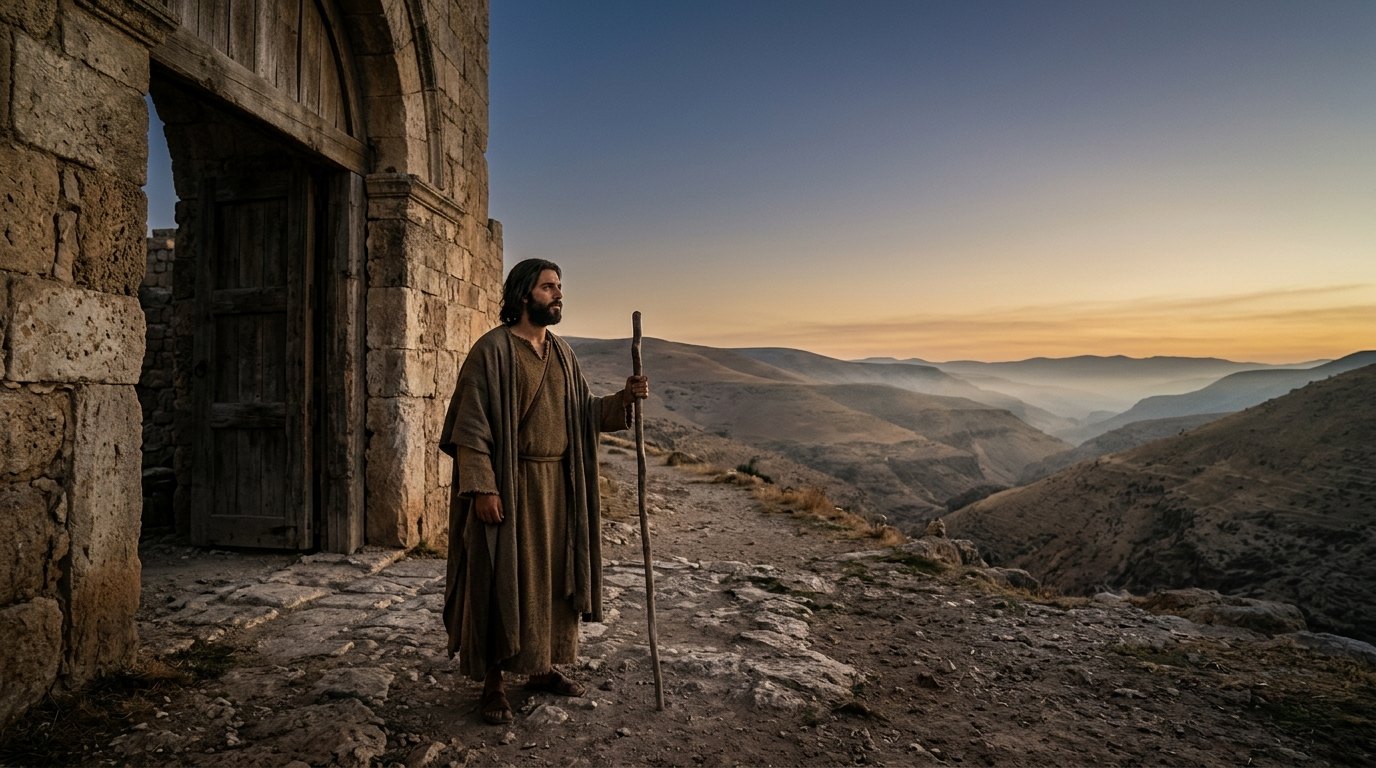
But you have come to Mount Zion, to the city of the living God, the heavenly Jerusalem. You have come to thousands upon thousands of angels in joyful assembly, to the church of the firstborn, whose names are written in heaven. You have come to God, the Judge of all, to the spirits of the righteous made perfect, to Jesus the mediator of a new covenant, and to the sprinkled blood that speaks a better word than the blood of Abel.
Hebrews 12:22-24 (NIV)
It declares that believers have not come to Sinai's terror, but to Mount Zion, heavenly Jerusalem, and Jesus the mediator.
Believers do not approach a mountain wrapped in terrifying darkness and scorching fire, but as Hebrews 12:22-24 declares, you have come to Mount Zion, to the city of the living God, the heavenly Jerusalem, and to Jesus the mediator of a new covenant. God's loving discipline, outlined in Hebrews 12:4-17, trains His sons and daughters for holiness so they do not sell their spiritual birthright like profane Esau.
Hebrews 12:18-29 contrasts the earthly terror of Sinai with the sublime grace of Zion, issuing a solemn warning: if those who refused the earthly voice did not escape, how much less shall we if we turn away from Him who speaks from heaven? Because our God is a consuming fire, we must offer acceptable worship with reverence and awe, receiving a kingdom that cannot be shaken. The epistle closes in Hebrews 13:1-17 with concrete fruit: extending hospitality, remembering prisoners, honoring marriage, resting content in God's presence, and walking outside the religious gate to bear Christ's reproach. Finally, Hebrews 13:18-25 offers a breathtaking benediction, praying that the God of peace who brought again from the dead our Lord Jesus, the great Shepherd of the sheep, will equip His people through the blood of the eternal covenant to do His will.
| Passage | What it says |
|---|---|
| Hebrews 12:4-17 | God disciplines His children out of love for their holiness, urging them to pursue peace and avoid Esau's bitter carelessness. |
| Hebrews 12:18-29 | Contrasting Sinai's terror with Mount Zion's grace, the text warns against refusing Him who speaks, offering an unshakeable kingdom. |
| Hebrews 13:1-17 | Practical instructions urge brotherly love, hospitality, marital fidelity, contentment, honoring leaders, and going outside the camp bearing Christ's reproach. |
| Hebrews 13:18-25 | The closing benediction invokes the God of peace who brought up the Great Shepherd through eternal covenant blood to equip saints. |
Where in the Bible
| Book | Passages |
|---|---|
| Hebrews | 29 · Hebrews 1:1-3, Hebrews 1:4-14, Hebrews 2:1-4, Hebrews 2:5-9, Hebrews 2:10-13, Hebrews 2:14-18, Hebrews 3:1-6, Hebrews 3:7-19, Hebrews 4:1-11, Hebrews 4:12-16, Hebrews 5:1-10, Hebrews 6:13-20, Hebrews 7:1-10, Hebrews 7:11-28, Hebrews 5:11-14, Hebrews 6:1-12, Hebrews 8:1-6, Hebrews 8:7-13, Hebrews 9:1-10, Hebrews 9:11-28, Hebrews 10:1-18, Hebrews 10:19-25, Hebrews 10:26-39, Hebrews 11:1-40, Hebrews 12:1-3, Hebrews 12:4-17, Hebrews 12:18-29, Hebrews 13:1-17, Hebrews 13:18-25 |
The story in order
- God speaks through prophets (c. 1400 BC - AD 30) · Hebrews 1:1-3 · God's message was partial and fragmented before Christ.
- Israel's wilderness unbelief (c. 1450 BC) · Hebrews 3:7-19 · Unbelief barred Israel from God's promised rest.
- Joshua did not give ultimate rest (c. 1400 BC) · Hebrews 4:1-11 · True Sabbath rest is found in Christ, not the land.
- Abraham pays tithes to Melchizedek (c. 2000 BC) · Hebrews 7:1-10 · Melchizedek's priesthood is superior to the Levitical line.
- Christ appointed High Priest (AD 30) · Hebrews 5:1-10 · Jesus learned obedience through suffering to become High Priest.
- Jeremiah prophesies new covenant (c. 600 BC) · Hebrews 8:7-13 · God promised a new covenant written on hearts.
- Christ enters heavenly sanctuary (AD 30) · Hebrews 9:11-28 · Jesus offered His own blood once for all sins.
- Cloud of witnesses (c. 2000 BC - 100 AD) · Hebrews 11:1-40 · Faith is trusting God's promises despite suffering.
- Fix eyes on Jesus (AD 30) · Hebrews 12:1-3 · Persevere in faith by looking to Jesus, the pioneer.
- Contrast Sinai and Zion (c. 1450 BC / AD 30) · Hebrews 12:18-29 · God's voice brings terror at Sinai, but grace at Zion.
- Practical instructions (AD 65) · Hebrews 13:1-17 · Live out your faith in love, holiness, and obedience.
Old Covenant Shadows and Christ's Substance
| Shadow | Substance | Passage |
|---|---|---|
| God spoke through prophets | God has spoken through His Son | Hebrews 1:1-3 |
| Angelic messengers | Jesus is superior to angels | Hebrews 1:4-14 |
| Moses the servant in God's house | Christ the Son over God's house | Hebrews 3:1-6 |
| Joshua led into Canaan | Jesus gives eternal Sabbath rest | Hebrews 4:1-11 |
| Levitical priests | Christ the High Priest after Melchizedek | Hebrews 5:1-10 |
| Earthly tabernacle rituals | Christ's perfect sacrifice in heaven | Hebrews 9:1-10 |
| Yearly animal sacrifices | Christ's one eternal sacrifice | Hebrews 10:1-18 |
| Mount Sinai's terrifying law | Mount Zion's gracious covenant | Hebrews 12:18-29 |
Faith's Endurance Through Trials
| Faith Action | Result/Promise | Passage |
|---|---|---|
| Hold fast to our confession | Draw near to God's throne | Hebrews 10:19-23 |
| Do not shrink back | Live by faith | Hebrews 10:38-39 |
| Endure discipline | Share in God's holiness | Hebrews 12:4-11 |
| Pursue peace and holiness | See the Lord | Hebrews 12:14 |
| Receive God's unshakable kingdom | Serve with gratitude | Hebrews 12:28-29 |
Key words
- Son (huios, υἱός)
- God's unique, divine offspring, superior to angels and prophets. · Hebrews 1:1-3
- High Priest (hiereus, ἱερεύς)
- One appointed by God to mediate between God and humanity. · Hebrews 2:14-18
- Covenant (diatheke, διαθήκη)
- A binding agreement or promise, especially between God and His people. · Hebrews 8:7-13
- Faith (pistis, πίστις)
- Belief in and commitment to God and His promises, even when unseen. · Hebrews 11:1
- Sanctification (hagiasmos, ἁγιασμός)
- The process of being made holy or set apart for God. · Hebrews 10:10
- Perseverance (hypomonē, ὑπομονή)
- Continuing steadfastly in faith and obedience despite difficulties. · Hebrews 12:1-3
Hebrews leaves no room for casual faith or divided loyalties, showing that everything before Christ pointed toward Him and everything after Him rests on His finished work. As you hear His voice today, hold fast to your confession without wavering, draw near to the throne of grace, and run the race set before you with your eyes fixed on Jesus.
29 passages, each cited once.
Scripture cited
- Hebrews 4:1-16
- Hebrews 10:19-39
- Hebrews 11:1-12
- Hebrews 1
- Hebrews 2