What is the book of James about?

James 1:22-25
22 Do not merely listen to the word, and so deceive yourselves. Do what it says.
23 Anyone who listens to the word but does not do what it says is like someone who looks at his face in a mirror
24 and, after looking at himself, goes away and immediately forgets what he looks like.
25 But whoever looks intently into the perfect law that gives freedom, and continues in it—not forgetting what they have heard, but doing it—they will be blessed in what they do.
New International Version (NIV)
The answer
James is a practical letter about living the Christian faith—not merely hearing about it. Its central concern is God’s word producing visible, active obedience in everyday life, especially in how people treat others.
The letter addresses twelve tribes of the Dispersion—believers living outside their homeland, likely scattered Jewish Christians (James 1:1). James calls himself “a servant of God and of the Lord Jesus Christ” (James 1:1), so the book is not a detached lecture but pastoral counsel from a fellow servant.
A letter for real life
- Endure trials and ask for wisdom. Trials produce endurance, and God gives wisdom freely to those who ask in faith (James 1:2-8). The goal is a life that is mature and complete, not merely informed (James 1:4).
- Be a doer, not only a hearer. James likens hearing without acting to looking in a mirror and walking away, forgetting what one saw (James 1:22-24). The remedy is not less Bible reading but obedience that continues (James 1:25).
- Let faith produce action. Faith without works is dead (James 2:17). Abraham’s faith lived in his obedience (James 2:21-24), and caring for someone lacking basic needs is part of what love of neighbor looks like (James 2:15-16).
- Treat people without partiality. Showing favoritism to the wealthy while degrading the poor violates Scripture and commits sin (James 2:1-9). This principle applies both inside and outside the church.
- Control the tongue and pursue wisdom from above. The tongue can set a small fire spreading through a whole life (James 3:5-6). James describes true wisdom as pure, peaceful, gentle, reasonable, merciful, and productive of good fruit (James 3:17).
- Submit to God, resist the devil, and humble yourself. Friendship with the world is hostility toward God, and grace goes to the humble (James 4:4-10). Human plans must acknowledge that life is brief and uncertain (James 4:13-15).
- Speak honestly, pray, and help sinners turn back. Integrity demands that “yes” mean yes and “no” mean no (James 5:12). Those who turn a sinner from error save a soul from death (James 5:20).
In short: James teaches that faith is not merely a belief held in the mind; it is a life shaped by God’s word. Hearing, believing, and doing belong together, and true religion is seen in the tongue restrained, the needs of the poor met, the powerful treated without favoritism, and sinners pursued with compassionate truth.
Answered from Scripture · reviewed November 10, 2026
The Epistle of James is a direct, pastoral manifesto declaring that authentic saving faith inevitably proves itself in concrete action. Writing as a servant of God to scattered believers, James insists that Christian profession without active obedience, compassionate mercy, and personal holiness is lifeless and self-deceiving.
Faith in Affliction
Enduring Trials and Seeking Divine Wisdom

If any of you lacks wisdom, you should ask God, who gives generously to all without finding fault, and it will be given to you.
James 1:5 (NIV)
It points believers directly to God's generous, ungrudging character as the open source of heavenly wisdom in seasons of testing.
James establishes at the outset that hardship is neither meaningless nor accidental; rather, it is the refining soil in which spiritual maturity takes root. In James 1:5, the apostle directs anyone who lacks insight amidst life's crushing pressures to petition God directly, promising that the Lord gives generously to all without reproach. Wisdom in affliction is not mere stoic resignation, but the gift of seeing trials through the lens of God's redemptive purpose.
The letter opens as James addresses the scattered twelve tribes, identifying himself simply as a bondservant of God and of Christ (James 1:1). Rather than offering superficial comfort, he commands them to count varied trials as pure joy (James 1:2-4), explaining that the testing of faith produces steadfast endurance, fashioning believers into a state of spiritual completeness where nothing is lacking. Yet asking for divine wisdom must be marked by single-minded trust; the double-minded man who wavers like a wind-tossed sea can expect to receive nothing (James 1:5-8).
This heavenly perspective overturns the world's measurements of security and status. The brother of humble circumstances is told to exult in his high standing before God, whereas the rich must face their transience, fading away like wild grass scorched by the rising sun (James 1:9-11). When trials give way to internal solicitations to sin, believers must never blame God; evil desires conceive within the human heart, whereas God remains the unchanging Father of lights who brings us forth by the word of truth (James 1:12-18).
| Passage | What it says |
|---|---|
| James 1:1 | James greets the twelve tribes scattered among the nations as a servant of God and the Lord Jesus Christ. |
| James 1:2-4 | Believers are urged to count trials as joy because the testing of faith produces mature and complete endurance. |
| James 1:5-8 | God promises wisdom to those who ask in undivided faith without doubting or wavering like the sea. |
| James 1:9-11 | The lowly brother rejoices in exaltation, while the rich must recognize their fleeting glory like a withered flower. |
| James 1:12-18 | God tempts no one to evil but gives every good gift, bringing believers forth by the word of truth. |
Hearing and Obeying
Being Doers of the Perfect Law

Do not merely listen to the word, and so deceive yourselves. Do what it says.
James 1:22 (NIV)
It establishes the central imperative of the entire letter: hearing God's word without doing it is lethal self-deception.
The implanted word of God demands far more than passive auditory reception; it requires a transformed lifestyle. In James 1:22, the imperative rings with clarity: be doers of the word, and not hearers only, deceiving yourselves. Merely listening to God's truth without yielding obedience produces a perilous spiritual delusion, mistaking familiarity with the truth for personal transformation.
James insists that true discipleship begins with humble restraint: believers must be quick to hear, slow to speak, and slow to anger, stripping off moral filth to meekly receive the saving word (James 1:19-21). To illustrate the absurdity of inaction, he sketches the man who looks into a polished bronze mirror, perceives his natural face, and instantly walks away forgetting what manner of man he was (James 1:22-24). In stark contrast, the one who gazes intently into the perfect law of liberty and continues in it will find divine blessing resting upon his deeds (James 1:25).
This call aligns seamlessly with Christ's warning in Luke 6:46-49, where building on the rock is defined strictly by hearing and acting upon His words, while hearing without doing leaves a house exposed to catastrophic ruin. Paul likewise declares in Romans 2:13 that only doers of the law will be vindicated. Authentic religion cannot be faked with pious speech; it demonstrates its purity by controlling the tongue, ministering to orphans and widows in their distress, and remaining unspotted by the world's corruption (James 1:26-27).
| Passage | What it says |
|---|---|
| James 1:19-21 | Believers must be quick to listen, slow to speak, slow to anger, and receive the implanted word with meekness. |
| James 1:22-25 | Merely hearing the word is like glancing in a mirror and forgetting oneself, whereas obeying brings enduring blessing. |
| James 1:26-27 | Pure religion requires bridling the tongue, visiting orphans and widows in affliction, and remaining unspotted by the world. |
| Luke 6:46-49 | Jesus warns that calling him Lord while refusing to do his commands builds a house without a foundation. |
| Romans 2:13 | Paul confirms that it is not hearers of the law who are justified before God, but the doers. |
Impartial Love
Rejecting Favoritism and Honoring the Poor

If you really keep the royal law found in Scripture, “Love your neighbor as yourself,” you are doing right.
James 2:8 (NIV)
It elevates the command to love one's neighbor as oneself as the royal law governing all Christian community relations.
Partiality in the assembly is an explicit betrayal of the gospel of the Lord of glory. In James 2:8, the standard for Christian community is anchored in the royal law found throughout Scripture: you shall love your neighbor as yourself. Any preference shown toward individuals based on earthly wealth, pedigree, or influence strikes at the very heart of the kingdom that Christ inaugurated.
James confronts a shameful scenario occurring within their gatherings: a wealthy man enters adorned with gold rings and fine garments and is ushered to an honorable seat, while a destitute believer in filthy clothing is told to stand aside or sit on the floor (James 2:1-3). Such conduct makes believers judges with evil thoughts, dividing the body of Christ along worldly lines (James 2:4). James reminds the church that God has chosen the poor in this world to be rich in faith, making them heirs of the promised kingdom, whereas the worldly rich frequently oppress the vulnerable and blaspheme the honorable name by which Christians are called (James 2:5-7).
Favoritism is not an innocent social quirk; it is a direct transgression of divine law. James warns that stumbling in this single area incurs guilt under the whole moral law, for the same God who forbade adultery also commanded brotherly love (James 2:9-11). Believers must therefore speak and act as those who will be evaluated under the law of freedom, remembering that God's merciless judgment falls upon the merciless, while mercy triumphs over judgment (James 2:12-13).
| Passage | What it says |
|---|---|
| James 2:1-4 | Believers must not hold faith in Christ with partiality by fawning over the wealthy while despising the poor. |
| James 2:5-7 | God has chosen the poor in this world to be rich in faith and heirs of the promised kingdom. |
| James 2:8-13 | Showing partiality breaks the royal law and incurs guilt under the whole law, for mercy triumphs over judgment. |
Living Demonstration
Genuine Faith Proven by Tangible Deeds

In the same way, faith by itself, if it is not accompanied by action, is dead.
James 2:17 (NIV)
It delivers the famous verdict that faith existing only as an inward claim without fruit is fundamentally dead.
The definitive thesis of the Epistle of James is that real saving faith invariably authenticates itself through deeds of obedience. In James 2:17, the verdict is delivered without ambiguity: faith by itself, if it does not have works, is dead. A verbal profession that produces no concrete fruit of love is impotent, incapable of justifying anyone before God's judgment seat.
To expose the hollow nature of idle words, James presents the case of a brother or sister lacking daily food and clothing; speaking pious wishes of peace and warmth without providing for their physical needs profits nothing (James 2:14-16). He then shatters the excuse of intellectual orthodoxy by observing that even demons believe in the singular oneness of God and shudder in terror, yet their correct theology leaves them wholly unredeemed (James 2:18-20). Mere mental consent without moral obedience is spiritually barren.
Scripture supplies two historical proofs of faith made visible through obedience. Abraham was justified by works when he placed Isaac on the altar, his active obedience completing and validating the faith credited to him as righteousness (James 2:21-24; Genesis 15:6). Similarly, Rahab the prostitute was vindicated when she received the messengers and sent them out another way (James 2:25). Just as the physical body without the spirit is a lifeless corpse, so faith devoid of deeds is dead (James 2:26). John echoes this exact truth, declaring that knowing Christ is demonstrated solely through obedience to His commandments (1 John 2:3-5).
| Passage | What it says |
|---|---|
| James 2:14-17 | Faith without bodily works of charity toward a naked or hungry brother cannot save and remains entirely dead. |
| James 2:18-20 | Even demons believe that God is one and tremble, showing that mere intellectual assent is barren. |
| James 2:21-24 | Abraham was justified by works when he offered Isaac on the altar, showing his faith working alongside deeds. |
| James 2:25-26 | Rahab the prostitute was vindicated by deeds, just as the body without the spirit is dead, so faith without works. |
| 1 John 2:3-5 | John corroborates that knowing Christ is demonstrated solely through obedience to his commandments, perfecting God's love. |
Speech and Wisdom
Taming the Tongue with Heavenly Wisdom

But the wisdom that comes from heaven is first of all pure; then peace-loving, considerate, submissive, full of mercy and good fruit, impartial and sincere.
James 3:17 (NIV)
It defines true wisdom from heaven by its moral purity, peacefulness, gentleness, mercy, and utter lack of hypocrisy.
James 3:17 cuts through mere intellectual cleverness to declare what true divine insight looks like: wisdom from above is first pure, then peaceable, gentle, open to reason, full of mercy and good fruits, impartial and sincere. James opens the chapter by warning that anyone who steps forward to teach assumes a weighty responsibility, facing a stricter judgment because controlling speech is the ultimate test of spiritual maturity (James 3:1-4). Just as a horse's bit directs a powerful animal or a tiny rudder guides a massive ship driven by fierce winds, the smallest organ of speech exerts disproportionate influence over the entire course of life.
Left unbridled, human speech is devastating. The tongue resembles a tiny spark that ignites an immense forest; it acts as a restless world of unrighteousness, setting the entire cycle of existence on fire while being set on fire by hell itself (James 3:5-8). While human ingenuity has successfully domesticated beasts, birds, and sea creatures, no fallen human being can tame this member, which remains full of deadly poison. James exposes the glaring contradiction of religious hypocrisy when blessing toward God and curses against human beings made in his image spring from the very same mouth, violating the fundamental order of creation where fresh springs do not yield bitter salt water (James 3:9-12).
The root of destructive speech is always spiritual alignment. Earthly, unspiritual wisdom is driven by bitter jealousy and selfish ambition, inevitably producing disorder and every vile practice (James 3:13-18). By contrast, heavenly wisdom does not assert its own glory through contentious debate, but quietly sows in peace to reap a harvest of enduring righteousness.
| Passage | What it says |
|---|---|
| James 3:1-4 | Teachers incur stricter judgment because controlling the tongue directs the whole body like a ship's tiny rudder. |
| James 3:5-8 | The untamed tongue is a fire, a restless evil full of deadly poison that defiles the entire person. |
| James 3:9-12 | Blessing God and cursing people made in his image ought not flow from the same mouth. |
| James 3:13-18 | Earthly wisdom produces bitter envy and selfish ambition, whereas heavenly wisdom yields peace, gentleness, and righteousness. |
Humble Submission
Forsaking Worldliness and Yielding to God

Submit yourselves, then, to God. Resist the devil, and he will flee from you.
James 4:7 (NIV)
It provides the dual spiritual strategy for victory: total submission to God coupled with active resistance to the devil.
James 4:7 presents the decisive command for spiritual warfare and holy living: submit yourselves therefore to God; resist the devil, and he will flee from you. The conflicts and fractured relationships that plague any community do not originate from external forces, but from the warring passions within the human heart (James 4:1-3). Believers often plead for God's provision while remaining entirely unheard, because their requests are motivated by an appetite for self-indulgent pleasure rather than kingdom purposes.
To seek fellowship with the values, systems, and self-rule of the world is nothing less than spiritual adultery. James issues an uncompromising warning: friendship with the world is direct hostility toward God, and whoever chooses the world's alliance constitutes himself an enemy of the Almighty (James 4:4-6). Yet God's jealous love provides greater grace, declaring that while he fiercely opposes the proud, he lavishes unmerited favor upon the humble. The pathway back to fellowship demands practical repentance: cleansing outer actions, purifying divided hearts, turning frivolous laughter into godly grief over sin, and lowering oneself before the sovereign gaze of God so that he may lift up the contrite (James 4:7-10).
Humility completely reshapes how Christians treat others and view their own futures. Speaking slander against fellow believers arrogantly usurps the divine throne, presuming to judge the law rather than obey the single Lawgiver who alone holds power to save or destroy (James 4:11-12). In the same way, boasting about tomorrow's business profits ignores human frailty, since life is merely a vanishing vapor (James 4:13-17). True piety lives dependent on the Lord's will, remembering that knowing the right thing to do and refusing to do it is direct sin.
| Passage | What it says |
|---|---|
| James 4:1-3 | Quarrels arise from passionate worldly desires, and prayers remain unanswered when motivated by selfish pleasure. |
| James 4:4-6 | Friendship with the world is hostility toward God, but God opposes the proud and gives grace to the humble. |
| James 4:7-10 | Believers must submit to God, resist the devil, cleanse their hands, weep over sin, and humble themselves. |
| James 4:11-12 | Speaking evil against a brother judges the law itself, usurping the place of the one Lawgiver and Judge. |
| James 4:13-17 | Boasting about future plans is arrogant presumption, for human life is a mist and knowing good without doing it is sin. |
Patient Expectation
Enduring Injustice and Praying in Faith
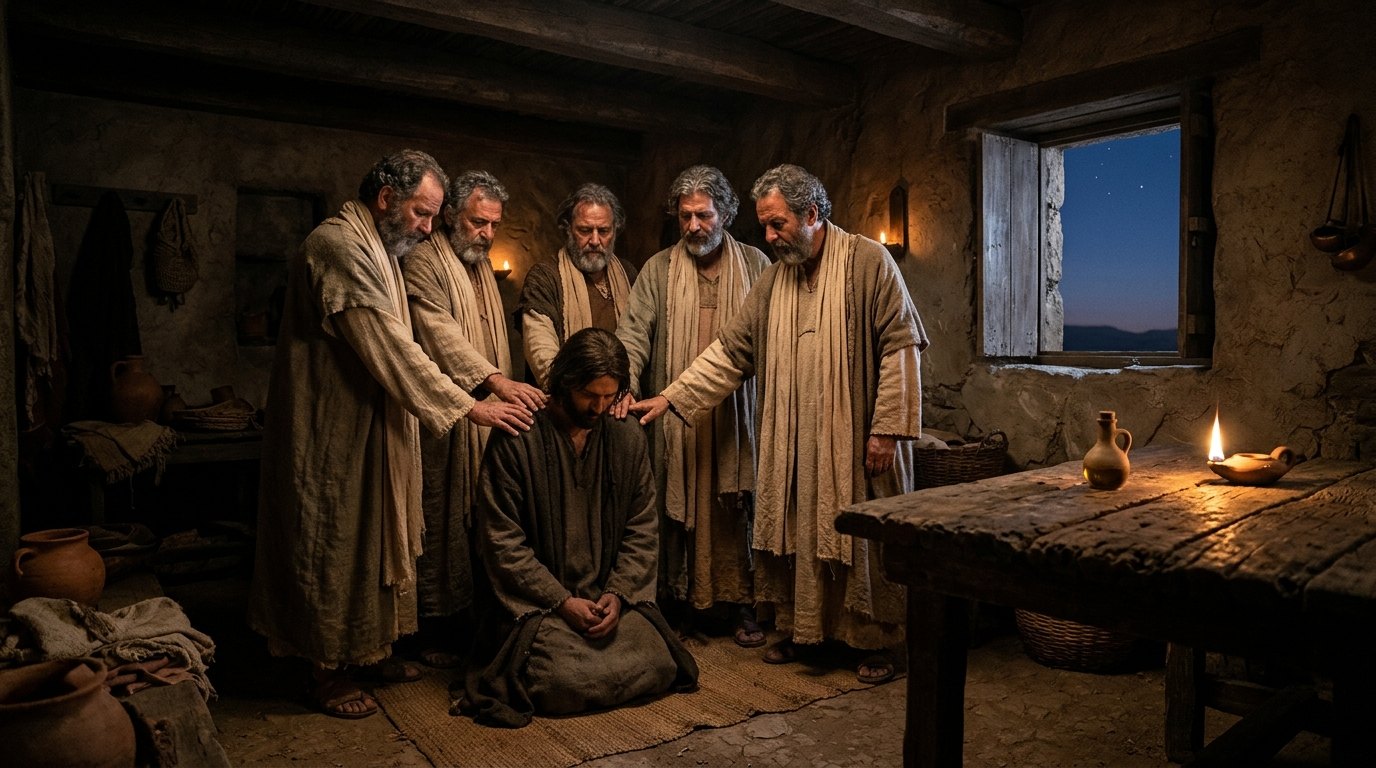
Therefore confess your sins to each other and pray for each other so that you may be healed. The prayer of a righteous person is powerful and effective.
James 5:16 (NIV)
It reveals the power of corporate honesty, mutual confession, and fervent prayer within the believing community.
James 5:16 anchors the daily life of the church in authentic fellowship: confess your sins to one another and pray for one another, that you may be healed; the prayer of a righteous person has great power as it is working. The closing movement of the epistle begins with a solemn prophetic indictment against exploitative wealth (James 5:1-6). Landowners who hoard treasures in the last days, withhold fair wages from their field laborers, and live in luxurious self-indulgence are fattening their hearts for a coming slaughter, as the cries of the defrauded harvesters reach the ears of the Lord of Hosts.
Oppressed believers are commanded to maintain patient endurance, waiting like a diligent farmer who watches expectantly for the early and late rains (James 5:7-11). Grumbling against brothers under pressure invites judgment, for the true Judge is already standing at the door. Christians find courage by looking to the steadfast endurance of ancient prophets and the historical vindication of Job, both of which prove that the Lord remains profoundly compassionate and merciful. That steadfast integrity must saturate every word, rendering elaborate oaths unnecessary because a believer's unadorned word can be wholly trusted (James 5:12).
The life of the church is carried forward through prayer and restorative love. Whether experiencing affliction, rejoicing in song, or facing debilitating illness, the community mobilizes: calling elders to anoint with oil and pray in faith, trusting the Lord for bodily healing and the forgiveness of sins (James 5:13-18). James points to Elijah, an ordinary human being whose earnest prayers shut and opened the heavens, as proof of what focused prayer accomplishes. Finally, James charges the church to actively pursue those who wander into error, because rescuing a straying brother from death covers a multitude of sins through God's redeeming grace (James 5:19-20).
| Passage | What it says |
|---|---|
| James 5:1-6 | Wealthy oppressors who hoard riches, withhold wages, and condemn the righteous face miseries in the last days. |
| James 5:7-11 | Believers must be patient until the Lord's coming, following the steadfast examples of the prophets and Job. |
| James 5:12 | Oaths should be avoided so that a simple yes means yes and no means no, escaping condemnation. |
| James 5:13-18 | The sick should call elders for anointing and prayer, confess sins, and trust the effective prayers exemplified by Elijah. |
| James 5:19-20 | Bringing a wandering sinner back to the truth saves a soul from death and covers a multitude of sins. |
Where in the Bible
| Book | Passages |
|---|---|
| Luke | 1 · Luke 6:46-49 |
| Romans | 1 · Romans 2:13 |
| James | 29 · James 1:1, James 1:2-4, James 1:5-8, James 1:9-11, James 1:12-18, James 1:19-21, James 1:22-25, James 1:26-27, James 2:1-4, James 2:5-7, James 2:8-13, James 2:14-17, James 2:18-20, James 2:21-24, James 2:25-26, James 3:1-4, James 3:5-8, James 3:9-12, James 3:13-18, James 4:1-3, James 4:4-6, James 4:7-10, James 4:11-12, James 4:13-17, James 5:1-6, James 5:7-11, James 5:12, James 5:13-18, James 5:19-20 |
| 1 John | 1 · 1 John 2:3-5 |
The story in order
- Abraham's faith demonstrated (c. 2000 BC) · James 2:21-24 · Shows faith proved by works in the Old Testament.
- Moses gives the Law (c. 1450 BC) · Romans 2:13 · Establishes the standard of obedience to God's law.
- Elijah prays effectively (c. 870 BC) · James 5:17-18 · Illustrates the power of persistent, righteous prayer.
- Jesus teaches on obedience (c. AD 30) · Luke 6:46-49 · Connects hearing His words with doing them.
- The Twelve Tribes scattered (c. AD 45) · James 1:1 · James addresses believers dispersed due to persecution.
- John on obedience and love (c. AD 90) · 1 John 2:3-5 · Corroborates that true knowledge of Christ leads to obedience.
Faith and Works
| Faith Demonstrated | Result | Passage |
|---|---|---|
| Faith without works is dead | Cannot save | James 2:14-17 |
| Abraham's faith shown by offering Isaac | Vindicated | James 2:21-24 |
| Rahab's faith shown by hiding spies | Vindicated | James 2:25-26 |
| Demons believe God is one | Tremble, but are not saved | James 2:18-20 |
Wisdom: Earthly vs. Heavenly
| Source | Characteristics | Results | Passage |
|---|---|---|---|
| Earthly | Bitter envy, selfish ambition | Disorder, every evil thing | James 3:14-16 |
| Heavenly | Pure, peace-loving, considerate, submissive, full of mercy and good fruit, impartial, sincere | Fruit of righteousness | James 3:17-18 |
Hearing and Doing the Word
| Action | Outcome | Passage |
|---|---|---|
| Merely hearing the word | Forgetting immediately | James 1:22-25 |
| Looking in a mirror and forgetting | No lasting benefit | James 1:23-24 |
| Hearing and obeying the perfect law | Blessed in all they do | James 1:25 |
| Calling Jesus Lord but not doing His commands | House built on sand, collapses | Luke 6:46-49 |
| Being doers of the law | Justified | Romans 2:13 |
Key words
- Faith (pistis, πίστις)
- Trust in God and His promises, demonstrated by action. · James 1:3
- Works (erga, ἔργα)
- Deeds and actions that demonstrate the reality of one's faith. · James 2:15
- Wisdom (sophia, σοφία)
- Skill and insight, particularly divine understanding to live rightly. · James 1:5
- Law (nomos, νόμος)
- The revealed will and commands of God. · James 1:22
- Humility (tapeinosis, ταπείνωσις)
- A lowliness of mind, considering others better than oneself. · James 4:10
- Patience (hypomonē, ὑπομονή)
- Endurance and steadfastness, especially under trial or oppression. · James 1:4
James summons every believer away from the illusion of an inactive, purely intellectual faith into a rigorous, vibrant walk of obedience. To heed this letter is to look intently into God's perfect law of liberty, bridle the tongue, serve the vulnerable, and walk in humble dependence before the coming Lord.
32 passages, each cited once.
Scripture cited
- James 1:22-25
- James 1
- James 2
- James 3
- James 4
- James 5