What is the book of Revelation about?

Revelation 1:1-3
1 The revelation from Jesus Christ, which God gave him to show his servants what must soon take place. He made it known by sending his angel to his servant John,
2 who testifies to everything he saw—that is, the word of God and the testimony of Jesus Christ.
3 Blessed is the one who reads aloud the words of this prophecy, and blessed are those who hear it and take to heart what is written in it, because the time is near.
New International Version (NIV)
The answer
The book of Revelation is the unveiling of Jesus Christ—His present reign, His victory over Satan, His coming judgment, and His renewal of all things. God gave it to show His servants what must happen (Revelation 1:1), and its opening blessing is for those who not only read and hear it but keep what is written (Revelation 1:3). It is prophecy given to produce worship, obedience, endurance, and hope—not mere speculation about the future.
John received these visions on Patmos, where he was because of God’s word and the testimony of Jesus, and was commanded to write to seven churches in Asia (Revelation 1:9-11). At its center stands Jesus: the faithful witness, the firstborn of the dead, and the ruler of earthly kings, who loves His people and washed them from their sins by His blood (Revelation 1:5). He is the Living One who died, is alive forever, and holds the keys of Death and Hades (Revelation 1:17-18).
How the book unfolds
- Christ among His churches (Revelation 1-3): The glorified Christ stands among seven lampstands, which He explains are seven assemblies (Revelation 1:12-20). He knows His churches, including their suffering, and calls them to overcome. To Smyrna He says, “Be faithful to death, and I will give you the crown of life” (Revelation 2:10).
- God’s throne and the Lamb (Revelation 4-5): God is worshiped as the Creator of all things (Revelation 4:11). The Lion of Judah is then revealed as a Lamb standing as though slain. He alone is worthy to open the sealed scroll because His blood bought people for God from every tribe, language, people, and nation (Revelation 5:5-9).
- Spiritual conflict and perseverance (Revelation 6-18): The visions unveil Satan’s war against God and His people, together with God’s judgments upon evil. The dragon is explicitly identified as the devil and Satan. He rages because his time is short, but believers overcome him through the Lamb’s blood and their faithful testimony, not loving their lives even to death (Revelation 12:9-12).
- Christ’s return and final judgment (Revelation 19-20): Jesus appears as Faithful and True, the Word of God, and King of kings and Lord of lords; He judges in righteousness (Revelation 19:11-16). Satan is bound for a thousand years, later released for a short time, and finally thrown into the lake of fire forever (Revelation 20:1-10). The dead then stand before God’s throne and are judged according to their works; anyone not found in the book of life is cast into the lake of fire (Revelation 20:11-15).
- New creation and life with God (Revelation 21-22): God makes a new heaven and new earth, dwells with His people, wipes away every tear, and ends death, mourning, crying, and pain (Revelation 21:1-5). The overcomer receives this inheritance, while the unbelieving and those who practise the sins named there receive the second death (Revelation 21:7-8).
Revelation therefore denies evil the last word. Jesus says, “Behold, I am coming soon!” and warns that He will repay each person according to his work (Revelation 22:7, 12). Yet the book also extends an open invitation: “He who is thirsty, let him come. He who desires, let him take the water of life freely” (Revelation 22:17).
Answered from Scripture · reviewed November 11, 2026
The book of Revelation is the unveiling of Jesus Christ, given by God to show His servants the climax of redemptive history. It is neither an impenetrable puzzle nor a mere timeline of future terrors, but a prophetic portrait of the exalted Lamb who redeems, judges, and reigns forever. Understanding its message calls believers to read, hear, and keep what is written as history moves toward Christ's triumphant return.
The Author and Focus
The Unveiling of the Exalted Son

The revelation from Jesus Christ, which God gave him to show his servants what must soon take place. He made it known by sending his angel to his servant John,
Revelation 1:1 (NIV)
It defines the entire book as the revelation belonging to and revealing Jesus Christ, delivered to His servants.
In Revelation 1:1, the book announces its true character: it is not a riddle of human speculation, but the unveiling of Jesus Christ, granted by God to make known what must soon take place. John explains that he merely bore record to the divine word and the testimony of Christ (Revelation 1:2), setting a beatitude over all who read, hear, and obey this prophecy (Revelation 1:3). God anchors the vision in His own unshakeable sovereignty, proclaiming Himself the Alpha and Omega, the eternal One who reigns over past, present, and future (Revelation 1:8). When John turns to see the voice speaking to him, he beholds the glorified Son of Man standing in blazing majesty among golden lampstands, His eyes like flames of fire and His voice like rushing waters (Revelation 1:12-16). John falls as dead before such absolute holiness, yet Christ lays His right hand upon him in comfort, declaring that He was dead, is alive forevermore, and possesses the keys of Death and Hades (Revelation 1:17-18). Armed with this sovereign authority over mortality and eternity, the Lord commissions His apostle to record the entire sweep of divine purpose: the things seen, the things that are, and the things that will happen after (Revelation 1:19).
| Passage | What it says |
|---|---|
| Revelation 1:1 | God gives Jesus Christ this revelation to show His servants the events that must soon take place. |
| Revelation 1:2 | John faithfully records and bears witness to the word of God and the testimony of Jesus Christ. |
| Revelation 1:3 | A blessing is pronounced on everyone who reads, hears, and obeys the words of this prophecy. |
| Revelation 1:8 | The Lord God declares Himself to be the Alpha and the Omega, who is, was, and is to come. |
| Revelation 1:12-16 | John sees the glorified Son of Man standing among golden lampstands, clothed in radiant majesty and power. |
| Revelation 1:17-18 | The living Christ declares He was dead, lives forever, and holds the keys of Death and Hades. |
| Revelation 1:19 | John is commanded to write what he saw, what is now, and what will take place hereafter. |
Christ and His Church
The Shepherd Walking Among the Lampstands
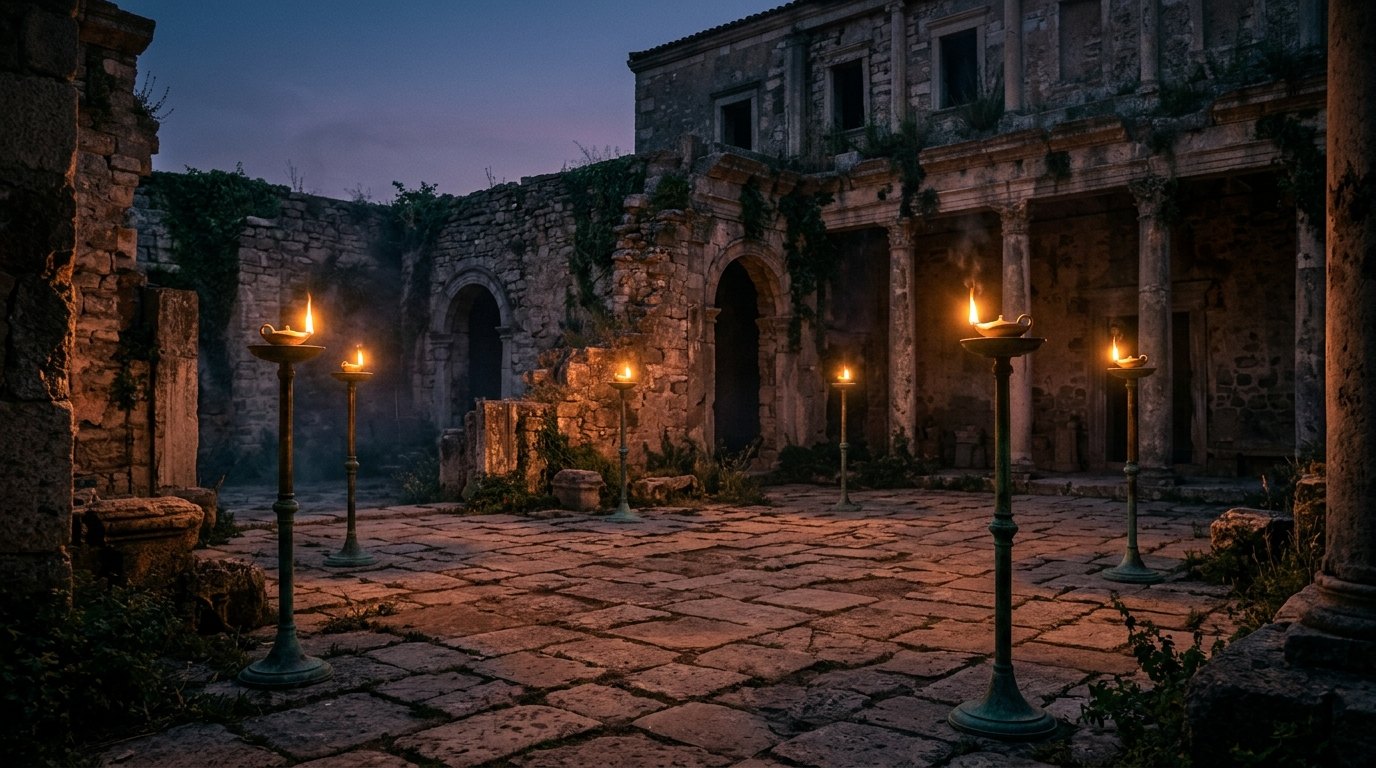
“To the angel of the church in Ephesus write: These are the words of him who holds the seven stars in his right hand and walks among the seven golden lampstands.
Revelation 2:1 (NIV)
It depicts Christ actively walking among His assemblies, knowing their deeds, trials, and faithfulness.
In Revelation 2:1, Christ presents Himself as the attentive Shepherd who holds the seven stars and walks in the midst of the seven golden lampstands, demonstrating His living presence among local churches. The mysteries of these stars and lampstands represent the messengers and assemblies under His care (Revelation 1:20). Addressing Ephesus, Christ praises their doctrinal steadfastness against false teachers, yet urgently commands repentance because they abandoned their first love (Revelation 2:1-7). To impoverished, afflicted Smyrna, He offers pure comfort without rebuke, promising the crown of life to those who endure martyrdom (Revelation 2:8-11). In Pergamum, dwelling where Satan's seat is, the church receives a severe warning against compromising doctrines that entice believers into idolatry (Revelation 2:12-17). Thyatira is praised for increasing love and service, yet sternly confronted for tolerating the deceptive Jezebel who leads souls into immorality (Revelation 2:18-29). Christ commands sleeping Sardis to awaken and strengthen what remains before He comes suddenly like a thief (Revelation 3:1-6). Faithful Philadelphia is granted an open door that no one can shut, accompanied by the promise of preservation through trial (Revelation 3:7-13). Finally, the self-satisfied, lukewarm church of Laodicea is rebuked with loving severity, urged to buy pure gold from Christ and open the door to His intimate fellowship (Revelation 3:14-22).
| Passage | What it says |
|---|---|
| Revelation 1:20 | The mystery of the seven stars represents the angels of the churches, and the lampstands are the churches. |
| Revelation 2:1-7 | Christ commends Ephesus for endurance and truth, yet calls them to repent and return to their first love. |
| Revelation 2:8-11 | Christ comforts the suffering church in Smyrna, promising the crown of life to those faithful unto death. |
| Revelation 2:12-17 | Christ warns Pergamum against false teaching and compromise, promising hidden manna to the overcomer. |
| Revelation 2:18-29 | Christ rebukes Thyatira for tolerating Jezebel while promising authority over nations to the faithful. |
| Revelation 3:1-6 | Christ confronts the spiritually dead church of Sardis, urging them to wake up and strengthen what remains. |
| Revelation 3:7-13 | Christ sets an open door before faithful Philadelphia, promising to keep them in the hour of trial. |
| Revelation 3:14-22 | Christ reproves lukewarm Laodicea, offering gold refined in fire and fellowship to whoever opens the door. |
The Throne and the Lamb
The Only One Worthy to Rule History

And they sang a new song, saying: “You are worthy to take the scroll and to open its seals, because you were slain, and with your blood you purchased for God persons from every tribe and language and people and nation.
Revelation 5:9 (NIV)
It proclaims the slain Lamb alone worthy to open the scroll because His blood redeemed people for God.
In Revelation 5:9, heaven bursts into an exuberant new song, celebrating the Lion of Judah who conquered not by force of arms, but because the slain Lamb ransomed people for God by His blood. Before this praise erupts, John is caught up into the heavenly throne room, where an emerald rainbow encircles the throne while living creatures and crowned elders offer ceaseless adoration to the eternal Creator (Revelation 4:1-11). A scroll sealed with seven seals lies in the Father's hand, representing the decreed destiny and judgment of the world, yet John weeps bitterly because no created being in heaven or earth is worthy to open it (Revelation 5:1-5). Then, standing at the very center of the throne, appears a Lamb bearing the marks of sacrifice, who steps forward and takes the scroll (Revelation 5:6-8). This triumphant act demonstrates that redemption and rule belong exclusively to Christ, who has made a kingdom of priests out of every tribe, tongue, people, and nation (Revelation 5:9-10). The vision expands exponentially as countless angels surround the throne, followed by every creature throughout all creation, uniting in universal, eternal worship to the Father and the Lamb (Revelation 5:11-14).
| Passage | What it says |
|---|---|
| Revelation 4:1-11 | John sees the heavenly throne surrounded by the rainbow, living creatures, and elders worshiping the eternal Creator. |
| Revelation 5:1-5 | No one in heaven or earth is found worthy to open the seven-sealed scroll except the Lion of Judah. |
| Revelation 5:6-8 | A Lamb standing as though slain appears at the throne and takes the scroll from the Father's hand. |
| Revelation 5:9-10 | Heaven sings a new song praising the Lamb for purchasing people from every tribe, tongue, and nation. |
| Revelation 5:11-14 | Myriads of angels and every creature ascribe honor, glory, and dominion to God and the Lamb forever. |
God's Righteous Judgment
The Outpouring of Wrath on Rebellion

They called to the mountains and the rocks, “Fall on us and hide us from the face of him who sits on the throne and from the wrath of the Lamb! For the great day of theirwrath has come, and who can withstand it?”
Revelation 6:16-17 (NIV)
It shows rebellious humanity fleeing before the holiness of God and the unavoidable wrath of the Lamb.
In Revelation 6:16-17, the terrified inhabitants of the earth cry out to the mountains and rocks to fall on them, unable to endure the righteous wrath of the Lamb. This terrifying day unfolds as Christ breaks the seals of the scroll, unleashing four horsemen whose riders bring conquest, violent war, severe scarcity, and widespread death across the globe (Revelation 6:1-8). Beneath the heavenly altar, martyred saints plead for God's holy justice, receiving white robes and the instruction to rest until the full number of fellow servants is complete (Revelation 6:9-11). Cosmic upheaval shakes the universe at the sixth seal, leaving monarchs and slaves alike stripped of power before God's judgment (Revelation 6:12-17). Yet divine mercy marks the faithful: God seals one hundred forty-four thousand servants before the four winds strike (Revelation 7:1-8), while an unnumbered multitude from every nation stands before the throne, washed clean in the Lamb's blood and delivered from all sorrow (Revelation 7:9-17). Silence grips heaven as saintly prayers rise like incense, immediately preceding the blare of seven trumpets of warning (Revelation 8:1-6). Even amidst terrifying plagues, unrepentant humanity hardens itself in idolatry and violence (Revelation 9:20-21), until the final trumpet announces that worldly dominion has surrendered forever to Christ (Revelation 11:15-18), followed by seven bowls of unmixed divine wrath poured upon persistent rebellion (Revelation 16:1-7).
| Passage | What it says |
|---|---|
| Revelation 6:1-8 | The Lamb breaks the first four seals, releasing the four horsemen of conquest, war, famine, and death. |
| Revelation 6:9-11 | Martyrs under the altar cry out for divine justice and are told to rest until the full number is reached. |
| Revelation 6:12-17 | The sixth seal brings cosmic upheaval, driving kings and slaves alike to dread the wrath of the Lamb. |
| Revelation 7:1-8 | God seals one hundred forty-four thousand servants on their foreheads before destruction strikes the earth. |
| Revelation 7:9-17 | An innumerable multitude out of the great tribulation worships God, washed clean in the Lamb's blood. |
| Revelation 8:1-6 | Silence fills heaven at the seventh seal as the saints' prayers ascend before the trumpets sound. |
| Revelation 9:20-21 | Despite destructive trumpet plagues, unrepentant humanity persists in idolatry, murder, sorcery, and theft. |
| Revelation 11:15-18 | The seventh trumpet sounds, proclaiming that the kingdoms of this world have become the Lord's and Christ's. |
| Revelation 16:1-7 | The angels pour out the bowls of God's wrath upon the earth, and God's judgments are declared righteous. |
The Cosmic Conflict
The Dragon's War and Final Defeat

They triumphed over him by the blood of the Lamb and by the word of their testimony; they did not love their lives so much as to shrink from death.
Revelation 12:11 (NIV)
It reveals the saints' decisive victory over the devil through the blood of the Lamb and faithful testimony.
The heartbeat of the conflict that spans the ages is unveiled in Revelation 12:11, which proclaims that the saints conquer the ancient serpent by the blood of the Lamb and by the word of their testimony, loving not their lives even unto death. This grand drama begins in Revelation 12:1-6, where a heavenly sign reveals a woman travailing to bear a male Child destined to rule all nations, whom a ferocious red dragon schemes to devour, only for the Child to be caught up safely to God's throne. Cast out of heaven by Michael and his angels, the dragon is thrown down to the earth (Revelation 12:7-12), furious because his time is short, and he turns his wrath upon the remnant of the woman's offspring (Revelation 12:17).
To wage this war, the dragon empowers monstrous allies. A blasphemous beast rises from the sea in Revelation 13:1-10, demanding worship and waging relentless war against the saints, while a second beast out of the earth in Revelation 13:11-18 deceives the nations through false signs and coerces allegiance under penalty of death. Yet God leaves no soul without warning: Revelation 14:9-12 heralds the eternal doom awaiting those who worship the beast, calling God’s people to unflinching endurance. The deceptive allure of worldly rebellion culminates in the figure of Babylon the great (Revelation 17:1-6), a decadent city intoxicated with the blood of the martyrs. Before her sudden and catastrophic downfall, God sounds a solemn summons to His own in Revelation 18:1-8 to flee her sinful communion. When her smoke rises forever, heaven erupts in joyful anthems of praise in Revelation 19:1-6, vindicating the righteous judgments of the Almighty.
| Passage | What it says |
|---|---|
| Revelation 12:1-6 | A woman gives birth to a male Child destined to rule, whom the great red dragon seeks to devour. |
| Revelation 12:7-12 | Michael casts the dragon down to earth, where he pursues God's people knowing his time is short. |
| Revelation 12:17 | The enraged dragon wages war against those who keep God's commandments and hold the testimony of Jesus. |
| Revelation 13:1-10 | A blasphemous beast rises from the sea, exercising global authority and persecuting the saints. |
| Revelation 13:11-18 | A false prophet deceives the earth, enforcing worship of the first beast and the mark of his name. |
| Revelation 14:9-12 | Angels warn of eternal torment for worshiping the beast, calling saints to patient endurance and faith. |
| Revelation 17:1-6 | Babylon the great harlot is seen drunk with the blood of the saints and martyrs of Jesus. |
| Revelation 18:1-8 | God's people are commanded to come out of Babylon before her sudden and total ruin in judgment. |
| Revelation 19:1-6 | Heaven resounds with hallelujahs celebrating God's righteous judgment on the great corrupting harlot. |
The Final Consummation
The Returning King and New Creation

And I heard a loud voice from the throne saying, “Look! God’s dwelling place is now among the people, and he will dwell with them. They will be his people, and God himself will be with them and be their God. ‘He will wipe every tear from their eyes. There will be no more death’ or mourning or crying or pain, for the old order of things has passed away.”
Revelation 21:3-4 (NIV)
It captures the climax of all Scripture: God dwelling with His people and removing death, sorrow, and pain forever.
The entire redemptive arc of Scripture reaches its magnificent climax in Revelation 21:3-4, where a voice from the throne declares that the dwelling place of God is with man, and He will wipe every tear from their eyes, extinguishing death, mourning, crying, and pain forever. This consummation begins in Revelation 19:11-16, when heaven opens to reveal Christ on a white horse, crowned with many diadems and striking down the nations as King of kings and Lord of lords. The deceptive beast and his false prophet are instantly seized and cast alive into the fiery lake (Revelation 19:19-21).
Satan is subsequently bound for a thousand years while the resurrected saints reign with their Lord (Revelation 20:1-6), and upon his final rebellion, the devil is hurled into the lake of fire for all eternity, followed by the terrifying majesty of the great white throne where all the dead are judged according to truth (Revelation 20:10-15). In Revelation 21:1-8, the old order vanishes before a new heaven and a new earth, crowned by the descent of the New Jerusalem. This holy city requires neither sun nor temple, for the radiant glory of the Lord God and the Lamb provides its unceasing light (Revelation 21:22-27). From the midst of the throne pours the crystal river of the water of life, nourishing the tree of life whose leaves heal the nations (Revelation 22:1-5). The prophecy closes with the urgent promise of Christ’s imminent return (Revelation 22:12-16) and an uncompromising warning to guard His words intact (Revelation 22:18-20).
| Passage | What it says |
|---|---|
| Revelation 19:11-16 | Christ appears on a white horse as Faithful and True, King of kings and Lord of lords, to judge and wage war. |
| Revelation 19:19-21 | The beast and false prophet are captured and thrown alive into the lake of fire burning with brimstone. |
| Revelation 20:1-6 | Satan is bound for a thousand years while resurrected saints reign with Christ in triumph. |
| Revelation 20:10-15 | The devil is cast into the lake of fire, followed by the great white throne judgment of all the dead. |
| Revelation 21:1-8 | God makes all things new, descending to dwell with His people in a new heaven and a new earth. |
| Revelation 21:22-27 | The New Jerusalem needs no temple, sun, or moon, for the glory of God and the Lamb illuminate it. |
| Revelation 22:1-5 | The river of the water of life flows from the throne, and God's servants see His face and reign forever. |
| Revelation 22:12-16 | Jesus announces His swift return with reward, declaring Himself the root and offspring of David, the morning star. |
| Revelation 22:18-20 | Strict warnings forbid tampering with the prophecy, concluding with Christ's promise of His imminent coming. |
Where in the Bible
| Book | Passages |
|---|---|
| Revelation | 47 · Revelation 1:1, Revelation 1:2, Revelation 1:3, Revelation 1:8, Revelation 1:12-16, Revelation 1:17-18, Revelation 1:19, Revelation 1:20, Revelation 2:1-7, Revelation 2:8-11, Revelation 2:12-17, Revelation 2:18-29, Revelation 3:1-6, Revelation 3:7-13, Revelation 3:14-22, Revelation 4:1-11, Revelation 5:1-5, Revelation 5:6-8, Revelation 5:9-10, Revelation 5:11-14, Revelation 6:1-8, Revelation 6:9-11, Revelation 6:12-17, Revelation 7:1-8, Revelation 7:9-17, Revelation 8:1-6, Revelation 9:20-21, Revelation 11:15-18, Revelation 16:1-7, Revelation 12:1-6, Revelation 12:7-12, Revelation 12:17, Revelation 13:1-10, Revelation 13:11-18, Revelation 14:9-12, Revelation 17:1-6, Revelation 18:1-8, Revelation 19:1-6, Revelation 19:11-16, Revelation 19:19-21, Revelation 20:1-6, Revelation 20:10-15, Revelation 21:1-8, Revelation 21:22-27, Revelation 22:1-5, Revelation 22:12-16, Revelation 22:18-20 |
The story in order
- God gives Jesus Christ revelation (c. AD 95) · Revelation 1:1 · Shows the divine origin and purpose of Revelation.
- John sees the glorified Son of Man (c. AD 95) · Revelation 1:12-16 · Reveals Christ's majestic and powerful appearance.
- Christ walks among the churches (c. AD 95) · Revelation 1:20 · Illustrates Christ's intimate knowledge and care for His church.
- Heavenly throne and worship (c. AD 95) · Revelation 4:1-11 · Depicts God's sovereign rule and the worship He receives.
- The Lamb takes the scroll (c. AD 95) · Revelation 5:6-8 · Shows Christ's unique worthiness to execute God's plan.
- Four horsemen released (c. AD 95) · Revelation 6:1-8 · Begins the unfolding of God's judgment on the earth.
- Martyrs cry for justice (c. AD 95) · Revelation 6:9-11 · Highlights the suffering of God's people and their hope for vindication.
- The dragon wages war (c. AD 95) · Revelation 12:17 · Describes the ongoing cosmic conflict between Satan and believers.
- Beast and false prophet deceive (c. AD 95) · Revelation 13:11-18 · Shows the deceptive power and global influence of evil.
- Bowls of wrath poured out (c. AD 95) · Revelation 16:1-7 · Illustrates the finality and righteousness of God's judgment.
- Judgment on Babylon (c. AD 95) · Revelation 18:1-8 · Depicts the complete destruction of corrupt worldly systems.
- Christ returns as King (c. AD 95) · Revelation 19:11-16 · Shows Christ's victorious return to judge and rule.
- Satan cast into the lake of fire (c. AD 95) · Revelation 20:10 · Marks the final defeat of evil and the ultimate judgment.
- New heaven and new earth (c. AD 95) · Revelation 21:1-8 · Reveals God's eternal dwelling with His redeemed people.
The Lamb's Worthiness and Victory
| The Lamb's State | His Action | His Praise | Passage |
|---|---|---|---|
| Appears as though slain | Takes the seven-sealed scroll | Purchased people from every tribe | Revelation 5:6-10 |
| Breaks the seals | Releases the horsemen | Brings forth conquest, war, famine, death | Revelation 6:1-8 |
| The living Christ | Holds the keys of Death and Hades | Declares He is, was, and is to come | |
| Faithful and True | Judges and wages war | King of kings and Lord of lords | Revelation 19:11-16 |
Key words
- Revelation (apokalypsis (ἀποκάλυψις))
- An unveiling or disclosure of divine truth. · Revelation 1:1
- Jesus Christ (Iēsous Christos (Ἰησοῦς Χριστός))
- The Son of God, the promised Messiah, who redeems humanity. · Revelation 1:1
- Servants (doulos (δοῦλος))
- Believers who are devoted to God and His purposes. · Revelation 1:1
- Soon (en tachei (ἐν τάχει))
- Events that are imminent and will certainly take place. · Revelation 1:1
- Lamb (arnion (ἀρνίον))
- Jesus Christ, depicted as slain, who is worthy and victorious. · Revelation 5:6
- Judgment (krisis (κρίσις))
- God's righteous sentence and execution of wrath on sin and rebellion. · Revelation 16:1
- New Creation (kainos (καινός))
- The redeemed, restored heaven and earth where God dwells with His people. · Revelation 21:1
Revelation fixes our gaze on Jesus Christ, assuring the church that every power opposing God will fall and every tear will be wiped away. As we hear its prophetic words, we are summoned to patient endurance, holy obedience, and confident worship. Living in light of its promises, the church echoes John's joyful cry: Amen, come, Lord Jesus.
47 passages, each cited once.
Scripture cited
- Revelation 1:4-20
- Revelation 2:7-11
- Revelation 5:1-14
- Revelation 19:11-16
- Revelation 20:11-15
- Revelation 21:1-8
- Revelation 22:6-21
- Revelation 4:1-11
- Revelation 20:1-10
- Revelation 12:7-12