What is the lake of fire?
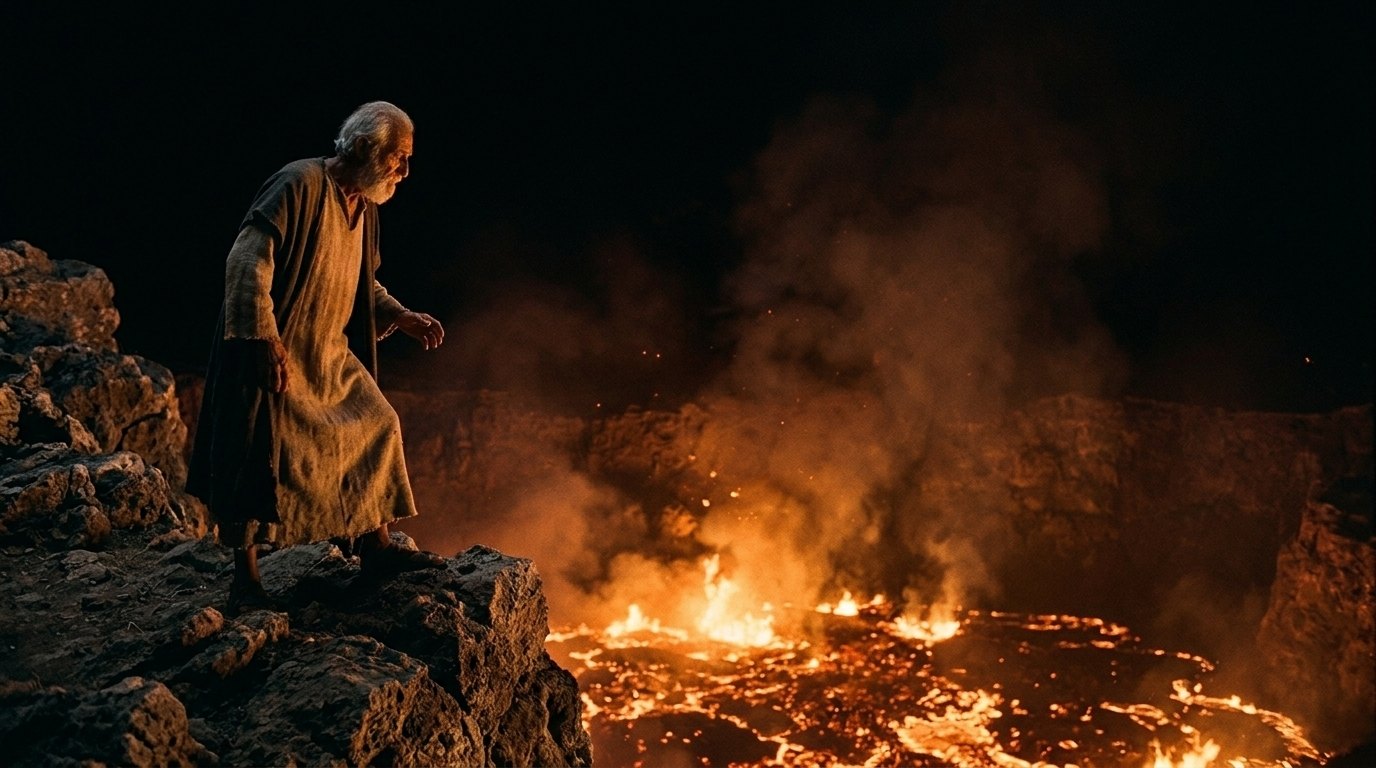
Revelation 20:14-15
14 Then death and Hades were thrown into the lake of fire. The lake of fire is the second death.
15 Anyone whose name was not found written in the book of life was thrown into the lake of fire.
New International Version (NIV)
The answer
The lake of fire is the place of eternal conscious punishment for the devil, the beast, the false prophet, and all whose names are not written in the book of life. Those cast into it “will be tormented day and night forever and ever” (Revelation 20:10), and Jesus says they will go away “into eternal punishment” (Matthew 25:46). Scripture does not describe it merely as a fire that consumes and ends its victims; it explicitly describes enduring torment.
What the name means
- “Lake of fire” describes a lake containing fire and sulfur. The same expression appears in Revelation 19:20, where the beast and false prophet are thrown into it alive.
- “The second death” identifies this judgment as final and irreversible in its result (Revelation 20:14). Death and Hades themselves are thrown into it, showing that death is no longer the end for those consigned there.
- “Their part” indicates the destiny belonging to the wicked: Revelation 21:8 lists the cowardly, unbelieving, sinners, murderers, sexually immoral, sorcerers, idolaters, and liars as having their part in the lake that burns with fire and sulfur.
What happens there
At the final judgment, the dead are raised and judged according to the books and according to their works (Revelation 20:11-13). The book of life is also opened, and “if anyone was not found written in the book of life, he was cast into the lake of fire” (Revelation 20:15).
This is the Bible’s plain teaching, not an optional interpretation: the lake of fire is the second death, the place of eternal punishment and conscious torment. The righteous, meanwhile, enter eternal life (Matthew 25:46), so the contrast is between two eternal destinies—not between temporary punishment and annihilation.
Answered from Scripture · reviewed November 11, 2026
The lake of fire is the final, irreversible place of eternal conscious punishment prepared for the devil, his angels, and all who reject the living God. Scripture defines it explicitly as the second death, where absolute divine justice is executed without end. Understanding this solemn reality reveals the terrifying gravity of sin, the certainty of God's holy judgment, and the glorious magnitude of redemption in Jesus Christ.
The Sovereign Verdict
The Final Consignment of Unrepentant Humanity
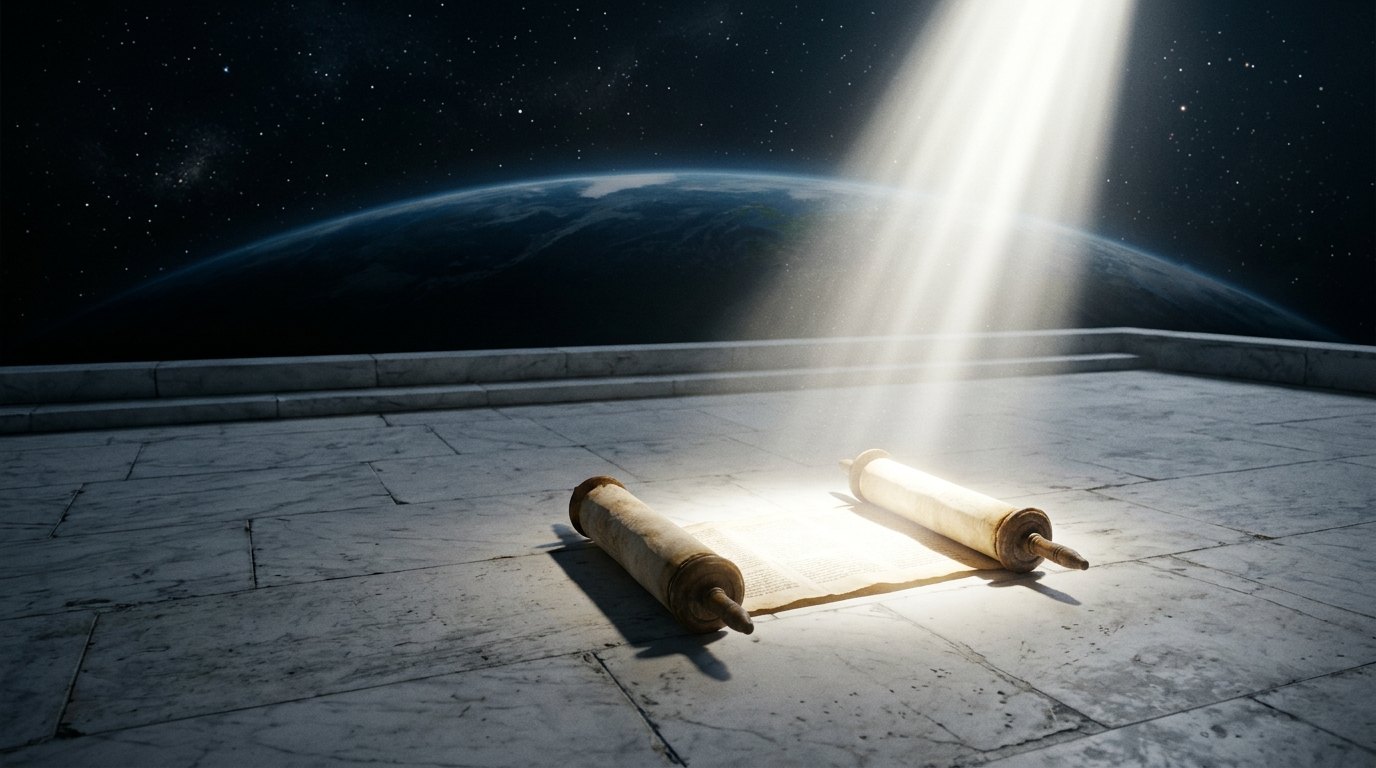
Anyone whose name was not found written in the book of life was thrown into the lake of fire.
Revelation 20:15 (NIV)
It declares the absolute dividing line of eternity: whoever is not recorded in the Book of Life is cast directly into the lake of fire.
The terrifying reality of final judgment turns on Revelation 20:15, which draws the ultimate, unyielding line of human eternity: whosoever was not found written in the Book of Life was cast into the lake of fire. Before this sentence is passed, Revelation 20:11 reveals the great white throne, radiant in unapproachable holiness, before whose majesty earth and heaven flee away so that no place is found for them. In Revelation 20:12, the dead of every generation, small and great alike, stand before God as the books containing every thought, word, and deed are opened alongside the Book of Life.
No sinner can escape this reckoning; Revelation 20:13 records that the sea, Death, and Hades yield up every soul held within them so that each person is judged strictly according to their works. This solemn assize fulfills the vision of Daniel 7:9-10, where the Ancient of Days sits on a fiery throne streaming with flames as a court convenes and celestial books are unsealed. In Revelation 21:8, the text catalogs those whose unrepentant lives seal their doom—the cowardly, faithless, detestable, murderers, sexually immoral, sorcerers, idolaters, and all liars—declaring plainly that their portion is in the lake that burns with fire and sulfur.
Our Lord Jesus warned of this destiny repeatedly. In Matthew 13:40-42 and Matthew 13:49-50, He declared that at the close of the age, His angels will sever the wicked from the righteous, casting evildoers into the fiery furnace where there will be weeping and gnashing of teeth. In Mark 9:43-48, Christ urged radical repentance, bidding hearers to cut off offending members rather than be cast whole into Gehenna, where the worm does not die and the fire is not quenched. Finally, 2 Thessalonians 1:7-9 affirms that when Jesus is revealed from heaven with His mighty angels in flaming fire, He will inflict vengeance on all who reject the gospel, sentencing them to eternal destruction.
| Passage | What it says |
|---|---|
| Revelation 20:11 | The Great White Throne appears, before whose divine presence earth and sky flee away with no place found for them. |
| Revelation 20:12 | The dead, small and great, stand before God while the books of deeds and the Book of Life are opened. |
| Revelation 20:13 | The sea, Death, and Hades deliver up all their dead, and each person is judged strictly according to their works. |
| Revelation 20:15 | Anyone whose name is not found written in the Book of Life is cast immediately into the lake of fire. |
| Revelation 21:8 | Lists the unrepentant—the cowardly, unbelieving, sexually immoral, murderers, idolaters, and liars—whose part is in the burning lake of fire and sulfur. |
| Daniel 7:9-10 | The Ancient of Days takes His seat amidst flaming fire while court sits and the books are opened in judgment. |
| Matthew 13:40-42 | The Son of Man sends His angels to cast evildoers into the furnace of fire where there is weeping and gnashing. |
| Matthew 13:49-50 | Angels sever the wicked from the righteous at the end of the age and throw them into the furnace of fire. |
| Mark 9:43-48 | Christ warns of unquenchable fire where the worm does not die, contrasting temporal loss with eternal ruin. |
| 2 Thessalonians 1:7-9 | The Lord Jesus is revealed from heaven in flaming fire, inflicting vengeance and eternal destruction away from His presence. |
The Defeat of Darkness
Satan and His Hosts Judged Forever
And the devil, who deceived them, was thrown into the lake of burning sulfur, where the beast and the false prophet had been thrown. They will be tormented day and night for ever and ever.
Revelation 20:10 (NIV)
It proves the lake of fire is a place of enduring conscious torment day and night forever, rather than instantaneous annihilation.
The ultimate destination of all cosmic rebellion is fixed in Revelation 20:10, which establishes that the devil who deceived them was thrown into the lake of fire and sulfur... and they will be tormented day and night forever and ever. This text directly refutes the notion of immediate annihilation, demonstrating conscious, unending accountability under God's righteous wrath. In Matthew 25:41, Jesus revealed the initial intent of this awful place, commanding the cursed to depart into the eternal fire prepared specifically for the devil and his angels.
The order of judgment begins with the mortal agents of Satan's deception. In Revelation 19:20, the beast and the false prophet are captured on the field of battle and hurled alive into the burning lake of sulfur. Then Satan himself joins them in Revelation 20:10, stripped of his ability to deceive the nations again. This final doom resolves ancient rebellion; as 2 Peter 2:4 affirms, God did not spare sinning angels but cast them into Tartarus, committing them to chains of gloomy darkness until the day of judgment.
Similarly, Jude 1:6 warns that angels who left their proper dwelling are kept in eternal chains under gloomy darkness for the judgment of the great day, while Jude 1:7 shows that the fiery destruction of Sodom and Gomorrah stands as a historic preview of eternal fire. In Revelation 14:9-11, this same unending retribution falls upon those who receive the beast’s mark and worship his image: the smoke of their torment ascends forever and ever, and they find no rest day or night under the unmixed indignation of God.
| Passage | What it says |
|---|---|
| Matthew 25:41 | Jesus reveals the eternal fire was originally prepared specifically for the devil and his rebellious angels. |
| Revelation 19:20 | The beast and the false prophet who deceived the nations are captured and thrown alive into the lake of burning sulfur. |
| Revelation 20:10 | The devil who deceived them is thrown into the lake of fire to be tormented day and night forever and ever. |
| 2 Peter 2:4 | God cast sinning angels into Tartarus and darkness to be reserved until the judgment. |
| Jude 1:6 | Angels who abandoned their proper domain are kept in everlasting chains under darkness for the great day's judgment. |
| Jude 1:7 | Sodom and Gomorrah serve as an example by undergoing the punishment of eternal fire. |
| Revelation 14:9-11 | Worshipers of the beast are tormented with fire and brimstone forever without rest. |
The Second Death
Death and the Grave Swallowed in Doom
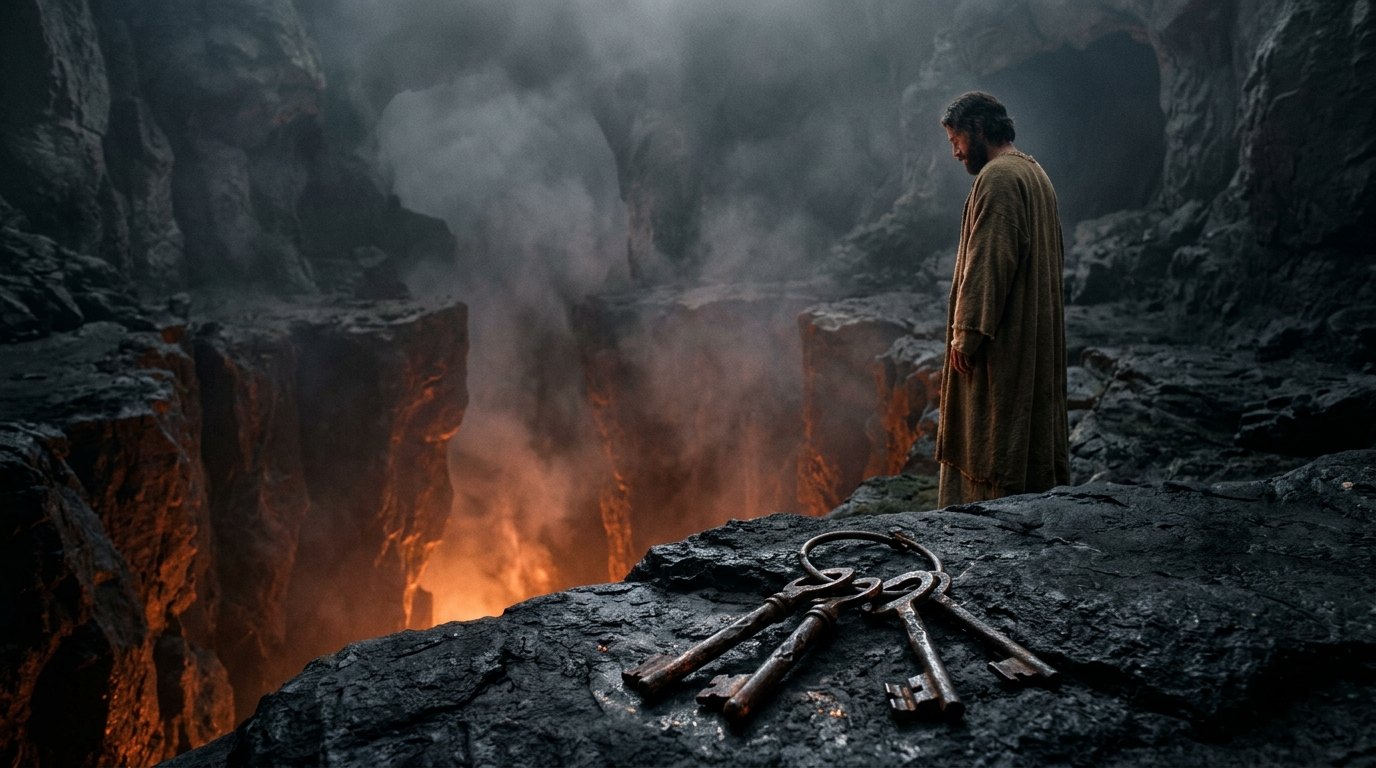
Then death and Hades were thrown into the lake of fire. The lake of fire is the second death.
Revelation 20:14 (NIV)
It defines the lake of fire as the second death and demonstrates that physical death and intermediate Hades are permanently abolished.
The finality of redemption requires the total abolition of sin's temporal consequences, which culminates in Revelation 20:14: Death and Hades were thrown into the lake of fire. This is the second death, the lake of fire. Here Scripture explicitly names the lake of fire as the "second death"—the permanent, irrevocable state of divine separation and judgment. It marks the absolute end of intermediate holding places and physical mortality, swallowing up both the grave and the realm of the disembodied dead.
This dramatic consummation brings the long arc of biblical promise to its close. In Hosea 13:14, the Lord proclaimed His ultimate triumph over corruption, declaring that He would ransom His people from the power of Sheol and redeem them from Death, demanding: "O Death, where are your plagues? O Sheol, where is your sting?" This promised victory was secured through Christ’s resurrection. In Revelation 1:18, the risen Lord announces to John that He died, is alive forevermore, and possesses the sovereign keys of Death and of Hades.
Because the cross and empty tomb broke the mastery of sin, the apostle Paul could triumphantly write in 1 Corinthians 15:26 that the last enemy to be destroyed is death itself. When Revelation 20:14 sees Death and Hades cast into the lake of fire, that last enemy is utterly dismantled. Physical death will never claim another body, and the intermediate state will never again house another soul; all that remains is the eternal state, where God’s people dwell in glorified life and the impenitent abide in the second death.
| Passage | What it says |
|---|---|
| Hosea 13:14 | The Lord declares He will redeem His people and destroy the power and sting of the grave and death. |
| 1 Corinthians 15:26 | Paul proclaims that the last enemy to be destroyed by the reigning Christ is death itself. |
| Revelation 1:18 | The glorified Christ proclaims He is alive forevermore and holds the sovereign keys of Death and Hades. |
| Revelation 20:14 | Death and Hades are hurled into the lake of fire, which is explicitly identified as the second death. |
Deliverance and Triumph
The Saints Exempted from the Second Death
Blessed and holy are those who share in the first resurrection. The second death has no power over them, but they will be priests of God and of Christ and will reign with him for a thousand years.
Revelation 20:6 (NIV)
It assures believers that those who share in the first resurrection are holy and entirely free from the second death's power.
Amid the solemn certainty of divine judgment, Scripture offers absolute assurance to those who belong to Jesus Christ, anchored in Revelation 20:6: Blessed and holy is the one who shares in the first resurrection! Over such the second death has no power. For the redeemed, the terror of the burning lake is not a lingering threat but a doom from which they have been completely and eternally delivered through the blood of the Lamb.
This guarantee echoes the Lord’s promise to the suffering church in Smyrna recorded in Revelation 2:11, where He says: "The one who conquers will not be hurt by the second death." The believer's union with Christ by faith secures an unbreakable shelter; because Christ endured the full fury of divine wrath on Calvary, those justified in Him will never taste the bitter anguish of the lake of fire. Their names are permanently inscribed in the Lamb's Book of Life, written before the foundation of the world.
This everlasting security clarifies the stark parting of ways described by Jesus in Matthew 25:46. At the conclusion of His Olivet Discourse, Christ sets the twin destinies of humanity side by side: the wicked go away into eternal punishment, but the righteous into eternal life. The exact same word is used for the duration of both destinations; just as the misery of the lake of fire is unending, so the joy, peace, and glory of life in the presence of God will never diminish. For the saint, the lake of fire magnifies the immense grace of the cross, where the Savior paid the full debt to rescue sinners from the second death and bring them safely into His eternal kingdom.
| Passage | What it says |
|---|---|
| Revelation 2:11 | Jesus promises the overcomer in the churches will never be hurt or touched by the second death. |
| Revelation 20:6 | Blessed are those sharing in the first resurrection, for over them the second death has no authority or power. |
| Matthew 25:46 | Jesus contrasts the final destinies, showing the wicked go into eternal punishment while the righteous enter eternal life. |
Old Testament Foreshadows
Shadows of Unquenchable Fire and Divine Wrath
Topheth has long been prepared; it has been made ready for the king. Its fire pit has been made deep and wide, with an abundance of fire and wood; the breath of the LORD, like a stream of burning sulfur, sets it ablaze.
Isaiah 30:33 (NIV)
It depicts God Himself kindling a pyre of fire and brimstone in sovereign judgment against wickedness.
Long before the New Testament speaks of the final lake of burning sulfur, the Old Testament establishes that God's holy wrath against unrepentant rebellion is catastrophic, unquenchable, and utterly consuming. In Isaiah 30:33, the prophet reveals that Topheth—a place of burning and abhorrence—has long been prepared for judgment: its funeral pyre is made deep and wide with abundant wood, and the very breath of the Lord kindles it like a stream of brimstone. This terrifying portrait establishes that divine retribution is not an uncontrolled catastrophe, but the deliberate and righteous execution of God's holy anger against evil.
The foundational historical pattern of this judgment appears in Genesis 19:24-25, where the Lord rains sulfur and fire out of heaven upon Sodom and Gomorrah, overthrowing the cities, their inhabitants, and all vegetation in the plain. Moses later cites this terrifying display in Deuteronomy 29:23, warning Israel that breaking covenant with the living God brings burning devastation, turning fertile soil into brimstone, salt, and scorched earth akin to Sodom's overthrow. God's holiness cannot tolerate persistent wickedness, and earthly devastation serves as a grim foretaste of ultimate ruin.
The prophetic writings deepen this shadow toward cosmic, unending dimensions. In Isaiah 34:9-10, the judgment upon rebellious Edom transforms its streams into burning pitch and its dust into brimstone, declaring that its fire will not be quenched night or day, and its smoke will ascend perpetually. Finally, Isaiah 66:24 concludes the prophet's book with a solemn vision outside the holy city: redeemed worshipers look upon the corpses of those who rebelled against God, whose worm does not die and whose fire is never quenched. These historical and prophetic fires prepare the mind for the terrifying reality of the lake of fire, magnifying the terrifying cost of sin and driving the sinner to seek refuge in the saving mercy of Christ alone.
| Passage | What it says |
|---|---|
| Genesis 19:24-25 | The Lord rains sulfur and fire out of heaven upon Sodom and Gomorrah in catastrophic overthrow. |
| Deuteronomy 29:23 | Moses warns of divine wrath laying the land waste like the brimstone and salt of overthrown Sodom. |
| Isaiah 30:33 | Topheth is prepared of old with deep fire and abundant wood, ignited by the breath of the Lord like brimstone. |
| Isaiah 34:9-10 | Edom's streams turn to pitch and its dust to brimstone, its unquenchable smoke rising forever. |
| Isaiah 66:24 | Worshipers look upon the corpses of transgressors whose worm never dies and whose fire is never quenched. |
Where in the Bible
| Book | Passages |
|---|---|
| Genesis | 1 · Genesis 19:24-25 |
| Deuteronomy | 1 · Deuteronomy 29:23 |
| Isaiah | 3 · Isaiah 30:33, Isaiah 34:9-10, Isaiah 66:24 |
| Daniel | 1 · Daniel 7:9-10 |
| Hosea | 1 · Hosea 13:14 |
| Matthew | 4 · Matthew 13:40-42, Matthew 13:49-50, Matthew 25:41, Matthew 25:46 |
| Mark | 1 · Mark 9:43-48 |
| 1 Corinthians | 1 · 1 Corinthians 15:26 |
| 2 Thessalonians | 1 · 2 Thessalonians 1:7-9 |
| 2 Peter | 1 · 2 Peter 2:4 |
| Jude | 2 · Jude 1:6, Jude 1:7 |
| Revelation | 12 · Revelation 20:11, Revelation 20:12, Revelation 20:13, Revelation 20:15, Revelation 21:8, Revelation 19:20, Revelation 20:10, Revelation 14:9-11, Revelation 1:18, Revelation 20:14, Revelation 2:11, Revelation 20:6 |
The story in order
- God prepares eternal fire for the devil (Before Creation) · Matthew 25:41 · Eternal punishment was prepared for Satan and his angels.
- Sodom and Gomorrah judged by fire (c. 2000 BC) · Genesis 19:24-25 · Foreshadows divine judgment with fire and brimstone.
- Moses warns of divine wrath (c. 1400 BC) · Deuteronomy 29:23 · The land laid waste like Sodom by brimstone.
- Isaiah describes Topheth's fire (c. 700 BC) · Isaiah 30:33 · A place prepared with fire, ignited by God's breath.
- Isaiah describes Edom's judgment (c. 700 BC) · Isaiah 34:9-10 · Edom's land turned to pitch and brimstone, smoke rising.
- Isaiah speaks of unquenchable fire (c. 700 BC) · Isaiah 66:24 · The worm does not die, the fire is not quenched.
- Daniel sees judgment and books opened (c. 600 BC) · Daniel 7:9-10 · The Ancient of Days judges with flaming fire.
- Jesus warns of unquenchable fire (AD 30) · Mark 9:43-48 · Christ warns of eternal ruin in unquenchable fire.
- Jesus casts evildoers into fire (AD 30) · Matthew 13:40-42 · Angels cast wicked into furnace of fire, weeping and gnashing.
- Jesus casts wicked into furnace (AD 30) · Matthew 13:49-50 · Angels sever wicked from righteous, throwing them into fire.
- Jesus contrasts eternal punishment and life (AD 30) · Matthew 25:46 · Wicked go into eternal punishment, righteous into eternal life.
- God reserves sinning angels for judgment (c. AD 65) · 2 Peter 2:4 · Sinning angels cast into Tartarus, reserved for judgment.
- Jesus revealed in flaming fire (c. AD 50) · 2 Thessalonians 1:7-9 · Inflicting vengeance and eternal destruction from His presence.
- Death and Hades cast into lake of fire (c. AD 95) · Revelation 20:14 · Death and Hades are thrown into the lake of fire, the second death.
The Second Death
| The First Death | The Second Death | Passage |
|---|---|---|
| Physical death of the body | Eternal conscious punishment in the lake of fire | Revelation 20:14 |
| Death and Hades deliver up the dead | Death and Hades are thrown into the lake of fire | Revelation 20:14 |
| Overcomers are exempt from the second death | Overcomers will never be hurt by the second death | Revelation 2:11 |
| Those in the first resurrection are free | The second death has no authority over them | Revelation 20:6 |
The Final Judgment and Punishment
| The Wicked | The Righteous | Passage |
|---|---|---|
| Cast into the furnace of fire | Sent into eternal life | Matthew 13:49-50 |
| Eternal destruction away from Christ's presence | To be with Christ in glory | 2 Thessalonians 1:7-9 |
| Eternal punishment | Eternal life | Matthew 25:46 |
| Tormented day and night forever | No more tears, no more death |
Key words
- Lake of Fire (limnē tou pyros, λίμνη τοῦ πυρός)
- The final, eternal place of conscious punishment for the unrepentant and fallen angels. · Revelation 20:14
- Second Death (deuteros thanatos, δεύτερος θάνατος)
- The eternal conscious punishment in the lake of fire, distinct from physical death. · Revelation 20:14
- Eternal Destruction (olethron aiōnion, ὄλεθρον αἰώνιον)
- Irreversible ruin and judgment, separated from God's presence. · 2 Thessalonians 1:9
- Furnace of Fire (kaiminos tou pyros, καμίνῳ τοῦ πυρός)
- A place of intense heat and suffering, symbolizing divine judgment. · Matthew 13:42
- Unquenchable Fire (pyr asveston, πῦρ ἄσβεστον)
- Fire that cannot be extinguished, representing unending judgment. · Mark 9:43
The reality of the lake of fire stands as Scripture's most solemn warning and a powerful summons to flee from the wrath to come. For every soul whose name is written in the Lamb's Book of Life through faith in Christ, this second death possesses no claim or power. Turn to Christ today, receiving His perfect righteousness and the free gift of eternal life.
29 passages, each cited once.
Scripture cited
- Revelation 21:8
- Revelation 19:20
- Revelation 20:10-15
- Matthew 25:46