What is the Lord's Prayer and what does it mean?

Matthew 6:9-13
9 “This, then, is how you should pray: “ ‘Our Father in heaven, hallowed be your name,
10 your kingdom come, your will be done, on earth as it is in heaven.
11 Give us today our daily bread.
12 And forgive us our debts, as we also have forgiven our debtors.
13 And lead us not into temptation, but deliver us from the evil one. ’
New International Version (NIV)
The answer
The Lord’s Prayer is Jesus’ model prayer, teaching His disciples to approach God as Father and to seek God’s glory before asking for their own needs. Matthew 6:9 introduces it with “Pray like this,” making it both a prayer to pray and a pattern for prayer. Luke 11:1-4 places it in response to a disciple’s request, “Lord, teach us to pray.”
What each petition means
- “Our Father in heaven” — belong to God and revere Him. God is approached with the confidence of children, yet with reverence for His heavenly majesty. Romans 8:15 explains that believers receive “the Spirit of adoption, whereby we cry, Abba, Father.” The repeated our and us also make this prayer concerned with others, not merely private desires.
- “may your name be kept holy” — desire God’s honour. God is already holy; this asks that His name be recognized and treated as holy rather than dishonoured. Psalms 111:9 declares, “holy and reverend is his name,” and Ezekiel 36:23 shows God acting to sanctify His name where it has been profaned.
- “Let your Kingdom come. Let your will be done on earth as it is in heaven.” — seek God’s rule and will. Matthew 6:10 places God’s reign and purposes ahead of personal preferences. It asks that life on earth reflect the obedience heaven gives to God.
- “Give us today our daily bread.” — depend on God’s provision. Matthew 6:11 teaches daily trust for needed provision rather than self-sufficiency. It asks for today’s needs and remembers the needs of others alongside one’s own.
- “Forgive us our debts, as we also forgive our debtors.” — receive and show mercy. In Matthew 6:12, debts pictures sin and the obligation it creates before God. Forgiving others does not purchase God’s pardon, but asking for mercy while refusing to show mercy contradicts this prayer.
- “Bring us not into temptation, but deliver us from the evil one” — seek spiritual protection. Matthew 6:13 acknowledges human weakness and asks God to preserve His people from falling into sin and to rescue them from the evil one’s power.
- “For yours is the Kingdom, the power, and the glory forever. Amen.” — end in praise and confidence. The conclusion grounds prayer in God’s eternal rule, power, and glory rather than human strength. Revelation 4:11 likewise declares the Lord worthy of glory, honour, and power because He created all things. Amen expresses agreement and trust; it is more than a word marking the end of prayer.
Answered from Scripture · reviewed November 11, 2026
The Lord's Prayer is the foundational pattern of Christian prayer given by Jesus Himself to guide how His disciples approach God. Spoken during the Sermon on the Mount and repeated upon the disciples' request, it orders our desires by placing God's glory first before bringing our daily needs, spiritual reconciliation, and moral protection to His throne.
The Occasion and Nature
Jesus Teaches His Followers How to Pray
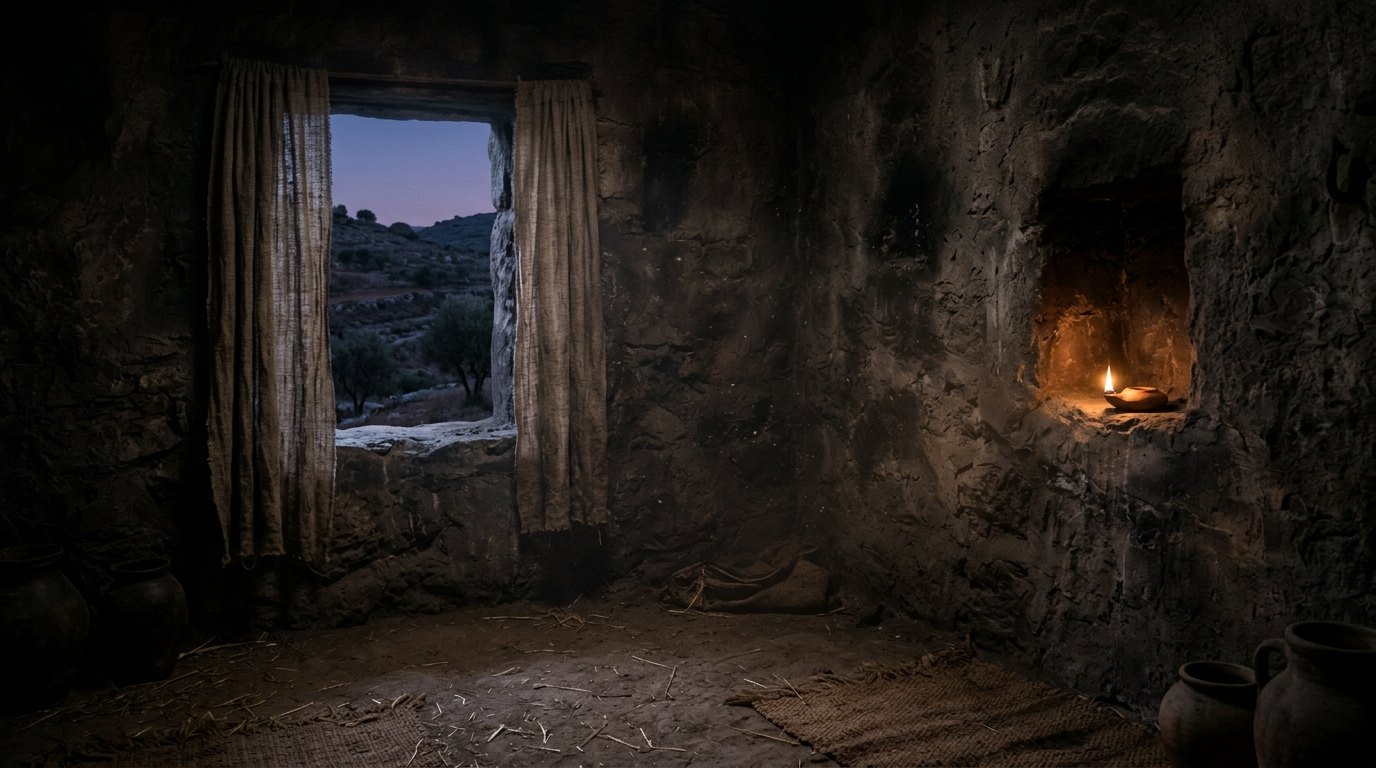
One day Jesus was praying in a certain place. When he finished, one of his disciples said to him, “Lord, teach us to pray, just as John taught his disciples.”
Luke 11:1 (NIV)
The disciples recognize Jesus' communion with the Father and ask for a distinct pattern to shape their own praying community.
In Luke 11:1, a disciple watches the Lord in prayer and makes a heartfelt plea: "Lord, teach us to pray, as John taught his disciples." The request reveals that prayer is not an innate human technique, but a learned posture given by a master to his community. Jesus readily answers this longing, but first strips away the religious distortions of the surrounding culture. In Matthew 6:5, He warns against hypocritical posturing, where men pray on street corners to be seen by human eyes. In Matthew 6:7, He prohibits heaping up empty phrases like the Gentiles, who mistakenly believe they will be heard for their many words. Instead, in Matthew 6:8, Christ assures His followers that the Father already knows what they need before they ask Him, liberating prayer from the burden of anxious manipulation.
True prayer is communion grounded in divine omniscience. In Matthew 6:6, the Lord directs His disciples to enter an inner room, shut the door, and speak to their Father who sees in secret. It is within this quiet posture of trust that Jesus gives the pattern recorded in Luke 11:2, granting His disciples a holy template that aligns their desires with the Father's heart.
| Passage | What it says |
|---|---|
| Luke 11:1 | A disciple asks Jesus to teach them how to pray just as John the Baptist taught his disciples. |
| Matthew 6:5 | Jesus warns against praying hypocritically to be seen by other men on the streets. |
| Matthew 6:7 | Christ instructs His followers not to heap up empty phrases as the Gentiles do in prayer. |
| Matthew 6:8 | Jesus reminds His disciples that the Father knows what they need before they ask. |
| Matthew 6:6 | Jesus commands going into a private room to pray to the Father in secret rather than seeking public applause. |
| Luke 11:2 | Jesus provides the pattern of prayer when His disciples ask to be taught how to pray. |
The Preface
Approaching Our Heavenly Father in Reverent Adoption

“This, then, is how you should pray: “ ‘Our Father in heaven, hallowed be your name,
Matthew 6:9 (NIV)
Jesus bids us address God as our shared Father in heaven, wedding the deepest family intimacy with exalted holy reverence.
When Jesus opens the pattern in Matthew 6:9, He invites us to speak words of breathtaking intimacy and towering grandeur: "Our Father in heaven, hallowed be your name." This opening establishes the relationship that governs every subsequent petition. Long before the incarnation, Isaiah 64:8 confessed the Lord as Father and potter, while Psalm 103:13 promised that as a father shows compassion to his children, so the Lord shows compassion to those who fear Him. Through Christ, this covenant reality reaches its glorious fullness. In Romans 8:15 and Galatians 4:6, the apostle Paul declares that believers have received the Spirit of adoption, by whom we cry, "Abba! Father!"
Yet this near tenderness never lapses into flippant familiarity. Jesus immediately adds that our Father is "in heaven." As Solomon warns in Ecclesiastes 5:2, God is in heaven and man is upon the earth, so our words must be few and reverent. To address God as Father in heaven is to approach the Almighty with childlike confidence and profound awe, knowing that the God who rules the universe has made us His own beloved children.
| Passage | What it says |
|---|---|
| Matthew 6:9 | Jesus opens the prayer by directing disciples to address 'Our Father in heaven.' |
| Romans 8:15 | Paul explains believers have received the Spirit of adoption by whom we cry 'Abba, Father.' |
| Isaiah 64:8 | Israel acknowledges the Lord as their Father and the potter who formed His people. |
| Ecclesiastes 5:2 | Solomon cautions that God is in heaven and man is on earth, calling for reverent words. |
| Galatians 4:6 | God sends the Spirit of His Son into hearts, crying 'Abba! Father!' |
| Psalms 103:13 | A father shows compassion to his children, as the Lord shows compassion to those who fear Him. |
God-Ward Petitions
Pleading for God's Name, Kingdom, and Will

your kingdom come, your will be done, on earth as it is in heaven.
Matthew 6:10 (NIV)
This petition focuses the believer's longing on the full realization of God's sovereign rule and obedient earthly worship.
The petitions begin not with our earthly anxieties, but with God's supreme glory. In Matthew 6:10, Jesus bids us pray: "Your kingdom come, your will be done, on earth as it is in heaven." The first cry of the redeemed soul is for the hallowing of God's name, fulfilling the ancient promise of Ezekiel 36:23 where God declares He will vindicate His holy name among the nations, and echoing Psalm 111:9, which proclaims that holy and reverend is His name. Prayer starts by aligning human affection with divine honor.
From that reverence flows an ardent desire for the reign of God to break into history. Psalm 145:11 describes the saints speaking of the glory of His kingdom and telling of His power. This kingdom arrives wherever the Father's will is obeyed without hesitation, exactly as the holy angels fulfill His word in Psalm 103:20. In Matthew 26:39, Jesus Himself perfectly embodies this petition in Gethsemane, sweating drops of blood as He yields His human will entirely to the Father: "Not as I will, but as you will." To pray this petition is to surrender our petty kingdoms so that Christ's righteous rule may reign supreme.
| Passage | What it says |
|---|---|
| Ezekiel 36:23 | God promises to vindicate the holiness of His great name before the nations. |
| Psalms 111:9 | The psalmist proclaims God's covenant redemption and declares His name holy and reverend. |
| Matthew 6:10 | The prayer asks for God's kingdom to come and His will to be done on earth as in heaven. |
| Matthew 26:39 | Jesus models total submission in Gethsemane, praying not His will but the Father's be done. |
| Psalms 145:11 | Saints speak of the glory of God's kingdom and tell of His supreme power. |
| Psalms 103:20 | Angels do God's word and obey the voice of His command in heaven. |
Daily Dependence
Trusting God for Daily Provision and Sustenance

Give us today our daily bread.
Matthew 6:11 (NIV)
The petition binds us to daily trust in God for our bread, casting aside anxious self-reliance.
Only after fixing our eyes on God's kingdom does Jesus turn to our physical preservation. In Matthew 6:11, He teaches us to pray: "Give us this day our daily bread." Repeated in Luke 11:3, this modest petition teaches contentment and constant reliance. It evokes the wilderness journey in Exodus 16:4, where the Lord rained bread from heaven day by day, testing whether Israel would depend upon Him for every morning's sustenance rather than hoarding for tomorrow. We are not taught to plead for endless luxury, but for what is needful for today.
This mirrors the humble wisdom of Agur in Proverbs 30:8, who asked God to feed him with the food convenient for him, lest he become full and deny the Lord or impoverished and steal. In Philippians 4:19, Paul assures the church that God will supply every need according to His riches in glory in Christ Jesus. When disciples obey Christ's command in Matthew 6:33 to seek first the kingdom of God and His righteousness, every temporal necessity is added unto them. Daily bread is both a gift from the Father's hand and a perpetual reminder that we live moment by moment on His gracious bounty.
| Passage | What it says |
|---|---|
| Matthew 6:11 | Jesus teaches disciples to ask the Father to give them this day their daily bread. |
| Exodus 16:4 | The Lord provides manna day by day to test whether Israel would walk in His law. |
| Proverbs 30:8 | Agur prays to be fed with the food convenient and needful for him. |
| Philippians 4:19 | Paul promises that God will supply every need according to His riches in glory in Christ. |
| Luke 11:3 | Jesus instructs His disciples to ask each day for their daily bread. |
| Matthew 6:33 | Jesus commands seeking first the kingdom of God and His righteousness, promising all necessities will be added. |
Reconciliation and Mercy
Confessing Sin and Extending God's Forgiveness

And forgive us our debts, as we also have forgiven our debtors.
Matthew 6:12 (NIV)
This petition ties our plea for God's cleansing to an active willingness to release debts owed to us.
In Matthew 6:12, the Lord binds our request for personal cleansing to our posture toward those who have wronged us: "and forgive us our debts, as we also have forgiven our debtors." Jesus does not treat sin lightly; He frames it as an unpayable moral debt toward a holy Creator. When Luke records this plea in Luke 11:4, he uses the explicit term "sins," demonstrating that every violation of God's law incurs real guilt before heaven. The honest disciple must confess transgression freely, echoing David's relief in Psalms 32:5, where transparent acknowledgement of iniquity is met with swift, unreserved pardon. Scripture leaves no room for hidden wrongdoing or self-righteous denial.
Yet the prayer also makes clear that an unforgiving heart cannot genuinely receive divine pardon. Directly after delivering this model prayer, Jesus adds a sobering warning in Matthew 6:14 and Matthew 6:15, declaring that if we refuse to release others, the Father will not release our trespasses. This is not earning mercy by good works; it reveals that those who have tasted God's staggering forgiveness necessarily show its fruit in daily relationships. The apostolic epistles consistently apply this principle to the church. In Ephesians 4:32, Paul urges believers to be tenderhearted, forgiving each other just as God in Christ forgave them, a charge repeated in Colossians 3:13. To plead for mercy at God's throne while harbouring bitterness against a neighbour is a spiritual contradiction that the Lord's Prayer directly dismantles.
| Passage | What it says |
|---|---|
| Matthew 6:12 | Disciples pray to be forgiven their debts as they forgive their debtors. |
| Luke 11:4 | Luke records the petition as asking forgiveness for sins as we forgive everyone indebted to us. |
| Matthew 6:14 | Jesus affirms that if we forgive others their trespasses, our heavenly Father will forgive us. |
| Matthew 6:15 | Jesus warns that refusing to forgive others means the Father will not forgive our trespasses. |
| Ephesians 4:32 | Paul exhorts believers to be kind and tenderhearted, forgiving one another just as God in Christ forgave them. |
| Psalms 32:5 | David acknowledges his sin to the Lord, and the Lord forgives the iniquity of his transgression. |
| Colossians 3:13 | Believers are commanded to forgive each other as the Lord has forgiven them. |
Spiritual Protection
Seeking Rescue from Trial and the Evil One
And lead us not into temptation, but deliver us from the evil one. ’
Matthew 6:13 (NIV)
Believers acknowledge their frailty before the enemy and pray to be kept from spiritual ruin.
The final petition in Matthew 6:13 confronts human weakness and the reality of unseen warfare: "And lead us not into temptation, but deliver us from evil." Here the believer acknowledges personal frailty, asking God to shepherd their path away from situations that would overwhelm faith. James 1:13 makes clear that God Himself tempts no one to sin, for He is holy and entirely separate from evil; rather, this petition asks the Father to preserve us from being caught in trials that could lead to spiritual ruin, providing a way of escape just as 1 Corinthians 10:13 guarantees to all who lean upon His faithfulness.
The second half of the phrase points to an active adversary: "deliver us from the evil one." Disciples do not walk through a neutral cosmos. Peter warns in 1 Peter 5:8 that the devil prowls like a roaring lion seeking someone to devour, while Paul commands believers in Ephesians 6:11 to put on the whole armor of God against demonic schemes. In John 17:15, Jesus intercedes with the exact same words for His followers, asking not that they be removed from this hostile world, but that the Father would guard them from the evil one. Our enduring security rests solely on God's preserving power, as affirmed in 2 Thessalonians 3:3, where the faithful Lord establishes His saints and guards them against every assault.
| Passage | What it says |
|---|---|
| Matthew 6:13 | The prayer asks not to be brought into temptation, but delivered from the evil one. |
| 1 Corinthians 10:13 | God is faithful and will not allow His children to be tempted beyond their ability to endure. |
| James 1:13 | James teaches that God tempts no one with evil, being Himself untempted by evil. |
| 1 Peter 5:8 | Peter warns to be sober and watchful because the devil prowls like a roaring lion seeking someone to devour. |
| John 17:15 | Jesus prays not that the Father take disciples from the world, but keep them from the evil one. |
| 2 Thessalonians 3:3 | The Lord is faithful to establish believers and guard them against the evil one. |
| Ephesians 6:11 | Believers are instructed to put on the whole armor of God to stand against the schemes of the devil. |
The Doxology
Ascribing All Kingdom, Power, and Glory to God

Yours, LORD, is the greatness and the power and the glory and the majesty and the splendor, for everything in heaven and earth is yours. Yours, LORD, is the kingdom; you are exalted as head over all.
1 Chronicles 29:11 (NIV)
David's ancient praise provides the scriptural foundation echoed by the prayer's closing doxology to the eternal King.
The prayer culminates in full-throated praise that anchors the soul in divine sovereignty: "For yours is the kingdom and the power and the glory, forever. Amen." This conclusion draws directly upon the historic worship of Israel, epitomised in 1 Chronicles 29:11, where King David blesses the Lord before the entire congregation, proclaiming that greatness, power, glory, victory, and majesty belong exclusively to Him whose dominion rules over all. By returning to God's reign at the close of every prayer, believers remember that all history, authority, and ultimate victory belong to God alone.
This doxological focus runs through the whole of Scripture. In Psalms 145:13, the psalmist rejoices that God's kingdom is an everlasting kingdom that spans every generation, undisturbed by earthly rulers or temporary chaos. When the saints assemble, they join the ancient chorus of 1 Chronicles 16:36, praising the Lord from everlasting to everlasting and sealing their trust with a united "Amen." The New Testament paints the final consummation of this praise: Revelation 4:11 records the heavenly host casting their crowns to confess that the Creator alone is worthy of glory, honour, and power. As Jude 1:25 seals the believer's hope, all glory, majesty, dominion, and authority are ascribed to the only God our Savior, before all time and for eternity.
| Passage | What it says |
|---|---|
| 1 Chronicles 29:11 | David proclaims the greatness, power, glory, victory, and majesty belong to the Lord whose kingdom rules over all. |
| Revelation 4:11 | The heavenly elders declare God worthy of glory, honor, and power as the Creator of all things. |
| 1 Chronicles 16:36 | The assembly responds with praise to God from everlasting to everlasting, answering with Amen. |
| Psalms 145:13 | God's kingdom is an everlasting kingdom, and His dominion endures throughout all generations. |
| Jude 1:25 | To the only God our Savior be glory, majesty, dominion, and authority before all time and forever. |
Where in the Bible
| Book | Passages |
|---|---|
| Exodus | 1 · Exodus 16:4 |
| 1 Chronicles | 2 · 1 Chronicles 29:11, 1 Chronicles 16:36 |
| Psalms | 6 · Psalms 103:13, Psalms 111:9, Psalms 145:11, Psalms 103:20, Psalms 32:5, Psalms 145:13 |
| Proverbs | 1 · Proverbs 30:8 |
| Ecclesiastes | 1 · Ecclesiastes 5:2 |
| Isaiah | 1 · Isaiah 64:8 |
| Ezekiel | 1 · Ezekiel 36:23 |
| Matthew | 13 · Matthew 6:5, Matthew 6:7, Matthew 6:8, Matthew 6:6, Matthew 6:9, Matthew 6:10, Matthew 26:39, Matthew 6:11, Matthew 6:33, Matthew 6:12, Matthew 6:14, Matthew 6:15, Matthew 6:13 |
| Luke | 4 · Luke 11:1, Luke 11:2, Luke 11:3, Luke 11:4 |
| John | 1 · John 17:15 |
| Romans | 1 · Romans 8:15 |
| 1 Corinthians | 1 · 1 Corinthians 10:13 |
| Galatians | 1 · Galatians 4:6 |
| Ephesians | 2 · Ephesians 4:32, Ephesians 6:11 |
| Philippians | 1 · Philippians 4:19 |
| Colossians | 1 · Colossians 3:13 |
| 2 Thessalonians | 1 · 2 Thessalonians 3:3 |
| James | 1 · James 1:13 |
| 1 Peter | 1 · 1 Peter 5:8 |
| Jude | 1 · Jude 1:25 |
| Revelation | 1 · Revelation 4:11 |
The story in order
- Jesus teaches prayer (c. AD 30) · Luke 11:1 · Disciples ask Jesus to teach them how to pray.
- Jesus warns against hypocrisy (c. AD 30) · Matthew 6:5 · Don't pray to be seen by men.
- Jesus teaches prayer pattern (c. AD 30) · Luke 11:2 · Jesus gives the disciples a model prayer.
- Address God as Father (c. AD 30) · Matthew 6:9 · Begin prayer by addressing God as 'Our Father'.
- God's name, kingdom, will (c. AD 30) · Matthew 6:10 · Pray for God's name to be honored, His kingdom to come, His will to be done.
- Daily provision (c. AD 30) · Matthew 6:11 · Ask God for daily needs like bread.
- Forgiveness of sins (c. AD 30) · Matthew 6:12 · Pray for forgiveness as we forgive others.
- Deliverance from evil (c. AD 30) · Matthew 6:13 · Ask God for protection from temptation and evil.
- Doxology (c. 1000 BC) · 1 Chronicles 29:11 · Ascribe kingdom, power, and glory to God.
- Paul on adoption (c. AD 60) · Romans 8:15 · Believers receive the Spirit of adoption, crying 'Abba, Father'.
- Paul on provision (c. AD 62) · Philippians 4:19 · God supplies all needs according to His riches.
- Paul on forgiveness (c. AD 62) · Ephesians 4:32 · Be kind and forgiving, as God in Christ forgave you.
- Peter on the devil (c. AD 65) · 1 Peter 5:8 · Be alert, for the devil prowls like a lion.
Forgiveness: Conditional and Absolute
| Condition for Receiving Forgiveness | Result of Unforgiveness | Passage |
|---|---|---|
| Forgive your debtors | Matthew 6:12 | Matthew 6:14 |
| If you do not forgive others, your Father will not forgive you | Matthew 6:15 | Matthew 6:15 |
Key words
- Abba (Abba, אַבָּא)
- An Aramaic term of endearment for 'Father', expressing intimacy. · Romans 8:15
- Daily Bread (epiousios, ἐπιούσιος)
- Sustenance needed for the day, both physical and spiritual. · Matthew 6:11
- Debts/Sins (opheilēmata, ὀφειλήματα)
- Financial obligations or moral failings that require forgiveness. · Matthew 6:12
- Temptation (peirasmos, πειρασμός)
- An enticement to sin or a trial that tests faith. · Matthew 6:13
- Evil One (ponēros, πονηρός)
- The devil, Satan, the ultimate source of evil. · Matthew 6:13
- Kingdom of God (basileia tou theou, βασιλεία τοῦ θεοῦ)
- God's sovereign rule and reign, both present and future. · Matthew 6:10
To pray the Lord's Prayer is to let Christ reshape our posture before God from anxious self-interest to filial trust and holy surrender. As we pray these words, we join believers across all ages in exalting the Father's eternal reign while depending entirely on His daily grace.
43 passages, each cited once.
Scripture cited
- Luke 11:1-4
- Revelation 4:11
- Romans 8:15
- Psalms 111:9
- Ezekiel 36:23
- Matthew 6:5-15