What is the meaning of Romans 15:5-6?
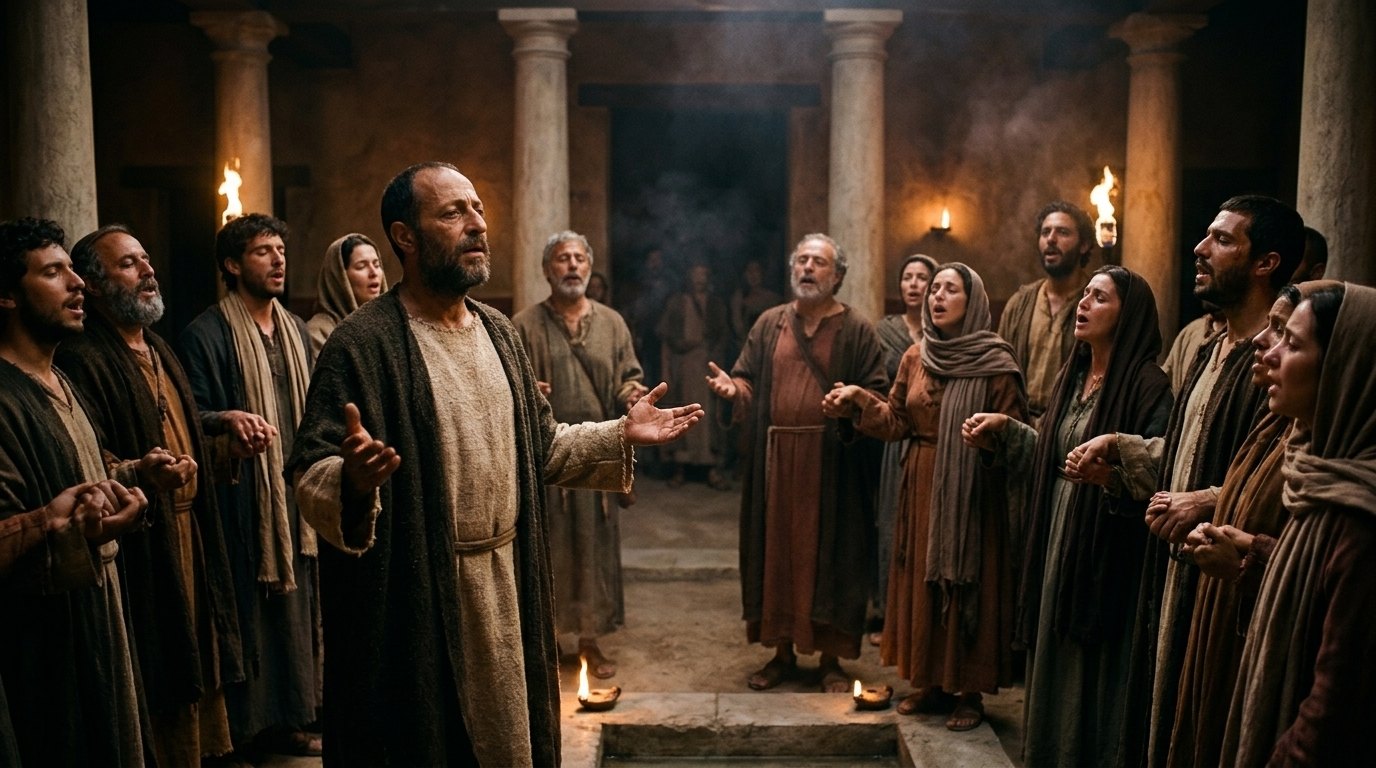
Romans 15:5-6
5 May the God who gives endurance and encouragement give you the same attitude of mind toward each other that Christ Jesus had,
6 so that with one mind and one voice you may glorify the God and Father of our Lord Jesus Christ.
New International Version (NIV)
The answer
Romans 15:5-6 is Paul's prayer that believers would be united in their thinking, shaped by Christ, so that they could praise God together with one heart and one voice.
The prayer: God gives a shared mind (Romans 15:5)
Paul asks the "God of perseverance and of encouragement" to grant believers the same mind toward one another "according to Christ Jesus." The result is not agreement produced by force or compromise; it is God producing unity by helping believers adopt Christ's way of thinking and living.
The purpose: unified praise (Romans 15:6)
That shared mind leads to harmony: "with one accord" describes their united heart and action, while "with one mouth" describes their united testimony. Their goal is to glorify "the God and Father of our Lord Jesus Christ." Unity matters because the church is called to speak and sing as one redeemed people centered on Christ.
What this looks like
Romans 15:7 follows with the instruction: "Accept one another, then, just as Christ accepted you for the glory of God." Christlikeness therefore includes humility, sincere welcome, and putting others ahead of ourselves (Philippians 2:3-5). It does not mean pretending every disagreement does not matter; it means handling differences without contempt and remaining united around Christ and his word.
Paul's aim in this prayer is not merely a comfortable congregation but a worshiping church whose shared life brings God the glory (Romans 15:7-9).
Answered from Scripture · reviewed November 10, 2026
Romans 15:5-6 is the apostle Paul's pastoral benediction begging God to grant believers supernatural harmony shaped by the character of Christ. This unity is not mere interpersonal politeness, but a shared posture designed to erupt into undivided, collective praise to God.
The Source
God Gives Endurance and Encouragement

May the God who gives endurance and encouragement give you the same attitude of mind toward each other that Christ Jesus had,
Romans 15:5 (NIV)
It names God as the author of both endurance and encouragement, the two divine provisions necessary to sustain church unity.
In Romans 15:5, the apostle Paul turns his pastoral exhortations into a prayer, recognizing that genuine Christian unity cannot be manufactured by human resolve alone. The church at Rome wrestled with sharp fractures over food laws and sacred days, leading Paul to command the strong to bear the weaknesses of those who stumble rather than simply pleasing themselves (Romans 15:1). Each Christian is summoned to pursue the good and building up of their neighbor (Romans 15:2), following the supreme pattern of Christ Jesus, who refused self-gratification and willingly absorbed the reproaches that belonged to others (Romans 15:3). This high calling would break any community left to its own strength, which is why God provided the written Scriptures to instruct, sustain patience, and stir enduring hope (Romans 15:4).
Because God is the true fountain of endurance and comfort, Paul petitions him directly to grant believers the supernatural capacity to live in mutual harmony according to Christ (Romans 15:5). This divine gift directly addresses the practical tensions outlined earlier, where believers are charged to receive the weak without quarreling over doubtful opinions (Romans 14:1) and to pursue actively the things that make for peace and mutual edification (Romans 14:19). The prayer anchors the church in divine sufficiency, culminating in the benediction that the God of hope would overflow in their hearts with joy and peace through the Holy Spirit (Romans 15:13).
| Passage | What it says |
|---|---|
| Romans 15:1 | Exhorts the strong to bear with the weaknesses of the failing, rather than merely pleasing themselves. |
| Romans 15:2 | Commands each believer to please their neighbour for their good, leading to their edification. |
| Romans 15:3 | Points to Christ, who did not please himself but willingly bore the reproaches of others. |
| Romans 15:4 | Affirms that Scriptures were written for our instruction, giving patience and comfort so that we have hope. |
| Romans 15:5 | Petitions the God of perseverance and encouragement to grant believers the same mind toward one another according to Christ. |
| Romans 15:13 | Prays that the God of hope will fill believers with all joy and peace in believing. |
| Romans 14:1 | Paul instructs believers to welcome those weak in faith without quarreling over opinions. |
| Romans 14:19 | Believers must pursue what makes for peace and mutual upbuilding across differences. |
The Standard
Having the Mind of Christ Jesus

In your relationships with one another, have the same mindset as Christ Jesus:
Philippians 2:5 (NIV)
It articulates the standard of Christian unity as sharing the humble, self-giving disposition of Christ Jesus.
The benchmark for biblical agreement is not vague goodwill or organizational conformity, but the humble, self-emptying character of Christ Jesus himself (Philippians 2:5). Paul urges the Roman believers to live in harmonious sympathy rather than nurturing proud thoughts or chasing status above the lowly (Romans 12:16). When believers share the mind of the Lord, rivalry and vain conceit give way to genuine lowliness of heart, where each counts the other as more significant than themselves (Philippians 2:3). This disposition actively shifts the believer's focus away from private rights toward the practical spiritual well-being of their brothers and sisters (Philippians 2:4).
Walking in this mindset mirrors the fragrant sacrifice of Christ, who loved us and gave himself up to God on our behalf (Ephesians 5:2). The apostle Peter reinforces this universal ethic across the scattered congregations, directing every Christian to be like-minded, compassionate, brotherly, tenderhearted, and courteous (1 Peter 3:8). It remains the apostolic plea across the New Testament that believers mend their divisions, comfort one another, and pursue the peace of God (2 Corinthians 13:11). Paul makes that exact appeal to the troubled Corinthian church, begging them in the name of the Lord Jesus Christ to be perfectly joined together in the same mind and the same judgment without schism (1 Corinthians 1:10).
| Passage | What it says |
|---|---|
| Romans 12:16 | Instructs the saints to be of the same mind toward one another, avoiding pride and high-mindedness. |
| Philippians 2:3 | Commands doing nothing through selfish ambition or conceit, but in humility esteeming others better than oneself. |
| Philippians 2:4 | Urges looking not only to one's own interests, but also to the interests of others. |
| Philippians 2:5 | Directs believers to have in themselves the very mind that was also in Christ Jesus. |
| Ephesians 5:2 | Calls Christians to walk in love, just as Christ loved us and gave himself up for us. |
| 1 Peter 3:8 | Admonishes all believers to be harmonious, sympathetic, brotherly, kind-hearted, and humble in spirit. |
| 2 Corinthians 13:11 | Exhorts brethren to comfort one another, agree with one another, and live in divine peace. |
| 1 Corinthians 1:10 | Paul appeals for complete agreement and unity of mind without divisions in the church. |
The Purpose
One Accord and One Voice

so that with one mind and one voice you may glorify the God and Father of our Lord Jesus Christ.
Romans 15:6 (NIV)
It defines the supreme goal of congregational harmony as glorifying God with one unified voice and mind.
The ultimate aim of church harmony is doxological: believers are united so that with one heart and one mouth they may glorify God (Romans 15:6). Division silences collective worship, but supernatural oneness turns diverse voices into a single, resonant song honoring the God and Father of our Lord Jesus Christ. Therefore, Paul issues the foundational command of Christian fellowship: welcome one another just as Christ welcomed you, precisely so that God may receive glory (Romans 15:7). This welcoming grace bridges ancient divides, demonstrating that Christ became a servant to the Jewish people to validate God's truthfulness and confirm patriarchal covenants (Romans 15:8), while simultaneously inviting the Gentiles to magnify God for his unfathomable mercy (Romans 15:9).
This corporate praise reflects the earliest heartbeat of the church, seen when the persecuted believers in Jerusalem lifted their voices together to heaven in immediate, unified prayer (Acts 4:24). It anticipates the eternal climax of redemption, where every creature in heaven, on earth, under the earth, and in the sea unites in unceasing praise to the enthroned Lord and to the Lamb forever (Revelation 5:13).
| Passage | What it says |
|---|---|
| Romans 15:6 | Declares that believers are to glorify the God and Father of our Lord Jesus Christ with one accord and voice. |
| Romans 15:7 | Commands mutual acceptance just as Christ accepted us, specifically for the glory of God. |
| Romans 15:8 | Explains that Christ became a servant to the circumcised to confirm the promises given to the patriarchs. |
| Romans 15:9 | Shows that the Gentiles glorify God for his mercy, quoting praise among the nations from Scripture. |
| Acts 4:24 | The early believers lift their voices together in one accord to glorify God. |
| Revelation 5:13 | Every creature unites in one voice of praise to God and the Lamb. |
Where in the Bible
| Book | Passages |
|---|---|
| Acts | 1 · Acts 4:24 |
| Romans | 13 · Romans 15:1, Romans 15:2, Romans 15:3, Romans 15:4, Romans 15:5, Romans 15:13, Romans 14:1, Romans 14:19, Romans 12:16, Romans 15:6, Romans 15:7, Romans 15:8, Romans 15:9 |
| 1 Corinthians | 1 · 1 Corinthians 1:10 |
| 2 Corinthians | 1 · 2 Corinthians 13:11 |
| Ephesians | 1 · Ephesians 5:2 |
| Philippians | 3 · Philippians 2:3, Philippians 2:4, Philippians 2:5 |
| 1 Peter | 1 · 1 Peter 3:8 |
| Revelation | 1 · Revelation 5:13 |
The story in order
- Patriarchs receive promises (c. 2000 BC) · Romans 15:8 · Christ confirmed God's promises to them.
- Israel's praise in Scripture (c. 1450 BC) · Romans 15:9 · Scripture shows Gentiles will praise God.
- Jesus lives to please God (c. AD 30) · Romans 15:3 · He bore reproaches, not pleasing himself.
- Early church unity (c. AD 33) · Acts 4:24 · Believers prayed together with one voice.
- Paul urges unity (c. AD 55) · 1 Corinthians 1:10 · Appeals for agreement and no divisions.
- Unity in Christ's mind (c. AD 61) · Philippians 2:5 · Have the mind of Christ Jesus.
- Unity in love and peace (c. AD 62) · Ephesians 5:2 · Walk in love as Christ loved us.
- Unity in mutual acceptance (c. AD 57) · Romans 15:7 · Accept one another for God's glory.
- Unity in one accord (c. AD 57) · Romans 15:6 · Glorify God with one voice.
- Unity in peace and upbuilding (c. AD 57) · Romans 14:19 · Pursue peace and mutual upbuilding.
- Unity in humility (c. AD 61) · Philippians 2:3 · Esteem others better than yourselves.
- Unity in harmony (c. AD 64) · 1 Peter 3:8 · Be harmonious, sympathetic, kind-hearted.
- Final unity in praise (c. AD 95) · Revelation 5:13 · All creation will praise God and the Lamb.
Christ's example of selfless love
| Believer's action | Christ's action | Purpose | Passage |
|---|---|---|---|
| Bear with the failing, not pleasing self | Did not please himself | To show God's character | Romans 15:1 |
| Please neighbour for their good | Bore reproaches of others | To build them up | Romans 15:2 |
| Have the same mind toward one another | Had the mind of Christ Jesus | To glorify God | Romans 15:5 |
| Accept one another | Christ accepted us | For the glory of God | Romans 15:7 |
Unity leads to praise
| Unity in action | Result | Passage |
|---|---|---|
| Welcome those weak in faith | Peace and mutual upbuilding | Romans 14:1 |
| Be of the same mind | Avoid pride and division | Romans 12:16 |
| Have the mind of Christ | Harmony and peace | Philippians 2:5 |
| Agree with one another | Live in peace | 2 Corinthians 13:11 |
| One accord and one voice | Glorify God | Romans 15:6 |
| Mutual acceptance | Glory of God | Romans 15:7 |
| Early believers' unity | Glorified God together | Acts 4:24 |
| All creation's unity | Praise to God and the Lamb | Revelation 5:13 |
Key words
- Mind (φρόνημα, phronēma)
- A shared disposition, attitude, and way of thinking. · Philippians 2:5
- One accord (ὁμόνοια, homonoia)
- Complete agreement and unity of purpose. · 1 Corinthians 1:10
- Encouragement (παράκλησις, paraklēsis)
- Exhortation and comfort that builds up. · Romans 15:5
- Perseverance (ὑπομονή, hypomonē)
- Endurance and steadfastness, especially under trial. · Romans 15:5
- Edification (οἰκοδομή, oikodomē)
- Building up in faith and spiritual maturity. · Romans 15:2
True Christian harmony is neither an accident of temperament nor an achievement of human willpower; it is a gift pleaded from the God of endurance and encouragement. When believers lay aside self-interest to love and welcome one another, their shared life becomes a unified choir exalting the Father through the Son.
22 passages, each cited once.
Scripture cited
- Romans 15:5-6