What is the Sermon on the Mount?

Matthew 5:1-12
1 Now when Jesus saw the crowds, he went up on a mountainside and sat down. His disciples came to him,
2 and he began to teach them. He said:
3 “Blessed are the poor in spirit, for theirs is the kingdom of heaven.
4 Blessed are those who mourn, for they will be comforted.
5 Blessed are the meek, for they will inherit the earth.
6 Blessed are those who hunger and thirst for righteousness, for they will be filled.
7 Blessed are the merciful, for they will be shown mercy.
8 Blessed are the pure in heart, for they will see God.
9 Blessed are the peacemakers, for they will be called children of God.
10 Blessed are those who are persecuted because of righteousness, for theirs is the kingdom of heaven.
11 “Blessed are you when people insult you, persecute you and falsely say all kinds of evil against you because of me.
12 Rejoice and be glad, because great is your reward in heaven, for in the same way they persecuted the prophets who were before you.
New International Version (NIV)
The answer
The Sermon on the Mount is the extended teaching of Jesus recorded in Matthew 5–7. Its name comes from the setting: Jesus saw the multitudes, went up onto a mountain, sat down, and taught his disciples (Matthew 5:1-2). It describes the character and conduct of those who belong to God’s Kingdom, calling for righteousness that reaches the heart rather than mere outward religion.
What Jesus teaches
- The Beatitudes: Jesus pronounces blessing on the poor in spirit, those who mourn, the gentle, the merciful, the pure in heart, peacemakers, and those persecuted for righteousness. Their rewards include the Kingdom of Heaven, comfort, mercy, and seeing God (Matthew 5:3-12).
- Salt, light, and true righteousness: Disciples are to make God’s goodness visible through good works. Jesus came not to destroy the Law and the Prophets but to fulfill them. He then exposes anger, lust, marital unfaithfulness, false speech, retaliation, and hatred, commanding reconciliation, purity, truthfulness, generosity, and love for enemies (Matthew 5:13-48).
- Devotion to God rather than human approval: Giving, prayer, and fasting must not be performances for spectators. This section includes the Lord’s Prayer, teaching about treasures in heaven, the impossibility of serving both God and Mammon, freedom from anxious striving, and the command to seek God’s Kingdom and righteousness first (Matthew 6:1-34).
- Discernment, prayer, and obedience: Jesus warns against hypocritical judgment, encourages persistent prayer, gives the Golden Rule, and warns of the broad road to destruction and of false prophets known by their fruits. He contrasts merely calling him Lord with doing the Father’s will (Matthew 7:1-23).
Why it matters
The sermon does not permit hearers to remain admirers of Jesus without becoming doers of his words. Its conclusion compares the obedient hearer to a house founded on rock and the disobedient hearer to a house built on sand that falls under the storm (Matthew 7:24-27). The multitudes were astonished because Jesus taught with authority, unlike the scribes (Matthew 7:28-29).
The similar sermon in Luke
Luke 6:17-49 records teaching often called the Sermon on the Plain, because Jesus stood on a level place. It contains blessings and woes, love for enemies, warnings about judgment, teaching about fruit and character, and another account of the wise and foolish builders. Some understand it as another account of the same sermon; others understand it as similar teaching delivered on a different occasion. The settings and contents are not identical, but both accounts carry Jesus’ demand for wholehearted obedience.
Answered from Scripture · reviewed November 11, 2026
The Sermon on the Mount, recorded in Matthew 5–7, is Jesus Christ's foundational proclamation of the kingdom of heaven and the nature of true discipleship. Delivered on a mountainside in Galilee to His disciples before listening crowds, it unpacks the internal righteousness, devotion, and steadfast trust demanded of those who belong to God. Far from abolishing the Law and the Prophets, the Messiah reveals their true fulfillment and sets forth an enduring pattern for life under His gracious rule.
The Setting and Beatitudes
The Character and Blessing of Kingdom Citizens
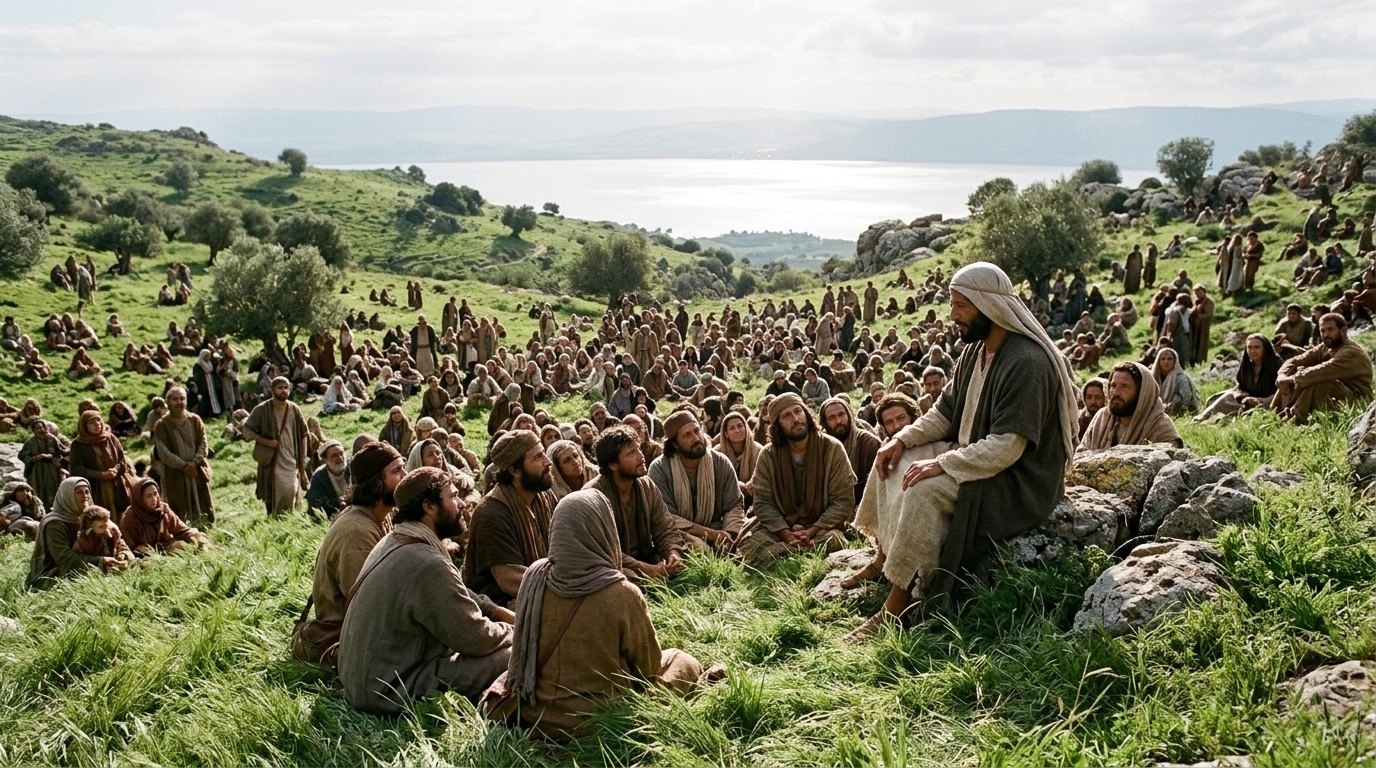
“Blessed are the poor in spirit, for theirs is the kingdom of heaven.
Matthew 5:3 (NIV)
It opens the sermon by declaring that spiritual poverty, rather than worldly merit, is the gateway to the kingdom of heaven.
In Matthew 5:3, Jesus opens His great proclamation with words that overturn human wisdom: 'Blessed are the poor in spirit, for theirs is the kingdom of heaven.' True kingdom citizenship begins not with spiritual self-sufficiency, but with an honest confession of utter bankruptcy before a holy God. Ascending the elevated ground overlooking the Sea of Galilee, Jesus assumes the posture of an authoritative teacher as His disciples draw near and listening multitudes gather around (Matthew 5:1-2).
What follows in the Beatitudes (Matthew 5:3-12) maps the supernatural reality of regenerated life. Those who mourn over sin receive divine comfort; the meek inherit the earth; and those hungering and thirsting for righteousness find complete satisfaction in God. Jesus promises mercy to the merciful, vision of God to the pure in heart, and heavenly sonship to peacemakers. Far from promising worldly ease, He prepares His people for slander and persecution, declaring that enduring hostility for His name's sake yields great reward in heaven.
Having outlined kingdom character, the Lord turns immediately to kingdom influence in Matthew 5:13-16. His followers are the salt of the earth and the light of the world. Just as salt preserves and imparts flavor, and a city set on a hill cannot remain hidden, disciples are called to display good works before an watching world—not for selfish praise, but that men may glorify the Father in heaven.
| Passage | What it says |
|---|---|
| Matthew 5:1-2 | Jesus ascends the mountain, sits down in teaching posture, and begins instructing His gathered disciples. |
| Matthew 5:3-12 | The Beatitudes describe the posture, persecutions, and heavenly rewards that characterize the citizens of Christ's kingdom. |
| Matthew 5:13-16 | Jesus designates His disciples as the salt of the earth and light of the world, commanding visible good works. |
Fulfilling the Law
Greater Righteousness and the Law's Full Meaning
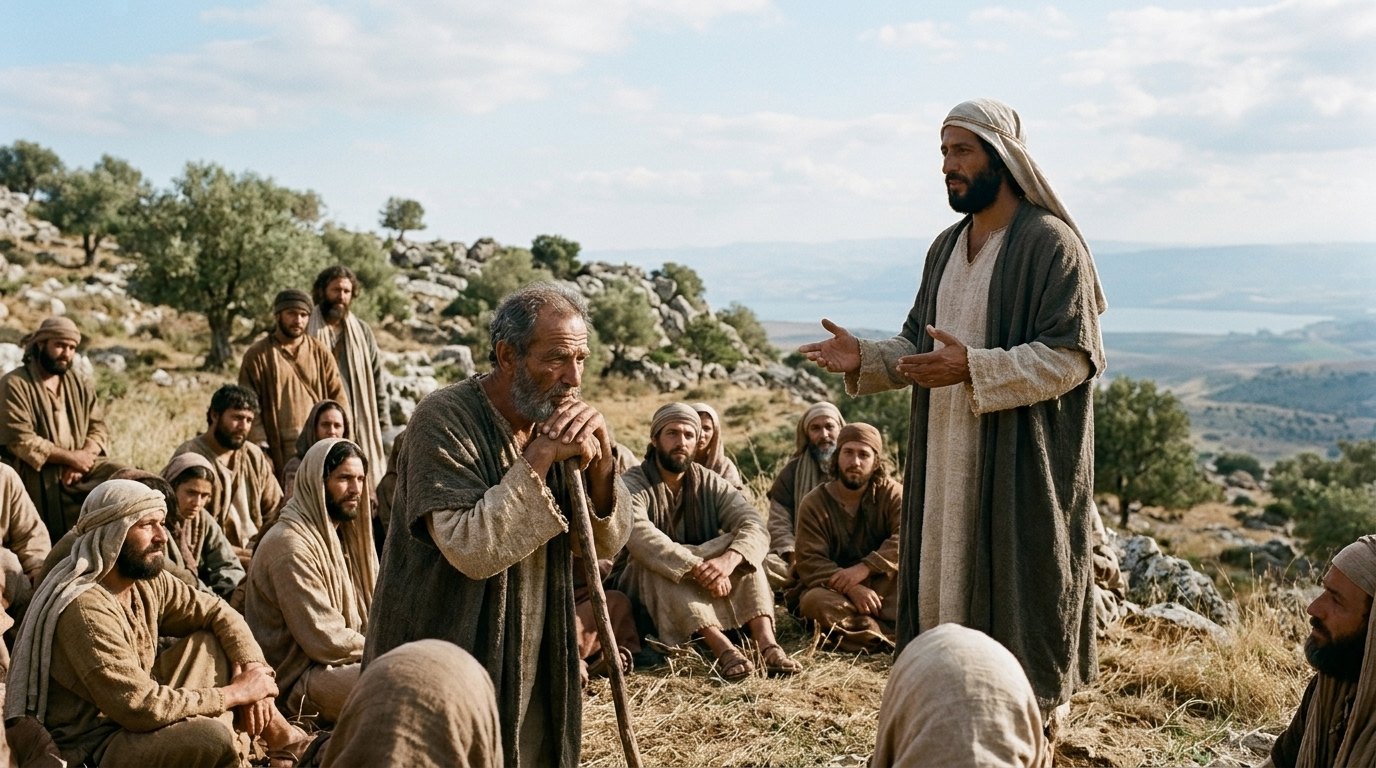
“Do not think that I have come to abolish the Law or the Prophets; I have not come to abolish them but to fulfill them.
Matthew 5:17 (NIV)
Jesus explicitly defines His mission not as dismantling God's revealed law, but bringing it to complete fulfillment.
In Matthew 5:17, Jesus announces the continuity and culmination of divine revelation: 'Do not think that I have come to abolish the Law or the Prophets; I have not come to abolish them but to fulfill them.' Every stroke and letter of God's Word stands immutable until all is accomplished, demanding a righteousness that exceeds the externalism of the scribes and Pharisees (Matthew 5:18-20).
Christ then penetrates beneath external compliance to the secret motives of the soul. Anger and contempt in the heart incur the guilt of murder, demanding swift, humble reconciliation before worship (Matthew 5:21-26). He reveals that looking with lustful intent commits adultery in the heart, calling believers to decisive, costly mortification of sin (Matthew 5:27-30). He upholds the holiness of marriage, exposing unbiblical divorce as an offense that causes adultery (Matthew 5:31-32), and demands unyielding integrity of speech where a disciple's 'Yes' means 'Yes' without manipulative oaths (Matthew 5:33-37).
Finally, the Lord shatters natural human retaliation (Matthew 5:38-42), commanding non-resistance to evil through patience, generosity, and service. Concluding with radical love, He commands His followers to love your enemies and pray for those who persecute you (Matthew 5:43-48), reflecting the impartial goodness and perfection of their Father in heaven.
| Passage | What it says |
|---|---|
| Matthew 5:17-20 | Jesus affirms the enduring authority of the Law and requires a righteousness surpassing that of the scribes and Pharisees. |
| Matthew 5:21-26 | Jesus exposes murderous anger and insults within the heart and commands urgent, humble reconciliation. |
| Matthew 5:27-30 | Jesus identifies lustful intent as adulterous sin and calls for radical removal of stumbling blocks. |
| Matthew 5:31-32 | Jesus upholds the sanctity and permanency of marriage against casual divorce. |
| Matthew 5:33-37 | Jesus commands absolute honesty in speech rather than reliance on evasive oaths. |
| Matthew 5:38-42 | Jesus forbids personal vengeance, urging non-retaliation, generosity, and going the second mile. |
| Matthew 5:43-48 | Jesus commands love and prayer for persecuting enemies to reflect the perfect mercy of the Heavenly Father. |
Heart Devotion
Authentic Piety Free from Hypocrisy
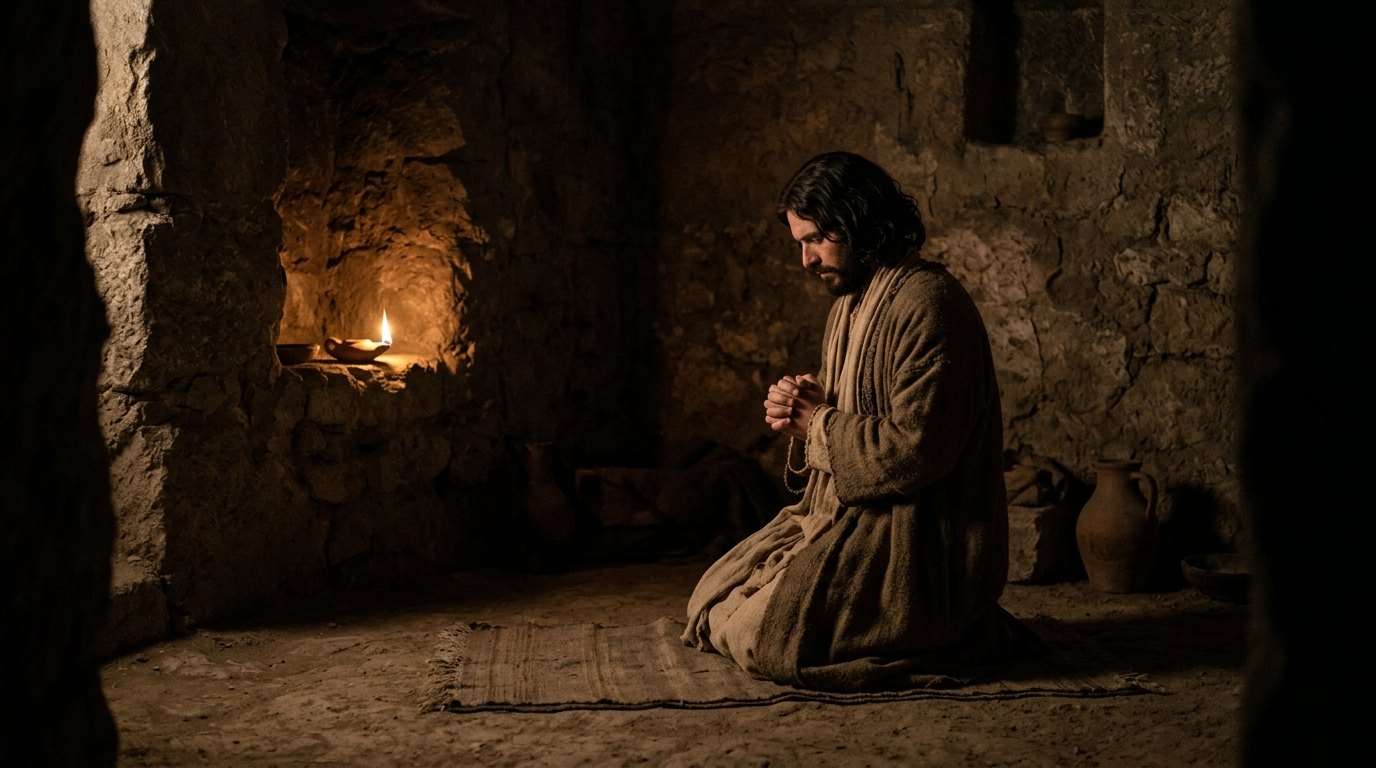
“Be careful not to practice your righteousness in front of others to be seen by them. If you do, you will have no reward from your Father in heaven.
Matthew 6:1 (NIV)
It establishes the foundational rule against practicing righteousness before human audiences for applause.
In Matthew 6:1, Jesus issues a sharp warning against religious theater: 'Beware of practicing your righteousness before other people in order to be seen by them, for then you will have no reward from your Father who is in heaven.' Authentic devotion seeks no earthly applause, resting entirely in the presence of the unseen God.
Applying this principle to giving, Jesus commands that charitable deeds be performed in secret, so quiet that the left hand does not know what the right hand is doing (Matthew 6:1-4). Hypocrites blow trumpets to receive human honors, receiving their reward in full, but the Father who sees in secret repays openly. The same quiet sincerity governs prayer (Matthew 6:5-8); disciples are to withdraw into their private rooms and avoid empty repetitions, trusting that their Father knows their needs before they ask.
To guide their worship, Jesus provides the model prayer in Matthew 6:9-15, directing believers to revere the Father's holy name, plead for the coming of His kingdom, seek daily bread, confess sins, and petition for deliverance from temptation, emphasizing that forgiving others reflects a heart that has truly received divine pardon. Likewise, fasting must occur without manufactured sorrow or disheveled appearances (Matthew 6:16-18), anointing the head so only God observes the soul's genuine hunger for Him.
| Passage | What it says |
|---|---|
| Matthew 6:1-4 | Jesus commands secret, sincere giving to the needy without sounding trumpets for public recognition. |
| Matthew 6:5-8 | Jesus instructs believers to pray privately to the Father rather than parading piety on street corners. |
| Matthew 6:9-15 | The Lord's Prayer provides a disciples' model of adoration, supplication, confession, and mutual forgiveness. |
| Matthew 6:16-18 | Jesus commands private fasting without gloomy outward display so that only God observes it. |
Faith and Treasure
Singular Loyalty and Trust Over Worry

But seek first his kingdom and his righteousness, and all these things will be given to you as well.
Matthew 6:33 (NIV)
It directs the disciple's primary ambition toward seeking God's kingdom and righteousness above all material necessities.
In Matthew 6:33, Christ settles every anxious ambition with a commanding summons: 'Seek first the kingdom of God and his righteousness, and all these things will be added to you.' Discipleship demands undivided allegiance, refusing to let the necessities of earthly life eclipse the eternal rule of God.
Jesus establishes this priority by warning against the peril of hoarding wealth on earth, where moth and rust destroy and thieves break in (Matthew 6:19-21). Because one's heart inevitably follows one's treasure, spiritual vision must remain clear, recognizing that no one can serve two masters: you cannot serve God and money (Matthew 6:22-24). Compromise is impossible; divided loyalty is spiritual treason.
From divided allegiance, the Lord addresses paralyzing anxiety over food, drink, and clothing (Matthew 6:25-32). Pointing to the birds of the air, which neither sow nor reap yet feed from the Father's hand, He exposes worry as a failure of faith. Pointing to the wildflowers that surpass Solomon in splendor, He reminds His hearers of their infinite worth to the Creator. Disciples need not chase after material provisions like the Gentiles; the heavenly Father already knows what they need. Trusting Him day by day, believers are freed from borrowed tomorrow's troubles, resting securely in His providential care (Matthew 6:34).
| Passage | What it says |
|---|---|
| Matthew 6:19-24 | Jesus contrasts earthly and heavenly treasure, warning that one cannot serve both God and money. |
| Matthew 6:25-34 | Jesus forbids anxious worry over food and clothing, pointing to God's care for birds and lilies. |
Discipleship and Discernment
Right Judgment, Sincere Prayer, and Faithful Obedience
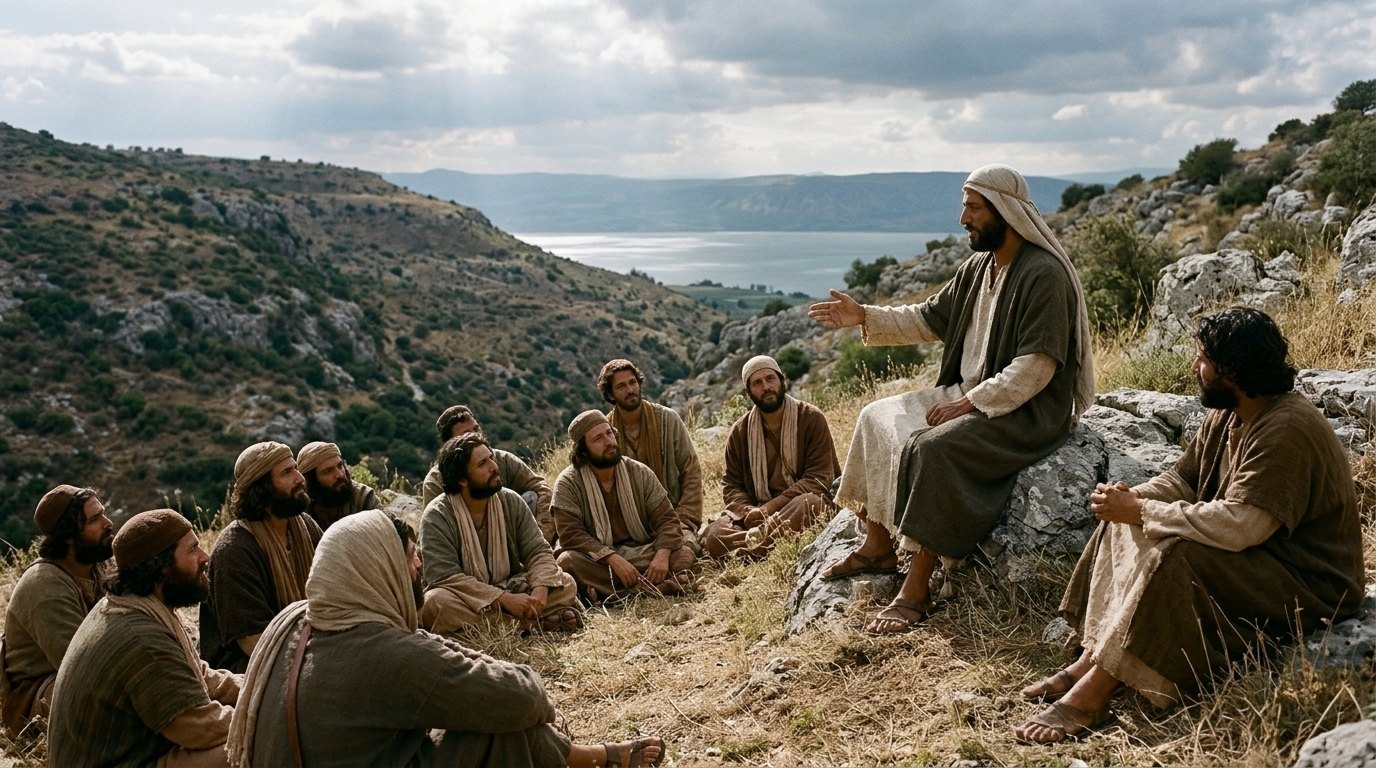
“Therefore everyone who hears these words of mine and puts them into practice is like a wise man who built his house on the rock.
Matthew 7:24 (NIV)
It grounds enduring life in hearing and doing Jesus' words, contrasting wisdom with disastrous foolishness.
Matthew 7:24 grounds true discipleship not merely in listening to Christ, but in steadfast obedience: “Everyone then who hears these words of mine and does them will be like a wise man who built his house on the rock.” In this climactic chapter of the Sermon on the Mount, Jesus addresses how His followers must navigate community, divine petition, discernment, and ultimate judgment. He begins in Matthew 7:1-6 by prohibiting self-righteous, hypocritical condemnation, commanding believers to remove the log from their own eye before attempting to address the speck in a brother's eye, while still exercising spiritual discernment not to cast what is holy before swine. In Matthew 7:7-11, He encourages persistent faith through prayer, assuring disciples that a gracious heavenly Father answers those who ask, seek, and knock with truly good gifts. This posture of love toward God translates into love toward others; Matthew 7:12 articulates the Golden Rule—whatever you wish that others would do to you, do also to them—summarizing the Law and the Prophets. Following Christ demands radical separation from worldly ease, as Jesus sets forth the narrow gate and hard path that lead to life versus the wide, broad road that leads to destruction in Matthew 7:13-14. He urges vigilance against false teachers in Matthew 7:15-20, revealing that false prophets masquerade in sheep's clothing but are invariably exposed by their corrupt fruit. Moreover, superficial religious profession cannot save; Matthew 7:21-23 solemnly warns that calling Him “Lord, Lord” without doing the Father's will results in hearing the terrible verdict, “I never knew you; depart from me, you workers of lawlessness.” Christ brings the entire discourse to its thunderous conclusion in Matthew 7:24-27 with the contrasting builders: the one who builds on the rock survives torrential floods and winds, while the foolish builder on the sand suffers catastrophic collapse. Matthew 7:28-29 records the immediate aftermath: the listening crowds are left astonished because Jesus taught with intrinsic, sovereign authority, unlike their scribes.
| Passage | What it says |
|---|---|
| Matthew 7:1-6 | Jesus warns against hypocritical, censorious judgment while calling for holy discernment. |
| Matthew 7:7-11 | Jesus promises that the Heavenly Father gives good gifts to those who consistently ask, seek, and knock. |
| Matthew 7:12 | The Golden Rule summarizes the Law and the Prophets by treating others as one wishes to be treated. |
| Matthew 7:13-14 | Jesus contrasts the wide gate leading to destruction with the narrow gate and hard way leading to life. |
| Matthew 7:15-20 | Jesus warns against false prophets, teaching that corrupt trees are identified by their unrighteous fruit. |
| Matthew 7:21-23 | Jesus declares that mere verbal confession without doing the Father's will leads to eternal rejection. |
| Matthew 7:24-27 | The parable of the wise and foolish builders contrasts obedient faith on the rock with ruin on sand. |
| Matthew 7:28-29 | The crowds stand astonished at Jesus' teaching because He teaches with unique, divine authority. |
Where in the Bible
| Book | Passages |
|---|---|
| Matthew | 24 · Matthew 5:1-2, Matthew 5:3-12, Matthew 5:13-16, Matthew 5:17-20, Matthew 5:21-26, Matthew 5:27-30, Matthew 5:31-32, Matthew 5:33-37, Matthew 5:38-42, Matthew 5:43-48, Matthew 6:1-4, Matthew 6:5-8, Matthew 6:9-15, Matthew 6:16-18, Matthew 6:19-24, Matthew 6:25-34, Matthew 7:1-6, Matthew 7:7-11, Matthew 7:12, Matthew 7:13-14, Matthew 7:15-20, Matthew 7:21-23, Matthew 7:24-27, Matthew 7:28-29 |
The story in order
- Jesus teaches His disciples (c. AD 30) · Matthew 5:1-2 · Foundational proclamation of kingdom life and discipleship.
- Jesus defines kingdom citizens (c. AD 30) · Matthew 5:3-12 · Beatitudes describe character, blessings, and heavenly rewards.
- Jesus calls disciples salt and light (c. AD 30) · Matthew 5:13-16 · Command to visible good works influencing the world.
- Jesus affirms Law's authority (c. AD 30) · Matthew 5:17-20 · Messiah reveals true fulfillment, demands greater righteousness.
- Jesus exposes heart sins (c. AD 30) · Matthew 5:21-30 · Anger, lust identified as sin; radical obedience required.
- Jesus upholds marriage (c. AD 30) · Matthew 5:31-32 · Sanctity and permanency of marriage affirmed.
- Jesus commands love for enemies (c. AD 30) · Matthew 5:43-48 · Call to reflect Heavenly Father's perfect mercy.
- Jesus teaches sincere devotion (c. AD 30) · Matthew 6:1-18 · Authentic piety in giving, prayer, and fasting.
- Jesus warns against worry (c. AD 30) · Matthew 6:25-34 · Trust God's care; do not serve money.
- Jesus calls for discernment (c. AD 30) · Matthew 7:1-6 · Warning against hypocrisy, call for holy discernment.
- Jesus promises answered prayer (c. AD 30) · Matthew 7:7-11 · Father gives good gifts to those who ask.
- Jesus summarizes the Law (c. AD 30) · Matthew 7:12 · The Golden Rule: treat others as you wish.
- Jesus warns of false prophets (c. AD 30) · Matthew 7:15-20 · Identify them by their unrighteous fruit.
- Jesus contrasts builders (c. AD 30) · Matthew 7:24-27 · Obedient faith on rock vs. ruin on sand.
Key words
- Righteousness (dikaiosynē, δικαιοσύνη)
- Living in right relationship with God and others, marked by obedience to God's will. · Matthew 5:20
- Law (nomos, νόμος)
- The Mosaic Law, given by God, revealing His will and standard for His people. · Matthew 5:17
- Kingdom of Heaven (basileia tōn ouranōn, βασιλεία τῶν οὐρανῶν)
- The reign and rule of God, manifested in Christ and His church, with future consummation. · Matthew 5:3
- Discipleship (mathētēs, μαθητής)
- The life of following Jesus Christ, marked by obedience, trust, and transformation. · Matthew 5:1
- Authority (exousia, ἐξουσία)
- The legitimate power and right to command and teach, derived from God. · Matthew 7:29
Hearing the Sermon on the Mount leaves no room for casual discipleship or mere outward compliance. Jesus calls every hearer to build their life upon the solid rock of His words, turning from self-reliance to true spiritual poverty and heart righteousness. To follow Him as citizens of His kingdom is to reflect His holiness, trust His unfailing Fatherly care, and live under His sovereign authority.
24 passages, each cited once.
Scripture cited
- Matthew 5
- Matthew 6
- Matthew 7
- Luke 6:17-49