Where is the Garden of Gethsemane and what happened there?
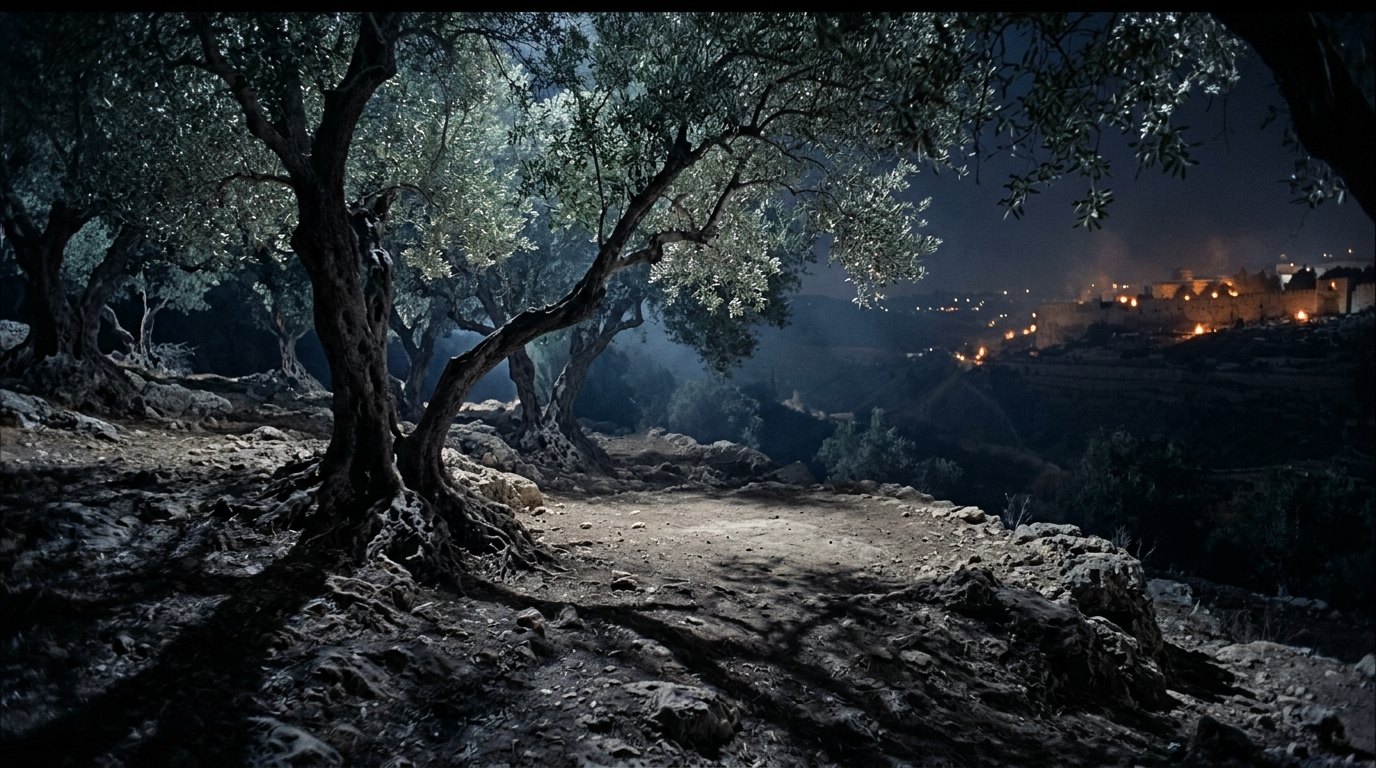
Matthew 26:36-46
36 Then Jesus went with his disciples to a place called Gethsemane, and he said to them, “Sit here while I go over there and pray.”
37 He took Peter and the two sons of Zebedee along with him, and he began to be sorrowful and troubled.
38 Then he said to them, “My soul is overwhelmed with sorrow to the point of death. Stay here and keep watch with me.”
39 Going a little farther, he fell with his face to the ground and prayed, “My Father, if it is possible, may this cup be taken from me. Yet not as I will, but as you will.”
40 Then he returned to his disciples and found them sleeping. “Couldn’t you men keep watch with me for one hour?” he asked Peter.
41 “Watch and pray so that you will not fall into temptation. The spirit is willing, but the flesh is weak.”
42 He went away a second time and prayed, “My Father, if it is not possible for this cup to be taken away unless I drink it, may your will be done.”
43 When he came back, he again found them sleeping, because their eyes were heavy.
44 So he left them and went away once more and prayed the third time, saying the same thing.
45 Then he returned to the disciples and said to them, “Are you still sleeping and resting? Look, the hour has come, and the Son of Man is delivered into the hands of sinners.
46 Rise! Let us go! Here comes my betrayer!”
New International Version (NIV)
The answer
Where it is: Gethsemane (the name means "oil press") was an olive grove on the lower slopes of the Mount of Olives, just east of Jerusalem. To reach it from the city you cross the Kidron valley — John 18:1 puts it precisely: Jesus went out "over the brook Kidron, where there was a garden, into which he and his disciples entered." John 18:2 adds that Judas knew the place, "for Jesus often met there with his disciples," so it was a familiar retreat. Today the traditional site sits at the foot of the Mount of Olives facing the Temple Mount, just across the Kidron from the Old City of Jerusalem.
What happened there: After the Last Supper, Jesus brought his disciples to Gethsemane the night before his crucifixion and entered into what the church calls his "agony." The account in Matthew 26:36-46 tells the story:
- He left eight disciples at the entrance and took Peter, James, and John further in, telling them, "My soul is exceedingly sorrowful, even to death. Stay here and watch with me" (Matthew 26:38).
- He fell on his face and prayed three times, "My Father, if it is possible, let this cup pass away from me; nevertheless, not what I desire, but what you desire" (Matthew 26:39; the same words repeated at verses 42 and 44). The "cup" is the suffering of the cross — the wrath his purpose was to bear.
- Luke 22:43-44 adds that an angel from heaven appeared strengthening him, "and being in agony he prayed more earnestly; and his sweat became like great drops of blood falling down on the ground."
- Each time he returned from prayer he found the three disciples asleep. He said to Peter, "Couldn't you watch with me for one hour? Watch and pray, that you don't enter into temptation. The spirit indeed is willing, but the flesh is weak" (Matthew 26:40-41).
- Then he roused them: "Behold, the hour is at hand, and the Son of Man is betrayed into the hands of sinners. Arise, let's be going. Behold, he who betrays me is at hand" (Matthew 26:45-46) — and Judas arrived with the crowd to arrest him.
In short: Gethsemane is a garden at the foot of the Mount of Olives, and it is where Jesus, in full obedience to his Father, prayed through his anguish over the cross just before his arrest.
Answered from Scripture · reviewed November 7, 2026
Gethsemane was an olive grove nestled at the foot of the Mount of Olives, just across the Kidron Valley from Jerusalem's eastern walls. On the night before His crucifixion, Jesus entered this garden to face the crushing weight of the cup of God's wrath in fervent prayer, submitting wholly to the Father's will before His arrest.
The Place and Arrival
An Olive Press Across the Kidron Valley
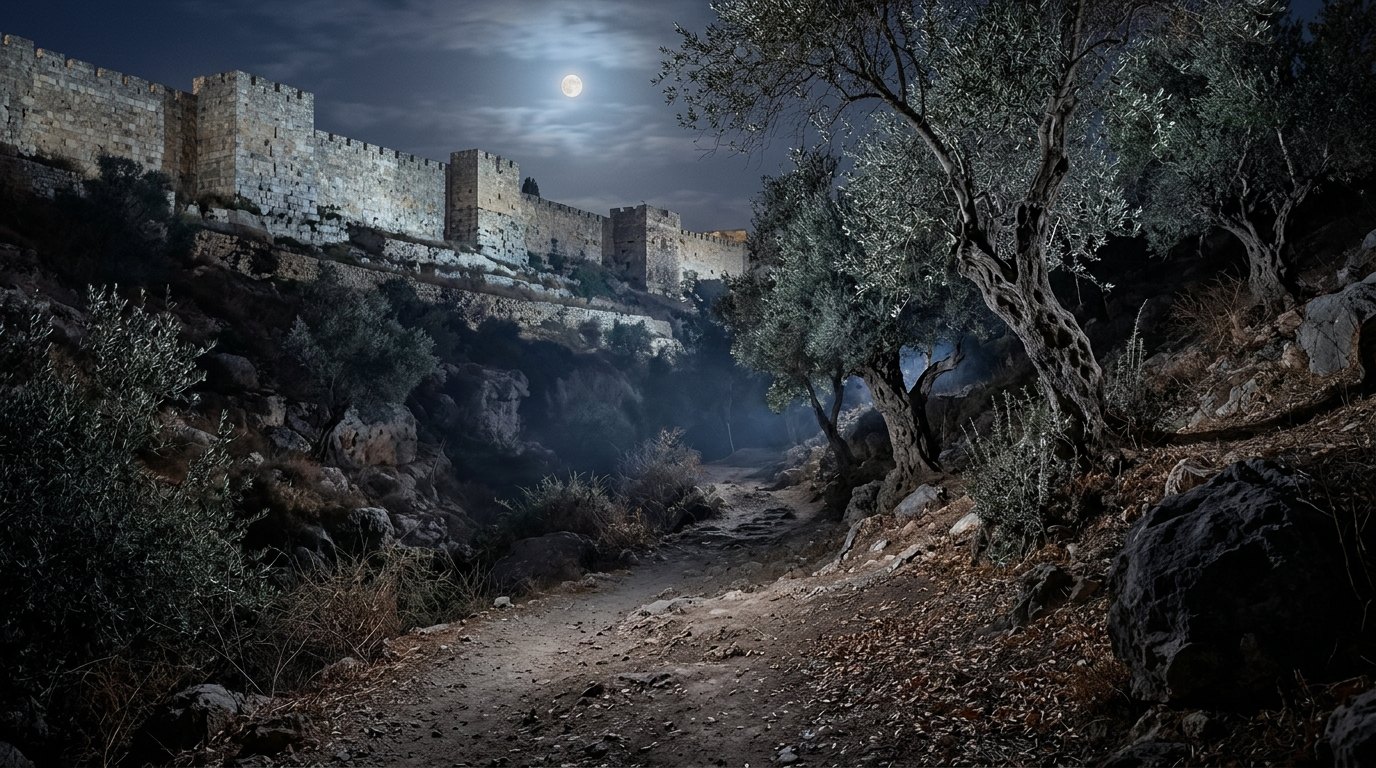
When he had finished praying, Jesus left with his disciples and crossed the Kidron Valley. On the other side there was a garden, and he and his disciples went into it.
John 18:1 (NIV)
It pins down the precise geography of the garden just across the Kidron Valley where Jesus frequently retreated with His disciples.
The night of the betrayal begins with a deliberate journey across a familiar valley. In John 18:1, the Apostle records that Jesus went out with His disciples across the brook Kidron, where there was a garden, which He and His disciples entered. The name Gethsemane itself means "oil press," marking this enclave on the lower slopes of the Mount of Olives as an agricultural grove dedicated to crushing olives. John 18:2 explains that Judas knew this quiet place intimately, for Jesus frequently met there with His followers to pray and instruct them outside the crowded city walls. Luke 22:39 confirms this routine, noting that Jesus came out and went, as was His custom, toward the Mount of Olives. Upon arriving at the grove, Matthew 26:36 and Mark 14:32 show the Lord directing the majority of the eleven disciples to sit and wait while He withdrew deeper among the trees to pour out His soul before God. This sorrowful departure across the Kidron echoes an ancient typological sorrow: in 2 Samuel 15:23, King David fled Jerusalem across the same brook Kidron while all the country wept aloud. In 2 Samuel 15:30, David climbed the Mount of Olives weeping, his head covered and his feet bare, betrayed by his close counselor Ahithophel. Christ, the true Son of David, retraced those exact footsteps into Gethsemane, moving willingly toward betrayal and the fulfillment of God's redemptive purpose.
| Passage | What it says |
|---|---|
| John 18:1 | Jesus crosses the Kidron brook with His disciples to enter a familiar walled garden. |
| John 18:2 | Judas knew the location well because Jesus often gathered there with His followers. |
| Luke 22:39 | Jesus departs Jerusalem for the Mount of Olives following His customary evening practice. |
| Matthew 26:36 | Jesus arrives at Gethsemane and instructs the majority of His disciples to sit while He prays. |
| Mark 14:32 | They come to Gethsemane where Jesus commands the disciples to rest while He petitions God. |
| 2 Samuel 15:23 | David crosses the brook Kidron weeping toward the Mount of Olives, foreshadowing Christ's sorrowful journey across the same valley. |
| 2 Samuel 15:30 | David ascends the Mount of Olives weeping with head covered and feet bare, prefiguring the suffering Son of David. |
Anguish and Submission
The Agony of the Cup of Wrath
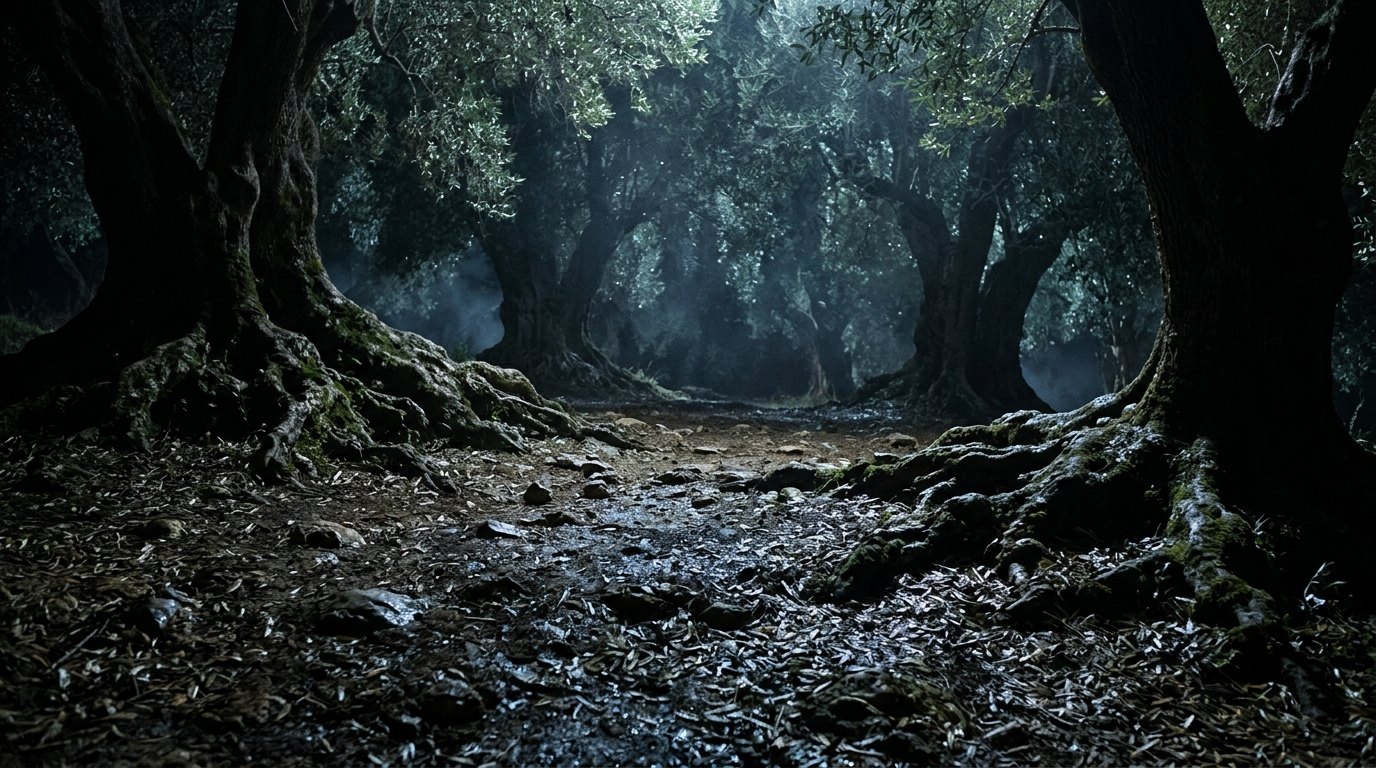
Going a little farther, he fell with his face to the ground and prayed, “My Father, if it is possible, may this cup be taken from me. Yet not as I will, but as you will.”
Matthew 26:39 (NIV)
This verse reveals Christ's deep anguish over the cup of judgment alongside His complete surrender to the Father's will.
The true struggle of Gethsemane was fought upon the earth in solitary, agonized prayer. In Matthew 26:39, Jesus fell on His face, petitioning, "My Father, if it be possible, let this cup pass from me; nevertheless, not as I will, but as you will." Before this climatic prayer, Matthew 26:37-38 records that He took Peter, James, and John aside and began to be sorrowful and deeply distressed, declaring His soul was swallowed up in sorrow even unto death. Mark 14:33-36 portrays Him falling to the ground, crying out "Abba, Father," asking if the appointed hour might pass. In Luke 22:41-42, He withdrew a stone's throw away, kneeling in utter submission to the Father's sovereign purpose. Luke 22:43-44 reveals the intensity of this spiritual warfare: an angel appeared from heaven to strengthen Him, and being in agony He prayed more earnestly, His sweat falling like great drops of blood upon the dirt. Hebrews 5:7-8 looks back on these hours, noting Christ offered up prayers and supplications with loud cries and tears to Him who was able to save Him from death, learning obedience through what He suffered. This dreaded cup was neither physical death nor mere martyrdom; it was the terrible cup of divine wrath. While Psalms 116:13 speaks of the cup of salvation, Isaiah 51:17 describes the chalice of God's furious judgment, and Jeremiah 25:15 commands the nations to drink the wine cup of God's fury. Jesus had acknowledged this impending trial in John 12:27, resolving that His soul's trouble was the very purpose for which He came into the world.
| Passage | What it says |
|---|---|
| Matthew 26:37-38 | Jesus takes Peter, James, and John aside, expressing deep sorrow even unto death. |
| Mark 14:33-36 | Jesus falls to the ground, crying 'Abba, Father,' asking that the cup pass if possible. |
| Matthew 26:39 | Falling on His face, Jesus prays for the cup to pass yet yields to the Father's desire. |
| Luke 22:41-42 | Kneeling a stone's throw away, Jesus prays for the Father's will rather than His own to be done. |
| Luke 22:43-44 | An angel strengthens Him as His agonizing sweat falls like great drops of blood. |
| Hebrews 5:7-8 | Jesus offered loud cries and tears to the Father, learning obedience through His suffering. |
| Psalms 116:13 | The psalmist speaks of lifting the cup of salvation, contrasting with the cup of judgment Jesus endured in prayer. |
| Isaiah 51:17 | Jerusalem is described as drinking from the hand of the Lord the cup of His wrath and fury. |
| Jeremiah 25:15 | Jeremiah is commanded to take from God's hand the wine cup of fury and make nations drink it. |
| John 12:27 | Jesus earlier speaks of His soul being troubled, yet affirming He came specifically for this hour. |
Watching and Praying
Sleeping Disciples and Approaching Betrayal
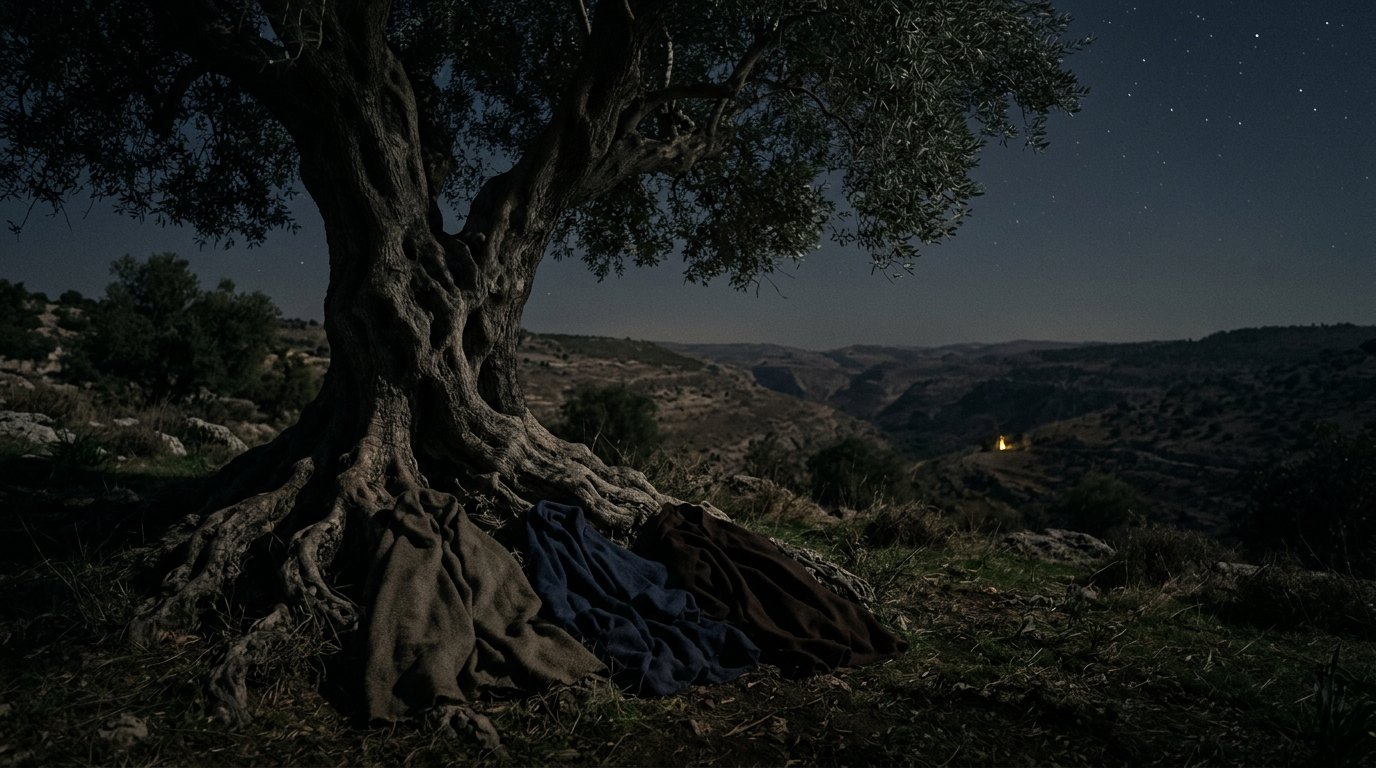
“Watch and pray so that you will not fall into temptation. The spirit is willing, but the flesh is weak.”
Matthew 26:41 (NIV)
Christ warns of human frailty in the face of spiritual warfare, urging constant prayer against temptation.
While Christ wrestled in agonizing intercession, His closest earthly companions succumbed to exhaustion and spiritual slumber. In Matthew 26:41, Jesus returned from prayer to find the disciples sleeping, issuing a sobering command: "Watch and pray that you may not enter into temptation. The spirit indeed is willing, but the flesh is weak." Matthew 26:40 records His piercing question to Peter, asking whether they could not remain awake with Him for even one single hour. Mark 14:37-38 highlights Simon Peter by name, underscoring the tragic contrast between Peter's earlier boast of unswerving loyalty and his present inability to watch against temptation. Luke 22:45-46 observes that the disciples were sleeping for sheer sorrow, yet Jesus commanded them to rise and pray so that they would not fall before the enemy's assault. Leaving them once more, Jesus went away and prayed a second and a third time, as described in Matthew 26:42-44, repeating the exact same words of full surrender while the disciples' eyes remained heavy with sleep. Mark 14:39-40 notes their utter confusion and shame, as they did not know what to answer Him when He found them resting again. Finally, having won the spiritual battle alone, Jesus returned a third time in Matthew 26:45-46 and Mark 14:41-42, declaring that the hour had come. The Son of Man was now betrayed into the hands of sinners, and He urged them to rise and face the approaching betrayer.
| Passage | What it says |
|---|---|
| Matthew 26:40-41 | Finding the disciples sleeping, Jesus asks Peter why they could not watch for one single hour. |
| Mark 14:37-38 | Jesus addresses Simon specifically, commanding vigilance because the spirit is willing but the flesh weak. |
| Luke 22:45-46 | Jesus finds the disciples asleep from grief and commands them to rise and pray against temptation. |
| Matthew 26:42-44 | Jesus prays a second and third time using the same words while the disciples remain heavy-eyed. |
| Mark 14:39-40 | Jesus returns repeatedly after praying, but the disciples do not know how to answer Him. |
| Matthew 26:45-46 | Jesus announces the hour has arrived for the Son of Man to be betrayed into sinners' hands. |
| Mark 14:41-42 | Jesus rouses His followers, declaring His betrayer has arrived to initiate His arrest. |
The Arrest
Betrayal, Power, and Surrender in the Night
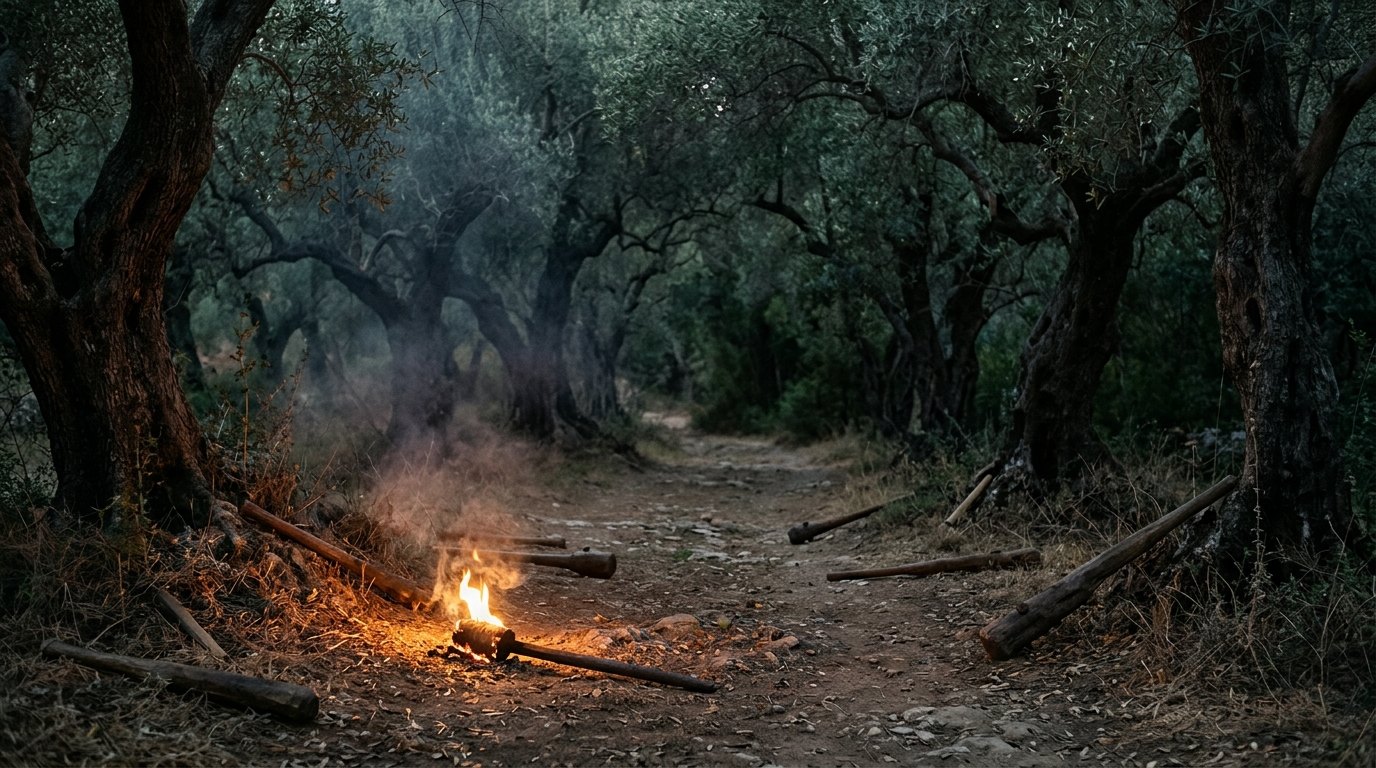
Jesus, knowing all that was going to happen to him, went out and asked them, “Who is it you want?” “Jesus of Nazareth,” they replied. “I am he,” Jesus said. (And Judas the traitor was standing there with them.) When Jesus said, “I am he,” they drew back and fell to the ground.
John 18:4-6 (NIV)
When Jesus declares 'I am He', the armed soldiers fall back to the ground, showing His sovereign willingness to surrender.
The solitude of Gethsemane was shattered by the clatter of weapons and flickering torches as the arresting party arrived. When Jesus confronted the mob in John 18:4-6, asking whom they sought, He answered their reply with divine authority: "When Jesus said to them, 'I am he,' they drew back and fell to the ground." Matthew 26:47-50 and Mark 14:43-46 describe Judas leading a large crowd sent from the chief priests and elders, carrying swords and clubs; the traitor identified the Master with a deceitful kiss of greeting. In Luke 22:47-48, Jesus exposed the betrayal, asking Judas if he would deliver up the Son of Man with a kiss. John 18:3-9 demonstrates Christ's absolute majesty as He protected His disciples, demanding they be allowed to go free. Rashly attempting to defend his Lord, Simon Peter drew a sword and struck Malchus, the high priest's servant, severing his right ear, as recorded in Matthew 26:51-54, Mark 14:47, and John 18:10-11. Jesus immediately rebuked Peter, commanding him to put away his weapon and declaring that He must drink the cup the Father had given Him. In Luke 22:49-51, Jesus demonstrated His mercy by touching the wounded ear and instantly healing it. Turning to the armed crowd in Matthew 26:55-56 and Luke 22:52-53, Jesus rebuked them for coming after Him like a robber, noting that this was their hour and the reign of darkness, yet all took place so that the Scriptures of the prophets might be fulfilled. At that moment, as Mark 14:48-52 records, every disciple fled in terror, including a young man who slipped out of his linen wrap to escape naked into the night. John 18:12 concludes the scene as the Roman cohort and Jewish officers seized Jesus, bound Him, and led Him away to judgment.
| Passage | What it says |
|---|---|
| Matthew 26:47-50 | Judas arrives with an armed crowd from the chief priests and betrays Jesus with a kiss. |
| Mark 14:43-46 | Judas leads a crowd with swords and clubs, gives the predetermined sign, and Jesus is seized. |
| Luke 22:47-48 | Judas approaches to kiss Jesus, and Jesus asks if he betrays the Son of Man with a kiss. |
| John 18:3-9 | Jesus steps forward, identifies Himself as 'I am', causing the armed cohort to fall to the ground. |
| Matthew 26:51-54 | A disciple cuts off Malchus's ear; Jesus commands swords away and affirms Scripture must be fulfilled. |
| Mark 14:47 | A bystander draws a sword and strikes the servant of the high priest, cutting off his ear. |
| Luke 22:49-51 | Jesus touches the severed ear of the high priest's servant and miraculously heals him. |
| John 18:10-11 | Simon Peter is named as striking Malchus; Jesus commands him to sheath his sword and drink the Father's cup. |
| Matthew 26:55-56 | Jesus rebukes the crowd for coming with weapons, and all His disciples abandon Him and flee. |
| Mark 14:48-52 | Jesus addresses the mob, all disciples flee, and a young man in linen slips away naked. |
| Luke 22:52-53 | Jesus notes this is their hour and the power of darkness as the religious leaders arrest Him. |
| John 18:12 | The Roman cohort, commander, and Jewish officers arrest Jesus, bind Him, and lead Him away. |
Where in the Bible
| Book | Passages |
|---|---|
| 2 Samuel | 2 · 2 Samuel 15:23, 2 Samuel 15:30 |
| Psalms | 1 · Psalms 116:13 |
| Isaiah | 1 · Isaiah 51:17 |
| Jeremiah | 1 · Jeremiah 25:15 |
| Matthew | 9 · Matthew 26:36, Matthew 26:37-38, Matthew 26:39, Matthew 26:40-41, Matthew 26:42-44, Matthew 26:45-46, Matthew 26:47-50, Matthew 26:51-54, Matthew 26:55-56 |
| Mark | 8 · Mark 14:32, Mark 14:33-36, Mark 14:37-38, Mark 14:39-40, Mark 14:41-42, Mark 14:43-46, Mark 14:47, Mark 14:48-52 |
| Luke | 7 · Luke 22:39, Luke 22:41-42, Luke 22:43-44, Luke 22:45-46, Luke 22:47-48, Luke 22:49-51, Luke 22:52-53 |
| John | 6 · John 18:1, John 18:2, John 12:27, John 18:3-9, John 18:10-11, John 18:12 |
| Hebrews | 1 · Hebrews 5:7-8 |
The story in order
- David crosses Kidron, ascends Mount of Olives (c. 1000 BC) · 2 Samuel 15:23 · Foreshadows Christ's sorrowful journey across the same valley.
- Psalmist lifts cup of salvation (c. 1000 BC) · Psalms 116:13 · Contrasts with the cup of judgment Jesus endured.
- Jeremiah commanded to take cup of fury (c. 600 BC) · Jeremiah 25:15 · Illustrates the cup of wrath Jesus faced.
- Jerusalem drinks cup of wrath (c. 700 BC) · Isaiah 51:17 · Describes the cup of God's wrath.
- Jesus speaks of troubled soul (c. AD 30) · John 12:27 · Jesus affirms He came for this hour.
- Jesus departs for Mount of Olives (AD 30) · Luke 22:39 · Jesus follows His customary evening practice.
- Jesus arrives at Gethsemane (AD 30) · Matthew 26:36 · Jesus instructs disciples to sit while He prays.
- Jesus prays in Gethsemane (AD 30) · Mark 14:32 · Jesus petitions God while disciples rest.
- Jesus' agony and prayer for the cup to pass (AD 30) · Matthew 26:37-38 · Jesus expresses deep sorrow, taking key disciples aside.
- Jesus prays 'Abba, Father' (AD 30) · Mark 14:33-36 · Jesus asks for the cup to pass, yielding to God's will.
- Jesus prays for Father's will (AD 30) · Luke 22:41-42 · Jesus kneels and prays for God's will to be done.
- Angel strengthens Jesus (AD 30) · Luke 22:43-44 · Jesus' sweat falls like blood in agony.
- Jesus learns obedience through suffering (AD 60s) · Hebrews 5:7-8 · Jesus offered loud cries and tears to the Father.
- Disciples sleep while Jesus prays (AD 30) · Matthew 26:40-41 · Jesus finds disciples sleeping, asks them to watch.
Key words
- Gethsemane
- An olive grove at the foot of the Mount of Olives. · Matthew 26:36
- Kidron
- A brook that flows through the valley between the Mount of Olives and Jerusalem. · John 18:1
- Cup of Wrath
- The judgment and wrath of God poured out upon sin. · Isaiah 51:17
- Abba, Father (Αββά, ὁ πατήρ (Abba, ho patēr))
- An intimate Aramaic term for 'Father', expressing deep trust and dependence. · Mark 14:36
- Agony
- Extreme suffering, mental or physical; Jesus' intense struggle in Gethsemane. · Luke 22:44
- Betrayal
- The act of delivering someone into the hands of an enemy. · Matthew 26:45
- I am (Ἐγώ εἰμι (Egō eimi))
- Jesus' divine self-identification, causing the arresting party to fall back. · John 18:5
In Gethsemane, the eternal Son willingly drank the bitter cup of judgment that our sins deserved, yielding His human will in flawless obedience. His agony in the garden assures every believer that our High Priest understands our deepest weaknesses, offering sovereign grace whenever we face temptation and sorrow.
36 passages, each cited once.
Scripture cited
- Matthew 26:36-46
- Mark 14:32-42
- Luke 22:39-46
- Matthew 26:42
- Matthew 26:39
- John 18:1-2