Who created God?

Psalms 90:1-2
1 Lord, you have been our dwelling place throughout all generations.
2 Before the mountains were born or you brought forth the whole world, from everlasting to everlasting you are God.
New International Version (NIV)
The answer
No one created God. He is uncreated, without beginning, and without end. Scripture says it as plainly as anything in the Bible: "Before the mountains were born, before you had formed the earth and the world, even from everlasting to everlasting, you are God" (Psalms 90:2).
The question itself can mislead, because we are used to everything we touch having a maker. Genesis 1:1 opens Scripture with the one unarguable starting point: "In the beginning God created the heaven and the earth." God stands on the other side of that "beginning." He is the Creator, not something created.
- He is eternal. "From everlasting to everlasting, you are God" (Psalms 90:2). He never came into being; He has always been.
- He is the Beginning and the End. "I am Alpha and Omega, the beginning and the ending, saith the Lord, which is, and which was, and which is to come, the Almighty" (Revelation 1:8).
- He is the only God, first and last. "I am the first, and I am the last; and beside me there is no God" (Isaiah 44:6).
- He made everything else. "All things were made by him; and without him was not any thing made that was made" (John 1:3). Whatever exists in time owes its existence to Him.
- He never changes. "Jesus Christ the same yesterday, and to day, and for ever" (Hebrews 13:8).
So the answer is not that something made God, but that God is the uncreated One — the one being whose existence does not depend on anything or anyone outside Himself. That is precisely what makes Him able to be our "dwelling place for all generations" (Psalms 90:1): the One who has no beginning also has no end, and so is a refuge you can actually rely on.
Answered from Scripture · reviewed November 8, 2026
No one created God, because He is uncreated, possessing life in Himself from before all time. Everything in creation has a beginning, but Scripture reveals the Lord as the eternal, self-existent Maker of heaven and earth who alone sits outside of time.
The Uncreated Creator
God Stands Outside and Before All Created Things
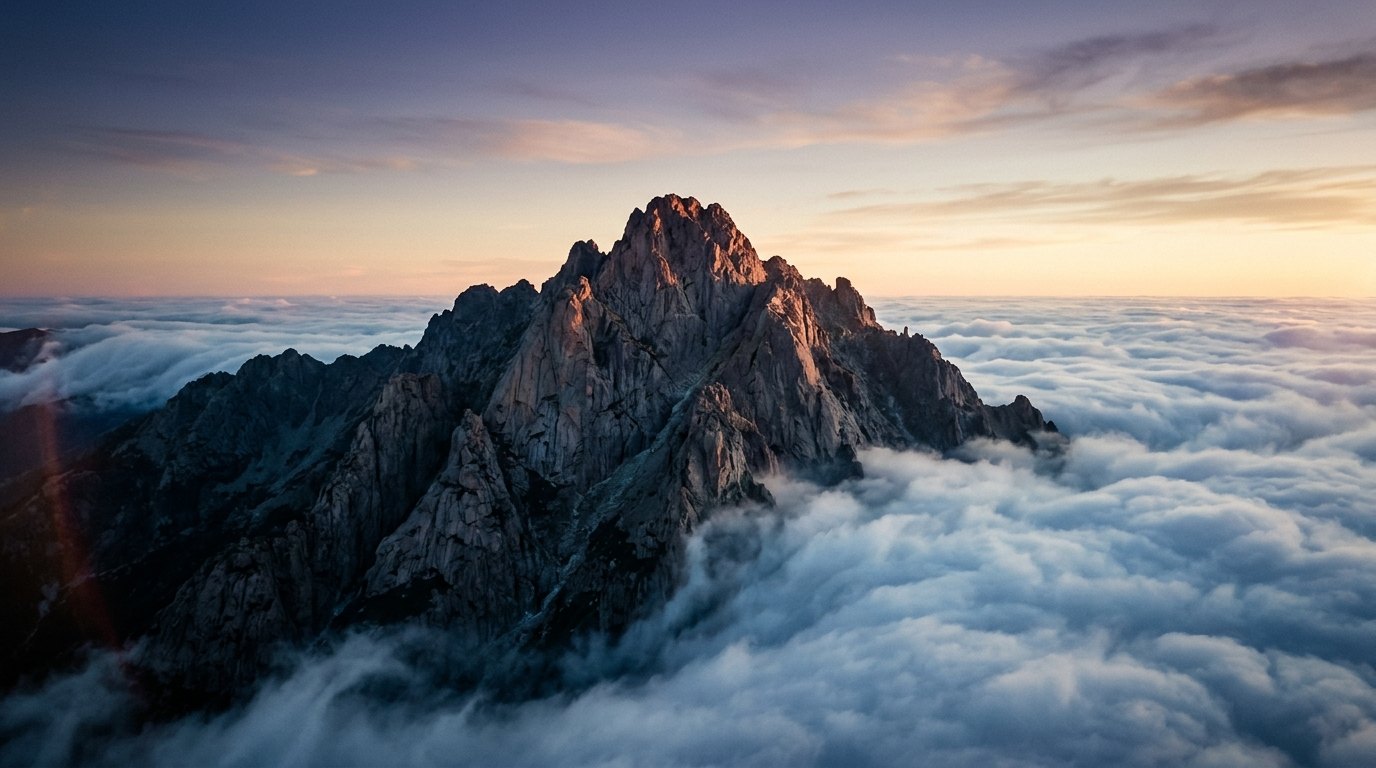
Before the mountains were born or you brought forth the whole world, from everlasting to everlasting you are God.
Psalms 90:2 (NIV)
Moses explicitly declares that prior to the birth of the earth, from everlasting to everlasting, God already is.
Moses anchors human perspective in the timeless reality of our Maker when he prays in Psalm 90:2: 'Before the mountains were brought forth, or ever you had formed the earth and the world, from everlasting to everlasting you are God.' Created beings reckon time by beginnings, yet before any tectonic ridge arose or a single grain of dust coalesced, God already existed in absolute fullness. Moses reminds us in Psalm 90:1 that this eternal Lord has been our dwelling place across all human generations, standing firm while finite mortals pass away.
This uncaused reality opens the very first sentence of sacred Scripture. Genesis 1:1 does not recount the birth of the Almighty; it records Him stepping forward to summon heaven and earth into being out of nothing. The Apostle John reveals that this cosmic origin was accomplished through the eternal Son, declaring in John 1:1-3 that the Word was already in the beginning with God, and without Him was not anything made that was made. The Apostle Paul reiterates this in Colossians 1:16-17, testifying that in Christ all things were created, both visible and invisible, and in Him all things hold together. He stands prior to all creaturely reality because He is uncreated.
Scripture constantly draws this sharp boundary between the Maker and the made. Hebrews 11:3 teaches that the worlds were framed by the word of God, so that what is seen was not made out of things that are visible. In Nehemiah 9:6, the Levites lift their voices to bless the Lord alone, who made the highest heavens with all their starry host, the earth, and the seas, preserving every creature. As the writer of Hebrews 3:4 plainly observes, while every house has an earthly builder, the builder of all things is God. Asking who made Him applies a creaturely limitation to the One who originated space, time, and matter.
| Passage | What it says |
|---|---|
| Genesis 1:1 | God is already present at the very beginning of time and space, creating the heavens and the earth. |
| Psalms 90:1 | The Lord has served as the dwelling place for His people across every human generation. |
| Psalms 90:2 | Before the mountains were formed, God exists from everlasting to everlasting. |
| John 1:1-3 | The Word was in the beginning with God, and every created thing was made through Him. |
| Colossians 1:16-17 | Christ is before all things, and in Him all things hold together. |
| Hebrews 11:3 | The worlds were framed by God's word, so what is seen was not made from visible things. |
| Nehemiah 9:6 | Affirms the Lord alone made the heavens, earth, and seas, and preserves all living things. |
| Hebrews 3:4 | States that while every house is built by someone, the builder of all things is God. |
Self-Existence and Aseity
The Lord Possesses Underived Life in Himself

God said to Moses, “I AM WHO I AM. This is what you are to say to the Israelites: ‘I AM has sent me to you.’ ”
Exodus 3:14 (NIV)
God identifies Himself by His absolute self-existence, the eternal 'I AM' who depends on nothing.
At the burning bush, God unsealed the foundation of all theology when He answered Moses in Exodus 3:14: 'I AM WHO I AM.' This sacred name reveals that the Lord possesses underived being; He is completely self-existent, relying upon nothing outside Himself for His life or power. The theologians call this aseity—being from Himself. While every angel, human, and star derives breath from an external source, God alone is the source of all existence, uncaused, unprompted, and eternally self-sustaining.
This underived vitality extends equally across the Godhead. In John 5:26, the Lord Jesus affirms that just as the Father has life in Himself, so He has granted the Son also to have life in Himself. Because God possesses this fullness, He enters into relationship with His creatures out of pure grace rather than any inward lack. Paul proclaimed this to the philosophers at the Areopagus in Acts 17:24-25, insisting that the God who made the world is not served by human hands as though He needed anything, seeing He gives to all people life, breath, and everything else.
Human arrogance often imagines that we somehow add to God's glory or place Him in our debt. Yet the Lord silenced Job in Job 41:11 by demanding, 'Who has first given to me, that I should repay him? Whatever is under the whole heaven is mine.' Paul echoes this breathtaking reality in Romans 11:35-36, praising the truth that from Him, through Him, and to Him are all things. Paul also rejoices in 1 Timothy 1:17 before the immortal, invisible King of the ages, adding in 1 Timothy 6:15-16 that this blessed Potentate alone possesses absolute immortality, dwelling in unapproachable light whom no man has seen or can see.
| Passage | What it says |
|---|---|
| Exodus 3:14 | God reveals His covenant name as 'I AM WHO I AM', declaring independent, uncaused being. |
| John 5:26 | The Father has unborrowed life in Himself and granted the Son to have life in Himself. |
| Acts 17:24-25 | God is not served by human hands as though He needed anything, giving all life and breath. |
| Romans 11:35-36 | No one has ever given to God to require repayment; all things are from Him, through Him, to Him. |
| 1 Timothy 6:15-16 | The King of kings and Lord of lords alone possesses absolute immortality, dwelling in unapproachable light. |
| Job 41:11 | God asks who has first given to Him that He should repay, since everything under heaven is His. |
| 1 Timothy 1:17 | Ascribes honor and glory to the King of the ages, immortal, invisible, the only God. |
The First and the Last
No God Preceded Him and None Follows
“This is what the LORD says— Israel’s King and Redeemer, the LORD Almighty: I am the first and I am the last; apart from me there is no God.
Isaiah 44:6 (NIV)
The Lord Himself announces that He is both the first and the last, leaving no room for any other deity.
The Lord Himself leaves no conceptual space for an ancestry when He thunders in Isaiah 44:6: 'Thus says the Lord, the King of Israel and his Redeemer, the Lord of hosts: I am the first and I am the last; besides me there is no god.' Pagan mythologies envisioned endless genealogies where younger gods overthrew their predecessors. Holy Scripture shatters these fantasies: our Creator had no predecessors, endures no competitors, and leaves no successors. He is the ultimate reality beyond which the human mind cannot probe.
In Isaiah 40:28, the prophet challenges the weary soul to consider who God is: the everlasting Lord, the Creator of the ends of the earth, who neither faints nor grows weary, whose understanding is unsearchable. God declares in Isaiah 41:4 that He called the generations from the beginning, being the first, and with the last. He repeats this uncompromising standard in Isaiah 43:10, stating emphatically, 'Before me no god was formed, nor shall there be any after me.' Again in Isaiah 48:12, He summons Israel to hear that He alone is the first and He alone is the last.
This divine title passes directly to Jesus Christ in the closing book of the canon. In Revelation 1:8, the Lord proclaims, 'I am the Alpha and the Omega, who is and who was and who is to come, the Almighty.' The resurrected Christ repeats this majestic claim in Revelation 22:13, declaring that He is the Beginning and the End. Round His throne, as depicted in Revelation 4:8-10, the four living creatures rest not day nor night, crying out to the One who was, who is, and who is to come, while the elders cast their crowns before Him who lives forever and ever.
| Passage | What it says |
|---|---|
| Isaiah 40:28 | The Lord is the everlasting God and Creator of the ends of the earth, who never grows weary. |
| Isaiah 43:10 | Before the Lord no god was formed, nor shall there be any after Him. |
| Isaiah 44:6 | The Lord of hosts proclaims He is the first and the last, and beside Him there is no God. |
| Revelation 1:8 | The Lord declares He is the Alpha and Omega, who is, who was, and who is to come. |
| Revelation 22:13 | Christ affirms He is the Alpha and the Omega, the First and the Last, the Beginning and the End. |
| Isaiah 41:4 | The Lord declares He calls the generations from the beginning, being the first and with the last. |
| Isaiah 48:12 | The Lord proclaims to Israel that He is the First and He is also the Last. |
| Revelation 4:8-10 | The living creatures and elders worship Him who lives forever and ever, who was and is and is to come. |
An Unchanging Refuge
The Eternal God Is Our Sure Dwelling Place
The eternal God is your refuge, and underneath are the everlasting arms. He will drive out your enemies before you, saying, ‘Destroy them!’
Deuteronomy 33:27 (NIV)
Because God is uncreated and eternal, His everlasting arms provide absolute security to His people.
The uncreated nature of God is not an abstract riddle; it is the bedrock of Christian consolation, summarized in Deuteronomy 33:27: 'The eternal God is your dwelling place, and underneath are the everlasting arms.' Because God never began, His strength never fades; because He depends on nothing, His promises cannot be overturned. The believer finds total rest in knowing that our refuge is as enduring as God Himself, holding us securely through every sorrow and trial.
David takes refuge in this permanence in Psalm 71:3, crying out to God as his continual habitation and rock of defense. The psalmist in Psalm 91:1-2 and Psalm 91:9 describes this same blessed safety, declaring that whoever dwells in the shelter of the Most High abides under the shadow of the Almighty, finding a fortress where no evil can conquer them. Even when God's ancient people were driven into exile, the Lord assured them in Ezekiel 11:16 that He Himself would be their sanctuary in the lands where they had gone, proving that His presence is an unshakable home.
Every created thing changes, deteriorates, and eventually passes away. Psalm 102:25-27 observes that the earth and heavens will perish like an old garment, but God remains the same, His years without end. The Lord reaffirms this constancy in Malachi 3:6, promising, 'For I the Lord do not change; therefore you, O children of Jacob, are not consumed.' James 1:17 celebrates the Father of lights, with whom there is no variation or shadow of turning. In Hebrews 13:8, we discover that Jesus Christ is the same yesterday, today, and forever, and in 1 John 4:16, that abiding in His uncreated love means we abide in God and God in us.
| Passage | What it says |
|---|---|
| Deuteronomy 33:27 | The eternal God is a refuge, holding His people with underneath everlasting arms. |
| Psalms 71:3 | The believer continually resorts to God as a strong habitation, rock, and fortress. |
| Psalms 91:1-2 | He who dwells in the secret place of the Most High abides under the shadow of the Almighty. |
| Psalms 91:9 | Making the Most High one's habitation shields the trusting soul in perfect safety. |
| Ezekiel 11:16 | Though scattered among the nations, the Lord promises to be a sanctuary to His scattered people. |
| Hebrews 13:8 | Jesus Christ remains the same yesterday, today, and forever. |
| 1 John 4:16 | God is love, and whoever abides in love abides in God, and God abides in him. |
| Psalms 102:25-27 | Creation wears out like a garment, but God remains the same and His years have no end. |
| Malachi 3:6 | The Lord declares His unchanging nature: 'For I the Lord do not change; therefore you, O children of Jacob, are not consumed.' |
| James 1:17 | Describes the Father of lights with whom there is no variation or shadow due to change. |
Where in the Bible
| Book | Passages |
|---|---|
| Genesis | 1 · Genesis 1:1 |
| Exodus | 1 · Exodus 3:14 |
| Deuteronomy | 1 · Deuteronomy 33:27 |
| Nehemiah | 1 · Nehemiah 9:6 |
| Job | 1 · Job 41:11 |
| Psalms | 6 · Psalms 90:1, Psalms 90:2, Psalms 71:3, Psalms 91:1-2, Psalms 91:9, Psalms 102:25-27 |
| Isaiah | 5 · Isaiah 40:28, Isaiah 43:10, Isaiah 44:6, Isaiah 41:4, Isaiah 48:12 |
| Ezekiel | 1 · Ezekiel 11:16 |
| Malachi | 1 · Malachi 3:6 |
| John | 2 · John 1:1-3, John 5:26 |
| Acts | 1 · Acts 17:24-25 |
| Romans | 1 · Romans 11:35-36 |
| Colossians | 1 · Colossians 1:16-17 |
| 1 Timothy | 2 · 1 Timothy 6:15-16, 1 Timothy 1:17 |
| Hebrews | 3 · Hebrews 11:3, Hebrews 3:4, Hebrews 13:8 |
| James | 1 · James 1:17 |
| 1 John | 1 · 1 John 4:16 |
| Revelation | 3 · Revelation 1:8, Revelation 22:13, Revelation 4:8-10 |
The story in order
- God creates the heavens and earth (c. 4000 BC) · Genesis 1:1 · Establishes God as the uncreated Creator at the beginning of time.
- God's eternal existence declared (c. 1000 BC) · Psalms 90:2 · God existed before the mountains, from everlasting to everlasting.
- God's covenant name revealed (c. 1450 BC) · Exodus 3:14 · God declares His self-existent nature: 'I AM WHO I AM'.
- God is the First and Last (c. 700 BC) · Isaiah 44:6 · Asserts God's unique position as the beginning and end, with no predecessor.
- The Word was in the beginning (AD 30) · John 1:1-3 · Shows Christ's pre-existence with God and His role in creation.
- Christ is before all things (c. AD 60) · Colossians 1:16-17 · Christ is the firstborn of all creation and sustains it.
- God is the dwelling place (c. 1000 BC) · Psalms 90:1 · God has been the eternal refuge for His people.
- God is unchanging (c. AD 65) · Hebrews 13:8 · Jesus Christ is the same yesterday, today, and forever.
- God is the Alpha and Omega (c. AD 95) · Revelation 1:8 · God declares Himself as the beginning and the end.
Key words
- Uncreated (ἀγέννητος (agennetos))
- Not brought into existence; existing eternally. · John 1:3
- Eternal (αἰώνιος (aiōnios))
- Lasting or existing forever; without end. · Psalms 90:2
- Self-existent (ἐστιν (estin) - 'is')
- Having existence in or from oneself; not dependent on external causes. · Exodus 3:14
- Aseity (אֶהְיֶה אֲשֶׁר אֶהְיֶה (ehyeh asher ehyeh))
- God's independence from creation; His underived existence. · Exodus 3:14
- First and Last (רִאשׁוֹן וְאַחֲרוֹן (rishon we'acharon))
- Designates God's unique position as the beginning and end of all. · Isaiah 44:6
- Unchanging (ἀμετάπτωτος (ametaptōtos))
- Not subject to change or variation. · Hebrews 13:8
Because God was never created, He is subject to neither decay nor defeat, and His sovereign promises never expire. The uncreated Lord who spoke the cosmos into being invites finite creatures to find their permanent dwelling place in His eternal arms.
33 passages, each cited once.
Scripture cited
- Hebrews 13:8
- Genesis 1:1
- Revelation 1:8
- Isaiah 44:6