Who was Huldah the prophetess?
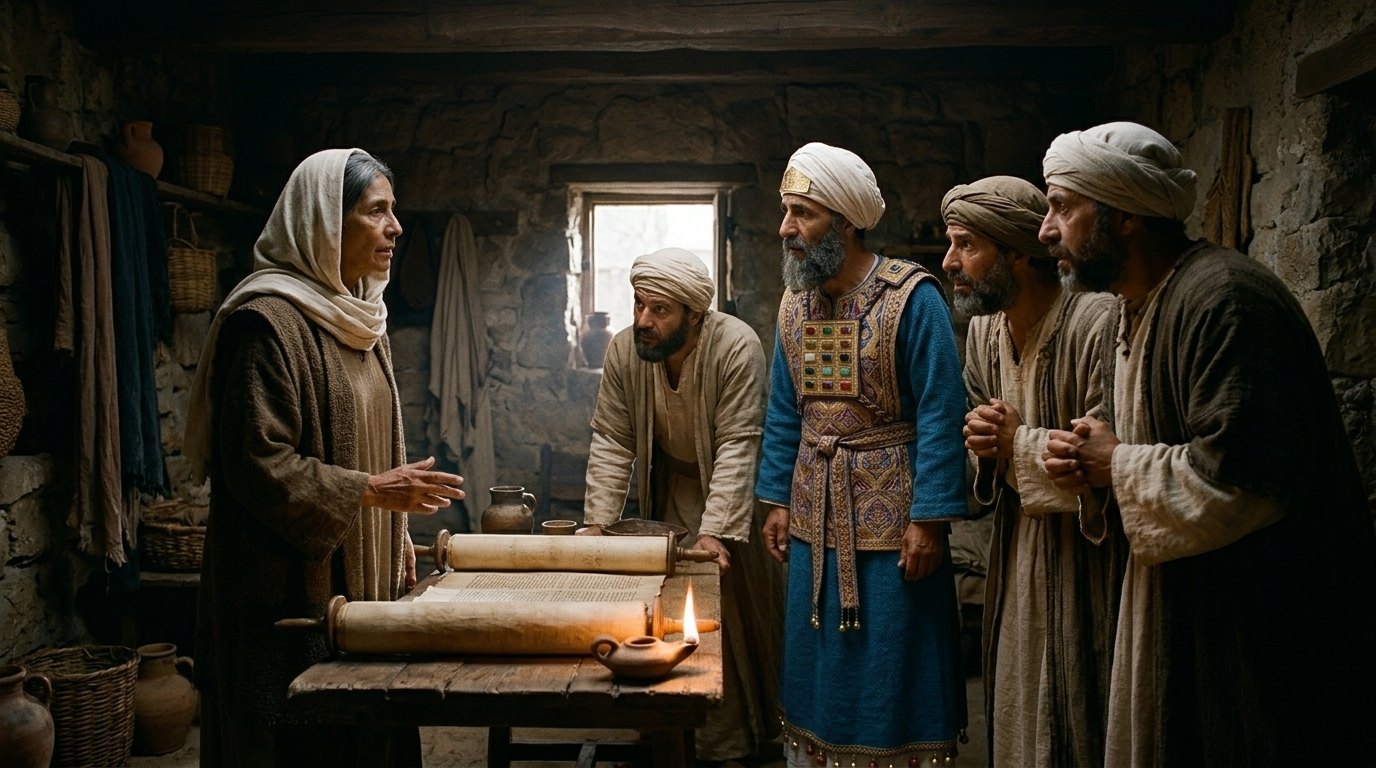
2 Kings 22:14-20
14 Hilkiah the priest, Ahikam, Akbor, Shaphan and Asaiah went to speak to the prophet Huldah, who was the wife of Shallum son of Tikvah, the son of Harhas, keeper of the wardrobe. She lived in Jerusalem, in the New Quarter.
15 She said to them, “This is what the LORD, the God of Israel, says: Tell the man who sent you to me,
16 ‘This is what the LORD says: I am going to bring disaster on this place and its people, according to everything written in the book the king of Judah has read.
17 Because they have forsaken me and burned incense to other gods and aroused my anger by all the idols their hands have made, my anger will burn against this place and will not be quenched.’
18 Tell the king of Judah, who sent you to inquire of the LORD, ‘This is what the LORD, the God of Israel, says concerning the words you heard:
19 Because your heart was responsive and you humbled yourself before the LORD when you heard what I have spoken against this place and its people—that they would become a curse and be laid waste—and because you tore your robes and wept in my presence, I also have heard you, declares the LORD.
20 Therefore I will gather you to your ancestors, and you will be buried in peace. Your eyes will not see all the disaster I am going to bring on this place.’ ” So they took her answer back to the king.
New International Version (NIV)
The answer
Huldah was a prophetess of Yahweh in Jerusalem during the reign of King Josiah of Judah. She delivered God’s message to Josiah after the Book of the Law was rediscovered in the temple.
When Hilkiah the high priest found the book, Josiah heard its warnings, tore his clothes, and sent senior officials to inquire of Yahweh because his ancestors had disobeyed it (2 Kings 22:8-13). They went to Huldah. She was the wife of Shallum, who kept the wardrobe, and she lived in Jerusalem’s second quarter (2 Kings 22:14). The king’s delegation seeking her out shows that she was recognized as a genuine messenger of God.
Speaking in Yahweh’s name, Huldah announced two things (2 Kings 22:15-20):
- Judgment on Jerusalem and its people: Because they had forsaken God and burned incense to other gods, the disaster warned about in the book would come, and God’s wrath against that place would not be quenched.
- A personal promise to Josiah: Because his heart was tender and he humbled himself, tore his clothes, and wept before God, God heard him. Josiah would be gathered to his grave in peace and would not see all the coming disaster.
Huldah therefore confirmed the book’s warnings while declaring God’s gracious response to Josiah’s humility. The national judgment remained certain, but God took notice of the king’s repentance. Her appearance is also recorded in the parallel account in 2 Chronicles 34:22.
Scripture names other women who bore the title prophetess, including Miriam (Exodus 15:20) and Deborah (Judges 4:4). Huldah’s brief account stands as a powerful testimony that God’s word is sure and that He hears those who humble themselves before it.
Answered from Scripture · reviewed November 25, 2026
How Huldah Brought God's Word to Josiah
Read from top to bottom: the events of 2 Kings 22, from the finding of the book to Huldah's twofold message of judgment and mercy.
- The Book of the Law is found · Hilkiah the high priest finds the book in the temple. · 2 Kings 22:8
- Josiah tears his clothes · The king hears its warnings and knows his ancestors had disobeyed it. · 2 Kings 22:11
- Officials sent to inquire of Yahweh · Josiah sends senior officials to seek God's word about the book. · 2 Kings 22:12-13
- They go to Huldah · The prophetess, wife of Shallum the keeper of the wardrobe, living in Jerusalem's second quarter. · 2 Kings 22:14
- Judgment on Jerusalem · Because they forsook God and burned incense to other gods, the disaster in the book would come. · 2 Kings 22:15-17
- Promise to Josiah · Because he humbled himself and wept, he would be gathered to his grave in peace. · 2 Kings 22:18-20
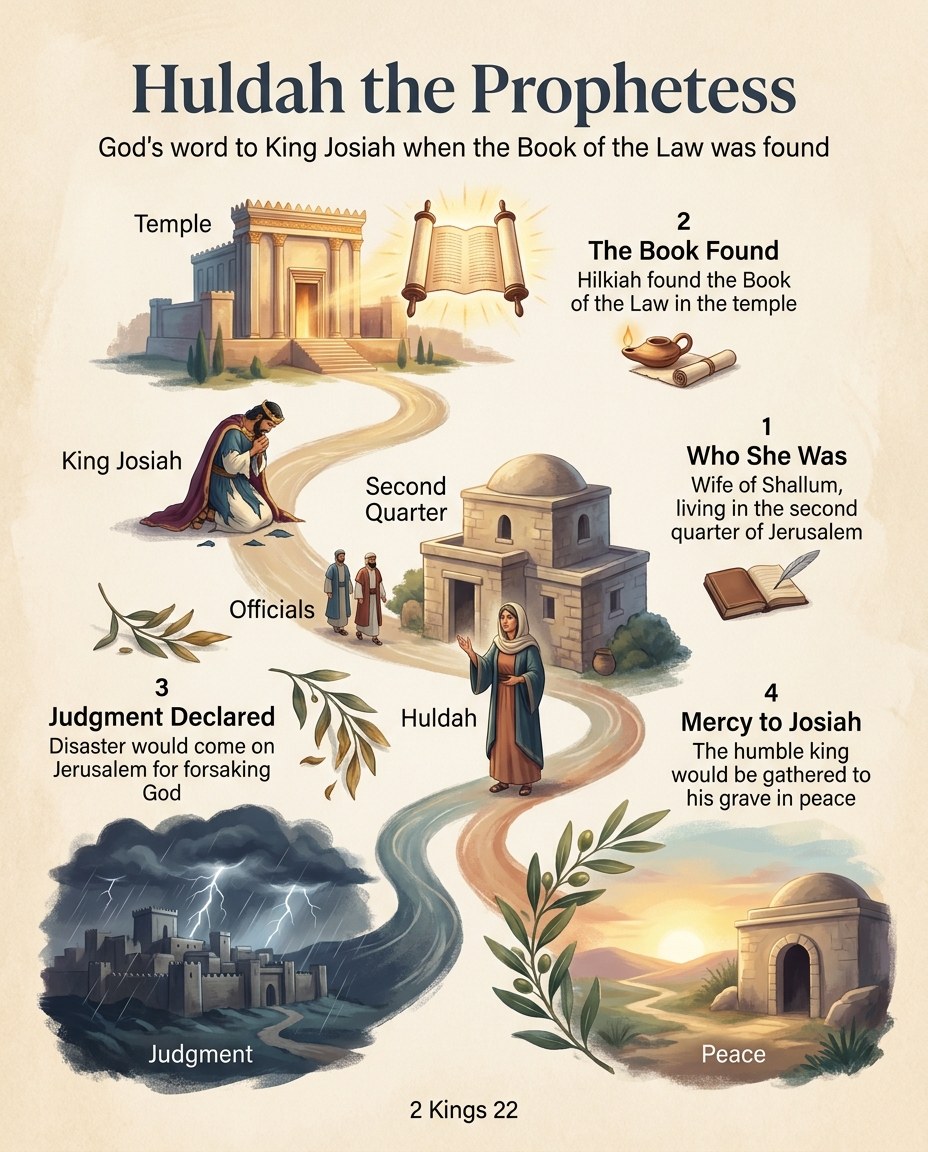
Huldah was a prophetess who ministered in Jerusalem during the reign of King Josiah, trusted by both high priest and royal court to deliver the unvarnished word of the Lord. When the long-lost Book of the Law was unearthed in the temple, it was Huldah who authenticated its warnings, declaring unavoidable judgment on Judah while speaking mercy to a penitent king.
The Royal Inquiry
King Josiah Sends Leaders to Seek God's Word
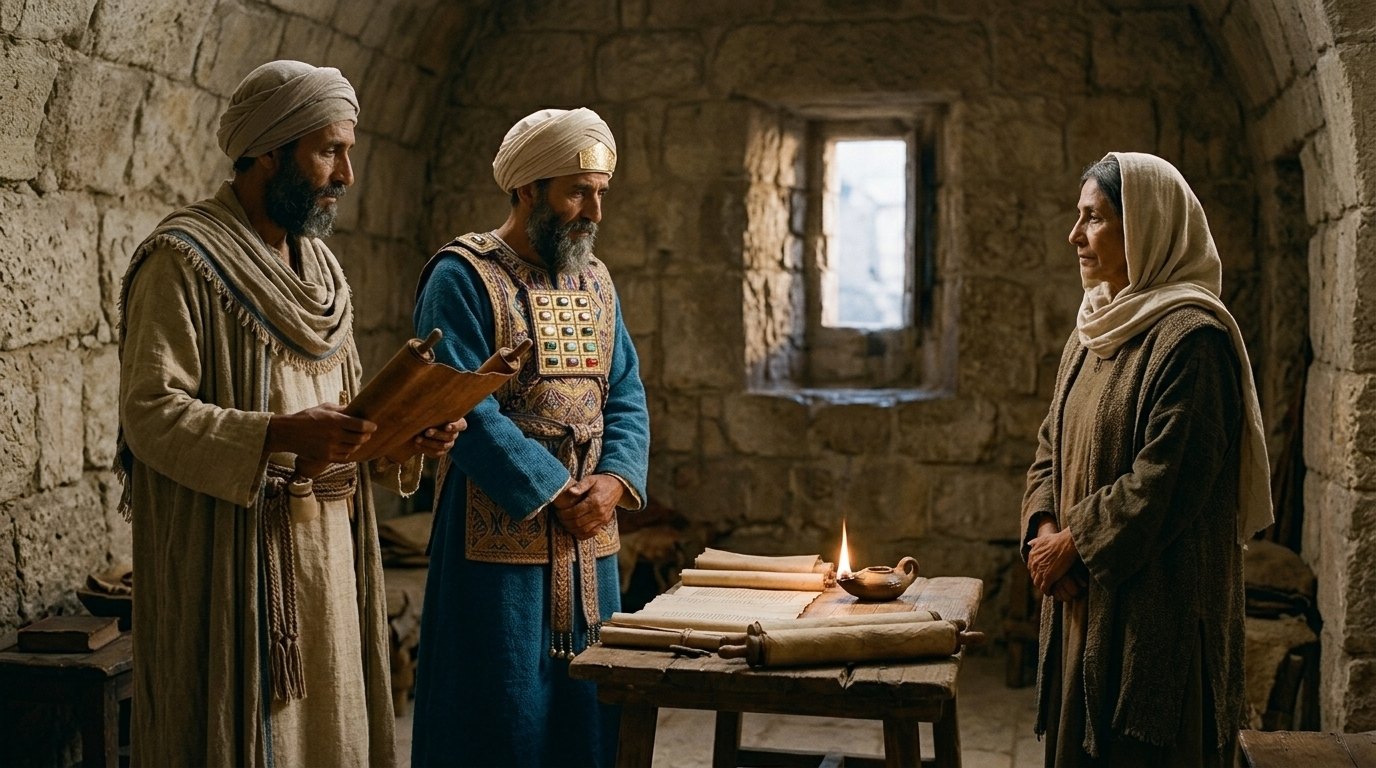
Hilkiah the priest, Ahikam, Akbor, Shaphan and Asaiah went to speak to the prophet Huldah, who was the wife of Shallum son of Tikvah, the son of Harhas, keeper of the wardrobe. She lived in Jerusalem, in the New Quarter.
2 Kings 22:14 (NIV)
It records the royal delegation consulting Huldah the prophetess in Jerusalem after the Book of the Law was found.
In 2 Kings 22:14, the royal officials went directly to Huldah the prophetess, seeking an authoritative word from God during an acute spiritual crisis. Hilkiah the high priest had uncovered the long-neglected Book of the Law inside the temple (2 Kings 22:8), identified in 2 Chronicles 34:14-15 as given through Moses. When the scribe Shaphan read its sobering curses before the court, King Josiah tore his royal robes in grief, recognizing that generations of idolatry had ignited God's holy anger (2 Kings 22:11; 2 Chronicles 34:18-19). Josiah immediately commanded his top advisors—including Hilkiah, Shaphan, and royal ministers—to inquire of the Lord on behalf of the entire remnant of Judah (2 Kings 22:12-13; 2 Chronicles 34:20-21).
Rather than seeking out another contemporary, the delegation sought out Huldah, the wife of Shallum keeper of the wardrobe, residing in the Second Quarter of Jerusalem (2 Kings 22:14; 2 Chronicles 34:22). Her recognized stature in Israel was such that both the high priest and the royal court unquestioningly entrusted her with verifying the authenticity and meaning of the sacred text. Her home became the place where the throne sought the mind of God.
| Passage | What it says |
|---|---|
| 2 Kings 22:8 | Hilkiah the high priest discovers the Book of the Law inside the house of the Lord. |
| 2 Kings 22:11 | King Josiah tears his royal clothes upon hearing the words and curses written in the Law. |
| 2 Kings 22:12-13 | Josiah commands his officials to inquire of Yahweh concerning the great wrath burning against Judah. |
| 2 Kings 22:14 | The delegation visits Huldah, wife of Shallum keeper of the wardrobe, living in the Second Quarter. |
| 2 Chronicles 34:22 | The chronicler records the parallel account of Hilkiah and the royal delegation conferring with Huldah. |
| 2 Chronicles 34:14-15 | Hilkiah finds the Book of the Law of the Lord given through Moses, prompting the crisis that leads to consulting Huldah. |
| 2 Chronicles 34:18-21 | Shaphan reads the law to Josiah, who tears his clothes and sends his officials specifically to inquire of the Lord. |
The Unquenchable Wrath
Huldah Pronounces Unavoidable Judgment Upon Jerusalem
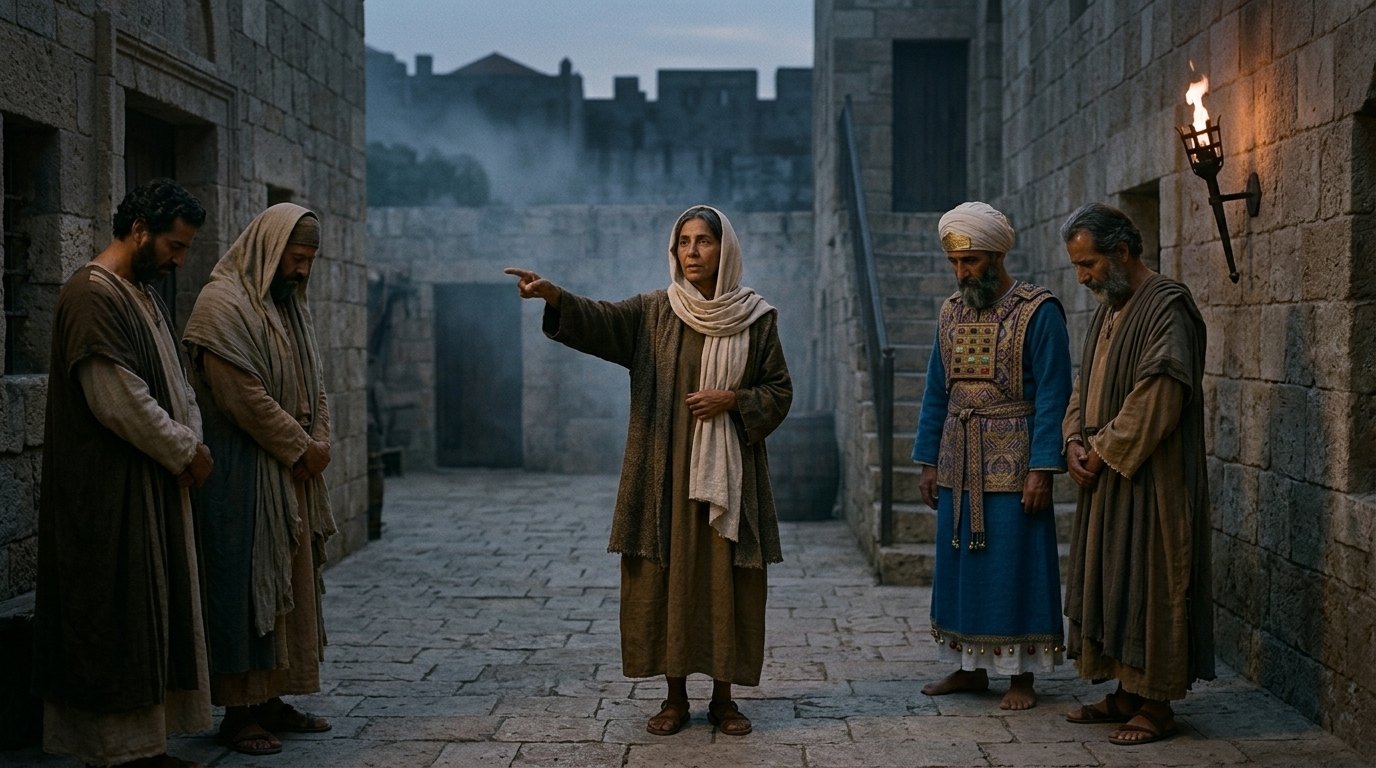
‘This is what the LORD says: I am going to bring disaster on this place and its people, according to everything written in the book the king of Judah has read. Because they have forsaken me and burned incense to other gods and aroused my anger by all the idols their hands have made, my anger will burn against this place and will not be quenched.’
2 Kings 22:16-17 (NIV)
Huldah declares that the wrath of the Lord is kindled against the city and will not be quenched because of idolatry.
Huldah declared that God's holy wrath was kindled against Jerusalem and would not be quenched, as recorded in 2 Kings 22:16-17. Speaking without flattery or fear of the royal emissaries, she prefaced her message with absolute divine authority: "Thus says the Lord God of Israel" (2 Kings 22:15; 2 Chronicles 34:23). She confirmed that the horrifying curses written in the discovered scroll were literal, righteous, and irreversible.
The Lord made known through Huldah that the coming disaster was the direct consequence of persistent spiritual apostasy (2 Kings 22:16; 2 Chronicles 34:24). The people had deliberately forsaken Yahweh, burning incense to false gods and provoking Him with the works of their hands (2 Kings 22:17; 2 Chronicles 34:25). God is holy, and unrepentant sin inevitably meets His righteous judgment. Huldah neither softened the divine warning nor offered false comfort, demonstrating the uncompromising fidelity required of every true prophet of God.
| Passage | What it says |
|---|---|
| 2 Kings 22:15 | Huldah speaks with prophetic authority in the name of Yahweh, addressing the king who sent them. |
| 2 Kings 22:16 | Yahweh declares through Huldah that He will bring disaster upon Jerusalem according to the book's curses. |
| 2 Kings 22:17 | God explains that forsaking Him for false idols has provoked His unquenchable wrath against Judah. |
| 2 Chronicles 34:23-25 | The chronicler recounts Huldah's prophetic decree confirming that the curses written in the book will fall. |
Mercy for the Penitent
God Grants Peace to a King With a Tender Heart
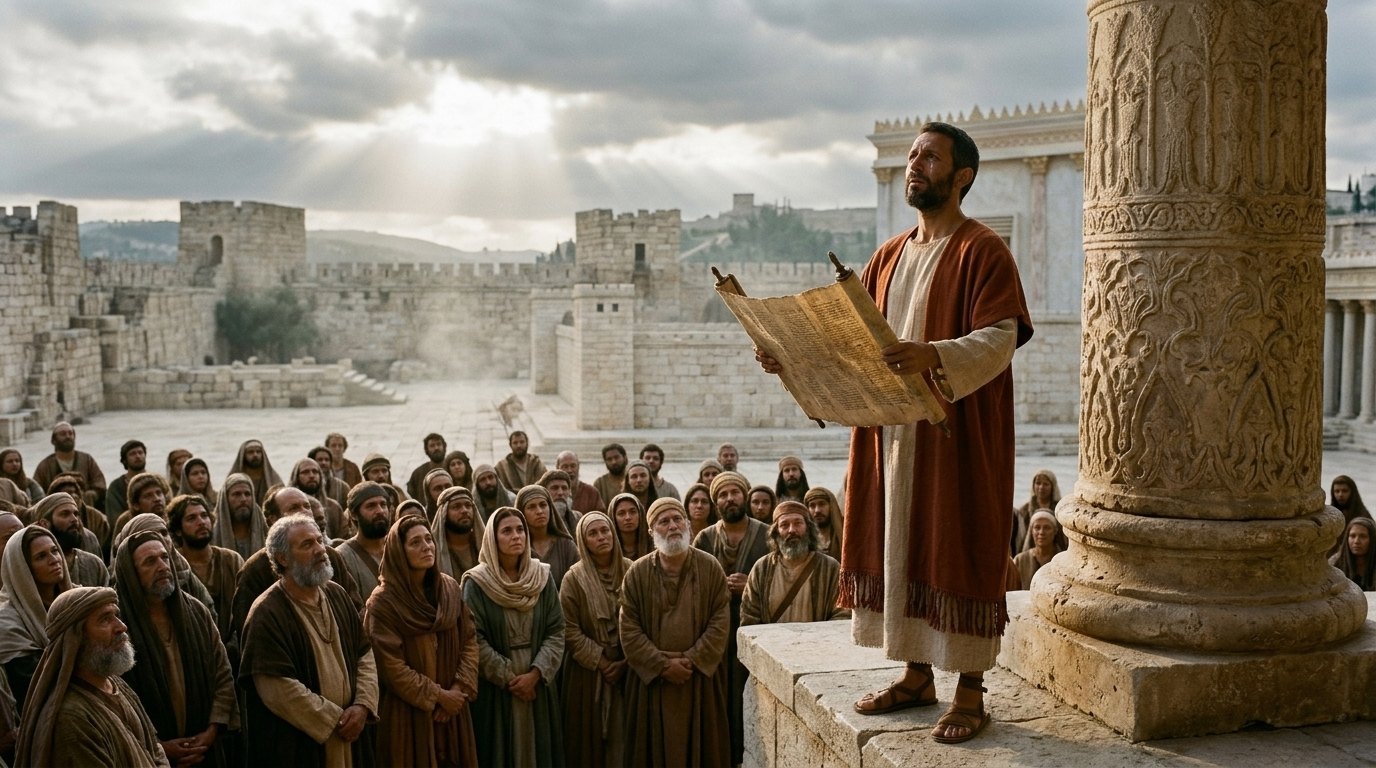
Because your heart was responsive and you humbled yourself before the LORD when you heard what I have spoken against this place and its people—that they would become a curse and be laid waste—and because you tore your robes and wept in my presence, I also have heard you, declares the LORD.
2 Kings 22:19 (NIV)
It reveals God's personal response to Josiah's tender heart, mourning, and deep humility before the Lord.
Because Josiah's heart was tender and he humbled himself before God, Yahweh granted him personal mercy, as promised in 2 Kings 22:19. Turning from the nation's unavoidable judgment, Huldah gave a tailored word of comfort specifically for the king who had sent them (2 Kings 22:18; 2 Chronicles 34:26). God took note of Josiah's genuine brokenness—his weeping, his torn garments, and his reverence for the holy law—declaring that heaven had heard his cry.
God promised that Josiah would be gathered to his fathers and laid in his grave in peace, spared from seeing the devastating disaster destined for Jerusalem (2 Kings 22:20; 2 Chronicles 34:27-28). Emboldened by Huldah's divine oracle, Josiah did not surrender to fatalism; instead, he gathered all the elders, priests, and citizens to read the covenant aloud and solemnly pledge obedience before Yahweh (2 Kings 23:1-3; 2 Chronicles 34:29-32). Under the momentum of Huldah's prophecy, the king led an exhaustive national reformation that purged the land of idols throughout his days (2 Chronicles 34:33).
| Passage | What it says |
|---|---|
| 2 Kings 22:18 | Huldah delivers a distinct and personal message of Yahweh directed specifically to King Josiah. |
| 2 Kings 22:19 | God notes Josiah's tender heart and self-humbling, promising that his weeping was heard by heaven. |
| 2 Kings 22:20 | Yahweh promises Josiah that he will be gathered to his grave before the devastation arrives. |
| 2 Chronicles 34:26-28 | The parallel record of Huldah's oracle assuring Josiah of preservation from seeing the impending calamity. |
| 2 Kings 23:1-3 | Following Huldah's prophecy, Josiah gathers all Judah and renews the covenant before the Lord. |
| 2 Chronicles 34:29-33 | The king leads the nation in covenant faithfulness throughout his lifetime in direct response to the prophetic word delivered by Huldah. |
Prophetic Calling
Women Chosen by God as Prophetic Voices
Now Deborah, a prophet, the wife of Lappidoth, was leading Israel at that time.
Judges 4:4 (NIV)
It shows Deborah serving as an established prophetess and judge who proclaimed God's word to Israel.
Scripture demonstrates that God has repeatedly called and gifted women to speak His truth, such as when Deborah served as a prophetess and judge to lead Israel in Judges 4:4. Long before Josiah's day, Miriam was designated a prophetess who led the assembly in praise after the Red Sea crossing (Exodus 15:20), honored alongside Moses and Aaron as a leader sent before Israel (Micah 6:4). Isaiah likewise referred to his wife as the prophetess (Isaiah 8:3), pointing to the recognized operation of prophetic gifts within the covenant community.
This pattern continues seamlessly into the New Testament. In the temple, Anna the prophetess recognized the infant Messiah and proclaimed redemption to all who waited for the consolation of Jerusalem (Luke 2:36-38). On the day of Pentecost, Peter announced that God's Spirit is poured out on all flesh, so that "your sons and your daughters shall prophesy" (Acts 2:17-18). Later, the evangelist Philip was noted for his four unmarried daughters who exercised the gift of prophecy (Acts 21:8-9). Huldah's ministry stands in this rich, biblical continuity of women chosen by God to faithfully speak His holy Word.
| Passage | What it says |
|---|---|
| Exodus 15:20 | Miriam the prophetess leads the women in worship after God's deliverance at the Red Sea. |
| Micah 6:4 | The Lord reminds Israel that He sent Moses, Aaron, and Miriam ahead of them from Egypt. |
| Judges 4:4 | Deborah is recognized as a prophetess and leader who spoke God's commands to Barak. |
| Luke 2:36-38 | Anna the prophetess gives thanks to God upon seeing the child Jesus in the temple. |
| Isaiah 8:3 | Isaiah refers to his wife as the prophetess, recognizing prophetic calling within married covenant life. |
| Acts 2:17-18 | Peter quotes Joel declaring that in the last days God's Spirit is poured out on sons and daughters to prophesy. |
| Acts 21:8-9 | Philip the evangelist is noted as having four unmarried daughters who possessed the gift of prophecy. |
Where in the Bible
| Book | Passages |
|---|---|
| Exodus | 1 · Exodus 15:20 |
| Judges | 1 · Judges 4:4 |
| 2 Kings | 11 · 2 Kings 22:8, 2 Kings 22:11, 2 Kings 22:12-13, 2 Kings 22:14, 2 Kings 22:15, 2 Kings 22:16, 2 Kings 22:17, 2 Kings 22:18, 2 Kings 22:19, 2 Kings 22:20, 2 Kings 23:1-3 |
| 2 Chronicles | 6 · 2 Chronicles 34:22, 2 Chronicles 34:14-15, 2 Chronicles 34:18-21, 2 Chronicles 34:23-25, 2 Chronicles 34:26-28, 2 Chronicles 34:29-33 |
| Isaiah | 1 · Isaiah 8:3 |
| Micah | 1 · Micah 6:4 |
| Luke | 1 · Luke 2:36-38 |
| Acts | 2 · Acts 2:17-18, Acts 21:8-9 |
The story in order
- Miriam leads worship (c. 1450 BC) · Exodus 15:20 · Miriam is the first named prophetess in Scripture.
- Deborah leads Israel (c. 1200 BC) · Judges 4:4 · Deborah is a prophetess and judge of Israel.
- Book of the Law found (c. 622 BC) · 2 Kings 22:8 · Hilkiah finds the Book of the Law in the temple.
- Josiah inquires of Huldah (c. 622 BC) · 2 Kings 22:14 · Josiah sends officials to Huldah for God's word.
- Huldah pronounces judgment (c. 622 BC) · 2 Kings 22:16 · Huldah declares God's wrath on Judah.
- Huldah promises peace to Josiah (c. 622 BC) · 2 Kings 22:20 · Huldah assures Josiah he will die before disaster.
- Josiah renews the covenant (c. 622 BC) · 2 Kings 23:3 · Josiah leads Judah in covenant faithfulness.
- Joel's prophecy of Spirit's outpouring (AD 30) · Acts 2:17-18 · Peter quotes Joel, promising prophecy for sons and daughters.
- Anna prophesies at the temple (c. AD 1) · Luke 2:36-38 · Anna recognizes Jesus as the Messiah.
- Philip's daughters prophesy (c. AD 55) · Acts 21:9 · Philip's daughters are noted for their gift of prophecy.
Huldah's Oracle: Judgment and Mercy
| Judgment | Mercy | Passage |
|---|---|---|
| Disaster upon Jerusalem | Peace for Josiah | 2 Kings 22:16 |
| Wrath against Judah for idolatry | Josiah's tender heart heard | 2 Kings 22:17 |
| Curses written in the book will fall | Josiah gathered to his grave in peace | 2 Kings 22:20 |
| Impending calamity | Josiah preserved from seeing it | 2 Chronicles 34:28 |
Women of Prophetic Calling
| Name | Role | Biblical Context | Passage |
|---|---|---|---|
| Miriam | Prophetess | Led women in worship after Red Sea deliverance | Exodus 15:20 |
| Deborah | Prophetess and Judge | Spoke God's commands to Barak | Judges 4:4 |
| Huldah | Prophetess | Authenticated the Book of the Law to King Josiah | 2 Kings 22:14 |
| Isaiah's wife | Prophetess | Recognized prophetic calling in covenant life | Isaiah 8:3 |
| Anna | Prophetess | Gave thanks for the child Jesus in the temple | Luke 2:36-38 |
| Philip's daughters | Prophetesses | Possessed the gift of prophecy | Acts 21:9 |
Key words
- Prophetess (נְבִיאָה (nevi'ah))
- A woman who speaks God's message with divine authority. · Exodus 15:20
- Book of the Law (סֵפֶר הַתּוֹרָה (sefer ha-torah))
- The divinely given instruction, found in Josiah's time. · 2 Kings 22:8
- Wrath of the Lord (אַף־יְהוָה (aph-Yahweh))
- God's righteous anger against sin and idolatry. · 2 Kings 22:13
- Tender Heart (לֵב־רַךְ (lev-rakh))
- A heart that is humble, sensitive to God's word, and repentant. · 2 Kings 22:19
Huldah's ministry reminds the church that God speaks with complete clarity and sovereign authority, honoring those who tremble at His word. Though national judgment was decreed, the Lord saw and rewarded Josiah's humble repentance, pointing believers in every generation to the refuge found in Christ.
24 passages, each cited once.
Scripture cited
- 2 Kings 22:14-20
- Judges 4:4
- 2 Chronicles 34:22
- Exodus 15:20
- 2 Kings 22