Who was King Zedekiah?
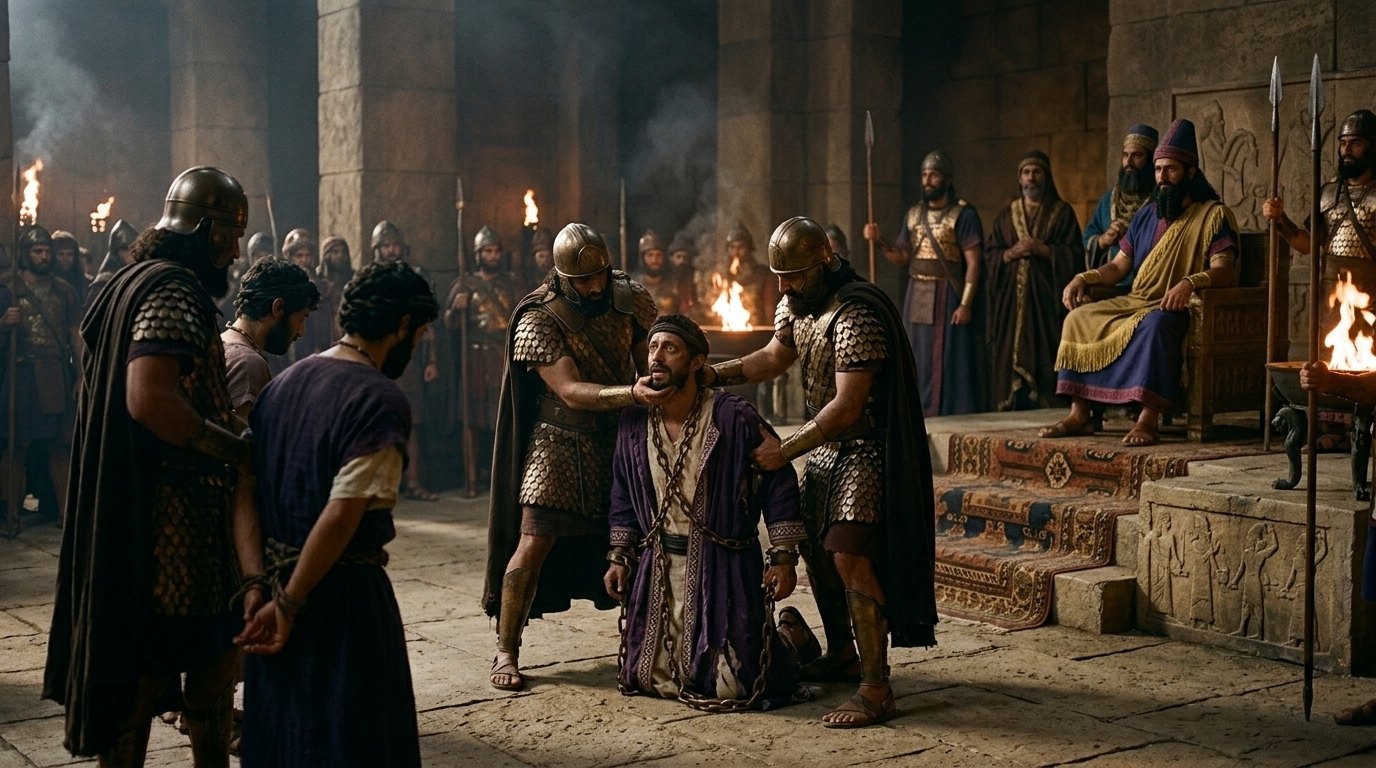
2 Kings 25:1-7
1 So in the ninth year of Zedekiah’s reign, on the tenth day of the tenth month, Nebuchadnezzar king of Babylon marched against Jerusalem with his whole army. He encamped outside the city and built siege works all around it.
2 The city was kept under siege until the eleventh year of King Zedekiah.
3 By the ninth day of the fourth month the famine in the city had become so severe that there was no food for the people to eat.
4 Then the city wall was broken through, and the whole army fled at night through the gate between the two walls near the king’s garden, though the Babylonians were surrounding the city. They fled toward the Arabah,
5 but the Babylonian army pursued the king and overtook him in the plains of Jericho. All his soldiers were separated from him and scattered,
6 and he was captured. He was taken to the king of Babylon at Riblah, where sentence was pronounced on him.
7 They killed the sons of Zedekiah before his eyes. Then they put out his eyes, bound him with bronze shackles and took him to Babylon.
New International Version (NIV)
The answer
Zedekiah was Judah’s last king before Jerusalem fell to Babylon. Originally named Mattaniah, he was a son of King Josiah and Jehoiachin’s uncle. Nebuchadnezzar placed him on the throne in Jehoiachin’s place and changed his name to Zedekiah. He began reigning at twenty-one and ruled in Jerusalem for eleven years (2 Kings 24:17-18; Jeremiah 37:1).
Scripture’s verdict is that Zedekiah did evil in Yahweh’s sight. He refused to humble himself before Jeremiah, who spoke God’s word, and rebelled against Nebuchadnezzar despite having sworn allegiance by God. He stiffened his neck and hardened his heart instead of turning to Yahweh (2 Kings 24:19-20; 2 Chronicles 36:12-13).
Zedekiah sometimes sought God’s help, even asking Jeremiah to pray during the Babylonian crisis. Yet he, his officials, and the people would not listen to what Yahweh said through the prophet (Jeremiah 37:2-3). When Egypt’s army temporarily caused the Babylonians to withdraw, Jeremiah warned that they would return, capture Jerusalem, and burn it (Jeremiah 37:5-10).
That warning came true. Nebuchadnezzar besieged Jerusalem from Zedekiah’s ninth year until his eleventh. Famine became severe, the city was breached, and Zedekiah fled by night but was overtaken near Jericho. At Riblah, his sons were killed before his eyes; he was then blinded, bound, and carried to Babylon, where he remained imprisoned until his death (2 Kings 25:1-7; Jeremiah 52:9-11).
His life is a sober warning that seeking God’s help cannot replace humbling oneself and obeying God’s word (2 Chronicles 36:12; Jeremiah 37:2-3).
Answered from Scripture · reviewed November 25, 2026
The Reign and Fall of King Zedekiah
Read top to bottom: Judah's last king rose by Babylon's hand, refused God's word through Jeremiah, and fell as Jeremiah had warned.
- Made king by Nebuchadnezzar (Age 21) · Mattaniah, son of Josiah and uncle of Jehoiachin, renamed Zedekiah and set on the throne in Jehoiachin's place. · 2 Kings 24:17-18
- Does evil in Yahweh's sight (Eleven-year reign) · He would not humble himself before Jeremiah, who spoke God's word. · 2 Chronicles 36:12
- Rebels against Babylon (During his reign) · He broke the allegiance he had sworn by God, stiffening his neck and hardening his heart. · 2 Chronicles 36:13
- Asks Jeremiah to pray (Babylonian crisis) · He sought help, yet he, his officials and the people would not listen to Yahweh's word. · Jeremiah 37:2-3
- Babylon withdraws for a time (Egypt's army advances) · Jeremiah warned the Babylonians would return, capture Jerusalem and burn it. · Jeremiah 37:5-10
- Siege of Jerusalem begins (His ninth year) · Nebuchadnezzar besieged the city. · 2 Kings 25:1
- City breached; king flees (His eleventh year) · Famine grew severe, the wall was broken, and Zedekiah fled by night and was overtaken near Jericho. · 2 Kings 25:2-5
- Judged at Riblah (After capture) · His sons were killed before his eyes; he was blinded and bound. · 2 Kings 25:6-7
- Prisoner in Babylon (Until his death) · Carried to Babylon and held in prison all his remaining days. · Jeremiah 52:11
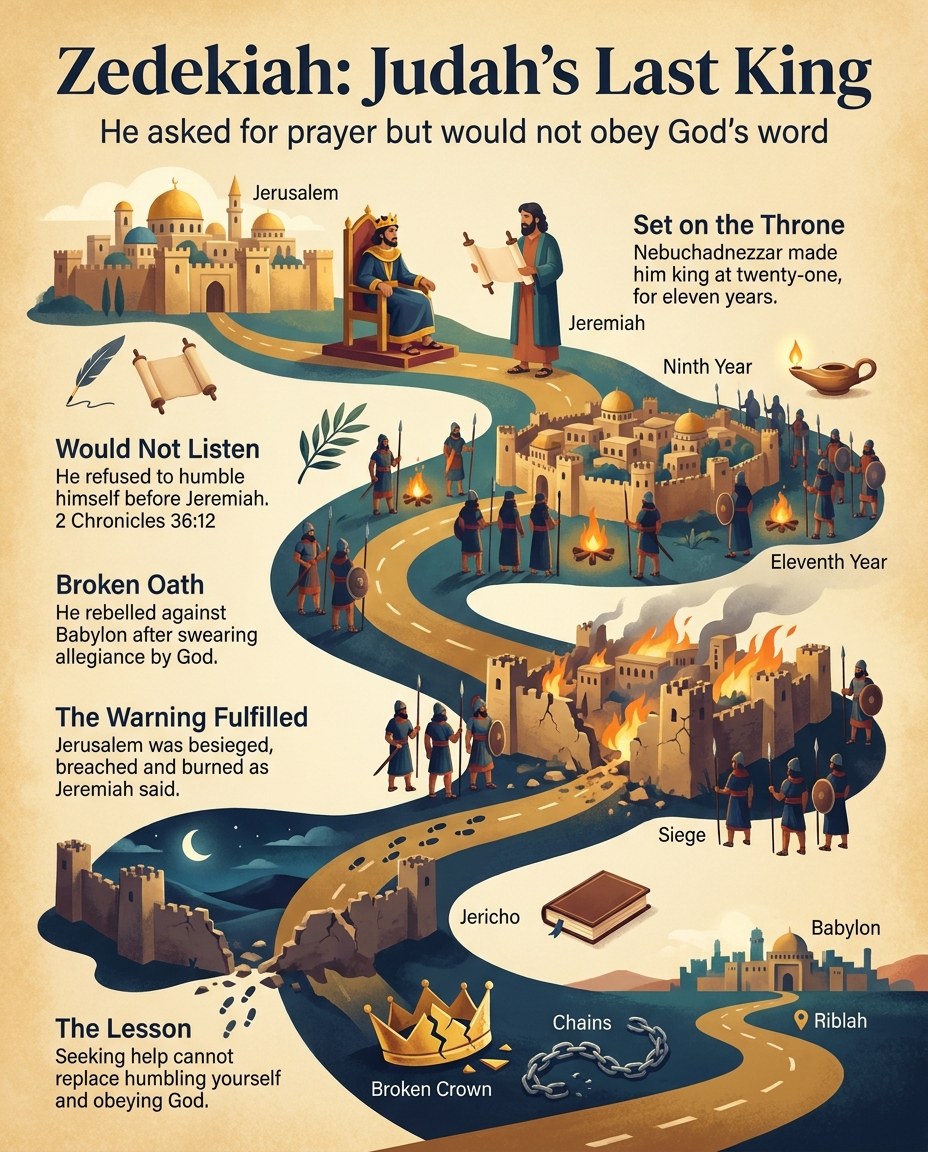
Zedekiah was the final king of Judah before the destruction of Jerusalem and the Babylonian exile. Appointed as a puppet ruler by Nebuchadnezzar, his tragic eleven-year reign illustrates the ruin of hardening one's heart against God's direct warnings while seeking divine favor without true repentance.
The Puppet King
Nebuchadnezzar establishes Mattaniah as the last ruler of Judah
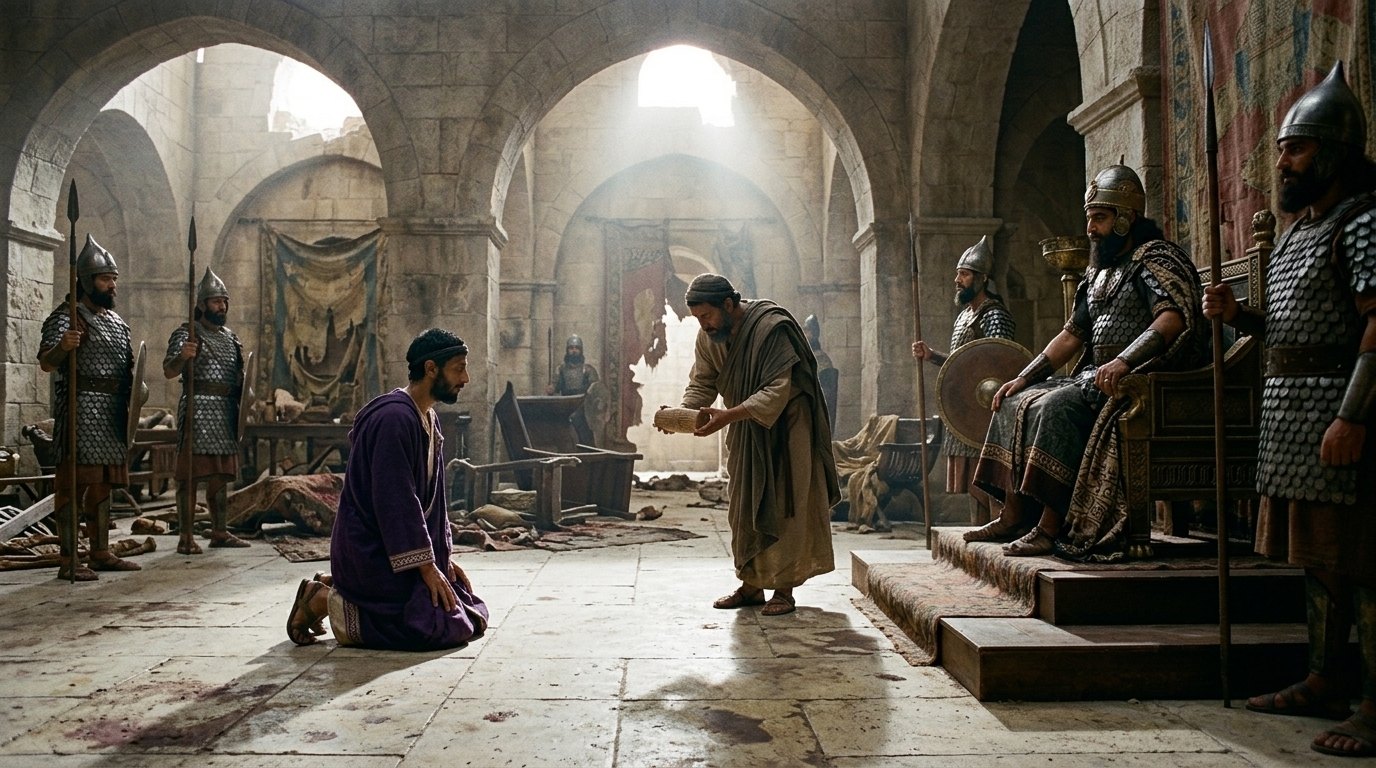
He made Mattaniah, Jehoiachin’s uncle, king in his place and changed his name to Zedekiah.
2 Kings 24:17 (NIV)
It records the exact moment Babylon deposed Jehoiachin and changed Mattaniah's name to Zedekiah, marking the start of his tragic vassal reign.
The appointment of Zedekiah marked the twilight of the Davidic dynasty in pre-exilic Jerusalem, beginning in vassalage and ending in catastrophe. As recorded in 2 Kings 24:17, the king of Babylon made Mattaniah his father's brother king in his stead, and changed his name to Zedekiah, stripping the ruler of even his sovereign identity. At just twenty-one years old, Zedekiah began an eleven-year reign characterized by political fragility and spiritual compromise (2 Kings 24:18; 2 Chronicles 36:11). Though he was counted among the royal sons of the godly reformer Josiah (1 Chronicles 3:15), he inherited none of his father's covenant faithfulness.
His elevation was entirely engineered by foreign imperial decree. Following the brief and disastrous reign of Jehoiachin, also known as Coniah, Nebuchadnezzar installed Zedekiah as a subordinate puppet across the shattered province of Judah (Jeremiah 37:1). Yet God did not leave the throne without divine witness. The prophetic ministry of Jeremiah, which had begun decades earlier under Josiah, pressed directly through the entire eleven years of Zedekiah right up until the final carrying away of Jerusalem into captive exile (Jeremiah 1:3).
Throughout the early stages of his rule, Zedekiah found himself caught between conflicting factions and deceptive promises. In his fourth year, the prophet Hananiah broke a wooden yoke to falsely declare that Babylon's grip would be shattered within two years, a lie Jeremiah immediately confronted and exposed with divine judgment (Jeremiah 28:1). That same fourth year saw Zedekiah make a diplomatic pilgrimage eastward to Babylon, accompanied by Seraiah his quiet quartermaster, to reaffirm his allegiance and pay tribute to his imperial master (Jeremiah 51:59). Even while walking the halls of Babylon, Zedekiah remained blind to the spiritual reality that Judah's true peril came not from imperial geopolitics, but from forsaking the Lord.
| Passage | What it says |
|---|---|
| 2 Kings 24:17 | Nebuchadnezzar makes Mattaniah king instead of Jehoiachin and renames him Zedekiah. |
| 2 Kings 24:18 | Zedekiah begins his eleven-year reign in Jerusalem at the age of twenty-one. |
| 1 Chronicles 3:15 | Zedekiah is listed among the royal sons of Josiah, king of Judah. |
| 2 Chronicles 36:11 | Zedekiah reigns in Jerusalem for eleven years after succeeding Jehoiachin. |
| Jeremiah 37:1 | Coniah is replaced by Zedekiah son of Josiah through the decree of Nebuchadnezzar. |
| Jeremiah 1:3 | Sets the timeline of Jeremiah's prophetic ministry extending through the eleventh year of Zedekiah unto Jerusalem's carrying away captive. |
| Jeremiah 28:1 | Dates the confrontation with the false prophet Hananiah to the fourth year of Zedekiah's reign in Jerusalem. |
| Jeremiah 51:59 | Records Zedekiah traveling to Babylon in the fourth year of his reign accompanied by Seraiah his quiet quartermaster. |
Spiritual Hardening
Scripture's verdict on Zedekiah's rebellion and stubborn defiance
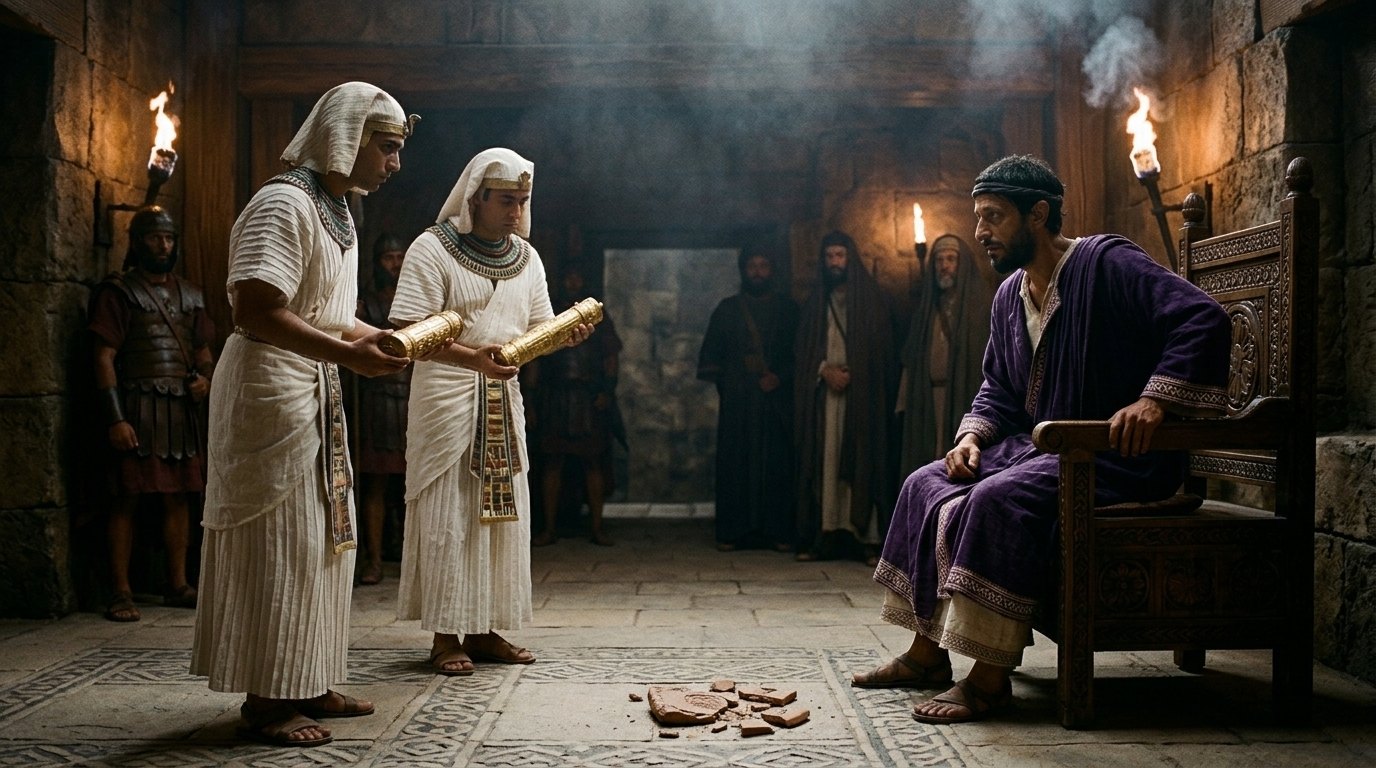
He did evil in the eyes of the LORD his God and did not humble himself before Jeremiah the prophet, who spoke the word of the LORD.
2 Chronicles 36:12 (NIV)
It pinpoints Zedekiah's core spiritual failing: refusing to humble himself before Jeremiah speaking from the mouth of the Lord.
Scripture's assessment of Zedekiah is unanimous and unsparing: he did that which was evil in the sight of the Lord his God, and humbled not himself before Jeremiah the prophet speaking from the mouth of the Lord (2 Chronicles 36:12). He deliberately walked in the apostate footsteps of Jehoiakim (2 Kings 24:19). When Yahweh's provoked wrath reached its zenith, Zedekiah made the disastrous choice to rebel against Babylon (2 Kings 24:20). He not only defied an imperial conqueror, but stiffened his neck and hardened his heart against Yahweh after breaking a solemn oath sworn by God Himself (2 Chronicles 36:13).
From exile by the river Chebar, Ezekiel unveiled the full treacherous depth of Zedekiah's political machinations. In Ezekiel 17:12-14, the prophet recounted how Nebuchadnezzar had bound the royal seed under covenant so that the kingdom might remain humble and stand. Yet Zedekiah despised this solemn vow: he rebelled against him in sending his ambassadors into Egypt, that they might give him horses and much people (Ezekiel 17:15). God declared through Ezekiel that no one who breaks covenant and despises a sacred oath can ever escape judgment (Ezekiel 17:18).
Human alliances offered no shield against divine decrees. Ezekiel prophesied that Pharaoh's mighty army would prove utterly useless when Babylon returned, and that Zedekiah would surely die in the very land whose covenant he had scorned (Ezekiel 17:16-17, 19-21). Finally, God pronounced utter overthrow upon this profane ruler: remove the diadem, and take off the crown... I will overturn, overturn, overturn it: and it shall be no more, until he come whose right it is; and I will give it him (Ezekiel 21:25-27). Zedekiah's faithless rebellion stripped Judah of its earthly crown until Christ, the true King, arrived.
| Passage | What it says |
|---|---|
| 2 Kings 24:19 | Zedekiah does evil in Yahweh's eyes according to all Jehoiakim had done. |
| 2 Kings 24:20 | Through Yahweh's anger Jerusalem is cast out, and Zedekiah rebels against Babylon. |
| 2 Chronicles 36:12 | Zedekiah does evil and refuses to humble himself before the prophet Jeremiah. |
| 2 Chronicles 36:13 | Zedekiah breaks his oath sworn by God and stiffens his neck against Yahweh. |
| Ezekiel 17:15 | Zedekiah rebels against Babylon by sending ambassadors to Egypt for horses and troops. |
| Ezekiel 17:18 | The Lord declares Zedekiah will not escape judgment after breaking his covenant oath. |
| Ezekiel 17:12-14 | Explains Nebuchadnezzar taking seed of the royal house and placing him under oath so the kingdom would stay humble. |
| Ezekiel 17:16-17 | Decrees that the oath-breaking king who despised Babylon's covenant will die in Babylon despite Pharaoh's futile military help. |
| Ezekiel 17:19-21 | Declares God's personal retribution against Zedekiah for breaking the divine covenant made under oath to Babylon. |
| Ezekiel 21:25-27 | Pronounces ruin upon the profane, wicked prince of Israel whose turban and crown are removed until He comes whose right it is. |
Inquiring Without Obeying
Zedekiah seeks Jeremiah's prayers while rejecting God's clear counsel
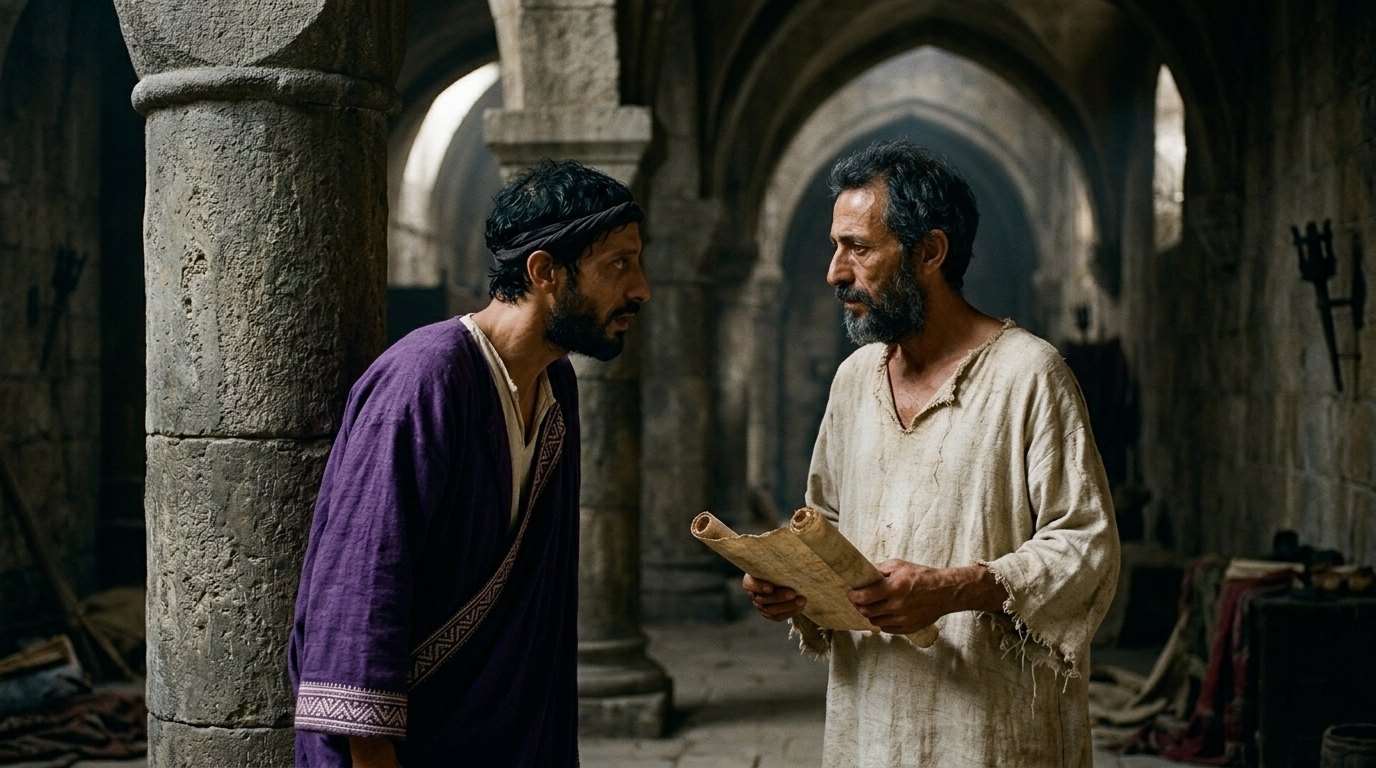
Neither he nor his attendants nor the people of the land paid any attention to the words the LORD had spoken through Jeremiah the prophet.
Jeremiah 37:2 (NIV)
It diagnoses the fatal flaw of Zedekiah and his court: maintaining religious curiosity while outright refusing to listen to Yahweh's words.
The fatal spiritual paradox of Zedekiah's life was his persistent desire for prophetic revelation paired with an absolute refusal to obey it. As Scripture summarizes, neither he, nor his servants, nor the people of the land, did hearken unto the words of the Lord, which he spake by the prophet Jeremiah (Jeremiah 37:2). When Nebuchadnezzar first approached, Zedekiah sent envoys pleading for Jeremiah to inquire whether God might perform a miraculous deliverance like those of old (Jeremiah 21:1-2). Instead, the Lord answered that He Himself would fight against Jerusalem with outstretched hand, handing the king over to death and captivity (Jeremiah 21:3-7).
Jeremiah continually set two ways before the house of David. In the vision of the two baskets of figs, Zedekiah and his princes were revealed as rotten, inedible figs destined for reproach and ruin (Jeremiah 24:8-10). Jeremiah even made wooden yokes to send to visiting foreign ambassadors and urged Zedekiah directly to bow under Babylon's yoke to live (Jeremiah 27:3, 12-15). Yet Zedekiah imprisoned Jeremiah for foretelling Judah's fall (Jeremiah 32:1-5; 34:1-3). When a temporary Egyptian advance caused Babylon to lift the siege, Zedekiah asked Jeremiah for prayers, only to be told that Pharaoh would retreat and the Chaldeans would return to burn the city (Jeremiah 37:3, 7-8). During that brief respite, the nobles cynically rescinded a proclaimed covenant releasing Hebrew slaves, sealing their condemnation (Jeremiah 34:8-11, 21-22).
Paralyzed by cowardice, Zedekiah privately asked Jeremiah, "Is there any word from the Lord?" yet could only offer the prophet a daily loaf of bread while keeping him detained (Jeremiah 37:17-21). Later, when hostile princes cast Jeremiah into a muddy pit to die, the king admitted, "The king is not he that can do any thing against you" (Jeremiah 38:5). Though he allowed Ebed-melech to rescue the prophet (Jeremiah 38:6-10), Zedekiah still rejected Jeremiah's final plea to surrender to Babylon and spare Jerusalem (Jeremiah 38:14-23). Paralyzed by fear of men, he swore Jeremiah to secrecy, choosing self-destruction over simple obedience (Jeremiah 38:24-28).
| Passage | What it says |
|---|---|
| Jeremiah 21:1-2 | Zedekiah sends officials to Jeremiah asking him to inquire of Yahweh concerning Nebuchadnezzar. |
| Jeremiah 34:1-3 | Jeremiah warns Zedekiah that Jerusalem will burn and he will face Babylon's king. |
| Jeremiah 37:2 | Zedekiah and his servants do not listen to Yahweh's words spoken through Jeremiah. |
| Jeremiah 37:3 | Zedekiah sends an embassy requesting that Jeremiah pray to Yahweh on their behalf. |
| Jeremiah 37:7-8 | Jeremiah reveals Pharaoh's army will retreat and Babylon will burn the city. |
| Jeremiah 37:17 | Zedekiah questions Jeremiah secretly in his house, asking if there is a word from God. |
| Jeremiah 38:5 | Zedekiah yields Jeremiah to hostile princes, admitting he cannot oppose their demands. |
| Jeremiah 38:14-23 | Jeremiah urges Zedekiah to surrender to Babylon to spare his life and the city. |
| Jeremiah 21:3-7 | Jeremiah delivers God's answer warning Zedekiah that the Lord Himself will fight against the city and deliver the king to Nebuchadnezzar. |
| Jeremiah 24:8-10 | Contrasts the good figs with the bad, rotten figs representing Zedekiah and his princes delivered to destruction and reproach. |
| Jeremiah 27:3 | Directs symbolic bonds and yokes to be sent to neighbouring nations through their envoys arriving in Jerusalem to visit Zedekiah. |
| Jeremiah 27:12-15 | Jeremiah explicitly urges King Zedekiah to bring his neck under the yoke of Babylon and serve him to live. |
| Jeremiah 32:1-5 | Zedekiah shuts up Jeremiah in the court of the prison because the prophet foretold Babylon capturing the city and king. |
| Jeremiah 34:8-11 | Zedekiah initiates a covenant proclaiming freedom for Hebrew slaves, but the leaders quickly renege and force them back into servitude. |
| Jeremiah 34:21-22 | The Lord declares Zedekiah and his officials will be delivered into the hand of Babylon's army, which will return and burn the city. |
| Jeremiah 37:18-21 | Zedekiah commits Jeremiah to the court of the prison and orders a daily loaf of bread for him from the bakers' street. |
| Jeremiah 38:6-10 | Zedekiah gives permission to Ebed-melech the Ethiopian to draw Jeremiah out of the muddy mire pit before he dies. |
| Jeremiah 38:24-28 | Zedekiah charges Jeremiah to keep their private interview secret from the princes while Jeremiah remains detained until Jerusalem is taken. |
The Final Fall
Jerusalem falls and judgment overtakes Zedekiah in the plains of Jericho
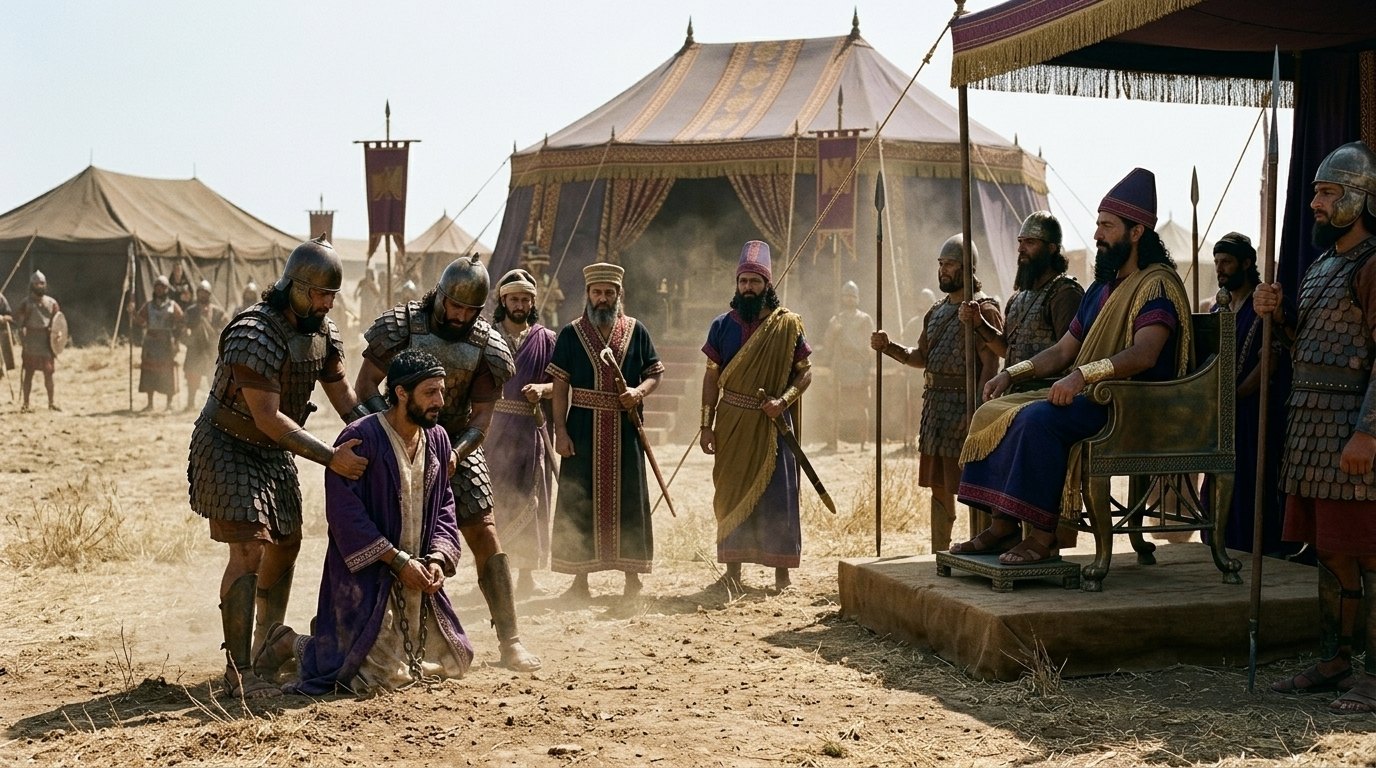
They killed the sons of Zedekiah before his eyes. Then they put out his eyes, bound him with bronze shackles and took him to Babylon.
2 Kings 25:7 (NIV)
It shows the gruesome and literal fulfillment of prophecy when Zedekiah's sons are slain before his eyes before he is blinded.
The dreadful judgment pronounced by God's prophets reached its terrible consummation when Babylon breached the walls of Jerusalem. For eighteen agonizing months, Nebuchadnezzar's forces encircled the capital until severe famine exhausted every morsel of bread (2 Kings 25:1-3; Jeremiah 39:1-2; Jeremiah 52:1-5). By the eleventh year of Zedekiah, the defensive ramparts buckled. Under cover of midnight, the king and his warriors fled toward the Jordan Valley, but the Chaldean army pursued and overtook him in the desert plains of Jericho (2 Kings 25:4-5; Jeremiah 39:4-5; Jeremiah 52:7-8).
Captured and abandoned by his scattered troops, Zedekiah was dragged north to Riblah in Hamath to face Nebuchadnezzar for formal judgment (2 Kings 25:6; Jeremiah 39:5; Jeremiah 52:9). There, prophecy was fulfilled with chilling precision: they slew the sons of Zedekiah before his eyes, and put out the eyes of Zedekiah, and bound him with fetters of brass, and carried him to Babylon (2 Kings 25:7). Jeremiah 39:6-7 and Jeremiah 52:10-11 record that the nobles of Judah were slaughtered alongside the royal heirs. The final sight Zedekiah ever beheld was the execution of his sons, after which blinding iron plunged him into perpetual darkness.
This exact horror had been unveiled years earlier by Ezekiel: I will bring him to Babylon to the land of the Chaldeans; yet shall he not see it, though he shall die there (Ezekiel 12:13). Blind, imprisoned, and stripped of glory, Zedekiah lingered in a Babylonian dungeon until his death. Meanwhile, Nebuzaradan incinerated the temple, the royal palace, and Jerusalem's houses with fire, just as the Lord had warned (Jeremiah 32:28-29; Jeremiah 52:12-14). In Lamentations 4:20, Jeremiah wept over the tragic end of David's earthly reign: "The breath of our nostrils, the anointed of the Lord, was taken in their pits." Zedekiah's ruin stands as an eternal monument to the fatal end of despising the Word of God.
| Passage | What it says |
|---|---|
| 2 Kings 25:1-3 | Nebuchadnezzar besieges Jerusalem until severe famine leaves the city without bread. |
| 2 Kings 25:4-5 | The city wall is breached, and Babylon's army captures Zedekiah near Jericho. |
| 2 Kings 25:6 | Zedekiah is taken to Riblah before the king of Babylon for sentencing. |
| 2 Kings 25:7 | Zedekiah's sons are killed before his eyes, he is blinded, and taken to Babylon. |
| Jeremiah 39:4-7 | Zedekiah flees by night, is captured, blinded at Riblah, and bound in fetters. |
| Jeremiah 52:4-11 | The detailed historical record confirms Zedekiah's capture, blinding, and imprisonment until death. |
| Ezekiel 12:13 | Ezekiel prophesies that Zedekiah will be brought to Babylon yet will not see it. |
| Jeremiah 32:28-29 | The Lord confirms that Jerusalem is given to Nebuchadnezzar to burn with fire due to Judah's provoking idolatries. |
| Jeremiah 39:1-2 | Chronicles the ninth to eleventh year siege of Jerusalem ending when the city wall is breached in Zedekiah's final days. |
| Jeremiah 52:1-3 | Gives the regnal overview of Zedekiah's evil doing and his rebellion against Babylon leading to Judah's casting out from God's presence. |
| Lamentations 4:20 | Mourns the anointed of the Lord, caught in their pits, under whose shadow Judah hoped to live among the nations. |
Where in the Bible
| Book | Passages |
|---|---|
| 2 Kings | 8 · 2 Kings 24:17, 2 Kings 24:18, 2 Kings 24:19, 2 Kings 24:20, 2 Kings 25:1-3, 2 Kings 25:4-5, 2 Kings 25:6, 2 Kings 25:7 |
| 1 Chronicles | 1 · 1 Chronicles 3:15 |
| 2 Chronicles | 3 · 2 Chronicles 36:11, 2 Chronicles 36:12, 2 Chronicles 36:13 |
| Jeremiah | 27 · Jeremiah 37:1, Jeremiah 1:3, Jeremiah 28:1, Jeremiah 51:59, Jeremiah 21:1-2, Jeremiah 34:1-3, Jeremiah 37:2, Jeremiah 37:3, Jeremiah 37:7-8, Jeremiah 37:17, Jeremiah 38:5, Jeremiah 38:14-23, Jeremiah 21:3-7, Jeremiah 24:8-10, Jeremiah 27:3, Jeremiah 27:12-15, Jeremiah 32:1-5, Jeremiah 34:8-11, Jeremiah 34:21-22, Jeremiah 37:18-21, Jeremiah 38:6-10, Jeremiah 38:24-28, Jeremiah 39:4-7, Jeremiah 52:4-11, Jeremiah 32:28-29, Jeremiah 39:1-2, Jeremiah 52:1-3 |
| Lamentations | 1 · Lamentations 4:20 |
| Ezekiel | 7 · Ezekiel 17:15, Ezekiel 17:18, Ezekiel 17:12-14, Ezekiel 17:16-17, Ezekiel 17:19-21, Ezekiel 21:25-27, Ezekiel 12:13 |
The story in order
- Zedekiah appointed king of Judah (c. 597 BC) · 2 Kings 24:17 · Nebuchadnezzar replaces Jehoiachin with Zedekiah, renaming him.
- Jeremiah's ministry through Zedekiah's reign (c. 597-586 BC) · Jeremiah 1:3 · Prophetic ministry spans Zedekiah's entire reign until Jerusalem's fall.
- Zedekiah's rebellion against Babylon (c. 594 BC) · 2 Kings 24:20 · Zedekiah rebels against Nebuchadnezzar, defying God's anger.
- Zedekiah's embassy to Egypt (c. 591 BC) · Ezekiel 17:15 · Zedekiah seeks Egyptian aid, breaking his oath to Babylon.
- Zedekiah's covenant for slaves (c. 589 BC) · Jeremiah 34:8-11 · Zedekiah proclaims freedom for slaves, then retracts it.
- Jerusalem's siege begins (c. 589 BC) · Jeremiah 39:1-2 · Nebuchadnezzar's army besieges Jerusalem for over two years.
- Jerusalem's wall breached (c. 586 BC) · 2 Kings 25:4 · The city wall is broken, leading to its fall.
- Zedekiah captured near Jericho (c. 586 BC) · 2 Kings 25:5 · Zedekiah attempts to flee but is captured by Babylonian forces.
- Zedekiah judged at Riblah (c. 586 BC) · 2 Kings 25:6 · Zedekiah is brought before Nebuchadnezzar for sentencing.
- Zedekiah blinded and taken to Babylon (c. 586 BC) · 2 Kings 25:7 · His sons are killed, he is blinded, and imprisoned in Babylon.
Zedekiah's actions and God's response
| Zedekiah's Action | Scripture's Verdict/Consequence | Passage |
|---|---|---|
| Does evil in Yahweh's eyes | Jerusalem is cast out; Zedekiah rebels | 2 Kings 24:19-20 |
| Refuses to humble himself before Jeremiah | Does evil and refuses to humble himself | 2 Chronicles 36:12 |
| Stiffens his neck against Yahweh | Breaks his oath sworn by God | 2 Chronicles 36:13 |
| Rebels against Babylon by sending to Egypt | Will not escape judgment for breaking covenant | |
| Despises Babylon's covenant | Will die in Babylon | Ezekiel 17:16-17 |
| Does not listen to Yahweh's words | Jerusalem will burn and he will face Babylon's king | |
| Yields Jeremiah to hostile princes | God will fight against the city and deliver the king | |
| Breaks his oath to Babylon | Will be brought to Babylon but not see it | Ezekiel 12:13 |
Key words
- Zedekiah (tsidqiyyahu (Hebrew))
- The last king of Judah, appointed by Nebuchadnezzar, who rebelled and was taken captive to Babylon. · 2 Kings 24:17
- Nebuchadnezzar (nebuchadnezzar (Hebrew))
- King of Babylon who conquered Judah and Jerusalem, exiling its people. · 2 Kings 24:17
- Oath (shavu'ah (Hebrew))
- A solemn promise, often sworn before God, binding one to a course of action. · Ezekiel 17:18
- Rebellion (mered (Hebrew))
- Open defiance or resistance to an established authority, in this case, against Babylon and God. · 2 Kings 24:20
- Prophet (navi (Hebrew))
- One who speaks for God, conveying His messages and warnings. · Jeremiah 1:3
Zedekiah's life stands as an enduring biblical warning that mere religious inquiries and secret prayers cannot substitute for authentic obedience to God's word. When God speaks, turning away through fear of man or stubborn pride brings catastrophic judgment, yet His sovereign covenant outlasts the fall of earthly kings.
47 passages, each cited once.
Scripture cited
- 2 Kings 25:1-7
- 2 Kings 24:17-20
- 2 Chronicles 36:10-13
- Jeremiah 37:1-10
- Jeremiah 52:1-11