Who was Sennacherib?
2 Kings 19:32-37
32 “Therefore this is what the LORD says concerning the king of Assyria: “ ‘He will not enter this city or shoot an arrow here. He will not come before it with shield or build a siege ramp against it.
33 By the way that he came he will return; he will not enter this city, declares the LORD.
34 I will defend this city and save it, for my sake and for the sake of David my servant.’ ”
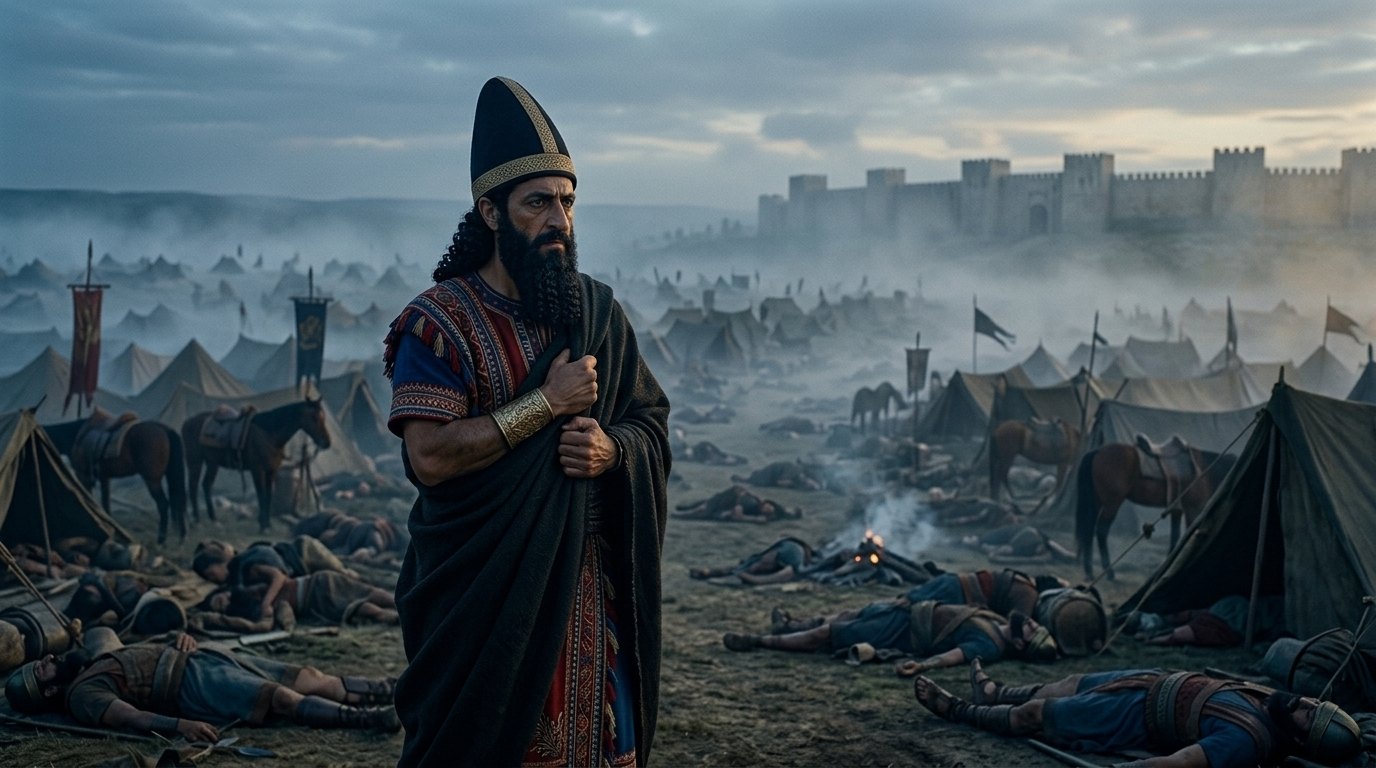
35 That night the angel of the LORD went out and put to death a hundred and eighty-five thousand in the Assyrian camp. When the people got up the next morning—there were all the dead bodies!
36 So Sennacherib king of Assyria broke camp and withdrew. He returned to Nineveh and stayed there.
37 One day, while he was worshiping in the temple of his god Nisrok, his sons Adrammelek and Sharezer killed him with the sword, and they escaped to the land of Ararat. And Esarhaddon his son succeeded him as king.
New International Version (NIV)
The answer
Sennacherib was the king of Assyria who invaded Judah during King Hezekiah’s reign, captured its fortified cities, and threatened Jerusalem—but Yahweh stopped his campaign and delivered Jerusalem.
- Conquest and tribute: Sennacherib attacked Judah in Hezekiah’s fourteenth year. Hezekiah paid him three hundred talents of silver and thirty talents of gold, taking silver from the temple and royal treasury and gold from the temple doors and pillars (2 Kings 18:13-16).
- Defiance of Yahweh: Sennacherib’s spokesman Rabshakeh mocked Jerusalem’s trust in Yahweh, treating Him like the powerless gods of nations Assyria had conquered (2 Kings 18:28-35). Sennacherib later repeated this defiance in a letter, which Hezekiah spread before Yahweh in prayer (2 Kings 19:9-19).
- Defeat and withdrawal: Yahweh answered through Isaiah, promising that Sennacherib would not enter or attack Jerusalem and would return by the way he came (2 Kings 19:20, 32-34). That night, Yahweh’s angel struck 185,000 in the Assyrian camp. Sennacherib departed and returned to Nineveh (2 Kings 19:35-36).
- Death: While worshipping in the house of Nisroch, his god, Sennacherib was killed with the sword by Adrammelech and Sharezer. His son Esar-haddon succeeded him (2 Kings 19:37).
His downfall displays Yahweh’s sovereignty over powerful earthly kingdoms and His faithfulness in answering the prayers of Hezekiah and Isaiah (2 Chronicles 32:20-22).
Answered from Scripture · reviewed November 25, 2026
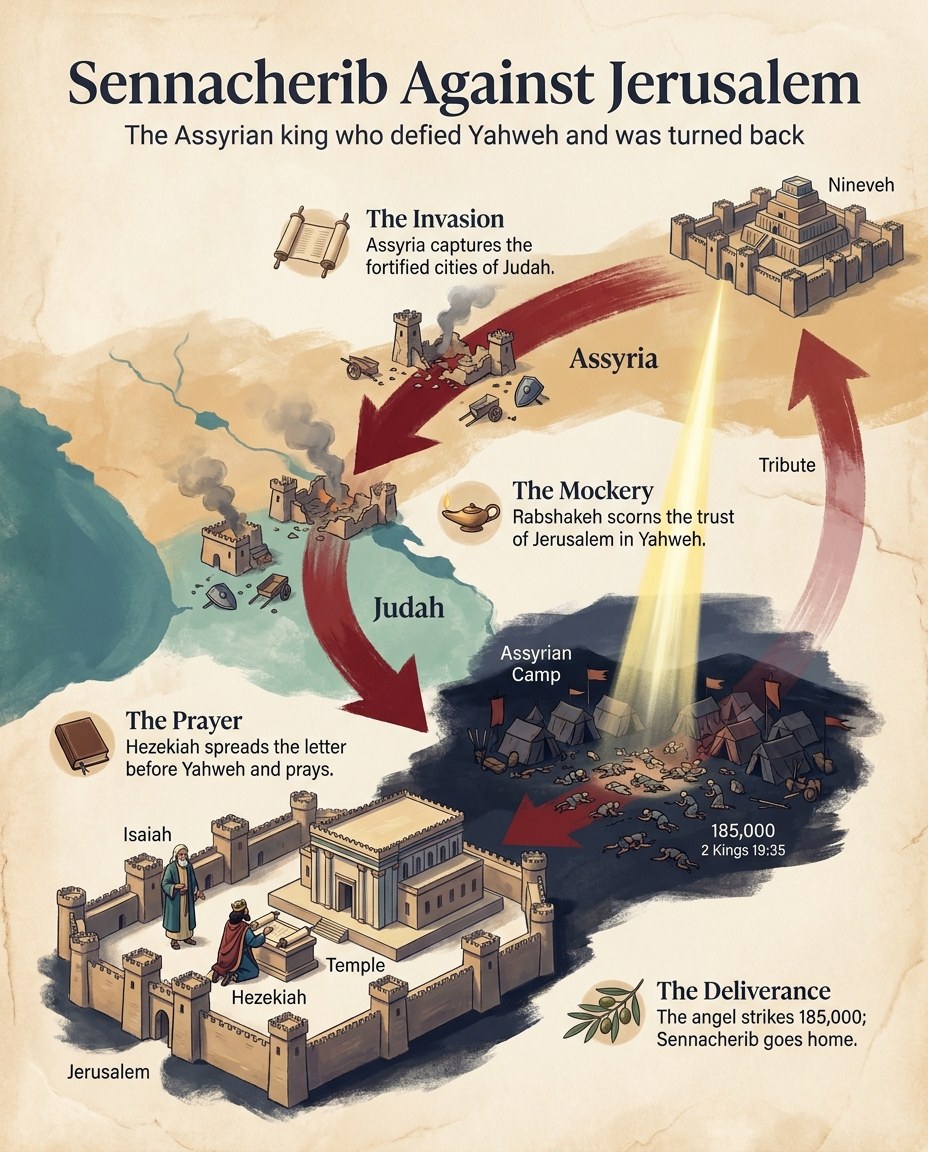
Sennacherib's Campaign Against Judah
Read top to bottom: Sennacherib's invasion, his defiance of Yahweh, Hezekiah's prayer, and how Yahweh stopped him and delivered Jerusalem.
- Invades Judah · In Hezekiah's fourteenth year Sennacherib attacks Judah and captures its fortified cities. · 2 Kings 18:13
- Tribute paid · Hezekiah pays 300 talents of silver and 30 of gold, taken from the temple and royal treasury. · 2 Kings 18:14-16
- Rabshakeh mocks · Sennacherib's spokesman scorns Jerusalem's trust in Yahweh, ranking Him with the powerless gods of conquered nations. · 2 Kings 18:28-35
- Letter and prayer · Sennacherib repeats his defiance in a letter; Hezekiah spreads it before Yahweh in prayer. · 2 Kings 19:9-19
- Yahweh answers · Through Isaiah, Yahweh promises Sennacherib will not enter Jerusalem and will return by the way he came. · 2 Kings 19:32-34
- 185,000 struck · That night Yahweh's angel strikes 185,000 in the Assyrian camp. · 2 Kings 19:35
- Back to Nineveh · Sennacherib departs and returns to Nineveh. · 2 Kings 19:36
- Death · Killed with the sword by Adrammelech and Sharezer while worshipping Nisroch; Esar-haddon succeeds him. · 2 Kings 19:37
Sennacherib was the ruthless king of the Neo-Assyrian Empire who overran Judah and brought his imperial war machine to the very gates of Jerusalem during the reign of King Hezekiah. His campaign became a defining demonstration of the living God’s supremacy over earthly empires when the Lord miraculously broke the Assyrian siege and struck down the proud monarch. Tracing Sennacherib through Scripture reveals both the peril of imperial defiance and the unshakeable faithfulness of God toward His covenant people.
Imperial Invasion
Assyria Overruns Judah and Exacts Severe Tribute
In the fourteenth year of King Hezekiah’s reign, Sennacherib king of Assyria attacked all the fortified cities of Judah and captured them.
2 Kings 18:13 (NIV)
This verse marks the sudden onslaught of Sennacherib against Judah’s fortified towns in the fourteenth year of Hezekiah’s reign.
In the fourteenth year of King Hezekiah, Sennacherib king of Assyria launched a crushing offensive against the southern kingdom of Judah, taking all the fortified cities of Judah as recorded in 2 Kings 18:13. Sennacherib commanded the world's preeminent military power, an empire renowned for ruthless sieges, terror tactics, and sweeping deportations. Chronicled also in 2 Chronicles 32:1 and Isaiah 36:1, his armies rolled through the Shephelah, isolating Jerusalem from the surrounding countryside. Judah’s defensive network collapsed under the weight of imperial battering rams, sappers, and seasoned shock troops.
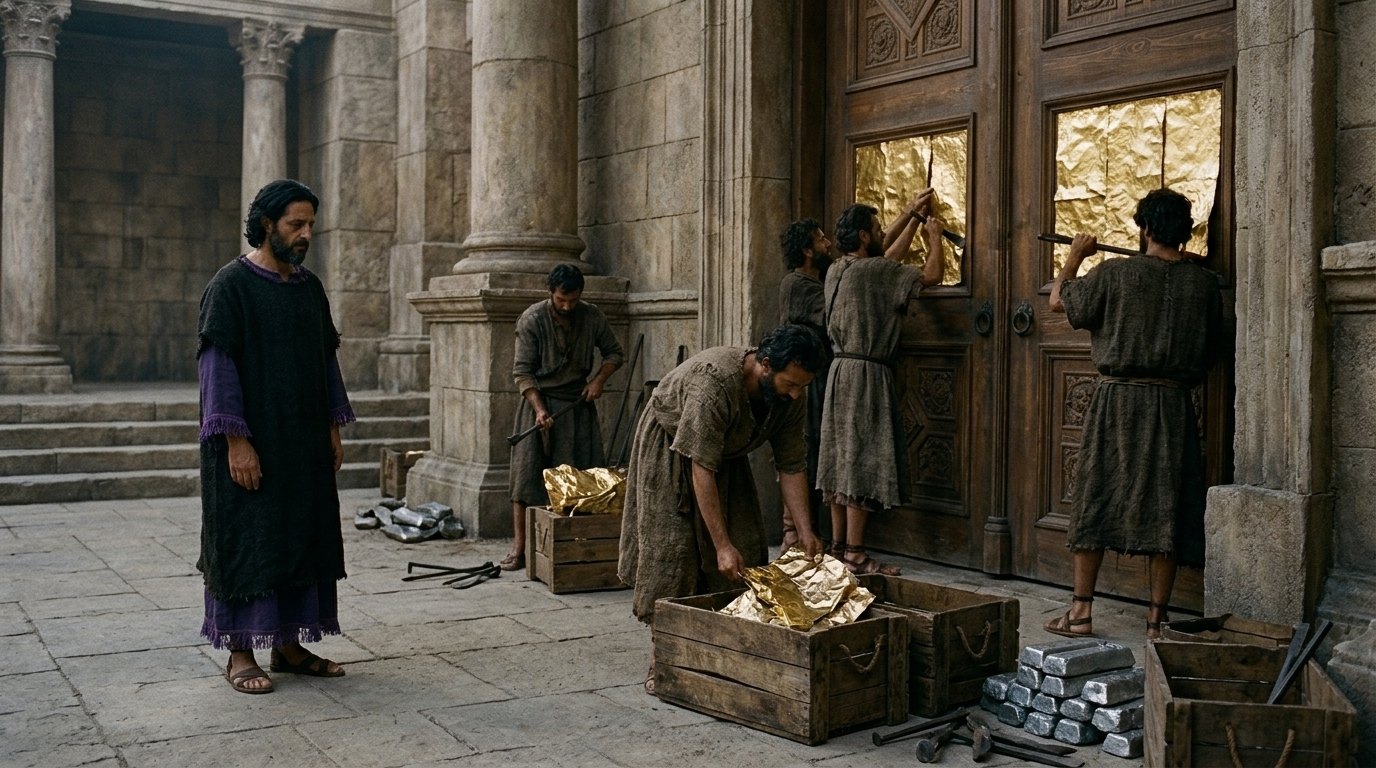
Faced with total ruin, Hezekiah initially attempted appeasement. From Lachish, the major Judean bastion currently under Assyrian siege, Sennacherib dictated crushing terms (2 Kings 18:14). The Judean monarch agreed to bear whatever penalty was laid upon him, surrendering three hundred talents of silver and thirty talents of gold. To satisfy this extortionate levy, Hezekiah emptied both the royal treasuries and the house of the Lord (2 Kings 18:15). He went so far as to strip the very gold plating from the temple doors and doorposts to send to Nineveh’s emperor (2 Kings 18:16). Yet this desperate tribute failed to buy peace; it merely exposed Judah's vulnerability and fueled Sennacherib's insatiable imperial ambition to conquer Jerusalem outright.
| Passage | What it says |
|---|---|
| 2 Kings 18:13 | Sennacherib attacks all the fortified cities of Judah and takes them in Hezekiah's fourteenth year. |
| 2 Kings 18:14 | Hezekiah confesses offense and agrees to bear whatever tribute the Assyrian king demands at Lachish. |
| 2 Kings 18:15 | Hezekiah gives Sennacherib all the silver found in the house of the Lord and the royal treasuries. |
| 2 Kings 18:16 | Hezekiah strips gold from the temple doors and pillars to deliver to the king of Assyria. |
| 2 Chronicles 32:1 | Sennacherib invades Judah and encamps against the fortified cities with intention to conquer them. |
| Isaiah 36:1 | Isaiah records the imperial assault of Sennacherib against all of Judah's fortified cities. |
Defying the Almighty
The Rabshakeh Taunts the Faith of Jerusalem
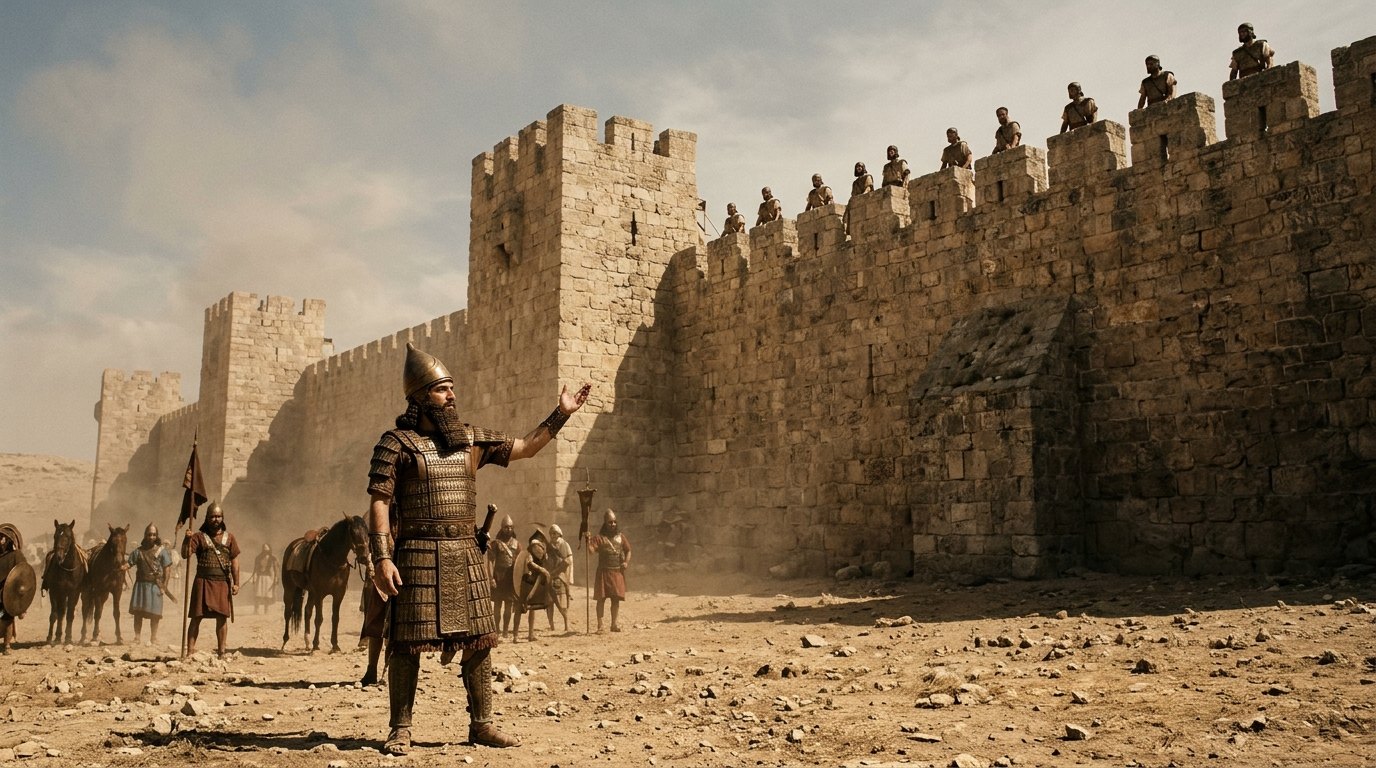
Who of all the gods of these countries has been able to save his land from me? How then can the LORD deliver Jerusalem from my hand?”
2 Kings 18:35 (NIV)
The Assyrian emissary directly challenges the Lord by equating Him to the helpless idols of conquered nations.
Sennacherib was not satisfied with gold; he sought absolute capitulation. Dispatched from Lachish with a massive field force, the Tartan, the Rabsaris, and the Rabshakeh marched to the conduit of the upper pool outside Jerusalem (2 Kings 18:17). There, the Rabshakeh delivered an insolent psychological assault, warning the defenders against trusting either an alliance with Egypt or the sovereign deliverance of the Lord (2 Kings 18:19–25). The Assyrian orator deliberately spoke in Judean rather than Aramaic, aiming his poison directly at the common soldiers stationed along the wall (2 Kings 18:28–35; Isaiah 36:2–20).
The apex of Sennacherib's hubris was theological: he asked, Who among all the gods of the lands have delivered their countries out of my hand, that the Lord should deliver Jerusalem out of my hand? (2 Kings 18:35). In their haughty propaganda, Sennacherib’s messengers reduced the Maker of heaven and earth to the status of man-made idols carved from stone and wood (2 Chronicles 32:9–19). When Hezekiah tore his clothes and sought the prophet Isaiah son of Amoz, the Word of the Lord came with immediate clarity (2 Kings 19:1–7; Isaiah 37:1–7). Yahweh promised that Sennacherib would hear a rumor, withdraw back to his own land, and fall by the sword.
| Passage | What it says |
|---|---|
| 2 Kings 18:17 | Sennacherib sends his commanders with a great army from Lachish to King Hezekiah at Jerusalem. |
| 2 Kings 18:19-25 | The Rabshakeh warns Jerusalem not to rely on Egypt or the Lord, claiming Yahweh told him to destroy it. |
| 2 Kings 18:28-35 | The Rabshakeh loudly urges the people on the wall not to let Hezekiah deceive them with promises of deliverance. |
| 2 Chronicles 32:9-15 | Sennacherib sends servants from Lachish to mock Hezekiah and persuade Judah that no god can deliver them. |
| 2 Chronicles 32:16-19 | Sennacherib's servants speak against the Lord God, treating Yahweh like the carved gods of the peoples. |
| Isaiah 36:2-20 | Isaiah details the Rabshakeh’s public challenge and insolent blasphemy against the Lord before Jerusalem's wall. |
| 2 Kings 19:1-7 | Isaiah tells Hezekiah that Sennacherib will hear a rumor, return home, and fall by the sword. |
| Isaiah 37:1-7 | Isaiah prophesies to Hezekiah that the Lord will cause Sennacherib to hear a rumor and return. |
Prayer and Prophecy
Hezekiah Spreads the Letter Before the Lord
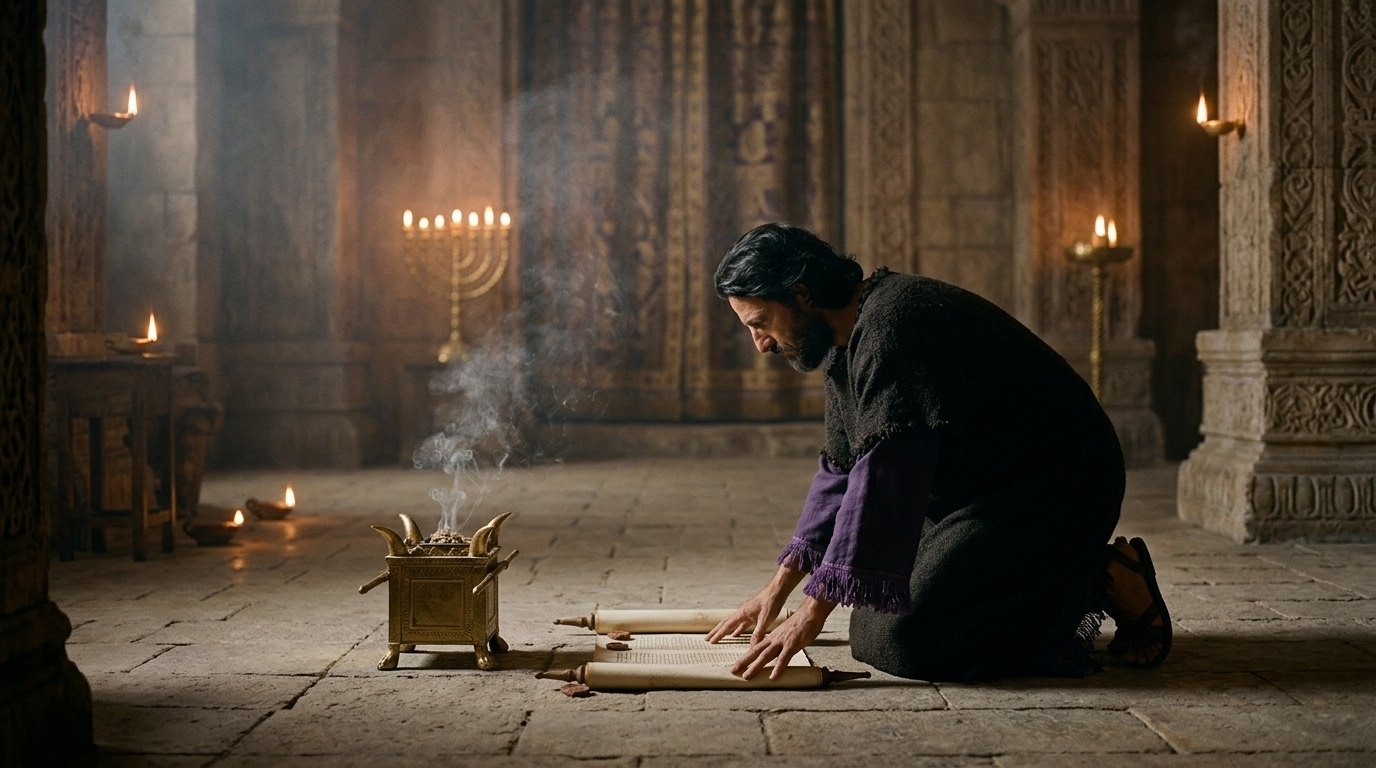
Hezekiah received the letter from the messengers and read it. Then he went up to the temple of the LORD and spread it out before the LORD.
2 Kings 19:14 (NIV)
Hezekiah physically lays Sennacherib's threatening letter before God in the temple, modeling complete dependence upon the Lord.
With military pressure tightening as the king of Assyria moved from Lachish to battle Libnah (2 Kings 19:8), Sennacherib caught wind of Tirhakah, king of Cush, marching out against him (2 Kings 19:9; Isaiah 37:8–9). Before dealing with that flank, Sennacherib dispatched a contemptuous written ultimatum directly to Hezekiah, warning that no sovereign god of Gozan, Haran, or Rezeph had ever withstood the Assyrian onslaught (2 Kings 19:10–13; Isaiah 37:10–13). Rather than surrendering, Hezekiah went up to the house of the Lord and spread it before the Lord (2 Kings 19:14; Isaiah 37:14).
Hezekiah’s prayer represents one of Scripture's purest confessions of covenant faith. He petitioned God to open His eyes and ears to the blasphemy of Sennacherib, acknowledging that pagan gods were destroyed because they were mere wood and stone, while Yahweh alone was God over all kingdoms (2 Kings 19:15–19; 2 Chronicles 32:20; Isaiah 37:15–20). Through Isaiah, the Lord issued an unyielding verdict of judgment against Sennacherib’s pride: the Virgin Daughter of Zion mocked him (2 Kings 19:20–28; Isaiah 37:21–29). Because the Assyrian monarch dared rage against Yahweh, the Lord promised to put a hook in his nose and a bridle in his lips, dragging him back by the way he came.
| Passage | What it says |
|---|---|
| 2 Kings 19:9-13 | Sennacherib sends messengers warning Hezekiah that no nation's gods have escaped Assyrian total destruction. |
| 2 Kings 19:14-19 | Hezekiah spreads Sennacherib’s letter in the temple and prays for God to save them so kingdoms know Yahweh is God alone. |
| 2 Kings 19:20-28 | Isaiah prophesies God’s scorn for Assyria’s boast and decrees a bridle in Sennacherib's jaws to turn him back. |
| 2 Chronicles 32:20 | King Hezekiah and the prophet Isaiah son of Amoz pray and cry out to heaven regarding Assyria. |
| Isaiah 37:14-20 | Isaiah records Hezekiah spreading the insolent letter before Yahweh and pleading for divine intervention. |
| Isaiah 37:21-29 | God answers through Isaiah, declaring Sennacherib's arrogant rage against Him will result in his forced retreat. |
| 2 Kings 19:8 | The Rabshakeh finds Sennacherib warring against Libnah after the king of Assyria departed from Lachish. |
| Isaiah 37:8-13 | Sennacherib hears of Tirhakah marching out and sends messengers with threatening letters to Hezekiah. |
Divine Judgment
God Strikes the Camp and Cuts Down Sennacherib
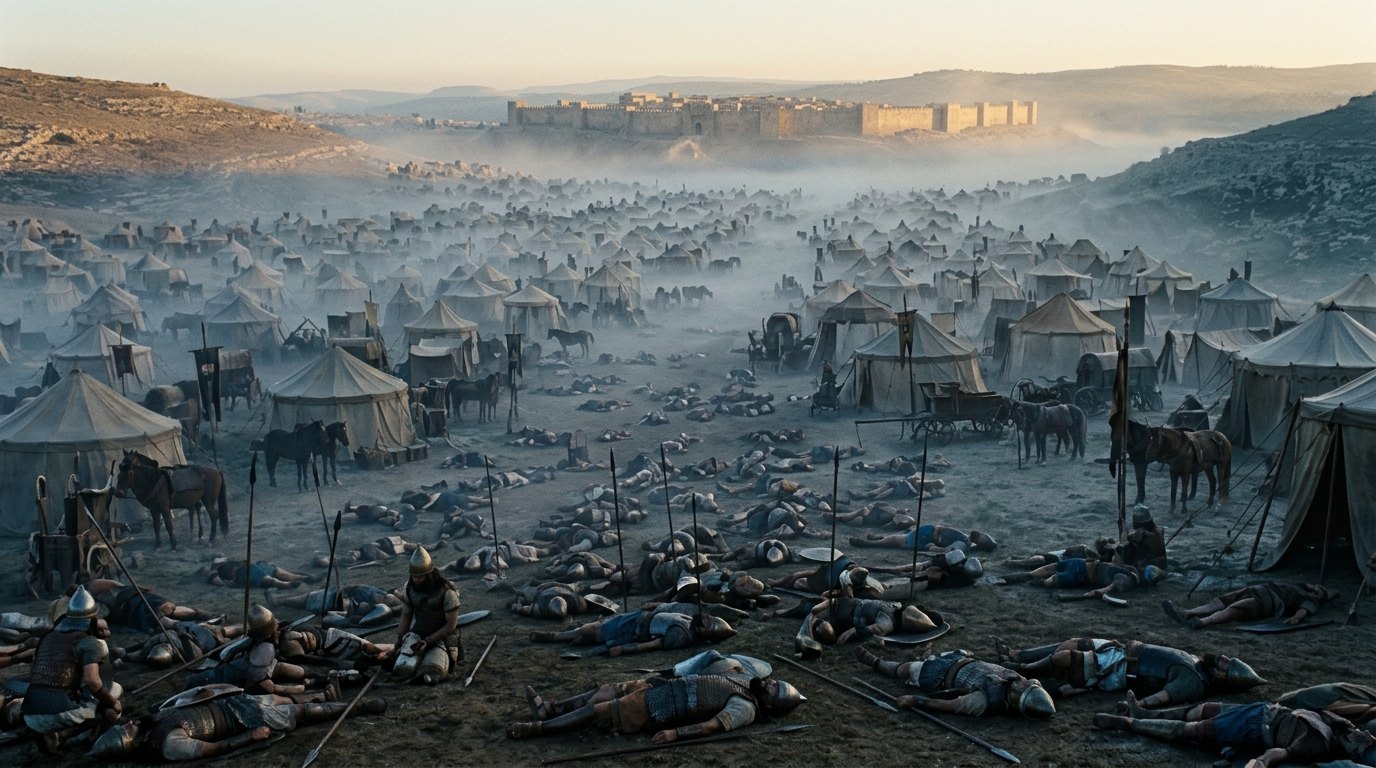
That night the angel of the LORD went out and put to death a hundred and eighty-five thousand in the Assyrian camp. When the people got up the next morning—there were all the dead bodies!
2 Kings 19:35 (NIV)
A single night of divine visitation wipes out Sennacherib's vast military host without Jerusalem having to loose an arrow.
The Lord decreed a categorical promise over Jerusalem: Sennacherib would not enter the city, shoot an arrow there, or erect a siege ramp against its ramparts (2 Kings 19:32–34; Isaiah 37:33–35). The battle was the Lord’s alone. That very night, the angel of the Lord went out and struck down 185,000 in the camp of the Assyrians (2 Kings 19:35). Without a single Judean spear cast or bow drawn, the imperial war machine that had terrified the ancient world was broken in an instant (2 Chronicles 32:21; Isaiah 37:36).
When the morning dawn broke over the Judean hills, the hillsides were covered with lifeless corpses. Broken, humbled, and stripped of his grand army, Sennacherib broke camp, fled Judah, and returned to reside in Nineveh (2 Kings 19:36; Isaiah 37:37). Divine justice reached its ultimate conclusion years later. While Sennacherib was bowing down to worship his false god in the house of Nisroch, his own sons, Adrammelech and Sharezer, assassinated him with the sword (2 Kings 19:37; 2 Chronicles 32:21; Isaiah 37:38). The monarch who had taunted Yahweh as an impotent deity fell dead before his own carved idol, fulfilling God’s infallible word.
| Passage | What it says |
|---|---|
| 2 Kings 19:32-34 | Yahweh declares Sennacherib will not enter Jerusalem, shoot an arrow, or cast a siege mound against it. |
| 2 Kings 19:35 | The angel of the Lord strikes 185,000 men in the Assyrian camp overnight. |
| 2 Kings 19:36 | Sennacherib departs in disgrace, returns to Assyria, and dwells at Nineveh. |
| 2 Kings 19:37 | Sennacherib is struck down by his sons Adrammelech and Sharezer while worshipping in Nisroch's temple. |
| 2 Chronicles 32:21-22 | Yahweh sends an angel who destroys all the mighty men, cutting down Sennacherib who is later slain by his offspring. |
| Isaiah 37:33-38 | Isaiah confirms the slaughter of the 185,000, Sennacherib's retreat to Nineveh, and his assassination at Nisroch's house. |
Prophetic Warnings
The Prophets Foretell the Hubris and Fall of Assyria's King
When the Lord has finished all his work against Mount Zion and Jerusalem, he will say, “I will punish the king of Assyria for the willful pride of his heart and the haughty look in his eyes.
Isaiah 10:12 (NIV)
It declares God's righteous purpose to humble the haughty pride and arrogant speech of the Assyrian monarch.
In Isaiah 10:12, the prophet lays bare the sovereign purpose of the Almighty: the Lord uses earthly rulers to accomplish His holy discipline, yet He holds proud tyrants fully accountable for their arrogant hearts. Assyria fancied itself an unstoppable conqueror, but Isaiah 10:5-12 reveals that Sennacherib's empire was merely the rod of God's anger, an ax that absurdly boasted against the very One who wielded it. The king intended plunder and destruction without limit, blind to the truth that his power was permitted only for a set time and a divine purpose.
God immediately offered comforting assurance to His trembling remnant in Jerusalem. In Isaiah 10:24-27, the Lord commanded Zion not to fear the Assyrian conqueror who struck with the rod, promising that His indignation would soon turn against the oppressor and break the crushing imperial yoke from Judah's neck. God's purpose stood immovable; as Isaiah 14:24-27 emphatically declares, the Lord of hosts swore an oath to shatter the Assyrian war machine upon His own holy mountains, demonstrating that no human counsel can annul what divine sovereignty has decreed.
The approaching doom of the proud invader is portrayed in vivid, terrifying detail. In Isaiah 30:30-33, the prophet foretells that the glorious voice of the Lord will cause Assyria to be struck with terror, preparing Topheth as a vast pyre stoked with brimstone to consume the royal adversary. Ultimately, Isaiah 31:8-9 promises that the Assyrian would not fall by a human blade, nor would an earthly warrior deliver the final blow; rather, a divine sword would devastate Sennacherib's ranks, driving his commanders to flee in panic before the blazing hearth of God in Zion.
| Passage | What it says |
|---|---|
| Isaiah 10:5-12 | The Lord names Assyria as the rod of His anger, yet pledges to punish the arrogant boast of Assyria's king. |
| Isaiah 10:24-27 | God comforts Zion, promising that the Assyrian oppression will soon cease and Assyria's yoke will be broken. |
| Isaiah 14:24-27 | The Lord swears to break the Assyrian in His land and trample him upon His mountains. |
| Isaiah 30:30-33 | The voice of the Lord will shatter Assyria, preparing Topheth for its consuming judgment. |
| Isaiah 31:8-9 | The Assyrian shall fall by a sword not of man, and his rock shall pass away in terror. |
Where in the Bible
| Book | Passages |
|---|---|
| 2 Kings | 16 · 2 Kings 18:13, 2 Kings 18:14, 2 Kings 18:15, 2 Kings 18:16, 2 Kings 18:17, 2 Kings 18:19-25, 2 Kings 18:28-35, 2 Kings 19:1-7, 2 Kings 19:9-13, 2 Kings 19:14-19, 2 Kings 19:20-28, 2 Kings 19:8, 2 Kings 19:32-34, 2 Kings 19:35, 2 Kings 19:36, 2 Kings 19:37 |
| 2 Chronicles | 5 · 2 Chronicles 32:1, 2 Chronicles 32:9-15, 2 Chronicles 32:16-19, 2 Chronicles 32:20, 2 Chronicles 32:21-22 |
| Isaiah | 12 · Isaiah 36:1, Isaiah 36:2-20, Isaiah 37:1-7, Isaiah 37:14-20, Isaiah 37:21-29, Isaiah 37:8-13, Isaiah 37:33-38, Isaiah 10:5-12, Isaiah 10:24-27, Isaiah 14:24-27, Isaiah 30:30-33, Isaiah 31:8-9 |
The story in order
- Assyria invades Judah (c. 701 BC) · 2 Kings 18:13 · Sennacherib attacks Judah's cities in Hezekiah's fourteenth year.
- Hezekiah pays tribute (c. 701 BC) · 2 Kings 18:15 · Hezekiah gives silver from temple and treasuries to Assyria.
- Rabshakeh taunts Jerusalem (c. 701 BC) · 2 Kings 18:17 · Assyrian commanders mock Hezekiah and blaspheme the Lord.
- Hezekiah prays for deliverance (c. 701 BC) · 2 Kings 19:14 · Hezekiah spreads Sennacherib's letter in the temple and prays.
- God's judgment on Assyria (c. 701 BC) · 2 Kings 19:35 · Angel of the Lord strikes 185,000 Assyrian soldiers overnight.
- Sennacherib assassinated (c. 681 BC) · 2 Kings 19:37 · Sennacherib is killed by his sons in Nineveh.
Assyria's Arrogance and God's Judgment
| Assyrian Arrogance | God's Response | Passage |
|---|---|---|
| Sennacherib boasts and blasphemes Yahweh. | Isaiah prophesies God's scorn and forced retreat. | Isaiah 37:22-29 |
| Assyria is named the rod of God's anger, but its king boasts. | The Lord pledges to punish Assyria's arrogant boast. | Isaiah 10:5-12 |
| The Assyrian yoke oppresses Judah. | God promises to break the yoke and end the oppression. | Isaiah 10:24-27 |
| The Lord swears to break the Assyrian in His land. | Assyria will be trampled on God's mountains. | Isaiah 14:24-27 |
The Lord's Deliverance of Jerusalem
| Threat | God's Intervention | Outcome | Passage |
|---|---|---|---|
| Sennacherib's army surrounds Jerusalem. | The angel of the Lord strikes 185,000 men. | Sennacherib retreats in disgrace. | 2 Kings 19:35-36 |
| Rabshakeh taunts Hezekiah and the people. | Isaiah prophesies Sennacherib will hear a rumor and return. | Sennacherib departs from Jerusalem. | 2 Kings 19:1-7 |
| Sennacherib threatens Jerusalem with destruction. | Hezekiah prays, and Isaiah prophesies God's scorn. | Sennacherib is forced to retreat. | Isaiah 37:14-29 |
Key words
- Sennacherib (Sîn-ahhē-erība)
- King of Assyria who invaded Judah and besieged Jerusalem. · 2 Kings 18:13
- Hezekiah (Ḥizqiyyāhû)
- King of Judah during Sennacherib's invasion. · 2 Kings 18:13
- Rabshakeh (rabsāqē)
- An Assyrian official sent to taunt Jerusalem. · 2 Kings 18:17
- Yahweh (YHWH)
- The covenant name of God. · 2 Kings 18:19
- Nineveh (Nînûveh)
- The capital city of the Neo-Assyrian Empire. · 2 Kings 19:36
The rise and ruin of Sennacherib testify that no earthly superpower can mock the God of heaven or overthrow His redemptive purposes. When believers place their ultimate trust in the Lord rather than human strength, He delivers and preserves them for His own glory and namesake.
33 passages, each cited once.
Scripture cited
- 2 Kings 18:13-37
- 2 Kings 19:1-37
- 2 Chronicles 32:1-23