Who was Noah?
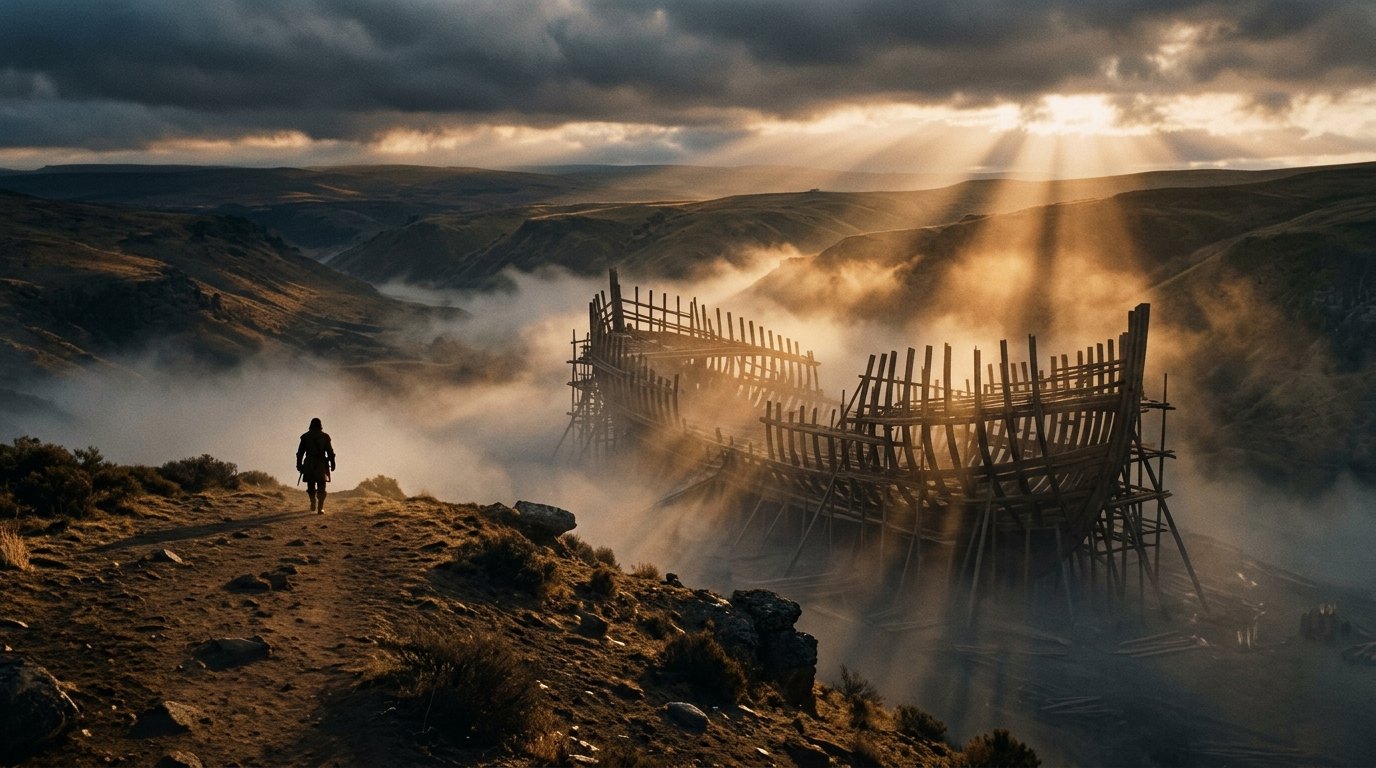
Genesis 6:9-22
9 This is the account of Noah and his family. Noah was a righteous man, blameless among the people of his time, and he walked faithfully with God.
10 Noah had three sons: Shem, Ham and Japheth.
11 Now the earth was corrupt in God’s sight and was full of violence.
12 God saw how corrupt the earth had become, for all the people on earth had corrupted their ways.
13 So God said to Noah, “I am going to put an end to all people, for the earth is filled with violence because of them. I am surely going to destroy both them and the earth.
14 So make yourself an ark of cypress wood; make rooms in it and coat it with pitch inside and out.
15 This is how you are to build it: The ark is to be three hundred cubits long, fifty cubits wide and thirty cubits high.
16 Make a roof for it, leaving below the roof an opening one cubit high all around. Put a door in the side of the ark and make lower, middle and upper decks.
17 I am going to bring floodwaters on the earth to destroy all life under the heavens, every creature that has the breath of life in it. Everything on earth will perish.
18 But I will establish my covenant with you, and you will enter the ark—you and your sons and your wife and your sons’ wives with you.
19 You are to bring into the ark two of all living creatures, male and female, to keep them alive with you.
20 Two of every kind of bird, of every kind of animal and of every kind of creature that moves along the ground will come to you to be kept alive.
21 You are to take every kind of food that is to be eaten and store it away as food for you and for them.”
22 Noah did everything just as God commanded him.
New International Version (NIV)
The answer
Noah was a righteous man who walked with God in the generation before the flood, and the man God chose to save his household and the animals from the judgment to come. Genesis 6:9 says he was "a righteous man, blameless among the people of his time. Noah walked with God," and he was the father of three sons — Shem, Ham, and Japheth (Genesis 6:10). When God saw that the earth was corrupt and filled with violence (Genesis 6:11-12), He told Noah to build an ark, and Genesis 6:22 records that "Noah did. He did all that God commanded him."
Three things mark him across Scripture:
- A man who walked with God. The same phrase used of Enoch in Genesis 5:24 is given to Noah, marking him as one of the few in the early chapters so described.
- A man of faith and obedience. Hebrews 11:7 says that, warned by God of things not yet seen, Noah "prepared an ark to the saving of his house; by the which he condemned the world, and became heir of the righteousness which is by faith." This is the same faith the just are to live by, according to Galatians 3:11.
- A preacher of righteousness. Second Peter 2:5 calls him that — he warned the world while the ark was being built, and God "saved Noah the eighth person" when the flood came on the ungodly.
God's own verdict stands in Genesis 7:1: "thee have I seen righteous before me in this generation."
Answered from Scripture · reviewed November 7, 2026
Noah was a righteous patriarch whom God preserved through a catastrophic global flood, delivering him and his family by grace through faith. In a violent and thoroughly corrupt generation, he walked faithfully with God, built the ark in obedient reverent fear, and heralded God's righteousness to an unheeding world.
Walk With God
Noah walked with God amid total corruption
This is the account of Noah and his family. Noah was a righteous man, blameless among the people of his time, and he walked faithfully with God.
Genesis 6:9 (NIV)
This verse establishes Noah's singular character as righteous, blameless, and walking directly with God amid universal moral decay.
In Genesis 6:9, Scripture captures Noah’s life with stark clarity: “Noah was a just man and perfect in his generations, and Noah walked with God.” This singular commendation recalls the holy pattern set by his ancestor in Genesis 5:24, where Enoch walked with God and was taken. Noah was not sinless in an absolute sense, but by faith he was declared righteous, living a life of undivided devotion while raising his three sons, Shem, Ham, and Japheth, as noted in Genesis 6:10. His blameless walk stands in horrific contrast to the world around him. Genesis 6:11 reveals that the earth was utterly corrupt before the sight of God and filled with unbridled violence, a state so thorough that Genesis 6:12 affirms all flesh had perverted its way upon the earth. Amid this universal rebellion, Noah did not waver or compromise with the culture. Therefore, when divine patience reached its end, the Lord gave His personal testimony in Genesis 7:1: “Come thou and all thy house into the ark; for thee have I seen righteous before me in this generation.” Noah’s life anticipates the pure and blameless conduct described centuries later in Luke 1:6, demonstrating that true faith always bears fruit in holy separation from the corrupting patterns of a fallen world.
| Passage | What it says |
|---|---|
| Genesis 5:24 | Records Enoch walking with God prior to his translation, setting the precedent for Noah's faithful walk. |
| Genesis 6:9 | Declares Noah to be a just and blameless man who walked with God in his generation. |
| Genesis 6:10 | Names Noah's three sons: Shem, Ham, and Japheth. |
| Genesis 6:11 | Describes the earth as thoroughly corrupt before God and filled with unbridled violence. |
| Genesis 6:12 | Affirms that God observed the earth and saw that all flesh had corrupted its way. |
| Genesis 7:1 | God testifies that He has seen Noah alone as righteous before Him in that generation. |
| Luke 1:6 | Describes Zacharias and Elizabeth walking blamelessly before God, echoing Noah's faithful life. |
Ark and Covenant
God revealed His judgment and commanded deliverance
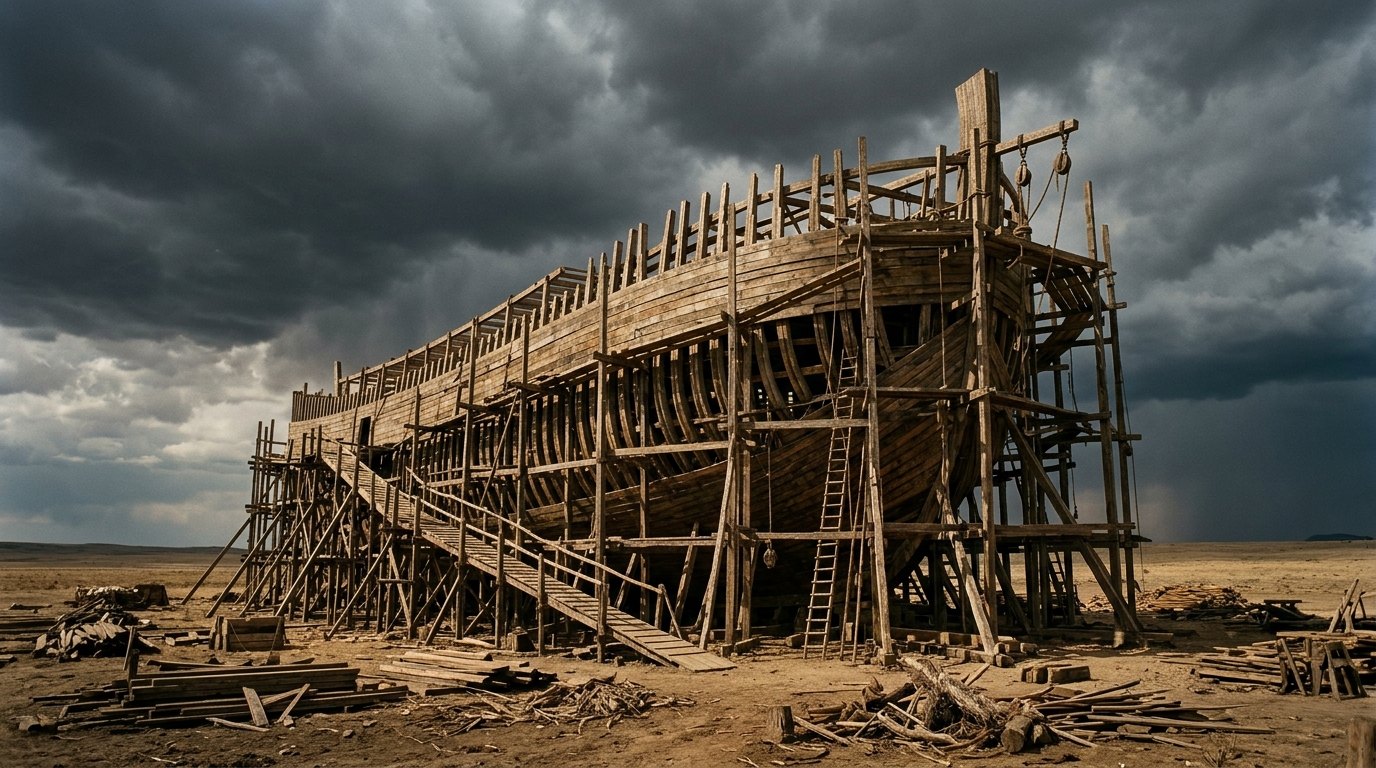
Noah did everything just as God commanded him.
Genesis 6:22 (NIV)
It emphasizes Noah's total, unhesitating obedience to everything God commanded regarding the ark and the coming judgment.
The defining reality of Noah's life was unwavering submission to divine revelation, summarized in Genesis 6:22: “Thus did Noah; according to all that God commanded him, so did he.” When God revealed that the end of all flesh was at hand due to pervasive violence in Genesis 6:13, He gave explicit, detailed instructions for salvation that pointed forward to the coming Redeemer. In Matthew 24:37-39, the Lord Jesus verified this historical judgment, warning that the days before His return will mirror Noah's era. Noah was commanded in Genesis 6:14 to construct an ark of gopher wood, sealed within and without with pitch, typifying the protective shelter of Christ's blood, as 1 Peter 3:20-21 shows how Noah's family was brought safely through water as a figure of salvation. God prescribed massive proportions in Genesis 6:15—three hundred cubits in length, fifty in breadth, and thirty in height—to ensure stable deliverance. The singular access door set in the side of the ark in Genesis 6:16 foreshadowed Christ Himself, who proclaimed in John 10:9, “I am the door: by me if any man enter in, he shall be saved.” When God decreed the total destruction of all breathing life by water in Genesis 6:17—a catastrophic global overflow affirmed in 2 Peter 3:6—He established an everlasting covenant in Genesis 6:18, guaranteeing safety for Noah’s household just as the Mediator of the new covenant secures eternal redemption in Hebrews 9:15. Noah obeyed fully, gathering pairs of every creature according to their kinds and storing vast provisions as detailed in Genesis 6:19-21, proving his faith through total action as Hebrews 11:7 confirms.
| Passage | What it says | Fulfilled |
|---|---|---|
| Genesis 6:13 | God announces to Noah the end of all flesh because the earth is filled with violence. | Matthew 24:37-39 |
| Genesis 6:14 | God commands Noah to build a vessel of gopher wood and coat it inside and out with pitch. | 1 Peter 3:20-21 |
| Genesis 6:15 | God specifies the exact dimensions: three hundred cubits long, fifty wide, and thirty high. | |
| Genesis 6:16 | God details the construction of the window, the side door, and three interior decks. | John 10:9 |
| Genesis 6:17 | God declares that He will bring a flood of waters to destroy all air-breathing life. | 2 Peter 3:6 |
| Genesis 6:18 | God establishes His covenant with Noah, promising salvation in the ark for his family. | Hebrews 9:15 |
| Genesis 6:19 | God commands pairs of every living thing to be brought into the ark to keep them alive. | |
| Genesis 6:20 | Specifies that birds, livestock, and creeping things will come to Noah according to their kinds. | |
| Genesis 6:21 | God commands Noah to gather and store sufficient food for his family and the animals. | |
| Genesis 6:22 | Records that Noah did according to all that God commanded him. | Hebrews 11:7 |
Righteousness of Faith
Noah's enduring witness of faith and proclamation
By faith Noah, when warned about things not yet seen, in holy fear built an ark to save his family. By his faith he condemned the world and became heir of the righteousness that is in keeping with faith.
Hebrews 11:7 (NIV)
This passage defines Noah's ark-building as an act of faith that condemned the world and made him an heir of righteousness.
The monumental endurance of Noah is unlocked in Hebrews 11:7, which records that “by faith Noah, being warned of God of things not seen as yet, moved with fear, prepared an ark to the saving of his house; by the which he condemned the world, and became heir of the righteousness which is by faith.” Noah’s obedience was not an attempt to earn salvation by moral effort, but the active, fruit-bearing trust of a justified soul. Long before Moses received the law, Noah exemplified the enduring spiritual truth reaffirmed in Galatians 3:11, that “the just shall live by faith.” For decades, as the colossal ark rose on dry ground far from any sea, his daily labor served as an unyielding indictment of the unbelieving culture around him. Moreover, Noah did not build in silence. In 2 Peter 2:5, the Holy Spirit names him a “preacher of righteousness,” demonstrating that Noah vocalized God's impending wrath and called his violent generation to repentance while the divine longsuffering waited. Although the surrounding world mocked his warning and perished in the waters of judgment, Noah stood as an immovable pillar of faith, showing that genuine belief heeds God's unseen Word, acts in reverent obedience, and rests securely in His promised grace.
| Passage | What it says |
|---|---|
| Hebrews 11:7 | Explains that Noah was warned of unseen events, moved with fear, prepared an ark, and inherited righteousness. |
| Galatians 3:11 | States the foundational truth that no man is justified by the law, but the just shall live by faith. |
| 2 Peter 2:5 | Names Noah as a preacher of righteousness whom God preserved when He brought the flood upon the ungodly. |
Origins and Lineage
Noah's Lineage and Prophetic Birth
He named him Noah and said, “He will comfort us in the labor and painful toil of our hands caused by the ground the LORD has cursed.”
Genesis 5:29 (NIV)
Lamech's naming of Noah establishes his divine calling as one who brings relief from the curse.
Noah’s role in redemptive history was foretold at his very birth in Genesis 5:29, when his father Lamech named him, declaring: “This same shall comfort us concerning our work and toil of our hands, because of the ground which the Lord hath cursed.” Genesis 5:28 records that Lamech was one hundred and eighty-two years old when this son was born, longing for divine relief from the sweat and sorrow imposed upon creation after Adam's rebellion. Following Noah's birth, Lamech lived another five hundred and ninety-five years, fathering other sons and daughters before dying at seven hundred and seventy-seven years of age, as recounted in Genesis 5:30-31. When Noah reached five hundred years of age, he fathered his three sons, Shem, Ham, and Japheth (Genesis 5:32), who would become the fathers of the post-flood nations. While the entire world plummeted into apostasy and moral ruin, Genesis 6:8 provides the hinge of hope: “Noah found grace in the eyes of the Lord.” This divine election preserved the royal seed line. In 1 Chronicles 1:3-4, Noah and his sons are recorded in the sacred lineage of the godly seed descending directly from Seth. Most gloriously, Luke 3:36 places Noah squarely within the earthly ancestry of our Lord Jesus Christ, proving that God used this faithful patriarch to preserve the human race and bring forth the ultimate Comfort who delivers believers from the curse of sin forever.
| Passage | What it says |
|---|---|
| Genesis 5:28 | Lamech lives one hundred and eighty-two years and fathers a son. |
| Genesis 5:29 | Lamech names him Noah, prophesying he will bring rest from their painful toil on the cursed ground. |
| Genesis 5:30 | Lamech lives five hundred and ninety-five years after fathering Noah and has other sons and daughters. |
| Genesis 5:31 | All the days of Lamech are seven hundred and seventy-seven years, and he dies. |
| Genesis 5:32 | After Noah is five hundred years old, he fathers Shem, Ham, and Japheth. |
| Genesis 6:8 | Noah finds favor and grace in the eyes of the Lord amid universal wickedness. |
| 1 Chronicles 1:3 | Noah is recorded in the sacred ancestral genealogy descending from Adam through Seth and Enoch. |
| 1 Chronicles 1:4 | The sons of Noah are registered as Shem, Ham, and Japheth. |
| Luke 3:36 | Noah is named directly in the human genealogy of Jesus Christ, Son of God. |
The Great Flood
The Deluge and Divine Preservation
The animals going in were male and female of every living thing, as God had commanded Noah. Then the LORD shut him in.
Genesis 7:16 (NIV)
God personally shuts Noah into the ark, demonstrating sovereign preservation amidst global judgment.
When God shut the door of the vessel in Genesis 7:16, the boundary between divine mercy and righteous judgment was irrevocably drawn. Noah had spent decades building the great ark, and when the appointed hour arrived, the Lord commanded him to take seven pairs of clean animals and flying birds, along with pairs of the unclean (Genesis 7:2-3). God gave a final seven-day warning before forty days of torrential rain would blot out all earthly life (Genesis 7:4). In complete submission, Noah did all that the Lord commanded, embarking at six hundred years of age with his wife, his three sons, and their wives (Genesis 7:5-7, 13).
Creation itself obeyed its Maker as beasts, cattle, birds, and creeping things gathered to Noah two by two (Genesis 7:8-9, 14-15). Once the human and animal remnant was secured inside, the Lord shut him in (Genesis 7:16). Judgment broke forth with terrifying power: the fountains of the great subterranean deep burst apart, and the raingates of the heavens opened simultaneously (Genesis 7:11-12). For forty continuous days the torrents fell, lifting the ark above the surging land (Genesis 7:17).
The floodwaters prevailed with immense force, elevating the massive wooden ark upon the face of the raging waters (Genesis 7:18). So complete was the Deluge that every high hill and mountain under the whole heaven was submerged beneath fifteen cubits of water (Genesis 7:19-20). In that universal cataclysm, all flesh died that moved upon the earth—beasts, birds, swarming creatures, and all humanity possessing the breath of life perished (Genesis 7:21-22). Every living substance outside the ark was blotted out, leaving only Noah and those with him alive as the waters held sway for one hundred and fifty days (Genesis 7:23-24).
| Passage | What it says |
|---|---|
| Genesis 7:2 | God commands Noah to take seven pairs of clean animals and a pair of unclean animals. |
| Genesis 7:3 | Noah is instructed to take seven pairs of birds of the heavens to preserve life. |
| Genesis 7:4 | God announces rain will fall for forty days and nights to blot out every living thing. |
| Genesis 7:5 | Noah does all that the Lord commands him. |
| Genesis 7:6 | Noah is six hundred years old when the floodwaters come upon the earth. |
| Genesis 7:7 | Noah enters the ark with his sons, his wife, and his sons' wives. |
| Genesis 7:8 | Clean animals, unclean animals, birds, and creeping things approach Noah. |
| Genesis 7:9 | Pairs of all flesh enter the ark with Noah, just as God commanded. |
| Genesis 7:10 | After seven days, the waters of the flood come upon the earth. |
| Genesis 7:11 | The fountains of the deep burst forth and the windows of heaven open. |
| Genesis 7:12 | Rain falls upon the earth forty days and forty nights. |
| Genesis 7:13 | On that very day, Noah and his family enter the ark together. |
| Genesis 7:14 | Every beast, livestock, creeping creature, and bird according to its kind enters. |
| Genesis 7:15 | Creatures having the breath of life enter the ark in pairs to Noah. |
| Genesis 7:16 | Male and female enter as God commanded, and the Lord shuts him in. |
| Genesis 7:17 | The flood continues forty days, lifting the ark high above the earth. |
| Genesis 7:18 | The waters prevail greatly and the ark floats upon the face of the waters. |
| Genesis 7:19 | The waters prevail so exceedingly that all high mountains under heaven are covered. |
| Genesis 7:20 | The waters rise fifteen cubits higher, submerging the mountains completely. |
| Genesis 7:21 | All flesh moving on the earth dies: birds, livestock, beasts, swarming creatures, and mankind. |
| Genesis 7:22 | Everything on dry land possessing the breath of life dies. |
| Genesis 7:23 | God blots out all life from the earth, leaving only Noah and those with him. |
| Genesis 7:24 | The waters prevail on the earth for one hundred and fifty days. |
The Waters Subside
Waters Recede and Earth Restored
But God remembered Noah and all the wild animals and the livestock that were with him in the ark, and he sent a wind over the earth, and the waters receded.
Genesis 8:1 (NIV)
God remembering Noah marks the turning point where mercy initiates the renewal of creation.
The restoration of creation begins with four words of unfathomable grace in Genesis 8:1: God remembered Noah and every living thing. Remembering His covenant purpose, God caused a wind to blow over the earth, and the water subsided. The subterranean fountains and the windows of heaven were firmly stopped, halting the torrential rain (Genesis 8:2). As the waters receded steadily across one hundred and fifty days, the ark grounded safely upon the mountains of Ararat on the seventeenth day of the seventh month (Genesis 8:3-4).
Steadily the waters abated until mountain peaks appeared (Genesis 8:5). Forty days later, Noah opened the ark’s window and sent out a raven, which flew back and forth over the desolate landscape (Genesis 8:6-7). He then sent a dove to test the ground, but finding no rest, she returned into the ark (Genesis 8:8-9). Waiting another seven days, Noah released the dove once more; she returned with a freshly plucked olive leaf, proving vegetation had revived (Genesis 8:10-11). After seven more days, the dove was freed and did not return (Genesis 8:12).
In his six hundred and first year, Noah removed the vessel's roof and beheld the dried surface of the earth (Genesis 8:13). Nearly two months later, on the twenty-seventh day of the second month, the ground was thoroughly dry (Genesis 8:14). God commanded Noah to exit the ark alongside his entire family and all the animal kinds (Genesis 8:15-17). Noah stepped forth in obedience onto cleansed ground, releasing the creatures by families to multiply and replenish the restored earth (Genesis 8:18-19).
| Passage | What it says |
|---|---|
| Genesis 8:1 | God remembers Noah and all the beasts, sending a wind over the waters to subside. |
| Genesis 8:2 | The fountains of the deep and windows of heaven are closed, and rain is restrained. |
| Genesis 8:3 | The waters recede steadily from the earth and abate at the end of 150 days. |
| Genesis 8:4 | The ark comes to rest on the mountains of Ararat on the seventeenth day of the seventh month. |
| Genesis 8:5 | The waters decrease steadily until the tops of the mountains become visible. |
| Genesis 8:6 | At the end of forty days, Noah opens the window of the ark. |
| Genesis 8:7 | Noah sends out a raven, which flies back and forth until the waters dry up. |
| Genesis 8:8 | Noah sends out a dove to see if the waters have receded from the ground. |
| Genesis 8:9 | Finding no resting place, the dove returns to Noah in the ark. |
| Genesis 8:10 | Noah waits seven more days and sends the dove out again. |
| Genesis 8:11 | The dove returns in the evening with a freshly plucked olive leaf in her mouth. |
| Genesis 8:12 | Noah waits seven days more and releases the dove, which does not return. |
| Genesis 8:13 | In Noah's six hundred and first year, he removes the ark covering and sees dry ground. |
| Genesis 8:14 | By the twenty-seventh day of the second month, the earth is completely dry. |
| Genesis 8:15 | God speaks to Noah, instructing him to leave the ark. |
| Genesis 8:16 | God commands Noah and his family to exit the ark together. |
| Genesis 8:17 | God orders all animals out of the ark to breed abundantly and multiply on earth. |
| Genesis 8:18 | Noah disembarks with his sons, his wife, and his sons' wives. |
| Genesis 8:19 | Every animal, creeping creature, and bird departs from the ark by families. |
The Noahic Covenant
Altar and the Everlasting Covenant
I have set my rainbow in the clouds, and it will be the sign of the covenant between me and the earth.
Genesis 9:13 (NIV)
The rainbow is established as God's visible pledge that judgment by universal water will never recur.
The first act of the delivered patriarch upon stepping onto the cleansed earth was total worship. In Genesis 8:20, Noah erected an altar and presented burnt offerings from every clean beast and bird. Taking pleasure in this soothing aroma, the Lord determined never again to curse the ground on man’s account, though man’s heart remains inclined to evil from youth, establishing an enduring promise that seedtime and harvest, cold and heat, summer and winter, day and night shall never cease (Genesis 8:21-22).
God then blessed Noah and his sons, renewing the creation mandate to be fruitful, multiply, and fill the earth (Genesis 9:1, 7). He placed the dread of humanity upon animal life and permitted flesh for food, yet strictly forbade consuming blood, the life principle (Genesis 9:2-4). Because man is made in the image of God, God established the sanctity of human life, instituting civil justice: whoever sheds man's blood, by man shall his blood be shed (Genesis 9:5-6).
God then initiated an unshakeable, universal covenant with Noah, his offspring, and every living creature (Genesis 9:8-10). He promised that never again would all flesh be destroyed by the waters of a flood (Genesis 9:11). In Genesis 9:13, God declared: I set My bow in the cloud, providing an everlasting sign in the sky (Genesis 9:12, 14, 17). Whenever storm clouds gather over the earth, the rainbow shines as God’s own memorial that His covenant of preservation with all living creatures stands forever firm (Genesis 9:15-16).
| Passage | What it says |
|---|---|
| Genesis 8:20 | Noah builds an altar to the Lord, offering burnt offerings of clean beasts and birds. |
| Genesis 8:21 | The Lord smells the pleasing aroma and resolves never again to curse the ground on man's account. |
| Genesis 8:22 | God establishes that seedtime, harvest, cold, heat, summer, winter, day, and night shall not cease. |
| Genesis 9:1 | God blesses Noah and his sons, commanding them to be fruitful, multiply, and fill the earth. |
| Genesis 9:2 | The fear of man is placed upon all beasts, birds, creeping things, and fish. |
| Genesis 9:3 | Every moving thing that lives is given to man for food alongside green plants. |
| Genesis 9:4 | God forbids eating flesh with its lifeblood still in it. |
| Genesis 9:5 | God requires a reckoning for human life from beasts and from mankind. |
| Genesis 9:6 | Whoever sheds human blood, by man his blood shall be shed, for man is made in God's image. |
| Genesis 9:7 | God reiterates the mandate to be fruitful, multiply, and increase abundantly on earth. |
| Genesis 9:8 | God speaks to Noah and to his sons with him. |
| Genesis 9:9 | God establishes His covenant with Noah and his offspring after him. |
| Genesis 9:10 | The covenant encompasses every living creature that came out of the ark. |
| Genesis 9:11 | God promises never again to cut off all flesh by floodwaters or destroy the earth. |
| Genesis 9:12 | God identifies the sign of the covenant for perpetual generations. |
| Genesis 9:13 | God sets His bow in the cloud as the sign of the covenant with the earth. |
| Genesis 9:14 | Whenever God brings clouds over the earth, the bow will be seen. |
| Genesis 9:15 | God remembers His covenant never again to bring a flood destroying all flesh. |
| Genesis 9:16 | The rainbow serves as an everlasting memorial between God and all living creatures on earth. |
| Genesis 9:17 | God confirms to Noah that the bow is the sign of the covenant established with all flesh. |
Later Life and Prophecy
Noah's Later Years and Blessing

He also said, “Praise be to the LORD, the God of Shem! May Canaan be the slave of Shem.
Genesis 9:26 (NIV)
Noah's prophetic blessing marks Shem as the lineage through which the covenant Lord is praised.
The emergence of the post-flood world began with the family that survived the waters: Shem, Ham, and Japheth, through whom the entire earth would be populated (Genesis 9:18-19). Noah began cultivating the ground and planted a vineyard (Genesis 9:20). Yet even righteous Noah was not immune to human frailty: Noah drank of the wine and became drunk, lying uncovered inside his tent (Genesis 9:21). Ham, the father of Canaan, gazed upon his father’s nakedness and publicized it to his brothers, exposing an irreverent and dishonorable heart (Genesis 9:22).
Demonstrating deep filial reverence, Shem and Japheth took a garment across their shoulders, walked backward into the tent, and covered their father without looking upon him (Genesis 9:23). When Noah awoke and understood what had transpired, he uttered a prophetic oracle regarding their descendants (Genesis 9:24). He pronounced a curse upon Canaan, declaring he would be a servant of servants to his brothers (Genesis 9:25). Noah then uttered the pivotal blessing of redemptive history: Blessed be the Lord, the God of Shem, prophesying that the true God would dwell among Shem’s descendants, through whose line the promised Seed would come (Genesis 9:26).
Noah also prayed that God would enlarge Japheth, permitting him to dwell in the tents of Shem (Genesis 9:27). Noah lived three hundred and fifty years after the Deluge, dying in faith at nine hundred and fifty years of age (Genesis 9:28-29). From his three sons came the genealogical table of seventy nations recorded in Genesis 10:1 and Genesis 10:32, scattering across the earth to repopulate the world in fulfillment of God's sovereign command.
| Passage | What it says |
|---|---|
| Genesis 9:18 | Noah's sons coming out of the ark are Shem, Ham, and Japheth; Ham is Canaan's father. |
| Genesis 9:19 | From these three sons of Noah, the whole earth is populated. |
| Genesis 9:20 | Noah begins to be a man of the soil and plants a vineyard. |
| Genesis 9:21 | Noah drinks wine, becomes drunk, and lies uncovered inside his tent. |
| Genesis 9:22 | Ham, the father of Canaan, sees his father's nakedness and tells his two brothers outside. |
| Genesis 9:23 | Shem and Japheth place a garment across their shoulders and walk backward to cover their father. |
| Genesis 9:24 | Noah awakes from his wine and discovers what his youngest son had done to him. |
| Genesis 9:25 | Noah pronounces a curse on Canaan, declaring he shall be a servant of servants to his brothers. |
| Genesis 9:26 | Noah blesses the Lord God of Shem and designates Canaan as his servant. |
| Genesis 9:27 | Noah prays God enlarge Japheth to dwell in Shem's tents, with Canaan as servant. |
| Genesis 9:28 | Noah lives three hundred and fifty years after the flood. |
| Genesis 9:29 | All the days of Noah are nine hundred and fifty years, and he dies. |
| Genesis 10:1 | Generations of Noah's sons Shem, Ham, and Japheth who had sons after the flood. |
| Genesis 10:32 | From the families of the sons of Noah, the nations disperse through the earth after the flood. |
Noah in Later Scripture
Prophetic Warning and Typological Deliverance
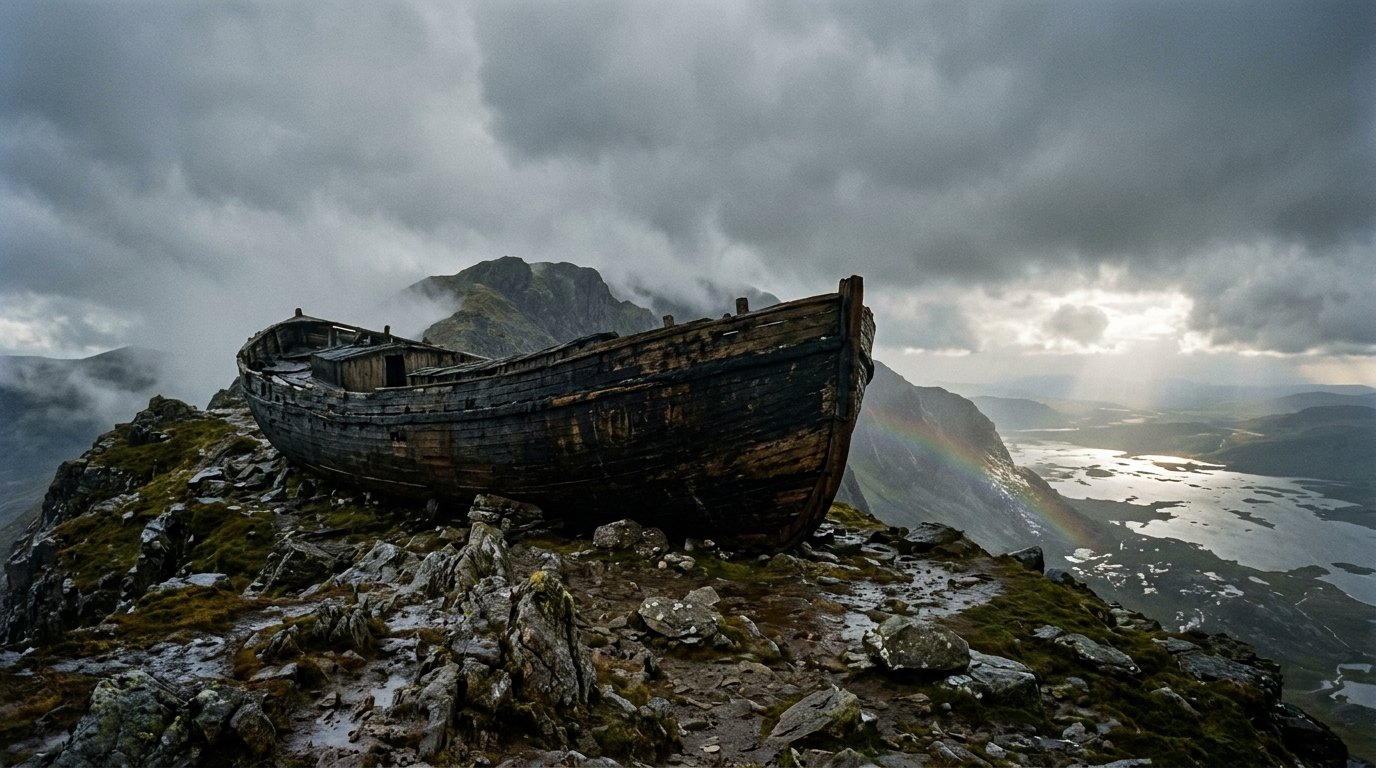
As it was in the days of Noah, so it will be at the coming of the Son of Man.
Matthew 24:37 (NIV)
Christ presents the suddenness of Noah's flood as the definitive warning pattern for His return.
In Matthew 24:37, our Lord Jesus Christ anchors the sudden reality of His future return in the historic reality of the past: 'As the days of Noah were, so shall also the coming of the Son of man be.' Across the Old and New Testaments, Noah stands not as a myth, but as a sober monument of divine judgment, unfailing righteousness, and sure covenant mercy. God looks back on His ancient oath in Isaiah 54:9, swearing that just as the waters of Noah should no more go over the earth, so His covenant of peace with His people will never be shaken.
Yet Scripture never treats Noah’s righteousness as an umbrella that could automatically spare the unrepentant around him. In Ezekiel 14:14 and Ezekiel 14:20, the Lord declares that even if Noah, Daniel, and Job stood before Him in an apostate nation, they could deliver only their own souls by their righteousness; even sons and daughters could not be shielded by a father's devotion. Personal accountability before a holy God is unavoidable.
This sobering reality frames Christ's warnings about the end of the age. As Jesus explains in Matthew 24:38 and Luke 17:26–27, the generation before the deluge carried on in ordinary pursuits—eating, drinking, marrying, and giving in marriage—completely indifferent to coming wrath. As recorded in Matthew 24:39, they remained wilfully unaware until Noah entered the vessel and the deluge swept them all away. Finally, 1 Peter 3:20 reminds the church that divine longsuffering waited patiently while the ark was preparing, preserving eight souls through water. Noah’s story endures as a vivid historical summons: to flee present complacency, heed God's warnings, and seek the true refuge found only in Jesus Christ.
| Passage | What it says |
|---|---|
| Isaiah 54:9 | God compares His everlasting covenant of peace to His oath that Noah's floodwaters would never cover earth again. |
| Ezekiel 14:14 | Noah, Daniel, and Job are named together as righteous men who could deliver only themselves. |
| Ezekiel 14:20 | The Lord affirms that even Noah, Daniel, and Job could not save sons or daughters by their righteousness. |
| Matthew 24:37 | Jesus warns that the coming of the Son of Man will be like the days of Noah. |
| Matthew 24:38 | People ate, drank, and married until the day Noah entered the ark. |
| Matthew 24:39 | They remained unaware until the flood arrived and swept them all away. |
| Luke 17:26 | Jesus teaches that the days of the Son of Man will resemble the days of Noah. |
| Luke 17:27 | People indulged until Noah entered the ark and the flood destroyed them all. |
| 1 Peter 3:20 | God waited patiently in the days of Noah while the ark was prepared, saving eight persons through water. |
Where in the Bible
| Book | Passages |
|---|---|
| Genesis | 98 · Genesis 5:24, Genesis 6:9, Genesis 6:10, Genesis 6:11, Genesis 6:12, Genesis 7:1, Genesis 6:13, Genesis 6:14, Genesis 6:15, Genesis 6:16, Genesis 6:17, Genesis 6:18, Genesis 6:19, Genesis 6:20, Genesis 6:21, Genesis 6:22, Genesis 5:28, Genesis 5:29, Genesis 5:30, Genesis 5:31, Genesis 5:32, Genesis 6:8, Genesis 7:2, Genesis 7:3, Genesis 7:4, Genesis 7:5, Genesis 7:6, Genesis 7:7, Genesis 7:8, Genesis 7:9, Genesis 7:10, Genesis 7:11, Genesis 7:12, Genesis 7:13, Genesis 7:14, Genesis 7:15, Genesis 7:16, Genesis 7:17, Genesis 7:18, Genesis 7:19, Genesis 7:20, Genesis 7:21, Genesis 7:22, Genesis 7:23, Genesis 7:24, Genesis 8:1, Genesis 8:2, Genesis 8:3, Genesis 8:4, Genesis 8:5, Genesis 8:6, Genesis 8:7, Genesis 8:8, Genesis 8:9, Genesis 8:10, Genesis 8:11, Genesis 8:12, Genesis 8:13, Genesis 8:14, Genesis 8:15, Genesis 8:16, Genesis 8:17, Genesis 8:18, Genesis 8:19, Genesis 8:20, Genesis 8:21, Genesis 8:22, Genesis 9:1, Genesis 9:2, Genesis 9:3, Genesis 9:4, Genesis 9:5, Genesis 9:6, Genesis 9:7, Genesis 9:8, Genesis 9:9, Genesis 9:10, Genesis 9:11, Genesis 9:12, Genesis 9:13, Genesis 9:14, Genesis 9:15, Genesis 9:16, Genesis 9:17, Genesis 9:18, Genesis 9:19, Genesis 9:20, Genesis 9:21, Genesis 9:22, Genesis 9:23, Genesis 9:24, Genesis 9:25, Genesis 9:26, Genesis 9:27, Genesis 9:28, Genesis 9:29, Genesis 10:1, Genesis 10:32 |
| 1 Chronicles | 2 · 1 Chronicles 1:3, 1 Chronicles 1:4 |
| Isaiah | 1 · Isaiah 54:9 |
| Ezekiel | 2 · Ezekiel 14:14, Ezekiel 14:20 |
| Matthew | 3 · Matthew 24:37, Matthew 24:38, Matthew 24:39 |
| Luke | 4 · Luke 1:6, Luke 3:36, Luke 17:26, Luke 17:27 |
| Galatians | 1 · Galatians 3:11 |
| Hebrews | 1 · Hebrews 11:7 |
| 1 Peter | 1 · 1 Peter 3:20 |
| 2 Peter | 1 · 2 Peter 2:5 |
The story in order
- Creation and Fall (c. 4000 BC) · Genesis 1:1 · The beginning of all things, setting the stage for humanity's story.
- Noah's Birth and Lineage (c. 2950 BC) · Genesis 5:29 · Noah is born into a lineage tracing back to Adam.
- Corruption and Violence (c. 2350 BC) · Genesis 6:11 · The earth is filled with violence and corruption before God.
- God's Command to Build Ark (c. 2350 BC) · Genesis 6:14 · God instructs Noah to build an ark for salvation.
- The Great Flood Begins (c. 2349 BC) · Genesis 7:11 · The floodwaters cover the earth for 150 days.
- Ark Rests on Ararat (c. 2349 BC) · Genesis 8:4 · The ark comes to rest on the mountains of Ararat.
- Earth Dries and Noah Exits (c. 2349 BC) · Genesis 8:13 · Noah sees dry ground and God commands them to exit the ark.
- The Noahic Covenant (c. 2349 BC) · Genesis 9:9 · God establishes an everlasting covenant with Noah and all life.
- Noah's Later Life and Death (c. 2000 BC) · Genesis 9:29 · Noah lives 950 years and dies after the flood.
- Jesus' Warning on His Return (AD 30) · Matthew 24:37 · Jesus likens His coming to the days of Noah.
Key words
- Righteousness (tsedaqah (Hebrew))
- The quality of being morally right or justifiable; in faith, living in accordance with God's will. · Genesis 6:9
- Faith (pistis (Greek))
- Complete trust or confidence in someone or something, especially God. · Hebrews 11:7
- Covenant (berit (Hebrew))
- A solemn agreement or promise between God and humanity, or between people. · Genesis 6:18
- Flood (mabbul (Hebrew))
- A great overflowing of water; specifically, the global deluge described in Genesis. · Genesis 7:17
- Grace (chen (Hebrew))
- The unmerited favor of God, shown especially in the salvation of sinners. · Genesis 6:8
Noah's life demonstrates that true faith manifests in steadfast obedience, unyielding trust in God's promises, and holy separation from a corrupt culture. For believers today, his preservation in the ark stands as an enduring picture of salvation found only in Jesus Christ.
114 passages, each cited once.
Scripture cited
- Hebrews 11:7
- Galatians 3:11
- Genesis 5:24
- 2 Peter 2:5
- Genesis 7:1