Who were the Pharisees and Sadducees?
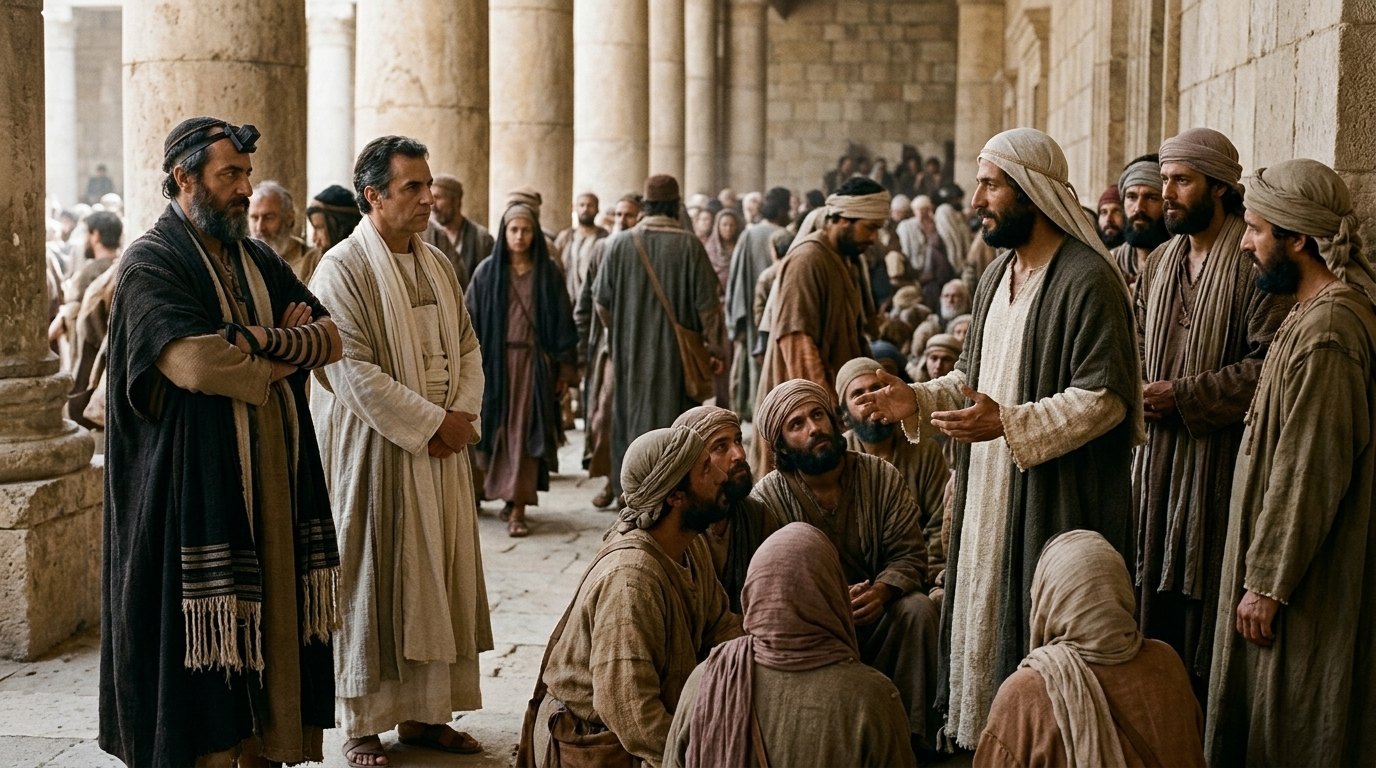
Matthew 23:1-7
1 Then Jesus said to the crowds and to his disciples:
2 “The teachers of the law and the Pharisees sit in Moses’ seat.
3 So you must be careful to do everything they tell you. But do not do what they do, for they do not practice what they preach.
4 They tie up heavy, cumbersome loads and put them on other people’s shoulders, but they themselves are not willing to lift a finger to move them.
5 “Everything they do is done for people to see: They make their phylacteries wide and the tassels on their garments long;
6 they love the place of honor at banquets and the most important seats in the synagogues;
7 they love to be greeted with respect in the marketplaces and to be called ‘Rabbi’ by others.
New International Version (NIV)
The answer
The Pharisees and Sadducees were two Jewish religious parties in Jesus’ time. Broadly, the Pharisees were meticulous about the Law and inherited religious traditions, while the Sadducees were connected with the priestly leadership and denied the resurrection, angels and spirits (Acts 23:8).
The Pharisees
Their name means separated ones. They were extremely careful about matters of the Mosaic Law and also upheld “the tradition of the elders,” including ceremonial handwashing (Matthew 15:1-2). Their beliefs were not wrong in every respect: unlike the Sadducees, they confessed the resurrection, angels and spirits (Acts 23:8).
Jesus principally exposed their hypocrisy, self-righteousness and elevation of human tradition. He said, “they say, and don’t do” (Matthew 23:3), and condemned their performance of religious works “to be seen by men” (Matthew 23:5). When their traditions nullified God’s command to honor one’s parents, he charged them with “teaching as doctrine rules made by men” (Matthew 15:3-9).
The Sadducees
The Sadducees were an influential priestly and governing party. Acts 5:17 identifies the high priest’s following as “the sect of the Sadducees.” They rejected the Pharisees’ claim that the oral law was divine revelation, regarding the written Law alone as binding.
Most importantly, they denied the resurrection. In Matthew 22:23-28, they devised a story about a woman married successively to seven brothers, attempting to make the resurrection appear absurd. Jesus answered, “You are mistaken, not knowing the Scriptures, nor the power of God” (Matthew 22:29). He then showed from God’s words to Moses that he “is not the God of the dead, but of the living” (Matthew 22:31-32).
Their unbelief also shaped their opposition to the apostles: the Sadducees had Peter and John arrested because they “proclaimed in Jesus the resurrection from the dead” (Acts 4:1-3).
Answered from Scripture · reviewed November 11, 2026
The Pharisees and Sadducees were the two dominant religious and political factions shaping Jewish life during the earthly ministry of Jesus Christ and the early church. While the popular Pharisees championed strict adherence to oral tradition and believed in the supernatural realm, the aristocratic Sadducees held institutional power in the Temple, adhered strictly to the written Pentateuch, and denied the resurrection. Understanding their distinct theology, rivalry, and shared opposition to Jesus clarifies the world into which the Son of God came.
The Pharisees' Identity
Popular Teachers of Minute Legal Observance
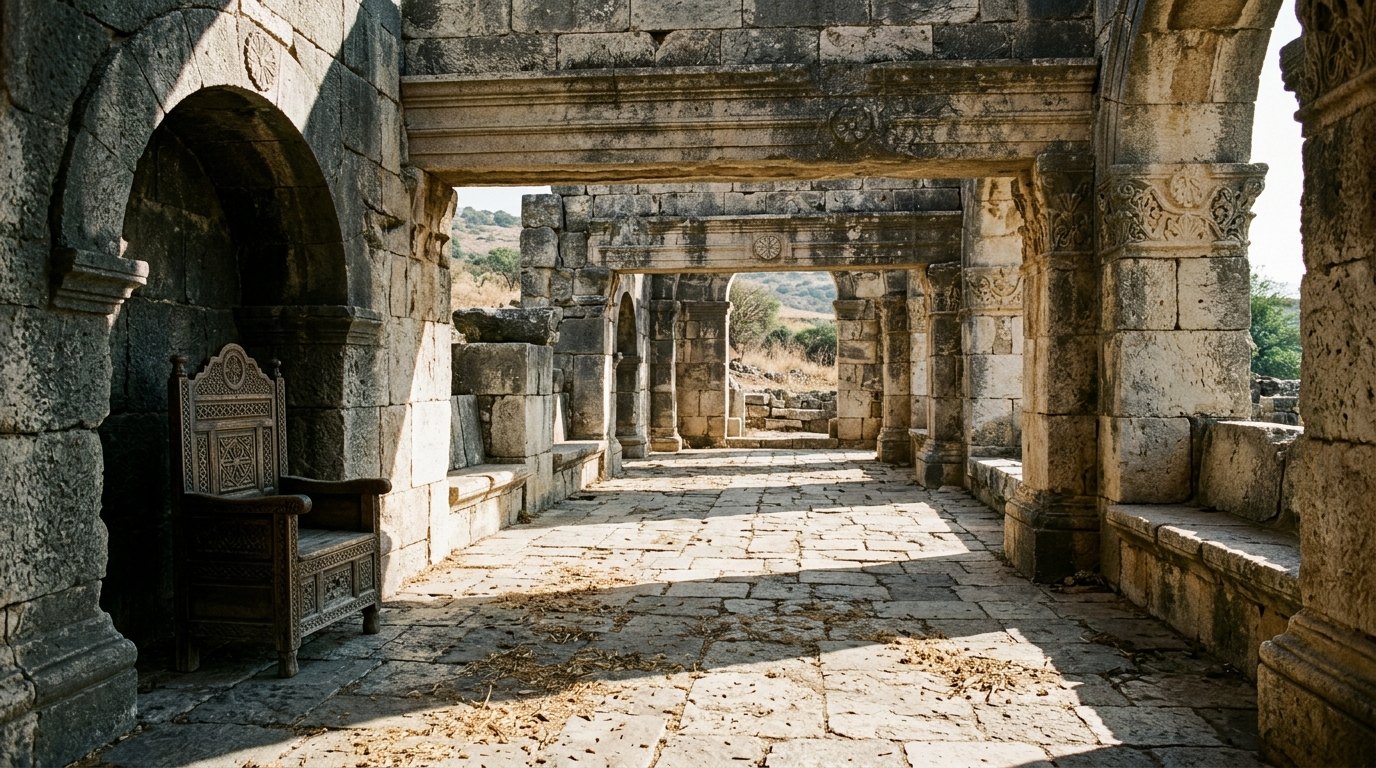
“The teachers of the law and the Pharisees sit in Moses’ seat.
Matthew 23:2 (NIV)
Jesus establishes that the Pharisees occupied recognized teaching authority over the law, sitting formally in the seat of Moses.
In Matthew 23:2, Jesus defines the authoritative standing of the scribes and Pharisees: they sit in Moses' seat, possessing recognized communal responsibility to teach the sacred law. Because their seat carried legitimate authority, Matthew 23:1 and Matthew 23:3 instruct disciples to hear their lawful instruction while sternly avoiding their hypocrisy. Their religion was marked by external show and unbearable legal burdens; Matthew 23:4 records how they placed crushing obligations on the shoulders of others, yet Matthew 23:5 through Matthew 23:7 details how they enlarged their phylacteries, lengthened garment tassels, and coveted the chief synagogue seats and the title of Rabbi. In Luke 11:42, the Lord points out their fatal disproportion: they punctiliously tithed mint, rue, and garden herbs, yet bypassed divine justice and the love of God.
This outward punctiliousness generated profound spiritual blindness. In Luke 18:9, Luke 18:11, and Luke 18:12, Jesus depicts a Pharisee congratulating himself before God for fasting twice a week and tithing all income, despising the penitent tax collector. Consequently, Matthew 5:20 warns that entry into the kingdom of heaven requires a righteousness exceeding that of the scribes and Pharisees. Their rigorous purity standards led them to criticize Christ in Matthew 9:11 for eating with sinners, and in Matthew 12:2 for permitting hungry disciples to pluck heads of grain on the Sabbath. Yet they were not monolithic in their hardness. In Luke 7:36, Simon the Pharisee hosted Jesus at table, and John 3:1 introduces Nicodemus as a ruler of the Jews who sought the Messiah by night, countering the arrogant dismissal recorded in John 7:48. Decades later, the apostle Paul unashamedly pointed to this heritage in Acts 26:5 and Philippians 3:5, affirming that according to the strictest sect of his fathers' ancestral faith, he had lived blamelessly under the law as a Pharisee.
| Passage | What it says |
|---|---|
| Matthew 23:1 | Jesus addresses the crowds and His disciples concerning the leadership of the scribes and Pharisees. |
| Matthew 23:2 | The scribes and Pharisees sit in Moses' seat as teachers of the law. |
| Matthew 23:3 | Disciples are told to heed their lawful teaching but avoid imitating their hypocritical actions. |
| Matthew 23:4 | They place heavy legal burdens on others while refusing to lift a finger to help them. |
| Matthew 23:5 | They perform works to be seen, broadening phylacteries and enlarging garment fringes. |
| Matthew 23:6 | They crave places of honor at feasts and the foremost seats in synagogues. |
| Matthew 23:7 | They covet respectful greetings in public squares and the title of Rabbi. |
| Luke 11:42 | They scrupulously tithe mint and rue while neglecting justice and the love of God. |
| Luke 18:12 | The self-righteous Pharisee boasts of fasting twice weekly and giving tithes of all possessions. |
| Matthew 5:20 | Jesus declares that entrance into heaven requires a righteousness exceeding that of the scribes and Pharisees. |
| Matthew 9:11 | Pharisees question Jesus' disciples about why their Master eats with tax collectors and sinners. |
| Matthew 12:2 | Pharisees accuse Jesus' disciples of breaking Sabbath law by plucking grain to eat. |
| Luke 7:36 | A Pharisee named Simon invites Jesus to eat at his house, where a sinful woman anoints Jesus' feet. |
| Luke 18:9 | Jesus tells the parable of the Pharisee and tax collector to those trusting in their own righteousness. |
| Luke 18:11 | The Pharisee prays with himself, thanking God he is not like extortioners, unjust, adulterers, or the tax collector. |
| John 3:1 | Nicodemus is identified as a Pharisee and a ruler of the Jews who visits Jesus by night. |
| John 7:48 | Pharisees argue against Jesus by asking if any rulers or Pharisees have believed in Him. |
| Acts 26:5 | Paul testifies before Agrippa that according to the strictest sect of Jewish religion he lived as a Pharisee. |
| Philippians 3:5 | Paul recounts his Jewish pedigree, stating that concerning the law he was a Pharisee. |
Oral Tradition Rebuked
Human Commandments Elevated Above God's Word
Jesus replied, “And why do you break the command of God for the sake of your tradition?
Matthew 15:3 (NIV)
Jesus directly confronts the Pharisees for transgressing God's explicit commandment for the sake of their human tradition.
In Matthew 15:3, Jesus unmasks the fatal flaw of Pharisaic religion: they transgressed the explicit commandment of God for the sake of human tradition. The conflict arose in Matthew 15:1 and Matthew 15:2 when emissaries from Jerusalem demanded why Jesus' disciples ignored the "tradition of the elders" by failing to perform ritual handwashing before meals. Mark 7:3 clarifies that this practice was not hygiene but a rigid ceremonial hedge invented by rabbinic tradition. Christ laid bare their duplicity in Matthew 15:4, Matthew 15:5, and Matthew 15:6 by contrasting God's direct command to honor one's father and mother with their tradition of "Corban," which permitted a son to dedicate his assets to the temple treasury, thereby abandoning his aging parents to poverty. In doing so, they completely nullified the Word of God.
This legalistic creep systematically corrupted the people's understanding of sin and obedience. In Mark 7:8 and Mark 7:9, Christ charged them with laying aside God's authentic command to elevate human ordinances, repeating in Mark 7:13 that their man-made tradition rendered God's living word utterly void. He summoned the crowd in Mark 7:14 to understand that true defilement never springs from unwashed hands or dietary contact, but flows outward from the corrupt intentions of the human heart. For this reason, Jesus urged His followers in Luke 12:1 to guard themselves first of all against the leaven of the Pharisees, which is hypocrisy—a pervasive spiritual pride that prizes the praise of men over inward purity. Paul later reflected on this deceptive snare in Galatians 1:14, confessing how his former zeal for these ancestral traditions had violently alienated him from God's true redemptive work in Christ.
| Passage | What it says |
|---|---|
| Matthew 15:1 | Pharisees and scribes from Jerusalem challenge Jesus regarding ceremonial defilement. |
| Matthew 15:2 | They accuse the disciples of breaking the tradition of the elders by unwashed hands. |
| Matthew 15:3 | Jesus asks why they break the commandment of God through their tradition. |
| Matthew 15:4 | Jesus cites God's law to honor father and mother under penalty of death. |
| Matthew 15:5 | Their tradition claimed dedicatory oaths excused supporting elderly parents. |
| Matthew 15:6 | By such tradition they made the commandment of God of no effect. |
| Mark 7:14 | Jesus calls the multitude to understand that defilement proceeds from the heart. |
| Luke 12:1 | Jesus warns His disciples first of all against the leaven of the Pharisees, which is hypocrisy. |
| Mark 7:3 | Mark explains that the Pharisees and all the Jews observe the tradition of the elders by ceremonial handwashing. |
| Mark 7:8 | Jesus rebukes the Pharisees for laying aside God's commandment to hold fast human traditions. |
| Mark 7:9 | Jesus charges them with rejecting the commandment of God in order to keep their own tradition. |
| Mark 7:13 | Jesus declares that their human traditions make the word of God of no effect. |
| Galatians 1:14 | Paul recounts his former zeal for the traditions of his fathers while practicing Judaism. |
The Sadducees' Identity
Priestly Aristocrats Who Denied the Supernatural
That same day the Sadducees, who say there is no resurrection, came to him with a question.
Matthew 22:23 (NIV)
Scripture explicitly identifies the foundational theological error of the Sadducees as their total denial of bodily resurrection.
In Matthew 22:23, Scripture introduces the aristocratic adversaries of Christ: the Sadducees, who say there is no resurrection. Drawing largely from the priestly elite and wealthy families of Jerusalem, they held administrative power over the Temple and recognized only the written Torah as binding, rejecting oral expansions and the bodily resurrection of the dead. In Matthew 22:24, Mark 12:18, and Luke 20:27, they approached Jesus with a contrived hypothetical case based on Moses' law of levirate marriage, asking whose wife a seven-times-widowed woman would be in the world to come. Their mocking question was designed to reduce the resurrection to an absurdity.
Christ's rebuke penetrated directly to the spiritual source of their skepticism. In Matthew 22:29, He declared, "You are mistaken, not knowing the Scriptures nor the power of God." He clarified in Luke 20:34, Luke 20:35, and Luke 20:36 that the resurrected life does not mirror earthly fleshly arrangements; those accounted worthy to attain that age neither marry nor die, but are equal to the angels and are sons of God, being sons of the resurrection. Jesus then utterly dismantled their denial using the very Pentateuch they claimed to venerate. Quoting Exodus in Matthew 22:31, Matthew 22:32, Mark 12:26, and Luke 20:38, He reminded them of the voice from the burning bush: God said, "I am the God of Abraham, the God of Isaac, and the God of Jacob." God is not the God of the dead, but of the living, for all live unto Him.
| Passage | What it says |
|---|---|
| Matthew 22:23 | Sadducees approach Jesus, explicitly identified as those who say there is no resurrection. |
| Matthew 22:24 | They present a legal scenario based on Moses' command concerning levirate marriage. |
| Matthew 22:29 | Jesus answers that they err because they know neither the Scriptures nor God's power. |
| Matthew 22:31 | Jesus addresses the resurrection of the dead using the Pentateuch they acknowledged. |
| Matthew 22:32 | God is declared the God of Abraham, Isaac, and Jacob, of the living not dead. |
| Mark 12:18 | Mark affirms that the Sadducees deny the reality of the resurrection. |
| Luke 20:27 | Luke introduces the Sadducean interrogators by their doctrinal denial of the resurrection. |
| Mark 12:26 | Jesus refutes the Sadducees regarding resurrection by quoting God speaking to Moses from the bush. |
| Luke 20:34 | Jesus answers the Sadducees that the sons of this age marry and are given in marriage. |
| Luke 20:35 | Jesus teaches that those worthy of the resurrection from the dead neither marry nor are given in marriage. |
| Luke 20:36 | Jesus states that the resurrected cannot die anymore, being equal to angels and sons of God. |
| Luke 20:38 | Jesus reminds the Sadducees that God is not the God of the dead, but of the living. |
The Great Divide
Theological Fault Lines Splitting the Council
(The Sadducees say that there is no resurrection, and that there are neither angels nor spirits, but the Pharisees believe all these things.)
Acts 23:8 (NIV)
This verse provides the definitive biblical summary comparing Sadducean skepticism with Pharisaic supernatural orthodoxy.
In Acts 23:8, the Bible provides the definitive doctrinal contrast between the two rival parties: the Sadducees say that there is no resurrection—and no angel or spirit; but the Pharisees confess both. When the apostle Paul stood on trial before the Sanhedrin in Acts 23:6, he immediately discerned the theological fracture within the assembly. Crying out that he was on trial for the hope of the resurrection of the dead, he struck the very nerve dividing the council. Acts 23:7 records that a violent dissension broke out at once, and in Acts 23:9, scribes of the Pharisees' party arose to defend Paul against the Sadducees, contending that a spirit or an angel might truly have spoken to him.
While their views clashed sharply, both factions shared a lethal spiritual hazard. In Matthew 16:6 and Matthew 16:12, Jesus explicitly commanded His disciples to beware of the leaven of both the Pharisees and the Sadducees—referring not to physical bread, but to their corrupting doctrines of legalistic self-righteousness on one hand, and secularized skepticism on the other. Even within the leadership of the Sanhedrin, some Pharisees exercised sobering influence, as when Gamaliel cautioned the council against executing the apostles in Acts 5:34. Furthermore, after the day of Pentecost, Acts 15:5 reveals that certain believers had belonged to the party of the Pharisees, though their lingering insistence on circumcision for Gentile converts required the apostolic council to confirm that salvation is solely by grace through faith.
| Passage | What it says |
|---|---|
| Acts 23:6 | Paul perceives the council's division between Sadducees and Pharisees and proclaims his hope in the resurrection. |
| Acts 23:7 | Paul's statement ignites an immediate dispute, throwing the Sanhedrin into division. |
| Acts 23:8 | Sadducees say there is no resurrection, angel, or spirit, whereas Pharisees confess them all. |
| Acts 23:9 | Pharisaic scribes defend Paul, suggesting a spirit or angel may have spoken to him. |
| Matthew 16:6 | Jesus warns the disciples to beware of the leaven of both the Pharisees and Sadducees. |
| Matthew 16:12 | The disciples understand the leaven warned against was the doctrine of Pharisees and Sadducees. |
| Acts 5:34 | Gamaliel, a Pharisee and respected teacher of the law in the council, stands up to counsel moderation. |
| Acts 15:5 | Believers who belonged to the party of the Pharisees insist that Gentile converts must be circumcised. |
United in Opposition
Rivals Allied Against Christ and His Church

But when he saw many of the Pharisees and Sadducees coming to where he was baptizing, he said to them: “You brood of vipers! Who warned you to flee from the coming wrath?
Matthew 3:7 (NIV)
John the Baptist addresses both sects together under one scathing indictment as a generation of vipers fleeing coming wrath.
In Matthew 3:7, John the Baptist peers into the Jordan wilderness and spots an unthinkable alignment: the Pharisees and the Sadducees approaching his baptism side by side, drawing his piercing charge that they were a generation of vipers fleeing the wrath to come. These bitter theological rivals rarely found common ground, yet their mutual resentment of God's Messiah forged an enduring political alliance. Their collusion surfaced explicitly when Pharisees and Sadducees joined forces in Matthew 16:1 to test Jesus by demanding a sign from heaven, attempting to publicly discredit His authority.
As Jesus' ministry pressed toward Jerusalem, this hostile cooperation deepened into lethal resolve. In John 11:47, the chief priests, who were predominantly Sadducean aristocrats, convened an urgent council session with the Pharisees, concluding that Jesus' multiplying miracles threatened their entire national status. That calculated panic culminated in Matthew 26:3, where chief priests and elders assembled in the palace of Caiaphas to plot Christ's covert arrest. When Judas arrived in Gethsemane, John 18:3 records that he was guided by officers sent jointly from the chief priests and Pharisees. Hours later, Matthew 26:59 exposes the entire Sanhedrin—bringing both factions together—bent on securing false witness against Jesus to justify His execution.
Even after the resurrection, their common hostility shifted seamlessly toward Christ's apostles. In Acts 4:1-2, the priests, the captain of the temple guard, and the Sadducees confronted Peter and John, deeply agitated because the apostles proclaimed in Jesus the very resurrection the Sadducees dogmatically rejected. Their fury boiled over in Acts 5:17, when the high priest and his Sadducean party arrested the apostles out of sheer indignation. Yet their alliance remained volatile; when the apostle Paul stood before the gathered Sanhedrin in Acts 23:1, he exposed the fracture lines between them, proving that only their shared enmity toward the gospel had ever bridged their divide.
| Passage | What it says |
|---|---|
| Matthew 3:7 | John the Baptist rebukes incoming Pharisees and Sadducees as a generation of vipers. |
| Matthew 26:3 | Chief priests and elders gather in Caiaphas's palace plotting Jesus' arrest. |
| Matthew 26:59 | Chief priests and the whole council seek false testimony to condemn Jesus. |
| Acts 4:1 | Priests, the temple captain, and Sadducees confront Peter and John preaching Christ's resurrection. |
| Acts 4:2 | The Sadducees are grieved because the apostles taught resurrection through Jesus. |
| Acts 5:17 | The high priest and the sect of the Sadducees are filled with indignation against the apostles. |
| Matthew 16:1 | Pharisees and Sadducees come together testing Jesus by asking Him to show a sign from heaven. |
| John 11:47 | The chief priests and Pharisees convene a council meeting concerning Jesus' signs. |
| John 18:3 | Judas brings a detachment of soldiers and officers from the chief priests and Pharisees to arrest Jesus. |
| Acts 23:1 | Paul looks intently at the council of Pharisees and Sadducees, stating he lived in good conscience before God. |
Where in the Bible
| Book | Passages |
|---|---|
| Matthew | 27 · Matthew 23:1, Matthew 23:2, Matthew 23:3, Matthew 23:4, Matthew 23:5, Matthew 23:6, Matthew 23:7, Matthew 5:20, Matthew 9:11, Matthew 12:2, Matthew 15:1, Matthew 15:2, Matthew 15:3, Matthew 15:4, Matthew 15:5, Matthew 15:6, Matthew 22:23, Matthew 22:24, Matthew 22:29, Matthew 22:31, Matthew 22:32, Matthew 16:6, Matthew 16:12, Matthew 3:7, Matthew 26:3, Matthew 26:59, Matthew 16:1 |
| Mark | 7 · Mark 7:14, Mark 7:3, Mark 7:8, Mark 7:9, Mark 7:13, Mark 12:18, Mark 12:26 |
| Luke | 11 · Luke 11:42, Luke 18:12, Luke 7:36, Luke 18:9, Luke 18:11, Luke 12:1, Luke 20:27, Luke 20:34, Luke 20:35, Luke 20:36, Luke 20:38 |
| John | 4 · John 3:1, John 7:48, John 11:47, John 18:3 |
| Acts | 11 · Acts 26:5, Acts 23:6, Acts 23:7, Acts 23:8, Acts 23:9, Acts 5:34, Acts 15:5, Acts 4:1, Acts 4:2, Acts 5:17, Acts 23:1 |
| Galatians | 1 · Galatians 1:14 |
| Philippians | 1 · Philippians 3:5 |
The story in order
- Pharisees' strict observance (c. 1st Century AD) · Luke 18:12 · Shows their self-righteous fasting and tithing.
- Sadducees deny resurrection (c. 1st Century AD) · Matthew 22:23 · They question Jesus about the resurrection.
- Jesus rebukes Pharisees' tradition (c. 1st Century AD) · Mark 7:8 · They lay aside God's commandment for human tradition.
- Jesus teaches on resurrection (c. 1st Century AD) · Matthew 22:32 · God is God of the living, refuting Sadducees.
- Pharisees and Sadducees unite (c. 1st Century AD) · Matthew 16:1 · They test Jesus together, seeking a sign.
- John the Baptist rebukes them (c. 1st Century AD) · Matthew 3:7 · Calls them a generation of vipers.
- Council plots against Jesus (c. 1st Century AD) · Matthew 26:3 · Chief priests and elders plot Jesus' arrest.
- Sadducees oppose apostles (c. 1st Century AD) · Acts 4:1 · Confront Peter and John preaching resurrection.
- Paul's testimony before council (c. 1st Century AD) · Acts 23:1 · States he lived in good conscience before God.
- Paul uses division (c. 1st Century AD) · Acts 23:6 · Proclaims hope in resurrection, dividing council.
Key words
- Pharisee (Perushim (Hebrew))
- A member of a Jewish sect emphasizing strict observance of the Law and oral traditions. · Matthew 23:1
- Sadducee (Tzdukim (Hebrew))
- A member of a Jewish sect, primarily priests and aristocrats, who rejected oral tradition and denied resurrection. · Matthew 22:23
- Resurrection (Anastasis (Greek))
- The act of rising from the dead. · Matthew 22:23
- Tradition (Paradosis (Greek))
- Customary beliefs or practices passed down through generations. · Mark 7:8
- Leaven (Zume (Greek))
- A substance used to make dough rise; metaphor for corrupting influence. · Luke 12:1
- Righteousness (Dikaiosune (Greek))
- Conformity to divine law or will. · Matthew 5:20
Though divided by sharp theological and political disputes, both Pharisees and Sadducees ultimately united in their rejection of Jesus Christ, exposing how religious pride and worldly power oppose the gospel. Their scriptural record remains an enduring warning to modern believers against legalism that substitutes human tradition for God's Word, and skepticism that denies the supernatural power of God.
62 passages, each cited once.
Scripture cited
- Matthew 23:1-7
- Acts 23:6-9
- Matthew 22:23-33
- Matthew 15:1-9
- Acts 4:1-3
- Acts 5:17-18