Why did God create the world in the first place?

Revelation 4:11
11 “You are worthy, our Lord and God, to receive glory and honor and power, for you created all things, and by your will they were created and have their being.”
New International Version (NIV)
The answer
God created the world by His own free choice and for His own glory. Revelation 4:11 says that He created all things and that “because of your desire they existed and were created”; the same verse declares Him worthy “to receive the glory, the honor, and the power.” Creation was neither accidental nor necessary to complete God.
- God did not create because He needed anything. He is already Lord of heaven and earth and is not served “as though he needed anything”; instead, He gives everyone “life and breath and all things” (Acts 17:24-25). Creation flows from His sovereign freedom and generosity, not from any deficiency in Him.
- The world displays His glory. Psalm 19:1 says, “The heavens declare the glory of God. The expanse shows his handiwork.” Creation makes His power, wisdom, and craftsmanship visible. Everything ultimately comes from Him, exists through Him, and is directed toward Him: “For of him and through him and to him are all things” (Romans 11:36).
- Creation is centered on Christ. Colossians 1:16-17 teaches that everything in heaven and earth, visible and invisible, was created by Christ and for Christ. The world’s purpose is therefore not ultimately human-centered; humanity and the rest of creation belong to the Son.
- Humanity was made to reflect and serve Him. God created human beings in His image and entrusted them with responsible dominion over the earth (Genesis 1:26-28). God also says of those He calls His own that He created them “for my glory” (Isaiah 43:7). Human life finds its proper purpose in knowing, worshiping, and obeying its Creator.
The fitting response is therefore worship rather than treating the world—or life itself—as self-owned. That worship also belongs to Christ: Revelation 5:12 proclaims, “Worthy is the Lamb that was slain to receive power, and riches, and wisdom, and strength, and honour, and glory, and blessing.”
Answered from Scripture · reviewed November 11, 2026
Scripture answers the deepest question of our origins with unwavering clarity: God created the universe not out of loneliness, lack, or compulsion, but freely, for His own pleasure and glory. From the opening cadence of Genesis to the celestial anthems of Revelation, every created realm exists to display the manifold perfections of its Maker.
Divine Sovereignty
Created by His Sovereign Pleasure and Eternal Will
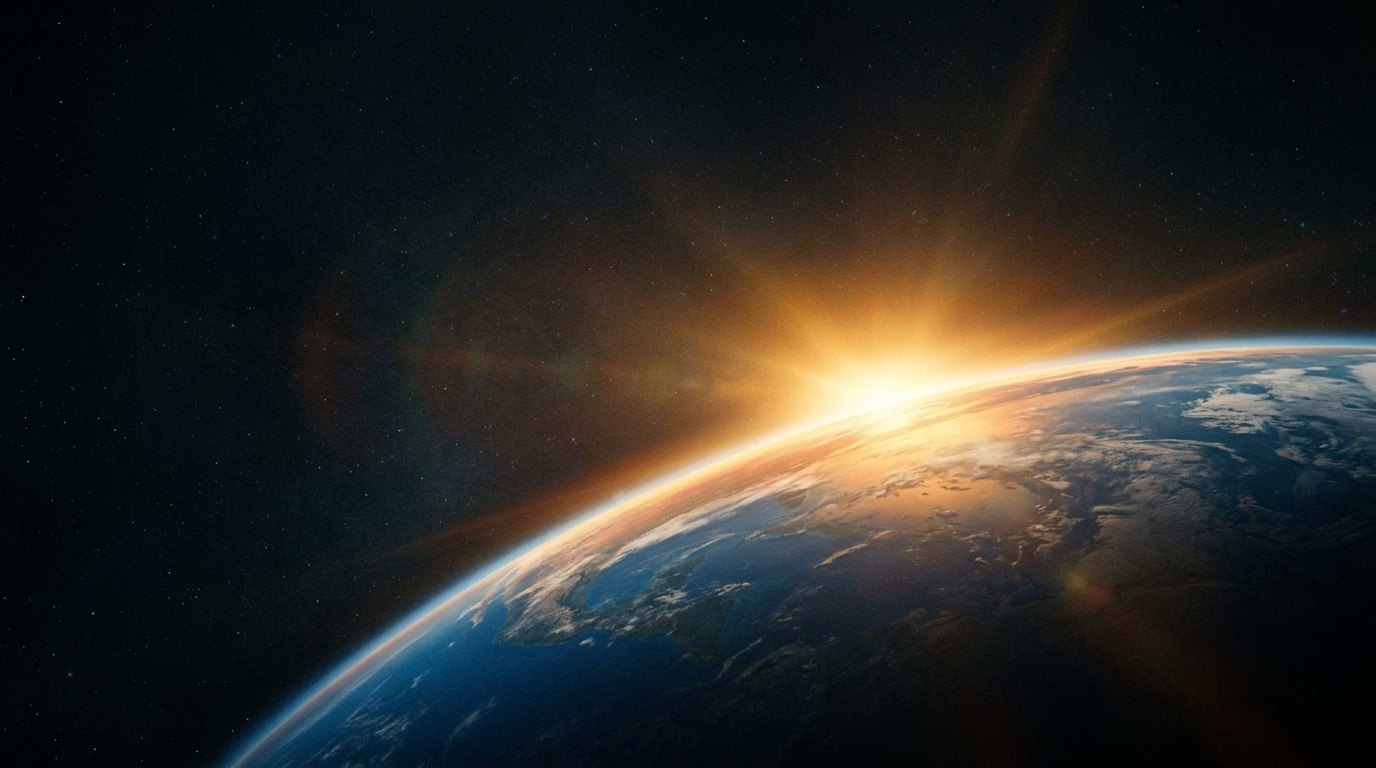
“You are worthy, our Lord and God, to receive glory and honor and power, for you created all things, and by your will they were created and have their being.”
Revelation 4:11 (NIV)
Heaven's worship declares that all creation exists solely because of God's sovereign will and good pleasure.
In Revelation 4:11, the heavenly host casts their crowns before the throne and proclaims the ultimate foundation of existence: God created all things by His sovereign will and for His pleasure. The universe did not arise by accident, necessity, or blind fate. As Genesis 1:1 declares, in the beginning God alone brought forth the heavens and the earth out of nothing, originating reality by sovereign prerogative. He is the living Creator praised in Revelation 10:6, who fashioned the heavens, the earth, the seas, and everything within them.
Because God is completely free, Scripture repeatedly grounds creation in His delight. Psalm 115:3 affirms that our God is in the heavens and does whatever pleases Him, a truth echoed in Psalm 135:6 across the heights, the oceans, and all deep places. Creation is the voluntary theater where He works all things according to the counsel of His will, as Paul reminds us in Ephesians 1:11. This universe is no haphazard experiment; Isaiah 45:18 insists that the Lord formed the earth purposefully to be inhabited, establishing order and life according to His design.
This majestic design required neither struggle nor labor. By the word of the Lord the heavens were made, and all their host by the breath of His mouth, as Psalm 33:6 records. When He uttered His decree, creation answered without delay, for Psalm 33:9 concludes that He spoke and it came to be, He commanded and it stood firm. The world exists because God willed it to exist, answering solely to His sovereign pleasure.
| Passage | What it says |
|---|---|
| Genesis 1:1 | God acts as the uncaused First Cause, originating the heavens and the earth out of nothing by His word. |
| Revelation 4:11 | Heavenly elders praise the Lord who created all things according to His holy pleasure and sovereign desire. |
| Revelation 10:6 | The living God is sworn by as the one who fashioned the heavens, earth, sea, and all their contents. |
| Psalms 115:3 | The God of heaven exercises absolute freedom, doing whatever pleases Him in heaven and on earth. |
| Psalms 135:6 | The Lord accomplishes His sovereign delight across heaven, earth, the seas, and all deep places. |
| Ephesians 1:11 | God works all things according to the counsel of His own will, ordering history to His glory. |
| Isaiah 45:18 | God formed the earth purposefully to be inhabited, establishing His sovereign design rather than creating it in vain. |
| Psalms 33:6 | The heavens were created effortlessly by the sovereign word of the Lord and the breath of His mouth. |
| Psalms 33:9 | God spoke and the world came into existence; He commanded, and it stood firm according to His will. |
Self-Sufficient Fullness
An Overflow of Self-Sufficient Fullness, Not Need

“The God who made the world and everything in it is the Lord of heaven and earth and does not live in temples built by human hands. And he is not served by human hands, as if he needed anything. Rather, he himself gives everyone life and breath and everything else.
Acts 17:24-25 (NIV)
Paul shows that the Creator needs nothing from human hands, being the giver of life, breath, and everything else.
Standing before the philosophers of Athens, Paul overturned pagan assumptions in Acts 17:24–25 by announcing that God is not served by human hands, as though He needed anything. Pagan deities were imagined as hungry for sacrifices or lonely for companionship, but the true Creator gives life, breath, and everything to all. He does not dwell in temples crafted by men, nor can finite creatures augment His intrinsic perfection. As Isaiah 40:28 proclaims, the everlasting Lord, the Creator of the ends of the earth, never grows faint or weary, possessing wisdom beyond measure.
God directly challenges the illusion that humanity enriches Him. In Psalm 50:10–12, the Lord declares that every beast of the forest is His and the cattle on a thousand hills; if He were hungry, He would not tell us, for the world and its fullness belong to Him. Long before a single star was ignited, divine communion was already infinite and complete. In John 17:5 and John 17:24, the Lord Jesus speaks of the glory and mutual love He shared with the Father before the foundation of the world. The triune God possessed an eternal fellowship of boundless joy and love.
Creatures cannot enrich the Almighty. Job 22:2–3 asks whether a man can be of any profit to God, while Job 41:11 settles the matter: who has first given to Him that it should be repaid? In 1 Chronicles 29:14, David confesses that all things come from God, and we give Him only what is already His. Creation is not a remedy for divine loneliness, but the free overflow of God's self-sufficient fullness.
| Passage | What it says |
|---|---|
| Acts 17:24 | The Lord of heaven and earth does not live in temples built by human hands. |
| Acts 17:25 | God is not served by human hands as though needing anything, since He gives life to all. |
| Isaiah 40:28 | The everlasting Lord and Creator never faints nor grows weary, possessing unsearchable understanding. |
| Psalms 50:10-12 | God owns all the cattle on a thousand hills and has no physical need of creaturely provision. |
| John 17:5 | The Father and the Son shared perfect, glorious communion before the foundation of the world. |
| John 17:24 | The Father loved the Son prior to creation, proving divine fullness and eternal fellowship within the Trinity. |
| Job 22:2-3 | Man cannot bring profit to God; the Almighty gains nothing in Himself from human righteousness. |
| Job 41:11 | God is indebted to no one, for everything under the whole heaven belongs to Him already. |
| 1 Chronicles 29:14 | All things come from God, so creation merely renders back to Him what is already His. |
Displaying Glory
The Cosmos as an Unceasing Theater of Divine Glory

The heavens declare the glory of God; the skies proclaim the work of his hands.
Psalms 19:1 (NIV)
David points to the celestial vault as an active, uninterrupted witness to God's eternal splendor and artistry.
In Psalm 19:1, David directs our eyes upward to demonstrate the cosmic purpose: the heavens declare the glory of God, and the sky above proclaims His handiwork. Day after day pours out speech, testifying to an invisible, omnipotent Architect. As Romans 1:20 explains, God's eternal power and divine nature have been clearly perceived ever since the creation of the world through the things that are made. Creation serves as a vast mirror reflecting the matchless attributes of its Maker, fashioned intentionally so that creatures might behold and honor His perfection.
Scripture makes clear that divine self-manifestation is the governing aim of all that exists. Proverbs 16:4 teaches that the Lord has made everything for its purpose, ordering reality toward the vindication of His righteousness. Paul seals this truth in Romans 11:36, crying out that from Him and through Him and to Him are all things, to whom be glory forever. In Isaiah 6:3, the seraphim cry out that the fullness of the whole earth is His glory, while Psalm 104:24 marvels at the manifold wisdom filling every corner of the globe.
This purpose will not fail. In Numbers 14:21, the Lord swears that all the earth shall be filled with His glory, a promise mirrored in Habakkuk 2:14, where the knowledge of the Lord's glory covers the earth as waters cover the sea. Psalm 148:1–13 summons stars, ocean deeps, snow, and mountains to render praise, for His name alone is exalted. Psalm 8:1 frames the cosmos in worship, proclaiming that God has set His majestic glory above the heavens.
| Passage | What it says |
|---|---|
| Psalms 19:1 | The heavens declare the glory of God, and the sky proclaims the work of His hands. |
| Romans 1:20 | God's eternal power and divine nature are clearly seen and understood through the things He made. |
| Proverbs 16:4 | The Lord has fashioned everything for His own ends and purposes, even the wicked for judgment. |
| Romans 11:36 | From Him, through Him, and to Him are all things, ensuring that all glory belongs to God forever. |
| Isaiah 6:3 | The seraphim proclaim that the fullness of the whole earth is filled with the Lord's glory. |
| Psalms 104:24 | The manifold works of the Lord reveal His wisdom, filling the entire earth with His riches. |
| Numbers 14:21 | The Lord declares His resolute purpose that all the earth shall be filled with His glory. |
| Habakkuk 2:14 | The earth will be filled with the knowledge of the glory of the Lord as waters cover the sea. |
| Psalms 148:1-13 | Sun, moon, stars, and deeps are summoned to praise the Lord because His glory transcends earth and heaven. |
| Psalms 8:1 | The majesty of the Lord's name and glory is displayed above all the heavens. |
Christ the Center
All Things Made Through and for the Eternal Son

For in him all things were created: things in heaven and on earth, visible and invisible, whether thrones or powers or rulers or authorities; all things have been created through him and for him.
Colossians 1:16 (NIV)
Paul identifies Jesus Christ as both the architect and the supreme final goal of the entire created universe.
The ultimate destination and center of all creation is Jesus Christ, the eternal Son. In Colossians 1:16, the apostle Paul unveils the mystery of cosmic history: all things were created through Him and for Him, whether visible or invisible, thrones, dominions, rulers, or authorities. Christ is not merely an agent in the beginning; He is the final goal toward which every atom, angel, and human heart moves. John 1:1–3 declares that the Word was with God in the beginning, and without Him was not anything made that was made.
Not only did all things originate in Him, but Colossians 1:17 adds that He is before all things, and in Him all things hold together. He is the active sustainer of the cosmos. Hebrews 1:2 reveals that God appointed the Son heir of all things and made the universe through Him, while Hebrews 2:10 confirms that all things exist for Him and by Him as He brings many sons to glory. There is one God and Father from whom are all things, and one Lord Jesus Christ through whom are all things, as 1 Corinthians 8:6 teaches.
Creation forms the stage for the redemption of the church and the cosmic supremacy of the Son. Ephesians 1:9–10 announces God's plan to unite all things in heaven and earth in Christ, while Ephesians 3:9–11 shows that God created the cosmos so that His manifold wisdom might be displayed to heavenly rulers through the redeemed. In Revelation 1:8, the Lord proclaims Himself the Alpha and the Omega. The world was made so that Christ would be exalted as the reigning King and Savior of all creation.
| Passage | What it says |
|---|---|
| John 1:1-3 | The Word was in the beginning with God, and through Him every single creature was made. |
| Colossians 1:16 | All things visible and invisible were created by Christ, through Christ, and directly for Christ. |
| Colossians 1:17 | Christ is before all things, and by His sovereign power all things hold together. |
| Hebrews 1:2 | God appointed the Son heir of all things and made the universe through Him. |
| Hebrews 2:10 | All things exist for God and through God, as He brings many sons into final glory. |
| 1 Corinthians 8:6 | There is one God the Father, and one Lord Jesus Christ, through whom we exist. |
| Ephesians 1:9-10 | God's eternal purpose is to unite all things in heaven and on earth under Christ. |
| Ephesians 3:9-11 | God created all things to display His manifold wisdom through the church in Christ Jesus. |
| Revelation 1:8 | The Lord God is Alpha and Omega, the beginning and the end of all created reality. |
Human Purpose
Bearing His Image and Echoing His Eternal Praise

everyone who is called by my name, whom I created for my glory, whom I formed and made.”
Isaiah 43:7 (NIV)
God explicitly describes His redeemed sons and daughters as those He created, formed, and made for His glory.
Isaiah 43:7 brings the overarching purpose of human existence into sharp focus: God formed mankind specifically for His own glory. When God summoned Adam and Eve into being in Genesis 1:26-27, He crowned them with His own image and likeness, placing them as living mirrors on earth to display His character, holy authority, and righteousness. Humanity was never an arbitrary addition to an impersonal universe; we were designed from our first breath to bear witness to the majesty of the Maker.
Because we were created for this transcendent end, the redemption accomplished in Christ simply restores our primary vocation. Paul declares in Ephesians 1:12 that those who hope in Christ exist to live for the praise of His glory. This is not confined to sacred gatherings; 1 Corinthians 10:31 commands that whether we eat or drink, or whatever we do, every ordinary act must be offered to the honor of God. As the Lord reminds His covenant flock in Isaiah 43:21, He formed a people for Himself so that they would proclaim His praise—a purpose reaffirmed in 1 Peter 2:9, which names believers a royal priesthood called to herald the excellencies of the One who brought them into marvelous light. Rather than boasting in wisdom, wealth, or strength, Jeremiah 9:23-24 directs humanity to boast solely in knowing the Lord who exercises steadfast love, justice, and righteousness on the earth.
The culmination of this design sweeps into eternity. In Revelation 5:12-13, the curtain of heaven parts to show a redeemed company singing that the slain Lamb is worthy of power, riches, wisdom, and honor. Every creature in the cosmos joins this unified chorus, demonstrating that the final destiny of all created beings is the unceasing worship of the King.
| Passage | What it says |
|---|---|
| Genesis 1:26-27 | God creates humanity in His own image and likeness to reflect His holy character and rule. |
| Isaiah 43:7 | The Lord gathers everyone called by His name, whom He created for His glorious display. |
| Ephesians 1:12 | Believers who hope in Jesus Christ are chosen to live for the praise of God's glory. |
| 1 Corinthians 10:31 | Whether believers eat, drink, or whatever they do, all is to be done for God's glory. |
| Revelation 5:12 | The glorified multitude praises the slain Lamb as worthy to receive power, riches, wisdom, and honor. |
| Revelation 5:13 | Every creature in heaven, on earth, and in the sea attributes eternal blessing to God and the Lamb. |
| Isaiah 43:21 | God formed a people for Himself specifically to declare His praise. |
| 1 Peter 2:9 | Believers are chosen to proclaim the excellencies of Him who called them out of darkness. |
| Jeremiah 9:23-24 | Man's ultimate boast and purpose is knowing and understanding the Lord who delights in steadfast love. |
Divine Delight
Created for Delight and Love

God saw all that he had made, and it was very good. And there was evening, and there was morning—the sixth day.
Genesis 1:31 (NIV)
It shows that creation was fashioned as an object of divine pleasure, goodness, and shared joy.
Genesis 1:31 captures the pure satisfaction of the Creator as He surveys His finished work: everything God made was very good. Creation was not an arduous duty, an involuntary eruption of energy, or a desperate remedy for cosmic loneliness. It was an act of pure benevolence, an overflow of the Triune God's infinite life and boundless generosity, crafted to be an arena of divine pleasure.
Scripture consistently celebrates this sacred happiness in what has been made. Psalm 104:31 raises the joyful prayer that the glory of the Lord endure forever and that the Lord may rejoice in His works. When God observes the sea, the stars, the cedars of Lebanon, and the creeping things of the ground, He takes genuine delight in their order and beauty. Proverbs 8:30-31 reveals that eternal Wisdom was beside God as a master craftsman, rejoicing always before Him and finding delight specifically in the children of man. Creation was formed as a theater where divine delight could be shared with creatures capable of knowing Him.
Even when sin marred this pristine order, God's affection for His work did not falter. In Zephaniah 3:17, the prophet beholds the Lord in the midst of His redeemed people: He rejoices over them with gladness, quieting them in His love, and exulting over them with loud singing. From the dawn of Genesis to the restoration of the covenant, the heart of God toward His creation remains one of holy, joyous, and communicative love.
| Passage | What it says |
|---|---|
| Genesis 1:31 | God inspected all He had made and saw that it was very good, delighting in its beauty. |
| Psalms 104:31 | The psalmist prays that God's glory endure forever and that the Lord rejoice in His works. |
| Proverbs 8:30-31 | Divine wisdom rejoiced in the habitable parts of the earth, delighting in the children of man. |
| Zephaniah 3:17 | God rejoices over His redeemed creation with gladness, quieting them in love and singing. |
Eschatological Goal
The Consummation of Eternal Fellowship

And I heard a loud voice from the throne saying, “Look! God’s dwelling place is now among the people, and he will dwell with them. They will be his people, and God himself will be with them and be their God.
Revelation 21:3 (NIV)
It discloses the ultimate telos of the world: God dwelling intimately and visibly with His people.
Revelation 21:3 discloses the grand destination of all redemptive history: God will dwell with man, and they will be His people, and God Himself will be with them as their God. The cosmos was not formed as a temporary staging ground to be discarded into nothingness, but as the home where God's redeemed family would behold His unfiltered majesty and enjoy unbroken fellowship forever.
Because of human rebellion, the present order groans under the burden of corruption. Yet Romans 8:19-21 assures us that this groaning is filled with eager expectation; the creation itself will be set free from its bondage to decay into the glorious liberty of the children of God. The physical world will not be annihilated, but purified and renewed. Isaiah 65:17 foretells the coming day when the Lord creates new heavens and a new earth, where former agonies and fears are never remembered or brought to mind.
Looking forward to that magnificent dawn, 2 Peter 3:13 encourages believers to wait steadfastly for the promised new heavens and new earth in which righteousness makes its permanent dwelling. Finally, Revelation 21:1-2 witnesses the holy city descending from heaven, prepared as a bride adorned for her husband. There, in an uncorrupted universe radiant with the presence of the Lamb, the original purpose of creation reaches its everlasting Sabbath, where God and His people dwell together in eternal, unbroken joy.
| Passage | What it says |
|---|---|
| Romans 8:19-21 | Creation was subjected to futility in hope of being liberated into the freedom of God's children. |
| Isaiah 65:17 | God promises to create new heavens and a new earth where former troubles are remembered no more. |
| 2 Peter 3:13 | Believers wait for a promised new heaven and new earth where righteousness dwells. |
| Revelation 21:1-3 | The climax of creation is God dwelling directly with man in the new heaven and earth. |
Where in the Bible
| Book | Passages |
|---|---|
| Genesis | 3 · Genesis 1:1, Genesis 1:26-27, Genesis 1:31 |
| Numbers | 1 · Numbers 14:21 |
| 1 Chronicles | 1 · 1 Chronicles 29:14 |
| Job | 2 · Job 22:2-3, Job 41:11 |
| Psalms | 10 · Psalms 115:3, Psalms 135:6, Psalms 33:6, Psalms 33:9, Psalms 50:10-12, Psalms 19:1, Psalms 104:24, Psalms 148:1-13, Psalms 8:1, Psalms 104:31 |
| Proverbs | 2 · Proverbs 16:4, Proverbs 8:30-31 |
| Isaiah | 6 · Isaiah 45:18, Isaiah 40:28, Isaiah 6:3, Isaiah 43:7, Isaiah 43:21, Isaiah 65:17 |
| Jeremiah | 1 · Jeremiah 9:23-24 |
| Habakkuk | 1 · Habakkuk 2:14 |
| Zephaniah | 1 · Zephaniah 3:17 |
| John | 3 · John 17:5, John 17:24, John 1:1-3 |
| Acts | 2 · Acts 17:24, Acts 17:25 |
| Romans | 3 · Romans 1:20, Romans 11:36, Romans 8:19-21 |
| 1 Corinthians | 2 · 1 Corinthians 8:6, 1 Corinthians 10:31 |
| Ephesians | 4 · Ephesians 1:11, Ephesians 1:9-10, Ephesians 3:9-11, Ephesians 1:12 |
| Colossians | 2 · Colossians 1:16, Colossians 1:17 |
| Hebrews | 2 · Hebrews 1:2, Hebrews 2:10 |
| 1 Peter | 1 · 1 Peter 2:9 |
| 2 Peter | 1 · 2 Peter 3:13 |
| Revelation | 6 · Revelation 4:11, Revelation 10:6, Revelation 1:8, Revelation 5:12, Revelation 5:13, Revelation 21:1-3 |
The story in order
- God creates the heavens and earth (c. 4000 BC) · Genesis 1:1 · God acts as the uncaused First Cause, originating all from nothing.
- God forms humanity in His image (c. 4000 BC) · Genesis 1:26-27 · Humanity is created to reflect God's character and rule.
- God rejoices in His creation (c. 4000 BC) · Genesis 1:31 · God sees all He made as very good, delighting in its beauty.
- Wisdom rejoices in creation (c. 950 BC) · Proverbs 8:30-31 · Divine wisdom rejoiced in the earth, delighting in mankind.
- The heavens declare God's glory (c. 900 BC) · Psalms 19:1 · The created order proclaims the work of God's hands.
- God forms all for His purposes (c. 950 BC) · Proverbs 16:4 · The Lord has fashioned everything for His own ends.
- God's eternal power is seen (c. AD 55) · Romans 1:20 · God's nature is clearly understood through His creation.
- All things created through Christ (c. AD 30) · John 1:1-3 · The Word was with God and made all creatures.
- Christ holds all things together (c. AD 60) · Colossians 1:17 · Christ is before all things and sustains the universe.
- God's purpose to unite all in Christ (c. AD 60) · Ephesians 1:9-10 · God's plan is to unite all things under Christ.
- Creation awaits liberation (c. AD 55) · Romans 8:19-21 · Creation was subjected to futility, hoping for freedom.
- New heavens and new earth (c. 700 BC) · Isaiah 65:17 · God promises a new creation where former troubles cease.
- God dwells with man in new creation (c. AD 95) · Revelation 21:1-3 · The climax is God dwelling directly with humanity.
Key words
- Sovereign Pleasure (θέλημα, thelēma)
- God's absolute freedom and will to do as He pleases. · Revelation 4:11
- Self-Sufficient Fullness (χρεία, chreia)
- God's complete independence and lack of need for anything outside Himself. · Acts 17:25
- Glory (δόξα, doxa)
- The visible radiance and manifest presence of God's perfections. · Psalms 19:1
- Image (צֶלֶם, tsalem)
- A representation or likeness, reflecting the character and authority of the original. · Genesis 1:26
- Delight (שַׂחֵק, saceq)
- Joy and pleasure taken in something; God's satisfaction in His works. · Proverbs 8:30
- Consummation (ἀποκατάστασις, apokatastasis)
- The completion or fulfillment of God's plan for creation. · Acts 3:21
Understanding why God created the cosmos rescues our lives from aimlessness and anchors our identity in His eternal design. We were fashioned from the dust to know Him, delight in His goodness, and join all creation in proclaiming the unmatched worth of our Creator and Redeemer.
54 passages, each cited once.
Scripture cited
- Revelation 4:11
- Colossians 1:16-17
- Revelation 5:12
- Acts 17:24-25
- Psalms 19:1
- Genesis 1:26-31
- Isaiah 43:6-7
- Romans 11:33-36