Why did Jesus cry 'My God, my God, why have you forsaken me'?

Matthew 27:46
46 About three in the afternoon Jesus cried out in a loud voice, “Eli, Eli, lema sabachthani?” (which means “My God, my God, why have you forsaken me?”).
New International Version (NIV)
The answer
Jesus cried these words because he was bearing sin and its judgment as the sacrifice for sinners. His anguish was real, but it was not unbelief, defeat, or evidence that the Father had stopped loving him. He was also quoting Psalm 22, identifying himself with its righteous sufferer who is ultimately heard and vindicated.
He was suffering in the sinner’s place
The cry came after three hours of darkness, near the end of the crucifixion (Matthew 27:45-46). Isaiah explains what was happening: the Servant was pierced for transgressions and crushed for iniquities, and the punishment that brought peace was laid on him (Isaiah 53:5). The Lord laid the iniquity of all on him and made his soul an offering for sin (Isaiah 53:6, 10).
The New Testament gives the same explanation. Christ personally bore sins in his body on the tree (1 Peter 2:24). The one who knew no sin was made sin on behalf of others so that they might receive God’s righteousness in him (2 Corinthians 5:21). He also became a curse to redeem others from the law’s curse (Galatians 3:13). His cry therefore expresses the dreadful judgment attached to the sin he was carrying, not merely the physical pain of crucifixion.
This did not mean Jesus became a sinner, ceased to be God’s Son, or divided the Trinity. The Father loved the Son precisely in his willing sacrifice: Jesus said that he laid down his life of his own authority and received this commandment from the Father (John 10:17-18).
He was speaking the words of Psalm 22
The opening line of the psalm is exactly the cry Jesus uttered (Psalm 22:1). Its details strikingly anticipate the crucifixion: the sufferer is mocked and challenged to trust God for deliverance (Psalm 22:7-8), his hands and feet are pierced (Psalm 22:16), and his clothing is divided by casting lots (Psalm 22:18).
But Psalm 22 does not end in abandonment. God hears the sufferer’s cry (Psalm 22:24), the sufferer praises God among his people (Psalm 22:22), and the nations turn to the Lord (Psalm 22:27). Jesus’ words were therefore an expression of profound suffering, not final despair.
The cross was accomplishment, not failure
Even the words “My God” show that Jesus was crying out to God, not renouncing him. Hebrews 5:7 says that he offered prayers with strong crying and tears and was heard. John 19:30 records his declaration, “It is finished!” His saving work was completed, not cut short.
The cry shows both how serious sin is and what it cost Christ to save sinners. The fitting response is to turn from sin and return to the Shepherd, dying to sin and living to righteousness through the one who bore it (1 Peter 2:24-25).
Answered from Scripture · reviewed November 11, 2026
When Jesus cried from Golgotha, 'My God, my God, why have you forsaken me?', He gave voice to the deepest mystery of the atonement: the sinless Son bearing the dreadful weight of human rebellion in our place. Far from a cry of despair or a shattered Trinity, His words intentionally invoke Psalm 22 to proclaim both the horror of sin-bearing judgment and the certainty of messianic victory.
The Prophetic Cry
Jesus invokes Psalm 22 to declare His messianic suffering and triumph.
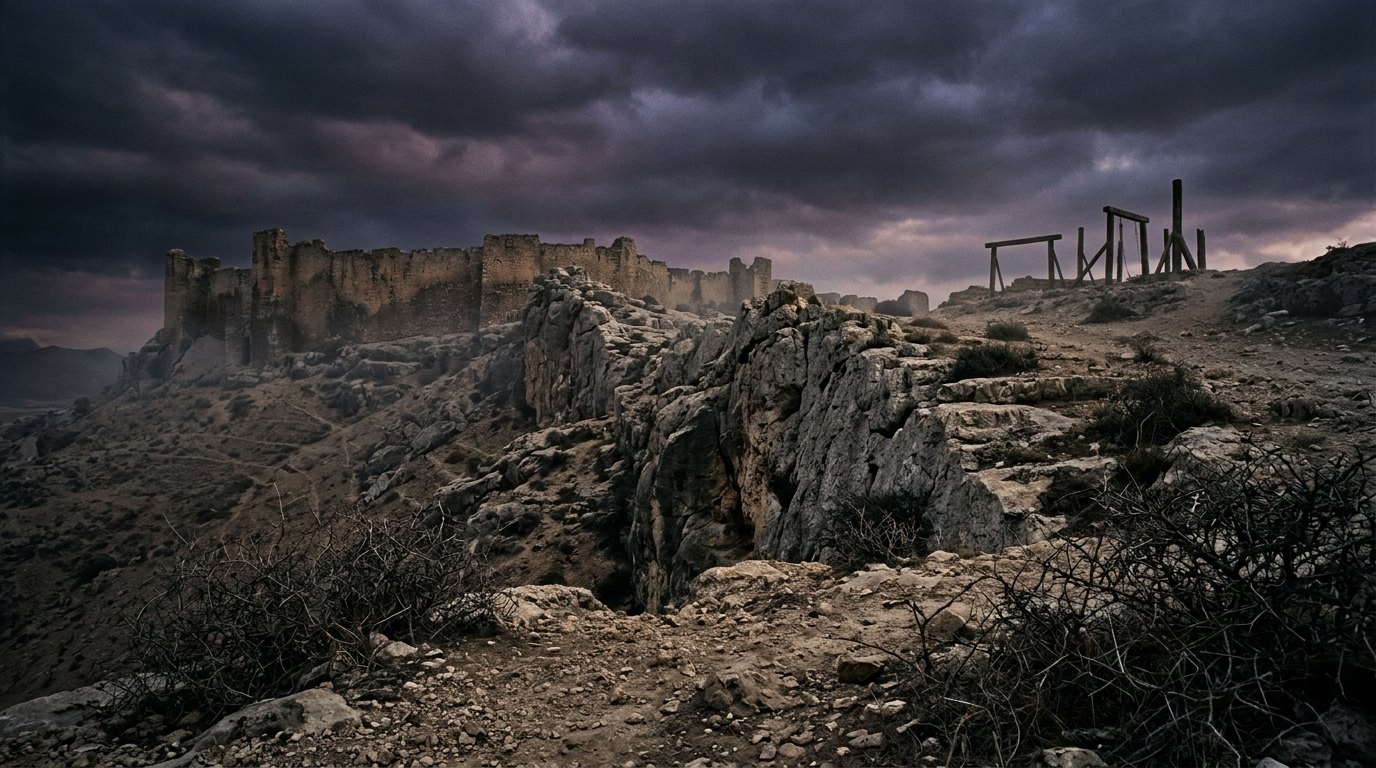
About three in the afternoon Jesus cried out in a loud voice, “Eli, Eli, lema sabachthani?” (which means “My God, my God, why have you forsaken me?”).
Matthew 27:46 (NIV)
Jesus explicitly quotes the opening line of David's prophetic lament while enduring the agony of the cross.
When Jesus cried out at the ninth hour in Matthew 27:46, He deliberately took the opening words of Psalm 22 upon His lips to reveal the divine architecture of the cross. Mark 15:34 preserves His exact Aramaic utterance—Eloi, Eloi, lema sabachthani—capturing the agonizing reality of His suffering before a watching world. In Jewish tradition, quoting the first line of a psalm invoked the entirety of the song, and Psalm 22:1 stands as David’s prophetic portrait of the righteous Sufferer who endures inexplicable anguish yet emerges in vindication.
Every dimension of the scene unfolded according to this ancient script. When passersby and religious rulers sneered at the cross in Matthew 27:35–43, they unwittingly fulfilled Psalm 22:7–8, shaking their heads and mocking the Sufferer’s confidence in God. When callous Roman legionaries gambled beneath His feet in John 19:23–24, they acted out Psalm 22:16–18, which had foretold centuries earlier that His hands and feet would be pierced and His seamless tunic divided by lot.
Yet David’s psalm does not terminate in a tomb. It concludes in radiant victory, anticipating in Psalm 22:27–31 that all the families of the nations will bow before the Lord because He has not hidden His face forever from the afflicted. In Hebrews 2:12 and Revelation 5:9–10, this prophetic promise finds its global realization as the risen Christ proclaims God’s name among His redeemed brethren. Jesus cried these words not in blind bewilderment, but to announce that the long-promised redemption of the world had arrived precisely as Scripture decreed.
| Passage | What it says | Fulfilled |
|---|---|---|
| Matthew 27:46 | Jesus cries with a loud voice at the ninth hour asking why God has forsaken Him. | |
| Mark 15:34 | Mark records the Aramaic words of Jesus' cry of abandonment during the crucifixion. | |
| Psalms 22:1 | David laments being forsaken by God and left without deliverance amid his desperate groaning. | Matthew 27:46, Mark 15:34 |
| Psalms 22:7-8 | Onlookers mock the suffering righteous sufferer, taunting him to let the Lord deliver him. | Matthew 27:39-43 |
| Psalms 22:16-18 | The sufferer describes his hands and feet pierced and his garments divided by casting lots. | John 19:23-24, Matthew 27:35 |
| Psalms 22:27-31 | The psalm concludes with all the families of nations worshiping God for what He has done. | Hebrews 2:12, Revelation 5:9-10 |
| Matthew 27:35-43 | Passersby and leaders mock Jesus by quoting Psalm 22, fulfilling prophetic details precisely at the cross. | |
| John 19:23-24 | Soldiers cast lots for Jesus' seamless tunic to fulfill Scripture recorded in the prophetic psalm. |
Bearing the Curse
The sinless substitute bore the full wrath of God against sin.

God made him who had no sin to be sinfor us, so that in him we might become the righteousness of God.
2 Corinthians 5:21 (NIV)
God made the sinless Christ to be sin on our behalf so we might become His righteousness.
The dreadful depth of Jesus' cry lies in the reality of penal substitution, captured supremely in 2 Corinthians 5:21: God made the sinless Son to be sin on our behalf so that sinners might receive the righteousness of God. The cross was neither an accident nor a mere moral example; it was the divine altar where the holy wrath of God against human rebellion fell upon an innocent sacrifice. Isaiah 53:4–6 foretold that the Lord would lay upon Him the iniquity of us all, bruising Him for our transgressions, while Isaiah 53:10 affirms that it pleased the Father to crush Him as a guilt offering.
Because God's eyes are too pure to approve evil (Habakkuk 1:13), the holy Judge turned His face of judicial favor away from the sin-bearer. Galatians 3:13 declares that Christ redeemed us from the curse of the law by becoming a curse in our stead, bearing in His human body the legal condemnation our treason deserved (1 Peter 2:24; Romans 8:3). This propitiation satisfied divine justice completely (Romans 3:25–26).
In Gethsemane, Jesus had recoiled from the horrific cup of undiluted wrath (Matthew 26:39), yet He drank it to the dregs. The midday darkness blanketing the earth in Matthew 27:45 was an unmistakable Old Testament sign of divine judgment. On Golgotha, Christ truly tasted the agonizing horror of spiritual estrangement, enduring the terrifying desolation of hell so that His people would never taste it.
| Passage | What it says |
|---|---|
| Isaiah 53:4-6 | The Servant was wounded for our transgressions and the Lord laid on Him our collective iniquity. |
| Isaiah 53:10 | It pleased the Lord to crush Him and make His soul an offering for sin. |
| Galatians 3:13 | Christ redeemed believers from the curse of the law by becoming a curse for us. |
| 2 Corinthians 5:21 | God made Him who had no sin to be sin for us for our justification. |
| 1 Peter 2:24 | Jesus bore our sins in His own body on the tree that we might live to righteousness. |
| Habakkuk 1:13 | God's holy eyes are too pure to look upon evil or tolerate wrongdoing. |
| Romans 8:3 | God condemned sin in the flesh by sending His own Son in the likeness of sinful flesh as a sacrifice. |
| Romans 3:25-26 | God set Christ forth as a propitiation by His blood to demonstrate God's righteous justice in forgiving sins. |
| Matthew 26:39 | Jesus pleaded in Gethsemane over the cup of God's wrath, yet willingly submitted to drink it fully. |
| Matthew 27:45 | Supernatural darkness fell over all the land from noon to three, signaling divine judgment upon the sin-bearer. |
Unbroken Trust
Even in dereliction, Christ clung faithfully to His Father.

During the days of Jesus’ life on earth, he offered up prayers and petitions with fervent cries and tears to the one who could save him from death, and he was heard because of his reverent submission.
Hebrews 5:7 (NIV)
Christ offered prayers with loud cries and was heard because of His reverent submission.
Even in the unfathomable agony of dereliction, Jesus displayed an unwavering, filial trust in His Father, as Hebrews 5:7 affirms that He was heard for His reverent submission. His cry began not with an accusatory outburst, but with the repeated embrace of personal faith: 'My God, my God.' While hostile mockers sneered that God had permanently cast Him aside (Psalm 71:11), the true Sufferer rested on the covenant fidelity commemorated in Psalm 22:2–5 and Psalm 22:9–10, recalling how God had delivered fathers of old and nurtured Him from His mother’s womb.
There was never an ontological rupture within the Holy Trinity; the Father never ceased to love the Son. Indeed, as John 10:17–18 declares, the Father loves the Son precisely because He willingly laid down His life in perfect filial obedience. The momentary withdrawal of the Father’s comforting presence was judicial, not a destruction of their eternal bond of divine love.
Having exhausted the curse and fulfilled every prophetic requirement (John 19:28–30), Jesus did not expire in defeat. With His final breath, He cried, 'Father, into your hands I commit my spirit' (Luke 23:46). Because the Sin-bearer stood in desolate isolation on our behalf, believers are secured forever under the unbreakable covenant promise of Hebrews 13:5: God will never leave us nor ever forsake us.
| Passage | What it says |
|---|---|
| Psalms 71:11 | Enemies falsely assume that God has utterly abandoned the afflicted righteous servant. |
| Luke 23:46 | Jesus finishes His earthly trial by committing His Spirit into the Father's hands. |
| John 19:28-30 | Knowing all scripture was accomplished, Jesus declared 'It is finished' and gave up His spirit. |
| Hebrews 5:7 | In the days of His flesh, Jesus offered loud cries and tears and was heard. |
| Hebrews 13:5 | God promises His people that He will never leave them nor ever forsake them. |
| Psalms 22:2-5 | The sufferer continues praying day and night, affirming that God is holy and delivered the trusting fathers. |
| Psalms 22:9-10 | The cry confesses complete reliance on God from birth and infancy as the personal God of life. |
| John 10:17-18 | The Father loves the Son because He freely lays down His life in obedient filial communion. |
Where in the Bible
| Book | Passages |
|---|---|
| Psalms | 7 · Psalms 22:1, Psalms 22:7-8, Psalms 22:16-18, Psalms 22:27-31, Psalms 71:11, Psalms 22:2-5, Psalms 22:9-10 |
| Isaiah | 2 · Isaiah 53:4-6, Isaiah 53:10 |
| Habakkuk | 1 · Habakkuk 1:13 |
| Matthew | 4 · Matthew 27:46, Matthew 27:35-43, Matthew 26:39, Matthew 27:45 |
| Mark | 1 · Mark 15:34 |
| Luke | 1 · Luke 23:46 |
| John | 3 · John 19:23-24, John 19:28-30, John 10:17-18 |
| Romans | 2 · Romans 8:3, Romans 3:25-26 |
| 2 Corinthians | 1 · 2 Corinthians 5:21 |
| Galatians | 1 · Galatians 3:13 |
| Hebrews | 2 · Hebrews 5:7, Hebrews 13:5 |
| 1 Peter | 1 · 1 Peter 2:24 |
The story in order
- David laments being forsaken (c. 1000 BC) · Psalms 22:1 · Foreshadows the suffering of the Messiah.
- Servant wounded for iniquity (c. 700 BC) · Isaiah 53:4-6 · Prophesies the substitutionary atonement for sin.
- God's holy eyes cannot look on evil (c. 600 BC) · Habakkuk 1:13 · Explains God's necessary judgment on sin.
- Jesus prays in Gethsemane (AD 30) · Matthew 26:39 · He submits to the Father's will to drink wrath.
- Darkness signals divine judgment (AD 30) · Matthew 27:45 · God's wrath falls on the sin-bearer.
- Jesus cries from the cross (AD 30) · Matthew 27:46 · He invokes Psalm 22, identifying with its suffering.
- Soldiers cast lots for tunic (AD 30) · John 19:23-24 · Fulfills Psalm 22:18 during crucifixion.
- Jesus commits His Spirit (AD 30) · Luke 23:46 · He entrusts Himself to the Father in death.
- Christ redeems from the curse (c. AD 55) · Galatians 3:13 · Explains Christ's curse-bearing for believers.
- God made Him to be sin (c. AD 55) · 2 Corinthians 5:21 · He became sin for our justification.
- Jesus bore our sins (c. AD 60) · 1 Peter 2:24 · He bore our sins on the tree.
- Nations worship God (c. 1000 BC) · Psalms 22:27-31 · The psalm's end points to ultimate victory.
Key words
- Forsaken (azab, עָזַב)
- Abandoned or deserted by someone or something. · Psalms 22:1
- Iniquity (avon, עָוֹן)
- Wickedness, injustice, or wrongdoing. · Isaiah 53:6
- Curse (ara, אָרָר)
- A solemn utterance intended to invoke supernatural harm or a state of being under such an utterance. · Galatians 3:13
- Sin (hamartia, ἁμαρτία)
- An immoral act considered to be a transgression against divine law. · 2 Corinthians 5:21
- Propitiation (hilasterion, ἱλαστήριον)
- The action of appeasing a god or spirit; a sacrifice or offering made to appease. · Romans 3:25
Because the Savior endured that awful moment of abandonment, no believer in Christ will ever be forsaken by God. In His darkest cry, our eternal reconciliation was secured, fulfilling the Father's eternal plan to bring many sons and daughters to glory.
26 passages, each cited once.
Scripture cited
- Psalms 22:1
- Hebrews 5:7
- Isaiah 53:10
- John 19:28-30
- Psalms 22
- Matthew 27:45-54
- Isaiah 53:4-12
- 1 Peter 2:24-25
- 2 Corinthians 5:21
- Galatians 3:13
- John 10:17-18
- Hebrews 5:7-9