Why did Jesus have to be fully God and fully man?

Hebrews 2:14-18
14 Since the children have flesh and blood, he too shared in their humanity so that by his death he might break the power of him who holds the power of death—that is, the devil—
15 and free those who all their lives were held in slavery by their fear of death.
16 For surely it is not angels he helps, but Abraham’s descendants.
17 For this reason he had to be made like them, fully human in every way, in order that he might become a merciful and faithful high priest in service to God, and that he might make atonement for the sins of the people.
18 Because he himself suffered when he was tempted, he is able to help those who are being tempted.
New International Version (NIV)
The answer
Jesus had to be both fully God and fully man so that a Person great enough to pay for an infinite debt could die in the place of the very humans who owed it. Hebrews 2:14-17 holds both truths side by side: He shared our flesh and blood so He could die for us, and He came as the Son of God to bring to nothing the one who held the power of death. Either nature without the other leaves the work undone.
Why He had to be fully man
- He had to share the nature He came to save. "Since the children have shared in flesh and blood, he also himself in the same way partook of the same" (Hebrews 2:14). A sacrifice outside our race could not stand in for our race.
- He had to die in our place. "That through death he might bring to nothing him who had the power of death, that is, the devil" (Hebrews 2:14). Only a real human death could pay the wages of human sin (Romans 6:23).
- He had to be made like us to be our priest. "In all things to be made like his brothers, that he might become a merciful and faithful high priest in things pertaining to God, to make atonement for the sins of the people" (Hebrews 2:17). A priest who does not know what it is to suffer cannot represent sufferers.
- He had to be tempted as we are. "In that he himself has suffered being tempted, he is able to help those who are tempted" (Hebrews 2:18). His help is rooted in shared experience, not a distant sympathy.
Why He had to be fully God
- Only an infinite Person can bear an infinite weight. The debt of sin against a holy God is infinite; a mere creature could not pay it. Scripture marks the atonement as the work of Christ alone (Acts 4:12; 1 Timothy 2:5-6), because only He is the eternal Son.
- Only God could defeat death itself. The aim of His coming was not just to die, but to "bring to nothing him who had the power of death" and swallow it up (Hebrews 2:14; Isaiah 25:8; 1 Corinthians 15:54-57). Death undone is a victory only God could win.
- Only God could be the sacrifice whose blood truly cleanses. "The Word was made flesh" (John 1:14) — the one who was God from the beginning took a body into which He could offer Himself to the Father (John 1:1, John 1:14).
- Only the God-Man could be a Priest whose offering has done away with sin once for all. Hebrews 7-10 builds on chapter 2: a priest like Melchizedek, exalted above Aaron, whose self-offering is final because the Offerer is divine.
One sentence to carry
The incarnation is not a clever arrangement; it is the only arrangement that fits what we needed: a substitute truly of us, with authority truly above us.
"God sending his own Son in the likeness of sinful flesh, and for sin, condemned sin in the flesh" (Romans 8:3). The heart of the gospel is that the Second Person of the Trinity entered our nature so the condemnation we deserved fell on Him, and the righteousness we lacked could become ours.
Answered from Scripture · reviewed November 8, 2026
Jesus had to be both fully God and fully man because our salvation required a Mediator who could represent man in paying sin's debt and possess the infinite worth of God to exhaust divine wrath. If Christ were only man, His death could not bear an infinite judgment or vanquish death itself; if He were only God, He could neither suffer, bleed, nor die as humanity's legal substitute. Scripture reveals that the incarnation is the only divine arrangement that satisfies holy justice while delivering sinners from the bondage of death.
The Human Substitute
Man Must Pay the Debt of Man

Since the children have flesh and blood, he too shared in their humanity so that by his death he might break the power of him who holds the power of death—that is, the devil—
Hebrews 2:14 (NIV)
It shows that Christ took on real flesh and blood specifically so that through physical death He could destroy the devil's power.
In Hebrews 2:14, Scripture makes it undeniably plain: the Son took on human flesh and blood so that through physical death He might break the devil's power. Divine justice demanded that the nature which committed the offense must also endure the penalty. God cannot bleed or die in His divine essence; therefore, an authentic human nature was essential to bear the curse. As Romans 8:3 declares, God sent His own Son in the likeness of sinful flesh to condemn sin directly in the flesh where humanity had fallen. Christ did not assume an angelic nature, but specifically laid hold of the seed of Abraham (Hebrews 2:16), stepping into our corporate lineage as the second Adam.
This legal substitution anchors the entire economy of redemption. According to Romans 5:19, just as the disobedience of one man brought condemnation to many, so by the obedience of one man the many are made righteous. Humanity broke God's covenant, and a genuine man had to fulfill all righteousness on man's behalf. In 1 Corinthians 15:21-22, Paul insists that since death entered this world through a man, the resurrection of the dead must also come by a man.
To accomplish this bodily work, a real human body was prepared for the eternal Son (Hebrews 10:5). When the fullness of time arrived, God sent forth His Son, born of a woman and born under the law, in order to redeem those who were held under the law's righteous curse (Galatians 4:4-5). It was not an apparition or an illusion that hung upon Calvary, but the spotless Lamb of God: 1 Peter 2:24 testifies that Jesus bore our sins in His own physical body on the tree, satisfying justice in our place.
| Passage | What it says |
|---|---|
| Hebrews 2:14 | Christ partook of human flesh and blood so that through death He might destroy the devil who held death's power. |
| Romans 8:3 | God sent His Son in the likeness of sinful flesh to condemn sin in the flesh where the law failed. |
| Hebrews 2:16 | Christ did not take on the nature of angels, but specifically took hold of the human offspring of Abraham. |
| Romans 5:19 | Just as one man's disobedience made many sinners, so by one man's obedience many are made righteous. |
| 1 Corinthians 15:21-22 | Since death came by a man, the resurrection of the dead also came by a man, Jesus Christ. |
| Hebrews 10:5 | A human body was prepared for Christ to offer the ultimate bodily sacrifice for sin. |
| Galatians 4:4-5 | Christ was born of a woman under the law to redeem those under the law. |
| 1 Peter 2:24 | Jesus bore our sins in His own human body upon the tree. |
The Merciful High Priest
A Priest Must Share Our Nature
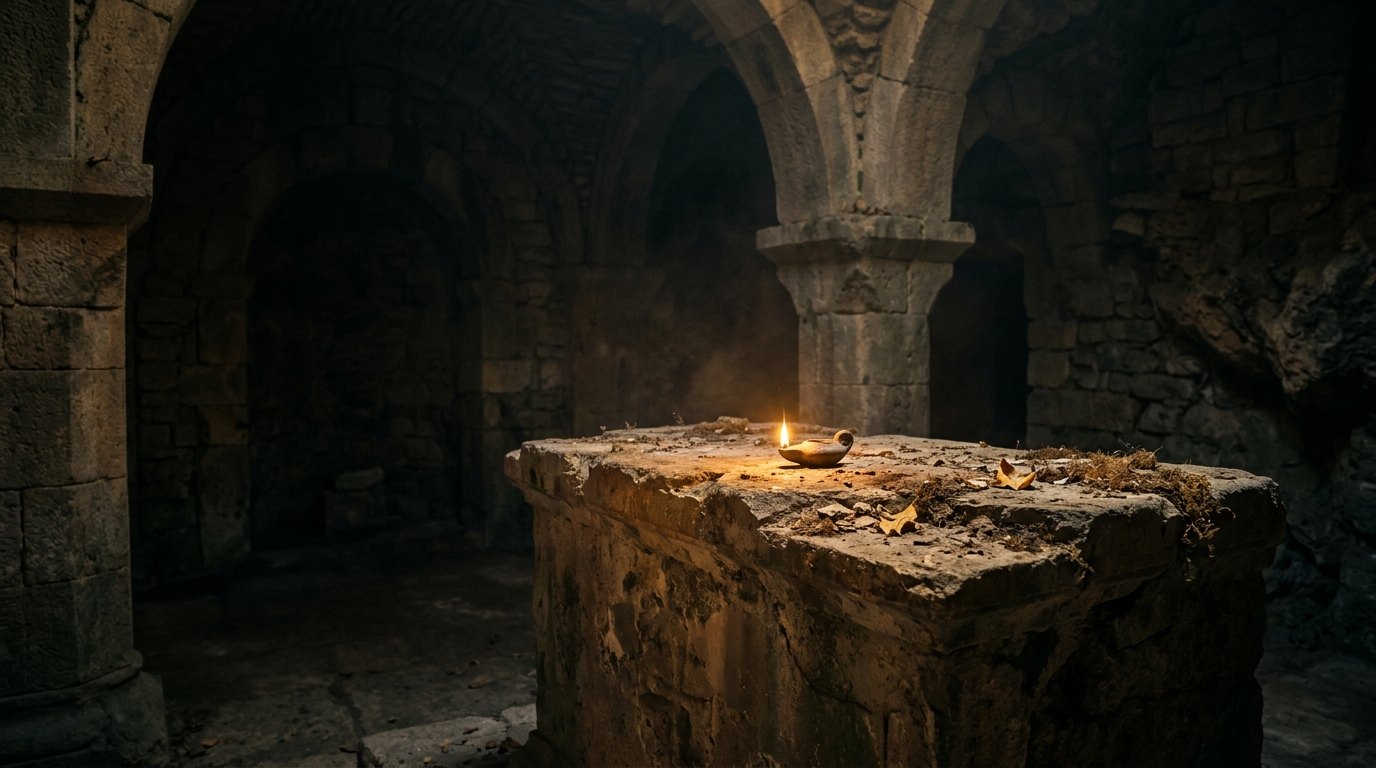
For this reason he had to be made like them, fully human in every way, in order that he might become a merciful and faithful high priest in service to God, and that he might make atonement for the sins of the people.
Hebrews 2:17 (NIV)
It establishes that Christ had to be made like His brothers in every respect to make propitiation for their sins.
Hebrews 2:17 reveals the necessity of Christ's kinship with His people: He had to be made like His brothers in every respect to serve as a merciful and faithful high priest. The Levitical priesthood prefigured this principle, because an advocate who intercedes for sinners must come from among the sinners themselves. As Hebrews 5:1-2 teaches, every high priest taken from among men can deal gently with the ignorant and misguided precisely because he shares their frail condition. If Christ had bypassed an earthly human life, He could neither represent us before the throne nor mediate on our behalf.
Yet our Lord's human nature is not merely a legal instrument; it is the fountain of rich pastoral comfort. Because He personally suffered when tempted in the wilderness and the garden, He is actively able to come to the aid of those who are tempted today (Hebrews 2:18). Scripture assures the believer in Hebrews 4:15 that we do not have an aloof high priest who cannot sympathize with our weaknesses, but one who has been tempted in all points just as we are, yet remained entirely without sin.
During His earthly days, Jesus offered up prayers and petitions with loud cries and tears to the Father who could save Him from death (Hebrews 5:7-9). Through those agonizing human experiences, He learned obedience and was perfected as the source of eternal salvation for all who obey Him. He is the priest we desperately required: holy, innocent, undefiled, separated from sinners, and now exalted above the heavens (Hebrews 7:26).
| Passage | What it says |
|---|---|
| Hebrews 2:17 | He had to be made like His brothers in all things to become a merciful, faithful high priest making atonement. |
| Hebrews 2:18 | Because He Himself suffered under temptation, He is able to actively help those who are being tempted. |
| Hebrews 4:15 | We have a high priest who sympathizes with our weaknesses, having been tempted in every way, yet without sin. |
| Hebrews 5:1-2 | Every high priest chosen from among men can deal gently with the ignorant and wayward because of shared weakness. |
| Hebrews 5:7-9 | Jesus learned obedience through human suffering and became the source of eternal salvation. |
| Hebrews 7:26 | Our high priest must be holy and blameless yet exalted above the heavens. |
The Divine Savior
Only God Can Bear Infinite Wrath

The Word became flesh and made his dwelling among us. We have seen his glory, the glory of the one and only Son, who came from the Father, full of grace and truth.
John 1:14 (NIV)
It declares that the eternal Word who is fully God took on flesh and dwelt visibly among us.
In John 1:14, the bedrock truth of Christianity is unveiled: the Word who was God in the beginning became flesh and tabernacled among us. John 1:1 establishes without compromise that this Word was co-eternal with the Father and was Himself fully God. If Christ had been a created being or merely an extraordinary man, His sacrifice would have possessed finite value, incapable of atoning for millions of souls against an infinite God. As Colossians 2:9 states, the whole fullness of deity dwells bodily in Jesus Christ.
Psalm 49:7-9 lays bare human helplessness: no man can by any means redeem his brother or give to God a ransom for his life, because the redemption of a soul is too costly and must cease forever. Left to human resources, every soul would perish under divine judgment. This is why the prophet declares in Isaiah 43:11 that beside Yahweh there is no savior at all. Salvation belongs entirely to the Lord; therefore, the Savior had to be the Lord Himself.
When Jesus hung upon the cross, it was divine majesty that imparted infinite efficacy to His blood. In Acts 20:28, the apostle Paul can boldly state that God obtained the church with His own blood, demonstrating how intimately the two natures are united in the one Person of Christ. He is our great God and Savior Jesus Christ, who gave Himself to purify for Himself a prized possession (Titus 2:13-14), fulfilling the ancient prophecy of Isaiah 9:6 that the child born to us is the Mighty God.
| Passage | What it says |
|---|---|
| John 1:1 | In the beginning was the Word, who was with God and who was fully God in essence. |
| John 1:14 | The eternal divine Word became flesh and tabernacled among men, revealing the Father's glory. |
| Colossians 2:9 | The entire fullness of deity dwells bodily in Christ. |
| Acts 20:28 | God purchased the flock of the church with His own blood. |
| Psalms 49:7-9 | No mere human can redeem another brother or give God a ransom sufficient to live forever. |
| Isaiah 43:11 | The Lord declares that besides Him there is no savior, requiring divine nature in Christ. |
| Titus 2:13-14 | Our great God and Savior Jesus Christ gave Himself to redeem and purify a people. |
| Isaiah 9:6 | The promised child born to us is named Mighty God and Everlasting Father. |
The Sovereign Conqueror
Only God Can Overcome Death

and free those who all their lives were held in slavery by their fear of death.
Hebrews 2:15 (NIV)
It explains that Christ's triumph delivers humanity from the lifelong slavery caused by the fear of death.
Hebrews 2:15 points to the ultimate outcome of the incarnation: Christ entered our nature to deliver those who through fear of death were subject to lifelong slavery. A purely human substitute could enter death, but he would remain trapped in its jaws like every other descendant of Adam. Only God possesses the inherent power of endless life to tear down the gates of the grave from within. Thus, the ancient promise of Isaiah 25:8—that the Lord God will swallow up death forever—found its decisive fulfilment when Jesus Christ abolished death and brought immortality to light through the gospel (2 Timothy 1:10; 1 Corinthians 15:54-57).
At the cross, what looked to the world like defeat was in fact a total divine conquest. Christ disarmed the principalities and rulers of darkness, triumphing over them publicly in His sacrificial death (Colossians 2:15). No creature forced Jesus to the cross; as the divine Son, He held intrinsic authority to lay down His life and intrinsic authority to take it back up again (John 10:17-18).
This glorious union of humanity and deity is the heart of the gospel. According to the flesh He was born a descendant of David, but according to the Spirit of holiness He was declared the Son of God with power by His resurrection from the dead (Romans 1:3-4). Because He is both the dying man and the eternal God, He stands before us in Revelation 1:17-18 as the First and the Last, holding the keys of Death and Hades forever.
| Passage | What it says | Fulfilled |
|---|---|---|
| Hebrews 2:15 | Christ delivered those who through fear of death were held in slavery all their lives. | 2 Timothy 1:10 |
| Isaiah 25:8 | The Lord God will swallow up death forever and wipe away tears from every face. | 1 Corinthians 15:54-57 |
| Colossians 2:15 | Christ disarmed the rulers and authorities, triumphing over them publicly in the cross. | Colossians 2:15 |
| 2 Timothy 1:10 | Jesus Christ abolished death and brought life and immortality to light through the gospel. | 2 Timothy 1:10 |
| 1 Corinthians 15:54-57 | Death is swallowed up in victory through the power of our Lord Jesus Christ. | 1 Corinthians 15:57 |
| John 10:17-18 | Jesus possesses intrinsic divine authority to lay down His life and take it up again. | |
| Romans 1:3-4 | Descended from David by flesh, He was declared Son of God in power by resurrection. | |
| Revelation 1:17-18 | The First and the Last holds the keys of Death and Hades forevermore. |
The One Mediator
Bridging Heaven and Earth Forever

For there is one God and one mediator between God and mankind, the man Christ Jesus, who gave himself as a ransom for all people. This has now been witnessed to at the proper time.
1 Timothy 2:5-6 (NIV)
It names the man Christ Jesus as the single bridge between a holy God and fallen mankind.
The entire architecture of redemption hinges on a single, irrepeatable reality: there is one mediator between God and men, the man Christ Jesus (1 Timothy 2:5-6). Paul's affirmation underscores that reconciliation could never be brokered by an ordinary mortal, nor by an unincarnate Spirit. Job once voiced the agonizing cry of all humanity when he confessed that there was no arbiter between him and God who could lay a hand on both parties (Job 9:33). That long-felt rift found its answer only when the eternal Son took on true flesh. Because Christ shares the very nature of God, He touches heaven with full authority; because He shares our flesh, He touches earth in real brotherhood, paying the ransom price with His own life.
This unique union of natures forms the bedrock of His eternal priesthood. As the author of Hebrews declares, Christ holds His priesthood permanently because He lives forever, possessing the power to save completely those who draw near to God (Hebrews 7:24-25). Unlike earthly priests who offered animal blood, Christ entered the heavenly holy places once for all by His own blood, securing eternal redemption (Hebrews 9:11-12). It is precisely this divine-human sacrifice that makes salvation exclusive and sufficient, leaving no other name under heaven by which fallen men must be saved (Acts 4:12).
The incarnation demonstrates that God was in Christ reconciling the world to Himself (2 Corinthians 5:19). Though existing eternally in the form of God, Christ emptied Himself, taking the form of a servant and humbling Himself to the point of death on a cross (Philippians 2:5-8). He does not merely point the way; He is the living intersection of divine holiness and human frailty. In His own person, Jesus stands as the way, the truth, and the life, the only door through which humanity may return to the Father (John 14:6).
| Passage | What it says |
|---|---|
| 1 Timothy 2:5-6 | There is one God and one mediator between God and men, the man Christ Jesus, who gave Himself a ransom. |
| Job 9:33 | Job laments that there is no mediator or umpire who might lay his hand on both parties. |
| Hebrews 7:24-25 | Because Christ lives forever, He holds a permanent priesthood and can save to the uttermost those who approach God. |
| Hebrews 9:11-12 | Christ entered the holy places once for all by His own blood, securing an eternal redemption. |
| Acts 4:12 | There is salvation in no one else, for there is no other name under heaven given among men to save. |
| Philippians 2:5-8 | Though in very nature God, Christ took human form to humble Himself to death. |
| 2 Corinthians 5:19 | God was in Christ reconciling the world to Himself, uniting divine initiative with incarnation. |
| John 14:6 | Jesus is the exclusive way, truth, and life bringing humanity directly to the Father. |
Where in the Bible
| Book | Passages |
|---|---|
| Job | 1 · Job 9:33 |
| Psalms | 1 · Psalms 49:7-9 |
| Isaiah | 3 · Isaiah 43:11, Isaiah 9:6, Isaiah 25:8 |
| John | 4 · John 1:1, John 1:14, John 10:17-18, John 14:6 |
| Acts | 2 · Acts 20:28, Acts 4:12 |
| Romans | 3 · Romans 8:3, Romans 5:19, Romans 1:3-4 |
| 1 Corinthians | 2 · 1 Corinthians 15:21-22, 1 Corinthians 15:54-57 |
| 2 Corinthians | 1 · 2 Corinthians 5:19 |
| Galatians | 1 · Galatians 4:4-5 |
| Philippians | 1 · Philippians 2:5-8 |
| Colossians | 2 · Colossians 2:9, Colossians 2:15 |
| 1 Timothy | 1 · 1 Timothy 2:5-6 |
| 2 Timothy | 1 · 2 Timothy 1:10 |
| Titus | 1 · Titus 2:13-14 |
| Hebrews | 12 · Hebrews 2:14, Hebrews 2:16, Hebrews 10:5, Hebrews 2:17, Hebrews 2:18, Hebrews 4:15, Hebrews 5:1-2, Hebrews 5:7-9, Hebrews 7:26, Hebrews 2:15, Hebrews 7:24-25, Hebrews 9:11-12 |
| 1 Peter | 1 · 1 Peter 2:24 |
| Revelation | 1 · Revelation 1:17-18 |
The story in order
- Creation and Fall (c. 4000 BC) · Genesis 3 · Introduces sin and the need for a redeemer.
- Abrahamic Covenant (c. 2000 BC) · Genesis 12:1-3 · God promises blessing through Abraham's offspring.
- Exodus and Law (c. 1450 BC) · Exodus 20 · God's law reveals sin and the need for atonement.
- Davidic Kingdom (c. 1000 BC) · 2 Samuel 7:12-16 · Promise of an eternal king from David's line.
- Prophetic Warnings (c. 700 BC) · Isaiah 53 · Foretells a suffering servant who bears sin.
- Birth of Jesus (c. 4 BC) · Galatians 4:4-5 · Christ born of a woman under the law.
- Jesus' Ministry Begins (AD 28) · John 1:14 · The Word became flesh and dwelt among us.
- Jesus' Death and Resurrection (AD 30) · 1 Corinthians 15:3-4 · Christ died for our sins and rose again.
- Ascension and High Priesthood (AD 30s) · Hebrews 4:14-15 · Jesus serves as our sympathetic high priest.
- Apostolic Ministry (AD 40s-60s) · Acts 4:12 · Salvation is found only in Jesus' name.
- New Testament Completion (c. AD 95) · Revelation 1:17-18 · Christ holds the keys of death and Hades.
The Merciful High Priest
| Human Weakness | Christ's Shared Experience | Christ's Ability to Help | Passage |
|---|---|---|---|
| Man is ignorant and wayward. | Christ was made like His brothers. | He can deal gently and make atonement. | |
| Man suffers temptation. | Christ suffered under temptation. | He can actively help those tempted. | |
| Man learns obedience through suffering. | Jesus learned obedience through suffering. | He became the source of eternal salvation. | Hebrews 5:7-9 |
Key words
- Mediator (mesitēs (μεσίτης))
- One who bridges the gap between two parties, especially God and humanity. · 1 Timothy 2:5
- Incarnation (sarkō (σαρκῶ))
- The divine Word becoming flesh and dwelling among men. · John 1:14
- Atonement (hilaskomai (ἱλάσκομαι))
- Making reconciliation or satisfaction for sin. · Hebrews 2:17
- Debt of Sin (hamartia (ἁμαρτία))
- The penalty owed to God because of sin. · Romans 5:19
- Divine Wrath (orgē (ὀργή))
- God's righteous anger against sin. · Romans 1:18
- High Priest (archiereus (ἀρχιερεύς))
- One appointed to represent people before God. · Hebrews 5:1
Because our Savior is truly human, He sympathizes with our weaknesses, understands our temptations, and stands before the Father as our genuine brother. Because He is truly God, His finished work possesses infinite efficacy, guaranteeing that those who trust in Him are forever secure in His victory over sin and the grave. The God-Man alone bridges the gulf between heaven and earth, offering the sinner an unshakable peace with the living God.
38 passages, each cited once.
Scripture cited
- Romans 8:3
- 1 Corinthians 15:54-57
- John 1:14
- Isaiah 25:8