Why did Jesus wash his disciples' feet?
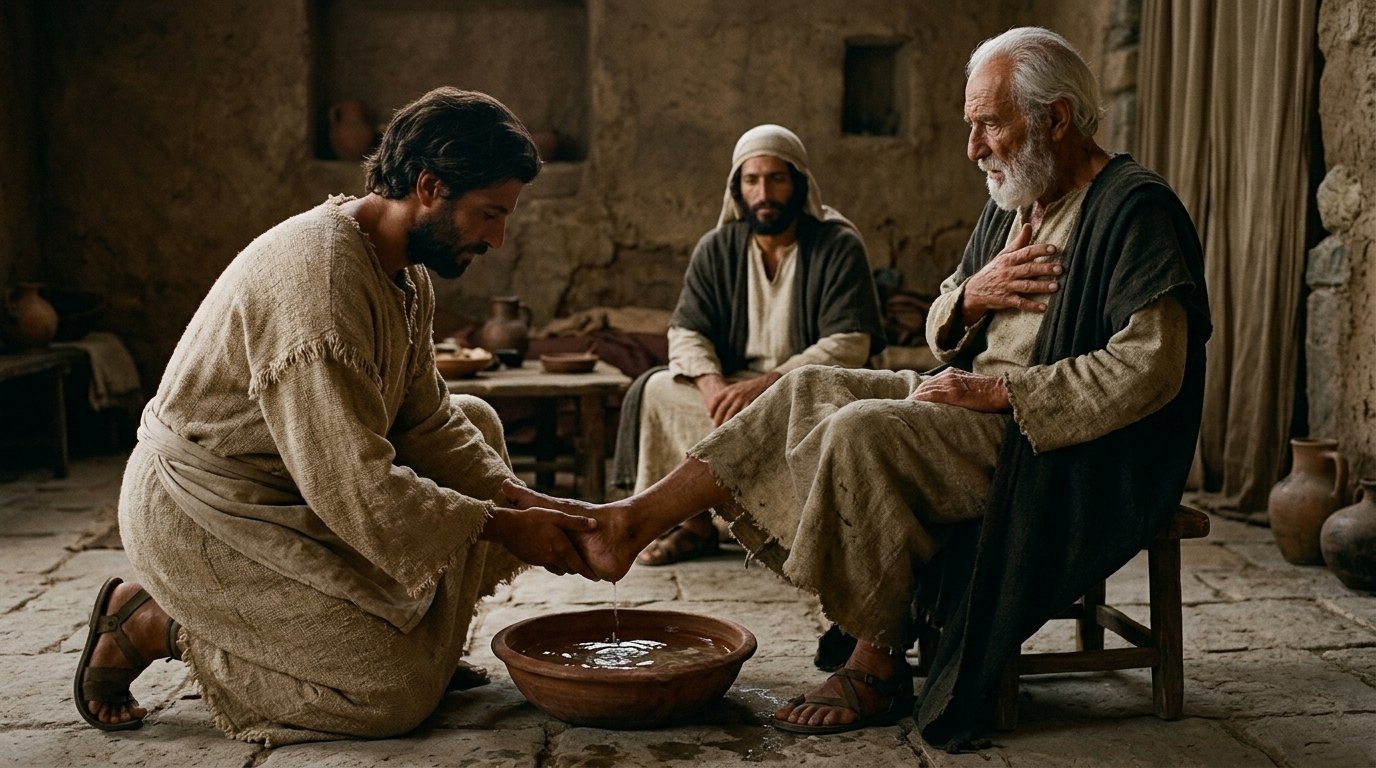
John 13:1-17
1 It was just before the Passover Festival. Jesus knew that the hour had come for him to leave this world and go to the Father. Having loved his own who were in the world, he loved them to the end.
2 The evening meal was in progress, and the devil had already prompted Judas, the son of Simon Iscariot, to betray Jesus.
3 Jesus knew that the Father had put all things under his power, and that he had come from God and was returning to God;
4 so he got up from the meal, took off his outer clothing, and wrapped a towel around his waist.
5 After that, he poured water into a basin and began to wash his disciples’ feet, drying them with the towel that was wrapped around him.
6 He came to Simon Peter, who said to him, “Lord, are you going to wash my feet?”
7 Jesus replied, “You do not realize now what I am doing, but later you will understand.”
8 “No,” said Peter, “you shall never wash my feet.” Jesus answered, “Unless I wash you, you have no part with me.”
9 “Then, Lord,” Simon Peter replied, “not just my feet but my hands and my head as well!”
10 Jesus answered, “Those who have had a bath need only to wash their feet; their whole body is clean. And you are clean, though not every one of you.”
11 For he knew who was going to betray him, and that was why he said not every one was clean.
12 When he had finished washing their feet, he put on his clothes and returned to his place. “Do you understand what I have done for you?” he asked them.
13 “You call me ‘Teacher’ and ‘Lord,’ and rightly so, for that is what I am.
14 Now that I, your Lord and Teacher, have washed your feet, you also should wash one another’s feet.
15 I have set you an example that you should do as I have done for you.
16 Very truly I tell you, no servant is greater than his master, nor is a messenger greater than the one who sent him.
17 Now that you know these things, you will be blessed if you do them.
New International Version (NIV)
The answer
Jesus washed the disciples’ feet to show love that carries the cross—and then commanded them to do the same for one another.
John 13:1 explains the heart of it: Jesus, knowing his time had come to leave the world, “having loved his own who were in the world, he loved them to the end.” His washing was therefore the visible expression of a love reaching its fullest extent in his death for his people.
The act also pictured the cleansing his disciples needed. When Peter resisted, Jesus said, “If I don’t wash you, you have no part with me” and explained that one who has bathed only needs his feet washed (John 13:8-10). Jesus then applied the picture to everyone at the table: “You are clean, but not all of you,” because he knew Judas would betray him (John 13:10-11).
After washing their feet, Jesus gave the command: “If I then, the Lord and the Teacher, have washed your feet, you also ought to wash one another’s feet” (John 13:14). This was humble, practical service—not an elaborate religious ceremony. “A new commandment I give unto you, That ye love one another; as I have loved you, that ye also love one another” (John 13:34).
For believers today, this means serving others in the spirit of Christ, especially those who need care, while looking to Christ for cleansing and renewal. The response is repentance, forgiveness, and new life in Him, not permission to continue in sin (Romans 6:1-2; 1 John 1:9).
Answered from Scripture · reviewed November 11, 2026
On the night before his crucifixion, Jesus rose from the supper table, wrapped a towel around his waist, and poured water to wash the feet of his disciples. In this single act of lowly service, the Lord of glory revealed the full extent of his self-giving love, pictured the spiritual cleansing wrought by his cross, and gave his followers an enduring pattern of humble sacrifice.
Love to the Uttermost
Jesus demonstrated a love reaching to the cross
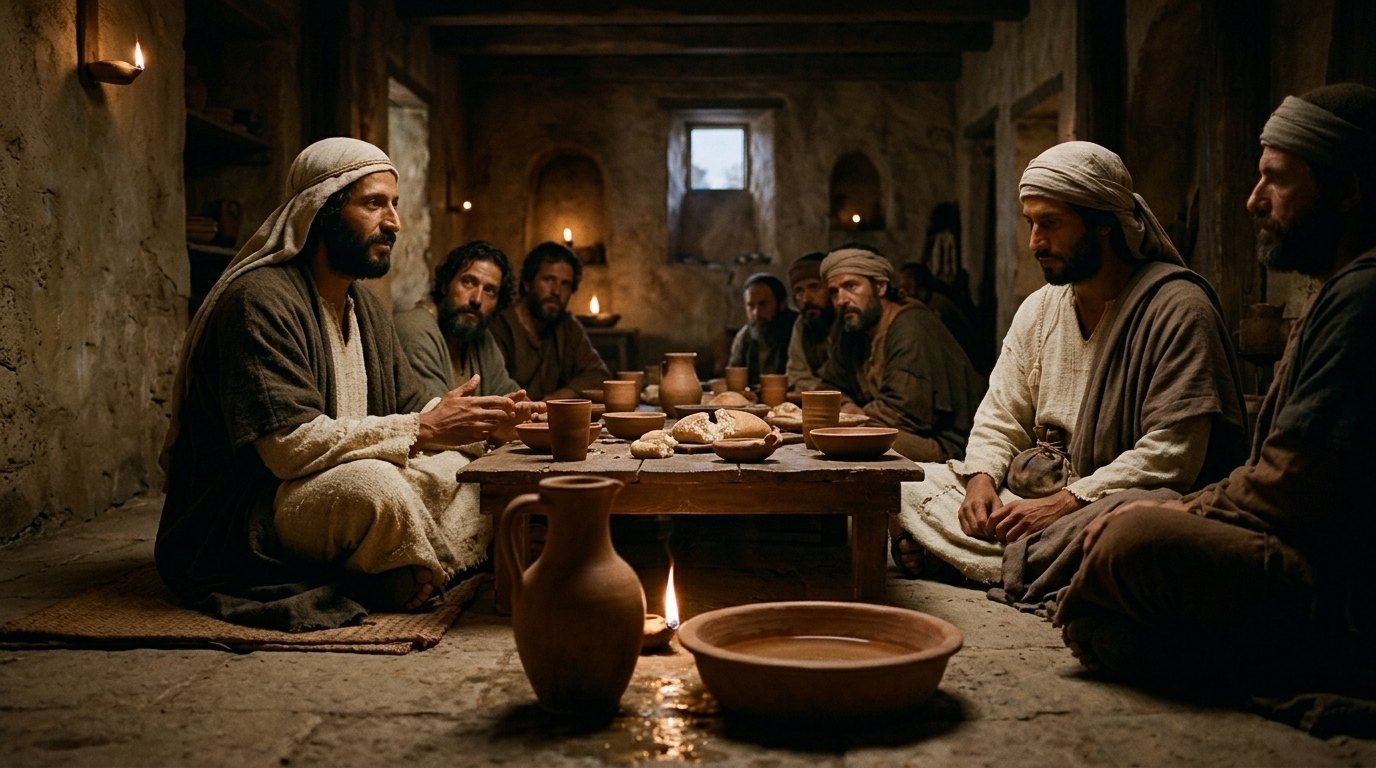
It was just before the Passover Festival. Jesus knew that the hour had come for him to leave this world and go to the Father. Having loved his own who were in the world, he loved them to the end.
John 13:1 (NIV)
This verse sets the theological foundation for the foot washing, showing that it expresses Christ loving his own to the uttermost.
The scene in the Upper Room unfolds under the shadow of the cross, anchored in John 13:1 where Jesus loved his own who were in the world to the end. The impending cross was not an unexpected tragedy but the deliberate culmination of his redemptive mission. Having repeatedly announced that his appointed hour was coming, as in John 12:23 when he declared the hour had arrived for the Son of Man to be glorified, Jesus knew with absolute clarity that the time had come to depart this world and return to the Father.
Even as Satan prompted Judas Iscariot toward treachery in John 13:2, Jesus stood entirely sovereign over the events about to unfold. His actions did not arise from weakness, confusion, or fatalism. As John 13:3 records, he moved with the conscious awareness that the Father had given all things into his hands, and that he had come from God and was returning to God. He had already testified of this divine trajectory in John 16:28, affirming that his entrance into the world and his departure to the Father formed a unified redemptive purpose.
Washing the disciples' feet was therefore an outward dramatization of his eternal love reaching its climax in his sacrificial death. The Greek phrase translated 'to the end' carries the double sense of enduring until the last breath and extending to the absolute uttermost. Because Christ first demonstrated this boundless, self-giving grace to his own, believers are empowered to mirror his character, fulfilling 1 John 4:19 by loving others because he first loved us.
| Passage | What it says |
|---|---|
| John 13:1 | Jesus, knowing his hour had arrived to depart to the Father, loved his own who were in the world to the very end. |
| John 13:2 | During supper, the devil had already put the betrayal of Christ into the heart of Judas Iscariot. |
| John 13:3 | Jesus acted knowing the Father had given all things into his hands and that he came from God and returned to God. |
| John 12:23 | Jesus declared that the hour had come for the Son of Man to be glorified through his impending death. |
| John 16:28 | Jesus affirmed that he came forth from the Father into the world and was leaving the world to return to him. |
| 1 John 4:19 | Believers love God and others because he first demonstrated his sacrificial love toward them. |
The Basin and Towel
The Sovereign Lord took the posture of a slave
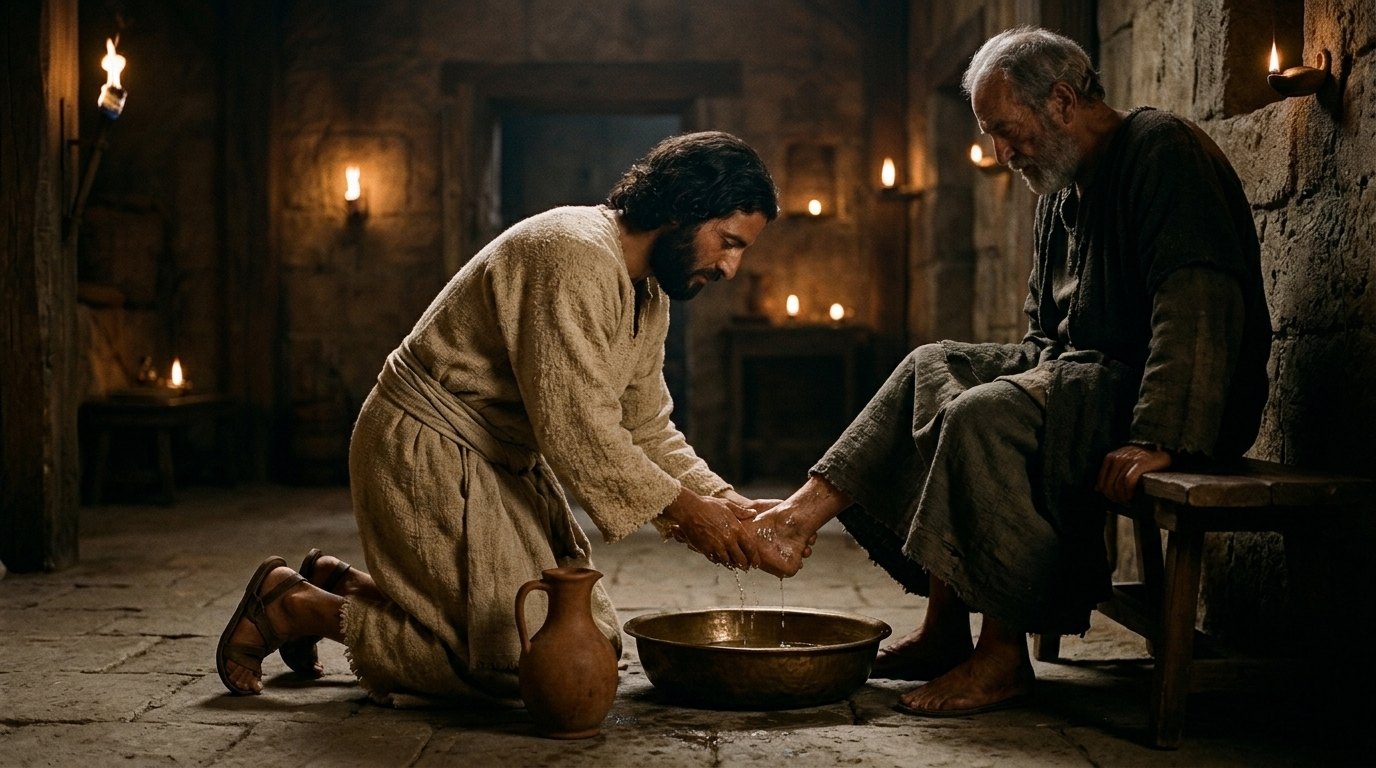
so he got up from the meal, took off his outer clothing, and wrapped a towel around his waist.
John 13:4 (NIV)
The Master laid aside his garments and girded himself with a towel to perform the task reserved for household slaves.
The creator of heaven and earth demonstrated supreme authority through astounding self-abasement, captured in John 13:4 when Jesus rose from supper and tied a towel around his waist. In ancient households, washing the dust and grime from guests' feet was a menial task relegated to the lowest non-Jewish slave. Yet here, the eternal Word stepped down from the place of honour, laid aside his outer garments, and willingly assumed the attire and posture of a menial bondservant.
According to John 13:5, he poured water into a basin and began to wash the disciples' feet, wiping them dry with the linen towel wrapped around him. This dramatic posture made tangible what he had taught throughout his earthly ministry. In Luke 22:27, when the disciples squabbled over greatness, Jesus countered that he walked among them as the one who serves. He embodied the truth of Matthew 20:28, having come not to be served, but to serve and to give his life as a ransom for many.
By divesting himself of his outer robe and kneeling in the dust, Christ visually dramatized the humiliation described in Philippians 2:7, where he emptied himself by taking the form of a servant and being made in human likeness. This voluntary condescension also anticipates the eschatological banquet promised in Luke 12:37, where the returning Master will gird himself, have his watchful servants recline, and come to wait on them.
| Passage | What it says |
|---|---|
| John 13:4 | Jesus rose from the table, laid aside his outer garments, and tied a linen towel around his waist. |
| John 13:5 | Jesus poured water into a basin and began washing the disciples' feet, drying them with the wrapped towel. |
| Luke 22:27 | Jesus identified himself among his disciples not as one reclining at table, but as the one who serves. |
| Philippians 2:7 | Christ emptied himself by taking the form of a bondservant and coming in the likeness of men. |
| Luke 12:37 | Jesus promises that the master will gird himself and serve his watchful servants at his coming table. |
| Matthew 20:28 | The Son of Man came not to be served but to serve and give his life as a ransom. |
Cleansing and Communion
The washing signified vital union and spiritual purity
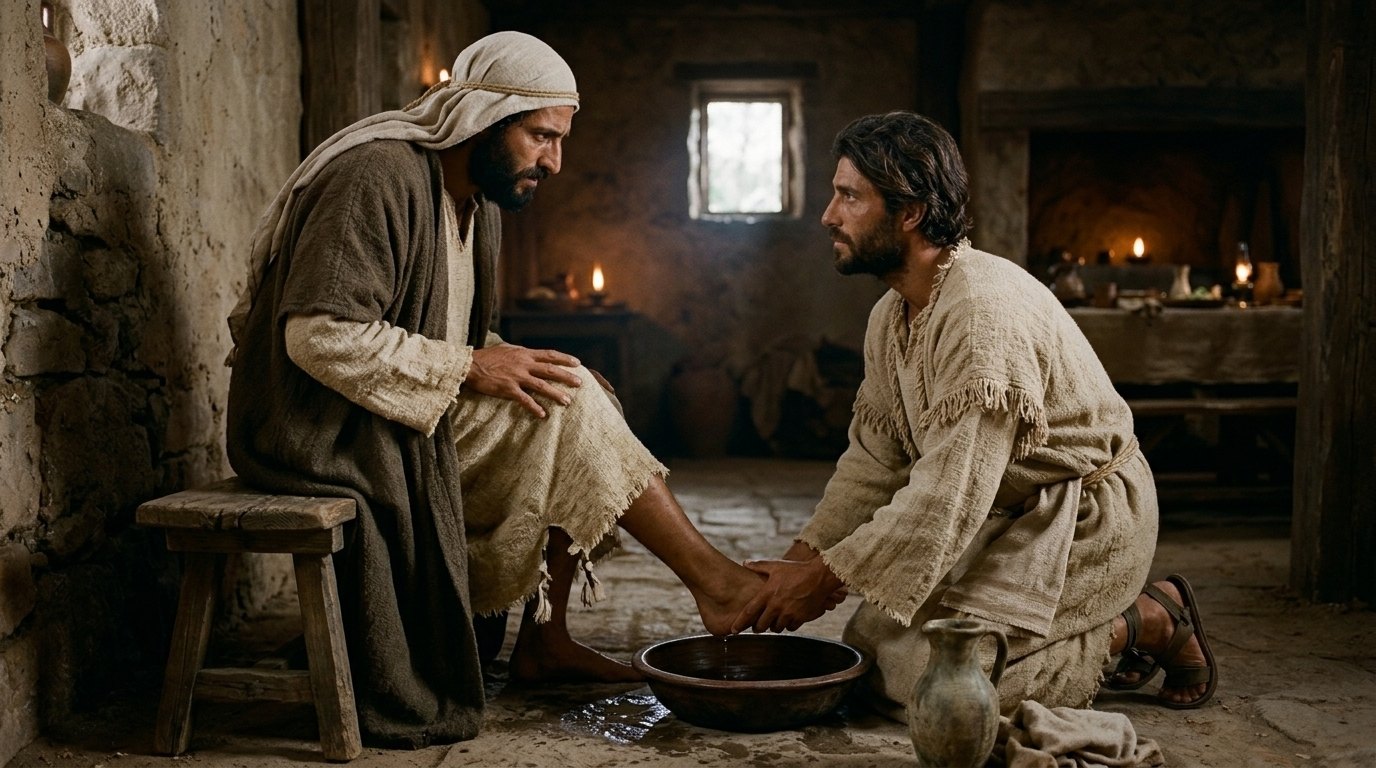
“No,” said Peter, “you shall never wash my feet.” Jesus answered, “Unless I wash you, you have no part with me.”
John 13:8 (NIV)
Jesus warned Peter that without his spiritual cleansing, one can have no share or fellowship with him.
When Jesus reached Simon Peter, the physical washing opened directly into a vital spiritual reality, punctuated in John 13:8 by the solemn warning that unless Christ washes you, you have no share with him. Peter had recoiled in John 13:6, unable to bear the sight of his Master stooping to wash his feet. Jesus replied in John 13:7 that Peter could not fathom the deeper meaning in that moment, but would understand afterward—an explicit reference to the illumination that would follow his crucifixion, resurrection, and the outpouring of the Spirit.
Fearing separation from Christ, Peter swung to the opposite extreme in John 13:9, demanding his hands and head be washed as well. In John 13:10–11, Jesus drew an indispensable theological distinction: the person who has bathed is entirely clean and needs only to wash soiled feet. Jesus pronounced them clean, though noting that not all were pure, because he knew Judas would betray him. The initial bath represents once-for-all regeneration and justification, described in Titus 3:5 as the washing of regeneration and in 1 Corinthians 6:11 as being washed, sanctified, and justified in the name of the Lord Jesus.
The ongoing foot washing symbolizes the daily cleansing of defilement picked up while walking through a fallen world. As Ephesians 5:26 and Hebrews 10:22 teach, believers are cleansed by Christ's word and sprinkled clean from an evil conscience. When Christians stumble, 1 John 1:9 promises that God is faithful and just to forgive our sins and cleanse us from all unrighteousness.
| Passage | What it says |
|---|---|
| John 13:6 | Simon Peter questioned the Lord, expressing astonished reluctance at the thought of Jesus washing his feet. |
| John 13:7 | Jesus told Peter that he did not grasp what was occurring then, but would understand afterward. |
| John 13:8 | When Peter refused, Jesus stated that without being washed by him, Peter would have no part with him. |
| John 13:9 | Peter immediately asked Jesus to wash not only his feet, but his hands and his head as well. |
| John 13:10 | Jesus explained that one who has bathed needs only foot washing, pronouncing them clean, though not all. |
| John 13:11 | Jesus noted they were not all clean because he already knew the identity of his betrayer. |
| 1 Corinthians 6:11 | Believers who once lived in unrighteousness were washed, sanctified, and justified in the name of the Lord Jesus Christ. |
| 1 John 1:9 | God is faithful and just to forgive confessed sins and continually cleanse believers from all unrighteousness. |
| Titus 3:5 | God saves believers through the washing of regeneration and renewal of the Holy Spirit. |
| Ephesians 5:26 | Christ cleanses his church by the washing of water with the word. |
| Hebrews 10:22 | Believers draw near with hearts sprinkled clean and bodies washed with pure water. |
The Master's Example
Christians are commanded to serve one another humbly
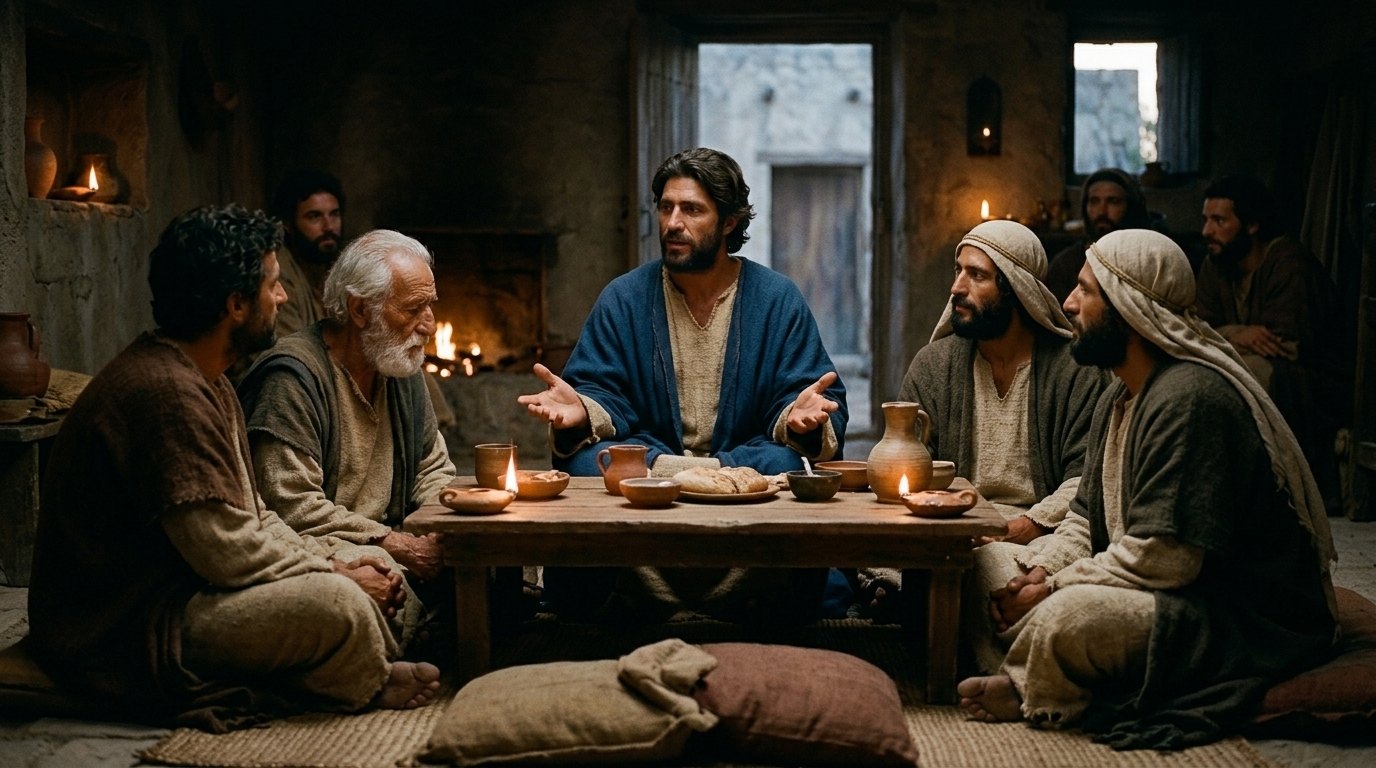
Now that I, your Lord and Teacher, have washed your feet, you also should wash one another’s feet.
John 13:14 (NIV)
The Lord and Teacher establishes his own lowly action as an unavoidable moral obligation for every disciple.
Having completed the task, resumed his garments, and taken his place at the table, Jesus issued an inescapable moral mandate in John 13:14: if your Lord and Teacher washed your feet, you ought to wash one another's feet. He asked the disciples in John 13:12 if they comprehended what had just occurred, affirming in John 13:13 that their recognition of his authority as Teacher and Lord was right. By establishing that the supreme Master had embraced the lowest service, Jesus dismantled every pretext for worldly hierarchy among his followers.
In John 13:15–16, he stated explicitly that he had provided an example for them to imitate, reminding them that no servant is greater than his master, nor is an emissary superior to the one who sent him. Knowing the doctrine of servant leadership is useless without concrete practice, Jesus added in John 13:17 that blessedness belongs only to those who do these things. Moments later, in John 13:34, he codified this ethic as a new commandment: to love one another just as he loved them.
The apostles carried this standard directly into the life of the early church. Paul urged believers in Philippians 2:3 to count others as more significant than themselves in lowliness of mind, and in Galatians 6:2 to bear one another's burdens and so fulfill the law of Christ. Peter similarly commanded in 1 Peter 5:5 that all believers clothe themselves with humility toward one another. In 1 Timothy 5:10, washing the feet of the saints was remembered not merely as a historic memory, but as a living pattern of sacrificial Christian hospitality.
| Passage | What it says |
|---|---|
| John 13:12 | After putting his garments back on and reclining again, Jesus asked if they understood what he had done. |
| John 13:13 | Jesus affirmed that their titles for him as Teacher and Lord were accurate, for that is who he is. |
| John 13:14 | Jesus commanded that if he, their Lord and Teacher, washed their feet, they ought to wash one another's feet. |
| John 13:15 | Jesus stated that he gave them an example so that they should do precisely as he had done. |
| John 13:16 | Jesus emphasized that a servant is not greater than his master, nor is an emissary greater than the sender. |
| John 13:17 | Jesus pronounced a blessing upon those who not only know these truths, but actively practice them. |
| John 13:34 | Jesus gave a new commandment that disciples must love one another just as he has loved them. |
| Galatians 6:2 | Believers fulfill the law of Christ by bearing one another's burdens in gentleness and mutual care. |
| Philippians 2:3 | Paul exhorts believers in lowliness of mind to count others more significant than themselves. |
| 1 Peter 5:5 | Believers are commanded to clothe themselves with humility toward one another. |
| 1 Timothy 5:10 | Washing the feet of the saints is recognized as a mark of humble Christian service. |
Where in the Bible
| Book | Passages |
|---|---|
| Matthew | 1 · Matthew 20:28 |
| Luke | 2 · Luke 22:27, Luke 12:37 |
| John | 20 · John 13:1, John 13:2, John 13:3, John 12:23, John 16:28, John 13:4, John 13:5, John 13:6, John 13:7, John 13:8, John 13:9, John 13:10, John 13:11, John 13:12, John 13:13, John 13:14, John 13:15, John 13:16, John 13:17, John 13:34 |
| 1 Corinthians | 1 · 1 Corinthians 6:11 |
| Galatians | 1 · Galatians 6:2 |
| Ephesians | 1 · Ephesians 5:26 |
| Philippians | 2 · Philippians 2:7, Philippians 2:3 |
| 1 Timothy | 1 · 1 Timothy 5:10 |
| Titus | 1 · Titus 3:5 |
| Hebrews | 1 · Hebrews 10:22 |
| 1 Peter | 1 · 1 Peter 5:5 |
| 1 John | 2 · 1 John 4:19, 1 John 1:9 |
The story in order
- Jesus' ministry and impending death (c. AD 30) · John 12:23 · Jesus knew his hour had come to be glorified.
- The Last Supper begins (c. AD 30) · John 13:2 · Judas' betrayal was being set in motion.
- Jesus washes disciples' feet (c. AD 30) · John 13:4-5 · Jesus demonstrated humble service.
- Jesus explains the act (c. AD 30) · John 13:6-11 · The washing signified cleansing and union.
- Jesus gives the command to serve (c. AD 30) · John 13:14-15 · Disciples are to serve one another.
- Jesus gives a new commandment (c. AD 30) · John 13:34 · Love one another as Christ loved.
- The church is cleansed (c. AD 60-62) · Ephesians 5:26 · Christ cleanses the church by the word.
- Believers are washed and justified (c. AD 55) · 1 Corinthians 6:11 · Past cleansing from sin through Christ.
- Humility and mutual service (c. AD 60-64) · 1 Peter 5:5 · Clothe yourselves with humility.
- Bearing one another's burdens (c. AD 49-51) · Galatians 6:2 · Fulfilling the law of Christ through service.
Jesus' Service and His Followers' Service
| Jesus' Action | His Disciples' Response | Passage |
|---|---|---|
| Washed disciples' feet | Ought to wash one another's feet | |
| Gave his life as a ransom | Give life as a ransom | Matthew 20:28 |
| Came to serve | Serve one another | |
| Loved to the very end | Love one another as I have loved you |
Cleansing in Scripture
| Type/Symbol | Spiritual Reality | Result | Passage |
|---|---|---|---|
| Washing of feet | Cleansing from sin | Part with Christ | |
| Washed, sanctified, justified | Cleansing by the Spirit | New life in Christ | 1 Corinthians 6:11 |
| Washing of regeneration | Renewal by the Holy Spirit | Salvation | Titus 3:5 |
| Washing of water with the word | Christ's cleansing of the church | Holiness | Ephesians 5:26 |
| Hearts sprinkled clean | Purity through Christ's blood | Draw near to God | Hebrews 10:22 |
Key words
- Love (agape, ἀγάπη)
- Self-giving devotion demonstrated to the uttermost. · John 13:1
- Serve (diakoneō, διακονέω)
- To act as a servant, to minister. · Luke 22:27
- Wash (niptō, νίπτω)
- To cleanse by water, signifying spiritual purification. · John 13:5
- Clean (katharos, καθαρός)
- To be purified, especially from sin. · John 13:10
- Example (hypogrammos, ὑπόδειγμα)
- A pattern or model to be followed. · John 13:15
- Humble (tapeinos, ταπεινός)
- Having a modest view of one's own importance; lowly. · Philippians 2:3
Jesus washed the feet of his disciples not as an empty ceremonial gesture, but as an urgent summons to follow him into lowly, cruciform love. Having been cleansed once for all by his blood, believers are called to daily confession, mutual forgiveness, and active service toward one another in his name.
34 passages, each cited once.
Scripture cited
- John 13:1-17
- John 13:34