Why does God seem silent?

Psalms 13:1-6
1 How long, LORD? Will you forget me forever? How long will you hide your face from me?
2 How long must I wrestle with my thoughts and day after day have sorrow in my heart? How long will my enemy triumph over me?
3 Look on me and answer, LORD my God. Give light to my eyes, or I will sleep in death,
4 and my enemy will say, “I have overcome him,” and my foes will rejoice when I fall.
5 But I trust in your unfailing love; my heart rejoices in your salvation.
6 I will sing the LORD’s praise, for he has been good to me.
New International Version (NIV)
The answer
God can seem silent when His answer or help has not yet come in the way or time longed for. That painful delay is not proof that He is absent, forgetful, or unwilling to hear. Psalm 13 does not explain every reason for God's timing; instead, it shows how to speak honestly to Him while waiting.
David begins with the cry, “How long, Yahweh? Will you forget me forever?” and asks why God seems to hide His face (Psalm 13:1). His sorrow, confusion, and fear are brought directly into prayer rather than concealed. Yet the same psalm ends, “But I trust in your loving kindness. My heart rejoices in your salvation” (Psalm 13:5). Faith does not deny the silence; it refuses to let the silence have the final word about God's character.
What remains true when God seems silent
- God hears the afflicted. Psalm 22 moves from desperate pleading to the assurance that God has not despised the sufferer's affliction: “when he cried to him, he heard” (Psalm 22:19-24). Feeling unheard is therefore not the same as being unheard.
- God does not forget His people. When Zion says that the Lord has forgotten her, God answers with the tenderness of a mother toward her nursing child: “Yes, these may forget, yet I will not forget you!” He adds that His people are engraved on His palms (Isaiah 49:14-16). His commitment is more constant than the strongest human attachment.
- God has not left the world without His word. He spoke through the prophets and “has at the end of these days spoken to us by his Son” (Hebrews 1:1-2). However quiet a particular season feels, God's decisive self-revelation and saving answer stand in Jesus Christ.
What to do in the silence
David prays for an answer and for light, entrusts himself to God's steadfast love, remembers His salvation, and chooses to sing because God has been good to him (Psalm 13:3-6). Waiting is therefore not passive resignation or pretending that everything is fine. It is continuing to pray, remember, trust, and obey while the answer is still unseen. “Wait for Yahweh. Be strong, and let your heart take courage. Yes, wait for Yahweh” (Psalm 27:14).
Answered from Scripture · reviewed November 11, 2026
When heaven feels like brass and prayers seem to echo back unheard, Scripture does not scold our ache; it gives us words to utter it. God is never truly absent or asleep, yet He frequently allows His people to experience the heavy sense of His hidden face. Tracing this raw cry through the Psalms and the prophets reveals not a God who has abandoned His covenant, but a Father who draws faith deeper than felt comfort.
The Honest Cry
Scripture gives voice to the ache of perceived abandonment.

How long, LORD? Will you forget me forever? How long will you hide your face from me?
Psalms 13:1 (NIV)
David boldly brings his bewilderment straight to God, asking four times how long the Lord will hide His face.
In Psalm 13:1, David gives voice to the rawest human ache: “How long, O Lord? Will you forget me forever? How long will you hide your face from me?” He does not begin with polite theological formulas; he brings his bewilderment straight to the throne of grace. Far from rebuking this anguish, the Holy Spirit inspired these words so believers would know that feeling unheeded is not foreign to true faith. In Psalm 13:2, David laments having to take counsel in his soul day after day with sorrow in his heart, wondering how long his enemies will be exalted over him.
This same piercing lament reverberates across the canon. Psalm 22:1 captures the ultimate cry of the forsaken sufferer: “My God, my God, why have you forsaken me? Why are you so far from saving me, from the words of my groaning?” Even when crying by day and by night without finding rest (Psalm 22:2), the faithful persist in addressing God directly. Job likewise challenges the divine stillness, asking in Job 13:24 why God conceals His face and treats His servant as an adversary. Jeremiah echoes the grief of a shattered nation in Lamentations 5:20, asking why the Lord seems to forget His people forever.
Yet the most agonizing part of divine silence is the inability to find Him through our senses. Job describes this disorientation in Job 23:8-9, searching forward and backward, looking to the left and the right where God is working, yet failing to behold Him. In Job 30:20, he groans, “I cry to you for help and you do not answer me.” Heman the Ezrahite leaves his grief completely unresolved in Psalm 88:14, crying, “O Lord, why do you cast my soul away? Why do you hide your face from me?” Scripture records these cries to assure us that God's perceived silence is an ordinary milestone in the pilgrimage of faith.
| Passage | What it says |
|---|---|
| Psalms 13:1 | David cries out asking how long Yahweh will forget him and hide His face from view. |
| Psalms 13:2 | David expresses the daily sorrow of wrestling with his own inner thoughts while enemies triumph over him. |
| Psalms 22:1 | The psalmist laments being forsaken and questions why God remains far from helping and hearing. |
| Psalms 22:2 | The sufferer cries out continually day and night without receiving an immediate answer or rest. |
| Job 13:24 | Job asks why God conceals His face and treats him like an active enemy. |
| Lamentations 5:20 | Jeremiah questions why the Lord seems to forget and forsake His afflicted people for so long. |
| Job 23:8 | Job searches forward and backward for God but cannot perceive His presence. |
| Job 23:9 | Job looks to the left and right where God works, yet cannot behold Him. |
| Job 30:20 | Job cries out directly to God for help, yet receives no answering voice. |
| Psalms 88:14 | Heman asks why the Lord casts off his soul and hides His face. |
The Hidden Face
God conceals His presence to test endurance and awaken longing.

Truly you are a God who has been hiding himself, the God and Savior of Israel.
Isaiah 45:15 (NIV)
The prophet acknowledges that the God of Israel and Savior is truly a God who hides Himself.
In Isaiah 45:15, the prophet delivers an astonishing declaration: “Truly, you are a God who hides himself, O God of Israel, the Savior.” The mystery of divine silence is not that God has abandoned His creation, but that the very God who saves often chooses to operate beyond mortal sight. Ethan the Ezrahite cries out in Psalm 89:46, asking how long the Lord will hide Himself as if forever, while the congregation in Psalm 80:4 wonders how long the Lord God of hosts will seem angry against their prayers. In Psalm 94:3, the worshiper grapples with the silence that permits the wicked to exult.
Scripture reveals distinct biblical reasons why the Lord hides His presence. In Deuteronomy 31:17 and Isaiah 59:2, God warns that covenant unfaithfulness and cherished iniquities separate His people from His communion: our sins hide His face so that He will not hear. In Proverbs 1:28 and Micah 3:4, deliberate rebellion and oppression lead God to turn away His ear when distress finally strikes. When people persistently reject His wisdom, silence becomes the solemn harvest of their own hard hearts.
Yet sin is not the only reason heaven falls quiet. Sometimes God withdraws felt consolations to test and strengthen His servants. In 2 Chronicles 32:31, Scripture notes that God left King Hezekiah alone “to test him and to know all that was in his heart.” Divine silence strips away our reliance on emotional spiritual highs, exposing whether we love God for His gifts or for Himself alone. As David asks in Psalm 10:1, “Why, O Lord, do you stand far away? Why do you hide yourself in times of trouble?” The answer is often that the Father is purifying our trust into genuine endurance.
| Passage | What it says |
|---|---|
| Isaiah 45:15 | Isaiah declares that God truly hides Himself even while remaining the God of Israel and Savior. |
| Psalms 89:46 | Ethan the Ezrahite asks how long the Lord will hide Himself as if forever. |
| Psalms 80:4 | The community asks how long the Lord God of hosts will seem angry against their prayers. |
| Psalms 94:3 | The psalmist asks how long the wicked will be permitted to exult and triumph unchallenged. |
| Deuteronomy 31:17 | The Lord warns that His anger will hide His face when His people turn away to idols. |
| Isaiah 59:2 | Iniquities separate people from God, and sins hide His face so that He will not hear. |
| 2 Chronicles 32:31 | God leaves Hezekiah to test him and reveal everything in his heart. |
| Psalms 10:1 | David asks why the Lord stands far off and hides in times of trouble. |
| Proverbs 1:28 | The Lord declares those who despise wisdom will seek Him diligently but not find Him. |
| Micah 3:4 | The Lord hides His face from corrupt leaders because of their evil deeds. |
The Dark Night
Inner turmoil and adversarial doubts rush into the vacuum.

and my enemy will say, “I have overcome him,” and my foes will rejoice when I fall.
Psalms 13:4 (NIV)
David identifies the grave spiritual hazard that silence invites enemies to boast over a saint's fall.
David knew that divine stillness leaves the soul vulnerable to internal decay and external assault, warning in Psalm 13:4: “Lest my enemy say, ‘I have prevailed over him,’ lest my foes rejoice because I am shaken.” When God does not answer on our timetable, the vacuum is quickly filled by mocking voices. In Psalm 42:3, the sons of Korah weep until tears become food day and night, precisely because taunting adversaries ask continually, “Where is your God?” The silence of heaven invites the mockery of the world, testing the saint's allegiance down to the marrow.
In that silence, the believer's own thoughts often turn inward to torment the soul. Psalm 77 presents a masterclass in the psychological distress that accompanies perceived absence. Asaph begins in Psalm 77:1-2 by crying aloud with his voice, yet in the night of his distress his soul flatly refuses to be comforted. The agonizing unanswered questions multiply: “Will the Lord spurn forever, and never again be favorable?” (Psalm 77:7). “Has his steadfast love forever ceased? Are his promises at an end for all time?” (Psalm 77:8). “Has God forgotten to be gracious? Has he in anger shut up his compassion?” (Psalm 77:9).
The oppressive silence feels like an assault on God's foundational promises. The psalmist asks his rock why He has forgotten him while the adversary oppresses him (Psalm 42:9), feeling the enemy’s jeers like a fatal shatter in his bones (Psalm 42:10). The dark night of the soul forces faith to confront its deepest fears: not merely that relief is delayed, but that God's character has changed. It is precisely in this crucible that faith learns to look away from feelings and fasten itself solely to the eternal covenant.
| Passage | What it says |
|---|---|
| Psalms 13:4 | David fears his adversary will boast of prevailing and rejoice over his ultimate downfall. |
| Psalms 42:3 | Tears become food day and night while taunting opponents ask continually where God is. |
| Psalms 77:7 | Asaph questions whether the Lord will cast off forever and never show favor again. |
| Psalms 77:8 | The psalmist wonders if God's steadfast love has ceased and His promise failed for all time. |
| Psalms 77:9 | Asaph asks whether God has forgotten to be gracious and shut up His compassion in anger. |
| Psalms 42:9 | The psalmist asks God his rock why He has forgotten him amid oppression. |
| Psalms 42:10 | Enemies taunt the suffering believer daily with the agonizing question of where his God is. |
| Psalms 77:1 | Asaph cries aloud to God with his voice, seeking an ear in distress. |
| Psalms 77:2 | The soul refuses comfort in the night of distress while searching for the Lord. |
The Bold Petition
Faith continues calling on God even in felt darkness.

Look on me and answer, LORD my God. Give light to my eyes, or I will sleep in death,
Psalms 13:3 (NIV)
David insists that Yahweh is still his God and pleads for light before death overtakes him.
Instead of turning away in cold despair, biblical faith responds to silence by praying with renewed urgency. David pleads in Psalm 13:3: “Consider and answer me, O Lord my God; light up my eyes, lest I sleep the sleep of death.” Notice that even while experiencing abandonment, he still calls Yahweh “my God.” Faith does not walk away when heaven is quiet; it presses into the silence, demanding that God act in accordance with His covenant name. In Psalm 27:9, David begs, “Hide not your face from me. Turn not your servant away in anger, O you who have been my help.”
This bold insistence marks every faithful petitioner in Scripture. In Psalm 28:1, David calls out to his rock, pleading, “Be not deaf to me, lest, if you be silent to me, I become like those who go down to the pit.” In Psalm 143:7, he pleads for a swift answer because his spirit fails and he cannot endure the hidden face of God any longer. Habakkuk opens his prophecy in Habakkuk 1:2 with the identical cry: “O Lord, how long shall I cry for help, and you will not hear?”
Scripture repeatedly urges believers never to resign themselves to passive quietism. The psalmist calls out, “You have seen, O Lord; be not silent! O Lord, be not far from me!” (Psalm 35:22). Asaph implores in Psalm 83:1, “O God, do not keep silence; do not hold your peace or be still, O God!” And David reiterates in Psalm 109:1, “Be not silent, O God of my praise!” Our Lord Jesus Christ confirmed this pattern in Luke 18:7, assuring us that God will certainly bring justice for His elect who cry to Him day and night, even if He delays long over them. Divine silence is not an eviction from God's presence, but an invitation to holy, persistent importunity.
| Passage | What it says |
|---|---|
| Psalms 13:3 | David pleads for Yahweh his God to consider, answer, and enlighten his eyes against death. |
| Psalms 27:9 | David begs God not to hide His face, turn away in anger, or abandon him. |
| Psalms 28:1 | The psalmist calls to his rock not to be silent, lest he become like the dead. |
| Psalms 143:7 | David asks for a swift answer as his spirit fails, begging God not to hide. |
| Habakkuk 1:2 | Habakkuk cries out asking how long he must call for help before the Lord listens. |
| Psalms 35:22 | The psalmist urges the Lord not to remain silent or far off. |
| Psalms 83:1 | Asaph implores God not to keep silence, hold His peace, or be still. |
| Psalms 109:1 | David prays that the God of his praise will not remain silent. |
| Luke 18:7 | Jesus affirms God will bring justice for His elect who cry day and night. |
The Resolution
Steadfast love anchors the heart before circumstances change.
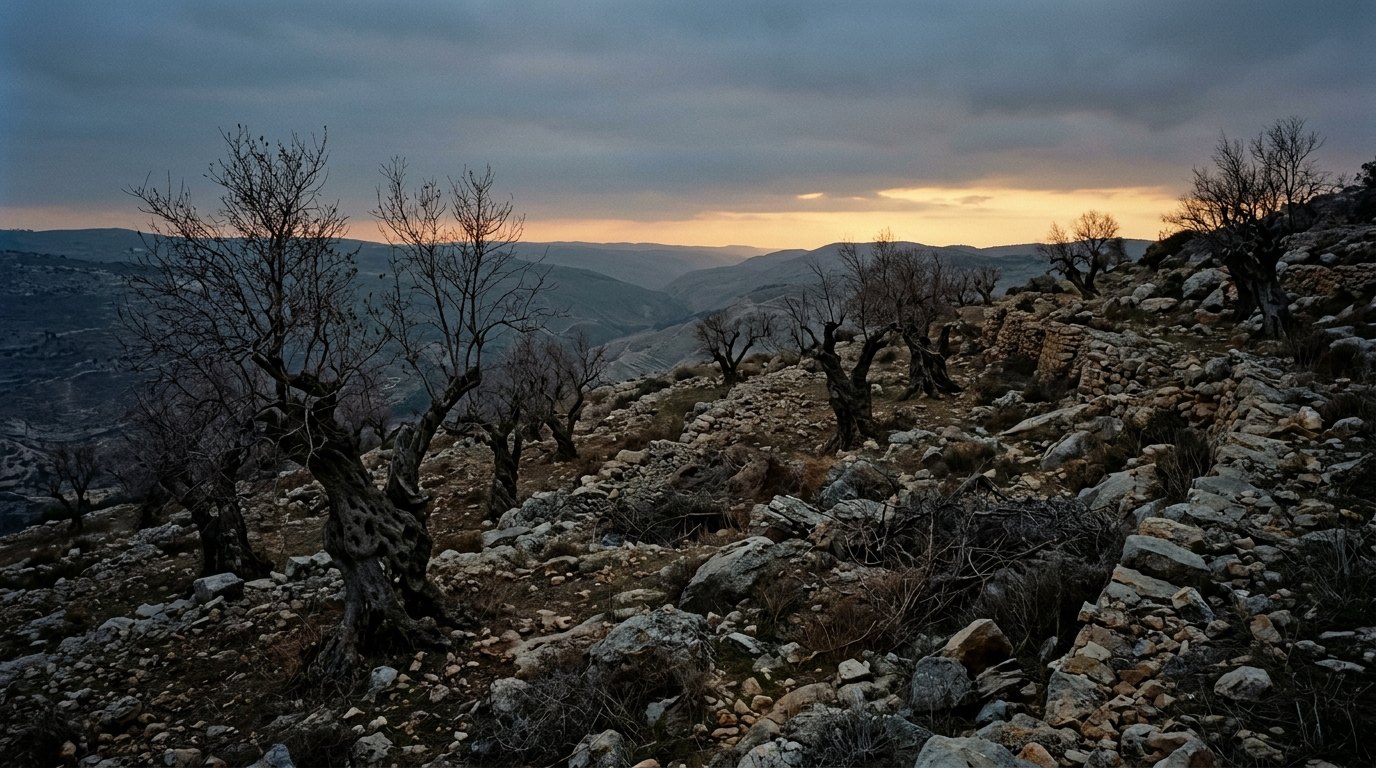
But I trust in your unfailing love; my heart rejoices in your salvation.
Psalms 13:5 (NIV)
David pivots from lament to unwavering trust in God's covenant loyalty and salvation.
In Psalm 13:5, David turns abruptly on a single conjunction: "But I have trusted in your steadfast love; my heart shall rejoice in your salvation." Nothing in his immediate circumstance has altered, yet faith rests on God's covenant character rather than visible relief. That steadfast love compels his vow in Psalm 13:6 to sing to the Lord, recognizing that God has dealt bountifully with him even before the trial lifts.
This same resolute hope steadies the prophet Habakkuk. In Habakkuk 3:17, he faces total agricultural catastrophe—the fig tree failing, the vine barren, and the stalls empty of cattle. Yet Habakkuk 3:18 declares, "Yet I will rejoice in the Lord; I will take joy in the God of my salvation." Faith chooses to praise God for who He is when every earthly sign of His favour vanishes. In Lamentations 3:25–26, amid the smouldering ruins of Jerusalem, Jeremiah affirms that Yahweh remains good to those who wait for Him, insisting that waiting quietly for divine deliverance is not wasted time but holy wisdom.
Scripture repeatedly reminds believers that silence does not equal absence. Psalm 22:24 testifies that God has not hidden His face forever from the afflicted, but has listened to his cry. Therefore, David commands his inner being in Psalm 62:5 to wait in silence for God alone, anchoring all expectation in Him. In Isaiah 30:18, the prophet reveals an astonishing mystery: the Lord Himself is waiting to be gracious, longing to show mercy to all who wait for Him. When God's people imagine their plight is overlooked, Isaiah 40:27 exposes their unbelief, while Isaiah 40:31 promises that those who wait on the Lord will renew their strength and mount up on wings like eagles. James 5:11 points to the endurance of Job as final proof that the Lord's hidden purposes are always full of compassion and mercy.
| Passage | What it says |
|---|---|
| Psalms 13:5 | David asserts his trust in God's steadfast lovingkindness and rejoices in His salvation. |
| Psalms 13:6 | David vows to sing to Yahweh because the Lord has dealt bountifully with him. |
| Habakkuk 3:17 | The prophet envisions total agricultural collapse and the absence of all visible provision. |
| Habakkuk 3:18 | Despite total barrenness, the prophet chooses to rejoice in Yahweh and joy in his salvation. |
| Lamentations 3:25 | Jeremiah declares that the Lord is good to those who wait for Him and seek Him. |
| Lamentations 3:26 | It is good that a person should quietly hope and wait for the Lord's salvation. |
| Psalms 22:24 | The afflicted praise God because He did not hide His face forever but heard. |
| Psalms 62:5 | The soul is commanded to wait silently for God alone, its source of hope. |
| Isaiah 30:18 | The Lord waits to be gracious, blessing all those who wait for Him. |
| Isaiah 40:27 | Jacob is corrected for thinking his way is hidden from the Lord. |
| Isaiah 40:31 | Those who wait upon the Lord shall renew their strength and mount up. |
| James 5:11 | Believers remember Job's steadfast endurance and the Lord's ultimate purpose of compassion and mercy. |
The Silent Cross
Christ bears divine silence on the cross for sinners.
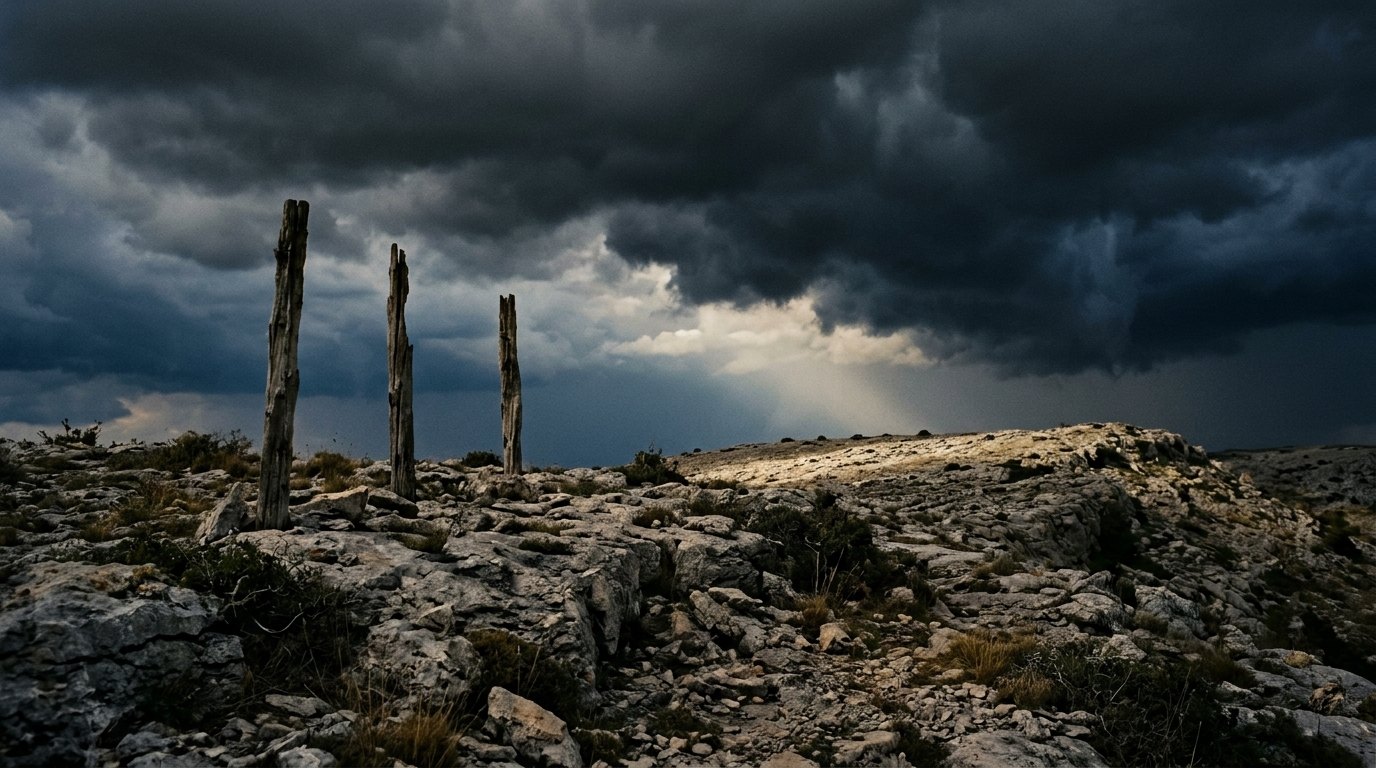
About three in the afternoon Jesus cried out in a loud voice, “Eli, Eli, lema sabachthani?” (which means “My God, my God, why have you forsaken me?”).
Matthew 27:46 (NIV)
Jesus takes the ultimate silence and judgment of God so His people never will.
At the summit of Golgotha, Matthew 27:46 records the darkest cry in human history: "My God, my God, why have you forsaken me?" In this supreme hour, Jesus Christ bore the real, crushing weight of divine abandonment so that His people would never face it. Mark 15:34 echoes this exact cry in the Aramaic tongue, underscoring that Jesus did not merely feel forsaken; He truly took the curse of sin, standing in the sinner's place beneath the unmitigated wrath and terrifying silence of God.
Yet this silence was neither a failure of faith nor a rejection of His person. Hebrews 5:7 explains that during His earthly days, Jesus offered up prayers and petitions with loud cries and tears to the Father who could save Him from death, "and he was heard because of his reverence." The silence of the cross was the necessary path to the resurrection, the divine design through which redemption was accomplished. In the midst of mockery and horrific abuse, 1 Peter 2:23 notes that Christ did not retaliate or threaten, but continually "entrusted himself to him who judges righteously." When heaven seemed entirely closed, Christ walked into the silence with unwavering obedience, purchasing for us an eternal access wherein God will never leave us nor forsake us.
| Passage | What it says |
|---|---|
| Matthew 27:46 | Jesus cries out David's lament from the cross, bearing forsakenness for sinners. |
| Mark 15:34 | Christ articulates the felt abandonment of the cross in His final hours. |
| Hebrews 5:7 | In His earthly life, Jesus offered prayers with tears and was heard for His reverence. |
| 1 Peter 2:23 | When suffering without an immediate answer, Christ entrusted Himself to Him who judges righteously. |
The Sure Word
God has already spoken decisively in His Son.

but in these last days he has spoken to us by his Son, whom he appointed heir of all things, and through whom also he made the universe.
Hebrews 1:2 (NIV)
Apparent silence is reframed by the final, comprehensive speech of God in Jesus Christ.
When Elijah fled into the wilderness, exhausted and despairing, God instructed him to stand on the mountain. As 1 Kings 19:11 recounts, a catastrophic wind shattered the rocks, followed by an earthquake and a consuming fire, but the Lord was not in the storm. Instead, 1 Kings 19:12 reveals that God met His prophet in a "low whisper"—a sound of sheer silence that drew Elijah out to listen. God often withdraws the thunderous manifestations of His power to train our ears to hear His still, quiet voice.
In the New Testament, apparent silence is forever answered by the fullness of divine revelation. Hebrews 1:1 observes that God spoke long ago to our fathers through the prophets at many times and in various ways. But Hebrews 1:2 announces the climax of history: "in these last days he has spoken to us by his Son, whom he appointed the heir of all things." God is not mute; He has spoken conclusively, perfectly, and fully in Jesus Christ. All that needs to be said for our redemption, comfort, and guidance has been articulated in the Word made flesh. Consequently, 2 Peter 1:19 urges the church to pay close attention to this prophetic word, describing Scripture as a shining lamp in a dark, bewildering world until the day dawns and the morning star rises in our hearts.
| Passage | What it says |
|---|---|
| 1 Kings 19:11 | The Lord passes by Elijah, but is not in the wind, earthquake, or fire. |
| 1 Kings 19:12 | God reveals His presence not in dramatic fury, but in a low whisper. |
| Hebrews 1:1 | Long ago God spoke to the fathers by the prophets in various ways. |
| Hebrews 1:2 | In these last days God has spoken definitively to us in His Son. |
| 2 Peter 1:19 | Believers possess the prophetic word confirmed, shining as a lamp in a dark place. |
Where in the Bible
| Book | Passages |
|---|---|
| Deuteronomy | 1 · Deuteronomy 31:17 |
| 1 Kings | 2 · 1 Kings 19:11, 1 Kings 19:12 |
| 2 Chronicles | 1 · 2 Chronicles 32:31 |
| Job | 4 · Job 13:24, Job 23:8, Job 23:9, Job 30:20 |
| Psalms | 29 · Psalms 13:1, Psalms 13:2, Psalms 22:1, Psalms 22:2, Psalms 88:14, Psalms 89:46, Psalms 80:4, Psalms 94:3, Psalms 10:1, Psalms 13:4, Psalms 42:3, Psalms 77:7, Psalms 77:8, Psalms 77:9, Psalms 42:9, Psalms 42:10, Psalms 77:1, Psalms 77:2, Psalms 13:3, Psalms 27:9, Psalms 28:1, Psalms 143:7, Psalms 35:22, Psalms 83:1, Psalms 109:1, Psalms 13:5, Psalms 13:6, Psalms 22:24, Psalms 62:5 |
| Proverbs | 1 · Proverbs 1:28 |
| Isaiah | 5 · Isaiah 45:15, Isaiah 59:2, Isaiah 30:18, Isaiah 40:27, Isaiah 40:31 |
| Lamentations | 3 · Lamentations 5:20, Lamentations 3:25, Lamentations 3:26 |
| Micah | 1 · Micah 3:4 |
| Habakkuk | 3 · Habakkuk 1:2, Habakkuk 3:17, Habakkuk 3:18 |
| Matthew | 1 · Matthew 27:46 |
| Mark | 1 · Mark 15:34 |
| Luke | 1 · Luke 18:7 |
| Hebrews | 3 · Hebrews 5:7, Hebrews 1:1, Hebrews 1:2 |
| James | 1 · James 5:11 |
| 1 Peter | 1 · 1 Peter 2:23 |
| 2 Peter | 1 · 2 Peter 1:19 |
The story in order
- Job's suffering and questioning (c. 2000 BC) · Job 13:24 · Job questions why God hides His face and treats him as an enemy.
- David's lament of abandonment (c. 1000 BC) · Psalms 13:1 · David cries out asking how long God will forget and hide His face.
- Asaph's night of distress (c. 1000 BC) · Psalms 77:2 · The psalmist searches for God in distress, refusing comfort.
- Jeremiah questions God's forsaking (c. 580 BC) · Lamentations 5:20 · Jeremiah questions why God seems to forget and forsake His people.
- Isaiah declares God hides Himself (c. 740 BC) · Isaiah 45:15 · Isaiah states God truly hides Himself, yet remains Israel's Savior.
- Micah on God hiding His face (c. 730 BC) · Micah 3:4 · God hides His face from corrupt leaders due to their evil deeds.
- Habakkuk cries for help (c. 610 BC) · Habakkuk 1:2 · Habakkuk cries out asking how long before God listens to his pleas.
- Jesus on the cross (AD 30) · Matthew 27:46 · Jesus cries out from the cross, bearing forsakenness for sinners.
- Jesus' prayers with tears (AD 30) · Hebrews 5:7 · Jesus offered prayers with tears and was heard for His reverence.
- God speaks in His Son (c. AD 65) · Hebrews 1:2 · God has spoken definitively to us in His Son.
- The prophetic word confirmed (c. AD 65) · 2 Peter 1:19 · The prophetic word shines as a lamp in a dark place.
The Cry and the Trust
| The Cry | The Trust | Outcome | Passage |
|---|---|---|---|
| How long will you forget me, Lord? | I trust in your steadfast love. | I will sing to the Lord. | |
| Why have you hidden your face? | I will wait for the Lord. | The Lord is good to those who wait. | Lamentations 3:25-26 |
| How long must I call for help? | I will rejoice in the Lord. | The Lord is my salvation. | |
| God did not hide His face forever. | My soul waits silently for God alone. | God is my hope. |
Key words
- Hidden Face (Hebrew: satah panim)
- God concealing His presence, often due to sin or for testing. · Psalms 13:1
- Forsaken (Hebrew: 'azab)
- Abandoned or deserted by God. · Psalms 22:1
- Steadfast Love (Hebrew: ḥesed, חֶסֶד)
- Unfailing, covenant loyalty and kindness. · Psalms 13:5
- Wait (Hebrew: qavah, קָוָה)
- To hope, expect, and patiently endure for God's deliverance. · Lamentations 3:25
- Silence (Hebrew: ḥarash, חָרַשׁ)
- God's perceived absence of response or intervention. · Psalms 35:22
Apparent silence is neither the end of God's covenant nor the proof of His absence. It is the crucible where faith ceases to depend upon immediate emotional affirmation and learns to anchor itself entirely in the steadfast love of the Lord. In the quiet, continue to speak to the God who hears, knowing that His dawn will surely break upon waiting eyes.
59 passages, each cited once.
Scripture cited
- Psalms 13:1-6
- Psalms 22:19-24
- Hebrews 1:1-2
- Isaiah 49:14-16
- Psalms 27:13-14