Why is Jesus called the Son of God?

Matthew 3:13-17
13 Then Jesus came from Galilee to the Jordan to be baptized by John.
14 But John tried to deter him, saying, “I need to be baptized by you, and do you come to me?”
15 Jesus replied, “Let it be so now; it is proper for us to do this to fulfill all righteousness.” Then John consented.
16 As soon as Jesus was baptized, he went up out of the water. At that moment heaven was opened, and he saw the Spirit of God descending like a dove and alighting on him.
17 And a voice from heaven said, “This is my Son, whom I love; with him I am well pleased.”
New International Version (NIV)
The answer
Jesus is called the Son of God because, in His very being, He is the eternal Son of the Father — the second Person of the Trinity, sharing the Father's divine nature. "Son of God" is therefore not a title He earned but a statement of who He eternally is. John 3:16 calls Him "his only begotten Son," and John 3:18 "the only begotten Son of God," pointing to a one-of-a-kind relationship: He is with the Father, like the Father, and yet distinct from the Father.
Scripture sets out several strands of meaning that fit together.
The Father declared it at His baptism
Right as Jesus came up from the water, the voice from heaven said, "This is my beloved Son, with whom I am well pleased" (Matthew 3:17; Luke 3:22; Mark 1:11). This is the Father's own naming of Him — before Jesus preached a sermon, healed the sick, or went to the cross.
The angel told Mary at His conception
When Gabriel announced His birth, he said He would be called "the Son of the Most High" (Luke 1:32) and explained the reason: "The Holy Spirit will come on you, and the power of the Most High will overshadow you. Therefore the holy one who is born from you will be called the Son of God" (Luke 1:35). The virgin conception marks Him out as more than another son of Abraham.
He shares the Father's nature
Hebrews presses this against anyone who would rank Jesus with angels: "To which of the angels did God ever say, 'You are my Son; today I have become your Father'?" (Hebrews 1:5). Of the Son he says, "Your throne, O God, is forever and ever" (Hebrews 1:8). He is "the radiance of God's glory and the exact representation of his being" (Hebrews 1:3).
He is the eternal Creator
Colossians calls Him "the image of the invisible God, the firstborn of all creation. For by him all things were created… all things have been created through him and for him" (Colossians 1:15-16). He is not a created son adopted into divinity; He is the Son through whom and for whom everything exists.
He is the promised King
Psalm 2:7 declares the Messiah the Son: "You are my Son; today I have become your Father." Gabriel tied this to David: "The Lord God will give him the throne of his father David, and he will reign over the house of Jacob forever" (Luke 1:32-33).
The resurrection displayed what was already true
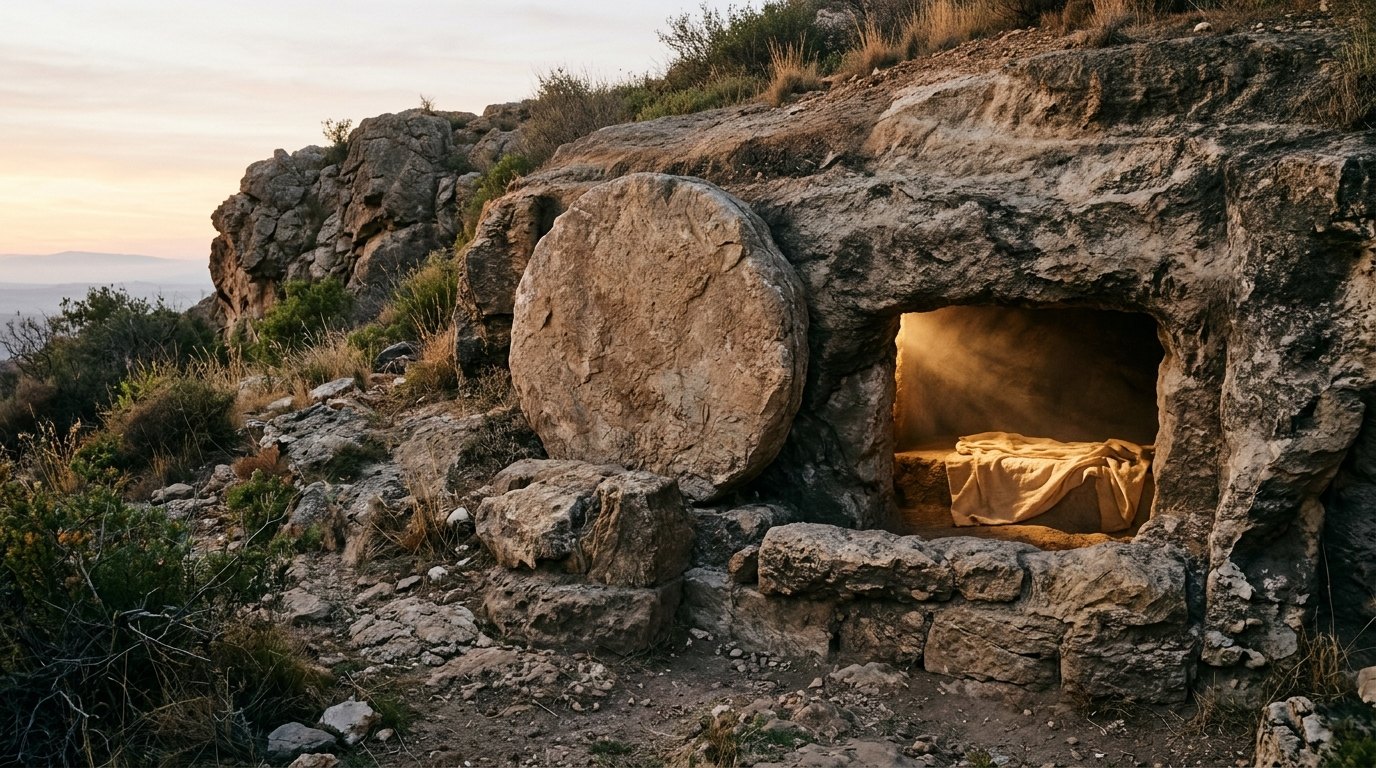
Romans 1:3-4 says He was "declared to be the Son of God with power… by the resurrection from the dead." The empty tomb did not make Him the Son — it publicly unveiled what was always the case.
In short, "the Son of God" is the title that holds together Christ's equality with the Father, His eternal generation within the Trinity, His incarnation by the Holy Spirit, His work as Creator and King, and His vindication at the cross and empty tomb — in a single phrase.
Answered from Scripture · reviewed November 7, 2026
Jesus is called the Son of God because He is the eternal second Person of the Trinity, sharing the Father's full divine nature from all eternity. Scripture weaves this title through His eternal preexistence, the prophetic promises of David's royal line, His miraculous virginal conception, the Father's audible witness from heaven, and His triumphant vindication at the resurrection.
Eternal Deity
He eternally shares the very nature of God

The Son is the radiance of God’s glory and the exact representation of his being, sustaining all things by his powerful word. After he had provided purification for sins, he sat down at the right hand of the Majesty in heaven.
Hebrews 1:3 (NIV)
Notice how the Son is described not as a creature or derivative being, but as the radiance of God's glory and exact representation of His very nature.
In Hebrews 1:3, the author declares that Jesus is the radiance of God's glory and the exact imprint of his nature, upholding the universe by the word of his power. To call Jesus the Son of God is not to name an adopted mortal or a subordinate angel, but to confess that He shares fully and eternally in the undivided divine essence. John opens his Gospel by anchoring this eternal relationship: John 1:1-2 reveals that the Word was in the beginning with God and was God, existing without origin before creation. John 1:14 describes how this eternal Word took on human flesh, exhibiting a majesty appropriate to the unique Son from the Father, full of grace and truth. As John 1:18 explains, while mortal eyes cannot gaze upon the transcendent God, the only begotten Son, residing eternally in the bosom of the Father, has made Him fully known.
This eternal sonship establishes the depth of divine love, for John 3:16 proclaims that God loved the world by giving His only begotten Son to deliver sinners from death. When Jesus defended His ministry in John 5:18, calling God His personal Father, His opponents correctly grasped that calling God His Father made Him equal with God. Paul expands this cosmic dignity in Colossians 1:15-17, presenting the Son as the image of the invisible God, born before all creation because all things in heaven and earth were created through Him and for Him. Hebrews 1:1-4 shows that God's definitive self-disclosure arrives in His Son, whom He appointed heir of all things. In Hebrews 1:8, the Father directly addresses the Son as God, crowning His throne as righteous and everlasting. Christ confirms this divine reality in John 10:30-36, proclaiming His essential unity with the Father, and in Matthew 11:27, asserting an exclusive, mutual knowledge possessed solely by the Father and the Son.
| Passage | What it says |
|---|---|
| John 1:1-2 | The Word was in the beginning with God and was God, eternally subsisting before all created things. |
| John 1:14 | The Word became flesh and dwelt among humanity, displaying glory as of the only begotten Son from the Father. |
| John 1:18 | No one has seen God, but the only begotten Son in the bosom of the Father has made Him known. |
| John 3:16 | God demonstrated His love toward the world by sending His only begotten Son to grant everlasting life. |
| John 5:18 | Jesus called God His own Father, which the Jewish leaders recognized as making Himself equal with God. |
| Colossians 1:15-17 | The Son is the image of the invisible God, holding preeminence over creation because all things were created through Him. |
| Hebrews 1:1-4 | God has spoken by His Son, through whom He made the universe and whom He appointed heir of all. |
| Hebrews 1:8 | The Father addresses the Son directly as God, declaring His throne to be righteous, eternal, and sovereign. |
| John 10:30-36 | Jesus defends His divine Sonship by pointing to His oneness in essence and works with the Father. |
| Matthew 11:27 | Jesus claims an exclusive, mutual, and comprehensive knowledge shared only between the Father and the Son. |
Prophetic Kingship
The Old Testament foretold the divine Davidic King
I will proclaim the LORD’s decree: He said to me, “You are my son; today I have become your father.
Psalms 2:7 (NIV)
Notice the Lord's decree establishing the royal Messiah as His begotten Son who inherits the nations as His possession.
In Psalm 2:7, the Lord decrees to His anointed ruler, 'You are my Son; today I have begotten you.' Across the Old Testament, the title Son of God was covenantally bound to the Davidic monarch who would rule the nations with divine authority. God established this pattern in 2 Samuel 7:12-14, covenanting with David that his royal seed would inherit an eternal kingdom, with God declaring, 'I will be to him a father, and he shall be to me a son.' This promise found its true substance in Christ's perpetual reign over the house of Jacob, celebrated in Luke 1:32-33 and applied specifically to Jesus in Hebrews 1:5.
Psalm 2:1-12 foretells the raging of earthly kings against the Lord's Anointed, only for God to enthrone His Son on Mount Zion, a triumph fulfilled when Christ rose and ascended, as proclaimed in Acts 13:33 and Hebrews 1:5. Psalm 89:26-27 promises that the royal descendant of David will cry out to God as Father, prompting the Lord to appoint Him the highest sovereign on earth, a title realized in Colossians 1:15 and Revelation 1:5, where Christ is named the firstborn of all creation and ruler of the kings of the earth. Isaiah 9:6-7 prophesied that a child would be born and a son given whose name is Wonderful Counselor, Mighty God, and Prince of Peace, fulfilled when Gabriel announced in Luke 1:32-33 that Mary's son would receive the throne of David forever. Even the sage in Proverbs 30:4 marveled at the divine mystery, asking who gathered the wind in his fists and what could be the name of His Son.
| Passage | What it says | Fulfilled |
|---|---|---|
| 2 Samuel 7:12-14 | God promised David that He would establish the throne of his offspring forever and be a Father to him. | Luke 1:32-33, Hebrews 1:5 |
| Psalms 2:1-12 | The Lord laughs at raging rulers, sets His anointed King on Zion, and calls all kings to kiss the Son. | Acts 13:33, Hebrews 1:5 |
| Psalms 89:26-27 | David's royal heir will cry to God as Father, and the Lord will make Him the highest firstborn King. | Colossians 1:15, Revelation 1:5 |
| Isaiah 9:6-7 | A child is born and a Son is given whose name is Mighty God and whose government endures forever. | Luke 1:32-33 |
| Proverbs 30:4 | Agur asks for the names of the Creator and His mysterious Son. |
Miraculous Conception
The Holy Spirit formed His human body

The angel answered, “The Holy Spirit will come on you, and the power of the Most High will overshadow you. So the holy one to be born will be called the Son of God.
Luke 1:35 (NIV)
Notice Gabriel's explicit link between the overshadowing power of the Holy Spirit and why the holy Child is called the Son of God.
In Luke 1:35, the angel Gabriel explicitly explains the earthly origin of this title: 'The Holy Spirit will come upon you, and the power of the Most High will overshadow you; therefore the child to be born will be called holy—the Son of God.' Jesus is named the Son of God not merely in eternity past, but because His human conception occurred without an earthly father. Matthew 1:18-25 records how Joseph learned that Mary's pregnancy was conceived of the Holy Spirit, fulfilling Isaiah's prophecy that the virgin would bear a Son named Emmanuel, God with us.
Gabriel's greeting in Luke 1:31-33 confirms that Mary would bring forth a child who would be great and hailed as the Son of the Most High, destined to occupy David's perpetual throne. Luke 1:34-35 settles Mary's question of how this could occur without a man: the sovereign creative power of God would overshadow her womb, ensuring that the offspring was untainted by Adam's fallen lineage. In Galatians 4:4-5, Paul shows that this miraculous advent marked the hinge of history: when the fullness of time had come, God sent forth his Son, born of woman, subject to the law so that He might redeem sinners and grant them adoption as sons. His miraculous birth in Bethlehem was the public entrance of God's eternal Son into human history.
| Passage | What it says |
|---|---|
| Matthew 1:18-25 | Mary conceived by the Holy Spirit to fulfill prophecy, bringing forth Emmanuel, meaning God with us. |
| Luke 1:31-33 | Gabriel announced Jesus would be great, called Son of the Most High, receiving the throne of His father David. |
| Luke 1:34-35 | The power of the Most High overshadowed Mary, causing the holy child to be called the Son of God. |
| Galatians 4:4-5 | In the fullness of time, God sent forth His Son, born of a woman, to redeem those under law. |
Heavenly Testimony
The Father publicly announced His beloved Son

And a voice from heaven said, “This is my Son, whom I love; with him I am well pleased.”
Matthew 3:17 (NIV)
Notice how the Father speaks audibly from opened heavens before Jesus has preached or worked miracles, establishing identity prior to works.
At the Jordan River, Matthew 3:17 captures the audible voice of God rending the silence: 'This is my beloved Son, with whom I am well pleased.' Before Jesus had preached a sermon or performed a single public miracle, the Father openly testified to His identity from heaven. Matthew 3:13-17 shows that as Jesus emerged from the waters of baptism, the heavens split and the Holy Spirit descended like a dove upon Him, accompanied by the Father's spoken delight. Mark 1:9-11 and Luke 3:21-22 record the same baptismal testimony as Jesus prayed, revealing the full Trinity in public display. John the Baptist bore witness in John 1:32-34, testifying that seeing the Spirit remain upon Jesus proved conclusively that He is the Son of God.
This heavenly certification was dramatically renewed on the mount of transfiguration. Matthew 17:1-5 narrates how a bright cloud enveloped Peter, James, and John while the Father's voice commanded, 'Listen to him.' In Mark 9:7 and Luke 9:35, the Father reaffirms Jesus as His chosen, beloved Son over Moses and Elijah. Decades later, in 2 Peter 1:17-18, the apostle Peter looked back on that transformative hour, testifying that they did not follow myths because they heard that glorious voice speak from the Majestic Glory on the holy mountain, vindicating Christ forever as the true Son of the Living God.
| Passage | What it says |
|---|---|
| Matthew 3:13-17 | As Jesus was baptized in the Jordan, the Spirit descended and the Father's voice affirmed His beloved Son. |
| Mark 1:9-11 | Jesus came from Nazareth to be baptized, where heaven opened and the Father declared His pleasure in His Son. |
| Luke 3:21-22 | While Jesus was praying after baptism, the Holy Spirit descended visibly and the Father affirmed His beloved Son. |
| John 1:32-34 | John the Baptist saw the Spirit descend and abide on Jesus, testifying that this is the Son of God. |
| Matthew 17:1-5 | On the holy mount, the cloud enveloped Jesus and the Father commanded the disciples to hear His beloved Son. |
| 2 Peter 1:17-18 | Peter recalls hearing the voice from the Majestic Glory declaring Jesus as God's beloved Son on the mountain. |
| Mark 9:7 | The Father speaks out of the overshadowing cloud commanding the disciples to listen to His beloved Son. |
| Luke 9:35 | The Father announces Jesus as His chosen Son from the cloud on the holy mountain. |
Public Confession
Disciples and witnesses acknowledged His Sonship

Simon Peter answered, “You are the Messiah, the Son of the living God.”
Matthew 16:16 (NIV)
Notice Peter's definitive confession revealed by the Father, uniting Christ's messianic office with His status as Son of the living God.
When Simon Peter spoke on the road near Caesarea Philippi, he uttered the watershed confession of the New Testament: "You are the Christ, the Son of the living God" (Matthew 16:16). As Jesus immediately made clear, this recognition was not derived from flesh and blood, but was granted directly by the Father in heaven (Matthew 16:13-17). Throughout His earthly ministry, this divine identity compelled confession from those who encountered His sovereign power and holy grace. After He walked upon the storm-tossed waters and stilled the gale, the disciples fell on their faces in the boat, crying out, "Truly you are the Son of God" (Matthew 14:33). Early in His ministry, Nathanael marveled at Christ's supernatural sight beneath the fig tree, declaring, "Rabbi, you are the Son of God; you are the King of Israel!" (John 1:49). In the shadow of Lazarus's tomb, Martha voiced the same steadfast conviction: "Yes, Lord; I believe that you are the Christ, the Son of God, who is coming into the world" (John 11:27).
This title was not merely an honorific given by intimate friends; it was the precise charge over which Jesus went to the cross and the inescapable reality confessed at His death. Under solemn oath before the Sanhedrin, when adjured to say whether He was the Christ, the Son of God, the Lord boldly answered, "You have said so" (Matthew 26:63-64). At Calvary, amidst torn rocks and darkened skies, the Roman centurion and the soldiers watching Him die proclaimed, "Truly this was the Son of God!" (Matthew 27:54; Mark 15:39). In the apostolic mission, this confession remained the sole prerequisite for baptism and the beating heart of the gospel. The Ethiopian eunuch declared, "I believe that Jesus Christ is the Son of God" (Acts 8:37), and newly converted Saul entered the synagogues of Damascus preaching that Jesus is indeed the Son of God (Acts 9:20). John concludes his entire record by stating that these signs were written so that "you may believe that Jesus is the Christ, the Son of God, and that by believing you may have life in his name" (John 20:30-31).
| Passage | What it says |
|---|---|
| Matthew 14:33 | Those in the boat worshiped Jesus after He calmed the sea, confessing Him truly to be God's Son. |
| Matthew 16:13-17 | Peter confessed Jesus as the Christ and the Son of the living God, revealed by the Father in heaven. |
| Matthew 26:63-64 | Under oath before the high priest, Jesus affirmed that He is the Christ, the Son of God. |
| Matthew 27:54 | The Roman centurion and guards at the cross witnessed the earthquake and confessed He was truly God's Son. |
| John 1:49 | Nathanael confessed Jesus as the Son of God and King of Israel after Jesus saw him under the fig tree. |
| John 11:27 | Martha confessed faith that Jesus is the Christ, the Son of God coming into the world. |
| John 20:30-31 | John wrote his Gospel so readers would believe that Jesus is the Christ, the Son of God, having life. |
| Mark 15:39 | The Roman centurion watching Jesus die confesses that He truly was the Son of God. |
| Acts 8:37 | The Ethiopian eunuch confesses his faith that Jesus Christ is the Son of God prior to baptism. |
| Acts 9:20 | Immediately after his conversion, Saul proclaims in the synagogues of Damascus that Jesus is the Son of God. |
Resurrection Vindication
The empty tomb displayed His Sonship with power
and who through the Spirit of holiness was appointed the Son of God in power by his resurrection from the dead: Jesus Christ our Lord.
Romans 1:4 (NIV)
Notice that the resurrection did not create Christ's Sonship, but openly installed and declared Him as the Son of God with power.
The resurrection of Christ was the definitive public vindication of His identity, where He "was declared to be the Son of God in power according to the Spirit of holiness by his resurrection from the dead" (Romans 1:4). The Apostle Paul opens his epistle to the Romans by anchoring the gospel in this two-fold witness: Christ was descended from David according to the flesh, fulfilling the royal covenant, but demonstrated to be God's eternal Son through the triumph of the empty tomb (Romans 1:1-4). The resurrection did not make Jesus the Son of God; rather, it openly installed Him in power before the watching cosmos, stripping away every veil of mortal weakness.
Preaching in the synagogue at Pisidian Antioch, Paul proclaimed that God fulfilled His ancient promise to the fathers when He raised up Jesus, citing the royal decree of Psalm 2: "You are my Son, today I have begotten you" (Acts 13:32-33). The resurrection manifested the eternal Sonship in bodily triumph, guaranteeing the inheritance of the saints. Because Christ has conquered death as the Living One, faith in His Sonship conveys indestructible life. As the Apostle John writes, "God gave us eternal life, and this life is in his Son. Whoever has the Son has life; whoever does not have the Son of God does not have life" (1 John 5:11-13). It is this resurrected Son who grants true spiritual understanding to His people, so that we may know the Father and rest securely in "the true God and eternal life" (1 John 5:20).
| Passage | What it says |
|---|---|
| Romans 1:1-4 | Jesus, born of David according to flesh, was declared Son of God with power through resurrection from the dead. |
| Acts 13:32-33 | Paul preached that God fulfilled His promise to the fathers by raising Jesus, as written in Psalm 2. |
| 1 John 5:11-13 | Eternal life resides in the Son of God, and those who believe in His name possess that eternal life. |
| 1 John 5:20 | The Son of God has given understanding to know Him who is true, the true God and eternal life. |
Demonic Witness
Demons Shudder and Acknowledge the Divine Son

Whenever the impure spirits saw him, they fell down before him and cried out, “You are the Son of God.” But he gave them strict orders not to tell others about him.
Mark 3:11-12 (NIV)
Unclean spirits instinctively recognize Jesus' divine authority and identify Him as the true Son of God.
Even before human beings fully grasped the mystery of the incarnation, the powers of darkness recognized their Creator and Judge: "Whenever the unclean spirits saw him, they fell down before him and cried out, 'You are the Son of God'" (Mark 3:11-12). In every encounter recorded in the Gospels, demons offered no resistance to His presence; instead, they collapsed in terror, constrained by His sovereign majesty to speak the truth. While the religious leaders of Israel stumbled over His authority, the spiritual realm immediately perceived His uncreated identity and shuddered before Him.
When Jesus stepped onto the eastern shore of the Sea of Galilee in the country of the Gadarenes, two fierce demoniacs rushed from the tombs, shouting in dread, "What have you to do with us, O Son of God? Have you come here to torment us before the time?" (Matthew 8:28-29). The unclean legion inhabiting the man fell prostrate at the feet of Christ, shrieking, "What have you to do with me, Jesus, Son of the Most High God? I adjure you by God, do not torment me" (Mark 5:7; Luke 8:28). Across Capernaum and throughout the towns of Galilee, "demons also came out of many, crying, 'You are the Son of God!' But he rebuked them and would not allow them to speak, because they knew that he was the Christ" (Luke 4:41). The testimony of hell confirms what scripture teaches from eternity: Jesus Christ possesses absolute, uncontested dominion as the divine Son, before whom every knee must ultimately bow.
| Passage | What it says |
|---|---|
| Matthew 8:28-29 | Two demon-possessed men cry out acknowledging Jesus as the Son of God and questioning their premature judgment. |
| Mark 3:11-12 | Unclean spirits fall down before Him and proclaim Him to be the Son of God. |
| Mark 5:7 | The Legion demon cries out identifying Jesus as the Son of the Most High God. |
| Luke 4:41 | Demons come out of many crying that He is the Son of God, knowing He is the Christ. |
| Luke 8:28 | The possessed Gerasene falls before Jesus addressing Him as the Son of the Most High God. |
Where in the Bible
| Book | Passages |
|---|---|
| 2 Samuel | 1 · 2 Samuel 7:12-14 |
| Psalms | 2 · Psalms 2:1-12, Psalms 89:26-27 |
| Proverbs | 1 · Proverbs 30:4 |
| Isaiah | 1 · Isaiah 9:6-7 |
| Matthew | 9 · Matthew 11:27, Matthew 1:18-25, Matthew 3:13-17, Matthew 17:1-5, Matthew 14:33, Matthew 16:13-17, Matthew 26:63-64, Matthew 27:54, Matthew 8:28-29 |
| Mark | 5 · Mark 1:9-11, Mark 9:7, Mark 15:39, Mark 3:11-12, Mark 5:7 |
| Luke | 6 · Luke 1:31-33, Luke 1:34-35, Luke 3:21-22, Luke 9:35, Luke 4:41, Luke 8:28 |
| John | 10 · John 1:1-2, John 1:14, John 1:18, John 3:16, John 5:18, John 10:30-36, John 1:32-34, John 1:49, John 11:27, John 20:30-31 |
| Acts | 3 · Acts 8:37, Acts 9:20, Acts 13:32-33 |
| Romans | 1 · Romans 1:1-4 |
| Galatians | 1 · Galatians 4:4-5 |
| Colossians | 1 · Colossians 1:15-17 |
| Hebrews | 2 · Hebrews 1:1-4, Hebrews 1:8 |
| 2 Peter | 1 · 2 Peter 1:17-18 |
| 1 John | 2 · 1 John 5:11-13, 1 John 5:20 |
The story in order
- God's promise to David (c. 1000 BC) · 2 Samuel 7:12-14 · Foretells an eternal Davidic heir, God's Son.
- Messianic King prophesied (c. 970 BC) · Psalms 2:1-12 · The Lord anoints His King on Zion, calling Him Son.
- Prophecy of God's Son (c. 740 BC) · Isaiah 9:6-7 · Names the coming ruler 'Mighty God, Son'.
- The Word becomes flesh (c. AD 30) · John 1:14 · The eternal Son of God enters humanity.
- Jesus' virginal conception (c. AD 1) · Matthew 1:18-25 · Conceived by the Spirit, fulfilling prophecy.
- Father's voice at baptism (AD 27) · Matthew 3:13-17 · Declares Jesus His beloved Son.
- Transfiguration testimony (AD 30) · Matthew 17:1-5 · Father commands to hear His beloved Son.
- Peter's confession (AD 30) · Matthew 16:13-17 · Confesses Jesus as Christ, Son of the living God.
- Jesus affirms Sonship (AD 30) · Matthew 26:63-64 · Affirms He is the Son of God before the high priest.
- Centurion's cross confession (AD 30) · Matthew 27:54 · Witnesses the events and confesses Jesus as God's Son.
- Resurrection declares Sonship (AD 55) · Romans 1:1-4 · Declared Son of God in power by resurrection.
- Apostle's proclamation (AD 35) · Acts 9:20 · Saul proclaims Jesus as the Son of God.
Divine Witness to Jesus' Sonship
| Event | Divine Declaration | Passage |
|---|---|---|
| Baptism in the Jordan | The Father: 'This is my beloved Son' | Matthew 3:13-17 |
| Transfiguration on the Mount | The Father: 'This is my beloved Son; listen to him' | Matthew 17:1-5 |
| Peter's Confession | Revealed by the Father | Matthew 16:13-17 |
| Jesus before the Sanhedrin | Jesus affirms His Sonship | Matthew 26:63-64 |
| Crucifixion | Centurion confesses 'Truly this was God's Son' | Matthew 27:54 |
Demonic Acknowledgment of Jesus' Identity
| Demon's Address | Jesus' Identity | Passage |
|---|---|---|
| Son of God | Jesus | Matthew 8:28-29 |
| Son of God | Jesus | Mark 3:11-12 |
| Son of the Most High God | Jesus | Mark 5:7 |
| Son of God, the Christ | Jesus | Luke 4:41 |
| Son of the Most High God | Jesus | Luke 8:28 |
Key words
- Son of God (huios tou theou (υἱὸς τοῦ θεοῦ))
- Designation highlighting Jesus' unique divine nature, relationship with the Father, and role. · Matthew 3:17
- Only Begotten (monogenes (μονογενής))
- Unique, one-of-a-kind, not created, sharing the Father's essence. · John 1:14
- Word (logos (λόγος))
- The eternal expression and agent of God, who became flesh. · John 1:1
- Christ (christos (Χριστός))
- The Anointed One, the promised Messiah and King. · Matthew 16:16
- Resurrection (anastasis (ἀνάστασις))
- Jesus' rising from the dead, proving His divine power and Sonship. · Romans 1:4
To know Jesus as the Son of God is to bow before the eternal Lord who took on human flesh to bring rebel sinners into adoption as children of the Father. Confessing His divine Sonship is not a theoretical abstraction, but the very foundation of eternal life and our unwavering assurance before God.
46 passages, each cited once.
Scripture cited
- Psalms 2:7
- Mark 1:11
- Luke 3:22
- Luke 1:30-35
- John 3:16-18
- Romans 1:1-4
- Hebrews 1:1-8
- Colossians 1:15-20