Why is there so much hypocrisy in the church?

Matthew 23:27-28
27 “Woe to you, teachers of the law and Pharisees, you hypocrites! You are like whitewashed tombs, which look beautiful on the outside but on the inside are full of the bones of the dead and everything unclean.
28 In the same way, on the outside you appear to people as righteous but on the inside you are full of hypocrisy and wickedness.
New International Version (NIV)
The answer
Hypocrisy exists in the church because outward religion can hide an unchanged heart, some people profess Christ without belonging to Him, and genuine believers still battle sin. None of that excuses it. Jesus exposed and condemned religious hypocrisy with exceptional severity; the failure of His professed followers is not a failure in Him.
Jesus compared the Pharisees to “whitened tombs, which outwardly appear beautiful, but inwardly are full of dead men’s bones and of all uncleanness” (Matthew 23:27). The point was that they appeared righteous before people while remaining inwardly full of “hypocrisy and iniquity” (Matthew 23:28). Touching a grave made someone unclean for seven days under the law (Numbers 19:16), so the picture conveys more than occasional inconsistency: an attractive religious exterior can conceal deep corruption.
Why it happens
- Love of human approval: Religious reputation can become more important than obedience. The Pharisees acted “to be seen by men,” sought places of honour, and said things they did not practise (Matthew 23:3-7).
- False profession: Jesus warned that not everyone who calls Him Lord will enter His kingdom. Some will point to prophecy, exorcisms, and mighty works, yet He will declare that He never knew them (Matthew 7:21-23). Religious activity is not the same as knowing Christ.
- Remaining sin and self-deception: Claiming to have no sin is self-deception (1 John 1:8-10). A believer who falls, confesses, and seeks restoration is not necessarily living as a hypocrite. Hypocrisy instead maintains a righteous appearance while concealing, defending, or refusing to repent of sin.
- God’s final separation is still future: In the parable of the wheat and darnel, both grow together until the harvest. Jesus identified the field as the world and the harvest as the end of the age, when He will finally remove everything that causes stumbling and does iniquity (Matthew 13:24-30; Matthew 13:36-43). Evil’s presence before that judgment does not mean God approves it.
Why it causes such damage
Religious hypocrisy attaches God’s name to conduct that denies Him. Paul challenged religious teachers who condemned sins in others while committing them themselves, and said that God’s name was blasphemed among the nations because of such disobedience (Romans 2:21-24). The hurt and distrust it produces are real; Scripture never treats hypocrisy as harmless or calls for its concealment.
The proper response includes gentle restoration, truthful examination, and humility rather than either cover-up or self-righteous contempt (Galatians 6:1-4). Ultimately, the answer is Christ Himself. He alone was without sin or deceit, and He bore sins in His body on the tree so that sinners might die to sin and live to righteousness (1 Peter 2:22-24). God promises forgiveness and cleansing to those who confess their sins (1 John 1:9). Christ’s remedy is therefore not a more convincing religious performance, but repentance, forgiveness, and a changed life.
Answered from Scripture · reviewed November 11, 2026
Hypocrisy appears in the church because the visible congregation gathers both unregenerate actors wearing religious garments and true believers who remain in daily battle against indwelling sin. The Bible never hides this painful reality; instead, it exposes the deceitful heart, warns that weeds grow alongside wheat until the harvest, and summons every believer to unvarnished self-examination before God.
The Actor's Mask
Jesus Names the Divide Between Appearance and Reality
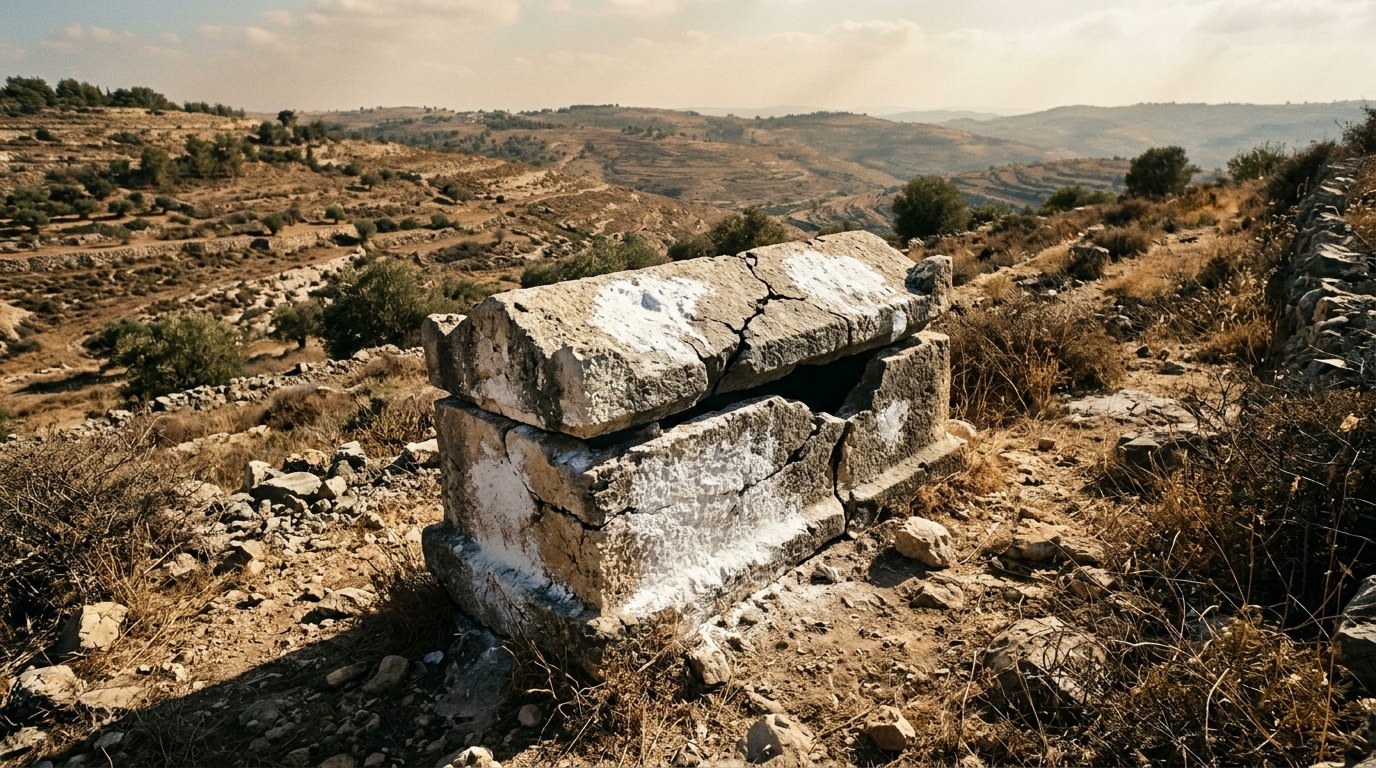
“Woe to you, teachers of the law and Pharisees, you hypocrites! You are like whitewashed tombs, which look beautiful on the outside but on the inside are full of the bones of the dead and everything unclean.
Matthew 23:27 (NIV)
Jesus compares religious hypocrites to whitewashed tombs, highlighting the stark contrast between polished outward facades and inward spiritual death.
Christ confronts the pretense of religious performance head-on in Matthew 23:27, declaring, "Woe to you, scribes and Pharisees, hypocrites! For you are like whitewashed tombs, which outwardly appear beautiful, but within are full of dead people's bones and all uncleanness." The original term for hypocrite designated an actor stepping onto a Greek stage behind an oversized mask. In Matthew 23:28, the Lord pierces that mask, exposing an outward appearance of righteousness that conceals inward lawlessness. Luke 11:44 sharpens this warning: hypocrites are like concealed graves that people walk over without realizing the spiritual corruption beneath.
This theatrical impulse repeatedly tempts the religious mind to seek human admiration rather than the pleasure of God. Jesus warns in Matthew 6:1 against practicing righteousness before men to win their applause. Centuries earlier, the prophet in Isaiah 29:13 rebuked those who drew near with speech while their hearts remained detached, an indictment Jesus applies directly to the religious establishment in Matthew 15:7-9. When self-glory drives religious duty, even sacred practices morph into performance: Matthew 6:2 describes trumpeting one's charitable giving, Matthew 6:5 exposes posturing in street corners during prayer, and Matthew 6:16 reproves the deliberate disfiguring of faces during fasting. In Matthew 23:25-26, Jesus commands the inward cleansing of the soul's cup before the exterior polish can mean anything at all. When Paul in Acts 23:3 confronts the high priest Ananias as a "whitewashed wall," he identifies the enduring tragedy of external religious form devoid of internal truth.
| Passage | What it says |
|---|---|
| Matthew 23:27 | Jesus pronounces woe on hypocrites who appear beautiful on the outside but are inwardly full of dead bones and uncleanness. |
| Matthew 23:28 | Jesus defines religious hypocrisy as presenting an outward posture of righteousness while inwardly harboring lawlessness and deceit. |
| Luke 11:44 | Jesus compares hypocrites to unmarked graves that people walk over unaware of the defilement beneath their feet. |
| Matthew 6:1 | Jesus warns disciples against practicing righteousness before people merely to be seen and praised by them. |
| Acts 23:3 | Paul denounces the high priest Ananias as a whitewashed wall judging others by the law while violating it himself. |
| Isaiah 29:13 | The Lord declares people draw near with their mouths and honor with lips while their hearts are far away. |
| Matthew 15:7-9 | Jesus cites Isaiah to rebuke religious leaders who teach human precepts while offering empty outward worship. |
| Matthew 6:2 | Jesus warns against blowing trumpets when giving alms to be seen by men rather than God. |
| Matthew 6:5 | Jesus commands believers not to pray ostentatiously on street corners to be seen and praised by others. |
| Matthew 6:16 | Jesus exposes hypocrites who disfigure their faces during fasting to publicly display their religious devotion. |
| Matthew 23:25-26 | Jesus condemns cleaning the outside of the cup while leaving the inside full of greed and self-indulgence. |
The Deceitful Heart
Self-Deception Is the Fertile Soil of Hypocrisy

The heart is deceitful above all things and beyond cure. Who can understand it?
Jeremiah 17:9 (NIV)
Jeremiah identifies the deceitfulness and incurable sickness of the human heart as the fountainhead of all self-delusion and false piety.
The fertile soil in which religious hypocrisy flourishes is the untamed human heart. As Jeremiah 17:9 diagnoses, "The heart is deceitful above all things, and desperately sick; who can understand it?" Left to our own faculties, human beings are astonishingly adept at manufacturing justifications for compromise. While humans evaluate their fellows by visible metrics, the Lord warned the prophet in 1 Samuel 16:7 that He looks directly past external veneer into the secret reality of the heart. Jesus reinforces this principle in Mark 7:20-23, explaining that the defilement that ruins a life does not originate in outside contaminants, but overflows from the wickedness, pride, and deceit bred deep inside human nature.
Because self-deception comes so naturally, men readily mistake outward religious association for actual spiritual health. Galatians 6:3 warns that if anyone considers himself something when he is nothing, he deceives his own mind. James 1:22 adds that merely hearing the Word without embodying it amounts to tragic delusion, while James 1:26 notes that an unbridled tongue renders an entire religious reputation utterly worthless. Proverbs 28:13 offers the divine remedy: life comes not by concealing transgression behind pious speech, but through honest confession and repentance. Without such candor, religious pride inevitably produces the figure in Luke 18:9-14—the self-congratulatory Pharisee celebrating his own moral achievements while despising his neighbor. Paul turns this mirror upon every religious judge in Romans 2:1-3 and Romans 2:21-24, demonstrating that judging outward sin while secretly indulging it blasphemes God's name.
| Passage | What it says |
|---|---|
| Jeremiah 17:9 | Jeremiah declares the human heart deceitful above all things and desperately sick, beyond full human self-comprehension. |
| 1 Samuel 16:7 | Yahweh reminds Samuel that while mortals judge by outward appearance, the Lord looks straight at the inward heart. |
| Mark 7:20-23 | Jesus teaches that outward actions do not defile, but evil desires, deceit, and pride emerging directly from the human heart. |
| Galatians 6:3 | Paul notes that anyone who thinks himself to be something when he is actually nothing simply deceives himself. |
| James 1:22 | James cautions that hearing the Word of God without doing it is a form of self-delusion. |
| James 1:26 | Anyone who considers himself religious yet does not bridle his tongue deceives his heart with worthless religion. |
| Proverbs 28:13 | Whoever conceals his sins will not prosper, but confessing and forsaking them obtains divine mercy. |
| Luke 18:9-14 | Jesus contrasts the self-righteous Pharisee trusting in his own works with the humble tax collector crying for mercy. |
| Romans 2:1-3 | Paul convicts the judge who condemns another while practicing the exact same moral failings. |
| Romans 2:21-24 | Those who preach against stealing, adultery, and idolatry while practicing them cause God's name to be blasphemed. |
Wheat and Weeds
Unbelievers and Believers Cohabit in the Visible Assembly

Let both grow together until the harvest. At that time I will tell the harvesters: First collect the weeds and tie them in bundles to be burned; then gather the wheat and bring it into my barn.’ ”
Matthew 13:30 (NIV)
Christ explains that true believers and false pretenders will coexist in the world and visible gathering until final judgment separates them.
Much of the hypocrisy witnessed within local gatherings arises because the visible assembly is not identical to the invisible body of the regenerate. In Matthew 13:30, the Master responds to the servants who discover tares among the grain: "Let both grow together until the harvest, and at the time of harvest I will tell the reapers, 'Gather the weeds first and bind them in bundles to be burned, but gather the wheat into my barn.'" Throughout this present age, the field of the visible church gathers both true wheat and counterfeit tares. In Matthew 13:24-30, Jesus reveals that an enemy sowed false pretenders who bear a striking visual resemblance to true believers until the fruit matures at harvest.
This mingling produces sobering spiritual anomalies. Jesus warns in Matthew 7:21-23 that on the final day, many will recite orthodox titles and boast of spectacular works in His name, yet hear Him say He never knew them. Paul similarly cautions in 2 Timothy 3:5 of people maintaining an outward form of godliness while repudiating its life-changing power, and Titus 1:16 describes those who profess God with their lips but deny Him through their actions. John explains the departure of such pretenders in 1 John 2:19, stating plainly that they left because they were never genuinely of the fold. The early church confronted this directly when Ananias and Sapphira feigned sacrificial giving in Acts 5:1-11. As Paul foretold in Acts 20:29-30 and 2 Corinthians 11:13-15, and as Peter and Jude echoed in 2 Peter 2:1-3 and Jude 1:12, unregenerate wolves inevitably mask themselves among the sheep.
| Passage | What it says |
|---|---|
| Matthew 13:24-30 | Jesus tells the parable of weeds sown among wheat, commanding that both be permitted to grow together until harvest. |
| Matthew 7:21-23 | Jesus reveals that many who say 'Lord, Lord' and perform religious works will be cast out as workers of lawlessness. |
| 2 Timothy 3:5 | Paul foretells men who maintain a recognizable form of godliness while utterly denying its transformative power. |
| Titus 1:16 | Paul describes people who publicly profess to know God but deny Him by their detestable and disobedient conduct. |
| 1 John 2:19 | John explains that apostates departed from the fellowship because they never truly belonged to the assembly of believers. |
| Acts 5:1-11 | Ananias and Sapphira feign total generosity in the congregation, lying to the Holy Spirit before facing judgment. |
| Acts 20:29-30 | Paul foretells fierce wolves entering the flock and men arising from within speaking twisted things to draw disciples. |
| 2 Corinthians 11:13-15 | False apostles disguise themselves as servants of righteousness just as Satan disguises himself as an angel of light. |
| Jude 1:12 | Jude exposes ungodly pretenders who operate as hidden reefs in church love feasts, caring only for themselves. |
| 2 Peter 2:1-3 | False teachers secretly bring destructive heresies into the church, exploiting believers with fabricated words. |
The Believer's Struggle
Genuine Christians Still War Against Remaining Flesh

For I know that good itself does not dwell in me, that is, in my sinful nature. For I have the desire to do what is good, but I cannot carry it out.
Romans 7:18 (NIV)
Paul's honest admission of the dwelling of sin in his fallen flesh explains why even sincere Christians fall short of their profession.
Hypocrisy does not arise exclusively from unregenerate actors; it also stems from the ongoing, agonizing sanctification of genuine Christians. In Romans 7:18, Paul lays bare the internal conflict: "For I know that nothing good dwells in me, that is, in my flesh. For I have the desire to do what is right, but not the ability to carry it out." Even the most sincere believer lives with a painful gulf between the holiness of their high calling and the frailty of their daily walk. Romans 7:19 articulates this shared lament, acknowledging that the good we desire to do is often undone by the very failures we detest.
Scripture makes no attempt to airbrush the moral missteps of its greatest heroes. In Galatians 2:11-13, Paul records his public confrontation of the apostle Peter and Barnabas at Antioch, where fear of human opinion led them into momentary insincerity and sectarian dissimulation regarding table fellowship with Gentiles. Galatians 5:17 explains the root of this contradiction: the remaining fallen flesh perpetually wages war against the indwelling Holy Spirit. Consequently, 1 John 1:8 insists that any Christian who claims to be free from sin deceives himself and lacks the truth. Rather than rushing to condemnation, Jesus commands in Matthew 7:1-5 that we dismantle the blinding timber in our own eye before addressing our brother's speck. Knowing that we all stumble in many ways, as James 3:2 reminds us, the believer walks with the broken humility of 1 Timothy 1:15, clinging to Christ as the only righteous Savior for sinners.
| Passage | What it says |
|---|---|
| Romans 7:18-19 | Paul laments that while the desire to do good is present within him, he fails to carry it out consistently. |
| Galatians 2:11-13 | Paul records that Peter and Barnabas were drawn into insincerity and hypocrisy over table fellowship with Gentiles in Antioch. |
| Galatians 5:17 | Paul describes the perpetual warfare between the desires of the flesh and the desires of the Holy Spirit. |
| 1 John 1:8 | John warns that claiming to have no sin is self-deception and proves the truth is not within us. |
| Matthew 7:1-5 | Jesus commands believers to remove the log from their own eye before attempting to remove another's speck. |
| James 3:2 | James acknowledges that all believers stumble in many ways, especially in what they say. |
| 1 Timothy 1:15 | Paul identifies himself as the foremost of sinners even while serving as Christ's appointed apostle. |
The Biblical Antidote
Confession, Cleansing, and True Brokenness Kill Pretension

If we confess our sins, he is faithful and just and will forgive us our sins and purify us from all unrighteousness.
1 John 1:9 (NIV)
John lays out the God-given path away from pretending: transparent confession met by Christ's faithful and righteous cleansing.
First John 1:9 dismantles religious posturing by offering the only true remedy for moral failure: honest confession met by God's faithful cleansing. Hypocrisy thrives when people attempt to cover their guilt with superficial performance, but genuine repentance abandons the mask entirely. Rather than hiding behind external rituals, David models the posture God requires in Psalm 51:10, pleading for God to create a clean heart within him, knowing that external reformation cannot cure an inward corruption. Psalm 51:17 reinforces that God rejects empty religious pantomime; the sacrifices pleasing to Him are a broken spirit and a contrite heart, completely unadorned by human pretense. God sees through mere outward observance, as Isaiah 58:1-2 makes clear when the prophet is commanded to declare the sins of those who delight in daily religious routines while cherishing wicked practices in secret.
The New Testament consistently commands believers to replace counterfeit devotion with transparent integrity. In James 4:8-10, sinners are urged to draw near to God, cleanse their hands, and purify double minds by mourning their sin rather than rationalizing it. This internal renovation transforms how believers relate to one another. Romans 12:9 insists that Christian love must be entirely without hypocrisy, actively despising evil and clinging to what is good. Paul summarizes the aim of all sound doctrine in 1 Timothy 1:5 as love that springs from a pure heart, a good conscience, and a sincere, unfeigned faith. In 1 Peter 1:22, having purified their souls through obedience to the truth, believers are equipped to love one another deeply from the heart. Consequently, 1 Peter 2:1 commands disciples to strip away all malice, deceit, hypocrisy, envy, and slander like soiled garments. Finally, James 3:17 reveals that heavenly wisdom stands in total contrast to self-seeking pretense, being pure, peaceable, gentle, full of mercy, impartial, and utterly sincere.
| Passage | What it says |
|---|---|
| 1 John 1:9 | John promises that honest confession of sin meets God's faithfulness and justice in forgiving and purifying all unrighteousness. |
| Psalms 51:10 | David prays for God to create a clean heart within him and renew a steadfast spirit after his grievous sin. |
| Psalms 51:17 | David declares that God's acceptable sacrifices are a broken spirit and a contrite, humble heart. |
| Isaiah 58:1-2 | The prophet is commanded to expose the sins of God's people who perform daily religious devotion while living corruptly. |
| James 4:8-10 | James commands sinners to cleanse their hands, purify their double minds, and humble themselves before the Lord. |
| Romans 12:9 | Paul instructs the church to let love be genuine, abhorring evil and holding fast to good. |
| 1 Timothy 1:5 | The goal of biblical instruction is love issuing from a pure heart, a good conscience, and sincere faith. |
| 1 Peter 1:22 | Purified souls through obedience to truth are called to love one another earnestly from a pure heart. |
| 1 Peter 2:1 | Believers are commanded to put away all malice, deceit, hypocrisy, envy, and all slander. |
| James 3:17 | Wisdom from above is pure, peaceable, gentle, open to reason, full of mercy, impartial, and sincere. |
Where in the Bible
| Book | Passages |
|---|---|
| 1 Samuel | 1 · 1 Samuel 16:7 |
| Psalms | 2 · Psalms 51:10, Psalms 51:17 |
| Proverbs | 1 · Proverbs 28:13 |
| Isaiah | 2 · Isaiah 29:13, Isaiah 58:1-2 |
| Jeremiah | 1 · Jeremiah 17:9 |
| Matthew | 11 · Matthew 23:27, Matthew 23:28, Matthew 6:1, Matthew 15:7-9, Matthew 6:2, Matthew 6:5, Matthew 6:16, Matthew 23:25-26, Matthew 13:24-30, Matthew 7:21-23, Matthew 7:1-5 |
| Mark | 1 · Mark 7:20-23 |
| Luke | 2 · Luke 11:44, Luke 18:9-14 |
| Acts | 3 · Acts 23:3, Acts 5:1-11, Acts 20:29-30 |
| Romans | 4 · Romans 2:1-3, Romans 2:21-24, Romans 7:18-19, Romans 12:9 |
| 2 Corinthians | 1 · 2 Corinthians 11:13-15 |
| Galatians | 3 · Galatians 6:3, Galatians 2:11-13, Galatians 5:17 |
| 1 Timothy | 2 · 1 Timothy 1:15, 1 Timothy 1:5 |
| 2 Timothy | 1 · 2 Timothy 3:5 |
| Titus | 1 · Titus 1:16 |
| James | 5 · James 1:22, James 1:26, James 3:2, James 4:8-10, James 3:17 |
| 1 Peter | 2 · 1 Peter 1:22, 1 Peter 2:1 |
| 2 Peter | 1 · 2 Peter 2:1-3 |
| 1 John | 3 · 1 John 2:19, 1 John 1:8, 1 John 1:9 |
| Jude | 1 · Jude 1:12 |
The story in order
- The Fall (c. 4000 BC) · Genesis 3 · Introduces sin and deceit into the human heart.
- Abrahamic Covenant (c. 2000 BC) · Genesis 12:1-3 · God's promise to bless through Abraham's line.
- Exodus and Law (c. 1450 BC) · Exodus 20 · God's law reveals sin and the need for righteousness.
- Prophetic Warnings (c. 700 BC) · Isaiah 29:13 · Prophets expose hypocrisy and empty worship.
- Exile and Return (c. 600 BC) · Jeremiah 17:9 · The heart's deceitfulness is highlighted.
- Jesus' Ministry (AD 30) · Matthew 23:27 · Jesus directly confronts and condemns religious hypocrisy.
- The Early Church (AD 30-33) · Acts 5:1-11 · Hypocrisy and its immediate judgment within the new community.
- Apostolic Teaching (AD 50-60) · Galatians 6:3 · Apostles warn against self-deception and false piety.
- The Believer's Struggle (AD 55-60) · Romans 7:18-19 · Paul describes the ongoing internal conflict against sin.
- Warning Against False Teachers (AD 60-65) · 2 Peter 2:1-3 · False teachers infiltrate the church with destructive heresies.
- John's Epistles (AD 90-95) · 1 John 1:8 · Emphasizes self-examination and the danger of claiming sinlessness.
- The Final Harvest (Future) · Matthew 13:30 · The ultimate separation of wheat and weeds.
Key words
- Hypocrisy (hypokritēs (ὑποκριτής))
- A pretense of virtue or religious devotion; a false outward show. · Matthew 23:27
- Deceitful Heart (mašḥît (מַשְׁחִית))
- The human heart's inherent tendency to mislead and betray. · Jeremiah 17:9
- Self-Deception (paralogizomai (παραλογίζομαι))
- The act of deceiving oneself, often by ignoring or rationalizing. · Galatians 6:3
- Righteousness (dikaiosynē (δικαιοσύνη))
- Conformity to God's law and character; moral uprightness. · Matthew 6:1
- Confession (homologeō (ὁμολογέω))
- An admission of guilt or sin; acknowledging wrongdoing. · 1 John 1:9
- Brokenness (dæka' (דַּכָּא))
- A contrite and humble spirit before God, acknowledging sin. · Psalms 51:17
The presence of pretenders in the pews does not invalidate the truth of the gospel; rather, it confirms precisely what Christ foretold about the visible church. True Christian community is not built on theatrical perfection, but upon brokenness, regular confession of sin, and the steadfast grace of Christ who cleanses the inside of the cup.
48 passages, each cited once.
Scripture cited
- Numbers 19:16
- Matthew 23:1-36
- Matthew 13:24-30
- Romans 2:17-24
- 1 John 1:8-10
- Matthew 13:36-43
- Matthew 7:21-23
- Galatians 6:1-5
- 1 Peter 2:21-24