Why would a good God command animal sacrifice?

Hebrews 10:1-10
1 The law is only a shadow of the good things that are coming—not the realities themselves. For this reason it can never, by the same sacrifices repeated endlessly year after year, make perfect those who draw near to worship.
2 Otherwise, would they not have stopped being offered? For the worshipers would have been cleansed once for all, and would no longer have felt guilty for their sins.
3 But those sacrifices are an annual reminder of sins.
4 It is impossible for the blood of bulls and goats to take away sins.
5 Therefore, when Christ came into the world, he said: “Sacrifice and offering you did not desire, but a body you prepared for me;
6 with burnt offerings and sin offerings you were not pleased.
7 Then I said, ‘Here I am—it is written about me in the scroll— I have come to do your will, my God.’ ”
8 First he said, “Sacrifices and offerings, burnt offerings and sin offerings you did not desire, nor were you pleased with them”—though they were offered in accordance with the law.
9 Then he said, “Here I am, I have come to do your will.” He sets aside the first to establish the second.
10 And by that will, we have been made holy through the sacrifice of the body of Jesus Christ once for all.
New International Version (NIV)
The answer
Because animal sacrifice was never God's final answer to sin — it was a shadow pointing to the One who would actually take sin away (Hebrews 10:1). When He commands it, He is teaching His people what sin costs and what it would take to cleanse them, while also pointing ahead to His Son.
It teaches that sin costs a life
From the first offerings in Genesis 4, Abel brought "the firstborn of his flock" and God respected it (Genesis 4:4). Later God explained the principle in Leviticus 17:11: "For the life of the flesh is in the blood. I have given it to you on the altar to make atonement for your souls; for it is the blood that makes atonement by reason of the life." The worshiper lays a living substitute on the altar in place of himself. Sin deserves death, and the animal's life stands in for his life, again and again, year by year.
It could never finish the job
Hebrews is blunt about this in the passage at hand. "It is impossible that the blood of bulls and goats should take away sins" (Hebrews 10:4). If those sacrifices had truly cleansed the worshiper, "they would have ceased to be offered" (Hebrews 10:2). Instead, "in those sacrifices there is a yearly reminder of sins" (Hebrews 10:3). The repeated sacrifice is not a cure; it is a sign that the real cure is still to come.
It pointed forward to Christ
Hebrews reads the whole system as a "shadow of the good to come, not the very image of the things" (Hebrews 10:1). When Christ enters the world He says, "Sacrifices and offerings you didn't desire, but you prepared a body for me… Behold, I have come to do your will, O God" (Hebrews 10:5-7, citing Psalm 40). That is the heart of the Father: not animals on an altar, but His Son obedient to the cross. "By which will we have been sanctified through the offering of the body of Jesus Christ once for all" (Hebrews 10:10).
This is why "without shedding of blood there is no remission" (Hebrews 9:22), and also why the shedding had to be His, not theirs: "How much more will the blood of Christ… cleanse your conscience from dead works to serve the living God" (Hebrews 9:14). The old sacrifices sketched the shape of the cross; the cross filled it in.
What this means for us
A good God did not command sacrifice because He enjoys death, but because He was opening a pathway for guilty sinners to be near a holy God — and He was shaping that pathway to land on His Son. The altar in Leviticus was always a signpost toward Golgotha. So the right response is not to be troubled by the blood, but to give thanks that the One whose blood was "once for all" offered (Hebrews 10:10) is the same who now "appears in the presence of God for us" (Hebrews 9:24).
A verse to carry
Christ also, having been offered once to bear the sins of many, will appear a second time, not to deal with sin, but to save those who are eagerly waiting for him. — Hebrews 9:28
Answered from Scripture · reviewed November 7, 2026
Scripture reveals that God never instituted animal sacrifice because He delighted in the death of beasts, but rather to reveal the devastating cost of sin and provide a gracious way for sinners to approach Him. The entire sacrificial system was a temporary, didactic shadow designed to tutor humanity until the coming of Jesus Christ, who offered Himself once for all. Tracing this scarlet thread from Eden to Golgotha shows that every altar was always a prophetic pointer to the ultimate substitute.
The Cost of Sin
Blood Represents Life Given in Place of Sinners
For the life of a creature is in the blood, and I have given it to you to make atonement for yourselves on the altar; it is the blood that makes atonement for one’s life.
Leviticus 17:11 (NIV)
This verse states the fundamental theological principle that the life of the flesh is in the blood given on the altar for atonement.
Leviticus 17:11 unlocks the entire logic of the Old Testament altar: “For the life of the flesh is in the blood, and I have given it for you on the altar to make atonement for your souls, for it is the blood that makes atonement by the life.” When sin entered the world, death followed as its inescapable consequence. God did not institute sacrifice out of arbitrary cruelty, but out of immense mercy, providing a spotless substitute so the guilty sinner might live. This scarlet thread begins in Eden when the Lord God made garments of skin to clothe fallen Adam and Eve (Genesis 3:21), requiring the first physical death in creation to cover moral shame—pointing ahead to the white robes of the saints (Romans 13:14; Revelation 19:8). Abel understood this substitution when he offered the firstborn of his flock in true faith (Genesis 4:4; Hebrews 11:4; Hebrews 12:24), as did Noah, whose clean offerings brought a soothing aroma (Genesis 8:20; Ephesians 5:2). On Mount Moriah, God supplied a caught ram in the place of Isaac, displaying the principle of gracious replacement (Genesis 22:13; John 8:56; Romans 8:32). During the Exodus, the unblemished lamb's blood on doorposts shielded Israel from judgment (Exodus 12:13; 1 Corinthians 5:7; 1 Peter 1:19), and at Sinai, Moses threw covenant blood upon the assembly to bind them to God (Exodus 24:8; Matthew 26:28; Hebrews 9:19-20). The Levitical economy crystallized this transfer: the worshiper pressed his hand upon the burnt offering (Leviticus 1:4; 2 Corinthians 5:21), bringing guilt and sin offerings where fat was burned and pardon pronounced (Leviticus 4:35; Leviticus 5:17-18; Isaiah 53:10; Hebrews 9:22). On the Day of Atonement, the high priest sprinkled blood directly on the mercy seat (Leviticus 16:15; Hebrews 9:12) and confessed Israel's transgressions over the scapegoat, driving it into the wilderness to show sins carried away (Leviticus 16:21; Leviticus 16:30; John 1:29; Hebrews 9:7-12; 1 Peter 2:24). The altar taught Israel what sin cost and how holiness was guarded.
| Passage | What it says | Fulfilled |
|---|---|---|
| Genesis 3:21 | The Lord God clothes Adam and Eve with garments of animal skins following their fall, requiring the first death in creation. | Romans 13:14, Revelation 19:8 |
| Genesis 4:4 | Abel brings an acceptable offering of the firstborn of his flock and their fat portions, demonstrating faith through sacrifice. | Hebrews 11:4, Hebrews 12:24 |
| Genesis 8:20 | Noah builds an altar after the flood and offers clean beasts and birds as burnt offerings pleasing to the Lord. | Ephesians 5:2 |
| Genesis 22:13 | Abraham discovers a ram caught in the thicket and offers it as a burnt offering in place of his son Isaac. | John 8:56, Romans 8:32 |
| Exodus 12:13 | The blood of the unblemished Passover lamb placed on doorposts protects Israel's firstborn from divine judgment. | 1 Corinthians 5:7, 1 Peter 1:19 |
| Leviticus 1:4 | The worshiper lays his hand on the head of the burnt offering so that it is accepted to make atonement for him. | 2 Corinthians 5:21 |
| Leviticus 16:15 | The high priest slaughters the goat of the sin offering and sprinkles its blood upon the mercy seat on the Day of Atonement. | Hebrews 9:12 |
| Leviticus 16:21 | Aaron lays both hands upon the scapegoat, confessing Israel's sins to symbolically carry their iniquities away into the wilderness. | John 1:29, 1 Peter 2:24 |
| Leviticus 17:11 | God explains that the life of the flesh is in the blood, given upon the altar to make atonement for human souls. | Matthew 26:28, Hebrews 9:22 |
| Leviticus 4:35 | The priest burns the fat on the altar for an offering, making atonement for the sin committed, and the offerer is forgiven. | Hebrews 9:22 |
| Leviticus 5:17-18 | A ram without blemish is brought as a guilt offering for unintentional trespasses, demonstrating divine justice and substitute restitution. | Isaiah 53:10 |
| Leviticus 16:30 | On the Day of Atonement, cleansing is made for Israel to be clean from all their sins before the Lord. | Hebrews 9:7-12 |
| Exodus 24:8 | Moses throws the blood of the covenant upon the people, sealing communion between God and His redeemed congregation. | Matthew 26:28, Hebrews 9:19-20 |
The Inherent Limitation
Animal Blood Could Never Fully Cleanse Human Conscience
It is impossible for the blood of bulls and goats to take away sins.
Hebrews 10:4 (NIV)
The text directly declares the impossibility of animal blood permanently remitting human moral guilt.
Hebrews 10:4 delivers the sober verdict of redemptive history: “For it is impossible for the blood of bulls and goats to take away sins.” The sacrificial system was never designed as an end in itself; an irrational beast could never bear the moral guilt of a human made in God's image. Thus the prophets and psalms consistently exposed the futility of bare ritualism. Samuel warned Saul that obedience is better than sacrifice (1 Samuel 15:22; Hebrews 10:7), while David declared that God did not delight in burnt offerings, but in a body prepared to do His will (Psalms 40:6; Hebrews 10:5-7) and in a broken spirit (Psalms 51:16-17; Luke 18:13-14). The Lord owns every beast of the forest and needs no sustenance from men (Psalms 50:9-13; Acts 17:25). When Israel used rituals to mask rebellion, God declared He had no pleasure in the blood of bulls and abhorred their feasts (Isaiah 1:11; Matthew 9:13; Amos 5:21-24), reminding them that He prioritized covenant fidelity before sacrificial mandates were ever recorded at Sinai (Jeremiah 7:22-23; Hosea 6:6; Matthew 12:7). As Micah summarized, thousands of rams cannot satisfy divine justice without mercy and humility (Micah 6:6-8; Matthew 23:23). The New Testament explains that the Levitical commandment was weak and unprofitable in itself (Hebrews 7:18-19, 22), serving as a recurring shadow that reminded worshipers of their debt every year without ever perfecting the conscience (Hebrews 9:9; Hebrews 10:1-3). Day after day, priests stood repeatedly ministering offerings that could never erase sin (Hebrews 10:11, 14). The law’s sacrifices functioned as an institutional mirror, exposing guilt rather than removing it.
| Passage | What it says | Fulfilled |
|---|---|---|
| 1 Samuel 15:22 | Samuel declares to Saul that obedience is better than sacrifice and to listen better than the fat of rams. | Hebrews 10:7 |
| Psalms 40:6 | David prophesies that God does not desire animal sacrifice or burnt offerings, but rather an obedient body prepared to do His will. | Hebrews 10:5-7 |
| Psalms 50:9-13 | God declares that He needs no bulls or goats from Israel, for every beast of the forest is already His. | Acts 17:25 |
| Psalms 51:16-17 | David recognizes that God delights not in mere external sacrifice, but in a broken spirit and a contrite heart. | Luke 18:13-14 |
| Isaiah 1:11 | The Lord rebukes hypocritical sacrifices, stating He has no pleasure in the blood of bulls, lambs, or goats without repentance. | Matthew 9:13 |
| Micah 6:6-8 | Micah asks whether God is pleased with thousands of rams, revealing that God requires justice, mercy, and walking humbly. | Matthew 23:23 |
| Hebrews 7:18-19 | The former commandment is set aside because of its weakness and unprofitableness, for the law made nothing perfect. | Hebrews 7:22 |
| Hebrews 10:1-3 | The law's repeated yearly sacrifices serve only as an annual reminder of sins rather than perfecting the worshipers. | Hebrews 10:14 |
| Hebrews 10:4 | Scripture states plainly that it is impossible for the blood of bulls and goats to take away sins. | Hebrews 9:14 |
| Hosea 6:6 | God declares He desires steadfast love rather than sacrifice, and the knowledge of God more than burnt offerings. | Matthew 9:13, Matthew 12:7 |
| Amos 5:21-24 | The Lord rejects ritual offerings divorced from righteous living and moral obedience. | |
| Jeremiah 7:22-23 | God reminds Israel that moral obedience to His voice was commanded before the sacrificial system was instituted. | |
| Hebrews 9:9 | The gifts and sacrifices offered under the law cannot perfect the conscience of the worshiper. | |
| Hebrews 10:11 | Priests stand daily ministering and offering repeatedly the same sacrifices, which can never take away sins. |
The True Substance
Christ's One Offering Fulfills and Ends the Shadow
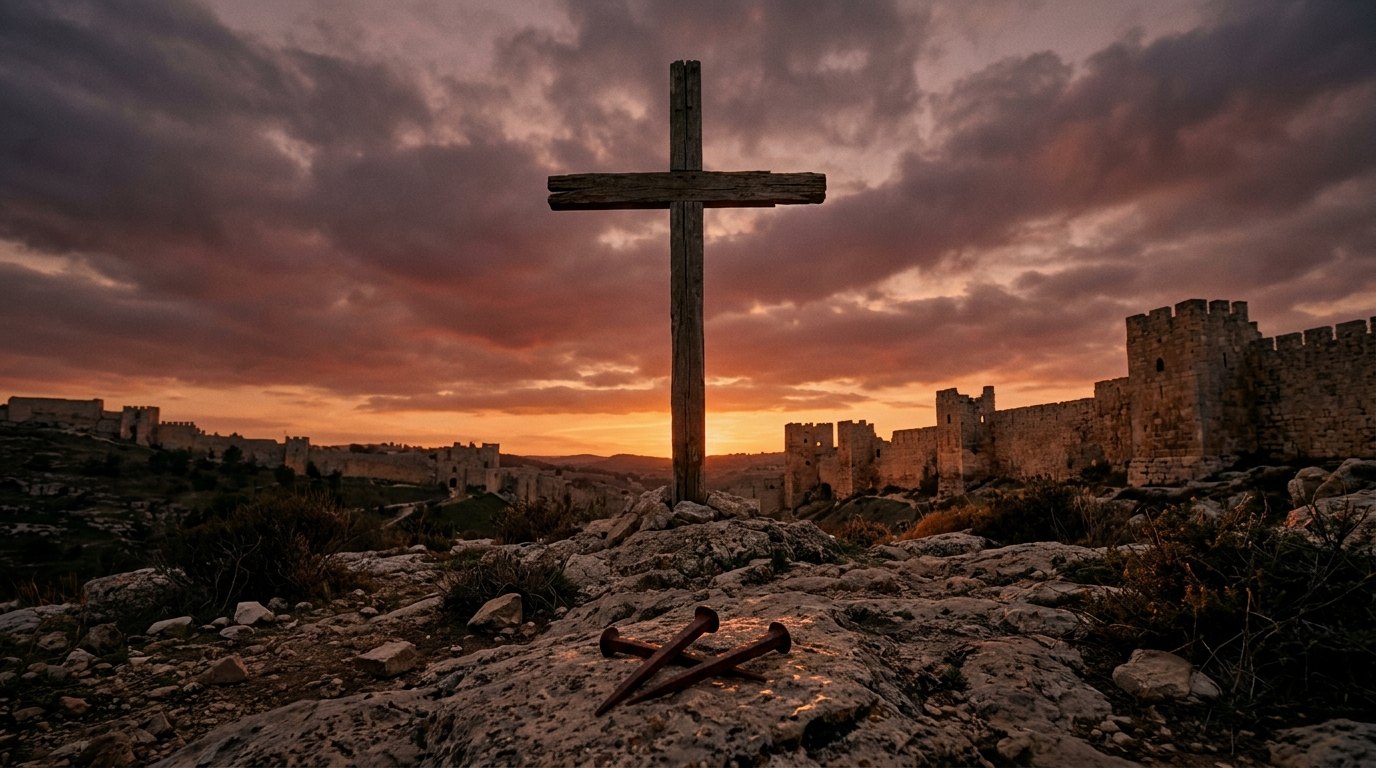
And by that will, we have been made holy through the sacrifice of the body of Jesus Christ once for all.
Hebrews 10:10 (NIV)
This passage shows the goal of the sacrificial system: believers sanctified forever through the once-for-all body of Jesus Christ.
Hebrews 10:10 reveals the glorious goal toward which every altar pointed: “And by that will we have been sanctified through the offering of the body of Jesus Christ once for all.” What millions of animal victims could only typify, Christ accomplished in full reality. Isaiah foretold that the Lord’s Servant would be led like a lamb to the slaughter, making His soul a guilt offering to justify many (Isaiah 53:7, 10; Acts 8:32-35; Romans 4:25; 1 Peter 2:22-25). Standing by the Jordan, John the Baptist pointed directly to this substance: “Behold, the Lamb of God, who takes away the sin of the world!” (John 1:29; Revelation 5:6). Colossians 2:17 clarifies that Old Testament ceremonies were merely a shadow, whereas the substance belongs to Christ. Because without the shedding of blood there is no remission (Hebrews 9:22; Romans 3:25), God sent His own Son in the likeness of sinful flesh (Romans 8:3). As our Passover Lamb sacrificed for us (1 Corinthians 5:7), Christ offered Himself as a fragrant offering (Ephesians 5:2). Unlike earthly high priests who entered yearly with animal blood, Christ entered the heavenly holy place once for all through His own blood, obtaining eternal redemption (Hebrews 9:11-12, 24-26). His blood cleanses human consciences from dead works to serve the living God (Hebrews 9:13-14; Titus 2:14). Having offered a single sacrifice for sins forever, He sat down at the right hand of God, setting aside repeated rituals (Hebrews 9:28; Hebrews 10:8-14, 18). We were not redeemed with silver or gold, but with the precious blood of Christ (1 Peter 1:18-19), the Lamb whose sacrifice now gathers a ransomed throng from every tribe and tongue (Revelation 5:9).
| Passage | What it says | Fulfilled |
|---|---|---|
| Isaiah 53:7 | The Suffering Servant is led like a lamb to the slaughter, silently bearing the transgression of God's people. | Acts 8:32-35, 1 Peter 2:22-25 |
| Isaiah 53:10 | The Lord puts His Servant to grief, making His soul an offering for sin to justify many. | Romans 4:25, 2 Corinthians 5:21 |
| John 1:29 | John the Baptist identifies Jesus as the Lamb of God who takes away the sin of the world. | Revelation 5:6 |
| Colossians 2:17 | Paul explains that the ceremonial rituals were a shadow of things to come, but the substance belongs to Christ. | Hebrews 8:5 |
| Hebrews 9:11-12 | Christ entered the holy places once for all by His own blood, obtaining eternal redemption rather than temporary covering. | Hebrews 9:24-26 |
| Hebrews 9:13-14 | The blood of Christ cleanses the human conscience from dead works to serve the living God, surpassing animal ashes. | Titus 2:14 |
| Hebrews 9:22 | Under the law almost everything is purified with blood, and without shedding of blood there is no remission. | Romans 3:25 |
| Hebrews 9:28 | Christ was offered once to bear the sins of many, appearing a second time for final salvation. | Titus 2:13 |
| Hebrews 10:8-10 | Jesus abolishes the first covenant of repetitive sacrifices to establish the second, sanctifying believers once for all. | Hebrews 10:18 |
| Romans 3:25 | God put Christ forward as a propitiation by His blood, showing God's righteousness in passing over former sins. | |
| Romans 8:3 | God sent His own Son in the likeness of sinful flesh as an offering for sin, condemning sin in the flesh. | |
| 1 Corinthians 5:7 | Christ our Passover lamb has been sacrificed for us, fulfilling the foundational exodus sacrifice. | |
| Ephesians 5:2 | Christ loved us and gave Himself up for us, a fragrant offering and sacrifice to God. | |
| Hebrews 10:12-14 | By a single offering Christ has perfected for all time those who are being sanctified, sitting down at God's right hand. | |
| 1 Peter 1:18-19 | Believers are redeemed not with perishable things but with the precious blood of Christ, a lamb without spot. | |
| Revelation 5:9 | Heavenly praise acclaims the slain Lamb who ransomed people for God from every tribe and language by His blood. |
Worship Regulated
God Regulated Sacrifice to Curb Idolatry and Pagan Cruelty

You must not worship the LORD your God in their way, because in worshiping their gods, they do all kinds of detestable things the LORD hates. They even burn their sons and daughters in the fire as sacrifices to their gods.
Deuteronomy 12:31 (NIV)
This verse draws a strict moral line separating God's regulated worship from pagan abominations like child sacrifice.
Deuteronomy 12:31 establishes an unbridgeable moral boundary between Israel's worship and the depraved rituals of surrounding nations: “You shall not worship the Lord your God in that way, for every abominable thing that the Lord hates they have done for their gods, for they even burn their sons and their daughters in the fire to their gods.” In the ancient Near East, sacrificial rites were dominated by capricious superstitions, demonic appeasement, and violent fertility practices, culminating in horrific human sacrifice. Far from imitating paganism, God strictly regulated Israel’s worship to curb idolatry and protect His people from savagery. When Moses outlined the burnt offerings in Leviticus 1:1-3, the Lord specified domestic farm animals from the herd or flock, completely ruling out human victims and ensuring offerings were brought only to the tent of meeting (Ephesians 5:2). Sacrificing in open fields to goat demons was forbidden on pain of being cut off from the covenant people (Leviticus 17:7). To prevent the spread of autonomous shrines and syncretistic hill-altars, God commanded that all sacrifice be restricted solely to the place He would choose to put His name (Deuteronomy 12:5-6; John 4:21-24). Furthermore, the judgment against Nadab and Abihu when they offered unauthorized fire demonstrated that worship is governed by God's holiness, not human invention (Leviticus 10:1-3; Hebrews 12:28-29). The Levitical code was thus an act of holy containment—a pedagogical hedge of divine order that curbed pagan cruelty while keeping the eyes of faith fixed on God's true redemption.
| Passage | What it says |
|---|---|
| Leviticus 1:1-3 | The Lord calls Moses to establish prescribed burnt offerings from cattle or sheep at the tent of meeting. |
| Leviticus 17:7 | Israel is commanded to bring sacrifices to the tabernacle rather than offering them to goat demons in open fields. |
| Deuteronomy 12:5-6 | God restricts sacrifice to the single place He chooses for His name, preventing chaotic pagan imitation across hilltops. |
| Deuteronomy 12:31 | The Lord explicitly forbids adopting pagan sacrificial abominations, specifically condemning human and child sacrifice to foreign idols. |
| Leviticus 10:1-3 | Unauthorized sacrificial practice is strictly judged, demonstrating that approach to a holy God is defined solely by His terms. |
Where in the Bible
| Book | Passages |
|---|---|
| Genesis | 4 · Genesis 3:21, Genesis 4:4, Genesis 8:20, Genesis 22:13 |
| Exodus | 2 · Exodus 12:13, Exodus 24:8 |
| Leviticus | 10 · Leviticus 1:4, Leviticus 16:15, Leviticus 16:21, Leviticus 17:11, Leviticus 4:35, Leviticus 5:17-18, Leviticus 16:30, Leviticus 1:1-3, Leviticus 17:7, Leviticus 10:1-3 |
| Deuteronomy | 2 · Deuteronomy 12:5-6, Deuteronomy 12:31 |
| 1 Samuel | 1 · 1 Samuel 15:22 |
| Psalms | 3 · Psalms 40:6, Psalms 50:9-13, Psalms 51:16-17 |
| Isaiah | 3 · Isaiah 1:11, Isaiah 53:7, Isaiah 53:10 |
| Jeremiah | 1 · Jeremiah 7:22-23 |
| Hosea | 1 · Hosea 6:6 |
| Amos | 1 · Amos 5:21-24 |
| Micah | 1 · Micah 6:6-8 |
| John | 1 · John 1:29 |
| Romans | 2 · Romans 3:25, Romans 8:3 |
| 1 Corinthians | 1 · 1 Corinthians 5:7 |
| Ephesians | 1 · Ephesians 5:2 |
| Colossians | 1 · Colossians 2:17 |
| Hebrews | 11 · Hebrews 7:18-19, Hebrews 10:1-3, Hebrews 10:4, Hebrews 9:9, Hebrews 10:11, Hebrews 9:11-12, Hebrews 9:13-14, Hebrews 9:22, Hebrews 9:28, Hebrews 10:8-10, Hebrews 10:12-14 |
| 1 Peter | 1 · 1 Peter 1:18-19 |
| Revelation | 1 · Revelation 5:9 |
The story in order
- The Fall and First Sacrifice (c. 4000 BC) · Genesis 3:21 · God provides the first animal skins, indicating death for sin.
- Abel's Faith Through Sacrifice (c. 3900 BC) · Genesis 4:4 · Abel's offering shows faith in God's provision for sin.
- Noah's Sacrifice After the Flood (c. 2350 BC) · Genesis 8:20 · Noah offers clean animals, a pleasing sacrifice to God.
- Abraham's Ram Substitute (c. 2000 BC) · Genesis 22:13 · God provides a ram as a substitute for Isaac's sacrifice.
- The Passover Lamb (c. 1445 BC) · Exodus 12:13 · The blood of the lamb protects Israel from judgment.
- Atonement by Blood (c. 1444 BC) · Leviticus 17:11 · The life is in the blood, given for atonement.
- Day of Atonement (c. 1444 BC) · Leviticus 16:15 · High priest sprinkles blood for cleansing from sin.
- Covenant Sealed with Blood (c. 1444 BC) · Exodus 24:8 · Blood seals the covenant between God and His people.
- Prophecy of Obedience Over Sacrifice (c. 1000 BC) · Psalms 40:6 · David prophesies God's desire for obedience, not just sacrifice.
- Rejection of Hypocritical Sacrifice (c. 700 BC) · Isaiah 1:11 · God rebukes empty sacrifices without true repentance.
- Suffering Servant's Offering (c. 700 BC) · Isaiah 53:7 · Prophecy of the Servant bearing transgressions silently.
- Jesus, the Lamb of God (AD 27) · John 1:29 · John identifies Jesus as the one who takes away sin.
- Christ's Perfect Offering (c. AD 65) · Hebrews 10:12 · Jesus' single offering perfects believers eternally.
- Redeemed by Christ's Blood (c. AD 65) · 1 Peter 1:18-19 · Redemption through Christ's precious, spotless blood.
Key words
- Atonement (כִּפֻּר (kipur))
- Making amends or reparation for guilt or wrongdoing; reconciliation. · Leviticus 16:15
- Propitiation (ἱλασμός (hilasmos))
- An offering made to appease a deity; a sacrifice that turns away wrath. · Romans 3:25
- Remission (ἄφεσις (aphesis))
- The cancellation or forgiveness of a debt, charge, or offense. · Hebrews 9:22
- Substitute (אֵיל (ayil) - ram, used as substitute)
- One acting or serving in place of another. · Genesis 22:13
- Lamb of God (ἀμνὸς τοῦ θεοῦ (amnos tou theou))
- Jesus Christ, the sacrificial lamb whose death atones for sin. · John 1:29
Rather than being troubled by the biblical requirement of blood, believers may rejoice in God's holy justice and profound mercy. The animal sacrifices were gracious tutors showing that our guilt requires a life, while pointing our eyes forward to the cross. In Jesus Christ, the shadow has given way to the substance, bringing full and eternal remission for all who trust in Him.
48 passages, each cited once.
Scripture cited
- Genesis 4:1-7
- Leviticus 17:10-14
- Hebrews 9:11-14
- Hebrews 9:22-28