What are the Psalms of lament?

Psalms 42
1 As the deer pants for streams of water, so my soul pants for you, my God.
2 My soul thirsts for God, for the living God. When can I go and meet with God?
3 My tears have been my food day and night, while people say to me all day long, “Where is your God?”
4 These things I remember as I pour out my soul: how I used to go to the house of God under the protection of the Mighty One with shouts of joy and praise among the festive throng.
5 Why, my soul, are you downcast? Why so disturbed within me? Put your hope in God, for I will yet praise him, my Savior and my God.
6 My soul is downcast within me; therefore I will remember you from the land of the Jordan, the heights of Hermon—from Mount Mizar.
7 Deep calls to deep in the roar of your waterfalls; all your waves and breakers have swept over me.
8 By day the LORD directs his love, at night his song is with me— a prayer to the God of my life.
9 I say to God my Rock, “Why have you forgotten me? Why must I go about mourning, oppressed by the enemy?”
10 My bones suffer mortal agony as my foes taunt me, saying to me all day long, “Where is your God?”
11 Why, my soul, are you downcast? Why so disturbed within me? Put your hope in God, for I will yet praise him, my Savior and my God.
New International Version (NIV)
The answer
The Psalms of lament are prayers in which God’s people bring suffering, sorrow, danger, injustice, or a sense of God’s distance directly to Him and plead for His help. Their honesty is not unbelief: the sufferer is still speaking to God, remembering who He is, and seeking Him even in darkness.
What a lament sounds like
Psalm 42 is a clear example. The writer longs for God: “As the deer pants for the water brooks, so my soul pants after you, God” (Psalms 42:1). He also describes tears, taunting enemies, painful memories of worship, and overwhelming trouble (Psalms 42:3-4, 7, 9-10). Yet he repeatedly calls his soul back to hope: “Why are you in despair, my soul? Why are you disturbed within me? Hope in God!” (Psalms 42:5; see also Psalms 42:11).
Many laments include several of these movements:
- Complaint: telling God plainly what is wrong. Psalm 13 opens, “How long, Yahweh? Will you forget me forever? How long will you hide your face from me?” (Psalms 13:1).
- Petition: asking God to intervene. David prays, “Behold, and answer me, Yahweh, my God. Give light to my eyes, lest I sleep in death” (Psalms 13:3).
- Trust: remembering God’s character despite present circumstances: “But I trust in your loving kindness. My heart rejoices in your salvation” (Psalms 13:5).
- Praise: looking toward God’s continued goodness: “I will sing to Yahweh, because he has been good to me” (Psalms 13:6).
Not every lament ends with explicit praise. Psalm 88 still addresses God as “Yahweh, the God of my salvation” and continues praying, but its closing verses remain filled with affliction and darkness (Psalms 88:1, 13-18). Lament is therefore not a formula for immediate relief; it is faithful prayer that refuses to hide the truth of suffering.
Individual and communal laments
- Individual laments voice one person’s distress, as in Psalms 13, 22, 42, and 88.
- Communal laments voice the suffering of God’s people together. Psalm 79 describes the nations defiling the temple and laying Jerusalem in heaps (Psalms 79:1-4), while Psalm 74 appeals to God to remember the congregation He redeemed (Psalms 74:1-2). Psalm 137 remembers the tears of God’s people in Babylonian exile (Psalms 137:1-4).
These psalms teach that faith need not deny grief. Their significance is deepest in Christ: on the cross, Jesus cried the opening words of Psalm 22, “My God, my God, why have you forsaken me?” (Matthew 27:46; Psalms 22:1). The laments give suffering believers language for bringing anguish to God without turning away from Him, while His steadfast love remains the ground of hope (Psalms 42:8, 11).
Answered from Scripture · reviewed November 11, 2026
The Psalms of lament are God-inspired prayers that carry raw suffering, fear, and sorrow directly to the Lord, moving deliberately from honest complaint to steadfast trust. Making up roughly a third of the Psalter, these sacred songs teach believers that bringing grief to God is not a sign of weak faith, but an act of profound dependence upon His covenant mercy.
The Nature of Lament
Crying out to God in honest desperation

As the deer pants for streams of water, so my soul pants for you, my God.
Psalms 42:1 (NIV)
It vividly captures the desperate thirst of the suffering soul panting for God as its sole source of life.
In Psalm 42:1, biblical lament reveals its true pulse not as cynical rebellion, but as the desperate thirst of a soul panting after God alone. Far from turning away from the Lord in seasons of desolation, the lamenter treats God as their only fountain of life. In Psalm 42:2, the psalmist yearns to appear directly before the living God, a holy longing echoed in Psalm 63:1, where David earnestly searches for God within a dry and weary land where no water can be found. This deep appetite for God's holy habitation also animates Psalm 84:1-2, where the worshiper’s flesh cries out for the temple courts. In Psalm 143:6-7, the servant spreads out his hands toward heaven, describing his inward life as dry, thirsty ground waiting for rain, and begging God not to hide His presence lest he descend into the pit. This posture turns urgent in Psalm 102:1-2, formally pleading for God to hear prayer and incline His ear quickly in the hour of anguish. Similarly, in Psalm 130:1-2, the cry rises out of the deepest depths straight to Yahweh. Biblical lament begins when sufferers refuse to seek relief elsewhere, casting their total need upon God.
| Passage | What it says |
|---|---|
| Psalms 42:1 | A soul pants for God just as a thirsty deer longs for brooks of water. |
| Psalms 42:2 | The psalmist thirsts for the living God, longing to appear before His divine presence. |
| Psalms 63:1 | David earnestly seeks God, his soul thirsting in a parched and waterless wilderness. |
| Psalms 84:1-2 | The soul longs and faints for the courts of the living God in worship. |
| Psalms 143:6-7 | The afflicted servant spreads out his hands, thirsting for God like parched ground. |
| Psalms 102:1-2 | A formal plea for God to hear prayer and hide not His face in trouble. |
| Psalms 130:1-2 | A cry out of deep distress pleading for the Lord's attentive ear. |
The Naked Pain
Naming grief and mockery before the Lord

My tears have been my food day and night, while people say to me all day long, “Where is your God?”
Psalms 42:3 (NIV)
It models bringing intense sorrow and the cutting taunts of enemies directly into prayer before God.
Psalm 42:3 demonstrates that God invites believers into unfiltered honesty, naming tears as continuous food while enduring the bitter mockery of adversaries. The Psalms never counsel believers to mask agony under religious pretense. In Psalm 42:7, suffering is laid bare as an overwhelming deluge, where deep calls unto deep and all of God's waves and breakers crash over the drowning servant. The soul asks in Psalm 42:9 why God, his very Rock, seems to have forgotten him, leaving him to mourn under the cruel oppression of foes whose relentless daily taunts pierce like a sword within his bones (Psalm 42:10). This raw candor matches Psalm 13:1-2, asking four times how long the Lord will look away while sorrow consumes the heart daily. In Psalm 88:1-3, a soul weighed down with relentless trouble cries out morning and night right at the doorstep of the grave. Psalm 22:1-2 records the supreme agony of felt forsakenness, where crying out brings no immediate rest. In Psalm 38:1-4, physical torment and the heavy hand of divine chastening crush the spirit, while Psalm 69:1-3 depicts sinking into deep mire where there is no foothold. Psalm 88:13-18 concludes with absolute darkness as the writer's companion, showing Scripture honors genuine grief.
| Passage | What it says |
|---|---|
| Psalms 42:3 | Tears serve as food day and night while adversaries taunt, asking where God is. |
| Psalms 42:7 | Overwhelming breakers and billows crash over the sufferer as deep calls to deep. |
| Psalms 42:9 | The believer asks his Rock why he is forgotten and left in mourning. |
| Psalms 42:10 | The daily taunts of mocking adversaries pierce the sufferer like a sword in bone. |
| Psalms 13:1-2 | The psalmist asks how long God will hide His face and allow sorrow to reign. |
| Psalms 88:1-3 | A soul full of troubles cries out day and night, drawing near to Sheol. |
| Psalms 22:1-2 | A devastating cry of abandonment and unanswered weeping day and night. |
| Psalms 38:1-4 | An admission of crushing guilt, physical agony, and the weight of God's heavy hand. |
| Psalms 69:1-3 | A description of drowning in deep mire and waiting with failing eyes for God. |
| Psalms 88:13-18 | The darkest individual lament, concluding with darkness as the psalmist's closest companion. |
The Anchor of Memory
Recalling past worship and God's covenant love
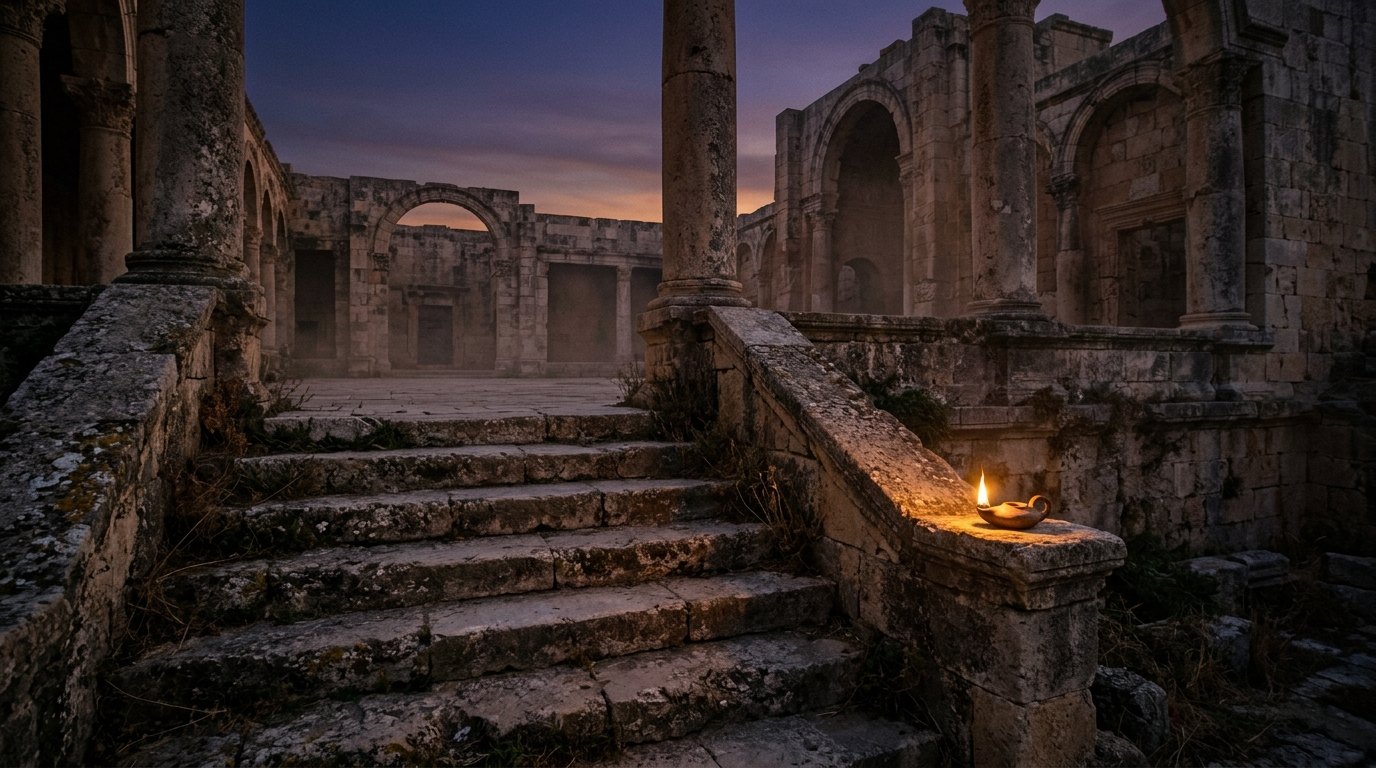
These things I remember as I pour out my soul: how I used to go to the house of God under the protection of the Mighty One with shouts of joy and praise among the festive throng.
Psalms 42:4 (NIV)
It shows how remembering past fellowship with God sustains a wounded soul through present isolation.
In Psalm 42:4, the wounded believer deliberately lays hold of the anchor of holy memory, recalling former days of joyful praise within God's house. Suffering can blind the soul to divine goodness, yet remembering God's past fidelity creates an immovable footing. In Psalm 42:6, even when cast down far to the north by the slopes of Mount Hermon, the psalmist consciously directs his mind toward the Lord. This discipline matches Psalm 77:10-12, where the psalmist, reeling from distress, resolves to recount the ancient wonders and mighty deeds of God's right hand. Isaiah 26:8-9 declares that the righteous soul waits upon the remembrance of Yahweh's holy name through the dark watches of the night, while Psalm 119:131 shows the servant panting because he longs for the enduring truth of God's commandments. This historical memory is communal as well: Psalm 44:1-3 recounts the historic victories of the fathers, noting it was not their own sword that saved them, but God's arm and countenance. Even amidst ruins, Psalm 74:12-17 recalls God's sovereign creation power, and Psalm 89:1-4 grounds its appeal in the unbreakable covenant pledged to David before facing national ruin.
| Passage | What it says |
|---|---|
| Psalms 42:4 | The sufferer remembers leading the joyful multitude to God's house in holy festivity. |
| Psalms 42:6 | Downcast from distant northern heights, the psalmist intentionally remembers the Lord. |
| Psalms 77:10-12 | In severe distress, the writer resolves to remember and meditate on God's ancient wonders. |
| Isaiah 26:8-9 | The soul's deep desire waits upon God's name and the remembrance of His ways. |
| Psalms 119:131 | Longing for God's holy commandments causes the servant to open wide and pant. |
| Psalms 44:1-3 | Recounting God's mighty historical deeds for the ancestors to contrast with present defeat. |
| Psalms 74:12-17 | Praising God's ancient kingship and creation victories in the midst of national desolation. |
| Psalms 89:1-4 | Affirming the enduring covenant with David before wrestling with apparent national collapse. |
The Turn to Hope
Preaching truth to the downcast heart

Why, my soul, are you downcast? Why so disturbed within me? Put your hope in God, for I will yet praise him, my Savior and my God.
Psalms 42:11 (NIV)
It illustrates the decisive climax of biblical lament: commanding oneself to hope in God amid sorrow.
Psalm 42:11 captures the dramatic conclusion of lament as the believer preaches truth to his downcast spirit, commanding his soul to hope in God alone. Lament refuses to remain stagnant in despair; it wages spiritual warfare by confronting internal unbelief. In Psalm 42:5, the psalmist rebukes his inner disquiet and redirects his gaze toward the help of God's presence, while in Psalm 42:8 he clings to the reality that Yahweh commands His steadfast covenant love by day and grants a song by night. This turn transforms David's outlook in Psalm 3:7-8, where surrounded by tens of thousands of enemies he boldly proclaims that salvation belongs entirely to Yahweh. In Psalm 22:22-24, the anguish of forsakenness gives way to triumphant vows to declare God's name in the midst of the congregation. In Psalm 57:7-10, the psalmist's heart becomes steadfast, awakening the dawn with praise because God's mercy reaches to the heavens. In Psalm 13:5-6, deep sorrow resolves in joyful singing of the Lord's bountiful dealings. Joyful thanksgiving erupts in Psalm 28:6-7, hailing the Lord as shield and strength, and Psalm 31:21-24 exhorts all saints to be of good courage because Yahweh preserves the faithful.
| Passage | What it says |
|---|---|
| Psalms 42:5 | The soul is rebuked for despair and urged to hope in God's presence. |
| Psalms 42:8 | Yahweh commands His lovingkindness by day, giving a song in the night. |
| Psalms 42:11 | The psalmist commands his disturbed soul to hope, praising God as his saving help. |
| Psalms 3:7-8 | Surrounded by many foes, David proclaims salvation belongs entirely to Yahweh. |
| Psalms 22:22-24 | Affliction gives way to declaring God's name and praising Him in the great congregation. |
| Psalms 57:7-10 | A steadfast heart awakes the dawn with songs to God's great steadfast love. |
| Psalms 13:5-6 | Trusting steadfast covenant love and resolving to sing praises after deep sorrow. |
| Psalms 28:6-7 | A burst of joy thanking the Lord who is strength, shield, and help. |
| Psalms 31:21-24 | Praising the Lord for preserved faithfulness and encouraging the saints to take courage. |
Corporate Laments
Crying out together in times of national disaster
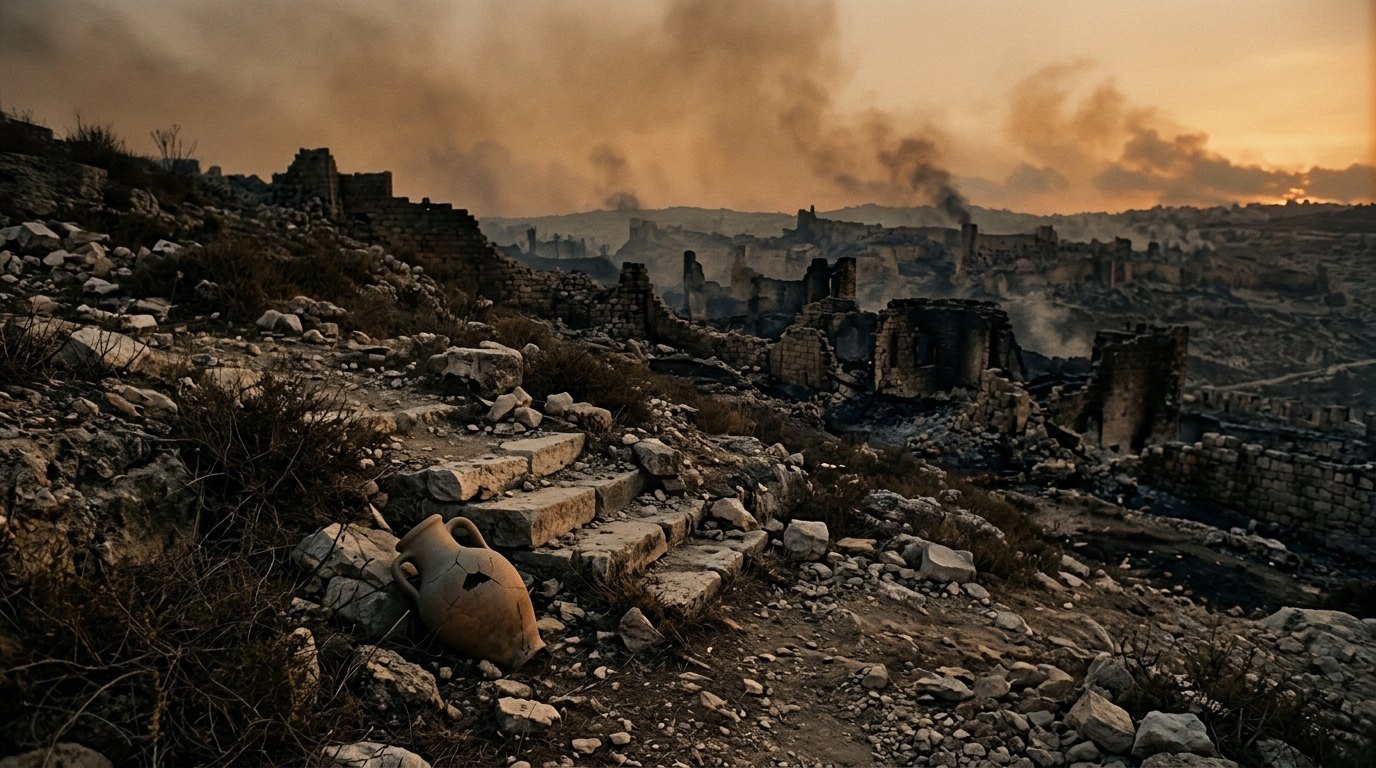
Restore us, O God; make your face shine on us, that we may be saved.
Psalms 80:3 (NIV)
It establishes the corporate refrain that God's restoring presence is the sole hope of His ruined people.
In the shadow of communal ruin, corporate laments anchor Israel to the only presence capable of undoing their despair. God's shining face alone brings salvation, as captured in the recurring plea of Psalm 80:3: "Restore us, O God; let your face shine, that we may be saved!" Corporate laments give liturgical voice to an entire community reeling under catastrophe, military rout, or national exile. In Psalm 44:9-14, the people mourn public disgrace and scattering among the nations, laying their bewildering distress before God without attempting to disguise their agony. Similarly, Psalm 74:1-3 weeps over a devastated temple, asking why the Shepherd's anger smokes against the sheep of His pasture while enemies smash the carved wood of the sanctuary. Psalm 79:1-4 details the gruesome aftermath of Jerusalem's fall, where the bodies of God's servants were left as food for the birds of the heavens and neighbors heaped derision upon the survivors. In Psalm 80:1-3, Israel turns their eyes to the Shepherd who leads Joseph like a flock, praying repeatedly for revival and rescue amidst their national collapse. Finally, Psalm 137:1-4 paints the sorrow of the Babylonian exile, where captives sat weeping by foreign canals, their harps hanging silent on poplars because their hearts could not voice Zion's songs under foreign tormentors. These prayers demonstrate that the church may corporately grieve devastating loss, running together toward God's unfailing covenant mercy rather than fracturing in despair.
| Passage | What it says |
|---|---|
| Psalms 44:9-14 | Israel laments public disgrace, military defeat, and plundering despite their covenant loyalty. |
| Psalms 74:1-3 | The community asks why God's wrath smokes against His sheep while the sanctuary lies ruined. |
| Psalms 79:1-4 | Lament over the defilement of Jerusalem, slaughtered saints, and foreign mockery. |
| Psalms 80:1-3 | A recurring prayer for the Shepherd of Israel to restore His people and shine. |
| Psalms 137:1-4 | Exiles weeping by Babylon's rivers, hanging their harps rather than singing joyful songs in captivity. |
Imprecation and Justice
Entrusting vengeance and ultimate justice to God
Help me, LORD my God; save me according to your unfailing love. Let them know that it is your hand, that you, LORD, have done it.
Psalms 109:26-27 (NIV)
It grounds imprecatory appeals in God's steadfast love and the public demonstration of His sovereign hand.
The imprecatory laments of the Psalter channel righteous outrage over ruthless violence and treachery into divine hands rather than personal vengeance. Ultimate justice belongs entirely to God, a conviction epitomized in Psalm 109:26-27: "Help me, O Lord my God! Save me according to your steadfast love! Let them know that this is your hand; you, O Lord, have done it!" Rather than taking matters into their own hands, the psalmists deliver their fury, vulnerability, and legal cases to the supreme Judge of the earth. In Psalm 35:1-6, David petitions God to grasp buckler and shield, drawing the spear against adversaries who ambushed him without cause. Psalm 58:6-9 calls on God to break the fangs of lions and blunt the poisoned arrows of corrupt judges who barter away righteousness. When facing relentless persecution and venomous mockery, Psalm 69:22-28 cries for divine retribution, asking that hardened, unrepentant oppressors be blotted out from the book of life. Psalm 109:6-15 sets forth the severe covenant penalties against an adversary who repaid David's love with accusation and showed no mercy to the poor and needy. Psalm 137:7-9 concludes the exilic dirge by asking God to remember Edom's cruelty and to execute righteous judgment on Babylon for slaughtering innocent children. Far from indulging private malice, these severe prayers uphold God's absolute holiness, pleading that He uphold justice and vindicate His afflicted people.
| Passage | What it says |
|---|---|
| Psalms 35:1-6 | Asking the Lord to take up buckler and spear to contend against malicious persecutors. |
| Psalms 58:6-9 | Pleading for God to shatter the teeth of wicked and unjust rulers. |
| Psalms 69:22-28 | Calling for retribution and divine blot from the book of life for unrepentant oppressors. |
| Psalms 109:6-15 | Appealing to God's strict justice against a treacherous accuser who showed no mercy. |
| Psalms 137:7-9 | Commending justice to God against Edom and Babylon for ruthless violence. |
Penitential Laments
Grieving over sin and seeking divine mercy

My sacrifice, O God, is a broken spirit; a broken and contrite heart you, God, will not despise.
Psalms 51:17 (NIV)
It defines the central inward posture of penitential lament: a broken spirit and contrite heart God will not despise.
Penitential laments confront the heaviest burden known to the human heart: the guilt of personal sin and rebellion against a holy God. A contrite heart is the sacrifice God never despises, as David confesses in Psalm 51:17: "The sacrifices of God are a broken spirit; a broken and contrite heart, O God, you will not despise." In these sacred prayers, suffering is understood as connected to divine discipline, prompting honest confession rather than defensive excuses. Psalm 6:1-5 portrays bodily wasting and soul-deep terror under the Lord's rebuke, pleading for deliverance based on His steadfast love. Psalm 32:1-5 traces the misery of keeping silent, where the psalmist's bones grew old through groaning and his vitality vanished like summer drought until he confessed his transgression and discovered the glad relief of pardon. In Psalm 51:1-4, David begs for complete cleansing and washing after his grave moral failure, recognizing that his transgression was ultimately committed against God alone. Psalm 130:3-4 contemplates the impossibility of standing before a God who records iniquities, only to celebrate the joyful reality of His forgiveness, which produces reverence. Psalm 143:1-2 appeals for an audience based on divine faithfulness, asking the Lord not to enter into judgment with His servant because no flesh living is righteous in His sight. These laments lead the brokenhearted sinner straight through repentance to the fathomless depths of God's forgiving grace.
| Passage | What it says |
|---|---|
| Psalms 6:1-5 | Pleading for healing and deliverance from divine chastening and terror in bone and soul. |
| Psalms 32:1-5 | Describing the dry wasting of unconfessed transgression before joyful forgiveness is found. |
| Psalms 51:1-4 | David's brokenhearted petition for mercy, cleansing from iniquity, and a clean heart. |
| Psalms 130:3-4 | Recognizing that no one can stand if the Lord marks sins, yet celebrating forgiveness. |
| Psalms 143:1-2 | Asking not to enter into judgment because no living person is righteous before God. |
Where in the Bible
| Book | Passages |
|---|---|
| Psalms | 48 · Psalms 42:1, Psalms 42:2, Psalms 63:1, Psalms 84:1-2, Psalms 143:6-7, Psalms 102:1-2, Psalms 130:1-2, Psalms 42:3, Psalms 42:7, Psalms 42:9, Psalms 42:10, Psalms 13:1-2, Psalms 88:1-3, Psalms 22:1-2, Psalms 38:1-4, Psalms 69:1-3, Psalms 88:13-18, Psalms 42:4, Psalms 42:6, Psalms 77:10-12, Psalms 119:131, Psalms 44:1-3, Psalms 74:12-17, Psalms 89:1-4, Psalms 42:5, Psalms 42:8, Psalms 42:11, Psalms 3:7-8, Psalms 22:22-24, Psalms 57:7-10, Psalms 13:5-6, Psalms 28:6-7, Psalms 31:21-24, Psalms 44:9-14, Psalms 74:1-3, Psalms 79:1-4, Psalms 80:1-3, Psalms 137:1-4, Psalms 35:1-6, Psalms 58:6-9, Psalms 69:22-28, Psalms 109:6-15, Psalms 137:7-9, Psalms 6:1-5, Psalms 32:1-5, Psalms 51:1-4, Psalms 130:3-4, Psalms 143:1-2 |
| Isaiah | 1 · Isaiah 26:8-9 |
The story in order
- Creation and Fall (c. 4000 BC) · Genesis 1:1 · God's perfect creation marred by sin, introducing suffering.
- The Patriarchs (c. 2000 BC) · Genesis 12:1-3 · God's covenant promises begin, a basis for trust in hardship.
- Exodus and Law (c. 1450 BC) · Exodus 14:13-14 · God's deliverance of Israel from slavery, a historical anchor.
- Conquest of Canaan (c. 1400 BC) · Joshua 1:1-9 · God's faithfulness in giving the promised land.
- United Monarchy (c. 1000 BC) · 2 Samuel 7:12-16 · God's covenant with David, establishing a royal line.
- Divided Kingdom (c. 931 BC) · 1 Kings 12:16-24 · National division and spiritual decline leading to judgment.
- Prophetic Warnings (c. 740 BC) · Isaiah 1:16-20 · Calls to repentance amidst national sin and suffering.
- Exile in Babylon (c. 586 BC) · Psalms 137:1-4 · A time of national grief and remembrance of Zion.
- Return and Rebuilding (c. 516 BC) · Ezra 3:10-13 · Rebuilding the temple amidst opposition and mixed emotions.
- Jesus' Ministry (AD 28) · Matthew 11:2-6 · Jesus fulfills messianic hopes, yet faces rejection.
- Crucifixion and Resurrection (AD 30) · Psalms 22:1-2 · The ultimate lament, answered by resurrection victory.
- The Apostolic Age (AD 40-60) · Acts 4:23-31 · The early church faces persecution with prayer and boldness.
From Despair to Trust
| Complaint/Pain | Memory/Hope | Resolution/Praise | Passage |
|---|---|---|---|
| Soul pants for God, cries out in distress | Remembers God's past deeds and covenant love | Commands soul to hope and praise God | Psalms 42:1-11 |
| Tears as food, adversaries taunt, asking where God is | Remembers leading joyful multitudes to God's house | Urged to hope in God's presence and saving help | Psalms 42:3-8 |
| How long will you hide your face? Sorrow reigns. | Resolves to remember God's ancient wonders. | Trusts in steadfast covenant love and sings praises. | Psalms 13:1-6 |
| Cries out day and night, drawing near to Sheol. | Affirming the enduring covenant with David. | Steadfast heart awakes the dawn with songs. |
Key words
- Lament
- A passionate expression of grief, sorrow, or regret, often directed to God. · Psalms 42:1
- Thirsting (tsamáʼ, צָמָא)
- A deep spiritual longing and craving for God's presence and help. · Psalms 42:1-2
- Sheol (še'ōl, שְׁאוֹל)
- The Hebrew concept of the underworld or grave, representing death and the absence of God. · Psalms 88:3
- Steadfast Love (ḥesed, חֶסֶד)
- God's enduring, loyal, and covenantal kindness and mercy. · Psalms 42:8
- Hope
- Confident expectation and trust in God's promises and deliverance, even amidst suffering. · Psalms 42:5
- Yahweh (Yhwh, יְהוָה)
- The personal covenant name of God, emphasizing His faithfulness and redemptive actions. · Psalms 3:7-8
Rather than turning away from God in dark seasons, the psalms of lament invite us to run straight into His presence with tears and honest questions. By tethering every ache to His unchanging promises, these ancient prayers lead our hearts out of despair and anchor our hope in the God of our salvation.
49 passages, each cited once.
Scripture cited
- Psalms 42
- Psalms 13
- Psalms 88
- Psalms 22:1-2
- Matthew 27:45-46
- Psalms 74:1-2
- Psalms 79:1-4
- Psalms 137:1-4