What does 'holy' mean in the Bible?

1 Peter 1:13-16
13 Therefore, with minds that are alert and fully sober, set your hope on the grace to be brought to you when Jesus Christ is revealed at his coming.
14 As obedient children, do not conform to the evil desires you had when you lived in ignorance.
15 But just as he who called you is holy, so be holy in all you do;
16 for it is written: “Be holy, because I am holy.”
New International Version (NIV)
The answer
In the Bible, “holy” means set apart for God and belonging to Him. When God is called holy, the word also describes His absolute purity and unique majesty—He is perfectly separate from all sin and unlike anything He has made.
The Hebrew word qadosh and the Greek word hagios both carry the idea of being sacred or consecrated. Scripture uses “holy” in several connected ways:
- God is perfectly holy. The seraphim call out, “Holy, holy, holy, is Yahweh of Armies!” (Isaiah 6:3). Isaiah immediately becomes conscious of his own uncleanliness before God’s glory (Isaiah 6:5). God’s holiness therefore includes both His surpassing greatness and His complete moral purity.
- People and things can be set apart for God. Something is holy when it is consecrated to His service rather than treated as ordinary. Believers are called “a holy nation, a people for God’s own possession” (1 Peter 2:9): their holiness begins with belonging to Him.
- God’s people must live holy lives. Holiness is not merely a religious label. Peter connects it with obedience, rejecting former sinful desires, and holiness “in all of your behavior” (1 Peter 1:14-15).
The standard is God Himself: “You shall be holy; for I, Yahweh your God, am holy” (Leviticus 19:2). Peter quotes that command in 1 Peter 1:16. Biblical holiness is therefore a life set apart to God, obeying Him and reflecting His character—not simply outward religiousness or self-righteousness.
Answered from Scripture · reviewed November 11, 2026
In Scripture, holiness fundamentally signifies being set apart exclusively for God and embodying flawless moral purity that mirrors His divine character. From the Hebrew qadosh to the Greek hagios, God's nature is the ultimate benchmark to which His people are called to conform in every sphere of life.
The Divine Standard
God Alone Is Holy in His Very Essence

And they were calling to one another: “Holy, holy, holy is the LORD Almighty; the whole earth is full of his glory.”
Isaiah 6:3 (NIV)
The threefold proclamation reveals that absolute holiness is the central glory and defining majesty of God's nature.
When Isaiah stood before the heavenly throne, he heard the burning seraphim crying out to one another, "Holy, holy, holy is the Lord of hosts; the whole earth is full of his glory" (Isaiah 6:3). This threefold repetition elevates holiness as the essential, defining majesty of God. He is not merely righteous by a rule outside Himself; He is the sovereign source and sole definition of absolute purity. As Hannah rejoiced in her prayer, there is none holy like the Lord, beside whom there is no other (1 Samuel 2:2). Moses echoed this foundational truth at the Red Sea, praising God as majestic in holiness and awesome in glorious deeds (Exodus 15:11). The psalmist likewise summons the entire earth to bow and exalt the Lord at His holy mountain because He alone is holy (Psalms 99:9).
Because God's nature is utterly pure, His eyes are too pure even to look approvingly upon evil or tolerate wrongdoing (Habakkuk 1:13). He is the high and lofty One who inhabits eternity, whose very name is Holy (Isaiah 57:15). Yet His transcendent separation does not keep Him distant from His covenant people; as Hosea reminds us, He remains the Holy One in their midst, whose ways surpass the fallen passions of humanity (Hosea 11:9). This divine purity is unceasing and eternal, celebrated continually around the heavenly throne where living creatures never rest from crying, "Holy, holy, holy is the Lord God Almighty" (Revelation 4:8). Ultimately, every tribe and nation will bow before Him in reverent awe, because He alone is holy and His righteous acts stand revealed forever (Revelation 15:4).
| Passage | What it says |
|---|---|
| Exodus 15:11 | Moses praises the Lord as majestic in holiness, awesome in glorious deeds, unmatched among the gods. |
| 1 Samuel 2:2 | Hannah declares in prayer that there is none holy like the Lord, for beside Him there is no other. |
| Psalms 99:9 | The psalmist calls all people to exalt the Lord at His holy mountain because He alone is holy. |
| Isaiah 6:3 | Seraphim cry out holy, holy, holy is the Lord of hosts, declaring the earth full of His glory. |
| Habakkuk 1:13 | The prophet observes that God's eyes are too pure to look on evil, tolerating no wrongdoing. |
| Revelation 4:8 | The four living creatures unceasingly proclaim holy, holy, holy is the Lord God Almighty who was and is to come. |
| Revelation 15:4 | All nations shall come and worship before the Lord because He alone is holy in His righteous acts. |
| Isaiah 57:15 | God identifies Himself as the high and lofty One who inhabits eternity, whose name is Holy. |
| Hosea 11:9 | God declares He will not execute fierce wrath because He is God and not man, the Holy One in their midst. |
Set Apart
Consecrated Spaces, Seasons, and Vessels for Divine Purpose

“Do not come any closer,” God said. “Take off your sandals, for the place where you are standing is holy ground.”
Exodus 3:5 (NIV)
God commands Moses to remove his sandals because divine presence consecrates ordinary ground into holy ground.
When Moses approached the burning bush on Mount Horeb, God stopped his advance with a solemn command: "Do not come near; take your sandals off your feet, for the place on which you are standing is holy ground" (Exodus 3:5). The soil itself possessed no inherent righteousness, but the immediate presence of the Almighty consecrated ordinary dirt into sacred space. In Scripture, to be holy fundamentally means to be set apart exclusively for God's presence and purpose. This pattern began at creation, when God rested on the seventh day and sanctified it as distinct from all other days (Genesis 2:3), establishing the weekly Sabbath command to be remembered and kept holy (Exodus 20:8).
This principle of divine consecration governed every aspect of Israel's national and religious life. When the tabernacle was erected, Moses was commanded to anoint the altar and all its furnishings with sacred oil so that they became most holy, consecrating whatever touched them (Exodus 30:29). Even the agrarian produce was subject to this principle; every tithe of the land, whether grain from the field or fruit from trees, was declared holy to the Lord (Leviticus 27:30). The high priest carried this reality visibly upon his forehead, wearing a pure gold plate engraved with "Holy to the Lord" to mark his dedicated service (Exodus 28:36). Through the Sinai covenant, God gathered an entire community out from among the pagan nations, charging Israel to be a kingdom of priests and a holy nation (Exodus 19:6). They were commanded to walk in distinction because God had separated them from the peoples to belong entirely to Himself (Leviticus 20:26).
| Passage | What it says |
|---|---|
| Genesis 2:3 | God blesses and sanctifies the seventh day because on it He rested from all His creative labor. |
| Exodus 3:5 | God tells Moses to take off his sandals because the ground where he stands is holy ground. |
| Exodus 30:29 | The altar and tabernacle furnishings are anointed so they become most holy, sanctifying whatever touches them. |
| Leviticus 20:26 | The Lord demands holiness from Israel because He separated them from all other peoples to be His own. |
| Leviticus 27:30 | All tithes of the land, whether seed or fruit of the tree, are declared holy to the Lord. |
| Exodus 19:6 | Israel is summoned to be a kingdom of priests and a holy nation consecrated entirely to the Lord. |
| Exodus 20:8 | God commands the Sabbath day to be remembered and kept holy as set apart unto Him. |
| Exodus 28:36 | The high priest's golden plate is engraved with 'Holy to the Lord' to consecrate his service. |
The Calling
God Calls His People to Mirror His Purity

But just as he who called you is holy, so be holy in all you do; for it is written: “Be holy, because I am holy.”
1 Peter 1:15-16 (NIV)
Peter anchors Christian ethics directly in God's eternal mandate to be holy as He is holy.
Because the God who redeems His people is entirely pure, He calls them to reflect His character in every dimension of life: "As he who called you is holy, you also be holy in all your conduct, since it is written, 'You shall be holy, for I am holy'" (1 Peter 1:15-16). Holiness for the believer is not an abstract religious concept or a private sentiment, but an active, visible reflection of God's moral perfection. Peter's apostolic command deliberately quotes the ancient covenant law given to Israel through Moses. In Leviticus, the Lord commanded His gathered people to consecrate themselves and walk in holiness precisely because He is holy (Leviticus 11:44), repeating this foundational mandate to the whole congregation as the governing standard for their community life (Leviticus 19:2).
Living in conformity with God's holiness demands intentional mental discipline and decisive moral separation. Peter directs believers to gird up the loins of their minds, remain sober-minded, and set their hope fully on the grace brought at the revelation of Jesus Christ (1 Peter 1:13). Genuine holiness requires a clean break from past sinful patterns; believers are called to live as obedient children who refuse to be conformed to the destructive desires that governed their prior days of spiritual ignorance (1 Peter 1:14). When God calls a person into fellowship with Himself, that calling transforms their thoughts, speech, and moral standards, conforming their ordinary conduct to the glorious purity of their heavenly Father.
| Passage | What it says |
|---|---|
| Leviticus 11:44 | The Lord commands His people to consecrate themselves and be holy because He is holy. |
| Leviticus 19:2 | The whole congregation of Israel is commanded to be holy because the Lord their God is holy. |
| 1 Peter 1:13 | Believers are told to prepare their minds, remain sober, and fix their hope on coming grace. |
| 1 Peter 1:14 | As obedient children, believers must not conform to former lusts lived in their past spiritual ignorance. |
| 1 Peter 1:15 | Just as the One who called them is holy, believers must become holy in all their conduct. |
| 1 Peter 1:16 | The apostolic instruction quotes Scripture's ancient command: You shall be holy, for I am holy. |
Daily Practice
Living Clean, Guarded Lives of Consecrated Behavior

Make every effort to live in peace with everyone and to be holy; without holiness no one will see the Lord.
Hebrews 12:14 (NIV)
Holiness is presented as an essential pursuit for the believer, without which no one will see God.
The call to holiness is not an optional pursuit for the Christian life, but an essential mark of authentic faith: "Strive for peace with everyone, and for the holiness without which no one will see the Lord" (Hebrews 12:14). True holiness demands vigorous spiritual exertion, leading believers to guard their hearts and conduct against the moral corruption of this world. Paul urges Christians by the mercies of God to present their physical bodies as living sacrifices, holy and acceptable to God, which is their spiritual worship (Romans 12:1). Standing on the promises of the covenant, believers are called to cleanse themselves from every defilement of flesh and spirit, bringing holiness to completion in the fear of God (2 Corinthians 7:1).
This consecrated lifestyle directly addresses bodily purity, particularly in the realm of human sexuality. Paul plainly declares that the will of God is our sanctification, requiring that each believer abstain from sexual immorality and know how to control their own body in holiness and honor (1 Thessalonians 4:3-7). God did not call His people to impurity, but into a life of consecrated righteousness. In the inner life, Christians are commanded to honor Christ the Lord as holy in their hearts, always ready to give a gentle and respectful defense of their hope (1 Peter 3:15). Paul reminds Timothy that in a great house there are diverse vessels, and whoever cleanses himself from dishonorable practices will be an honorable vessel, set apart as holy, useful to the Master of the house, and prepared for every good work (2 Timothy 2:21).
| Passage | What it says |
|---|---|
| Romans 12:1 | Paul urges believers to present their bodies as living sacrifices, holy and pleasing to God. |
| 2 Corinthians 7:1 | Believers are urged to cleanse themselves from every defilement, bringing holiness to completion in God's fear. |
| 1 Thessalonians 4:3 | Paul teaches that the will of God is sanctification, specifically abstaining from sexual immorality. |
| 1 Thessalonians 4:7 | God did not call His people to impurity, but in holiness and honor. |
| Hebrews 12:14 | Believers are instructed to pursue peace with everyone and holiness, without which no one sees the Lord. |
| 1 Peter 3:15 | Christians are commanded to honor Christ the Lord as holy in their hearts and defend their hope. |
| 2 Timothy 2:21 | Whoever cleanses himself from dishonour will be a vessel for honourable use, set apart and useful to the Master. |
Christ Our Sanctification
The Saints Perfected in Christ and Purified by the Spirit
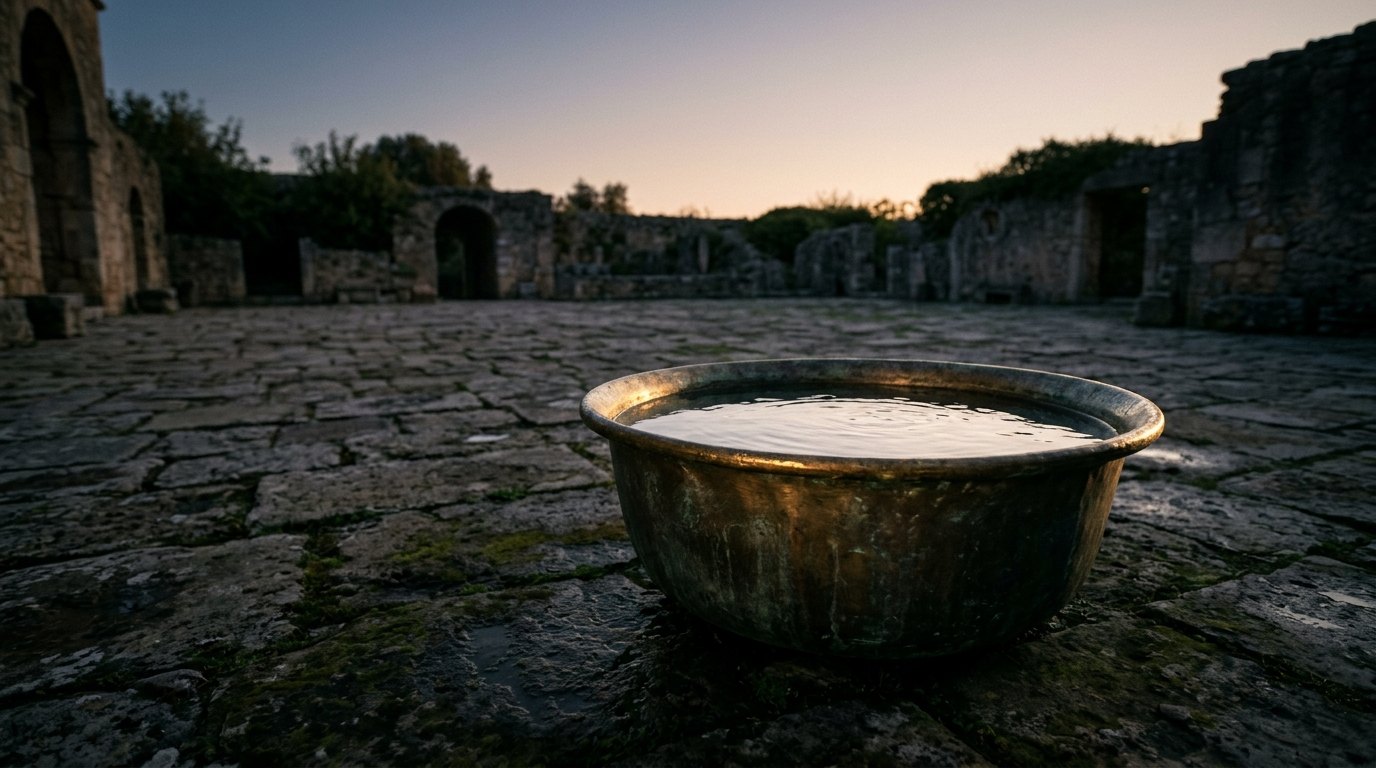
And by that will, we have been made holy through the sacrifice of the body of Jesus Christ once for all.
Hebrews 10:10 (NIV)
Our definitive sanctification rests upon the once-for-all offering of the body of Jesus Christ.
The decisive turning point in Scripture's doctrine of holiness is established in Hebrews 10:10, where we learn that believers have been sanctified once for all through the offering of the body of Jesus Christ. Under the Old Covenant, priests stood daily offering the same sacrifices that could never permanently remove guilt, but Jesus enacted an enduring consecration by His own blood. This transformative reality anchors the identity of every Christian. Writing to an imperfect congregation, Paul nonetheless addresses them in 1 Corinthians 1:2 as those sanctified in Christ Jesus and called to be saints—holy ones not by human merit, but by divine placement.
This position is forged in the washing of regeneration. In 1 Corinthians 6:11, the apostle reminds the believers that while they were once enslaved to defilement, they were washed, sanctified, and justified in the name of the Lord Jesus Christ and by the Spirit of our God. Such redemption realizes the eternal counsel of God, who, according to Ephesians 1:4, chose us in Christ before the foundation of the world to be holy and blameless before Him in love. The cross remains the active agent of this cleansing: as Ephesians 5:26 declares, Christ gave Himself up for the church so that He might sanctify her, washing her with the water of the word to present her without blemish.
Consequently, the New Testament transfers the sacred titles of Israel directly to the community of faith. In 1 Peter 2:9, Peter designates the church as a chosen race, a royal priesthood, and a holy nation belonging exclusively to God, charged to proclaim His excellencies. We possess no independent sanctity apart from our Head; as 1 Corinthians 1:30 affirms, Christ Jesus has become for us wisdom, righteousness, sanctification, and redemption. In Him, position and progress meet with absolute certainty. As Hebrews 10:14 concludes, by a single offering He has perfected for all time those who are being sanctified, establishing both our secure standing and our ongoing renewal in holiness.
| Passage | What it says |
|---|---|
| 1 Corinthians 1:2 | Paul addresses the church as those sanctified in Christ Jesus and called to be saints. |
| 1 Corinthians 6:11 | Believers were washed, sanctified, and justified in the name of the Lord Jesus and the Spirit. |
| Ephesians 1:4 | God chose believers in Christ before the world's foundation to be holy and blameless before Him. |
| Ephesians 5:26 | Christ gave Himself for the church to sanctify her, cleansing her by the washing of water with the word. |
| Hebrews 10:10 | Believers have been sanctified through the offering of the body of Jesus Christ once for all. |
| 1 Peter 2:9 | Believers are a chosen generation, a royal priesthood, and a holy nation belonging to God. |
| 1 Corinthians 1:30 | Christ Jesus has become for believers wisdom from God, righteousness, sanctification, and redemption. |
| Hebrews 10:14 | By a single offering Christ has perfected for all time those who are being sanctified. |
Where in the Bible
| Book | Passages |
|---|---|
| Genesis | 1 · Genesis 2:3 |
| Exodus | 6 · Exodus 15:11, Exodus 3:5, Exodus 30:29, Exodus 19:6, Exodus 20:8, Exodus 28:36 |
| Leviticus | 4 · Leviticus 20:26, Leviticus 27:30, Leviticus 11:44, Leviticus 19:2 |
| 1 Samuel | 1 · 1 Samuel 2:2 |
| Psalms | 1 · Psalms 99:9 |
| Isaiah | 2 · Isaiah 6:3, Isaiah 57:15 |
| Hosea | 1 · Hosea 11:9 |
| Habakkuk | 1 · Habakkuk 1:13 |
| Romans | 1 · Romans 12:1 |
| 1 Corinthians | 3 · 1 Corinthians 1:2, 1 Corinthians 6:11, 1 Corinthians 1:30 |
| 2 Corinthians | 1 · 2 Corinthians 7:1 |
| Ephesians | 2 · Ephesians 1:4, Ephesians 5:26 |
| 1 Thessalonians | 2 · 1 Thessalonians 4:3, 1 Thessalonians 4:7 |
| 2 Timothy | 1 · 2 Timothy 2:21 |
| Hebrews | 3 · Hebrews 12:14, Hebrews 10:10, Hebrews 10:14 |
| 1 Peter | 6 · 1 Peter 1:13, 1 Peter 1:14, 1 Peter 1:15, 1 Peter 1:16, 1 Peter 3:15, 1 Peter 2:9 |
| Revelation | 2 · Revelation 4:8, Revelation 15:4 |
The story in order
- God blesses the seventh day as holy (c. 4000 BC) · Genesis 2:3 · Establishes the concept of sacred time.
- Moses at the holy ground (c. 1450 BC) · Exodus 3:5 · Designates a specific place as holy.
- Israel called a holy nation (c. 1450 BC) · Exodus 19:6 · God sets apart a people for Himself.
- The altar is most holy (c. 1450 BC) · Exodus 30:29 · Objects are consecrated for divine use.
- Command to be holy because God is holy (c. 1450 BC) · Leviticus 11:44 · Moral imperative to reflect God's character.
- Moses praises God's holiness (c. 1450 BC) · Exodus 15:11 · God's unique and supreme holiness is declared.
- Hannah declares none is holy like the Lord (c. 1100 BC) · 1 Samuel 2:2 · Reiterates God's unparalleled holiness.
- Seraphim cry 'Holy, holy, holy' (c. 740 BC) · Isaiah 6:3 · Heavenly beings proclaim God's thrice-holy nature.
- God's eyes are too pure for evil (c. 610 BC) · Habakkuk 1:13 · Highlights God's moral purity.
- Jesus' offering perfects those being sanctified (c. AD 60) · Hebrews 10:14 · Christ's work is the basis of our sanctification.
- Believers sanctified in Christ Jesus (c. AD 55) · 1 Corinthians 1:2 · The church is identified by its sanctified status.
- Be holy in all your conduct (c. AD 60) · 1 Peter 1:15 · Call to live out holiness in daily life.
- Christians are a holy nation (c. AD 60) · 1 Peter 2:9 · New identity in Christ as God's people.
- Heavenly worship of the holy Lord (c. AD 95) · Revelation 4:8 · Eternal praise for God's holiness.
Key words
- Holy (qadosh (Hebrew), hagios (Greek))
- Set apart exclusively for God; morally pure and flawless, reflecting God's character. · Leviticus 11:44
- Sanctify/Sanctification (qadash (Hebrew), hagiazō/hagiasmos (Greek))
- The process of being made holy, set apart for God's purposes. · 1 Corinthians 1:2
- Consecrate (qadash (Hebrew))
- To dedicate or set apart for a sacred purpose; to make holy. · Exodus 30:29
- Purity (tahor (Hebrew), katharos (Greek))
- Moral cleanness and integrity, free from sin and defilement. · Habakkuk 1:13
- Set apart (badal (Hebrew), aphorizō (Greek))
- Separated from common use or profane things for a special purpose. · Leviticus 20:26
Holiness is not an unreachable ideal reserved for the few, but the distinct mark of all who belong to God. As believers rest in the sanctifying work of Christ and yield to His Spirit, they are transformed day by day to reflect the radiant purity and unmatched love of their holy Lord.
38 passages, each cited once.
Scripture cited
- Leviticus 19:1-2
- Isaiah 6:1-5
- 1 Peter 2:9