What does the Bible say about contentment?

Philippians 4:11-13
11 I am not saying this because I am in need, for I have learned to be content whatever the circumstances.
12 I know what it is to be in need, and I know what it is to have plenty. I have learned the secret of being content in any and every situation, whether well fed or hungry, whether living in plenty or in want.
13 I can do all this through him who gives me strength.
New International Version (NIV)
The answer
Contentment is a learned, steady satisfaction in God and his provision, whether in abundance or in need. Scripture contrasts it with anxiety, covetousness and the love of money. It is not pretending that hardship is pleasant: Paul could speak honestly about hunger and need while remaining content.
Contentment is learned through Christ
Paul wrote, “I have learned in whatever state I am, to be content in it” (Philippians 4:11). He had learned how to live both with plenty and with need, and his confidence was, “I can do all things through Christ who strengthens me” (Philippians 4:13). In context, this is not a promise that every ambition will succeed; it is assurance that Christ gives strength to remain faithful in every circumstance (Philippians 4:10-13).
Its foundation is God’s presence, not possessions
Hebrews 13:5 joins freedom from the love of money with contentment, grounding both in God’s promise: “I will in no way leave you, neither will I in any way forsake you.” Because the Lord is the believer’s helper, contentment replaces fear with courage (Hebrews 13:5-6).
Jesus likewise commands his disciples not to be anxious about food, drink or clothing. Their heavenly Father knows their needs, so they are to “seek first God’s Kingdom and his righteousness” rather than live anxiously for tomorrow (Matthew 6:31-34). Contentment ultimately finds its treasure in God himself: “There is no one on earth whom I desire besides you… God is the strength of my heart and my portion forever” (Psalm 73:25-26).
Contentment is great gain; covetousness is destructive
“Godliness with contentment is great gain” (1 Timothy 6:6). Since nothing is brought into or carried out of this world, food and clothing are sufficient cause for contentment (1 Timothy 6:7-8). By contrast, determination to become rich leads into temptation and ruin, while the love of money produces many kinds of evil and sorrow (1 Timothy 6:9-10). Jesus therefore warns, “a man’s life doesn’t consist of the abundance of the things which he possesses” (Luke 12:15). Covetousness must be rejected, not excused, because it makes possessions the measure of life.
Contentment shapes prayer and good works
Proverbs 30:8-9 models a prayer for neither poverty nor riches, asking for needful food so that abundance does not lead to denying God and poverty does not lead to stealing. Contentment is therefore neither greed nor despair, but dependence on God in either condition. His provision also equips believers to serve others: God gives sufficiency so that they “may abound to every good work” (2 Corinthians 9:8).
Answered from Scripture · reviewed November 11, 2026
Scripture presents contentment not as a passive resignation to circumstance, but as a learned spiritual sufficiency rooted firmly in the character, presence, and provision of God. Far from an innate human temperament, true contentment is empowered by Christ, offering freedom from the destructive pull of covetousness and anxiety. By cataloguing the full biblical witness, believers discover that godliness combined with contentment is ultimate gain.
A Learned Secret
Strength Through Christ in Every Condition

I am not saying this because I am in need, for I have learned to be content whatever the circumstances.
Philippians 4:11 (NIV)
Paul reveals that contentment is neither an innate personality trait nor a sudden miracle, but an intentional discipline learned over time through varying circumstances.
In Philippians 4:11, the apostle Paul unveils a profound reality about spiritual life: contentment is a learned discipline rather than a natural disposition. Writing from prison, he declares that he has learned to be content whatever the circumstances, showing that this posture is neither temperament nor instant maturity, but a habit forged through varied providences. Paul unpacks this education in Philippians 4:12, explaining that he knows both how to be brought low and how to abound. Whether facing fullness or hunger, abundance or need, he has been initiated into this sacred secret. The hinge of this reality appears in Philippians 4:13, where he proclaims that Christ infuses the supernatural endurance needed to face every condition. This is not a promise of boundless earthly achievement, but of sufficient divine strength to remain steadfast when outward comforts vanish.
This inward sufficiency radically redefines outward circumstances. In 2 Corinthians 6:10, Paul describes the ministerial calling as sorrowful yet always rejoicing, poor yet making many rich, and having nothing while possessing all things in Christ. Material deprivation cannot empty a life anchored in eternal wealth. Indeed, in Philippians 3:8, the apostle counts all former advantages, status, and worldly gains as absolute loss compared to the surpassing worth of knowing Jesus Christ his Lord. When personal affliction strikes, this contentment remains unshakeable. In 2 Corinthians 12:10, Paul states that he is well content with weaknesses, insults, distresses, persecutions, and difficulties for Christ's sake, because when earthly strength fails, the divine power of Christ rests fully upon him.
| Passage | What it says |
|---|---|
| Philippians 4:11 | Paul testifies that he has learned to be content regardless of his external state or material conditions. |
| Philippians 4:12 | Paul explains that he knows how to endure both humiliation and abundance, being filled and suffering hunger. |
| Philippians 4:13 | Christ supplies the inner power needed to endure all circumstances with steadfast contentment. |
| 2 Corinthians 6:10 | Ministers are characterized as sorrowful yet rejoicing, having nothing materially yet possessing all things spiritually in Christ. |
| Philippians 3:8 | Paul counts all worldly advantages and possessions as loss compared to the supreme worth of knowing Christ. |
| 2 Corinthians 12:10 | Paul rejoices in weaknesses and persecutions for Christ's sake, finding contentment when divine power rests upon him. |
True Wealth
Godliness with Contentment as Great Gain
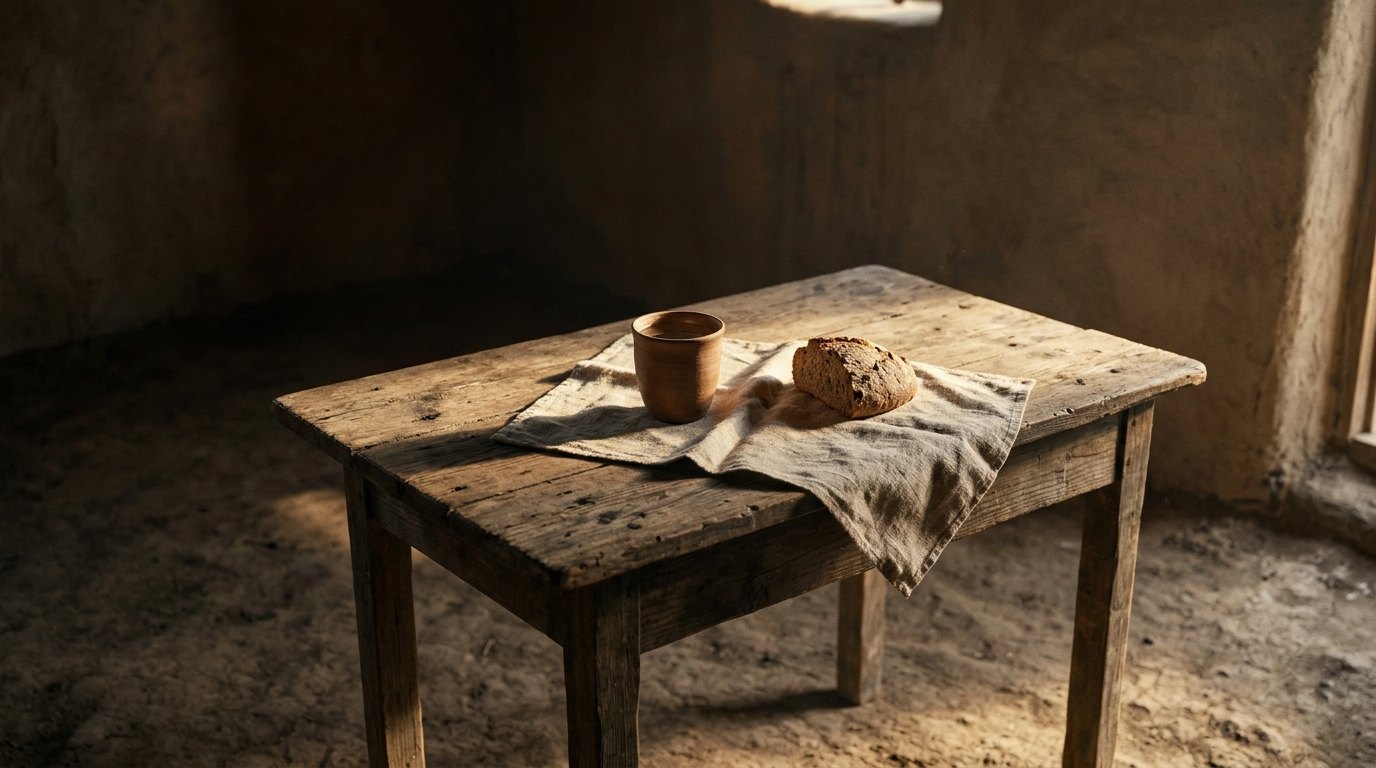
But godliness with contentment is great gain.
1 Timothy 6:6 (NIV)
This passage directly joins true Christian piety with contentment, defining that pair as the highest form of spiritual wealth.
In 1 Timothy 6:6, the Word of God strikes directly at the heart of human greed by declaring that godliness accompanied by contentment is itself immense wealth. Worldly wisdom assumes gain leads to satisfaction, but Scripture reverses the order: true spiritual abundance belongs to the heart that rests satisfied in God. Paul grounds this in eternal reality in 1 Timothy 6:7, reminding believers that we brought nothing into this world and certainly can carry nothing out. Therefore, as 1 Timothy 6:8 commands, having basic food and covering should satisfy the Christian heart. In sharp contrast, 1 Timothy 6:9 warns that the consuming desire to be rich plunges people into destructive traps and spiritual ruin, drowning souls in perdition.
The teachings of Jesus and the wisdom literature reinforce this sober perspective. In Luke 12:15, Christ warns His hearers to beware of all covetousness, establishing that a man's true life never consists in the abundance of his possessions. Centuries earlier, Agur captured this exact balance in Proverbs 30:8-9, pleading for neither poverty nor riches, but only daily bread, lest surplus breed pride that forgets the Lord or poverty tempt him to dishonour God's name. Ecclesiastes 5:10 exposes the vanity of accumulation, noting that whoever loves silver is never satisfied with silver. Proverbs 15:16 confirms that a modest portion held in the fear of the Lord surpasses immense treasure plagued by turmoil, while Proverbs 17:1 reminds us that a dry crust eaten in tranquil quietness is far better than a feast surrounded by bitter conflict.
| Passage | What it says |
|---|---|
| 1 Timothy 6:6 | Godliness accompanied by contentment provides immense spiritual gain rather than mere temporal profit. |
| 1 Timothy 6:7 | Believers brought nothing into the world and can take nothing material out upon death. |
| 1 Timothy 6:8 | Having basic food and clothing ought to be sufficient for the faithful disciple. |
| 1 Timothy 6:9 | The craving to be rich plunges souls into harmful lusts, ruin, and spiritual destruction. |
| Luke 12:15 | Jesus warns strictly against covetousness, declaring that a person's life does not consist in the abundance of possessions. |
| Proverbs 30:8-9 | Agur prays for neither poverty nor excessive riches, seeking only daily bread to guard against denying God. |
| Ecclesiastes 5:10 | Whoever loves money never has enough, and whoever loves wealth is never satisfied with their income. |
| Proverbs 15:16 | Better is a little with the fear of the Lord than great treasure and trouble with it. |
| Proverbs 17:1 | Better is a dry morsel with quietness than a house full of feasting with strife. |
Divine Presence
Resting in the God Who Never Leaves

Keep your lives free from the love of money and be content with what you have, because God has said, “Never will I leave you; never will I forsake you.”
Hebrews 13:5 (NIV)
Contentment is commanded as an antidote to covetousness, grounded specifically in God's unbreakable promise never to abandon His people.
In Hebrews 13:5, Scripture gives the ultimate ground for human peace: believers can live entirely free from the love of money because God has promised never to leave or forsake them. Contentment is not stoic willpower or emotional detachment; it is the direct fruit of resting in the living God. Because the Almighty Himself is our unfailing portion, Hebrews 13:6 boldly affirms that the Lord is our helper, removing the terror of what mere mortal man can do. David echoes this quiet assurance in Psalm 23:1, declaring that because the Lord is our shepherd, we shall lack no good thing. When the soul belongs to the Good Shepherd, every true need is anticipated and met by sovereign grace.
This divine presence reorders every desire. In Psalm 73:25-26, Asaph looks beyond the entire created order to proclaim that he has none in heaven or earth beside God, knowing that though heart and flesh fail, God remains the eternal strength of his heart and his portion forever. Paul echoes this abundant supply in 2 Corinthians 9:8, assuring the church that God can cause all grace to abound so that having all sufficiency in all things, they may overflow in every good work. David similarly rejoices in Psalm 16:5-6 that the Lord is his assigned cup and beautiful inheritance. In Psalm 63:3-5, he testifies that God's steadfast love is better than mortal life itself, satisfying the longing soul as with the richest feast. Habakkuk 3:17-18 captures this unshakable joy at its peak: even if the fig tree fails to blossom, the vines yield no fruit, and the stalls stand empty of cattle, the faithful soul exults in the Lord and rejoices in the God of salvation.
| Passage | What it says |
|---|---|
| Hebrews 13:5 | Believers must live free from the love of money, being content because God promised never to forsake them. |
| Hebrews 13:6 | Confidence in the Lord as our helper drives away the fear of what man can do. |
| Psalms 23:1 | Because the Lord is the shepherd of His people, they lack nothing essential. |
| Psalms 73:25-26 | Asaph confesses that God alone in heaven and earth is his desire and the enduring strength of his heart. |
| 2 Corinthians 9:8 | God makes all grace abound so that believers, having all sufficiency in all things, can abound in good works. |
| Psalms 16:5-6 | David declares the Lord is his chosen portion and cup, delighting in his beautiful inheritance. |
| Psalms 63:3-5 | God's steadfast love is better than life, satisfying the longing soul as with marrow and fatness. |
| Habakkuk 3:17-18 | Though the fig tree does not bud and fields produce no food, the prophet rejoices in God his Savior. |
Kingdom Priority
Casting Anxiety Upon the Heavenly Father

But seek first his kingdom and his righteousness, and all these things will be given to you as well.
Matthew 6:33 (NIV)
Jesus points out that prioritizing the reign and righteousness of God removes worldly anxiety by assuring the supply of all genuine needs.
In Matthew 6:33, the Lord Jesus Christ exposes the root of earthly fretting and establishes the supreme priority for His disciples: seek first the kingdom of God and His righteousness, and all necessary provisions will be added to you. Anxiety about material survival stems from a failure to trust the Father's tender oversight. Jesus explicitly warns in Matthew 6:31 against anxious questions regarding what we will eat, drink, or wear. In Matthew 6:32, He explains that while the unbelieving world frantically chases after perishable goods, our heavenly Father already knows every physical necessity before we ask. Freedom from anxiety comes through aligning our life with God's sovereign rule. Christ therefore commands in Matthew 6:34 that disciples must not borrow trouble from tomorrow, allowing each day's challenges to remain sufficient for the day.
This practical trust in God's daily government touches every station of life. When soldiers asked John the Baptist how repentance should reshape their conduct, Luke 3:14 records his plain command: avoid extortion, renounce false accusation, and remain content with your appointed wages. True godliness manifests in quiet vocational integrity and satisfaction with honest labour. Paul brings this pastoral instruction to its practical culmination in Philippians 4:6-7, commanding believers to be anxious for nothing, but in everything by prayer and supplication with thanksgiving to let their requests be made known to God. As they surrender anxiety, the peace of God that surpasses all human understanding guards their hearts and minds in Christ Jesus. Finally, 1 Peter 5:7 invites the weary believer to cast every single care upon Him, resting in the sure comfort that God continually and affectionately cares for His own.
| Passage | What it says |
|---|---|
| Matthew 6:31 | Jesus commands His followers not to be anxious concerning food, drink, or clothing. |
| Matthew 6:32 | The Gentiles chase earthly goods, but the heavenly Father already knows what His children need. |
| Matthew 6:33 | Seeking first God's kingdom and righteousness guarantees that all necessary physical needs will be supplied. |
| Matthew 6:34 | Disciples are instructed not to be anxious about tomorrow, letting each day address its own trouble. |
| Luke 3:14 | John the Baptist exhorts soldiers to avoid extortion and false accusation and to be content with their wages. |
| Philippians 4:6-7 | Believers are commanded to be anxious for nothing, presenting requests with thanksgiving so God's peace guards their hearts. |
| 1 Peter 5:7 | Casting all anxiety on God because He cares for His people. |
Guarding the Heart
Uprooting the Destructive Idol of Covetousness

“You shall not covet your neighbor’s house. You shall not covet your neighbor’s wife, or his male or female servant, his ox or donkey, or anything that belongs to your neighbor.”
Exodus 20:17 (NIV)
It shows that true discontent begins within the heart by desiring what God has entrusted to another.
The prohibition in Exodus 20:17 reaches beneath outward conduct into the hidden inclinations of the human soul. While earlier commandments forbid outward deeds such as murder, theft, and false witness, this tenth commandment targets the appetite itself: covetousness is the root sickness of discontent, desiring what God has sovereignly allotted to someone else. It exposes that discontentment is rarely about mere physical need; it is an inward refusal to honor God's distribution of His goods. When a believer nurtures longing for another's estate, spouse, or property, the heart quietly disputes the wisdom of the Lord.
The New Testament deepens this warning by laying bare the true nature of greed. In Colossians 3:5, Paul commands believers to put to death earthly practices, explicitly defining covetousness as idolatry. To crave what belongs to another or to obsess over perpetual accumulation is to dethrone the Creator and enthrone the created thing, looking to possessions for security, identity, and satisfaction. Because this craving is antithetical to life in the kingdom, Ephesians 5:3 insists that greed must not even be named among the saints, showing that holy living admits no compromise with grasping desire.
The ancient wisdom of Proverbs 27:20 illustrates the sheer futility of an unrestrained appetite, observing that just as death and ruin are never glutted, so the eyes of man are never satisfied. Left to itself, human longing is a bottomless chasm that more wealth and more status cannot fill. True contentment begins where covetousness is put to death, as the believer relinquishes illicit craving and rests securely in the unmerited bounty of God alone.
| Passage | What it says |
|---|---|
| Exodus 20:17 | The tenth commandment forbids coveting a neighbor's house, spouse, servants, or possessions. |
| Colossians 3:5 | Paul commands putting to death covetousness, which is explicit idolatry. |
| Ephesians 5:3 | Greed and covetousness must not even be named among the saints, as is proper for God's holy people. |
| Proverbs 27:20 | Sheol and Abaddon are never satisfied, and the eyes of man are never satisfied. |
Where in the Bible
| Book | Passages |
|---|---|
| Exodus | 1 · Exodus 20:17 |
| Psalms | 4 · Psalms 23:1, Psalms 73:25-26, Psalms 16:5-6, Psalms 63:3-5 |
| Proverbs | 4 · Proverbs 30:8-9, Proverbs 15:16, Proverbs 17:1, Proverbs 27:20 |
| Ecclesiastes | 1 · Ecclesiastes 5:10 |
| Habakkuk | 1 · Habakkuk 3:17-18 |
| Matthew | 4 · Matthew 6:31, Matthew 6:32, Matthew 6:33, Matthew 6:34 |
| Luke | 2 · Luke 12:15, Luke 3:14 |
| 2 Corinthians | 3 · 2 Corinthians 6:10, 2 Corinthians 12:10, 2 Corinthians 9:8 |
| Ephesians | 1 · Ephesians 5:3 |
| Philippians | 5 · Philippians 4:11, Philippians 4:12, Philippians 4:13, Philippians 3:8, Philippians 4:6-7 |
| Colossians | 1 · Colossians 3:5 |
| 1 Timothy | 4 · 1 Timothy 6:6, 1 Timothy 6:7, 1 Timothy 6:8, 1 Timothy 6:9 |
| Hebrews | 2 · Hebrews 13:5, Hebrews 13:6 |
| 1 Peter | 1 · 1 Peter 5:7 |
The story in order
- The Law Given (c. 1446 BC) · Exodus 20:17 · Coveting is identified as a sin against God's command.
- Wisdom Literature (c. 970-686 BC) · Proverbs 15:16 · Contentment with little and God's fear is better than riches.
- Prophetic Warnings (c. 630 BC) · Habakkuk 3:17-18 · Joy in God is possible even amidst severe lack.
- Jesus Teaches on Wealth (c. AD 30) · Luke 12:15 · Life is not defined by possessions; beware of covetousness.
- Jesus Teaches on Anxiety (c. AD 30) · Matthew 6:31 · Seek God's kingdom first, and He will provide.
- John the Baptist's Ministry (c. AD 28) · Luke 3:14 · Contentment with wages is exhorted for soldiers.
- Apostolic Teaching on Contentment (c. AD 60) · Philippians 4:11 · Contentment is a learned skill through Christ.
- Apostolic Teaching on Gain (c. AD 65) · 1 Timothy 6:6 · Godliness with contentment is great gain.
- Apostolic Teaching on Trust (c. AD 65) · Hebrews 13:5 · Be content because God will never leave you.
- Apostolic Teaching on Anxiety (c. AD 65) · 1 Peter 5:7 · Cast anxieties on God because He cares.
Contentment: Learned Skill vs. Innate Trait
| Learned Skill | Circumstance | Source of Strength | Passage |
|---|---|---|---|
| Learned to be content in any state | Humiliation and abundance | Christ who strengthens | Philippians 4:11-13 |
| Contentment is not innate | Suffering hunger and having nothing | Christ's provision | 2 Corinthians 6:10 |
| Contentment learned through Christ's power | Weaknesses and persecutions | Divine power resting on me | 2 Corinthians 12:10 |
True Wealth vs. Worldly Desire
| True Wealth | Worldly Desire | Warning | Passage |
|---|---|---|---|
| Godliness with contentment | Craving to be rich | Plunges into ruin | 1 Timothy 6:6-9 |
| Life is not in possessions | Abundance of possessions | Beware of covetousness | Luke 12:15 |
| A little with fear of the Lord | Great treasure and trouble | Better to have less with peace | Proverbs 15:16 |
| Dry morsel with quietness | House full of feasting with strife | Peace is better than abundance | Proverbs 17:1 |
Sources of Contentment
| Source | Result | Scripture | Passage |
|---|---|---|---|
| God's presence and promise not to forsake | Freedom from the love of money | Hebrews 13:5 | Hebrews 13:5 |
| The Lord as Shepherd | Lack nothing essential | Psalms 23:1 | Psalms 23:1 |
| God as desire and strength | Enduring strength of heart | Psalms 73:25-26 | Psalms 73:25-26 |
| God's grace abounding | All sufficiency in all things | 2 Corinthians 9:8 | 2 Corinthians 9:8 |
| God as portion and cup | Delight in inheritance | Psalms 16:5-6 | Psalms 16:5-6 |
| God's steadfast love | Satisfied longing soul | Psalms 63:3-5 | Psalms 63:3-5 |
| God our Savior | Rejoicing despite hardship | Habakkuk 3:17-18 | Habakkuk 3:17-18 |
Key words
- Contentment (autarkēs (αὐτάρκης))
- A state of spiritual sufficiency and peace, independent of external circumstances, rooted in God. · Philippians 4:11
- Covetousness (pleonexia (πλεονεξία))
- An intense desire for what belongs to another; considered idolatry. · Colossians 3:5
- Anxiety (merimnaō (μεριμνάω))
- Worry or excessive care about earthly needs and the future. · Matthew 6:34
- Godliness (eusebeia (εὐσέβεια))
- Devotion to God and His will; living a life that honors Him. · 1 Timothy 6:6
- Gain (kerdos (κέρδος))
- Spiritual profit and advantage, especially when coupled with godliness and contentment. · 1 Timothy 6:6
Resting in God's promises frees the believer from the tyranny of circumstances and the empty pursuit of earthly accumulation. Because Christ Himself remains an unfailing portion and an abiding presence, His people can face both abundance and adversity with quiet confidence. True contentment ultimately flows from knowing that the Lord who provides will never leave nor forsake His own.
34 passages, each cited once.
Scripture cited
- Hebrews 13:5-6
- Matthew 6:31-34
- 2 Corinthians 9:8
- Philippians 4:10-13
- 1 Timothy 6:6-10
- Proverbs 30:8-9
- Psalms 73:25-26
- Luke 12:15