What does the Bible say about ghosts?

Luke 24:36-39
36 While they were still talking about this, Jesus himself stood among them and said to them, “Peace be with you.”
37 They were startled and frightened, thinking they saw a ghost.
38 He said to them, “Why are you troubled, and why do doubts rise in your minds?
39 Look at my hands and my feet. It is I myself! Touch me and see; a ghost does not have flesh and bones, as you see I have.”
New International Version (NIV)
The answer
The Bible does not teach that the dead wander the earth as "ghosts." The old English word ghost simply means spirit — it is how older translations render the Hebrew nephesh and the Greek pneuma (both mean "breath," "life," or "living soul"). To "give up the ghost" is just to die (Acts 5:10; John 19:30). When people ask what Scripture says about ghosts, the Bible answers on three points: what a spirit actually is, what happens to the dead, and what God's people are to do with attempts to contact the dead.
A spirit is not a wandering dead body
In Luke 24:37-39, the risen Jesus appears to the disciples and they suppose they have seen a spirit (pneuma). Jesus corrects them on the spot: "A spirit doesn't have flesh and bones, as you see that I have." He then invites them to touch Him and eats a piece of broiled fish in front of them (Luke 24:41-43). The same event in John 20:19-23 has Him show them His hands and side. The point is plain: the risen Christ is bodily resurrected humanity, not a bodiless echo of a dead man. Whatever "ghosts" might be, they are not the physical resurrection of a person — and the resurrection of the body is, for believers, the hope (1 Corinthians 15:42-44).
What actually happens when someone dies
Scripture describes death as a sleep, awaiting a real resurrection.
- John 11:11-14 — Jesus says of Lazarus, "Our friend Lazarus has fallen asleep," and clarifies: "Lazarus is dead."
- Daniel 12:2 — "Many of those who sleep in the dust of the earth will awake, some to everlasting life, and some to shame and everlasting contempt."
- Revelation 14:13 — "Blessed are the dead who die in the Lord from now on… that they may rest from their labors."
- Hebrews 9:27 — "It is appointed for men to die once, and after this, judgment."
The dead are not roaming; they are at rest, awaiting the resurrection and the judgment — for the wicked and the redeemed alike, a bodily awakening to one of two everlasting states, not a return as a shade.
Contacting the dead is forbidden
Treating the dead as spirits one can summon is something God explicitly forbids.
- Leviticus 19:31 — "Don't turn to those who are mediums, nor to the wizards. Don't seek them out, to be defiled by them. I am Yahweh your God."
- Deuteronomy 18:10-12 — "There shall not be found with you anyone who… consults with a familiar spirit, or a wizard, or a necromancer… For whoever does these things is an abomination to Yahweh."
The hard case everyone raises is 1 Samuel 28: Saul, shut out by God, goes to the medium at Endor and something speaks to him. Even on the plainest reading, Scripture frames the whole episode as Saul's rebellion and the medium's violation of the very law Saul himself had enforced (1 Samuel 28:3, 6, 15). The text warns — it does not legitimize the practice. Manassey was condemned in part for this very thing (2 Kings 21:6; 2 Chronicles 33:6), and Josiah tore down the related installations as part of his reform (2 Kings 23:24).
How to read this today
- The KJV phrase "give up the ghost" in Job 3:11, Matthew 27:50, etc., simply means die — it is not a clue that a disembodied person hovers nearby.
- The fear of ghosts is, in the disciples' own words, "terrified and filled with fear" (Luke 24:37). Jesus' answer is not a debunking trick but His presence: "Peace be to you" (Luke 24:36; John 20:19). That is the Christian remedy to such fear — the living Christ, bodily risen, speaking peace.
- If a question tugs at you about someone who has died, Scripture's first word is not curiosity but comfort: the believer who has died "rests from his labors" (Revelation 14:13), and you do not need to chase him through mediums to reach him. You bring your grief to the God who raised His Son in body from the dead.
Answered from Scripture · reviewed November 7, 2026
Scripture gives no warrant for the popular folklore that the dead linger as wandering ghosts roaming old houses or earthbound haunts. Instead, God's Word reveals that human death immediately fixes one's state before God, that deceased souls do not wander the earth, and that all traffic with necromancy or spiritists is strictly forbidden. Believers look not to disembodied shades, but to the bodily resurrection of the dead through Jesus Christ.
Spirits and Resurrected Flesh
Jesus Clarifies What Spirits Are and Are Not

Look at my hands and my feet. It is I myself! Touch me and see; a ghost does not have flesh and bones, as you see I have.”
Luke 24:39 (NIV)
Jesus explicitly distinguishes between an incorporeal spirit and His own tangible, physically resurrected body.
In Luke 24:39, Jesus confronts the terrified assumption of His followers by stating plainly, "See my hands and my feet, that it is I myself. Touch me, and see. For a spirit does not have flesh and bones as you see that I have." His disciples had succumbed to human panic, mistaking their physical Master for an ethereal apparition. This was not the first time their fears led them to assume a phantom was present; when Jesus walked across the stormy waters of the Sea of Galilee, both Matthew 14:26 and Mark 6:49 record that the disciples cried out in dread, believing they were seeing an apparition.
Yet the resurrection of Christ delivers a decisive correction to all ghost folklore. In Luke 24:37, when the risen Lord stood among them, the disciples were frightened and thought they saw an incorporeal spirit. Jesus did not leave room for lingering superstitions. After displaying His scarred hands and feet, Luke 24:41 notes that He asked them whether they had any food. To remove all doubt of His tangible corporeality, Luke 24:42 records that they gave Him a piece of broiled fish, and Luke 24:43 reveals that He took it and ate it before their eyes. John 20:20 corroborates this bodily presentation, where Christ showed His hands and side to their boundless joy. While the ancient world debated spiritual realities—as seen in Acts 23:8 where the Sadducees denied angels, resurrection, and spirits while the Pharisees affirmed them—Scripture clarifies that God’s redemptive hope is never an earthbound ghost. Jesus demonstrated that an incorporeal spirit lacks flesh and bone, anchoring Christian hope firmly in the physical, bodily resurrection.
| Passage | What it says |
|---|---|
| Matthew 14:26 | Disciples cry out in fear when seeing Jesus walking on the water, mistakenly assuming He is an apparition or phantom. |
| Mark 6:49 | The disciples perceive Jesus walking on the lake, cry out in fear, and think they are seeing a ghost. |
| Luke 24:37 | Terrified and filled with fear, the disciples suppose they have seen a spirit when the risen Jesus appears among them. |
| Luke 24:39 | Jesus invites His disciples to touch His hands and feet, showing that a spirit does not have flesh and bones. |
| Luke 24:41 | To demonstrate His physical reality to the disbelieving disciples, Jesus asks if they have any food to eat. |
| Luke 24:42 | The disciples give the risen Lord a piece of broiled fish and some honeycomb to confirm His bodily presence. |
| Luke 24:43 | Jesus takes the broiled fish and eats it in front of the disciples, proving He is not an immaterial ghost. |
| John 20:20 | Jesus shows the gathered disciples His hands and side, confirming His physical reality and giving them great joy. |
| Acts 23:8 | Paul notes that Sadducees deny resurrection, angels, and spirits, whereas Pharisees confess and believe in all of them. |
The State of the Dead
The Dead Do Not Wander the Earth

Just as people are destined to die once, and after that to face judgment,
Hebrews 9:27 (NIV)
This verse establishes that physical death is a one-time boundary immediately followed by divine judgment, leaving no room for wandering.
The definitive boundary of mortality is declared in Hebrews 9:27: "And just as it is appointed for man to die once, and after that comes judgment." This single sentence sweeps away every myth of earthbound wanderers, unfinished business, and roaming phantoms. When physical life ends, human destiny is sealed immediately before God. Job 7:9 compares dying to a cloud that dissolves and vanishes, affirming that whoever goes down to the grave does not come back up, while Job 7:10 adds that the departed person returns no more to his house, nor does his place know him anymore. Job 14:10–12 reiterates that when man breathes his last, he lies down and does not rise until the heavens are no more.
King David understood this finality when mourning his infant son, confessing in 2 Samuel 12:23 that the child could not return to him, though David would one day go to him. The wisdom of Ecclesiastes confirms this absolute severance from earthly life. Ecclesiastes 9:5 explains that the dead know nothing of ongoing earthly affairs, and Ecclesiastes 9:6 establishes that their earthly passions have perished, having no further share in what happens under the sun. At death, Ecclesiastes 12:7 states that dust returns to the earth while the spirit returns directly to God who gave it. The dead do not linger to whisper in the night; as Psalm 115:17 and Psalm 146:4 testify, those who descend into silence no longer execute earthly plans.
For God’s people, death is described tenderly as sleep, as in Daniel 12:2, John 11:11, and John 11:14, awaiting the call of resurrection. For the believer, the transition is instantaneous and glorious: 2 Corinthians 5:8 declares that to be absent from the body is to be present with the Lord, echoing Philippians 1:23 where Paul desires to depart and be with Christ, and Revelation 14:13 where the saints rest peacefully from their labors.
| Passage | What it says |
|---|---|
| Job 7:9 | Job observes that as a cloud vanishes, anyone going down to the grave does not come back up. |
| Job 7:10 | The deceased person does not return to their house, and their earthly home knows them no more. |
| 2 Samuel 12:23 | David acknowledges that his deceased infant cannot return to him, though David will eventually go to him. |
| Ecclesiastes 9:5 | The living know that they will die, but the earthly awareness and earthly memory of the dead cease entirely. |
| Ecclesiastes 9:6 | The love, hatred, and envy of the deceased perish, and they have no further share in earthly affairs. |
| Ecclesiastes 12:7 | At death, dust returns to the earth as it was, and the spirit returns directly to God who gave it. |
| Daniel 12:2 | Those who sleep in the dust of the earth will awake, some to everlasting life and others to contempt. |
| John 11:11 | Jesus speaks of deceased Lazarus as sleeping, portraying physical death as a quiet state before awakening. |
| John 11:14 | Jesus plainly clarifies to His disciples that Lazarus is dead, equating death with the metaphor of sleep. |
| 2 Corinthians 5:8 | Paul teaches that to be absent from the physical body is to be present at home with the Lord. |
| Philippians 1:23 | Paul desires to depart and be directly with Christ, stating that this departure is far better. |
| Hebrews 9:27 | Man is appointed to die once, and after that faces the decisive judgment of Almighty God. |
| Revelation 14:13 | A voice from heaven proclaims blessedness for those who die in the Lord, resting peacefully from their labors. |
| Job 14:10-12 | Job observes that when man breathes his last, he does not rise again to his earthly habitation until the heavens are no more. |
| Psalms 115:17 | The dead do not praise the Lord on earth, nor do any who go down into silence. |
| Psalms 146:4 | When a man's breath departs, he returns to the earth, and in that very day his earthly plans perish. |
The Great Chasm
Scripture Bars Any Crossing Between the Dead and Living

And besides all this, between us and you a great chasm has been set in place, so that those who want to go from here to you cannot, nor can anyone cross over from there to us.’
Luke 16:26 (NIV)
Abraham declares an unbridgeable, impassable divide separating the departed dead, excluding any spectral roaming or communication.
In Luke 16:26, Abraham exposes the impossibility of spectral visitation, explaining to the rich man, "And besides all this, between us and you a great chasm has been fixed, in order that those who would pass from here to you may not be able, and none may cross from there to us." This narrative, spoken by the Lord Jesus Christ Himself, dismantles any belief that deceased humans have the power to traverse boundaries, haunt locations, or make contact with living descendants.
Jesus recounts in Luke 16:22 that when Lazarus died, angels carried him directly to Abraham's side, while the selfish rich man died, was buried, and immediately found his soul in the torments of Hades (Luke 16:23). Looking across the impassable gulf, the rich man conceived a plan rooted in the very desire that drives human superstition: seeking a spectral sign from the beyond. In Luke 16:27–28, he pleaded with Abraham to send Lazarus back to earth to warn his five surviving brothers, hoping a visible apparition would shock them into repentance.
Abraham’s answer in Luke 16:29 strips all validity from such occult expectations: "They have Moses and the Prophets; let them hear them." When the rich man persisted that an appearance from the dead would persuade them, Abraham delivered the final, crushing truth in Luke 16:31: if they do not hear the written Word of God, neither will they be convinced even if someone should rise from the dead. God has not designed the departed dead to serve as messengers or phantoms; His sufficient, inerrant Scriptures provide everything necessary for faith, salvation, and righteousness.
| Passage | What it says |
|---|---|
| Luke 16:22 | The beggar dies and is carried by angels to Abraham's side, while the rich man dies and is buried. |
| Luke 16:23 | In Hades, the rich man lifts up his eyes in torment and sees Abraham and Lazarus far off. |
| Luke 16:26 | Abraham explains that a great gulf is fixed so that none can cross between the realms of departed souls. |
| Luke 16:27 | The rich man begs Abraham to send Lazarus back to the land of the living to warn his brothers. |
| Luke 16:28 | He pleads that five living brothers be warned so they do not enter the same place of torment. |
| Luke 16:29 | Abraham replies that the living already possess Moses and the Prophets, and must listen to them. |
| Luke 16:31 | Abraham concludes that if people do not listen to Scripture, they will not be convinced even if one rises from the dead. |
The Sin of Necromancy
God Strictly Prohibits Seeking the Dead

Let no one be found among you who sacrifices their son or daughter in the fire, who practices divination or sorcery, interprets omens, engages in witchcraft,
Deuteronomy 18:10 (NIV)
This verse anchors the Torah's absolute prohibition of attempting to consult the dead or use mediums.
In Deuteronomy 18:10–11, Yahweh sets a barricade around His people, declaring that "There shall not be found among you anyone who burns his son or his daughter as an offering, anyone who practices divination or tells fortunes or interprets omens, or a sorcerer or a charmer or a medium or a necromancer." Consulting the dead is not innocent folklore; it is an abomination before the holy God (Deuteronomy 18:12). In Leviticus 19:31, God commands Israel not to turn to mediums or spiritists to be defiled by them, warning in Leviticus 20:6 that He will set His face against any person who follows such wickedness, and commanding in Leviticus 20:27 that those who act as mediums be cut off.
Israel’s history bears tragic witness to the ruin wrought by seeking familiar spirits. King Manasseh provoked the Lord to wrath by dealing with mediums and spiritists (2 Kings 21:6; 2 Chronicles 33:6), an evil that King Josiah later purged with godly zeal to uphold God’s law (2 Kings 23:24). The grave downfall of King Saul came because he turned away from Yahweh to consult a medium at En-dor; 1 Chronicles 10:13 states explicitly that Saul died for his unfaithfulness in seeking guidance from a medium rather than from God.
The prophet Isaiah confronts this rebellion with righteous indignation in Isaiah 8:19: "And when they say to you, 'Inquire of the mediums and the necromancers who chirp and mutter,' should not a people inquire of their God? Should they inquire of the dead on behalf of the living?" Turning to the realm of the dead is a futile, demonic trap that brings divine dismantling, as Isaiah 19:3 warns of Egypt's ruined sorcerers and Isaiah 29:4 portrays humbled whispers from the dust. Believers are commanded to look solely to the living God and His enduring Word.
| Passage | What it says |
|---|---|
| Leviticus 19:31 | The Lord commands His people not to turn to mediums or seek out wizards to be defiled by them. |
| Leviticus 20:6 | God sets His face against any soul that turns after mediums and familiar spirits, cutting them off from His people. |
| Leviticus 20:27 | A man or woman who acts as a medium or familiar spirit among Israel is sentenced to death. |
| Deuteronomy 18:10 | The Law forbids anyone among Israel who practices divination, sorcery, witchcraft, or casts spells. |
| Deuteronomy 18:11 | Moses specifically forbids charmers, mediums, consulters of familiar spirits, and anyone practicing necromancy. |
| Deuteronomy 18:12 | The Lord declares all who do these occult practices to be an abomination, driving out nations on their account. |
| 2 Kings 21:6 | King Manasseh provokes the Lord to anger by practicing soothsaying and dealing with mediums and spiritists. |
| 2 Kings 23:24 | King Josiah purges mediums, spiritists, household gods, and abominations out of Judah to confirm God's law. |
| 1 Chronicles 10:13 | Saul dies for unfaithfulness to Yahweh, particularly because he consulted a medium for guidance instead of seeking the Lord. |
| Isaiah 8:19 | Isaiah demands whether the living should consult the dead on behalf of the living rather than inquiring of God. |
| Isaiah 19:3 | The Lord dismantles Egyptian spiritists, mediums, and sorcerers, showing that seeking the dead leads to spiritual destruction. |
| 2 Chronicles 33:6 | Manasseh dealt with mediums and necromancers, doing much evil in the sight of the Lord to provoke Him to anger. |
| Isaiah 29:4 | Jerusalem is humbled, speaking from the dust like the faint whisper of a medium or ghost from the ground. |
The Warning at Endor
Saul's Desperation and the Summoning at Endor
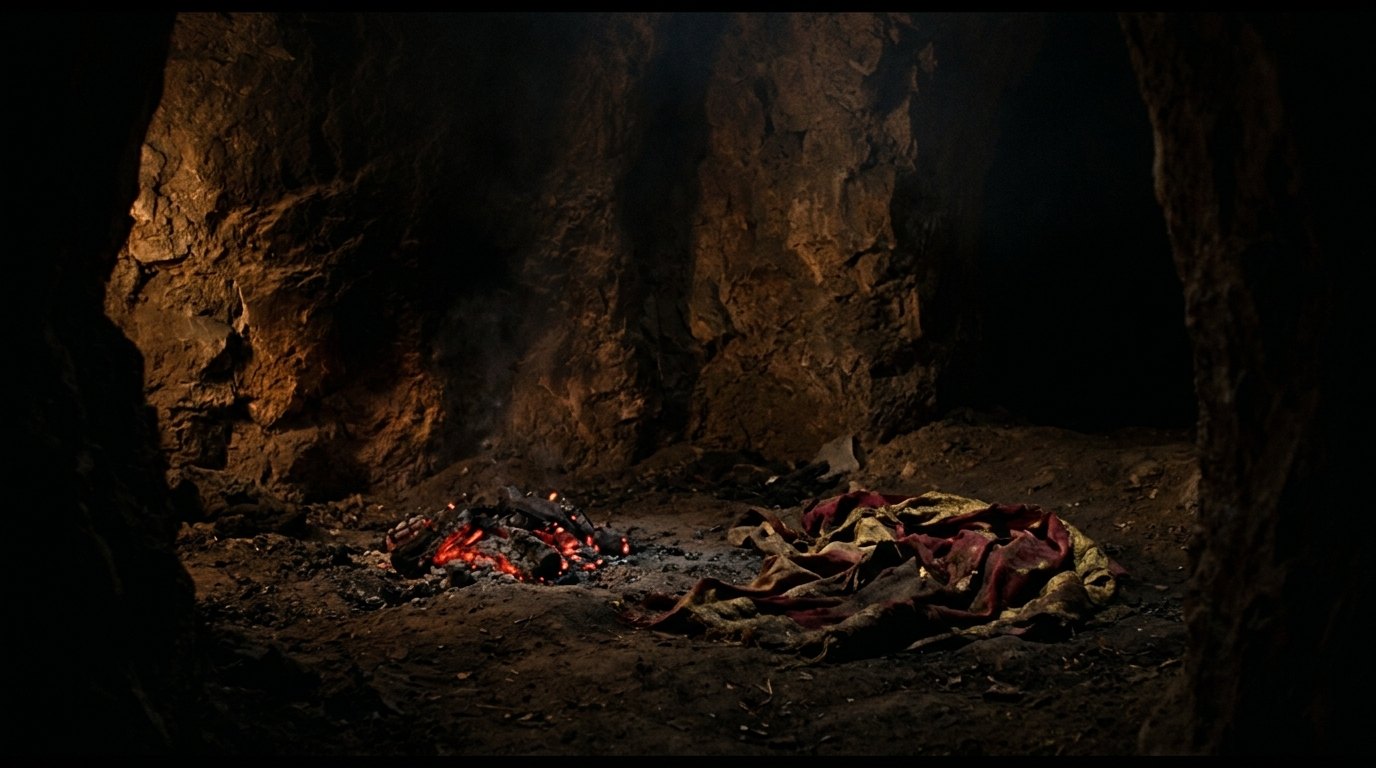
Samuel said to Saul, “Why have you disturbed me by bringing me up?” “I am in great distress,” Saul said. “The Philistines are fighting against me, and God has departed from me. He no longer answers me, either by prophets or by dreams. So I have called on you to tell me what to do.”
1 Samuel 28:15 (NIV)
Samuel's response demonstrates that Saul's occult inquiry brought divine judgment and impending doom rather than comfort.
In 1 Samuel 28:15, the prophet Samuel asks Saul, “Why have you disturbed me by bringing me up?” This chilling narrative marks the low point of the king’s unraveling life. Saul had earlier followed the Mosaic law by expelling necromancers and mediums from Israel (1 Samuel 28:3). Yet on the eve of battle against the Philistines, enveloped by dread, the king sought guidance from the Lord, but God remained silent, refusing to answer him by dreams, by Urim, or through prophetic revelation (1 Samuel 28:6).
Cut off from divine fellowship because of his repeated rebellion, Saul turned to the very wickedness he had previously banished. He disguised himself and sought out a medium at Endor (1 Samuel 28:7), asking her to summon the deceased prophet (1 Samuel 28:11). The biblical text shows the woman’s genuine terror when the apparition appeared (1 Samuel 28:12), showing this was no cheap theatrical trick of a charlatan, but an extraordinary, terrifying encounter permitted by sovereign decree. Saul bowed before the figure, recognizing him as Samuel (1 Samuel 28:14).
Rather than offering solace or military strategy, the deceased prophet delivered a devastating decree of judgment. Samuel reminded Saul that God had departed from him and announced that the king and his sons would perish in battle the very next day (1 Samuel 28:19). This sole instance of the dead being summoned in Scripture offers no warrant for lingering ghosts. Instead, it serves as a terrifying demonstration of divine judgment against occult practices, as the chronicler summarizes: Saul died for his unfaithfulness because he sought counsel from a medium rather than waiting upon God (1 Chronicles 10:14).
| Passage | What it says |
|---|---|
| 1 Samuel 28:3 | Samuel dies and is mourned, while Saul had previously expelled all mediums and spiritists from the land. |
| 1 Samuel 28:6 | When Saul inquires of the Lord, God refuses to answer him by dreams, by Urim, or by prophets. |
| 1 Samuel 28:7 | In sinful desperation, Saul orders his servants to locate a medium, finding a woman at Endor. |
| 1 Samuel 28:11 | The medium asks whom she should bring up, and Saul demands to speak with the deceased prophet Samuel. |
| 1 Samuel 28:12 | When the woman sees an apparition ascending, she cries out in sudden shock and realizes Saul's true identity. |
| 1 Samuel 28:14 | Saul perceives it to be Samuel, bowing down with his face to the ground in reverence. |
| 1 Samuel 28:15 | Samuel asks Saul why he has disturbed him, and Saul confesses that God has completely departed from him. |
| 1 Samuel 28:19 | The prophetic voice pronounces that the Lord will deliver Israel to Philistines and that Saul and his sons will die tomorrow. |
| 1 Chronicles 10:14 | Saul did not inquire of the Lord, seeking counsel from a medium instead, so the Lord put him to death. |
Spiritual Warfare and Deception
Demonic Deception Masquerading as the Dead

And no wonder, for Satan himself masquerades as an angel of light.
2 Corinthians 11:14 (NIV)
Paul unmasks the deceptive nature of dark spiritual forces that disguise themselves to deceive human beings.
The apostle Paul explains the fundamental danger behind supernatural encounters in 2 Corinthians 11:14, writing that “Satan disguises himself as an angel of light.” Where human folklore envisions friendly ancestors or restless phantoms trapped between realms, Scripture unmasks a much darker reality. Pagan nations constantly sought after familiar spirits, but Moses revealed that their offerings were not reaching dead human beings, but were sacrifices presented directly to demons (Leviticus 17:7; Deuteronomy 32:17). Occult phenomena frequently operate through counterfeit spirits that imitate the departed to mislead living souls.
This deceptive power appears vividly in Philippi, where a young slave girl was possessed by a spirit of divination, generating profit by fortune-telling until Paul commanded the demon to depart in Jesus' name (Acts 16:16, Acts 16:18). Scripture repeatedly warns that the believer's true conflict is not with disembodied human souls, but with cosmic powers and spiritual forces of evil in heavenly places (Ephesians 6:12). Even eerie, nocturnal apparitions like the chilling presence that glided past Eliphaz’s face in the night (Job 4:15–17) must be weighed with sober discernment.
The Holy Spirit explicitly cautions that in later times many will wander into spiritual ruin by devoting themselves to deceitful spirits and doctrines taught by demons (1 Timothy 4:1). As the end of the age approaches, unclean spirits will perform astonishing signs to gather rulers for rebellion (Revelation 16:14). For this reason, the apostle John commands believers never to believe every spirit, but to test the spirits against the unchanging truth of God's Word (1 John 4:1).
| Passage | What it says |
|---|---|
| Leviticus 17:7 | Israel is commanded never again to offer sacrifices to goat demons, breaking covenant faithfulness with God. |
| Deuteronomy 32:17 | Moses records that pagan idolatrous sacrifices were offered to demons, not to God, and to unfamiliar entities. |
| Acts 16:16 | A slave girl possessed by a spirit of divination brings her owners profit through fortune-telling. |
| Acts 16:18 | Paul commands the spirit in the name of Jesus Christ to come out of the slave girl immediately. |
| 2 Corinthians 11:14 | Satan disguises himself as an angel of light to deceive people through supernatural counterfeits. |
| Ephesians 6:12 | Our struggle is not against flesh and blood, but against principalities, cosmic powers, and spiritual forces of wickedness. |
| 1 Timothy 4:1 | The Spirit explicitly warns that in later times some will depart from the faith by following deceptive spirits and demonic doctrines. |
| 1 John 4:1 | John urges believers not to believe every spirit, but to test spirits against apostolic truth because false prophets abound. |
| Job 4:15-17 | Eliphaz recounts a nocturnal spirit that glided past his face, bringing trembling and a troubling word. |
| Revelation 16:14 | Demonic spirits perform deceptive signs and go out to gather the rulers of the whole earth. |
Where in the Bible
| Book | Passages |
|---|---|
| Leviticus | 4 · Leviticus 19:31, Leviticus 20:6, Leviticus 20:27, Leviticus 17:7 |
| Deuteronomy | 4 · Deuteronomy 18:10, Deuteronomy 18:11, Deuteronomy 18:12, Deuteronomy 32:17 |
| 1 Samuel | 8 · 1 Samuel 28:3, 1 Samuel 28:6, 1 Samuel 28:7, 1 Samuel 28:11, 1 Samuel 28:12, 1 Samuel 28:14, 1 Samuel 28:15, 1 Samuel 28:19 |
| 2 Samuel | 1 · 2 Samuel 12:23 |
| 2 Kings | 2 · 2 Kings 21:6, 2 Kings 23:24 |
| 1 Chronicles | 2 · 1 Chronicles 10:13, 1 Chronicles 10:14 |
| 2 Chronicles | 1 · 2 Chronicles 33:6 |
| Job | 4 · Job 7:9, Job 7:10, Job 14:10-12, Job 4:15-17 |
| Psalms | 2 · Psalms 115:17, Psalms 146:4 |
| Ecclesiastes | 3 · Ecclesiastes 9:5, Ecclesiastes 9:6, Ecclesiastes 12:7 |
| Isaiah | 3 · Isaiah 8:19, Isaiah 19:3, Isaiah 29:4 |
| Daniel | 1 · Daniel 12:2 |
| Matthew | 1 · Matthew 14:26 |
| Mark | 1 · Mark 6:49 |
| Luke | 12 · Luke 24:37, Luke 24:39, Luke 24:41, Luke 24:42, Luke 24:43, Luke 16:22, Luke 16:23, Luke 16:26, Luke 16:27, Luke 16:28, Luke 16:29, Luke 16:31 |
| John | 3 · John 20:20, John 11:11, John 11:14 |
| Acts | 3 · Acts 23:8, Acts 16:16, Acts 16:18 |
| 2 Corinthians | 2 · 2 Corinthians 5:8, 2 Corinthians 11:14 |
| Ephesians | 1 · Ephesians 6:12 |
| Philippians | 1 · Philippians 1:23 |
| 1 Timothy | 1 · 1 Timothy 4:1 |
| Hebrews | 1 · Hebrews 9:27 |
| 1 John | 1 · 1 John 4:1 |
| Revelation | 2 · Revelation 14:13, Revelation 16:14 |
The story in order
- Creation and Fall (c. 4000 BC) · Genesis 3 · Introduces sin and death as the consequence of disobedience.
- The Flood (c. 2350 BC) · Genesis 7 · God's judgment on a wicked world, with only Noah's family saved.
- Abrahamic Covenant (c. 2000 BC) · Genesis 15 · God's promise of land, descendants, and blessing through Abraham.
- Exodus from Egypt (c. 1446 BC) · Exodus 14 · God delivers Israel from slavery, establishing them as His people.
- The Law Given (c. 1446 BC) · Exodus 20 · God's commands, including prohibitions against necromancy.
- Saul consults a medium (c. 1075 BC) · 1 Samuel 28 · Saul's disobedience and desperate act leads to his downfall.
- David's infant dies (c. 1000 BC) · 2 Samuel 12 · David's grief and understanding of the deceased's state.
- Prophets warn against necromancy (c. 740 BC) · Isaiah 8 · Prophetic rebuke of seeking the dead instead of God.
- Daniel's vision of resurrection (c. 530 BC) · Daniel 12 · Prophecy of future resurrection for judgment and life.
- Jesus raises Lazarus (c. AD 30) · John 11 · Jesus demonstrates His power over death, calling it sleep.
- Jesus appears to disciples (AD 30) · Luke 24 · Jesus proves His bodily resurrection, distinguishing Himself from a spirit.
- Paul's teaching on death (c. AD 55) · 2 Corinthians 5 · Believers are absent from the body and present with the Lord.
- John's vision of the end (c. AD 95) · Revelation 14 · Blessedness for those who die in the Lord, resting from labors.
Key words
- Spirit (pneuma (πνεῦμα))
- An immaterial being, often referring to angels, demons, or the human soul after death. · Luke 24:37
- Ghost (phantasma (φάντασμα))
- An apparition or phantom, a mistaken perception of a disembodied spirit. · Matthew 14:26
- Dead (metá (μετά) thanatos (θάνατος))
- No longer living; departed from earthly life. · Job 7:9
- Resurrection (anastasis (ἀνάστασις))
- The act of rising from the dead; the future revival of the dead. · Daniel 12:2
- Necromancy (oneiromanteia (ὀνειρομαντεία) - divination by dreams,…)
- The practice of communicating with the dead, often through a medium. · Deuteronomy 18:11
- Medium (ba'al 'ov (בַּעַל־אֹוב))
- A person who claims to communicate with the spirits of the dead. · Leviticus 19:31
- Hades (haidēs (ᾅδης))
- The abode of the dead, often depicted as a place of separation and torment. · Luke 16:23
Rather than wondering about restless spirits, Christians rest in the truth that the deceased are in the hands of God, awaiting the bodily resurrection. Seeking messages from the unseen world through mediums is both spiritually perilous and strictly forbidden by God. We are called to anchor our comfort and hope entirely in Christ, who has conquered death and holds the keys of death and Hades.
64 passages, each cited once.
How the major Christian traditions read this
All major Christian traditions confess that death brings immediate separation from earthly life and an appointment for judgment (Hebrews 9:27), that necromancy and occult attempts to conjure spirits are strictly forbidden by God (Deuteronomy 18:10-12), and that the dead do not roam the earth at will.
Catholic
We teach that upon death, every soul faces immediate particular judgment before God, entering heaven, hell, or purgatory (Hebrews 9:27). Souls do not wander aimlessly, nor are they bound to earthly houses. However, by God's special providence and permission, holy souls or those undergoing purgation may occasionally be permitted to appear to the living to ask for prayers, bring warning, or offer comfort, as foreshadowed when Moses and Elijah appeared at the Transfiguration (Matthew 17:3). Any deliberate attempt by the living to summon, consult, or conjure spirits of the dead—necromancy or séances—is an absolute, grave sin against God (Deuteronomy 18:10-12). What popular culture calls haunted spirits are often either demonic deception or rare souls in need of suffrages.
Scripture: Hebrews 9:27, Matthew 17:3, Deuteronomy 18:10-12
Orthodox
Holy Tradition confesses that the departed soul leaves this earthly realm and enters an intermediate state awaiting the final resurrection and universal judgment (Hebrews 9:27). The dead do not haunt earthly places as restless phantoms. While saints can appear by God's divine grace and uncreated energy—just as Samuel spoke judgment to Saul (1 Samuel 28:15) or Moses and Elijah appeared on Mount Tabor (Luke 9:30-31)—human souls cannot be contacted, channeled, or summoned by men. The Church views alleged hauntings, ghostly apparitions, and spiritualist séances as dangerous spiritual illusions (planē) engineered by deceptive demonic powers masquerading as departed relatives (2 Corinthians 11:14). We counter these disturbances through the prayers of the Church, holy water, and the sign of the Cross.
Scripture: Hebrews 9:27, 1 Samuel 28:15, Luke 9:30-31, 2 Corinthians 11:14
Lutheran
We hold firmly to God's Word: when a person dies, their soul departs immediately to be with Christ in peace or into judgment, awaiting the bodily resurrection at the last day (Luke 23:43; Hebrews 9:27). The dead do not linger as disembodied ghosts wandering earthly houses or roads. As Scripture warns, Satan frequently disguises himself as an angel of light to deceive mankind (2 Corinthians 11:14). Therefore, apparent apparitions of the dead or spectral activity are either psychological delusions or deceitful work of evil spirits seeking to lead people into superstition and away from faith in Christ. Scripture strictly forbids seeking counsel from the dead (Deuteronomy 18:10-11); our faith rests solely on the Word and Sacraments.
Scripture: Luke 23:43, Hebrews 9:27, 2 Corinthians 11:14, Deuteronomy 18:10-11
Reformed & Presbyterian
Scripture teaches that at death, the souls of believers pass immediately into the presence of God, while the souls of the wicked are cast into torment, with an impassable gulf fixed between the departed and this world (Luke 16:26; 2 Corinthians 5:8). The idea that human spirits haunt the earth is entirely contrary to the biblical doctrine of the afterlife. When people claim to experience ghosts or apparitions of departed loved ones, Scripture reveals these to be the craft and deceit of Satan and his demons, who mimic the dead to seduce people into the abominable sin of necromancy (Leviticus 19:31). God has given us His sufficient Word in the Law and the Prophets; seeking truth from apparitions rejects Christ's revelation.
Scripture: Luke 16:26, 2 Corinthians 5:8, Leviticus 19:31
Anglican & Episcopal
Our historic formularies and pastoral tradition maintain that the dead rest in God's hands, awaiting the general resurrection, and do not roam the earth (Revelation 14:13; Hebrews 9:27). The Articles of Religion explicitly reject folklore and Romish doctrines concerning purgatorial wanderings. At the same time, classical Anglican pastoral care recognizes that people experience distressing phenomena or unquiet houses. In such cases, clergy minister through pastoral presence, the Eucharist, and prayers of blessing, committing the departed to Christ's mercy and claiming the authority of Jesus over any demonic activity (Luke 10:17-20). We caution all believers against occult curiosity, séances, or attempts to contact spirits, abiding strictly by biblical prohibitions (Deuteronomy 18:10-12).
Scripture: Revelation 14:13, Hebrews 9:27, Luke 10:17-20, Deuteronomy 18:10-12
Baptist
We read Scripture as leaving no room for wandering human ghosts. To be absent from the body is to be present with the Lord for the believer (2 Corinthians 5:8), while the unbeliever goes immediately into punishment, as shown in Jesus' account of the rich man and Lazarus (Luke 16:22-26). There is no wandering, no earthly lingering, and no returning to deliver messages to the living. Apparitions, poltergeists, and ghostly sightings are demonic deceptions designed to promote spiritualism, false doctrine, and occult involvement, all of which the Lord condemns as an abomination (Deuteronomy 18:10-12). Believers are to find all spiritual truth and comfort in the written Word of God alone.
Scripture: 2 Corinthians 5:8, Luke 16:22-26, Deuteronomy 18:10-12
Methodist & Wesleyan
We confess with Scripture that death fixes an eternal separation: our spirits return to God who gave them, either entering paradise with Christ or awaiting final judgment (Ecclesiastes 12:7; Luke 23:43). The dead do not wander the earth as earthbound souls. While early Methodist history, including John Wesley's journal, noted strange occurrences in homes, Wesley evaluated such occurrences through strict biblical scrutiny: the dead are in God's keeping, not roaming at will. Any genuine supernatural disturbance or spectral appearance that does not proclaim the gospel of Christ must be understood as the work of the adversary or an impression of the mind (1 Peter 5:8). We seek peace through prayer and faith in Christ.
Scripture: Ecclesiastes 12:7, Luke 23:43, 1 Peter 5:8
Pentecostal & Charismatic
Scripture makes clear that deceased human spirits do not walk the earth; at death the soul goes instantly to its eternal destination (Hebrews 9:27; Luke 16:22-23). Therefore, what worldly culture calls ghosts, apparitions, or poltergeists are actually familiar spirits and demonic entities carrying out spiritual warfare (Ephesians 6:12). Demonic spirits impersonate deceased humans to lure people into fear, necromancy, and the occult. Through the baptism of the Holy Spirit, believers have the gift of discerning of spirits (1 Corinthians 12:10) and authority in the name of Jesus to bind, rebuke, and cast out these oppressive spiritual forces, cleansing homes and freeing people from spiritual bondage in Christ's power.
Scripture: Hebrews 9:27, Luke 16:22-23, Ephesians 6:12, 1 Corinthians 12:10
Non-denominational & Evangelical
We look directly to the Bible, which shows that death immediately seals a person's eternal fate: either present with the Lord or separated from Him in torment (2 Corinthians 5:8; Luke 16:22-26; Hebrews 9:27). There is simply no biblical category for human spirits lingering in houses or haunting the earth. When people encounter supposed ghosts or communicate with mediums, they are confronting demonic spirits posing as dead individuals to deceive them and undermine God's truth (1 Timothy 4:1). We are commanded to put on the whole armor of God, reject all curiosity with the occult, and stand firm on the sufficient, infallible authority of Scripture.
Scripture: 2 Corinthians 5:8, Luke 16:22-26, Hebrews 9:27, 1 Timothy 4:1
Where they differ
True identity of ghostly apparitions
- Catholic
- Usually demonic deceptions, but occasionally souls appearing by divine permission.
- Orthodox
- Demonic delusions, barring rare biblical exceptions permitted directly by God.
- Lutheran
- Demonic deceptions or psychological delusions, never wandering human spirits.
- Reformed & Presbyterian
- Entirely demonic deceptions, as dead souls cannot visit the living.
- Anglican & Episcopal
- Generally demonic influences or illusions; human souls rest in God's keeping.
- Baptist
- Exclusively demonic deception meant to lead souls into dangerous occultism.
- Methodist & Wesleyan
- Deceptions of the devil or natural psychological impressions, never roaming ghosts.
- Pentecostal & Charismatic
- Familiar spirits and demonic entities actively impersonating deceased humans.
- Non-denominational & Evangelical
- Demonic spirits masquerading as deceased persons to deceive the living.
Scripture: 1 Samuel 28:15, Luke 16:26, 2 Corinthians 11:14
Possibility of souls appearing to living
- Catholic
- Possible only by God's sovereign permission, typically to request prayer.
- Orthodox
- Saints may appear by divine grace, but ordinary souls do not wander.
- Lutheran
- Impossible; departed souls go immediately to their fixed eternal state.
- Reformed & Presbyterian
- Impossible; an impassable chasm separates the dead from the earthly realm.
- Anglican & Episcopal
- Departed souls are at rest with God, not returning to earth.
- Baptist
- Impossible; Scripture teaches immediate, irreversible separation upon physical death.
- Methodist & Wesleyan
- Impossible; human spirits depart immediately to paradise or await judgment.
- Pentecostal & Charismatic
- Impossible; Scripture shows no departed souls returning as earthly apparitions.
- Non-denominational & Evangelical
- Impossible; the dead cannot cross back over into the physical world.
Scripture: Matthew 17:3, Luke 16:26, Hebrews 9:27
Your pastor can tell you where your church stands.
Scripture cited
- John 20:19-23
- Luke 24:36-43
- 1 Samuel 28:3-20
- Deuteronomy 18:9-14
- Leviticus 19:31
- Hebrews 9:27-28
- John 11:11-14
- Daniel 12:1-2
- Revelation 14:13
- 1 Corinthians 15:42-44