What does the Bible say about music?

Psalms 98:4-6
4 Shout for joy to the LORD, all the earth, burst into jubilant song with music;
5 make music to the LORD with the harp, with the harp and the sound of singing,
6 with trumpets and the blast of the ram’s horn— shout for joy before the LORD, the King.
New International Version (NIV)
The answer
Music is a gift for joyful, God-centred praise. Scripture joins singing and instruments in worship, calls all the earth to participate, and grounds song in God's salvation, redemption, holiness and reign. Its highest purpose is not performance but praise.
Praise should be joyful
Psalms 98:4 calls all the earth to make a joyful noise, burst out, sing for joy and sing praises. Psalms 66:1 and Psalms 100:1 repeat that call to all lands, while Psalms 95:1 connects joyful song with God as the rock of salvation. Worship can therefore be exuberant and glad without losing reverence: this joy is directed toward the Lord.
Voices and instruments can serve together
Psalms 98:5-6 names the harp, the voice of melody, trumpets and the ram's horn. These verses do not restrict praise to one instrument or one kind of sound. Their variety serves a single focus: making a joyful noise before the King, Yahweh.
Songs respond to God's saving works
Isaiah 44:23 calls the heavens, earth, mountains, forest and trees to sing because the Lord has redeemed Jacob and glorified Himself in Israel. Isaiah 12:6 likewise calls for cries and shouts because the Holy One of Israel is present among His people. Music gives voice to truth: God redeems, God is holy and God is near.
Music belongs to the worship of heaven
Revelation 19:6 describes a great multitude whose voice sounds like many waters and mighty thunderings, crying Alleluia because the Lord God omnipotent reigns. Earthly praise anticipates that heavenly worship. Music's greatest use is to magnify the reigning Lord rather than the musician.
Answered from Scripture · reviewed November 11, 2026
Music is woven into the fabric of creation from the dawn of time to the heights of eternity, given by God as the heartfelt voice of faith. From the first instruments forged in Genesis to the thunderous anthems around the throne in Revelation, Scripture reveals music not merely as human art, but as a commanded and holy vehicle for praising God, teaching His truth, and rejoicing in His salvation.
Origins and First Songs
From human invention to songs of deliverance

Then Moses and the Israelites sang this song to the LORD: “I will sing to the LORD, for he is highly exalted. Both horse and driver he has hurled into the sea.
Exodus 15:1 (NIV)
It records the first recorded corporate song in Scripture, rising spontaneously to glorify God for His miraculous salvation at the sea.
In Exodus 15:1, Scripture reveals the innate impulse of redeemed humanity: the first recorded corporate song rises spontaneously to glorify God for His dramatic victory at the shores of the sea. Long before this national anthem of deliverance, the gift of musical craft emerged in human society. In Genesis 4:21, Jubal is commemorated as the ancestor of all who handle the lyre and pipe, demonstrating that musical artistry was woven into early civilization under divine providence. Music quickly became the language of everyday human relationship and farewell, as shown in Genesis 31:27 when Laban speaks of parting with songs, tambourine, and harp.
Yet it is when God delivers His people that music assumes its highest calling. Following Moses' majestic opening in Exodus 15:1, Miriam the prophetess takes up the timbrel in Exodus 15:20-21, leading the daughters of Israel in joyful antiphonal celebration over Pharaoh's overthrown chariots. Song also marked ordinary sustained provision; in Numbers 21:17, Israel gathered around a freshly dug desert spring to sing a communal lyric of gratitude. In the era of the judges, Deborah and Barak joined their voices in Judges 5:1-3, offering a rich poetic memorial praising the Lord for breaking Sisera's tyranny.
Beyond spontaneous joy and historical commemoration, God ordained song as a permanent pedagogical tool. In Deuteronomy 31:19, the Lord commanded Moses to transcribe a formal song and teach it to the congregation so it would stand as an enduring divine witness. Moses immediately spoke this magnificent poem before the whole assembly in Deuteronomy 32:1-4, establishing the truth that sacred melody fixes eternal theology deep within human memory.
| Passage | What it says |
|---|---|
| Genesis 4:21 | Jubal is named as the father of all who play the harp and flute, marking the divine gift of musical craftsmanship in human history. |
| Genesis 31:27 | Laban mentions sending Jacob away with songs, tambourine, and harp, demonstrating early cultural use of music in farewell celebrations. |
| Exodus 15:1 | Moses and the sons of Israel sing praises to the Lord after He threw horse and rider into the Red Sea. |
| Exodus 15:20-21 | Miriam the prophetess leads the women with tambourines and dancing, answering Moses' song with triumphant choral response. |
| Numbers 21:17 | Israel sings a communal song to the well that the Lord provided in the wilderness. |
| Judges 5:1-3 | Deborah and Barak sing an inspired poetic anthem celebrating God's victory over Sisera and the Canaanite oppressors. |
| Deuteronomy 31:19 | Moses is commanded to write a song and teach it to Israel as a witness against their future rebellion. |
| Deuteronomy 32:1-4 | Moses recites the song of the Lord's righteousness and faithfulness before the assembly of Israel. |
Temple and Worship
Davidic order and sanctuary music
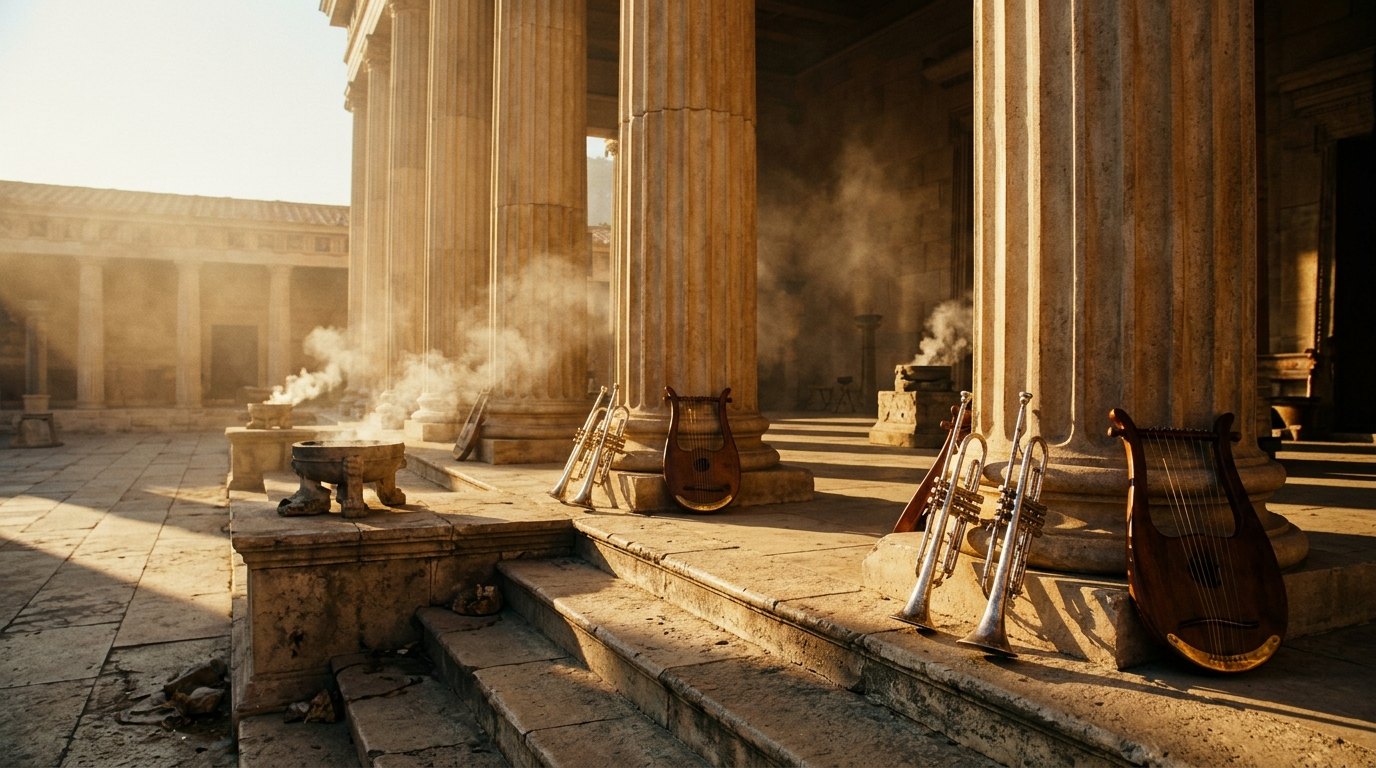
David, together with the commanders of the army, set apart some of the sons of Asaph, Heman and Jeduthun for the ministry of prophesying, accompanied by harps, lyres and cymbals. Here is the list of the men who performed this service:
1 Chronicles 25:1 (NIV)
It shows that temple musicians were specifically commissioned and set apart by David and the commanders to prophesy with instruments.
In 1 Chronicles 25:1, musical service reaches its full theological elevation: David and his commanders set apart musicians to prophesy with lyres, harps, and cymbals, establishing instrumental worship as an inspired, holy ministry. The spiritual potency of music was already visible in 1 Samuel 16:23, when young David plucked his lyre to drive away the distressing spirit tormenting Saul. When the ark of the covenant journeyed toward Jerusalem, 2 Samuel 6:5 notes that all Israel celebrated with an array of stringed, percussion, and wind instruments. To make this worship enduring, David organized the Levites in 1 Chronicles 15:16 and 1 Chronicles 6:31-32, assigning dedicated men to direct the sacred service of song.
This sanctuary choir was no casual guild. According to 1 Chronicles 9:33, these Levitical singers lived in temple chambers, freed from other duties to serve day and night. David delivered his first great psalm of thanks to Asaph in 1 Chronicles 16:7-9, cementing liturgy in holy song. At the dedication of Solomon's temple, 2 Chronicles 5:12-14 records that when trumpeters and singers joined in unison to declare the Lord's mercy, the tangible glory of God descended and filled the sanctuary.
Centuries later, music remained central to national faith. In 2 Chronicles 20:21-22, King Jehoshaphat stationed singers at the head of the royal army, routing formidable enemies through songs honoring the beauty of holiness. When King Hezekiah cleansed the temple in 2 Chronicles 29:27-28, the singing and instruments sounded unbroken alongside the burnt offering. Returning from exile, the people in Ezra 3:10-11 shouted aloud with trumpets and cymbals as the foundation of the second temple rose. Finally, Nehemiah 12:42-43 shows two vast choirs standing upon Jerusalem's rebuilt walls, their resounding thanksgiving carrying across the hills for miles.
| Passage | What it says |
|---|---|
| 1 Samuel 16:23 | David plays the lyre, bringing spiritual and emotional relief to King Saul when troubled by a distressing spirit. |
| 2 Samuel 6:5 | David and Israel celebrate before the Lord with lyres, harps, tambourines, castanets, and cymbals as the ark moves. |
| 1 Chronicles 15:16 | David directs the Levitical chiefs to appoint musicians with instruments of music to raise loud sounds of joy. |
| 1 Chronicles 25:1 | David sets apart the sons of Asaph, Heman, and Jeduthun to minister in song and prophesy with harps and cymbals. |
| 2 Chronicles 5:12-14 | Levitical musicians praise God in unison with trumpets and cymbals, and the glory cloud fills the newly built temple. |
| 2 Chronicles 29:27-28 | Hezekiah restores sanctuary worship, commanding song and instruments to sound continuously as the burnt offering is sacrificed. |
| Nehemiah 12:42-43 | Choirs led by Jezrahiah sing aloud at the dedication of Jerusalem's rebuilt wall, their joy heard far away. |
| 1 Chronicles 6:31-32 | David sets men in charge of the service of song in the house of the Lord. |
| 1 Chronicles 9:33 | Temple musicians and singers remain free from other duties to serve day and night. |
| 1 Chronicles 16:7-9 | David delivers a psalm of thanksgiving to Asaph and his brothers to sing before the ark. |
| 2 Chronicles 20:21-22 | Jehoshaphat appoints singers to lead the army, praising the beauty of holiness as God defeats the foe. |
| Ezra 3:10-11 | Priests and Levites play trumpets and cymbals, singing praises as the foundation of the second temple is laid. |
The Psalter's Cry
Joyful noise and full-throated praise

Praise the LORD. Praise God in his sanctuary; praise him in his mighty heavens. Praise him for his acts of power; praise him for his surpassing greatness. Praise him with the sounding of the trumpet, praise him with the harp and lyre, praise him with timbrel and dancing, praise him with the strings and pipe, praise him with the clash of cymbals, praise him with resounding cymbals. Let everything that has breath praise the LORD. Praise the LORD.
Psalms 150:1-6 (NIV)
The final psalm sums up biblical praise by calling every instrument and every breathing creature to glorify the Lord in His sanctuary.
In Psalms 150:1-6, the entire Psalter crescendos to its breathtaking climax: every instrument forged by human hands and every creature endowed with breath must praise the Lord for His surpassing greatness. The Psalms reveal that vocal and instrumental melody is the native air of the godly. Psalms 33:1-3 summons the righteous to play skillfully with joyful noise upon ten-stringed instruments, while Psalms 40:3 celebrates the new song God deposits within the believer's mouth as an evangelistic testimony to watching nations. Worship is not mindless enthusiasm; Psalms 47:6-7 commands that all singing be offered with doctrinal clarity and understanding.
This praise encompasses the entirety of time and creation. Psalms 66:1-2 invites all the earth to declare the glory of His name, and Psalms 68:24-25 pictures majestic sanctuary processions flanked by singers and maidens playing timbrels. David pledges in Psalms 71:22-23 to extol God's truth on harp and lyre, rejoicing with lips redeemed from death. In Psalms 81:1-3, the blowing of horns on solemn feast days summons Israel to remembrance, and Psalms 89:1 makes the Lord's steadfast love an eternal lyrical theme. The rhythm of sacred life mirrors the sun; Psalms 92:1-3 affirms that praising God on stringed instruments at dawn and nightfall is thoroughly good.
Psalms 95:1-2, Psalms 96:1-2, and Psalms 98:4-6 summon land, sea, and humanity to break into thunderous harmony before the sovereign King. In Psalms 100:1-2, glad singing is the gate through which worshippers step into God's presence. David rises before daybreak to tune his harp in Psalms 108:1-2, Psalms 104:33 vows lifelong song, Psalms 147:1 confirms that praise is profoundly pleasant and fitting, and Psalms 149:1-3 unleashes fresh choral dancing among the assembly of saints.
| Passage | What it says |
|---|---|
| Psalms 33:1-3 | The righteous are commanded to praise the Lord with lyre, ten-stringed harp, and a fresh, skillful new song. |
| Psalms 66:1-2 | All the earth is summoned to make a joyful noise to God and sing out the honor of His name. |
| Psalms 95:1-2 | God's people are called to come into His presence with thanksgiving, singing joyfully to the Rock of their salvation. |
| Psalms 98:4-6 | The whole earth bursts into praise with voice, harp, horns, and trumpets before the King, the Lord. |
| Psalms 100:1-2 | All lands are invited to serve the Lord with gladness and come before His presence with singing. |
| Psalms 149:1-3 | The congregation of the godly is called to praise His name with dancing, tambourine, and harp in a new song. |
| Psalms 150:1-6 | Every instrument and every creature possessing breath is summoned to praise the Lord for His surpassing greatness. |
| Psalms 40:3 | The Lord puts a new song in David's mouth, a song of praise causing many to trust God. |
| Psalms 47:6-7 | Worshipers are summoned to sing praises with understanding because God is King over all the earth. |
| Psalms 68:24-25 | Singers and musicians walk in procession into the sanctuary, accompanied by maidens playing timbrels. |
| Psalms 71:22-23 | David vows to praise God's faithfulness on the lute and harp with lips singing joyfully. |
| Psalms 81:1-3 | Israel is called to sing aloud to God, raise a song, and sound the tambourine, lyre, and trumpet. |
| Psalms 89:1 | The psalmist resolves to sing of the steadfast love and faithfulness of the Lord forever. |
| Psalms 92:1-3 | Praising the Lord with musical instruments morning and night is declared good and fitting. |
| Psalms 96:1-2 | The whole earth is commanded to sing to the Lord a new song and bless His name. |
| Psalms 104:33 | The psalmist vows to sing praises to God as long as he has breath and being. |
| Psalms 108:1-2 | David awakes the dawn with harp and lyre, fixing his heart on praising God among the nations. |
| Psalms 147:1 | Singing praises to God is declared pleasant, delightful, and thoroughly fitting for His people. |
Prophetic Rejoicing
Creation and Zion sing of redemption

Shout aloud and sing for joy, people of Zion, for great is the Holy One of Israel among you.”
Isaiah 12:6 (NIV)
It shows that music in the prophetic vision flows directly from the indwelling majesty of the Holy One in the midst of His redeemed people.
In Isaiah 12:6, the prophets link melody with ultimate salvation: Zion is summoned to sing and cry aloud because the Holy One of Israel is great in her midst. Joyful song is never an empty human wish; it is the inevitable outcome of divine redemption. In Isaiah 12:5-6 and Isaiah 26:1, songs of security and peace ring out across Judah because the Lord Himself constitutes her salvation. Even during dark seasons of judgment, Isaiah 30:29 promises God's people a midnight song of gladness, like one traveling with a flute to the mountain of the Lord.
This prophetic chorus expands to encompass the cosmos. Isaiah 42:10 urges the distant islands, seafarers, and ends of the earth to sing a new song to the Lord. In Isaiah 44:23 and Isaiah 55:12, non-human creation joins the anthem; mountains, forests, and trees burst into singing as the Lord redeems Jacob and leads His ransomed people forth in peace. In Isaiah 35:10 and Isaiah 51:11, the returning exiles enter Zion with everlasting joy upon their heads, their songs banishing sorrow and sighing forever. Isaiah 54:1 commands even the barren woman to break forth into loud song in anticipation of miraculous spiritual fruitfulness.
Jeremiah 31:12 foresees the gathered remnant singing aloud on the heights of Zion over the Lord's lavish goodness. In Habakkuk 3:19, the prophet concludes his trembling vision of judgment with defiant praise, assigning his song directly to the temple choirmaster for stringed instruments. Most astonishing of all, Zephaniah 3:17 portrays the Lord Himself not merely as the listener, but as the singer—resting in His love and exulting over His redeemed people with loud, triumphant singing.
| Passage | What it says |
|---|---|
| Isaiah 12:5-6 | Zion is told to sing and shout aloud because the Holy One of Israel is great in her midst. |
| Isaiah 35:10 | The ransomed of the Lord shall return and enter Zion with singing and everlasting joy upon their heads. |
| Isaiah 44:23 | Heavens, earth, mountains, and forests are summoned to break into singing because the Lord has redeemed Jacob. |
| Isaiah 51:11 | The redeemed return with singing to Zion, leaving behind sorrow and sighing for unending gladness. |
| Zephaniah 3:17 | The Lord Himself rejoices over His people with gladness, resting in His love and exulting over them with loud singing. |
| Isaiah 26:1 | A song of salvation and strong walls will be sung in the land of Judah. |
| Isaiah 30:29 | God promises His people will have a joyful night of singing as to the flute on holy feast days. |
| Isaiah 42:10 | The ends of the earth and the seafarers are summoned to sing a new song to the Lord. |
| Isaiah 54:1 | The barren woman is commanded to break forth into singing because of the multitude of her children. |
| Isaiah 55:12 | The mountains and hills will break forth into singing before the redeemed going out with joy. |
| Jeremiah 31:12 | The redeemed shall come and sing aloud on the height of Zion over the goodness of the Lord. |
| Habakkuk 3:19 | Habakkuk closes his prayer of triumphant faith directing it to the choirmaster with stringed instruments. |
The Gathering Church
Psalms, hymns, and spiritual songs
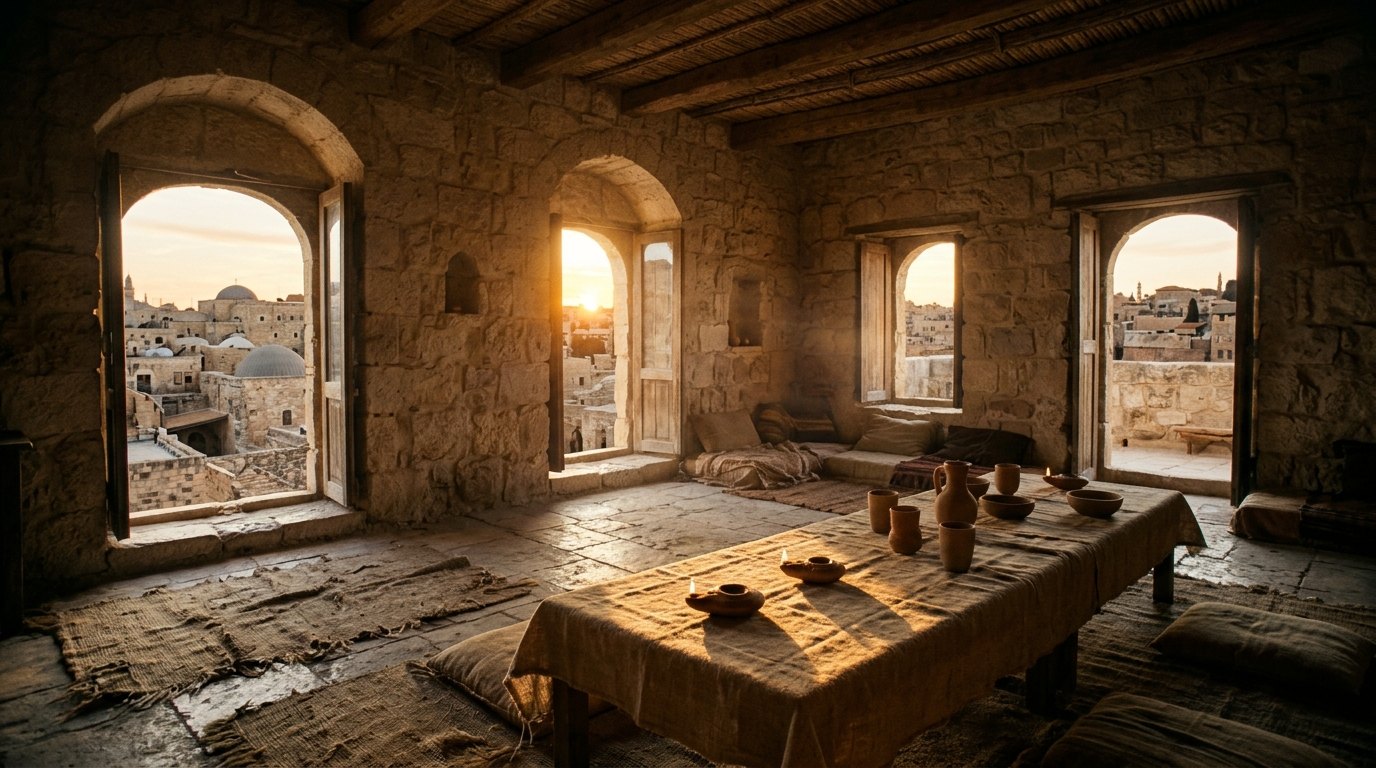
Let the message of Christ dwell among you richly as you teach and admonish one another with all wisdom through psalms, hymns, and songs from the Spirit, singing to God with gratitude in your hearts.
Colossians 3:16 (NIV)
It anchors congregational singing in the Word of Christ, uniting mutual instruction and heartfelt thanksgiving in three musical forms.
In Colossians 3:16, the apostle Paul binds music directly to the rich indwelling of divine truth: let the word of Christ dwell in you richly, teaching and admonishing one another in psalms, hymns, and spiritual songs with thankfulness in your hearts to God. Far from mere emotional indulgence or decorative artifice, Christian singing serves as a primary vehicle for mutual discipleship, sound doctrine, and collective gratitude.
This pattern reflects the very practice of Christ Himself. On the night He was betrayed, immediately following the institution of the Lord's Supper, Jesus and His disciples sang a hymn before departing into the dark toward the Mount of Olives (Matthew 26:30). By lifting His voice in the traditional Hallel psalms under the shadow of the cross, the Savior anchored the corporate song in His own obedient surrender. In Hebrews 2:12, this priestly role continues as Christ declares, in the midst of the congregation I will sing your praise, uniting the redeemed into a choir of worshipers whose praise extends across the nations to fulfill God's saving promise to the Gentiles (Romans 15:9).
The early church carried this sacrificial song into every circumstance of life. In the darkness of a Philippian dungeon, beaten and bound in stocks, Paul and Silas prayed and sang hymns to God at midnight, a witness that moved the prison and unlocked hearts (Acts 16:25). James similarly urges the cheerful believer to channel gladness straight to heaven by singing songs of praise (James 5:13).
When the assembly gathers, worship must balance passionate surrender with intellectual integrity. Paul directs that we must sing with the spirit and sing with the mind also (1 Corinthians 14:15), ensuring that our melodies edify the body and honor God in clear understanding. As Ephesians 5:19 reiterates, addressing one another in varied spiritual songs and making melody in the heart to the Lord flows naturally from a life filled with the Holy Spirit.
| Passage | What it says |
|---|---|
| Matthew 26:30 | Jesus and His disciples sing a hymn after the Last Supper before going out to the Mount of Olives. |
| Acts 16:25 | Paul and Silas pray and sing hymns to God at midnight while imprisoned in stocks in Philippi. |
| 1 Corinthians 14:15 | Paul instructs believers to sing with the spirit and sing with the mind also, emphasizing order and clarity. |
| Ephesians 5:19 | Believers are instructed to address one another in psalms, hymns, and spiritual songs, making melody in heart to God. |
| Colossians 3:16 | The Word of Christ dwells richly as believers teach and admonish one another in song with grace in their hearts. |
| James 5:13 | James commands anyone who is cheerful to express their gladness by singing praise to God. |
| Romans 15:9 | Christ came so Gentiles might glorify God, fulfilling prophecy by singing praise to His name among nations. |
| Hebrews 2:12 | Christ declares He will tell of the Father's name and sing praises in the midst of the congregation. |
The Heavenly Chorus
Eternal anthems before the Lamb

And they sang a new song, saying: “You are worthy to take the scroll and to open its seals, because you were slain, and with your blood you purchased for God persons from every tribe and language and people and nation.
Revelation 5:9 (NIV)
It reveals the ultimate purpose of redemption in music: the elders and living creatures singing the new song of the worthy Lamb.
Revelation 5:9 draws the entire biblical witness of music to its glorious summit before the throne of God: they sang a new song, saying, Worthy are you to take the scroll and to open its seals, for you were slain, and by your blood you ransomed people for God. Here in the heavenlies, music reaches its ultimate design, magnifying the sacrificial love and supreme majesty of the Lamb through the eternal chorus of the redeemed.
In this celestial temple, worship is both audibly magnificent and deeply symbolic. The four living creatures and twenty-four elders bow holding golden harps alongside bowls of incense, combining instrumental praise with the prayers of the saints (Revelation 5:8-9). This eternal orchestra resounds again in Revelation 14:2-3, where John hears a roar from heaven like the sound of many waters, loud thunder, and the resonant strumming of harpers playing their harps, echoing a new song that only the redeemed from the earth could learn and utter.
As the judgments unfold, the music does not falter. Victorious believers standing beside a glassy sea mingled with fire hold the harps of God and raise their voices in the song of Moses and of the Lamb (Revelation 15:2-3), celebrating God's great and marvelous deeds, His righteous ways, and His final deliverance of His people just as Israel sang beside the Red Sea.
Finally, heaven unleashes its climactic crescendo. In Revelation 19:6-7, the unified voice of an innumerable multitude roars like the crash of vast waterfalls and mighty peals of thunder, crying, Hallelujah! For the Lord our God the Almighty reigns! The eternal symphony reaches its consummation as all creation rejoices in the long-awaited marriage of the Lamb.
| Passage | What it says |
|---|---|
| Revelation 5:8-9 | The four living creatures and twenty-four elders holding harps sing a new song praising the slain, redeeming Lamb. |
| Revelation 14:2-3 | A heavenly sound like harpers playing harps accompanies the singing of a new song before the throne of God. |
| Revelation 15:2-3 | Victorious believers standing by the sea of glass with harps sing the song of Moses and of the Lamb. |
| Revelation 19:6-7 | A vast multitude sings like mighty thunderings, praising God omnipotent because the marriage of the Lamb has come. |
Judgment and Vanity
Music Perverted and Silenced
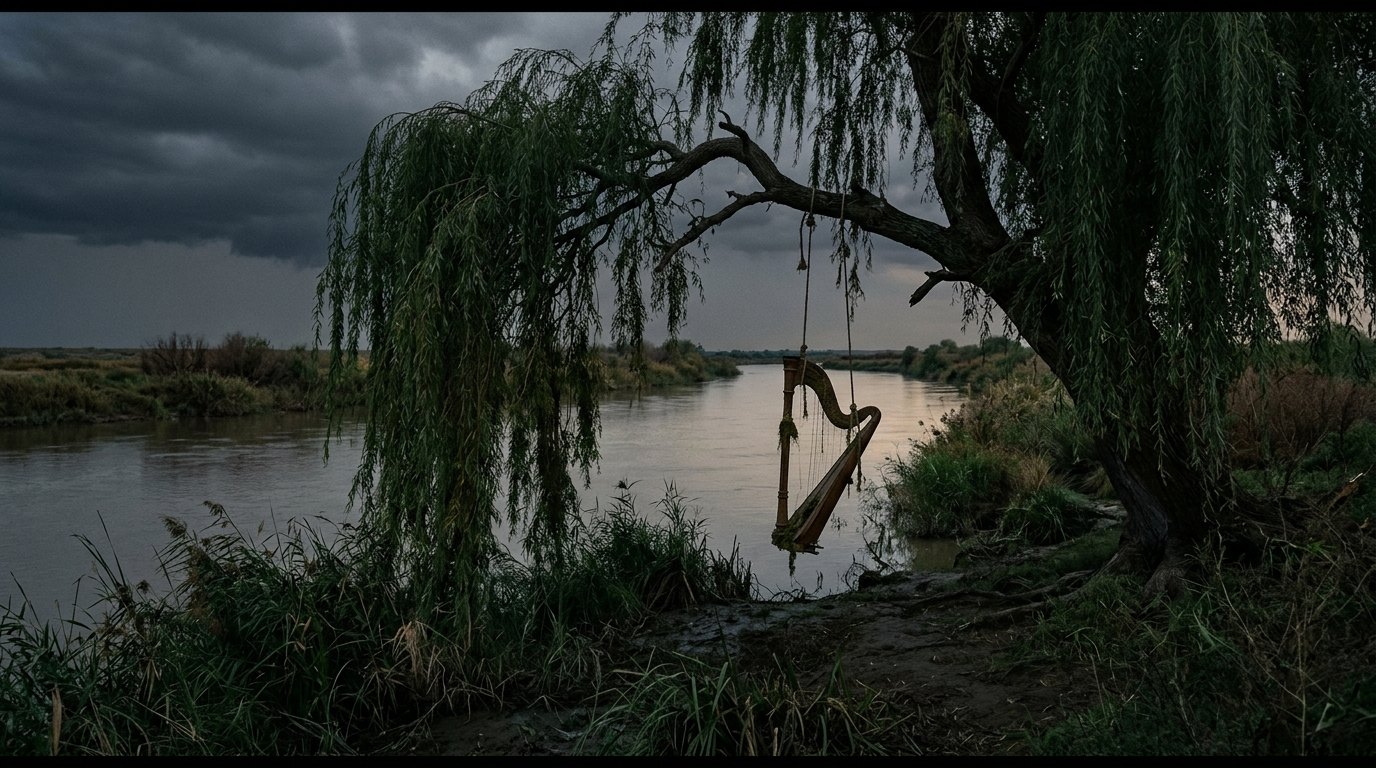
Away with the noise of your songs! I will not listen to the music of your harps.
Amos 5:23 (NIV)
It shows that God rejects musical worship when unaccompanied by moral righteousness and justice.
In Amos 5:23, God delivers an uncompromising indictment of formalist ritual: take away from me the noise of your songs; to the melody of your harps I will not listen. Where justice and moral righteousness are abandoned, elaborate music becomes an offensive din to the Holy One. God has never been charmed by outward technical beauty when the heart of the worshiper is hardened in rebellion.
Scripture repeatedly warns that musical skill can easily be perverted into a tool of selfish complacency. The prophet Amos issues a solemn woe against those who recline on luxurious beds, drink wine from bowls, and improvise idle melodies on harps, inventing instruments like David while remaining indifferent to the ruin of God's people (Amos 6:5). Similarly, Ezekiel was cautioned that the rebellious house of Israel would treat his prophetic warnings merely as entertainment, listening to him as one would listen to a gifted singer with a pleasant voice playing an instrument well, yet never putting his words into practice (Ezekiel 33:32).
Music also carries the capacity for profound vanity and manipulation. Ecclesiastes 7:5 observes that it is far better to hear the stern rebuke of a wise man than to indulge in the empty song of fools. When misapplied to human sorrow, singing lively songs to a broken, grieving heart is as cruel as stripping off a coat in freezing winter or pouring bitter vinegar onto soda (Proverbs 25:20).
When judgment falls, ungodly music is silenced entirely. In exile beside the canals of Babylon, the afflicted people of God hung their harps upon the weeping willows, weeping in grief because they could not bring themselves to sing the sacred songs of Zion to amuse their mockers in a foreign land (Psalms 137:1-4). Worse still, musical pomp has frequently served state-mandated idolatry, as seen in the plain of Dura, where Nebuchadnezzar gathered a massive royal orchestra of horn, pipe, lyre, and harp to compel universal worship of a golden image under penalty of fire (Daniel 3:5).
| Passage | What it says |
|---|---|
| Amos 5:23 | The Lord rejects the noisy songs and melody of harps from those who neglect justice and righteousness. |
| Amos 6:5 | Woe is pronounced on those who improvise idle songs on harps and invent musical instruments like David in self-indulgence. |
| Ezekiel 33:32 | God compares His prophet to a singer with a beautiful voice whom people hear but never obey. |
| Ecclesiastes 7:5 | It is better to hear the rebuke of the wise than the frivolous song of fools. |
| Proverbs 25:20 | Singing festive songs to a heavy heart is like taking a coat in winter or pouring vinegar on soda. |
| Psalms 137:1-4 | Exiles hang their harps by Babylon's waters, lamenting the impossibility of singing the Lord's song in a foreign land. |
| Daniel 3:5 | Nebuchadnezzar commands worship of his golden image under penalty of death at the sound of the royal orchestra. |
Where in the Bible
| Book | Passages |
|---|---|
| Genesis | 2 · Genesis 4:21, Genesis 31:27 |
| Exodus | 2 · Exodus 15:1, Exodus 15:20-21 |
| Numbers | 1 · Numbers 21:17 |
| Deuteronomy | 2 · Deuteronomy 31:19, Deuteronomy 32:1-4 |
| Judges | 1 · Judges 5:1-3 |
| 1 Samuel | 1 · 1 Samuel 16:23 |
| 2 Samuel | 1 · 2 Samuel 6:5 |
| 1 Chronicles | 5 · 1 Chronicles 15:16, 1 Chronicles 25:1, 1 Chronicles 6:31-32, 1 Chronicles 9:33, 1 Chronicles 16:7-9 |
| 2 Chronicles | 3 · 2 Chronicles 5:12-14, 2 Chronicles 29:27-28, 2 Chronicles 20:21-22 |
| Ezra | 1 · Ezra 3:10-11 |
| Nehemiah | 1 · Nehemiah 12:42-43 |
| Psalms | 19 · Psalms 33:1-3, Psalms 66:1-2, Psalms 95:1-2, Psalms 98:4-6, Psalms 100:1-2, Psalms 149:1-3, Psalms 150:1-6, Psalms 40:3, Psalms 47:6-7, Psalms 68:24-25, Psalms 71:22-23, Psalms 81:1-3, Psalms 89:1, Psalms 92:1-3, Psalms 96:1-2, Psalms 104:33, Psalms 108:1-2, Psalms 147:1, Psalms 137:1-4 |
| Proverbs | 1 · Proverbs 25:20 |
| Ecclesiastes | 1 · Ecclesiastes 7:5 |
| Isaiah | 9 · Isaiah 12:5-6, Isaiah 35:10, Isaiah 44:23, Isaiah 51:11, Isaiah 26:1, Isaiah 30:29, Isaiah 42:10, Isaiah 54:1, Isaiah 55:12 |
| Jeremiah | 1 · Jeremiah 31:12 |
| Ezekiel | 1 · Ezekiel 33:32 |
| Daniel | 1 · Daniel 3:5 |
| Amos | 2 · Amos 5:23, Amos 6:5 |
| Habakkuk | 1 · Habakkuk 3:19 |
| Zephaniah | 1 · Zephaniah 3:17 |
| Matthew | 1 · Matthew 26:30 |
| Acts | 1 · Acts 16:25 |
| Romans | 1 · Romans 15:9 |
| 1 Corinthians | 1 · 1 Corinthians 14:15 |
| Ephesians | 1 · Ephesians 5:19 |
| Colossians | 1 · Colossians 3:16 |
| Hebrews | 1 · Hebrews 2:12 |
| James | 1 · James 5:13 |
| Revelation | 4 · Revelation 5:8-9, Revelation 14:2-3, Revelation 15:2-3, Revelation 19:6-7 |
The story in order
- First instruments and songs (c. 3000 BC) · Genesis 4:21 · Music's divine gift and human craftsmanship are noted from early history.
- Songs of deliverance (c. 1446 BC) · Exodus 15:1 · Israel sings a song of praise and victory after crossing the Red Sea.
- Song of witness (c. 1406 BC) · Deuteronomy 31:19 · Moses is commanded to write a song to serve as a witness.
- Davidic worship order (c. 1060 BC) · 1 Samuel 16:23 · David's music soothes King Saul, showing its spiritual power.
- Temple musicians appointed (c. 1000 BC) · 1 Chronicles 15:16 · Levites are set apart for musical ministry in God's house.
- Temple worship established (c. 966 BC) · 2 Chronicles 5:12-14 · Unison praise fills the temple, and God's glory appears.
- Songs of Zion's redemption (c. 740 BC) · Isaiah 12:5-6 · Zion is called to sing aloud because of God's presence.
- Prophetic song of faith (c. 607 BC) · Habakkuk 3:19 · Habakkuk concludes his prayer with a song for the choirmaster.
- Jesus sings the Passover hymn (AD 30) · Matthew 26:30 · Jesus and His disciples sing a hymn before His passion.
- Apostles sing in prison (c. AD 50) · Acts 16:25 · Paul and Silas sing hymns, shaking the foundations.
- Church's musical instruction (c. AD 60) · Colossians 3:16 · The Word of Christ dwells richly through teaching and admonishing in song.
- Heavenly worship of the Lamb (c. AD 95) · Revelation 5:8-9 · Elders and creatures sing a new song to the redeeming Lamb.
- Eternal anthems of victory (c. AD 95) · Revelation 15:2-3 · Victorious saints sing the song of Moses and the Lamb.
Key words
- Song (šîr (Hebrew))
- A vocal utterance of praise, lament, or instruction, often set to music. · Exodus 15:1
- Harp (kinnôr (Hebrew))
- A stringed instrument played by plucking, used for praise and comfort. · Genesis 4:21
- Praise (tehillâh (Hebrew))
- The act of expressing approval, admiration, or adoration, especially to God. · Psalms 147:1
- Hymn (hymnos (Greek))
- A song of praise, typically addressed to God or a divine being. · Matthew 26:30
- Spiritual song (psalmos, humnos, ōdē pneumatikē (Greek))
- A song inspired by the Holy Spirit, expressing deep spiritual truths or emotions. · Ephesians 5:19
From our private devotions to our corporate assemblies, God calls His people to sing with understanding, grace, and spiritual vigor. Music is neither mere entertainment nor an afterthought in worship, but the eternal vocabulary of the redeemed crying out in joy before the King.
69 passages, each cited once.
Scripture cited
- Isaiah 44:23
- Revelation 19:6
- Psalms 66:1
- Psalms 95:1
- Psalms 100:1
- Isaiah 12:6