What does the Bible say about rejection?
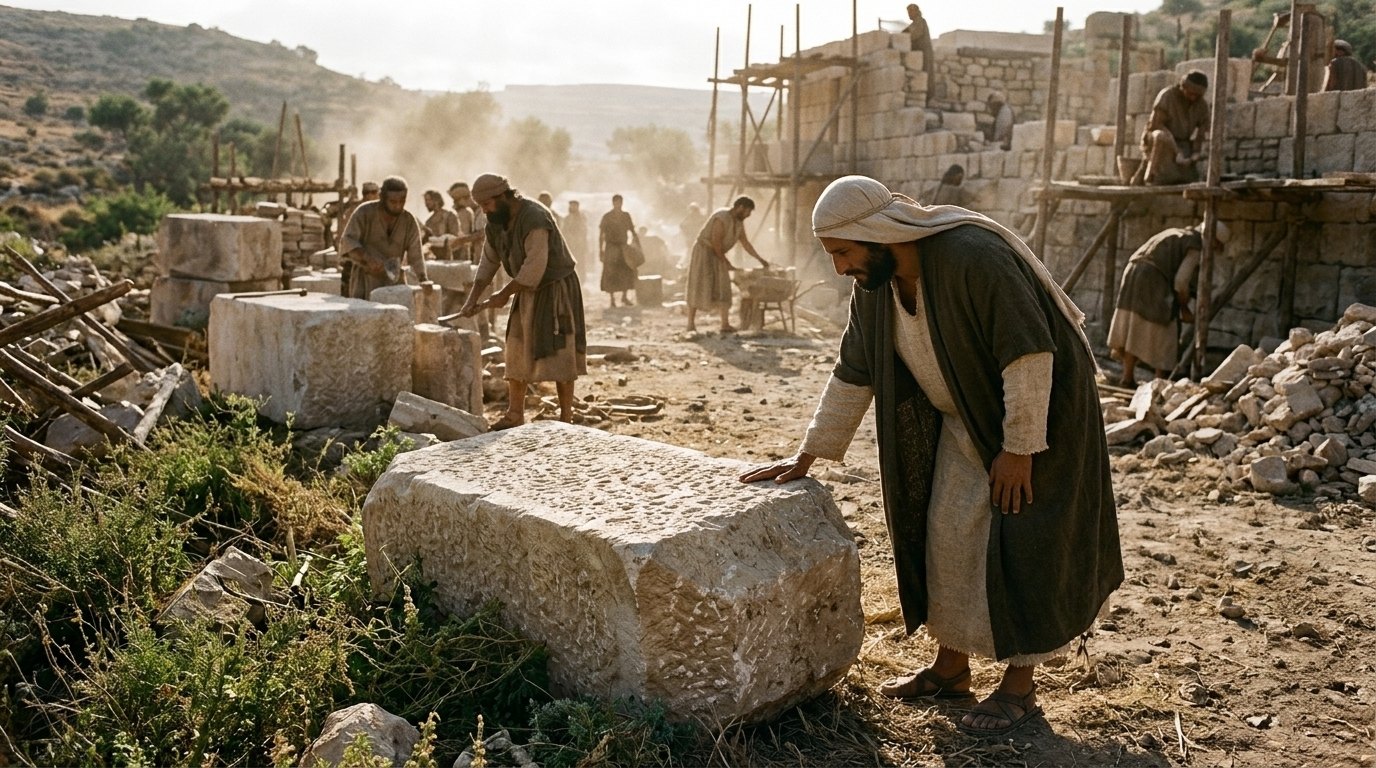
1 Peter 2:4-6
4 As you come to him, the living Stone—rejected by humans but chosen by God and precious to him—
5 you also, like living stones, are being built into a spiritual house to be a holy priesthood, offering spiritual sacrifices acceptable to God through Jesus Christ.
6 For in Scripture it says: “See, I lay a stone in Zion, a chosen and precious cornerstone, and the one who trusts in him will never be put to shame.”
New International Version (NIV)
The answer
The Bible treats rejection as real suffering, but human rejection is not God’s verdict on a person’s worth. Its clearest picture is Jesus: despised and rejected by people, yet chosen and precious to God. For those who belong to Him, rejection cannot cancel God’s love; for those who reject Christ, Scripture gives a sober warning.
Jesus understands rejection
Isaiah 53:3 says of the Messiah, “He was despised and rejected by men.” Yet His rejection did not defeat God’s purpose: Isaiah 53:5 explains that “he was pierced for our transgressions,” bearing the punishment that brings peace and healing.
Peter therefore calls Jesus “a living stone, rejected indeed by men, but chosen by God, precious” (1 Peter 2:4). People’s refusal did not change who Christ was or what God had appointed Him to do.
What rejection does—and does not—mean
- Rejection does not mean abandonment by God. Even the deepest family rejection is not beyond God’s care: “When my father and my mother forsake me, then Yahweh will take me up” (Psalm 27:10). Romans 8:38-39 declares that nothing in creation can separate believers from God’s love in Christ Jesus.
- Rejection for Christ’s sake is not shameful. Jesus told His disciples that the world’s hatred of them followed its hatred of Him (John 15:18-20). First Peter 4:14-16 says that those insulted for Christ’s name are blessed and should glorify God rather than be ashamed.
- Not every painful consequence is persecution. First Peter 4:15 distinguishes suffering for being a Christian from suffering for wrongdoing. Rejection should therefore produce honest self-examination, but neither automatic self-blame nor an automatic claim of persecution.
How Scripture says to respond
- Come to Christ with the wound. His promise is unmistakable: “He who comes to me I will in no way throw out” (John 6:37). Christ’s welcome is not uncertain or reluctant.
- Refuse revenge. Romans 12:14-21 commands blessing persecutors, repaying no one evil for evil, leaving vengeance with God, and overcoming evil with good. This forbids retaliation; it does not call another person’s sinful treatment righteous.
- Remain grounded in the identity God gives. Believers are living stones being built together into God’s spiritual house (1 Peter 2:5). Ephesians 1:4-5 says God chose His people in Christ and predestined them for adoption as His children. Human rejection cannot remove a believer from God’s household.
Rejecting Christ is different
Scripture also warns against becoming the one who rejects Him. First Peter 2:7-8 says the stone rejected by the builders became the chief cornerstone, while the disobedient stumble over Him. Refusing Christ is therefore not a spiritually neutral choice.
The response God calls for is faith, joined to a sure promise: “He who believes in him will not be disappointed” (1 Peter 2:6).
Answered from Scripture · reviewed November 11, 2026
Scripture speaks of rejection in two profound and contrasting ways: the rejection of God's servants by men, and God's righteous rejection of those who turn away from Him. At the center of human history stands Jesus Christ, who was despised and refused by human builders yet chosen and exalted by God as the precious cornerstone of salvation.
The Rejected Stone
Refused by Builders but Exalted by God
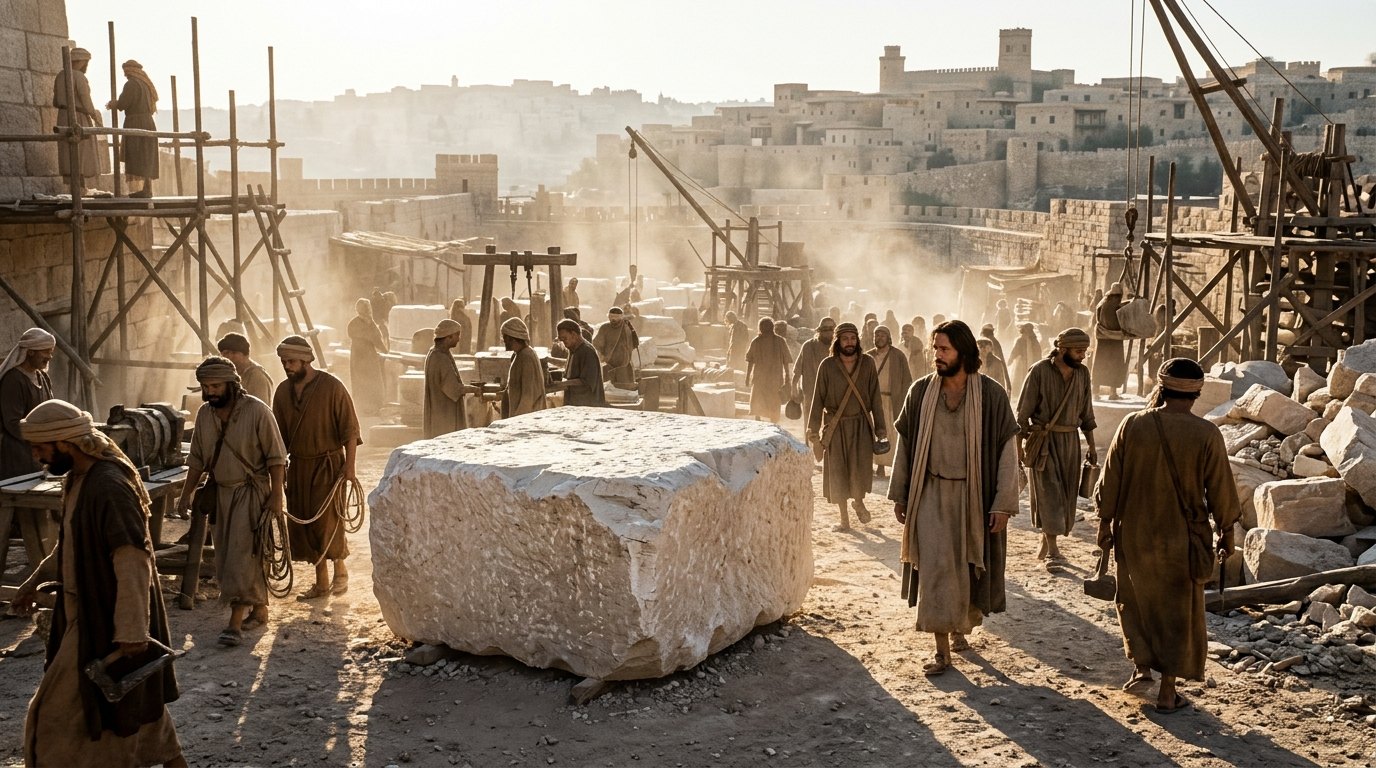
As you come to him, the living Stone—rejected by humans but chosen by God and precious to him—
1 Peter 2:4 (NIV)
This verse establishes that Christ was rejected by men yet uniquely chosen and precious in God's sight.
First Peter 2:4 presents Christ as a living stone rejected by human builders but chosen and precious to God, unveiling the sovereign reversal at the heart of redemptive history. What men discard in blindness, God appoints as the foundational anchor of His eternal dwelling. Centuries before, the psalmist anticipated this triumph in Psalm 118:22, singing that the stone refused by the masons would become the chief cornerstone, a prophetic word that found direct fulfilment when Jesus confronted the religious authorities in Matthew 21:42 and Mark 12:10. Quoting this ancient song, Christ warned that those who stumble over Him will be broken, a truth echoed in Luke 20:17.
This cornerstone was never an afterthought. Through Isaiah 28:16, the Lord had declared that He Himself would lay in Zion a tested, precious cornerstone, offering unshakable peace to all who trust in Him, as fulfilled in Romans 9:33 and 1 Peter 2:6. Zechariah 3:9 pointed forward to this same engraved stone set before Joshua the high priest, through which God removed the iniquity of the land in a single day.
When the apostles stood before the Sanhedrin, Peter boldly applied this divine verdict in Acts 4:11, charging the rulers with discarding the very Messiah God made head of the corner. Writing to scattered believers, Peter expands the image across 1 Peter 2:5-7: united to this living foundation, believers are fashioned into a spiritual house, finding Christ supremely precious while those who disobey stumble in ruin.
| Passage | What it says | Fulfilled |
|---|---|---|
| Psalms 118:22 | Prophesies that the stone rejected by the builders becomes the chief cornerstone. | Matthew 21:42, Acts 4:11 |
| Isaiah 28:16 | Declares that the Lord lays in Zion a tested, precious cornerstone as a sure foundation. | 1 Peter 2:6, Romans 9:33 |
| Luke 20:17 | Jesus quotes the rejected cornerstone prophecy to announce the consequence of rejecting Him. | |
| Acts 4:11 | Peter proclaims that the rejected Jesus has been made head of the corner by God. | |
| 1 Peter 2:4 | Describes Christ as a living stone cast aside by men but chosen and precious to God. | |
| 1 Peter 2:5 | Reveals that believers are built up as living stones into a holy priesthood. | |
| 1 Peter 2:6 | Cites Isaiah to assure that whoever trusts in this cornerstone will never be put to shame. | |
| 1 Peter 2:7 | Affirms that Christ is precious to believers but a stumbling block to those who disobey. | |
| Zechariah 3:9 | Presents the engraved stone laid before Joshua through which God removes the land's iniquity. | 1 Peter 2:4-6 |
| Matthew 21:42 | Jesus cites Psalm 118, warning religious leaders that the rejected cornerstone will crush those who fall upon it. | |
| Mark 12:10 | Jesus concludes the parable of the wicked tenants by proclaiming that the stone the builders rejected has become the cornerstone. |
The Suffering Servant
Despised by the World for Our Sake
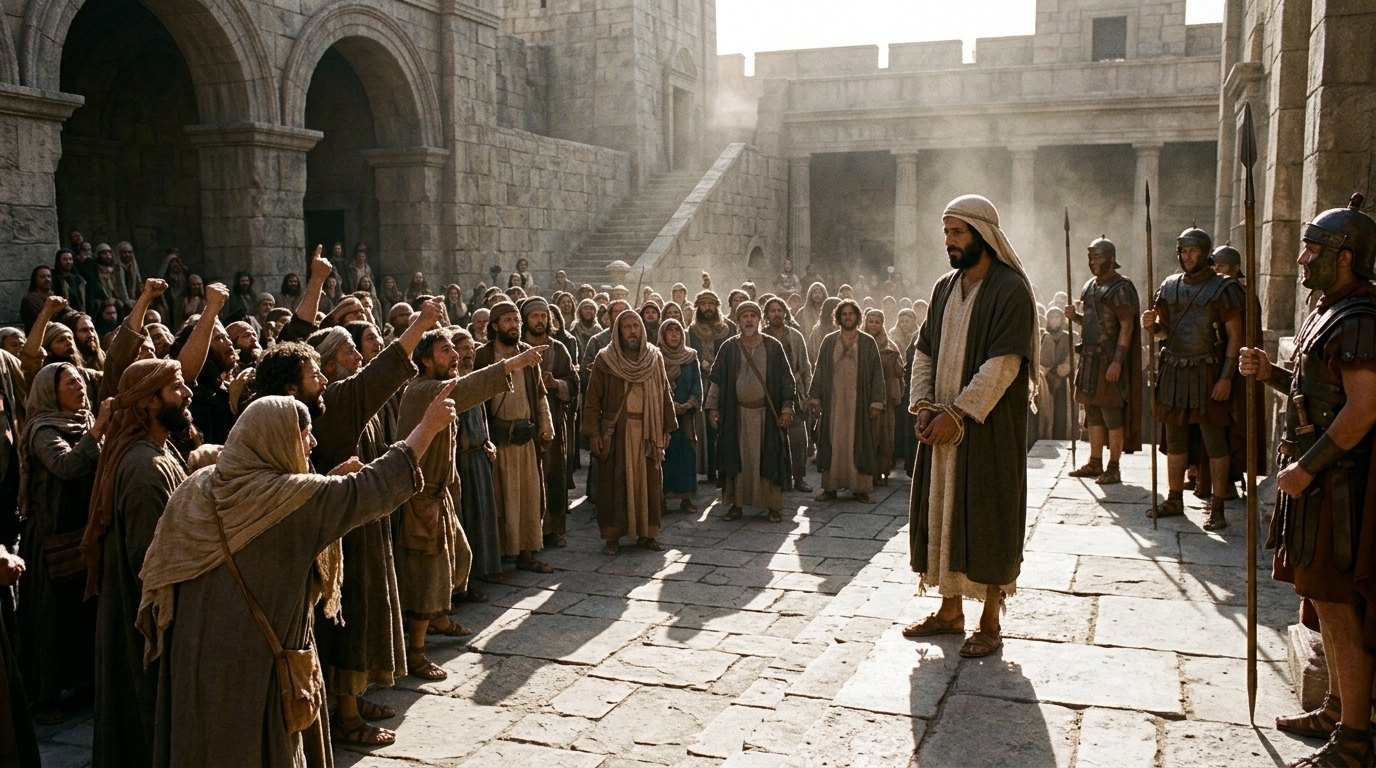
He was despised and rejected by mankind, a man of suffering, and familiar with pain. Like one from whom people hide their faces he was despised, and we held him in low esteem.
Isaiah 53:3 (NIV)
Isaiah captures the raw heart of human rejection endured by the Messiah on His way to the cross.
Isaiah 53:3 unveils the raw depth of the Messiah's earthly ordeal, declaring that He was despised and rejected by men, a man of sorrows and acquainted with grief, One from whom people hid their faces. The Holy Spirit had long prepared Israel for this suffering Savior. In Psalm 22:6, David cried out as a reproach of men and despised by the people, foreshadowing the cross where passersby mocked and shook their heads as fulfilled in Matthew 27:39-43. David's lament in Psalm 31:11 of being an outcast to friends and Psalm 69:8 of being a stranger to his mother's children found their tragic fulfilment when Christ's own brothers refused to believe in Him during His ministry (John 7:5).
Isaiah 49:7 foretold that the Redeemer would be deeply abhorred by His nation before kings would rise in reverence. When the Word took flesh, John 1:11 recorded the sorrowful reality: He came to His own domain, yet His own did not receive Him. At Nazareth, the hometown synagogue erupted in rage and sought to cast Him from a cliff (Luke 4:28).
Jesus repeatedly warned His disciples of this inevitable path; in Mark 8:31, Luke 9:22, and Luke 17:25, He insisted that the Son of Man must suffer many things and be rejected by the elders, chief priests, and scribes. This deliberate rejection culminated in the governor's courtyard, where the crowd chose Barabbas and demanded the Messiah be crucified (Matthew 27:21).
| Passage | What it says | Fulfilled |
|---|---|---|
| Isaiah 53:3 | Foretells that the Servant would be despised, rejected of men, and acquainted with grief. | John 1:11, Matthew 27:39-44 |
| Psalms 22:6 | Cries out as one reproachfully scorned and despised by the people. | Matthew 27:39-43 |
| Psalms 69:8 | Expresses becoming an outcast and stranger even to maternal brothers. | John 7:5 |
| John 1:11 | Records that Christ came to His own domain, yet His own people did not receive Him. | |
| Luke 4:28 | Recounts the hometown synagogue rejecting Jesus and attempting to cast Him down a cliff. | |
| Luke 9:22 | Jesus warns that the Son of Man must suffer and be rejected by the elders and priests. | |
| Psalms 31:11 | David laments being a reproach among adversaries and an object of dread to his acquaintances, foreshadowing Christ's abandonment. | |
| Isaiah 49:7 | The Redeemer is spoken to as One deeply despised and abhorred by the nation, yet destined to receive the homage of kings. | |
| Matthew 27:21 | The crowd chooses Barabbas over Jesus, demanding the Messiah be crucified. | |
| Matthew 27:39 | Passersby hurl insults and shake their heads at Jesus hanging upon the cross. | |
| Mark 8:31 | Jesus teaches plainly that the Son of Man must suffer and be rejected by elders, chief priests, and scribes. | |
| Luke 17:25 | Jesus emphasizes that before His glorious return, He must suffer many things and be rejected by this generation. | |
| John 7:5 | Scripture records that even His own brothers did not believe in Him during His earthly ministry. |
The Rejection of Disciples
Sharing in the Hatred of the World
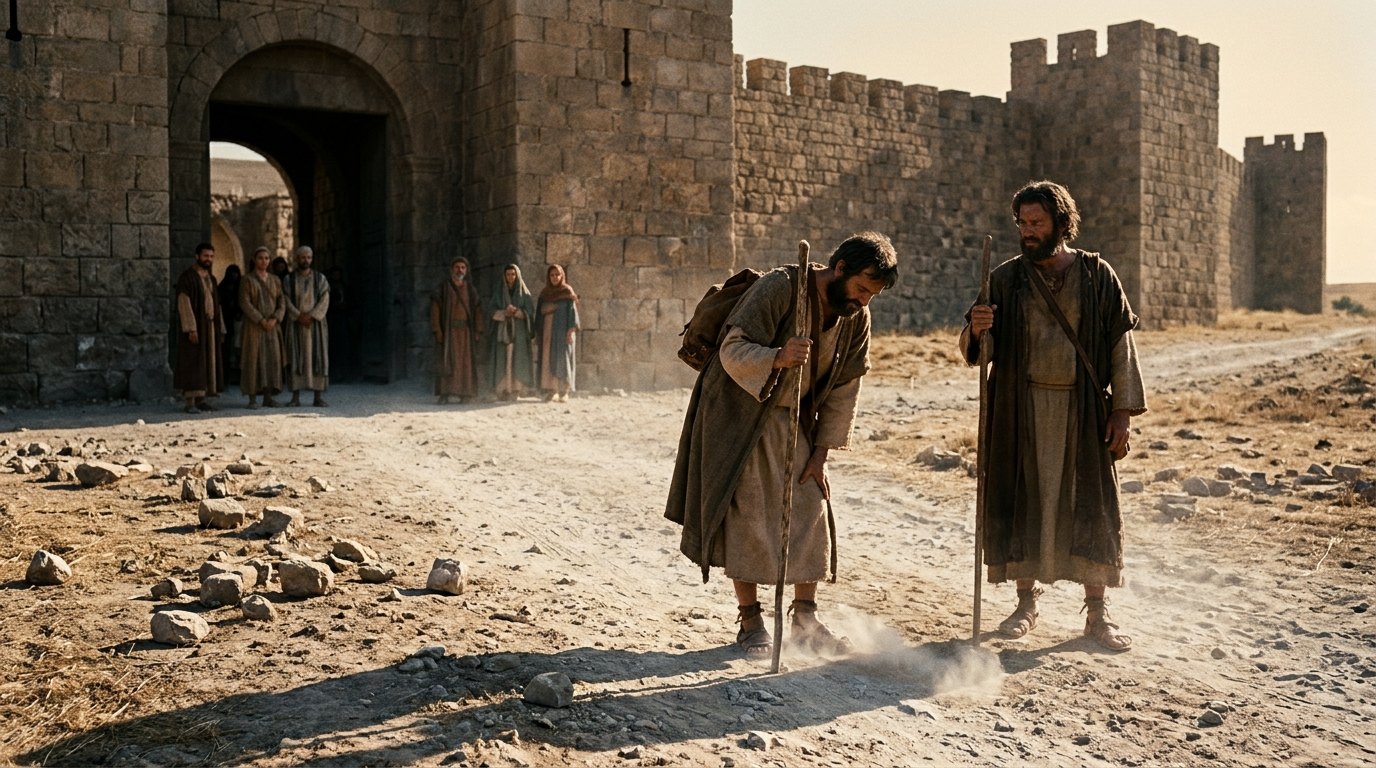
“If the world hates you, keep in mind that it hated me first.
John 15:18 (NIV)
Christ anchors the believer's experience of persecution in the world's prior hatred of Himself.
In John 15:18, Jesus prepares His followers for worldly hostility by establishing a vital principle: if the world hates you, know that it hated Me before it hated you. The disciple's experience of alienation is not an accident of history but the direct result of union with Christ. In John 15:19-20, the Lord explains that the world despises believers precisely because He has called them out of it; a servant cannot expect greater honor than his master. First John 3:13 reinforces this truth, urging the church never to marvel when facing the world's disdain.
Scripture transforms this suffering into an emblem of blessing. In the Sermon on the Mount, Jesus pronounces blessed those who are insulted, persecuted, and falsely accused for His sake (Matthew 5:11). Luke 6:22 similarly calls believers blessed when men exclude and revile them because of the Son of Man. Matthew 10:22 assures that whoever endures hatred for Christ's name to the end will be saved, while 1 Peter 4:14 promises that the Spirit of glory and of God rests upon those reproached for the Savior. Paul summarizes this reality in 2 Timothy 3:12, stating plainly that all who desire to live a godly life in Christ Jesus will suffer persecution.
Furthermore, rejection carries grave spiritual weight for those who inflict it. In Matthew 10:14, disciples are instructed to shake the dust from their feet when a town refuses their message. Both Matthew 10:40 and Luke 10:16 warn that anyone who rejects Christ's messengers rejects the Son and the Father who sent Him, a principle First Thessalonians 4:8 applies to apostolic teaching on holiness.
| Passage | What it says |
|---|---|
| Matthew 5:11 | Pronounces blessing on those insulted and falsely accused on account of Jesus. |
| Matthew 10:22 | Promises salvation to those who endure being hated by all for Christ's name. |
| Luke 6:22 | Blesses those excluded, reviled, and spurned as evil because of the Son of Man. |
| John 15:18 | Reminds disciples that the world hated their Lord before it ever hated them. |
| John 15:19 | Explains that the world's hatred stems from disciples being chosen out of the world. |
| 2 Timothy 3:12 | Affirms that all who desire to live a godly life in Christ Jesus will face persecution. |
| 1 Peter 4:14 | Declares the Spirit of glory rests upon those who are reproached for Christ's name. |
| Matthew 10:14 | Jesus instructs the disciples to shake off the dust from their feet when a town rejects their message. |
| Matthew 10:40 | Jesus reveals that rejecting His messengers equates to rejecting Christ Himself and the Father who sent Him. |
| Luke 10:16 | He who rejects the Lord's appointed witnesses rejects Christ and Him who sent Him. |
| John 15:20 | A servant is not greater than his master; if they persecuted Christ, they will persecute His followers. |
| 1 Thessalonians 4:8 | Whoever rejects apostolic instruction on holiness rejects not man, but the God who gives the Holy Spirit. |
| 1 John 3:13 | Believers are told not to marvel if the world hates them. |
Divine Judgment
God Rejects Those Who Forsake Him
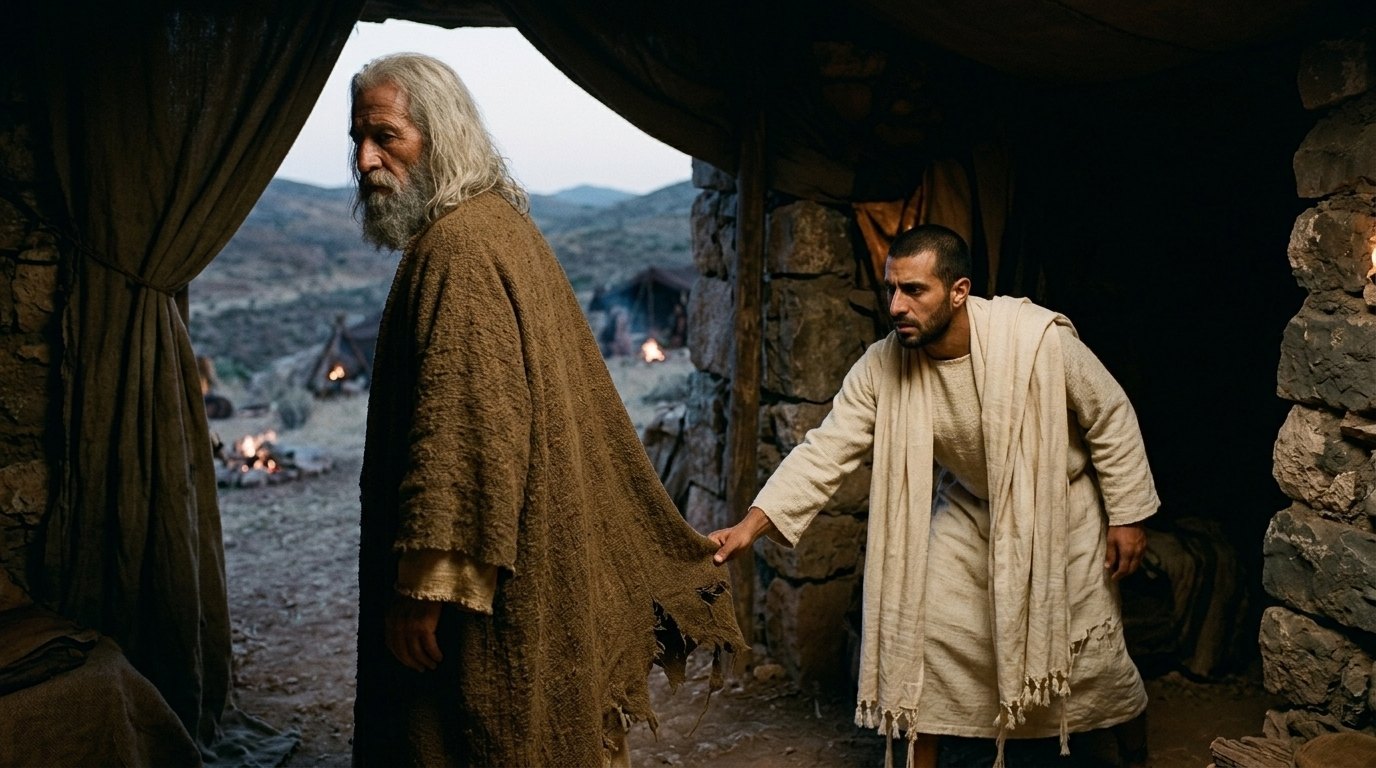
my people are destroyed from lack of knowledge. “Because you have rejected knowledge, I also reject you as my priests; because you have ignored the law of your God, I also will ignore your children.
Hosea 4:6 (NIV)
God declares that rejecting divine knowledge leads directly to being rejected by Him.
Hosea 4:6 delivers a solemn warning of divine retribution, declaring that because you have rejected knowledge, I will also reject you from being priest for Me, proving that spiritual unfaithfulness invites God's righteous abandonment. The pattern runs throughout the covenant story. In Leviticus 26:15 and 26:30, the Lord warned Israel that spurning His statutes would cause His soul to abhor their rebellion. At the edge of Canaan, Numbers 14:11 recorded the Lord's grief over a generation that despised Him despite witnessing His signs. Centuries later, Israel asked for a king, and God told Samuel in 1 Samuel 8:7 and 10:19 that the people had not rejected the prophet, but had rejected God from ruling over them.
This principle brought down Israel's first monarch. In 1 Samuel 15:23 and 15:26, Samuel announced to Saul that because he had rejected the word of the Lord, God had rejected him from being king. The northern kingdom met the same end in 2 Kings 17:20, where the Lord cast off all the seed of Israel because of idolatry. Jeremiah described the fallen nation as reprobate silver rejected by God (Jeremiah 6:30), declaring in Jeremiah 7:29 that the Lord had forsaken the generation of His wrath, even as the prophet wept over whether Zion was utterly loathed in Jeremiah 14:19.
In the New Testament, Hebrews 12:17 recalls Esau, who rejected his birthright and found no place for repentance though he sought the blessing with tears. Jesus exposed empty religion in Luke 6:46, warning in Matthew 7:23 that He will banish self-righteous hypocrites with the words, "I never knew you." As Romans 1:28 confirms, when men refuse to acknowledge God, He hands them over to a depraved mind.
| Passage | What it says |
|---|---|
| 1 Samuel 15:23 | Samuel announces that Saul's rejection of God's word caused God to reject him as king. |
| 1 Samuel 15:26 | Reiterates the finality of Saul being rejected from ruling over Israel. |
| 2 Kings 17:20 | Records that the Lord rejected all the seed of Israel and cast them out due to idolatry. |
| Jeremiah 6:30 | Names the unrepentant people reprobate silver because the Lord has rejected them. |
| Hosea 4:6 | States that because the people rejected knowledge, God rejects them from being priests. |
| Matthew 7:23 | Jesus declares He will tell lawless hypocrites He never knew them and cast them out. |
| Luke 6:46 | Questions why men call Him Lord while failing to do what He commands. |
| Romans 1:28 | Warns that those who refuse to acknowledge God are given over to a depraved mind. |
| Leviticus 26:15 | God warns Israel against spurning His statutes and breaking His covenant. |
| Leviticus 26:30 | The Lord declares He will destroy idolatrous high places and His soul will abhor persistent rebellion. |
| Numbers 14:11 | The Lord asks Moses how long the people will despise Him despite all the signs performed among them. |
| 1 Samuel 8:7 | God tells Samuel that the people demanding a king have not rejected Samuel, but have rejected God from being king over them. |
| 1 Samuel 10:19 | Samuel reminds the people they rejected the God who saves them from calamities by asking for an earthly monarch. |
| Jeremiah 7:29 | Jeremiah calls Jerusalem to lament because the Lord has rejected and forsaken the generation of His wrath. |
| Jeremiah 14:19 | The prophet intercedes, asking if the Lord has utterly rejected Judah or loathed Zion. |
| Hebrews 12:17 | Esau found no chance to repent though he sought the blessing with tears, having rejected his birthright. |
Covenant Faithfulness
God Does Not Forsake His Remnant

I ask then: Did God reject his people? By no means! I am an Israelite myself, a descendant of Abraham, from the tribe of Benjamin.
Romans 11:1 (NIV)
Paul directly answers whether God has permanently cast away His covenant people with an emphatic denial.
In Romans 11:1, the Apostle Paul confronts the agonizing question of whether God has abandoned His ancient covenant people, answering with fierce conviction: God has not cast away his people. Rooted in God’s immutable nature, Romans 11:2 declares that the Lord has not rejected those whom He foreknew. Even in national disobedience, their stumble is not beyond the reach of divine mercy; Romans 11:11 and Romans 11:25 explain that a partial hardening has come upon Israel to open salvation to the Gentiles until their fullness arrives, leading ultimately to the prophetic promise of Romans 11:26 that the Deliverer will save His people.
This preservation of a remnant echoes the entire testimony of Scripture. Long before the monarchy, 1 Samuel 12:22 assured Israel that the Lord would not forsake His people for His great name’s sake, a truth sung in Psalm 94:14. When judgment drove them into exile, Leviticus 26:44 guaranteed that God would never utterly abhor or break covenant with them. Moses anchored Israel’s courage in Deuteronomy 31:6 and Deuteronomy 31:8 with the unchanging pledge that God would never leave nor forsake them, a word given personally to Joshua in Joshua 1:5. Isaiah 41:9 reiterates this covenantal call, stating that God chose them and did not cast them off, while Lamentations 3:31 comforts the afflicted with the truth that the Lord will not cast off forever. This steadfast guarantee extends seamlessly to the New Testament church in Hebrews 13:5, anchoring our confidence in God’s unfailing presence.
| Passage | What it says |
|---|---|
| 1 Samuel 12:22 | Assures Israel that the Lord will not forsake His people for His great name's sake. |
| Psalms 94:14 | Promises that the Lord will not cast off His people or abandon His inheritance. |
| Romans 11:1 | Asks if God has cast away His people, answering that He certainly has not. |
| Romans 11:2 | Affirms that God has not rejected His people whom He foreknew. |
| Romans 11:11 | Explains that through Israel's stumble, salvation has come to the Gentiles to provoke jealousy. |
| Romans 11:25 | Reveals that partial hardening has happened to Israel until the Gentile fullness comes in. |
| Romans 11:26 | Proclaims that all Israel will be saved as the Deliverer comes out of Zion. |
| Leviticus 26:44 | Even in exile, God promises He will not reject or abhor Israel so as to destroy them and break His covenant. |
| Deuteronomy 31:6 | Israel is commanded to be strong and courageous, for the Lord will not leave them nor forsake them. |
| Deuteronomy 31:8 | The Lord goes before His servant; He will never leave nor forsake His people. |
| Joshua 1:5 | God assures Joshua that just as He was with Moses, He will never leave nor forsake him. |
| Isaiah 41:9 | God declares to Israel that He has chosen them and has not cast them off. |
| Lamentations 3:31 | Jeremiah affirms that the Lord will not cast off forever, but will show compassion according to His steadfast love. |
| Hebrews 13:5 | Believers are comforted by God's unchanging pledge never to leave nor forsake them. |
Human Rejection and Solace
God Draws Near When Humans Abandon and Despise Us
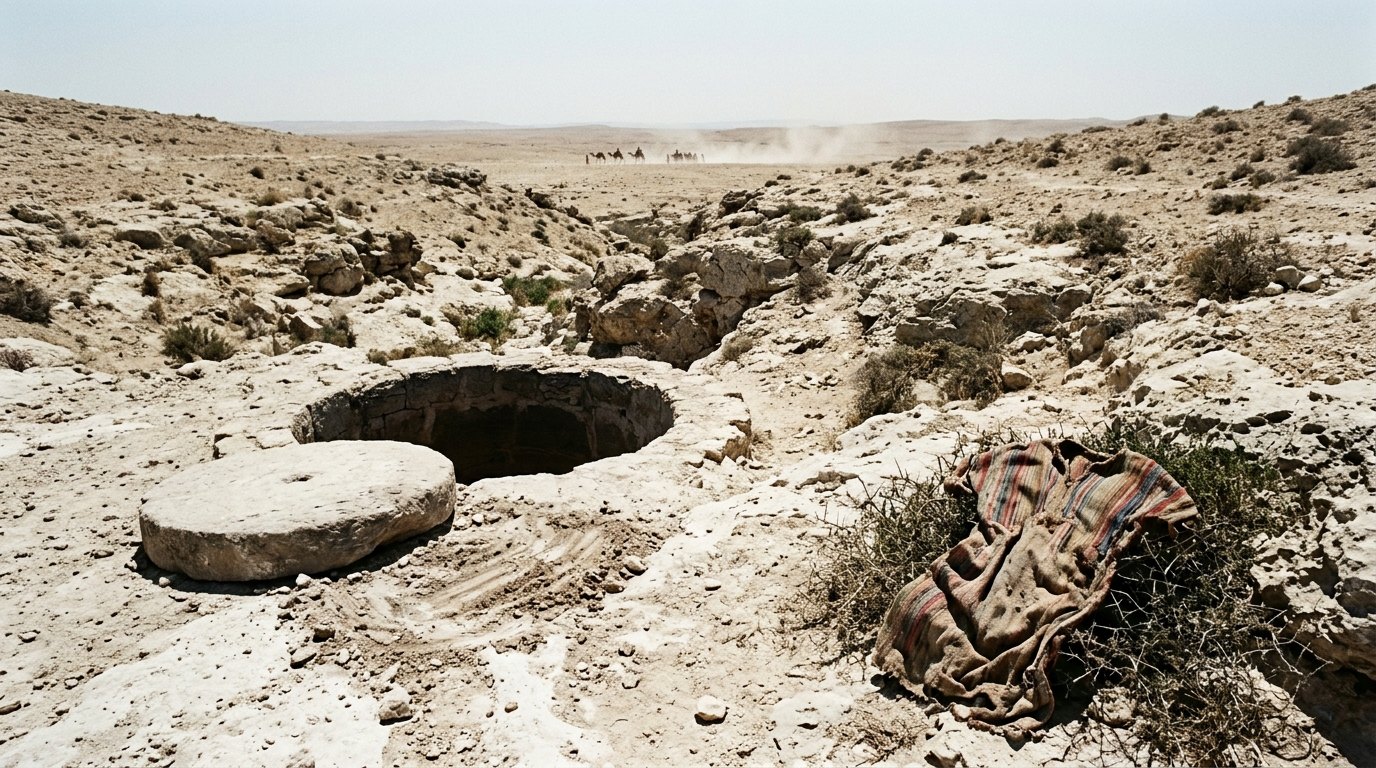
Though my father and mother forsake me, the LORD will receive me.
Psalms 27:10 (NIV)
It shows that God's adoption and care surpass even the most foundational earthly family bonds when they fail.
When human relationships shatter, Psalm 27:10 offers radical consolation: though my father and my mother forsake me, the Lord will receive me. The sting of being despised by family runs throughout redemptive history. In Genesis 16:4, Hagar experienced harsh contempt and mistreatment in the home of Abraham. Genesis 29:31 reveals God’s sensitive eye toward the neglected, noticing that Leah was unloved while Rachel was cherished. Joseph suffered brutal ostracization when his envious brothers refused peaceable words in Genesis 37:4, eventually throwing him into a cistern and selling him into slavery in Genesis 37:28. Centuries later, Jephthah was violently expelled from his ancestral home in Judges 11:2 because of his mother's identity.
Such wounds reach their deepest expression in Job’s laments. In Job 19:13 and Job 19:19, the patriarch mourns that his closest friends abhor him and his relatives have utterly estranged themselves. Proverbs 18:14 observes the unique difficulty of bearing a crushed spirit. Yet God never remains indifferent to human abandonment. Psalm 34:18 assures us that the Lord draws nearest to the brokenhearted, while Psalm 147:3 declares that He tenderly binds up their painful wounds. Even as Isaiah 54:6 compares the redeemed to an abandoned wife of youth whom God calls back, the Lord welcomes and restores all who have been cast aside by this fallen world.
| Passage | What it says |
|---|---|
| Genesis 16:4 | Hagar looks with contempt upon Sarai after conceiving, prompting bitter mistreatment and exile into the wilderness. |
| Genesis 29:31 | When the Lord saw that Leah was unloved and hated, He opened her womb while Rachel was barren. |
| Genesis 37:4 | Joseph's brothers hate him because their father loved him most, refusing to speak peaceably to him. |
| Genesis 37:28 | Joseph is rejected by his brethren, cast into a pit, and sold into slavery for twenty shekels of silver. |
| Judges 11:2 | Jephthah is driven away by his brothers because he was the son of another woman. |
| Job 19:13 | Job laments that his brothers have estranged themselves and his intimate acquaintances have forgotten him. |
| Job 19:19 | Job's close friends abhor him, and those he loved have turned against him in his suffering. |
| Psalms 27:10 | David confesses that even if his father and mother forsake him, the Lord will take him in. |
| Psalms 34:18 | The Lord is near to the brokenhearted and saves those crushed in spirit. |
| Psalms 147:3 | The Lord heals the brokenhearted and binds up their painful wounds. |
| Proverbs 18:14 | A man's spirit sustains him in sickness, but a crushed spirit who can bear. |
| Isaiah 54:6 | The Lord calls His people back like a wife deserted and grieved in spirit, a wife of youth who was cast off. |
Divine Acceptance in Christ
Christ Guarantees Everlasting Acceptance in the Beloved

All those the Father gives me will come to me, and whoever comes to me I will never drive away.
John 6:37 (NIV)
It provides absolute assurance that anyone coming to Christ in faith will never face divine expulsion or rejection.
In John 6:37, Jesus gives the supreme charter of salvation to every fearful soul: whoever comes to me I will never cast out. Divine acceptance in Christ is not a fragile conditional offer, but an unbreakable oath anchored in the Son’s own authority. In John 10:28, the Good Shepherd confirms this security, declaring that He gives His sheep eternal life and no one can ever snatch them from His hand. For those united to Him by faith, human hostility and worldly disapproval cannot overturn the Father’s verdict.
This reality transforms the believer's standing before heaven and earth. Romans 8:31 asks triumphantly, if God is for us, who can be against us? Paul traces this unshakable favor through every conceivable hardship, asking in Romans 8:35 whether distress, persecution, or the sword can divide us from the Savior. His resounding conclusion in Romans 8:38 and Romans 8:39 celebrates that neither death nor life, angels nor rulers, nor any created power will ever sever us from the love of God in Christ Jesus our Lord. As Ephesians 1:5 and Ephesians 1:6 announce, the Father predestined us for adoption as His sons, bestowing His lavish favor upon us forever in the Beloved.
| Passage | What it says |
|---|---|
| John 6:37 | Jesus promises that whoever comes to Him He will never cast out or turn away. |
| John 10:28 | Christ gives eternal life to His sheep, declaring that no one will snatch them from His hand. |
| Romans 8:31 | If God is for us, no adversary or accusation can successfully stand against us. |
| Romans 8:35 | Nothing can separate believers from the love of Christ, whether tribulation, distress, persecution, or sword. |
| Romans 8:38 | Paul is persuaded that neither death nor life, angels nor rulers, can separate us from God's love. |
| Romans 8:39 | No created thing in all creation will be able to sever believers from the love of God in Christ Jesus. |
| Ephesians 1:5 | God predestined believers for adoption as sons through Jesus Christ, according to the purpose of His will. |
| Ephesians 1:6 | Believers are received to the praise of His glorious grace, with which He blessed us in the Beloved. |
Where in the Bible
| Book | Passages |
|---|---|
| Genesis | 4 · Genesis 16:4, Genesis 29:31, Genesis 37:4, Genesis 37:28 |
| Leviticus | 3 · Leviticus 26:15, Leviticus 26:30, Leviticus 26:44 |
| Numbers | 1 · Numbers 14:11 |
| Deuteronomy | 2 · Deuteronomy 31:6, Deuteronomy 31:8 |
| Joshua | 1 · Joshua 1:5 |
| Judges | 1 · Judges 11:2 |
| 1 Samuel | 5 · 1 Samuel 15:23, 1 Samuel 15:26, 1 Samuel 8:7, 1 Samuel 10:19, 1 Samuel 12:22 |
| 2 Kings | 1 · 2 Kings 17:20 |
| Job | 2 · Job 19:13, Job 19:19 |
| Psalms | 8 · Psalms 118:22, Psalms 22:6, Psalms 69:8, Psalms 31:11, Psalms 94:14, Psalms 27:10, Psalms 34:18, Psalms 147:3 |
| Proverbs | 1 · Proverbs 18:14 |
| Isaiah | 5 · Isaiah 28:16, Isaiah 53:3, Isaiah 49:7, Isaiah 41:9, Isaiah 54:6 |
| Jeremiah | 3 · Jeremiah 6:30, Jeremiah 7:29, Jeremiah 14:19 |
| Lamentations | 1 · Lamentations 3:31 |
| Hosea | 1 · Hosea 4:6 |
| Zechariah | 1 · Zechariah 3:9 |
| Matthew | 8 · Matthew 21:42, Matthew 27:21, Matthew 27:39, Matthew 5:11, Matthew 10:22, Matthew 10:14, Matthew 10:40, Matthew 7:23 |
| Mark | 2 · Mark 12:10, Mark 8:31 |
| Luke | 7 · Luke 20:17, Luke 4:28, Luke 9:22, Luke 17:25, Luke 6:22, Luke 10:16, Luke 6:46 |
| John | 7 · John 1:11, John 7:5, John 15:18, John 15:19, John 15:20, John 6:37, John 10:28 |
| Acts | 1 · Acts 4:11 |
| Romans | 10 · Romans 1:28, Romans 11:1, Romans 11:2, Romans 11:11, Romans 11:25, Romans 11:26, Romans 8:31, Romans 8:35, Romans 8:38, Romans 8:39 |
| Ephesians | 2 · Ephesians 1:5, Ephesians 1:6 |
| 1 Thessalonians | 1 · 1 Thessalonians 4:8 |
| 2 Timothy | 1 · 2 Timothy 3:12 |
| Hebrews | 2 · Hebrews 12:17, Hebrews 13:5 |
| 1 Peter | 5 · 1 Peter 2:4, 1 Peter 2:5, 1 Peter 2:6, 1 Peter 2:7, 1 Peter 4:14 |
| 1 John | 1 · 1 John 3:13 |
The story in order
- God rejects Saul as king (c. 1000 BC) · 1 Samuel 15:23 · Rejection of God's word leads to rejection by God.
- David flees from Saul (c. 1000 BC) · Psalms 27:10 · Even when forsaken by family, God accepts.
- Prophecy of the Suffering Servant (c. 700 BC) · Isaiah 53:3 · Foretells the Messiah would be despised and rejected.
- Prophecy of the Rejected Stone (c. 1000 BC) · Psalms 118:22 · The rejected stone becomes the cornerstone.
- Jesus is rejected by His own (c. AD 30) · John 1:11 · Jesus came to His own, but they did not receive Him.
- Jesus is rejected by builders (c. AD 30) · Luke 20:17 · Jesus quotes prophecy about His rejection.
- Jesus is crucified (AD 30) · Matthew 27:21 · The crowd chooses Barabbas over Jesus.
- Peter proclaims Christ's exaltation (c. AD 30) · Acts 4:11 · The rejected Jesus is made head of the corner by God.
- Believers face world's hatred (c. AD 30) · John 15:18 · The world hated Christ first, so it hates His followers.
- Paul on God's faithfulness (c. AD 55) · Romans 11:1 · God has not cast away His people.
- Believers are never cast out (c. AD 30) · John 6:37 · Jesus promises He will never cast out those who come to Him.
- Nothing separates from God's love (c. AD 55) · Romans 8:38 · No created thing can separate believers from God's love.
Key words
- Rejected Stone (Greek: akrogoniaios, ακρογωνιαῖος)
- Jesus, despised by human builders but chosen by God as the foundation of salvation. · 1 Peter 2:4
- Suffering Servant (Hebrew: ebed, עֶבֶד)
- The Messiah, who would be despised, rejected, and acquainted with grief for humanity's sake. · Isaiah 53:3
- Reprobate Silver (Hebrew: ma'as, מָאַס)
- A metaphor for people rejected by God because they have refused His word and are unrepentant. · Jeremiah 6:30
- Cast Out (Greek: ekballo, ἐκβάλλω)
- To be rejected, expelled, or abandoned, either by humans or by God. · John 6:37
- Forsake (Hebrew: 'azab, עָזַב)
- To abandon, desert, or neglect, used for both human and divine actions. · Deuteronomy 31:6
- Beloved (Greek: agapetos, ἀγαπητός)
- Refers to Christ, in whom believers are accepted and loved by God. · Ephesians 1:6
Believers must never confuse human rejection with God's verdict, nor take His covenant grace for granted. Those united to Christ, the living Stone, find an eternal refuge that human scorn cannot shake, while the call remains urgent for all to seek His mercy before judgment falls.
87 passages, each cited once.
Scripture cited
- Isaiah 53:3-6
- John 6:37-40
- John 15:18-21
- Romans 8:31-39
- 1 Peter 4:12-16
- Romans 12:14-21
- 1 Peter 2:7-8
- Psalms 27:10
- Ephesians 1:3-6