What does the Bible say about the stars and the heavens?
Psalms 147:4
4 He determines the number of the stars and calls them each by name.
New International Version (NIV)
The answer
The stars and heavens are God's handiwork, named and numbered by Him, set in the sky to declare His glory and give light — and Scripture forbids worshiping them while commanding us to marvel at them.
God made them and set them in place
- Genesis 1:16 — "God made two great lights; the greater light to rule the day, and the lesser light to rule the night: he also made the stars."
- Psalm 8:3 — "When I consider thy heavens, the work of thy fingers, the moon and the stars, which thou hast ordained…"
- Job 26:13 — "By his spirit he hath garnished the heavens; his hand hath formed the crooked serpent."
- Psalm 33:6 — "By the word of the LORD were the heavens made; and all the host of them by the breath of his mouth."
- Psalm 148:5 — "Let them praise the name of the LORD: for he commanded, and they were created."
He numbers them and calls each by name
This is the point of Psalm 147:4 — "He counts the number of the stars. He calls them all by their names." The same truth echoes in Isaiah 40:26: "He bringeth out their host by number: he calleth them all by names by the greatness of his might, for that he is strong in power; not one faileth." Not one is missing from His accounting. When God promised Abraham an offspring as many as the dust of the earth, He pointed him to the sky and said, "Look now toward heaven, and tell the stars, if thou be able to number them" (Genesis 15:5) — a number no human could count, but God could.
They were appointed to give light and to mark time
- Genesis 1:14,17 — "God said, Let there be lights in the firmament of the heaven… to give light upon the earth… and God set them in the firmament of the heaven to give light upon the earth."
- Psalm 136:9 — "The moon and stars to rule by night: for his mercy endureth for ever."
- Jeremiah 31:35 — "The LORD, that giveth the sun for a light by day, and the ordinances of the moon and of the stars for a light by night."
They differ in glory and exist to praise God
- 1 Corinthians 15:41 — "One star differeth from another star in glory."
- Psalm 148:3 — "Praise ye him, sun and moon: praise him, all ye stars of light."
Worship of them is forbidden; wonder at them is right
- Deuteronomy 4:19 — "Lest thou lift up thine eyes unto heaven, and when thou seest the sun, and the moon, and the stars, even all the host of heaven, shouldest be driven to worship them, and serve them, which the LORD thy God hath divided unto all nations under the whole heaven."
- Psalm 19:1 — "The heavens declare the glory of God; and the firmament sheweth his handywork."
The created lights should point you to the Creator, not draw your worship to themselves.
The heavens are His dwelling place
He fills what no sky can contain: 1 Kings 8:27 — "Behold, the heaven and heaven of heavens cannot contain thee." Compare Isaiah 66:1 — "Thus saith the LORD, The heaven is my throne, and the earth is my footstool." The God who named every star is the One who sits above them and invites you to know Him.
When you look up tonight, the sky is not silent — it is a testimony, and the One who counts each star knows your name too.
Answered from Scripture · reviewed November 7, 2026
Scripture reveals that the heavens and the stars are the magnificent handiwork of God, created by His breath to give light, mark sacred seasons, and display His majesty. He numbers every star and calls each by its personal name, commanding our awe while strictly forbidding their worship. From Genesis to Revelation, the celestial bodies serve as silent witnesses to the glory, faithfulness, and sovereign power of their Creator.
Creation and Ordinance
Formed by His Word and Fashioned by His Fingers
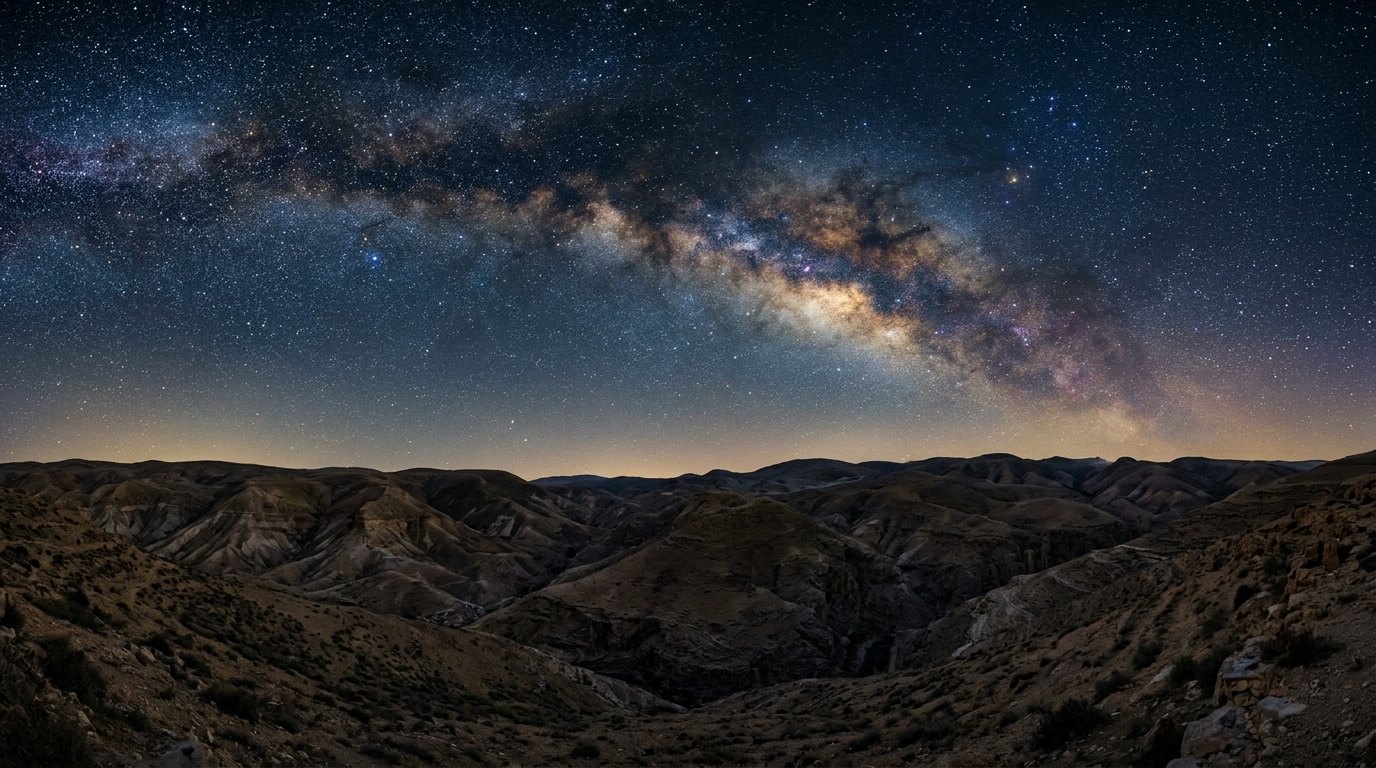
When I consider your heavens, the work of your fingers, the moon and the stars, which you have set in place,
Psalms 8:3 (NIV)
David reflects on human humility against the staggering craftsmanship of the moon and stars ordained directly by God's fingers.
When David lifts his eyes into the stillness of the night in Psalm 8:3, he marvels that the immense expanse above is merely the deft work of God's fingers, framed with effortless precision and ordered by sovereign decree. The opening chapter of Scripture demotes the celestial bodies from the pagan pantheon of autonomous deities into simple, obedient servants: in Genesis 1:14, God commands lights to appear in the celestial dome to partition the cycle of days, establish sacred festivals, and mark the passage of years. With staggering understatement, Genesis 1:16 notes that beside the sun and moon, "He made the stars also," setting them in place across the firmament in Genesis 1:17 to pour their illumination over the earth. The psalmist returns to this unfathomable ease of creation in Psalm 33:6, declaring that the whole cosmic army was summoned into being by the breath of His mouth, a truth echoed in Job 26:13, where the Spirit of God adorns the night sky and fashions the sweeping constellations like the fleeing serpent. Because their very existence hangs on His sovereign will, Psalm 148:5 calls upon the celestial host to render praise, for at His single word they were established. The Levites in Nehemiah 9:6 confess that the Lord alone fashioned heaven, the heaven of heavens, preserving every star as they continually bow before Him. This cosmic host stretches beyond human reckoning, as Jeremiah 33:22 reminds us, mirroring God's boundless covenant promises to David through an innumerability that defies every earthly measure.
| Passage | What it says |
|---|---|
| Genesis 1:14 | God commands lights to appear in the expanse to divide day from night and mark signs, seasons, days, and years. |
| Genesis 1:16 | God makes the two great lights to rule day and night, and He makes the stars as well. |
| Genesis 1:17 | God sets the celestial luminaries in the firmament of heaven to provide light upon the earth. |
| Psalms 8:3 | The psalmist contemplates the heavens as the work of God's fingers, alongside the moon and stars He ordained. |
| Psalms 33:6 | The heavens were created by the word of the Lord, and all their host by the breath of His mouth. |
| Job 26:13 | By His Spirit God adorned the heavens, and His hand formed the fleeing serpent constellation. |
| Psalms 148:5 | All heavenly hosts are summoned to praise the Lord because He commanded and they were created. |
| Nehemiah 9:6 | Affirms God alone made heaven, the heaven of heavens, with all their host, preserving them all as heaven's host worships Him. |
| Jeremiah 33:22 | Declares the host of heaven cannot be numbered, comparing the innumerability of the stars to God's promised multiplication of David's line. |
Divine Sovereignty
Counted, Named, and Sustained by Omnipotent Might
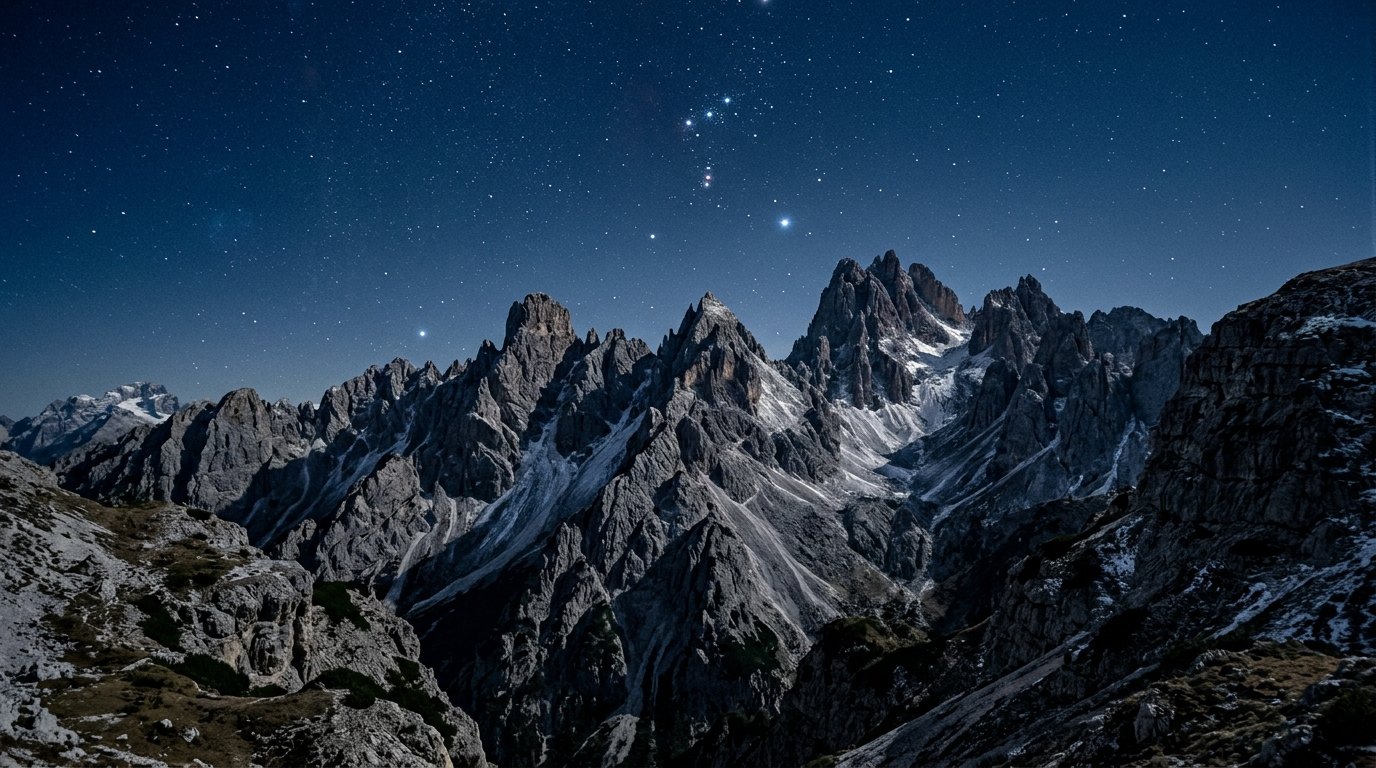
He determines the number of the stars and calls them each by name.
Psalms 147:4 (NIV)
This verse reveals God's exhaustive knowledge and personal governance over every single star in the cosmos.
The sweeping magnitude of the cosmos does not dissolve into an anonymous blur before the Almighty, for Psalm 147:4 reveals that He calculates the exact number of the stars and summons every single one by its own unique name. Man stands bewildered before the sky, as Abraham did in Genesis 15:5 when the Lord led him outside the tent and commanded him to number the stellar multitudes if he were able, sealing a covenant of multiplying descendants through that dazzling impossibility. In Isaiah 40:26, the prophet bids us lift up our eyes to behold the cosmic Commander who leads forth this starry regiment by name, keeping every beacon in place through the greatness of His might so that not one goes missing. Human technology cannot govern or disrupt their courses: in Job 9:9, Job reverently names God as the sole architect of the Bear, Orion, the Pleiades, and the southern constellations. When God answers Job from the whirlwind, He drives this sovereign boundary home in Job 38:31, questioning whether a mortal hand can fasten the cluster of the Pleiades or unbind the belt of Orion. In Amos 5:8, the faithful are summoned to seek this sovereign Maker who governs these very constellations and turns midnight gloom into the dawn. God alone directs the seasonal procession of the celestial vault, asking in Job 38:32 whether man can guide the constellations in their appointed seasons, and concluding in Job 38:33 that the ordinances of heaven and their influence over earth remain exclusively under His sovereign domain.
| Passage | What it says |
|---|---|
| Psalms 147:4 | God determines the exact number of the stars and summons each one by its individual name. |
| Isaiah 40:26 | The Holy One marshals the starry host by number and name; by His great power not one is missing. |
| Genesis 15:5 | The Lord brings Abraham outside and challenges him to count the stars to illustrate the magnitude of his offspring. |
| Job 9:9 | God alone makes the Bear, Orion, the Pleiades, and the chambers of the south. |
| Job 38:31 | The Lord challenges Job regarding whether he can bind the chains of the Pleiades or loose Orion's cords. |
| Amos 5:8 | The prophet calls Israel to seek Him who made the Pleiades and Orion and turns darkness to morning. |
| Job 38:32 | Asks whether man can bring forth the constellations in their season or guide the bear with its children under God's governance. |
| Job 38:33 | Points to the established ordinances of the heavens and God's rule over their dominion on the earth. |
Silent Proclamation
Declaring the Creator's Glory and Endless Praise
The heavens declare the glory of God; the skies proclaim the work of his hands.
Psalms 19:1 (NIV)
The cosmos functions as an unbroken, wordless sermon testifying to the glory and handiwork of God.
Without uttering an audible syllable or producing an earthly sound, the heavens maintain a ceaseless witness, as Psalm 19:1 proclaims that the skies declare the glory of God and the firmament exhibits the craftsmanship of His hands. This is not passive architecture but a continuous liturgy of creation: in Psalm 148:3, the sun, moon, and shining stars are directly commanded to join the chorus of praise directed toward their Maker. Their enduring stability reveals the steadfast character of God, demonstrated in Psalm 136:9, where the moon and stars appointed to rule the night stand as tangible, nightly monuments that His steadfast love endures forever. Through the prophet in Jeremiah 31:35, God points to the fixed orders of the sun for light by day and the stars for light by night as the immutable guarantee of His covenant with Israel—a bond as unbreakable as the physical laws holding the planets in their courses. In the New Testament, 1 Corinthians 15:41 observes the magnificent diversity of the heavenly architecture, noting how the sun, the moon, and the stars each possess distinct measures of glory, serving as a divine pattern for the greater physical resurrection awaiting the people of God.
| Passage | What it says |
|---|---|
| Psalms 19:1 | The heavens recount the glory of God, and the firmament proclaims His craftsmanship day and night. |
| Psalms 148:3 | The sun, moon, and all stars of light are commanded to offer praise to their Creator. |
| Psalms 136:9 | God fashioned the moon and stars to govern the night, demonstrating that His steadfast love endures forever. |
| Jeremiah 31:35 | The Lord established the fixed ordinances of the sun, moon, and stars as enduring witnesses of His covenant faithfulness. |
| 1 Corinthians 15:41 | Paul observes that the sun, moon, and stars differ from one another in distinct glory and splendor. |
Transcendence and Warning
Heavens Cannot Contain Him; Star Worship Forbidden
And when you look up to the sky and see the sun, the moon and the stars—all the heavenly array—do not be enticed into bowing down to them and worshiping things the LORD your God has apportioned to all the nations under heaven.
Deuteronomy 4:19 (NIV)
Moses explicitly warns God's people never to lift their eyes and be seduced into bowing down to the stars.
Because the cosmos is created work rather than a deity, Scripture issues stern prohibitions against celestial idolatry, beginning with Deuteronomy 4:19, where Moses cautions Israel never to lift their eyes, see the starry host, and be enticed to bow down and worship them. King Solomon understood this boundary at the dedication of the temple in 1 Kings 8:27, confessing that even the highest heavens cannot contain the omnipresent God, let alone an earthly house. God reinforces this infinite distinction in Isaiah 66:1, declaring that heaven is His throne and the earth merely His footstool, leaving no room for the divinization of matter. When ancient Israel strayed into astrology and astral worship, judgment fell: in 2 Kings 23:5, righteous King Josiah dismantled the illicit priests who had burned incense to the sun, moon, constellations, and the host of heaven. Paul exposes the moral bankruptcy of such practices in Romans 1:25, warning of the fatal exchange wherein humanity worships created things rather than the eternal Creator. The law of Moses pronounced severe judgment in Deuteronomy 17:3 against anyone caught serving the host of heaven, treating such worship as covenant treason. Furthermore, Isaiah 47:13 ridicules the futility of astrologers, stargazers, and monthly prognosticators who claim insight into destiny yet cannot deliver themselves from judgment, while Jeremiah 8:2 warns that those who cherished and worshiped the starry skies will find those same lifeless stars helpless to deliver them in the day of wrath.
| Passage | What it says |
|---|---|
| Deuteronomy 4:19 | Israel is commanded not to look to the sun, moon, and stars and be enticed into worshiping them. |
| 1 Kings 8:27 | Solomon acknowledges at the temple dedication that highest heaven cannot contain the infinite God. |
| Isaiah 66:1 | The Lord declares heaven as His throne and the earth as His footstool, defying any human enclosure. |
| 2 Kings 23:5 | King Josiah abolishes the idolatrous priests who burned incense to the sun, moon, constellations, and starry host. |
| Romans 1:25 | Paul condemns fallen mankind for exchanging God's truth to worship and serve created things rather than the Creator. |
| Deuteronomy 17:3 | Condemns serving or worshipping the sun, moon, or any of the host of heaven as a transgression of God's covenant. |
| Isaiah 47:13 | Rebukes astrologers, stargazers, and monthly prognosticators who falsely claim power to deliver from God's coming judgment. |
| Jeremiah 8:2 | Warns that those who loved, served, and worshipped the host of heaven will be exposed in dishonor before them. |
Messianic Signs and Metaphors
From the Star of Bethlehem to the Morning Star
“I, Jesus, have sent my angel to give you this testimony for the churches. I am the Root and the Offspring of David, and the bright Morning Star.”
Revelation 22:16 (NIV)
Jesus explicitly names Himself the bright morning star, consummating the celestial imagery of redemption.
In Revelation 22:16, the exalted Lord declares, "I am the Root and the Offspring of David, and the bright Morning Star." Scripture persistently uses celestial light to illuminate the hope of redemptive history, culminating in Christ as the dawn of everlasting day. Centures earlier, the reluctant seer Balaam foretold this royal arrival in Numbers 24:17, prophesying that "a Star shall come out of Jacob; a Scepter shall rise out of Israel," establishing an enduring link between celestial radiance and Davidic dominion. That ancient hope took physical form at the incarnation, when eastern Magi arrived in Jerusalem asking in Matthew 2:2, "Where is He who has been born King of the Jews? For we have seen His star in the East and have come to worship Him." God ordained an actual celestial phenomenon to guide seeking gentiles directly to the newborn Messiah.
Yet this celestial dignity is not held by Christ alone; it is graciously shared with His redeemed people. In Daniel 12:3, the prophet is promised that those who are wise and who turn many to righteousness "shall shine like the stars forever and ever." This radiance flows directly from Christ's sovereign protection over His church. In Revelation 1:16, John beholds the glorified Son of Man holding seven stars securely in His right hand—messengers and guardian spirits of the gathered flock sustained entirely by His power. From the guiding star over Bethlehem to the unending brightness of the new age, the lights of heaven continuously herald the glory of the Redeemer.
| Passage | What it says |
|---|---|
| Matthew 2:2 | Magi observe the star in the east heralding the birth of the King of the Jews, coming to worship Him. |
| Numbers 24:17 | Prophesies that a star shall come out of Jacob and a scepter shall rise out of Israel to crush His enemies. |
| Daniel 12:3 | Promises those who turn many to righteousness shall shine like the brightness of the heavens and like stars forever. |
| Revelation 1:16 | Describes the glorified Christ holding the seven stars, which represent the angels of the seven churches, in His right hand. |
| Revelation 22:16 | Jesus reveals Himself as the Root and the Offspring of David, and the bright morning star. |
Eschatological Shaking
Cosmic Upheaval, Final Dissolution, and New Creation
But the day of the Lord will come like a thief. The heavens will disappear with a roar; the elements will be destroyed by fire, and the earth and everything done in it will be laid bare.
2 Peter 3:10 (NIV)
It outlines the sudden eschatological dissolution of the celestial spheres before the arrival of the new heavens.
The apostle Peter warns in 2 Peter 3:10 that the present cosmos is destined for sudden, fiery renewal, when "the heavens will pass away with a great noise, and the elements will melt with fervent heat." Throughout the prophetic canon, the celestial bodies are neither eternal nor divine; they are finite creations that will visibly convulse under God's righteous judgment. Isaiah 13:10 warned that the day of the Lord brings utter gloom, where "the stars of heaven and their constellations will not give their light," while Isaiah 34:4 declared that "all the host of heaven shall be dissolved, and the heavens shall be rolled up like a scroll." In the same spirit of warning, Joel 2:10 announced that before the Lord's mighty army, "the heavens tremble; the sun and moon grow dark, and the stars diminish their brightness."
Jesus affirmed this terrifying climax in Matthew 24:29, stating that immediately after the tribulation, the powers of the heavens will be shaken and the stars will fall from the sky. The apostle John witnessed this very vision in Revelation 6:13, watching as "the stars of heaven fell to the earth, as a fig tree drops its late figs when it is shaken by a mighty wind." Yet this cosmic upheaval is not final ruin, but the necessary clearing away of a groaning creation. In Revelation 21:1, John beholds "a new heaven and a new earth, for the first heaven and the first earth had passed away." The temporal lights will dissolve so that the unfading glory of God Himself may illuminate the eternal home of the redeemed.
| Passage | What it says |
|---|---|
| Isaiah 13:10 | Foretells judgment where the stars of heaven and their constellations will withhold their light and the sun will darken. |
| Isaiah 34:4 | Describes all the host of heaven dissolving and the skies rolling up like a scroll at God's indignation. |
| Joel 2:10 | Declares that the earth quakes, the heavens tremble, and the sun, moon, and stars withdraw their shining in judgment. |
| Matthew 24:29 | Christ prophesies that immediately after the tribulation the sun darkens, the moon darkens, and stars fall from heaven. |
| 2 Peter 3:10 | Announces that the heavens will pass away with a roar and the celestial elements will melt with fervent heat. |
| Revelation 6:13 | Depicts the stars of heaven falling to the earth like figs shaken from a tree in late winter. |
| Revelation 21:1 | Visions a new heaven and a new earth, for the first heaven and the first earth had passed away. |
Where in the Bible
| Book | Passages |
|---|---|
| Genesis | 4 · Genesis 1:14, Genesis 1:16, Genesis 1:17, Genesis 15:5 |
| Numbers | 1 · Numbers 24:17 |
| Deuteronomy | 2 · Deuteronomy 4:19, Deuteronomy 17:3 |
| 1 Kings | 1 · 1 Kings 8:27 |
| 2 Kings | 1 · 2 Kings 23:5 |
| Nehemiah | 1 · Nehemiah 9:6 |
| Job | 5 · Job 26:13, Job 9:9, Job 38:31, Job 38:32, Job 38:33 |
| Psalms | 7 · Psalms 8:3, Psalms 33:6, Psalms 148:5, Psalms 147:4, Psalms 19:1, Psalms 148:3, Psalms 136:9 |
| Isaiah | 5 · Isaiah 40:26, Isaiah 66:1, Isaiah 47:13, Isaiah 13:10, Isaiah 34:4 |
| Jeremiah | 3 · Jeremiah 33:22, Jeremiah 31:35, Jeremiah 8:2 |
| Daniel | 1 · Daniel 12:3 |
| Joel | 1 · Joel 2:10 |
| Amos | 1 · Amos 5:8 |
| Matthew | 2 · Matthew 2:2, Matthew 24:29 |
| Romans | 1 · Romans 1:25 |
| 1 Corinthians | 1 · 1 Corinthians 15:41 |
| 2 Peter | 1 · 2 Peter 3:10 |
| Revelation | 4 · Revelation 1:16, Revelation 22:16, Revelation 6:13, Revelation 21:1 |
The story in order
- Creation of the Heavens and Stars (c. 4000 BC) · Genesis 1:16 · God created the stars along with the sun and moon.
- God Ordains Celestial Bodies (c. 4000 BC) · Genesis 1:14 · Lights in the sky are for signs, seasons, days, and years.
- Abraham Shown Starry Offspring (c. 2000 BC) · Genesis 15:5 · Stars symbolize the innumerable descendants God promised Abraham.
- Job Contemplates God's Cosmic Work (c. 1500 BC) · Job 38:31 · God challenges Job about His control over constellations like Pleiades.
- Psalmist Praises God's Fingerwork (c. 1000 BC) · Psalms 8:3 · The heavens and stars are seen as God's creation.
- Heavens Declare God's Glory (c. 1000 BC) · Psalms 19:1 · The skies continually proclaim the glory of God's work.
- Warning Against Star Worship (c. 1400 BC) · Deuteronomy 4:19 · Israel forbidden to worship the sun, moon, and stars.
- Josiah Abolishes Idolatry (c. 620 BC) · 2 Kings 23:5 · Idolatrous worship of stars and heavenly host was removed.
- Prophecy of Star of Bethlehem (c. 1400 BC) · Numbers 24:17 · A star signifies a ruler arising from Israel.
- Magi Follow Star to Jesus (c. 4 BC) · Matthew 2:2 · Wise men saw a star announcing the birth of the King.
- Christ Holds Seven Stars (c. AD 95) · Revelation 1:16 · Christ holds the stars, representing church messengers.
- Cosmic Judgment Foretold (c. 700 BC) · Isaiah 13:10 · Judgment brings darkness to the sun, moon, and stars.
- New Heavens and Earth (c. AD 95) · Revelation 21:1 · The first heaven and earth pass away, replaced by a new creation.
Heavens Proclaim God's Glory
| Heavens Recount God's Glory | Firmament Proclaims His Craftsmanship | Passage |
|---|---|---|
| The heavens recount the glory of God | and the firmament proclaims His craftsmanship day and night. | Psalms 19:1 |
| All heavenly hosts are summoned to praise the Lord | because He commanded and they were created. | Psalms 148:5 |
| The sun, moon, and all stars of light are commanded to offer praise | to their Creator. | Psalms 148:3 |
Celestial Bodies in Judgment
| Event | Cosmic Reaction | Consequence | Passage |
|---|---|---|---|
| God's indignation | All the host of heaven will dissolve | The skies will be rolled up like a scroll. | Isaiah 34:4 |
| Day of the Lord's judgment | The earth quakes, the heavens tremble | The sun, moon, and stars withdraw their shining. | Joel 2:10 |
| Tribulation | The sun will be darkened | the moon will not give its light, and stars will fall from heaven. | Matthew 24:29 |
| Day of the Lord | The heavens will pass away with a great noise | the elements will be dissolved with fervent heat. | 2 Peter 3:10 |
| Sixth Seal | The stars of heaven fell to the earth | like a fig tree drops its late figs when shaken by a powerful wind. | Revelation 6:13 |
Key words
- Host of Heaven (sāwā' šāmayim (צָבָא שָׁמַיִם))
- Refers to the stars, constellations, and celestial bodies, sometimes also angelic beings. · Nehemiah 9:6
- Ordinances of Heaven (ḥuqqōṯ šāmayim (חֻקּוֹת שָׁמַיִם))
- The fixed laws and patterns established by God that govern the celestial bodies. · Job 38:33
- Craftsmanship (mā'aśēh (מַעֲשֶׂה))
- The skillful work and design evident in God's creation, particularly the heavens. · Psalms 19:1
- Morning Star (astēr prōinos (ἀστὴρ πρωϊνός))
- A title for Jesus Christ, symbolizing His radiant glory and role as the harbinger of a new day. · Revelation 22:16
- Great Lights (mā'ōr gāḏōl (מָאוֹר גָּדוֹל))
- The sun and the moon, created by God to rule over day and night. · Genesis 1:16
Looking up at the night sky should never prompt superstition or idolatry, but reverent worship of the God who calls every star by name. The Lord who orchestrates the boundless cosmos is the same Shepherd who cares intimately for His people. As believers gaze into the heavens, they are reminded of His infinite majesty, His unwavering covenant promises, and the eternal glory awaiting those who belong to Christ.
42 passages, each cited once.
Scripture cited
- Psalms 147:4
- Isaiah 40:26
- Psalms 8:3
- Psalms 148:3
- Genesis 15:5