What does the parable of the prodigal son mean?

Luke 15:11-32
11 Jesus continued: “There was a man who had two sons.
12 The younger one said to his father, ‘Father, give me my share of the estate.’ So he divided his property between them.
13 “Not long after that, the younger son got together all he had, set off for a distant country and there squandered his wealth in wild living.
14 After he had spent everything, there was a severe famine in that whole country, and he began to be in need.
15 So he went and hired himself out to a citizen of that country, who sent him to his fields to feed pigs.
16 He longed to fill his stomach with the pods that the pigs were eating, but no one gave him anything.
17 “When he came to his senses, he said, ‘How many of my father’s hired servants have food to spare, and here I am starving to death!
18 I will set out and go back to my father and say to him: Father, I have sinned against heaven and against you.
19 I am no longer worthy to be called your son; make me like one of your hired servants.’
20 So he got up and went to his father. “But while he was still a long way off, his father saw him and was filled with compassion for him; he ran to his son, threw his arms around him and kissed him.
21 “The son said to him, ‘Father, I have sinned against heaven and against you. I am no longer worthy to be called your son.’
22 “But the father said to his servants, ‘Quick! Bring the best robe and put it on him. Put a ring on his finger and sandals on his feet.
23 Bring the fattened calf and kill it. Let’s have a feast and celebrate.
24 For this son of mine was dead and is alive again; he was lost and is found.’ So they began to celebrate.
25 “Meanwhile, the older son was in the field. When he came near the house, he heard music and dancing.
26 So he called one of the servants and asked him what was going on.
27 ‘Your brother has come,’ he replied, ‘and your father has killed the fattened calf because he has him back safe and sound.’
28 “The older brother became angry and refused to go in. So his father went out and pleaded with him.
29 But he answered his father, ‘Look! All these years I’ve been slaving for you and never disobeyed your orders. Yet you never gave me even a young goat so I could celebrate with my friends.
30 But when this son of yours who has squandered your property with prostitutes comes home, you kill the fattened calf for him!’
New International Version (NIV)
The answer
The parable teaches that God joyfully receives and restores sinners who repent, while warning that self-righteous resentment can keep an outwardly religious person from sharing His joy. Jesus uses a compassionate father and two lost-in-different-ways sons to explain His welcome of sinners and to confront those who objected to it.
Why Jesus told the parable
Tax collectors and sinners were drawing near to Jesus, while the Pharisees and scribes complained that He welcomed them and ate with them (Luke 15:1-3). The preceding parables of the lost sheep and lost coin give the same lesson explicitly: there is joy in heaven over one sinner who repents (Luke 15:7, 10).
Within that setting, the father reveals God’s heart, the younger son pictures open rebellion and repentance, and the older son reflects the critics who resent mercy being shown to others.
The younger son: repentance met by grace
The son rejects life under his father, wastes his inheritance, and ends in destitution (Luke 15:12-16). When he comes to himself, he does more than feel miserable. He acknowledges his sin, admits his unworthiness, and returns to his father (Luke 15:17-21). Repentance involves an honest confession of sin and an actual turning back to God.
The father sees him while he is still far off, runs to him, embraces him, and restores him with a robe, ring, sandals, and a feast. The son had hoped to become a hired servant; the father receives him as his son. His sin is neither approved nor minimized—it is confessed and left behind, while restoration is given graciously rather than earned (Luke 15:20-24).
That same grace is promised to everyone who confesses sin: God is faithful and righteous to forgive and cleanse (1 John 1:9). Its foundation is Christ’s death for sinners, for God demonstrates His love in that Christ died for us while we were still sinners (Romans 5:8).
The older son: self-righteousness outside the feast
The older brother is angry, refuses to enter, recites his own record of service, and speaks contemptuously of his brother. Yet the father also comes out and pleads with him, showing patience toward the self-righteous as well as the openly rebellious (Luke 15:28-30).
His faithful work is not the problem; his self-righteous comparison, resentment, and refusal to rejoice are. The father reminds him of the privileges he already enjoys and repeats that his brother was dead and is alive, lost and found (Luke 15:31-32). The unresolved ending leaves the older son—and everyone hearing Jesus—with a choice: remain outside resenting grace, or enter and rejoice over repentance.
The parable therefore calls both kinds of people to God. The wanderer must stop defending sin and return in repentance. The outwardly dutiful must stop trusting a personal record or despising restored sinners. God’s purpose is not merely better behavior, but reconciled children sharing His joy.
Answered from Scripture · reviewed November 11, 2026
Jesus told the parable of the prodigal son to reveal the scandalous, lavish heart of God toward sinners who return to Him. Set against the grumbling of self-righteous religious leaders, the story exposes both the ruin of outright rebellion and the subtle trap of legalism, while showcasing a Father who runs out to meet both sons in grace.
The Setting and Occasion
Why Jesus Told the Story of the Two Sons
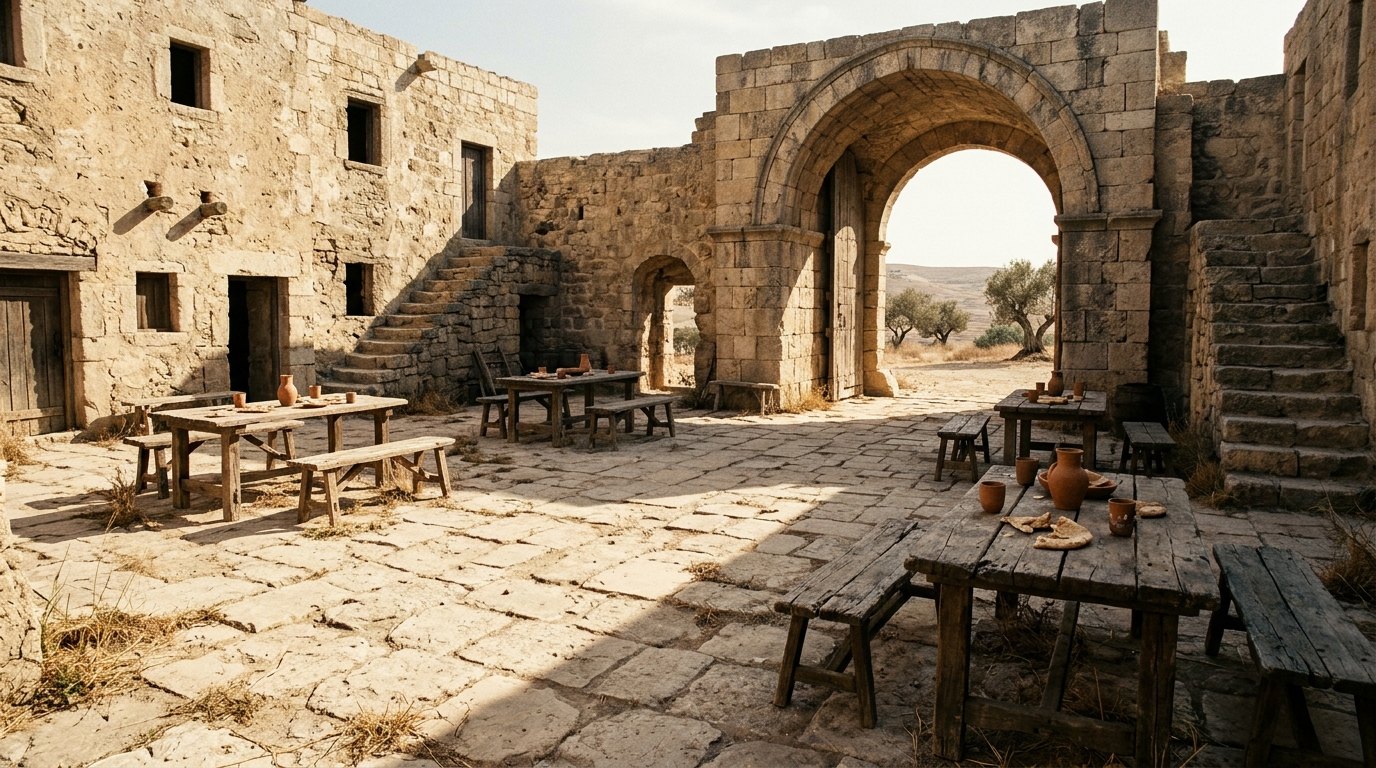
But the Pharisees and the teachers of the law muttered, “This man welcomes sinners and eats with them.”
Luke 15:2 (NIV)
The Pharisees' complaint that Jesus welcomes sinners is the engine driving all three parables of the lost in Luke 15.
Luke 15:2 captures the religious scandal that sparked one of Christ's greatest stories: "This man receives sinners and eats with them." The scribes and Pharisees viewed proximity to moral outcasts as ritual defilement. Yet as Luke 15:1 records, tax collectors and sinners were actively drawing near to hear Jesus speak. In their culture, sharing a meal signaled intimate fellowship, covenant endorsement, and mutual honor. To religious leaders who meticulously cataloged ceremonial boundaries, Jesus was crossing an unthinkable line.
Christ responded directly to their murmured outrage by speaking a three-part defense through parables (Luke 15:3). Before reaching the narrative of the two sons, Jesus laid the theological groundwork through the recovery of a lost sheep and a lost coin. In each case, He revealed what actually stirs the heavenly realm. Luke 15:7 affirms that there is more joy in heaven over one repenting sinner than over ninety-nine righteous individuals who think they have no need of repentance. Luke 15:10 reinforces the same principle: genuine joy erupts in the presence of God's angels over every single soul that turns home.
The entire chapter forms a single response to cold legalism. Jesus did not merely defend His hospitality; He exposed the heart of the Father against the hardness of the scribes. Heaven rejoices when the broken return, but those consumed by self-righteousness grumble at grace. By telling the story of a father and two disparate brothers, Christ invited His critics to see themselves—and the God they claimed to serve—in the mirror of His words.
| Passage | What it says |
|---|---|
| Luke 15:1 | Tax collectors and known sinners gathered close around Jesus to listen to His teaching. |
| Luke 15:2 | The Pharisees and scribes complained that Jesus receives notorious sinners and eats at the table with them. |
| Luke 15:3 | Jesus responds directly to the murmuring leaders by delivering a series of parables about lost things. |
| Luke 15:7 | Jesus declares that there is joyful celebration in heaven over a single sinner who repents. |
| Luke 15:10 | Joy breaks out before the angels of God when one lost sinner turns back in repentance. |
The Younger Son's Ruin
A Demanded Inheritance and Degradation in Exile

The younger one said to his father, ‘Father, give me my share of the estate.’ So he divided his property between them.
Luke 15:12 (NIV)
Demanding his share before the father's death was a culturally shocking rejection of the father himself.
The tragedy begins with an audacious assault on family honor, spotlighted in Luke 15:12: "Father, give me the portion of goods that falleth to me." In ancient Near Eastern culture, requesting an inheritance while the patriarch still lived amounted to wishing the father dead. Yet the father silently consented and divided his livelihood between his sons (Luke 15:11-12). Freedom granted was immediately abused. Not many days later, the younger boy gathered his assets, turned his back on the homestead, and journeyed into a far country to burn through everything in reckless, dissipated living (Luke 15:13).
Sin always promises liberty but delivers starvation. When his funds ran out, a severe famine struck the distant province, plunging him into utter destitution (Luke 15:14). Desperate for survival, he attached himself to a pagan citizen who banished him to the fields to feed pigs (Luke 15:15). For a Jewish youth, touching or tending unclean swine represented the ultimate nadir of ritual and personal disgrace.
His humiliation became complete when "no man gave unto him" (Luke 15:16). He was so ravenous that the carob pods intended for the swine looked enticing, yet nobody cared enough to spare even scraps. The far country had stripped him of wealth, dignity, community, and religious identity. Jesus paints the scene without softening its stark truth: self-willed independence from the father's house inevitably leads to a pigsty, where the soul discovers that the world offers no charity once the currency of pride is spent.
| Passage | What it says |
|---|---|
| Luke 15:11 | Jesus introduces the father who has two sons, establishing the dual focus of the narrative. |
| Luke 15:12 | The younger son demands his inheritance portion, and the father grants the division of his estate. |
| Luke 15:13 | The son departs to a distant land and squanders his entire fortune in reckless, riotous indulgence. |
| Luke 15:14 | A severe famine sweeps the land, leaving the impoverished young man destitute and in desperate need. |
| Luke 15:15 | He hires himself to a foreigner who sends him into fields to tend unclean swine. |
| Luke 15:16 | Longing to fill his starving stomach with pig fodder, he finds nobody willing to help him. |
Repentance and Return
Coming to Oneself on the Road Home

“When he came to his senses, he said, ‘How many of my father’s hired servants have food to spare, and here I am starving to death!
Luke 15:17 (NIV)
True repentance begins with facing spiritual bankruptcy and remembering the Father's sufficient provision.
Repentance begins with sudden, unvarnished clarity: "And when he came to himself, he said, How many hired servants of my father's have bread enough and to spare, and I perish with hunger!" (Luke 15:17). The illusion of autonomy shattered, the young man finally saw reality. True biblical repentance involves a fundamental change of mind, recognizing that life outside the father's blessing is slow death. Desperation turned his thoughts toward the estate he had despised.
He framed a speech born of genuine sorrow and broken pride (Luke 15:18-19). Resolving to return, he planned to confess that he had sinned against both heaven and his father, forfeiting every claim to family standing and asking merely to be taken on as a day laborer. A hired servant lived on wages without room or board—the lowest rung of rural society. Yet even that lower status was infinitely richer than remaining in the famine of sin.
He set out on the road home, still bearing the stench of the swine. But while he was still a long distance away, his father caught sight of him and was moved with profound compassion (Luke 15:20). In that culture, older men did not run; it was considered undignified to hitch up one's robes and bare ankles in public. Yet the father ran toward his destitute boy, threw his arms around his neck, and kissed him repeatedly. As the son stammered through his prepared confession in Luke 15:21, admitting his total unworthiness, the father's preemptive mercy overwhelmed his rehearsed petition, silencing his plea to be made a servant.
| Passage | What it says |
|---|---|
| Luke 15:17 | Coming to his senses, the starving son remembers that his father's hired laborers have bread to spare. |
| Luke 15:18 | He resolves to arise, go back home, and confess his grave sin against heaven and his father. |
| Luke 15:19 | He plans to plead for the lowly standing of a hired laborer rather than sonship. |
| Luke 15:20 | He sets out toward his father, who spots him far off, feels deep compassion, and runs to him. |
| Luke 15:21 | The son begins his confession, admitting unworthiness to be called a son in his father's sight. |
The Lavish Father
Full Restoration and the Father's Joy

“But the father said to his servants, ‘Quick! Bring the best robe and put it on him. Put a ring on his finger and sandals on his feet.
Luke 15:22 (NIV)
The best robe, the ring, and the sandals convey immediate, unconditional restoration to full family sonship.
Grace does not negotiate terms of probation; it restores completely. In Luke 15:22, the father orders his servants: "Bring forth the best robe, and put it on him; and put a ring on his hand, and shoes on his feet." Each gift carried immense symbolic weight. The best robe—likely the father's own festive garment—covered the traveler's pigsty rags in unmerited glory. The signet ring restored familial authority and trust, while sandals marked him as a freeborn son, since slaves walked barefoot throughout the house.
Restoration immediately spilled into communal celebration. The father commanded the slaughter of the fattened calf, reserved exclusively for the most sacred and joyful gatherings (Luke 15:23). His declaration in Luke 15:24 captures the heart of God: "For this my son was dead, and is alive again; he was lost, and is found." Reconciliation called for music, dancing, and feast, transforming personal rescue into shared triumph.
This lavish welcome provides a living portrait of Ezekiel 18:32, where the Lord God proclaims that He finds no delight in the destruction of the wicked, but longs for the dying to turn and live. The father in the parable did not extract payment, demand a period of penance, or hold past squandering over his son's head. He absorbed the shame, bore the cost of the estate's division, and covered the prodigal's guilt with abundant honor. Jesus demonstrates that God does not merely tolerate the repentant; He celebrates their return with boundless divine joy.
| Passage | What it says |
|---|---|
| Luke 15:22 | The father commands his servants to clothe the son in the best robe, ring, and sandals. |
| Luke 15:23 | He orders the fattened calf slaughtered to prepare an abundant celebratory feast. |
| Luke 15:24 | The father announces that his son was dead and is alive again, sparking communal celebration. |
| Ezekiel 18:32 | The Lord declares He takes no pleasure in the death of anyone, urging all to turn and live. |
The Elder Son's Bitterness
The Peril of Dutiful, Loveless Moralism

“The older brother became angry and refused to go in. So his father went out and pleaded with him.
Luke 15:28 (NIV)
The older brother's refusal to enter the house mirrors the religious rulers refusing to rejoice over forgiven tax collectors.
In Luke 15:28, the tragedy of the parable reaches its climax not in the mud of the distant country, but on the front porch of the father's house: the older brother becomes furious and refuses to go inside to celebrate. Just as the father ran out to embrace the younger rebel, he now humbles himself once more by walking outside into the dark to plead with his morally upright child. The older brother had been working hard in the fields (Luke 15:25), returning home only to be blindsided by the sound of music and dancing. When he summons a servant to ask what the commotion means (Luke 15:26), he hears that his lost sibling has returned safe and sound, and that his father has slaughtered the fattened calf (Luke 15:27).
Instead of joy, resentment erupts. The older brother vents years of pent-up bitterness, complaining that he has slaved without disobedience yet never received even a young goat for a private feast with his companions (Luke 15:29). Contemptuously disowning his sibling as 'this son of yours' who devoured the family estate with prostitutes (Luke 15:30), he reveals that his obedience was wage-seeking servitude rather than loving fellowship. Yet the father answers with astonishing tenderness: 'Son, you are always with me, and all that is mine is yours' (Luke 15:31). It was entirely right to make merry, the father gently insists, because a lost brother was found and a dead man made alive (Luke 15:32). By leaving the door standing open and the older brother's choice unwritten, Jesus confronted the Pharisees and scribes listening to Him, demonstrating just as He did in Matthew 21:31 that broken tax collectors who turn in repentance enter the kingdom while proud, self-justifying moralists stand outside.
| Passage | What it says |
|---|---|
| Luke 15:25 | Returning from hard labor in the fields, the older brother hears music and dancing near the house. |
| Luke 15:26 | He questions a servant to inquire about the meaning of the unexpected music and festivity. |
| Luke 15:27 | The servant explains that the father killed the calf because his brother returned safe and sound. |
| Luke 15:28 | Filled with anger, the older son refuses to enter, prompting the father to come out and entreat him. |
| Luke 15:29 | He complains of years of slaving without receiving even a young goat to enjoy with his friends. |
| Luke 15:30 | He bitterly accuses his brother of squandering the father's livelihood with prostitutes. |
| Luke 15:31 | The father tenderly reminds him that he is always present and shares in all the father owns. |
| Luke 15:32 | The father urges celebration, declaring that a brother who was dead has returned to life. |
| Matthew 21:31 | Jesus warns the chief priests that repenting tax collectors enter God's kingdom before defiant religious leaders. |
Where in the Bible
| Book | Passages |
|---|---|
| Ezekiel | 1 · Ezekiel 18:32 |
| Matthew | 1 · Matthew 21:31 |
| Luke | 27 · Luke 15:1, Luke 15:2, Luke 15:3, Luke 15:7, Luke 15:10, Luke 15:11, Luke 15:12, Luke 15:13, Luke 15:14, Luke 15:15, Luke 15:16, Luke 15:17, Luke 15:18, Luke 15:19, Luke 15:20, Luke 15:21, Luke 15:22, Luke 15:23, Luke 15:24, Luke 15:25, Luke 15:26, Luke 15:27, Luke 15:28, Luke 15:29, Luke 15:30, Luke 15:31, Luke 15:32 |
The story in order
- Jesus tells the parable (c. AD 30) · Luke 15:3 · Responding to grumbling religious leaders about His association with sinners.
- Younger son demands inheritance (c. AD 30) · Luke 15:12 · An act of rebellion, signifying a desire for independence from the father.
- Son squanders fortune (c. AD 30) · Luke 15:13 · Reckless living in a distant land leads to destitution.
- Son tends pigs in famine (c. AD 30) · Luke 15:15-16 · Extreme degradation, highlighting his desperate state and loss of dignity.
- Son comes to his senses (c. AD 30) · Luke 15:17 · Realization of his sin and the father's kindness leads to repentance.
- Son confesses and returns (c. AD 30) · Luke 15:18-21 · He plans to return as a hired servant, confessing his sin.
- Father runs to embrace son (c. AD 30) · Luke 15:20 · The father's lavish grace and compassion meet the returning son.
- Son is fully restored (c. AD 30) · Luke 15:22-24 · Best robe, ring, sandals, and a feast signify complete restoration.
- Elder son hears celebration (c. AD 30) · Luke 15:25 · He learns of his brother's return and the father's joy.
- Elder son refuses to enter (c. AD 30) · Luke 15:28 · His bitterness and legalism prevent him from sharing the joy.
- God's desire for repentance (c. 580 BC) · Ezekiel 18:32 · God takes no pleasure in death, but desires all to turn and live.
- Kingdom entry comparison (c. AD 30) · Matthew 21:31 · Repentant sinners enter God's kingdom before self-righteous leaders.
Key words
- Pharisees
- A religious sect known for strict adherence to the Law and oral traditions. · Luke 15:2
- Scribes
- Experts in Jewish law, often associated with the Pharisees. · Luke 15:2
- Tax collectors
- Publicans who collected taxes for the Roman government, often seen as sinners. · Luke 15:1
- Prodigal (Greek: 'asōtos')
- Wastefully extravagant; spending money or resources freely and recklessly. · Luke 15:13
- Repentance (Greek: 'metanoia')
- A change of mind and heart leading to a change of direction and action. · Luke 15:7
- Legalism
- Righteousness based on obeying rules rather than on God's grace. · Luke 15:25-30
Whether we find ourselves ruined in a distant country or hardened by bitter self-righteousness in the field, the Father still comes out to meet us. His call is an invitation to lay down our rebellion and our merit, step into the celebration, and rejoice in the grace that brings the dead back to life.
29 passages, each cited once.
Scripture cited
- Luke 15:1-10
- Romans 5:6-8
- 1 John 1:9