What happened at the Last Supper?
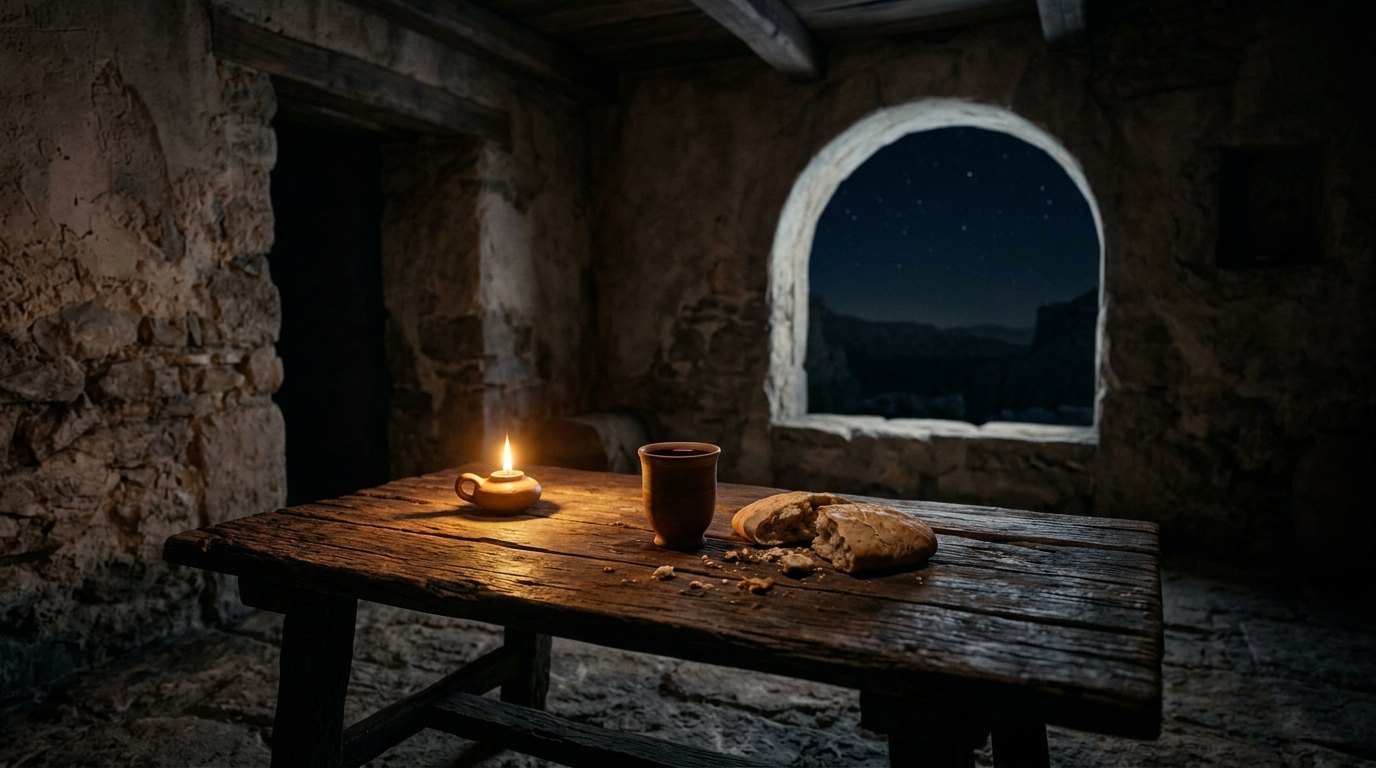
Luke 22:14-20
14 When the hour came, Jesus and his apostles reclined at the table.
15 And he said to them, “I have eagerly desired to eat this Passover with you before I suffer.
16 For I tell you, I will not eat it again until it finds fulfillment in the kingdom of God.”
17 After taking the cup, he gave thanks and said, “Take this and divide it among you.
18 For I tell you I will not drink again from the fruit of the vine until the kingdom of God comes.”
19 And he took bread, gave thanks and broke it, and gave it to them, saying, “This is my body given for you; do this in remembrance of me.”
20 In the same way, after the supper he took the cup, saying, “This cup is the new covenant in my blood, which is poured out for you.
New International Version (NIV)
The answer
At the Last Supper, Jesus ate the Passover meal with his twelve apostles and instituted the Lord's Supper (Communion).
Here is what happened, drawing from Luke 22:14-20:
- The setting: "When the hour had come, he sat down with the twelve apostles" (Luke 22:14). Matthew 26:20 and Mark 14:17 confirm it was evening, the time the Passover was to be eaten (Deuteronomy 16:6-7).
- His desire: Jesus said, "I have earnestly desired to eat this Passover with you before I suffer" (Luke 22:15), showing this was a meal he longed to share with them, knowing it was his last before the cross.
- A forward look: He told them he would not eat the Passover again "until it is fulfilled in God's Kingdom" (Luke 22:16) and would not drink of the fruit of the vine "until God's Kingdom comes" (Luke 22:18).
- The first cup: He took a cup, gave thanks, and said, "Take this and share it among yourselves" (Luke 22:17).
- The bread: "He took bread, and when he had given thanks, he broke and gave it to them, saying, 'This is my body which is given for you. Do this in memory of me'" (Luke 22:19). This is the moment that instituted the Lord's Supper — a memorial meal pointing to his body given for them on the cross.
- The cup after supper: "Likewise, he took the cup after supper, saying, 'This cup is the new covenant in my blood, which is poured out for you'" (Luke 22:20). His blood would seal the new covenant, the promised relationship between God and his people.
The Passover lamb itself prefigured this — "Christ our Passover is sacrificed for us" (1 Corinthians 5:7) — so the meal Jesus shared that night was the fulfillment of what every Passover had foreshadowed: his death for the forgiveness of sins.
Answered from Scripture · reviewed November 7, 2026
On the night He was betrayed, Jesus gathered the twelve apostles in an upper room in Jerusalem to celebrate the Passover meal. There He fulfilled the ancient shadows of Israel's redemption, instituted the Lord's Supper as an enduring memorial of His impending sacrifice, and established the New Covenant in His own blood.
The Gathering at Dusk
Jesus Reclines with the Twelve in the Upper Room
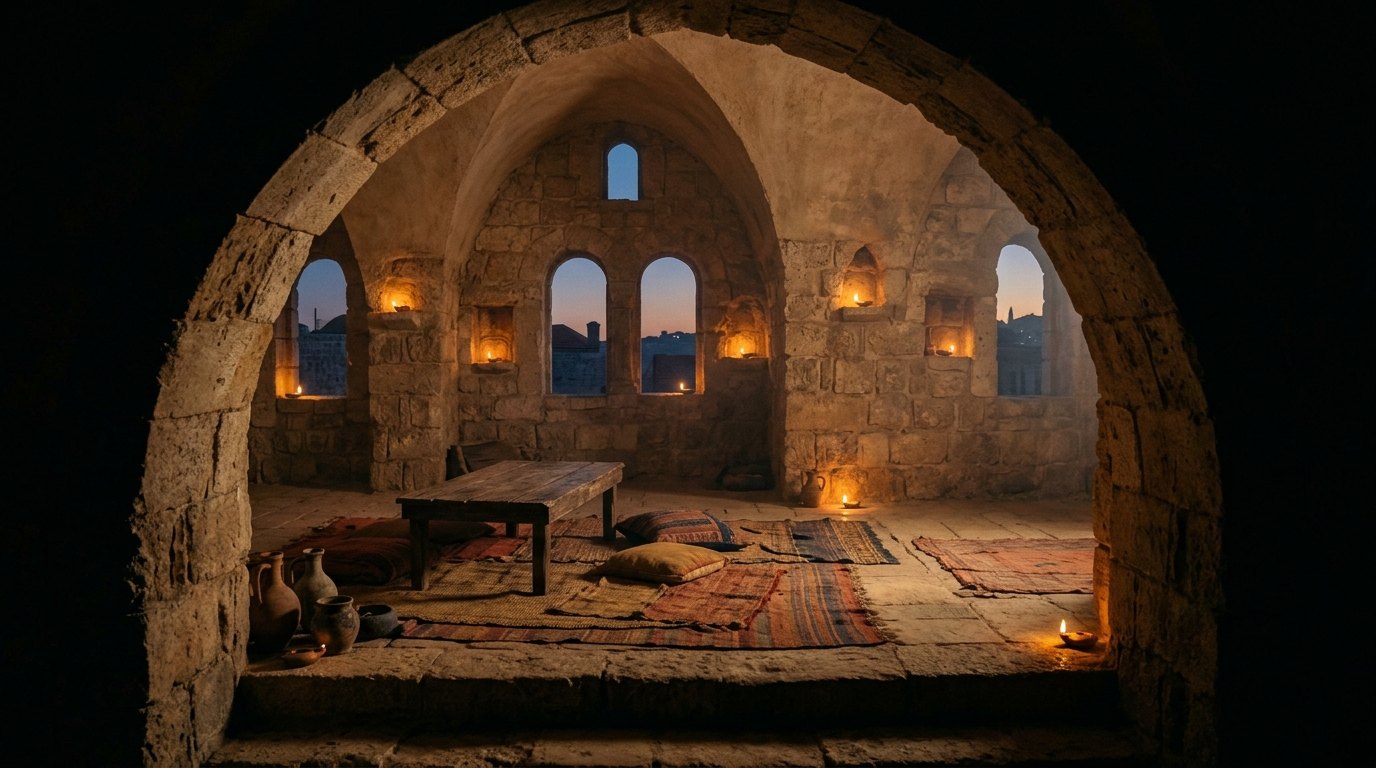
When the hour came, Jesus and his apostles reclined at the table.
Luke 22:14 (NIV)
It marks the arrival of the appointed hour when Jesus reclined at table with the twelve apostles to celebrate the Passover.
Luke 22:14 opens with quiet solemnity as the appointed moment arrives: "When the hour came, He reclined at table, and the apostles with Him." Everything in redemptive history was moving toward this night. Long before in the wilderness, Deuteronomy 16:6-7 instructed Israel that the Passover sacrifice had to be offered strictly at sunset and eaten within the place the Lord chose. In exact alignment with the Law, Mark 14:17 records that Jesus arrived with the Twelve at evening, entering the furnished upper room prepared in secret. Matthew 26:20 confirms that as darkness fell across the holy city, the Master reclined with His chosen companions to keep the feast. Luke 22:14 stresses the sovereign timing of this gathering: this was not merely an evening meal among friends, but the divinely designated "hour" wherein the Son of Man would prepare His disciples for the cross. In that secluded chamber, away from the plotting rulers, the eternal purpose of God began its climactic chapter.
| Passage | What it says |
|---|---|
| Deuteronomy 16:6-7 | God commanded that the Passover sacrifice be offered at sundown and eaten at the chosen central sanctuary. |
| Mark 14:17 | Jesus arrived in the evening at the prepared upper room with the twelve disciples. |
| Matthew 26:20 | When evening arrived, Jesus took His place at the table with the twelve disciples. |
| Luke 22:14 | When the appointed hour arrived, Jesus reclined at the table together with the twelve apostles. |
Earnest Desire
Jesus Anticipates His Suffering and the Coming Kingdom
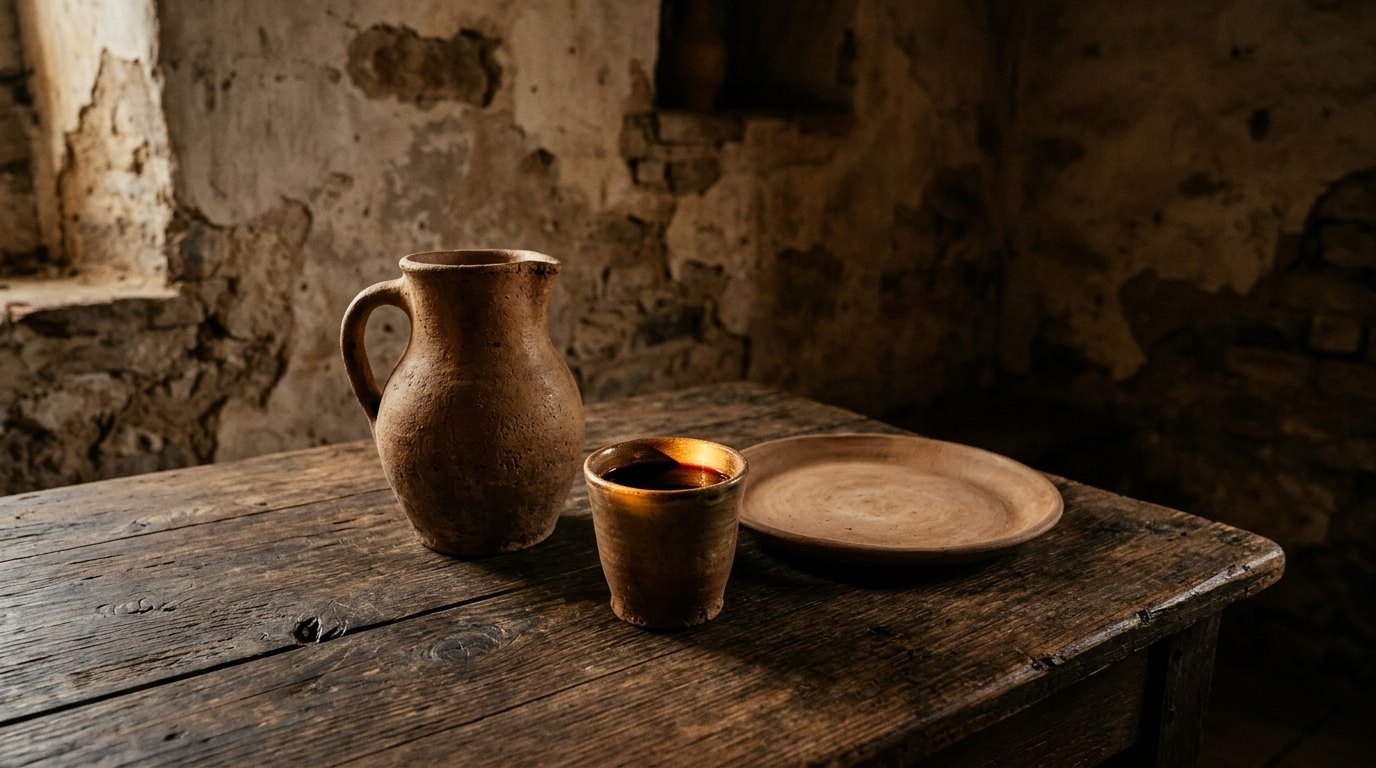
And he said to them, “I have eagerly desired to eat this Passover with you before I suffer.
Luke 22:15 (NIV)
It captures the deep longing of the Savior's heart to share this final covenant meal before facing the agony of the cross.
In Luke 22:15, the Savior reveals the overwhelming affection of His soul: "I have earnestly desired to eat this Passover with you before I suffer." Christ knew the full weight of the agony that lay before Him, yet His heart yearned to shepherd His disciples and anchor their faith in this pivotal hour. In Luke 22:16, He looked past the immediate anguish of Golgotha to the ultimate consummation, declaring He would not eat the Passover again until it finds its complete fulfillment in the Kingdom of God. Passing an early festival cup, Luke 22:17 shows Jesus giving thanks to the Father and instructing the disciples to divide it among themselves. Then, in Luke 22:18, He uttered a solemn vow of abstinence, refusing to drink of the fruit of the vine until God's sovereign rule is visibly unveiled. Through these poignant declarations, Jesus framed His impending death not as an unforeseen tragedy, but as the triumphant gateway to the eternal banquet prepared for His people.
| Passage | What it says |
|---|---|
| Luke 22:15 | Jesus expressed His earnest desire to eat this Passover with the apostles before His imminent suffering. |
| Luke 22:16 | Jesus declared He would not eat the Passover again until its ultimate fulfillment in the Kingdom of God. |
| Luke 22:17 | Jesus received a cup, offered thanksgiving to God, and directed the disciples to divide it among themselves. |
| Luke 22:18 | Jesus stated He would not drink of the fruit of the vine until the Kingdom of God arrived. |
The Broken Bread
Christ Gives His Body as a Lasting Memorial
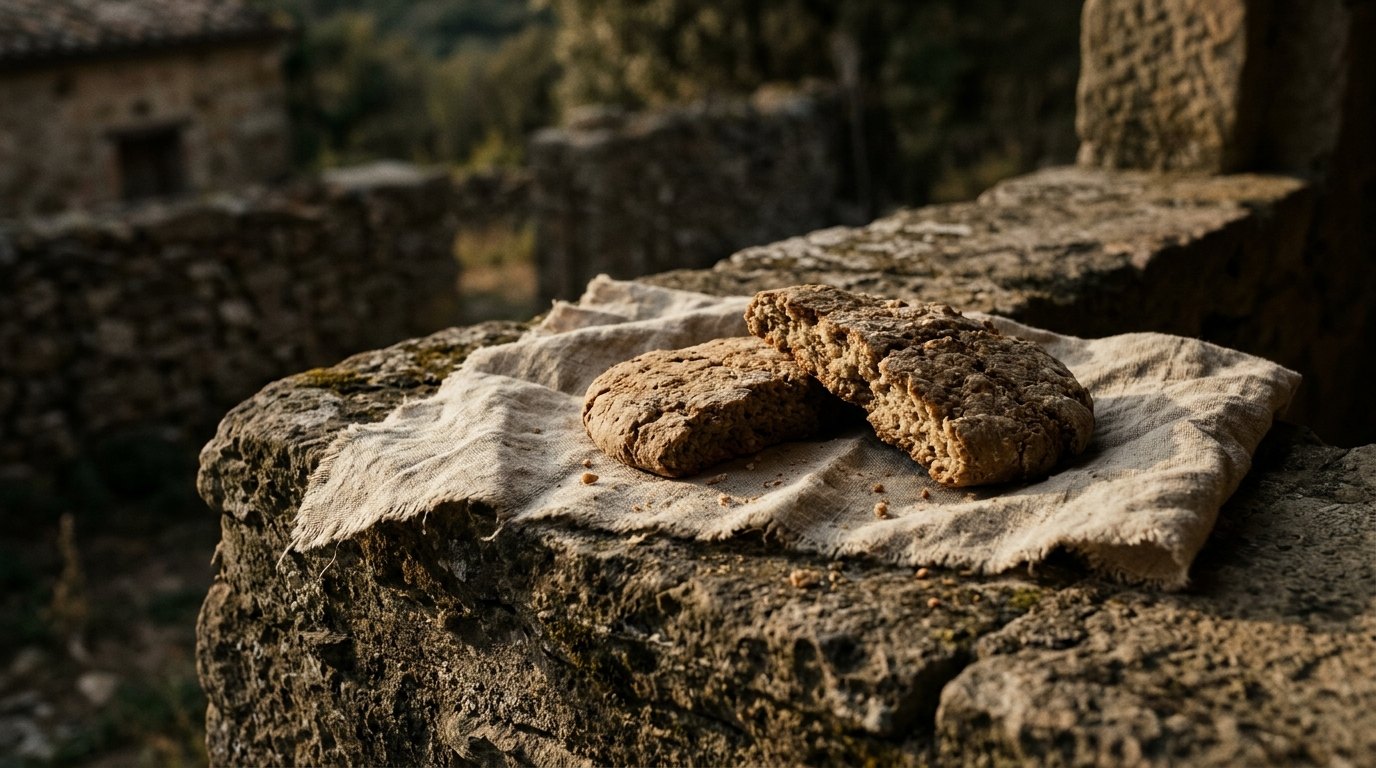
And he took bread, gave thanks and broke it, and gave it to them, saying, “This is my body given for you; do this in remembrance of me.”
Luke 22:19 (NIV)
It records the institution of the bread as the physical representation of Christ's body given for the salvation of His people.
Holding the unleavened loaf, Jesus transformed an ancient ritual into an enduring sign in Luke 22:19: "This is My body, which is given for you; do this in remembrance of Me." Centures earlier, Exodus 12:8 prescribed unleavened bread alongside the roasted lamb to recall Israel's hasty deliverance from Egyptian bondage. Jesus seized that very shadow and revealed its substance in Himself. Matthew 26:26 recounts how the Lord blessed the bread, broke it with His own hands, and distributed it to the disciples, identifying the broken loaf with His impending physical offering. Mark 14:22 underscores that this holy action took place as they ate, redirecting their focus from the historical exodus to their imminent redemption from sin. In Luke 22:19, He instituted a perpetual ordinance, commanding His church to break bread continually in remembrance of His substitutionary surrender. The apostle Paul, recounting the sacred tradition in 1 Corinthians 11:23-24, affirms that on the very night of His betrayal, Christ gave His own body as the spotless sacrifice that permanently sustains the souls of His people.
| Passage | What it says | Fulfilled |
|---|---|---|
| Exodus 12:8 | The original Passover ritual prescribed eating the roasted lamb alongside unleavened bread and bitter herbs. | Luke 22:19, 1 Corinthians 11:23-24 |
| Matthew 26:26 | Jesus blessed, broke, and gave bread to the disciples, identifying it as His body. | |
| Mark 14:22 | As they ate, Jesus took bread, blessed it, broke it, and gave it to them as His body. | |
| Luke 22:19 | Jesus broke bread and gave it to them as His body given for them, commanding perpetual remembrance. | |
| 1 Corinthians 11:23-24 | Paul recounts the Lord Jesus on the night He was betrayed breaking bread as His body given for believers. |
The Poured-Out Cup
The New Covenant Sealed by Christ's Blood
In the same way, after the supper he took the cup, saying, “This cup is the new covenant in my blood, which is poured out for you.
Luke 22:20 (NIV)
It defines the cup after supper as the inauguration of the long-promised New Covenant, ratified solely by Christ's shed blood.
Taking the cup after supper, the Lord spoke the decisive words of the evening in Luke 22:20: "This cup that is poured out for you is the new covenant in My blood." The Old Covenant was ratified at Mount Sinai with blood, as recorded in Exodus 24:8, when Moses sprinkled sacrificial blood upon the altar and the people. Centuries later, Jeremiah 31:31-34 prophesied that God would establish a New Covenant, one defined by the interior cleansing of hearts and the full, unconditional pardon of transgressions. Matthew 26:27-28 and Mark 14:23-24 confirm that Jesus fulfilled this promise directly, offering the cup of redemption as His covenant blood poured out for many for the forgiveness of sins. In Luke 22:20, Christ establishes that this blood was shed on behalf of His saints, sealing peace between God and man forever. In 1 Corinthians 11:25-26, Paul charges the church to proclaim this saving death until Christ returns, knowing that, as 1 Corinthians 5:7 declares, Christ our Passover Lamb has been slain once for all.
| Passage | What it says | Fulfilled |
|---|---|---|
| Exodus 24:8 | Moses sprinkled sacrificial blood upon the people, naming it the blood of the covenant made at Sinai. | Luke 22:20, Matthew 26:28 |
| Jeremiah 31:31-34 | The Lord promised to make a New Covenant with Israel, forgiving iniquity and writing His law on their hearts. | Luke 22:20, Hebrews 8:8-12 |
| Matthew 26:27-28 | Jesus offered the cup as His blood of the new covenant, poured out for many for the remission of sins. | |
| Mark 14:23-24 | Jesus gave thanks and shared the cup of the new covenant, poured out for many. | |
| Luke 22:20 | Jesus took the cup after supper, declaring it to be the new covenant in His blood poured out for them. | |
| 1 Corinthians 11:25-26 | The cup of the new covenant is commanded for remembrance, proclaiming Christ's death until He comes. | |
| 1 Corinthians 5:7 | Paul declares that Christ our Passover lamb has been sacrificed for us, fulfilling the ancient type. |
The Foot Washing
The Lord Stoops to Cleanse His Disciples
Now that I, your Lord and Teacher, have washed your feet, you also should wash one another’s feet. I have set you an example that you should do as I have done for you.
John 13:14-15 (NIV)
Christ establishes an enduring example of humble, self-giving love that defines Christian discipleship.
In John 13:14-15, the Lord Jesus draws the definitive conclusion from His humble action: 'If I then, your Lord and Teacher, have washed your feet, you also ought to wash one another's feet. For I have given you an example, that you should do just as I have done to you.' The King of the universe stooped to the position of the lowest domestic servant, setting the indelible pattern for life in the kingdom of God. Jesus entered that sacred evening fully conscious of His sovereign authority and imminent departure, knowing that the Father had given all things into His hands (John 13:1-3). Rather than displaying outward majesty, He rose from the meal, set aside His outer garments, wrapped a servant's linen towel about His waist, and poured water into a basin to wash the road-stained feet of His followers (John 13:4-5).
When He came to Simon Peter, the apostle recoiled at such an inversion of honor, declaring that Christ should never wash his feet. Jesus answered with solemn authority that unless He washed him, Peter had no share with Him (John 13:6-11). The physical washing served as an unmistakable sign of the spiritual cleansing that only Christ's sacrificial blood provides. When Peter impetuously requested that his hands and head be washed as well, Jesus clarified that one who has bathed needs only his feet cleaned—signifying that initial justification is complete, yet ongoing daily cleansing remains essential in a fallen world. Resuming His seat, Jesus impressed upon the Twelve that discipleship permits no worldly hierarchy; greatness in His kingdom is measured solely by self-emptying, sacrificial service to one another (John 13:12-17).
| Passage | What it says |
|---|---|
| John 13:1-3 | Jesus knows His hour has come to depart to the Father and that the Father gave all things into His hands. |
| John 13:4-5 | Jesus lays aside His outer garments, girds Himself with a towel, pours water into a basin, and washes the disciples' feet. |
| John 13:6-11 | Peter objects to Jesus washing his feet; Jesus explains that unless He washes him, Peter has no share with Him. |
| John 13:12-17 | Jesus instructs the disciples that as their Lord and Teacher washed their feet, they also must wash one another's feet. |
The Betrayal Exposed
Jesus Foretells His Betrayal by a Companion
Jesus answered, “It is the one to whom I will give this piece of bread when I have dipped it in the dish.” Then, dipping the piece of bread, he gave it to Judas, the son of Simon Iscariot. As soon as Judas took the bread, Satan entered into him. So Jesus told him, “What you are about to do, do quickly.”
John 13:26-27 (NIV)
Jesus identifies His betrayer with the morsel, fulfilling prophecy as Judas departs into the dark.
The sobering climax of the table fellowship unfolds in John 13:26-27, where Christ answers the unspoken dread among His disciples: 'Jesus answered, "It is he to whom I will give this morsel of bread when I have dipped it." So when he had dipped the morsel, he gave it to Judas, the son of Simon Iscariot. Then after he had taken the morsel, Satan entered into him.' In the ancient Near East, offering a dipped morsel was an intimate gesture of personal honor and friendship. In that tragic moment, the deepest expression of divine hospitality met the apex of human treachery, fulfilling the ancient prophecy of the psalmist who wept that his close, trusted friend who ate his bread had lifted his heel against him (Psalms 41:9).
As the meal proceeded, Jesus troubled the gathering by plainly stating that one reclining at the table with Him would hand Him over (Matthew 26:21-25; Mark 14:18-21). The disciples looked at one another in sorrowful confusion, each asking whether he could be the guilty one. Luke records Christ's lament that the hand of the betrayer was present upon the very table of the covenant (Luke 22:21-23). When Judas hypocritically questioned if it was he, Jesus quietly acknowledged the truth. Satan immediately seized Judas's hardened heart, and as the traitor stepped outside into the darkness of the Jerusalem night, the sovereign path of redemption moved inexorably toward the cross (John 13:21-30).
| Passage | What it says |
|---|---|
| Psalms 41:9 | David prophesies that his close friend who shared his bread has lifted up his heel against him. |
| Matthew 26:21-25 | Jesus announces that one reclining will betray Him; Judas asks if it is he, and Jesus confirms it. |
| Mark 14:18-21 | Jesus warns that the Son of Man goes as written, but woe to that man by whom He is betrayed. |
| Luke 22:21-23 | Jesus states that the hand of His betrayer is with Him at the table, prompting the disciples to question who. |
| John 13:21-30 | Jesus dips the morsel and gives it to Judas Iscariot; Satan enters Judas, and he goes out into the night. |
True Greatness and Love
Christ Rebukes Ambition and Commands Mutual Love
“A new command I give you: Love one another. As I have loved you, so you must love one another.
John 13:34 (NIV)
Jesus elevates love to the defining mark of His people, patterned after His own sacrificial love.
Amid the gathering shadows of betrayal, Jesus gave His church its enduring badge of identity in John 13:34: 'A new commandment I give to you, that you love one another: just as I have loved you, you also are to love one another.' The standard of this commandment was entirely unprecedented. It was not merely the ancient duty to love one's neighbor as oneself, but a call to love with the very measure of Christ's cross, a self-emptying devotion so radiant that the surrounding world would recognize His authentic disciples by that mutual affection alone (John 13:35).
This high calling stood in sharp contrast to the carnal pride that resurfaced even within the upper room. Luke reveals that a dispute broke out among the apostles over which of them should be regarded as the greatest (Luke 22:24-27). Rather than casting them off, Jesus patiently corrected their earthly instincts, contrasting worldly rulers who lord authority over their subjects with the ethos of His kingdom, where the greatest must become as the youngest, and the leader as one who serves. Pointing to Himself as the living standard of one who serves at the table, He promised that because they had stayed with Him in His trials, they would eat and drink at His royal table and sit on thrones judging the twelve tribes of Israel (Luke 22:28-30). True kingdom majesty is found only through cruciform humility.
| Passage | What it says |
|---|---|
| Luke 22:24-27 | The disciples dispute who is greatest; Jesus teaches that the greatest among them must serve as the youngest. |
| Luke 22:28-30 | Jesus assigns a kingdom to the apostles, promising they will eat and drink at His table and judge Israel. |
| John 13:34-35 | Jesus gives a new commandment to love one another just as He has loved them. |
The Sifting of Peter
Jesus Predicts the Scattering and Peter's Denial

“Simon, Simon, Satan has asked to sift all of you as wheat. But I have prayed for you, Simon, that your faith may not fail. And when you have turned back, strengthen your brothers.”
Luke 22:31-32 (NIV)
Jesus reveals His intercession that secures Peter's faith through the coming failure and restoration.
In Luke 22:31-32, Christ unmasks the unseen spiritual battle surrounding His followers while offering an unshakable promise of preserving grace: 'Simon, Simon, behold, Satan demanded to have you, that he might sift you like wheat, but I have prayed for you that your faith may not fail. And when you have turned again, strengthen your brothers.' The Lord did not shield Peter from the trial itself, but His sovereign intercession guaranteed that Peter's collapse would not be final. The adversary sought to crush the disciples entirely, yet Jesus secured their preservation through His prevailing prayer.
Jesus warned the Twelve that the prophetic word of the Old Testament was arriving at its appointed fulfillment: the Shepherd was about to be struck, and the sheep of the flock would be scattered abroad (Zechariah 13:7; Matthew 26:31-35). When Peter protested that even if all others fell away he would remain steadfast, Jesus declared the exact measure of his coming collapse. Before the rooster crowed twice to mark the dawn, Peter would deny Him three times (Mark 14:27-31). When Peter pledged his readiness to go with Christ to prison and to death, Jesus saw through the fragile confidence of human resolve (Luke 22:33-34; John 13:36-38). The upper room concluded with this sobering portrait of human frailty set against the unyielding faithfulness of the Savior.
| Passage | What it says |
|---|---|
| Zechariah 13:7 | The prophet foretells the striking of the Shepherd and the scattering of the sheep. |
| Matthew 26:31-35 | Jesus cites Zechariah and warns that Peter will deny Him three times before the rooster crows. |
| Mark 14:27-31 | Jesus foretells Peter's threefold denial before the rooster crows twice; Peter vehemently insists he will not deny Him. |
| Luke 22:31-34 | Jesus tells Simon that Satan demanded to sift them, but He prayed that Peter's faith not fail. |
| John 13:36-38 | Peter asks where Jesus is going and pledges his life; Jesus foretells Peter's denial before dawn. |
Numbered with Transgressors
Jesus Prepares His Disciples for Coming Hardship
It is written: ‘And he was numbered with the transgressors’; and I tell you that this must be fulfilled in me. Yes, what is written about me is reaching its fulfillment.”
Luke 22:37 (NIV)
Jesus explicitly declares that Isaiah's prophecy of being numbered with transgressors must find fulfillment in Him.
In Luke 22:37, the Lord Jesus turns the disciples' attention directly to the prophetic Scriptures, declaring: "this that is written must yet be accomplished in me, And he was reckoned among the transgressors." With the cross hours away, Jesus prepares His followers for a stark transition in their ministry conditions. During their initial Galilean missions, they had traveled without provision or defense and lacked nothing (Luke 22:35); now, however, the Shepherd was to be struck, and the sheep would face overt hostility. Long before, the prophet had declared that the suffering Servant would bear the sin of many and be numbered with transgressors (Isaiah 53:12). In Luke 22:35-38, Christ warns them to take a purse, a bag, and even acquire a sword—figuratively underscoring the severe, perilous climate of opposition that His death and departure would inaugurate. When the disciples produce two physical swords, He curtly concludes, "It is enough," dismissing their literalistic assumption of armed defense while establishing that He marches consciously and willingly toward the criminal's execution foretold of Him.
| Passage | What it says |
|---|---|
| Isaiah 53:12 | The prophet foretells that the Servant would be numbered with the transgressors. |
| Luke 22:35-38 | Jesus tells the disciples to take a purse, bag, and sword, fulfilling Isaiah's prophecy before His arrest. |
The Farewell Discourse
Christ Comforts and Equips the Church Before Departing
Jesus answered, “I am the way and the truth and the life. No one comes to the Father except through me.
John 14:6 (NIV)
Jesus reveals Himself as the sole, sufficient access to the Father in truth and life.
Standing before His troubled disciples, the Lord Jesus gives the definitive declaration of John 14:6: "I am the way, the truth, and the life: no man cometh unto the Father, but by me." This crowning statement opens the Farewell Discourse, in which the Savior anchors and comforts His flock before facing His arrest. In John 14:1-6, He charges them not to let their hearts be troubled, promising that He departs to prepare an eternal dwelling place in the Father's house. To ensure they are not left as orphans, He promises in John 14:15-17 and John 14:25-27 that the Father will send the Holy Spirit, the Comforter and Spirit of truth, who will abide within them forever, teach them all things, and impart supernatural peace. In John 15:1-8, Christ depicts Himself as the true Vine and His followers as the branches, showing that spiritual vitality and fruitfulness depend entirely upon abiding in Him. He frankly warns in John 15:18-21 that the world will hate them on His account, yet in John 16:7-11 He assures them that the Spirit's coming will convict the world of sin, righteousness, and judgment. Concluding His instruction in John 16:33, Jesus leaves them an unshakable guarantee: though they face tribulation in the world, they may take courage, for He has overcome the world.
| Passage | What it says |
|---|---|
| John 14:1-6 | Jesus comforts the disciples, promises to prepare a place, and declares Himself the way, truth, and life. |
| John 14:15-17 | Jesus promises the Father will give another Helper, the Spirit of truth, who will dwell with them. |
| John 14:25-27 | Jesus promises the Holy Spirit will teach all things and leaves His peace with the disciples. |
| John 15:1-8 | Jesus describes Himself as the true vine and believers as branches who must abide to bear fruit. |
| John 15:18-21 | Jesus warns that the world will hate the disciples because it hated Him first. |
| John 16:7-11 | Jesus explains that it is to their advantage He departs so that the Helper will convict the world. |
| John 16:33 | Jesus tells His disciples they will have tribulation in the world, but to take heart because He overcame. |
The High Priestly Prayer
Jesus Intercedes for His Apostles and All Believers

“My prayer is not for them alone. I pray also for those who will believe in me through their message, that all of them may be one, Father, just as you are in me and I am in you. May they also be in us so that the world may believe that you have sent me.
John 17:20-21 (NIV)
Christ's high priestly prayer extends across time to embrace every believer who will ever trust in Him.
Lifting His eyes to heaven before leaving the upper room, Jesus utters His great intercessory prayer, culminating in John 17:20-21: "Neither pray I for these alone, but for them also which shall believe on me through their word; that they all may be one." This sacred moment unveils the heart of Christ as the great High Priest entering the holy place of divine communion on behalf of His redeemed. In John 17:1-5, the Son petitions the Father to glorify Him with the eternal glory they shared before the world was created, that the Son might grant eternal life to all given to Him. Moving from His own glorification, in John 17:6-19 Jesus intercedes directly for the eleven apostles, asking the Father to keep them in His name, guard them from the evil one, and sanctify them in truth through His Word. Finally, in John 17:20-26, Jesus widens His intercession to embrace every future believer down through the ages, praying that the church may reflect divine unity, abide in the love of God, and ultimately behold His uncreated glory in eternity.
| Passage | What it says |
|---|---|
| John 17:1-5 | Jesus prays for the Father to glorify the Son so that the Son may glorify the Father. |
| John 17:6-19 | Jesus intercedes for His disciples' protection, unity, joy, and sanctification in the truth. |
| John 17:20-26 | Jesus prays for all future believers that they may be one and behold His eternal glory. |
The Departure to Gethsemane
Singing a Hymn, Christ Crosses the Kidron

When they had sung a hymn, they went out to the Mount of Olives.
Matthew 26:30 (NIV)
Jesus concludes the sacred meal with the traditional Passover praise before walking resolutely to Gethsemane.
The sacred Passover meal drew to its solemn close when the Savior and His disciples lifted their voices in praise, recorded in Matthew 26:30: "And when they had sung an hymn, they went out into the mount of Olives." This final song, drawn from the traditional Great Hallel psalms of thanksgiving (Psalms 115-118), proclaimed God's steadfast mercy and deliverance even as the True Lamb stepped out into the night to be slain. Both Matthew 26:30 and Mark 14:26 record this departure from the upper room toward the Mount of Olives. As John 18:1 details, Jesus led His disciples down through the eastern gate and across the shadowed ravine of the brook Kidron, making His way toward the secluded garden of Gethsemane. There, under the ancient olive trees, Christ walked directly toward the agony of the cup and the betrayal of Judas, submitting with absolute resolve to the Father's eternal plan of redemption.
| Passage | What it says |
|---|---|
| Matthew 26:30 | When they had sung a hymn, Jesus and the disciples went out to the Mount of Olives. |
| Mark 14:26 | Having sung a hymn, they departed the upper room and went out to the Mount of Olives. |
| John 18:1 | Having spoken these words, Jesus went out with His disciples across the brook Kidron to a garden. |
Where in the Bible
| Book | Passages |
|---|---|
| Exodus | 2 · Exodus 12:8, Exodus 24:8 |
| Deuteronomy | 1 · Deuteronomy 16:6-7 |
| Psalms | 1 · Psalms 41:9 |
| Isaiah | 1 · Isaiah 53:12 |
| Jeremiah | 1 · Jeremiah 31:31-34 |
| Zechariah | 1 · Zechariah 13:7 |
| Matthew | 6 · Matthew 26:20, Matthew 26:26, Matthew 26:27-28, Matthew 26:21-25, Matthew 26:31-35, Matthew 26:30 |
| Mark | 6 · Mark 14:17, Mark 14:22, Mark 14:23-24, Mark 14:18-21, Mark 14:27-31, Mark 14:26 |
| Luke | 12 · Luke 22:14, Luke 22:15, Luke 22:16, Luke 22:17, Luke 22:18, Luke 22:19, Luke 22:20, Luke 22:21-23, Luke 22:24-27, Luke 22:28-30, Luke 22:31-34, Luke 22:35-38 |
| John | 18 · John 13:1-3, John 13:4-5, John 13:6-11, John 13:12-17, John 13:21-30, John 13:34-35, John 13:36-38, John 14:1-6, John 14:15-17, John 14:25-27, John 15:1-8, John 15:18-21, John 16:7-11, John 16:33, John 17:1-5, John 17:6-19, John 17:20-26, John 18:1 |
| 1 Corinthians | 3 · 1 Corinthians 11:23-24, 1 Corinthians 11:25-26, 1 Corinthians 5:7 |
The story in order
- Passover commanded (c. 1400 BC) · Deuteronomy 16:6-7 · God commanded the Passover sacrifice be offered at sundown.
- New Covenant promised (c. 600 BC) · Jeremiah 31:31-34 · The Lord promised a New Covenant written on hearts.
- Prophecy of betrayal (c. 1000 BC) · Psalms 41:9 · David prophesied a close friend would betray him.
- Prophecy of shepherd struck (c. 500 BC) · Zechariah 13:7 · The prophet foretold the striking of the Shepherd.
- Prophecy of numbered with transgressors (c. 700 BC) · Isaiah 53:12 · The Servant would be numbered with transgressors.
- Jesus arrives at upper room (AD 30) · Mark 14:17 · Jesus arrived in the evening with the twelve.
- Jesus institutes Lord's Supper (AD 30) · Luke 22:19 · Jesus broke bread, identifying it as His body.
- New Covenant sealed (AD 30) · Luke 22:20 · The cup declared the new covenant in His blood.
- Jesus washes disciples' feet (AD 30) · John 13:4-5 · Jesus demonstrated humble service by washing feet.
- Jesus predicts Peter's denial (AD 30) · Matthew 26:31-35 · Jesus warned Peter he would deny Him thrice.
- Jesus gives new commandment (AD 30) · John 13:34-35 · Jesus commanded disciples to love one another.
- Jesus prays for believers (AD 30) · John 17:20-26 · Jesus interceded for the unity of all believers.
- Jesus departs to Gethsemane (AD 30) · Matthew 26:30 · After singing a hymn, they went to the Mount of Olives.
Key words
- Passover (pesach, פֶּסַח)
- The Jewish festival commemorating the Exodus from Egypt, with a lamb sacrifice. · Exodus 12:8
- Covenant (berit, בְּרִית)
- A solemn agreement or promise between God and humanity, or between people. · Exodus 24:8
- Betrayal (paradidomi, παραδίδωμι)
- The act of delivering someone to an enemy, often by treachery. · Matthew 26:21
- Memorial (anamnesis, ἀνάμνησις)
- An act or event done in remembrance of someone or something. · Luke 22:19
- Sanctification (hagiasmos, ἁγιασμός)
- The process of being made holy or set apart for God's service. · John 17:17
Whenever the church gathers to eat this bread and drink this cup, we proclaim the Lord's death until He comes. The Last Supper anchors our faith in the finished work of Christ on the cross and directs our hope toward the great marriage supper of the Lamb.
52 passages, each cited once.
How the major Christian traditions read this
All Christians confess that on the night He was betrayed, Jesus Christ gathered with His twelve apostles, ate the Passover meal, gave thanks, broke bread, and gave the cup, thereby instituting the Lord's Supper as a perpetual ordinance and memorial of His sacrificial death until He comes again (Luke 22:19-20; 1 Corinthians 11:23-26).
Catholic
At the Last Supper, our Lord Jesus Christ not only shared a Passover meal but instituted the Holy Eucharist and the ministerial priesthood. When He said, 'This is my body' (Luke 22:19) and 'This cup is the new covenant in my blood' (Luke 22:20), He anticipated in an unbloody sacramental offering the very sacrifice He consummated on Calvary the following day. By commanding 'Do this in memory of me' (Luke 22:19), Christ ordained the apostles as priests of the New Covenant, conferring authority to offer His true Body and Blood in the Mass, where the substance of bread and wine becomes His real Body, Blood, Soul, and Divinity (1 Corinthians 10:16).
Scripture: Luke 22:19, Luke 22:20, 1 Corinthians 10:16
Orthodox
In the Upper Room, Christ celebrated the Mystical Supper, transforming the shadow of the Old Covenant Passover into the eternal, life-giving mystery of the Eucharist. By declaring the bread to be His Body and the wine His Blood of the New Covenant (Luke 22:19-20), He established the central mystery of the Church. We do not explain the exact metaphysical mechanism, but we hold firmly that the Holy Spirit makes the bread and wine truly the Body and Blood of Christ. There, the Lord united His disciples to His eternal sacrifice and gave the Church a foretaste of the heavenly banquet in the coming Kingdom (Luke 22:18).
Scripture: Luke 22:18, Luke 22:19, Luke 22:20, Luke 22:19-20
Lutheran
At the Last Supper, Jesus established the Sacrament of the Altar for the forgiveness of sins. We take His words at their plain, literal meaning: 'This is my body' and 'This is my blood' (Luke 22:19-20; Matthew 26:26-28). He did not speak in mere metaphors. In this meal, under the bread and wine, the true, physical Body and Blood of Christ are genuinely present, distributed to, and received by the mouths of all communicants, whether believers or unbelievers, though only faith receives the blessing (1 Corinthians 11:27-29). It is not a human work or sacrifice offered to God, but a testament and gift of grace given directly to us.
Scripture: Luke 22:19, Luke 22:20, Matthew 26:26-28, 1 Corinthians 11:27-29, Luke 22:19-20
Reformed & Presbyterian
At the Last Supper, Jesus fulfilled the Passover and instituted the Lord's Supper as a covenant sign and seal of the benefits of His death on the cross (Luke 22:19-20). We do not believe the elements become the physical flesh of Christ, whose human body ascended to heaven (Acts 3:21). Instead, as the Westminster Confession (29.1) and Heidelberg Catechism (Q. 75) explain, believers are spiritually nourished by the Holy Spirit. By faith, we truly partake of Christ and commune with His crucified body and shed blood spiritually, growing in grace and renewing our covenant commitment to Him (1 Corinthians 10:16).
Scripture: Luke 22:19, Luke 22:20, Acts 3:21, 1 Corinthians 10:16, Luke 22:19-20
Anglican & Episcopal
At the Last Supper, Christ gave His Church a holy Sacrament of our redemption by His death (Luke 22:19-20). As Article 28 of the Thirty-Nine Articles affirms, the bread we break and the cup of blessing are a true partaking of the Body and Blood of Christ for those who receive worthily and with faith. The Body of Christ is given, taken, and eaten only after a heavenly and spiritual manner, and the means whereby it is received is faith. At that table, Christ gathered His disciples into communion with Himself and one another, calling us to remember His full and sufficient sacrifice (1 Corinthians 11:24-26).
Scripture: Luke 22:19, Luke 22:20, 1 Corinthians 11:24-26, Luke 22:19-20
Baptist
At the Last Supper, Jesus shared the final Passover with His apostles and established the Lord's Supper as a perpetual ordinance for His church (Luke 22:14-20). As the 1689 Baptist Confession (28.1) teaches, the Supper is an appointment of Christ meant for believers. The bread and cup are symbolic elements pointing to His body broken and His blood shed for our sins. Christ gave the explicit command, 'Do this in memory of me' (Luke 22:19). Thus, the meal is primarily a memorial and proclamation of the Lord's death until He returns, strengthening the local assembly in fellowship and obedience (1 Corinthians 11:26).
Scripture: Luke 22:14-20, Luke 22:19, 1 Corinthians 11:26
Methodist & Wesleyan
At the Last Supper, Jesus gathered His disciples to usher in the New Covenant through His blood (Luke 22:20). He instituted the Supper as an effective means of grace, where Christ meets His people and imparts spiritual strength (1 Corinthians 10:16). As our Articles of Religion state, it is a sacrament of our redemption where faithful recipients spiritually partake of Christ's body and blood. John Wesley described it as a converting and confirming ordinance. Christ’s words and actions at the meal call believers to ongoing holiness, deeper fellowship, and grateful remembrance of the perfect atonement made on the cross (Luke 22:19).
Scripture: Luke 22:19, Luke 22:20, 1 Corinthians 10:16
Pentecostal & Charismatic
At the Last Supper, Jesus revealed the depth of His sacrificial love, preparing His disciples for His death and the outpouring of the Holy Spirit. He broke bread and shared the cup as symbols of His body and the new covenant in His blood (Luke 22:19-20). As stated in our Statement of Fundamental Truths (Section 10), the Supper is a sacred memorial of His suffering, a symbol expressing our sharing in His divine nature (2 Peter 1:4), and a prophetic proclamation of His return (1 Corinthians 11:26). It is an encounter where believers actively receive spiritual renewal and healing through faith.
Scripture: Luke 22:19, Luke 22:20, 2 Peter 1:4, 1 Corinthians 11:26, Luke 22:19-20
Non-denominational & Evangelical
At the Last Supper, Jesus ate the Passover with His disciples and instituted Communion to keep our focus on the cross (Luke 22:15-20). The unleavened bread represents His sinless body given for us, and the cup represents the new covenant established through His shed blood for the forgiveness of sins (Matthew 26:28). When He said, 'Do this in remembrance of me' (Luke 22:19), He called all believers to regularly look back at what He accomplished on Calvary and look forward to His glorious return (1 Corinthians 11:26). It is an act of obedience, worship, and personal examination for the gathered body of Christ.
Scripture: Luke 22:15-20, Luke 22:19, Matthew 26:28, 1 Corinthians 11:26
Where they differ
Christ's presence in the elements
- Catholic
- The bread and wine become the actual Body, Blood, Soul, and Divinity of Christ.
- Orthodox
- The elements truly and mysteriously become the genuine Body and Blood of Christ.
- Lutheran
- Christ's physical body and blood are truly present in, with, and under the bread.
- Reformed & Presbyterian
- Christ is spiritually present, received by faith rather than physically in the mouth.
- Anglican & Episcopal
- The bread and cup communicate Christ spiritually to those who receive with faith.
- Baptist
- The elements remain bread and wine, serving as symbols of Christ's sacrifice.
- Methodist & Wesleyan
- The elements are a means of grace conveying Christ's presence spiritually to faith.
- Pentecostal & Charismatic
- The elements are symbolic reminders of Christ's suffering and promised return.
- Non-denominational & Evangelical
- The bread and juice are emblems observed in faithful, personal remembrance of Christ.
Scripture: Luke 22:19-20, 1 Corinthians 10:16, 1 Corinthians 11:27
The primary nature of the event
- Catholic
- The institution of the sacrificial Mass and the Catholic ministerial priesthood.
- Orthodox
- The institution of the holy mystery offering eternal communion with God.
- Lutheran
- A gracious testament giving bodily the forgiveness of sins to believers.
- Reformed & Presbyterian
- A covenantal sacrament spiritually sealing the benefits of Christ's cross.
- Anglican & Episcopal
- A sacrament of redemption and communion in Christ received by faith.
- Baptist
- An ordinance of obedient memorial proclaiming Christ's death until He returns.
- Methodist & Wesleyan
- An effective means of grace imparting converting and sanctifying spiritual strength.
- Pentecostal & Charismatic
- A memorial ordinance celebrating redemption and expecting Christ's second coming.
- Non-denominational & Evangelical
- A commemorative meal of remembrance and unity for the body of believers.
Scripture: Luke 22:19, 1 Corinthians 11:24-26
Your pastor can tell you where your church stands.
Scripture cited
- Luke 22:14-20
- Matthew 26:20
- Mark 14:17
- Deuteronomy 16:6-7