What is Easter about?
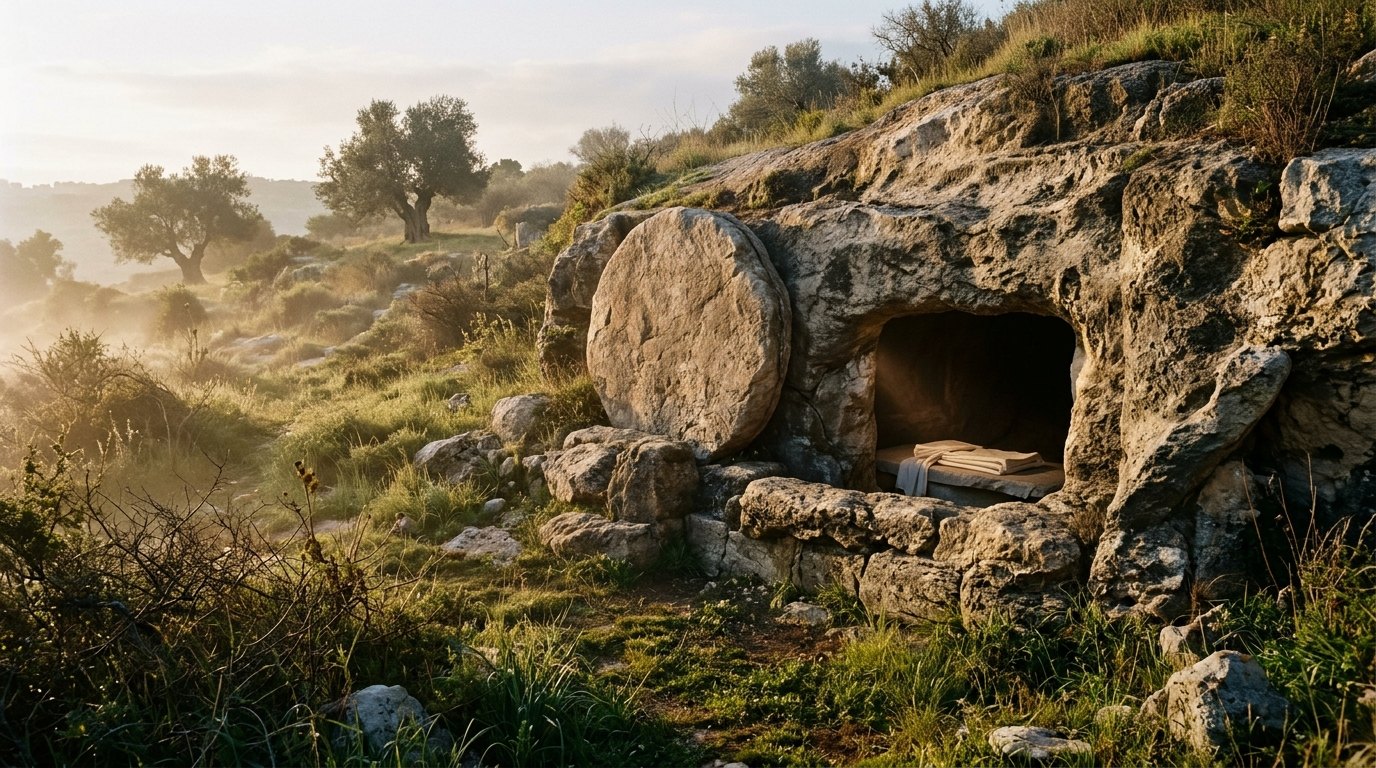
Luke 24:1-8
1 On the first day of the week, very early in the morning, the women took the spices they had prepared and went to the tomb.
2 They found the stone rolled away from the tomb,
3 but when they entered, they did not find the body of the Lord Jesus.
4 While they were wondering about this, suddenly two men in clothes that gleamed like lightning stood beside them.
5 In their fright the women bowed down with their faces to the ground, but the men said to them, “Why do you look for the living among the dead?
6 He is not here; he has risen! Remember how he told you, while he was still with you in Galilee:
7 ‘The Son of Man must be delivered over to the hands of sinners, be crucified and on the third day be raised again.’ ”
8 Then they remembered his words.
New International Version (NIV)
The answer
Easter is about Jesus Christ’s resurrection from the dead after his crucifixion. It celebrates the heart of the gospel: in 1 Corinthians 15:3-4, Christ dies for our sins, is buried, and is raised on the third day, all in fulfilment of the Scriptures.
Luke 24:1-8 describes what happened on the first day of the week. The women find the stone rolled away and Jesus’ body gone. Two angels remind them that Jesus had foretold his betrayal, crucifixion and resurrection, declaring in Luke 24:6, “He isn’t here, but is risen.” Easter therefore centres on a real, living Saviour—not merely an empty tomb or a inspiring memory.
First Corinthians 15:17-22 explains why this matters so much. If Christ had not been raised, faith would be empty and sinners would remain in their sins. But Christ has been raised and is the first fruit of those who have died. His resurrection means that forgiveness is real, death does not have the final word, and those who are in Christ have the sure hope of being made alive.
Answered from Scripture · reviewed November 11, 2026
Easter is the celebration of the bodily resurrection of Jesus Christ from the dead on the third day after His crucifixion. It is not an ornamental holiday added to Christian faith, but the cornerstone of the gospel itself, demonstrating Christ's victory over death and guaranteeing our justification and eternal life.
The Empty Tomb
He is not here, for He has risen.
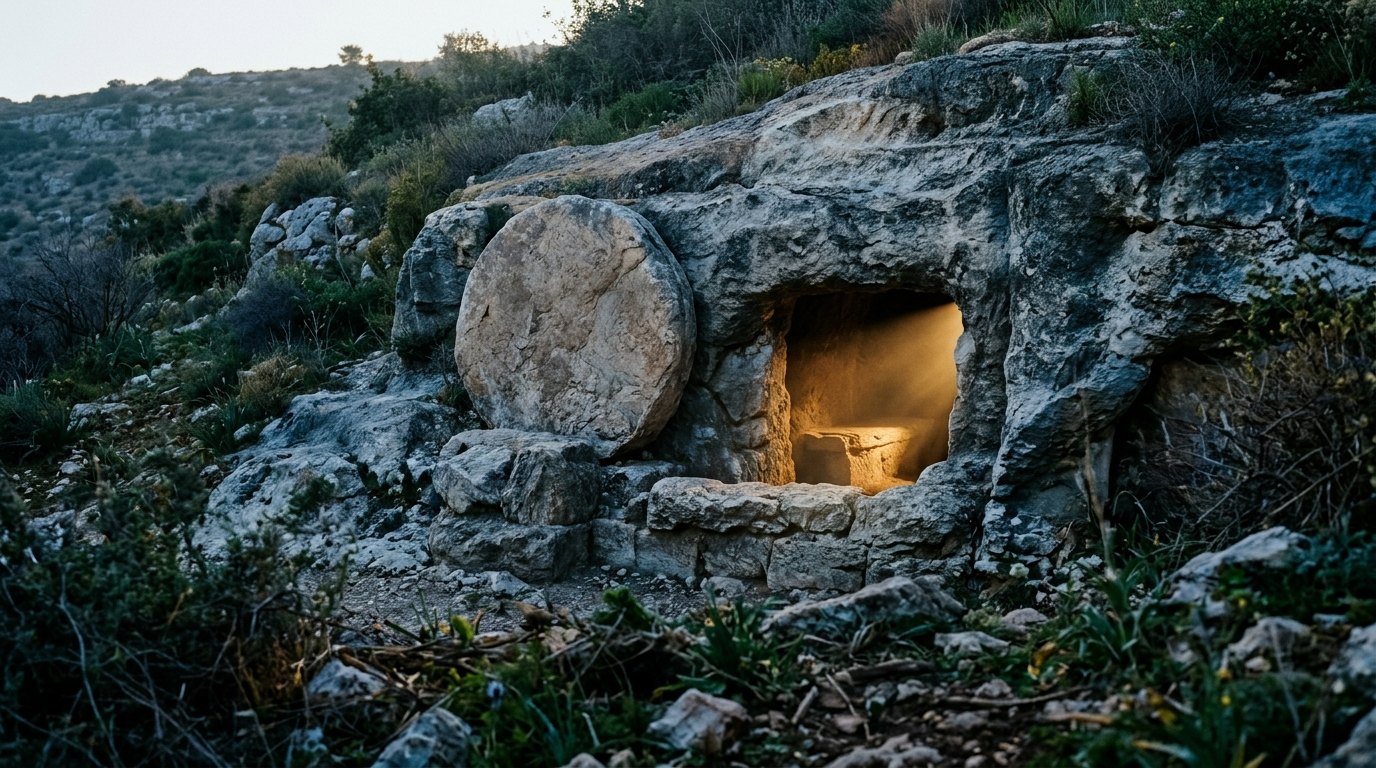
In their fright the women bowed down with their faces to the ground, but the men said to them, “Why do you look for the living among the dead? He is not here; he has risen! Remember how he told you, while he was still with you in Galilee:
Luke 24:5-6 (NIV)
The angels confront sorrow with triumph by asking why the living is sought among the dead, proclaiming Christ's bodily resurrection.
In Luke 24:5-6, two heavenly messengers utter the defining question of redemptive history: "Why do you seek the living among the dead? He is not here, but has risen." This angelic proclamation turned the world upside down, shifting the focus of human grief from an occupied tomb to a victorious, empty sepulcher. The women who came with spices had witnessed His burial (Luke 23:55-56), carefully observing the location before resting on the Sabbath according to the commandment.
Yet no earthly precaution could contain the Prince of Life. In Matthew 27:62-66, the chief priests and Pharisees had sealed the massive stone and posted a Roman guard to prevent any interference. Nevertheless, as Matthew 28:1-4 records, early on the first day of the week a great earthquake shook the ground when an angel of the Lord descended from heaven, rolled away the stone, and sat upon it, striking terror into the Roman sentries. Mark 16:1-6 shows the grief-stricken women arriving at dawn, wondering who would roll away the stone, only to find the entrance unobstructed and a white-robed young man announcing that the crucified Nazarene had been raised.
When the women entered, as recounted in Luke 24:1-8, they found the tomb barren of His body and were reminded that Jesus had foretold these very events in Galilee. In John 20:1-10, Mary Magdalene brought word to Peter and John, prompting a sprint to the sepulcher; John looked in, but Peter went right inside, beholding the neatly discarded linen wrappings and the folded face cloth. Luke 24:12 confirms Peter departed marveling at what had transpired. Desperate to mask the miracle, the chief priests bribed the soldiers to spread a fabrication that the disciples had stolen the body while they slept (Matthew 28:11-15), yet the empty tomb remains the irrefutable monument of Christ's triumph.
| Passage | What it says |
|---|---|
| Luke 23:55-56 | The faithful women observe Joseph's tomb, see where Christ was laid, and prepare spices before resting on the Sabbath. |
| Matthew 28:1-4 | At dawn on the first day, an earthquake occurs, an angel rolls back the stone, and the Roman guards shake with terror. |
| Mark 16:1-6 | Women bringing spices enter the tomb, find the stone rolled away, and hear an angel announce that the crucified Jesus is risen. |
| Luke 24:1-8 | The women find the stone rolled away, see two men in dazzling apparel, hear the resurrection announcement, and remember Jesus' words. |
| John 20:1-10 | Mary Magdalene finds the stone removed, alerting Peter and John, who run to the tomb and observe the discarded linen wrappings. |
| Matthew 27:62-66 | The chief priests seal the tomb and set a Roman guard to prevent any tampering. |
| Matthew 28:11-15 | The guards report the resurrection events, and the council bribes them to spread a cover story. |
| Luke 24:12 | Peter runs to the tomb, looks in, sees the linen cloths alone, and departs marveling. |
Promises Fulfilled
The Scriptures declared He would rise again.
because you will not abandon me to the realm of the dead, nor will you let your faithful one see decay.
Psalms 16:10 (NIV)
David prophetically speaks of God's Holy One never being abandoned to Sheol or undergoing bodily corruption.
The resurrection was neither an unexpected afterthought nor a divine improvisation, but the deliberate fulfillment of ancient prophecy. In Psalm 16:10, David sang under the inspiration of the Holy Spirit: "For you will not abandon my soul to Sheol, or let your holy one see corruption." David died and saw physical decay, but his prophetic song looked beyond his own grave to the Messiah whose body would never decompose. Peter cited this very psalm on Pentecost (Acts 2:24-32), declaring that God loosed the agony of death because it was impossible for Christ to be held by it. Paul echoed this in Antioch (Acts 13:34-37), demonstrating that Christ was raised never to return to corruption.
Prophetic voices throughout the Old Testament laid the groundwork for this third-day triumph. Hosea 6:2 anticipated corporate restoration and third-day resurrection, a pattern celebrated in 1 Corinthians 15:4 where Christ rose "on the third day in accordance with the Scriptures." Isaiah 53:10-12 had foretold that after the Suffering Servant offered His soul as a guilt offering, He would "prolong his days" and see the fruit of His travail. Even Jonah remaining in the belly of the sea creature for three days and nights (Jonah 1:17) was pointed to by Jesus Himself as an unmistakable type of the Son of Man's three days in the heart of the earth (Matthew 12:39-40).
Jesus explicitly prepared His disciples for this climactic moment. He challenged His opponents, declaring that if they destroyed this temple, He would raise it up in three days, speaking of His physical body (John 2:19-22). Throughout His Galilean ministry and on the journey to Jerusalem, He repeatedly forewarned the twelve that He must suffer, be betrayed, be crucified, and be raised on the third day (Matthew 16:21; Matthew 17:22-23; Matthew 20:17-19). Every promise came to pass exactly as written.
| Passage | What it says | Fulfilled |
|---|---|---|
| Psalms 16:9-11 | The Psalmist rejoices that God will not leave His soul in Sheol nor allow His Holy One to undergo physical corruption. | Acts 2:25-32, Acts 13:34-37 |
| Hosea 6:2 | The prophet foretells revival and restoration after two days, being raised up on the third day to live in God's presence. | 1 Corinthians 15:4 |
| John 2:19-22 | Jesus predicts that if this temple is destroyed, He will raise it up in three days, referring to His body. | Matthew 28:6 |
| Matthew 16:21 | Jesus plainly tells His disciples that He must suffer, be killed, and be raised to life on the third day. | Luke 24:6-7 |
| Isaiah 53:10-12 | The Suffering Servant sees His offspring and prolongs His days following His soul's offering for sin. | |
| Jonah 1:17 | Jonah remains in the belly of the fish three days and nights as a sign of Christ's burial. | |
| Matthew 12:39-40 | Jesus declares the sign of Jonah foreshadows the Son of Man's three days in the earth. | |
| Matthew 17:22-23 | Jesus foretells to His disciples that He will be killed and raised on the third day. | |
| Matthew 20:17-19 | Jesus predicts His betrayal, crucifixion, and third-day resurrection on the way to Jerusalem. | |
| Acts 2:24-32 | Peter proclaims that God loosed the pangs of death, fulfilling David's prophecy of the resurrection. | |
| Acts 13:34-37 | Paul preaches that God raised Jesus, never to return to corruption, fulfilling the sure mercies of David. |
First Witnesses
The risen Lord appears to His disciples.

Jesus said to her, “Mary.” She turned toward him and cried out in Aramaic, “Rabboni!” (which means “Teacher”). Jesus said, “Do not hold on to me, for I have not yet ascended to the Father. Go instead to my brothers and tell them, ‘I am ascending to my Father and your Father, to my God and your God.’ ”
John 20:16-17 (NIV)
Jesus calls Mary Magdalene by name outside the tomb, sending her as the first witness of His resurrection.
The truth of Easter does not rest on an empty tomb alone, but on the living presence of the Lord who showed Himself to chosen witnesses. Outside the garden tomb, Mary Magdalene wept in desolate bewilderment until the risen Lord spoke her name, prompting her joyful recognition (John 20:16-17; John 20:11-18; Mark 16:9-11). "Rabboni!" she cried, and was commissioned to tell the brethren that He was ascending to His Father and their Father. Soon after, the other women returning from the sepulcher met Jesus on the path, fell at His feet to worship Him, and were sent to tell His brothers to meet Him in Galilee (Matthew 28:8-10).
Later that day, two sorrowing travelers journeyed toward Emmaus (Luke 24:13-35; Mark 16:12-14). Jesus joined them unrecognized, opening the Scriptures to demonstrate that Christ had to suffer and enter into His glory, revealing Himself in the breaking of bread before vanishing from their sight. That evening, as the disciples huddled behind locked doors, Jesus stood among them (Luke 24:36-43). He calmed their fears, displayed the nail prints in His hands and feet, invited them to touch His flesh and bones, and ate broiled fish before their eyes to banish all doubt of a ghostly phantom.
Eight days later, Jesus returned for doubting Thomas, inviting him to place his fingers in the nail scars and his hand into His pierced side, drawing forth Thomas's confession: "My Lord and my God!" (John 20:24-29). On the shores of the Sea of Galilee, Jesus manifested Himself once more, providing a miraculous catch and cooking breakfast over a charcoal fire (John 21:1-14). Over forty days, through many infallible proofs, Jesus taught His disciples (Acts 1:1-3) and issued the Great Commission with all authority in heaven and on earth (Matthew 28:16-20).
| Passage | What it says |
|---|---|
| Matthew 28:8-10 | The women depart with fear and great joy, and Jesus meets them on the way, bidding them rejoice and sending them to His brethren. |
| John 20:11-18 | Mary Magdalene weeps outside the tomb, encounters the risen Christ who addresses her, and reports to the disciples that she has seen Him. |
| Luke 24:13-35 | Jesus walks with two disciples on the Emmaus road, expounds the Scriptures regarding Himself, and vanishes after breaking bread. |
| Luke 24:36-43 | Jesus appears to the gathered disciples, shows His hands and feet, invites them to handle Him, and eats broiled fish. |
| John 20:24-29 | Eight days later, Jesus appears to Thomas, offering His hands and side, eliciting Thomas's confession, 'My Lord and my God!' |
| Mark 16:9-11 | The risen Lord appears first to Mary Magdalene, who reports it to weeping disciples. |
| Mark 16:12-14 | Jesus appears to two disciples walking in the country and later rebukes the eleven for unbelief. |
| Matthew 28:16-20 | The risen Christ meets the eleven in Galilee and issues the Great Commission with all authority. |
| John 21:1-14 | Jesus appears by the Sea of Tiberias, provides a miraculous catch, and shares breakfast. |
| Acts 1:1-3 | Jesus presents Himself alive by many infallible proofs over forty days, speaking of God's kingdom. |
Gospel Foundation
Christ's resurrection secures our salvation and life.

And if Christ has not been raised, your faith is futile; you are still in your sins. Then those also who have fallen asleep in Christ are lost. If only for this life we have hope in Christ, we are of all people most to be pitied. But Christ has indeed been raised from the dead, the firstfruits of those who have fallen asleep.
1 Corinthians 15:17-20 (NIV)
Paul shows that our faith and forgiveness stand or fall on Christ's resurrection, declaring Him the firstfruits of all believers.
Paul sets forth the absolute necessity of the resurrection in 1 Corinthians 15:17-20: "And if Christ has not been raised, your faith is futile and you are still in your sins." Far from a secondary doctrine, the resurrection is the linchpin of Christian redemption. Because Christ was delivered up for our trespasses and raised for our justification (Romans 4:24-25), believers stand completely pardoned before God. By His resurrection, Jesus was declared with power to be the Son of God (Romans 1:3-4). As the firstfruits of those who have fallen asleep (1 Corinthians 15:12-23), His triumph guarantees the future bodily resurrection of every saint.
This victory transforms daily Christian living. We were buried with Christ by baptism into death so that, just as He was raised, we too might walk in newness of life (Romans 6:4-5; Colossians 2:12-13). Raised with Him, we are called to set our minds on things above, where Christ sits at God's right hand interceding for us (Colossians 3:1-4; Romans 8:34). God has caused us to be born again to a living hope through this event (1 Peter 1:3-5; 1 Peter 3:21-22). We are empowered by the same Spirit who raised Jesus from the dead, who will also give life to our mortal bodies (Romans 8:11; Ephesians 1:19-23; Ephesians 2:4-6).
Because Christ lives, death is robbed of its sting and swallowed up in ultimate victory (1 Corinthians 15:54-57). We do not grieve as those who have no hope; God will bring with Jesus those who have fallen asleep in Him (1 Thessalonians 4:13-14). Living for Him who died and rose (2 Corinthians 5:14-15; Philippians 3:10-11), we rest on the gospel message itself (1 Corinthians 15:3-8; Romans 10:9). In Revelation 1:17-18, the exalted Christ proclaims: "I died, and behold I am alive forevermore, and I have the keys of Death and Hades."
| Passage | What it says |
|---|---|
| Romans 4:24-25 | Christ was delivered over to death for our trespasses and was raised to life for our justification before God. |
| Romans 6:4-5 | Believers are united with Christ through baptism into His death, so that just as He was raised, we walk in newness of life. |
| 1 Corinthians 15:3-8 | Paul rehearses the foundational gospel: that Christ died for our sins, was buried, rose on the third day, and appeared to many. |
| 1 Peter 1:3-5 | God has caused us to be born again to a living hope through the resurrection of Jesus Christ from the dead. |
| Romans 1:3-4 | Jesus is declared to be the Son of God with power according to the Spirit by resurrection. |
| Romans 8:11 | The Spirit who raised Jesus from the dead will also give life to mortal bodies. |
| Romans 8:34 | Christ Jesus who died and was raised is at the right hand of God interceding for us. |
| Romans 10:9 | Salvation comes through confessing Jesus as Lord and believing God raised Him from the dead. |
| 1 Corinthians 15:12-23 | Christ's resurrection guarantees the resurrection of all believers as the firstfruits of the dead. |
| 1 Corinthians 15:54-57 | Death is swallowed up in victory through the resurrection of our Lord Jesus Christ. |
| 2 Corinthians 5:14-15 | Christ died and rose so that those who live might no longer live for themselves. |
| Ephesians 1:19-23 | God demonstrated His great power by raising Christ and seating Him far above all rule and authority. |
| Ephesians 2:4-6 | God made believers alive together with Christ and raised them up with Him in the heavenly places. |
| Philippians 3:10-11 | Paul desires to know Christ and the power of His resurrection, attaining the resurrection from the dead. |
| Colossians 2:12-13 | Believers are buried with Christ in baptism and raised with Him through faith in God's power. |
| Colossians 3:1-4 | Those raised with Christ are commanded to seek things above, where Christ sits at God's right hand. |
| 1 Thessalonians 4:13-14 | Believers grieve with hope because God will bring with Jesus those who have fallen asleep in Him. |
| 1 Peter 3:21-22 | Baptism saves through the resurrection of Jesus Christ, who has gone into heaven with angels subject. |
| Revelation 1:17-18 | The glorified Lord declares He is the living One who died and holds the keys of Death and Hades. |
Where in the Bible
| Book | Passages |
|---|---|
| Psalms | 1 · Psalms 16:9-11 |
| Isaiah | 1 · Isaiah 53:10-12 |
| Hosea | 1 · Hosea 6:2 |
| Jonah | 1 · Jonah 1:17 |
| Matthew | 9 · Matthew 28:1-4, Matthew 27:62-66, Matthew 28:11-15, Matthew 16:21, Matthew 12:39-40, Matthew 17:22-23, Matthew 20:17-19, Matthew 28:8-10, Matthew 28:16-20 |
| Mark | 3 · Mark 16:1-6, Mark 16:9-11, Mark 16:12-14 |
| Luke | 5 · Luke 23:55-56, Luke 24:1-8, Luke 24:12, Luke 24:13-35, Luke 24:36-43 |
| John | 5 · John 20:1-10, John 2:19-22, John 20:11-18, John 20:24-29, John 21:1-14 |
| Acts | 3 · Acts 2:24-32, Acts 13:34-37, Acts 1:1-3 |
| Romans | 6 · Romans 4:24-25, Romans 6:4-5, Romans 1:3-4, Romans 8:11, Romans 8:34, Romans 10:9 |
| 1 Corinthians | 3 · 1 Corinthians 15:3-8, 1 Corinthians 15:12-23, 1 Corinthians 15:54-57 |
| 2 Corinthians | 1 · 2 Corinthians 5:14-15 |
| Ephesians | 2 · Ephesians 1:19-23, Ephesians 2:4-6 |
| Philippians | 1 · Philippians 3:10-11 |
| Colossians | 2 · Colossians 2:12-13, Colossians 3:1-4 |
| 1 Thessalonians | 1 · 1 Thessalonians 4:13-14 |
| 1 Peter | 2 · 1 Peter 1:3-5, 1 Peter 3:21-22 |
| Revelation | 1 · Revelation 1:17-18 |
The story in order
- God's promise of a redeemer (c. 4000 BC) · Genesis 3:15 · The first hint of resurrection after death.
- Psalmist foretells resurrection (c. 1000 BC) · Psalms 16:9-11 · God's promise of no corruption and life beyond death.
- Jonah's sign (c. 750 BC) · Jonah 1:17 · Foreshadows Christ's three days in the earth.
- Hosea's prophecy of revival (c. 750 BC) · Hosea 6:2 · Predicts revival on the third day.
- Isaiah's Suffering Servant (c. 700 BC) · Isaiah 53:10-12 · The Servant sees life after death.
- Jesus predicts His resurrection (c. AD 28) · Matthew 16:21 · He must be raised on the third day.
- Jesus predicts His resurrection (c. AD 29) · Matthew 17:22-23 · He will be killed and raised.
- Jesus predicts His resurrection (c. AD 30) · Matthew 20:17-19 · Foretells betrayal, crucifixion, and resurrection.
- Jesus predicts His resurrection (c. AD 27) · John 2:19-22 · He will raise the temple of His body.
- The chief priests seal the tomb (AD 30) · Matthew 27:62-66 · Attempt to prevent tampering with the body.
- The empty tomb (AD 30) · Matthew 28:1-4 · Angel announces the resurrection; guards terrified.
- Peter and John see the tomb (AD 30) · John 20:1-10 · They see the grave clothes, believe.
- Jesus appears to Mary Magdalene (AD 30) · John 20:11-18 · The first witness to the risen Lord.
- Jesus appears to disciples (AD 30) · Luke 24:13-35 · He walks with them and expounds Scripture.
Christ's resurrection as a sign
| Sign | Fulfillment | Passage |
|---|---|---|
| Jesus' prediction of raising the temple | Jesus' body raised in three days | John 2:19-22 |
| Jonah in the fish three days | Son of Man in the earth three days | Matthew 12:39-40 |
| Hosea's prophecy of revival on the third day | Christ raised on the third day | Hosea 6:2 |
Promises of resurrection fulfilled
| Promise | Fulfillment | Passage |
|---|---|---|
| God will not leave my soul in Sheol | Christ was raised and not left in Sheol | |
| God will not allow His Holy One to see corruption | Christ's body did not undergo corruption | |
| The Suffering Servant's days will be prolonged | Christ lives after His death | Isaiah 53:10-12 |
| Jesus must be raised on the third day | Jesus was raised on the third day |
Resurrection as foundation of the gospel
| Gospel Truth | Basis in Resurrection | Passage |
|---|---|---|
| Christ died for our sins | He was raised for our justification | Romans 4:25 |
| We are united with Christ in His death and resurrection | We walk in newness of life | Romans 6:4-5 |
| Our faith is not in vain | Christ was raised on the third day | |
| We have a living hope | Through the resurrection of Jesus Christ | 1 Peter 1:3-5 |
| Jesus is declared Son of God | By His resurrection | Romans 1:4 |
| We will be raised from the dead | Christ is the firstfruits of the resurrection | 1 Corinthians 15:20-23 |
| We are made alive with Christ | God raised us up with Him | Ephesians 2:4-6 |
Key words
- Resurrection (anastasis, ἀνάστασις)
- Christ's rising from the dead on the third day. · 1 Corinthians 15:4
- Justification (dikaiōsis, δικαίωσις)
- Being declared righteous before God. · Romans 4:25
- Gospel (euangelion, εὐαγγέλιον)
- The good news of Christ's death and resurrection for salvation. · 1 Corinthians 15:1-4
- Sheol (Sheol, שְׁאוֹל)
- The place of the dead; the grave. · Psalms 16:10
- Corruption (diaphthora, διαφθορά)
- Physical decay and death. · Acts 13:34-37
- Firstfruits (aparchē, ἀπαρχή)
- The first part of a harvest, guaranteeing the rest. · 1 Corinthians 15:20
Because Jesus rose bodily from the grave, death has lost its sting and our reconciliation with God is completely secure. Easter invites us to turn from despair to worship, standing on the living Savior and joyfully proclaiming His victory to the ends of the earth.
48 passages, each cited once.
Scripture cited
- Luke 24:1-8
- 1 Corinthians 15:3-4
- 1 Corinthians 15:17-22