What is Rastafarianism?
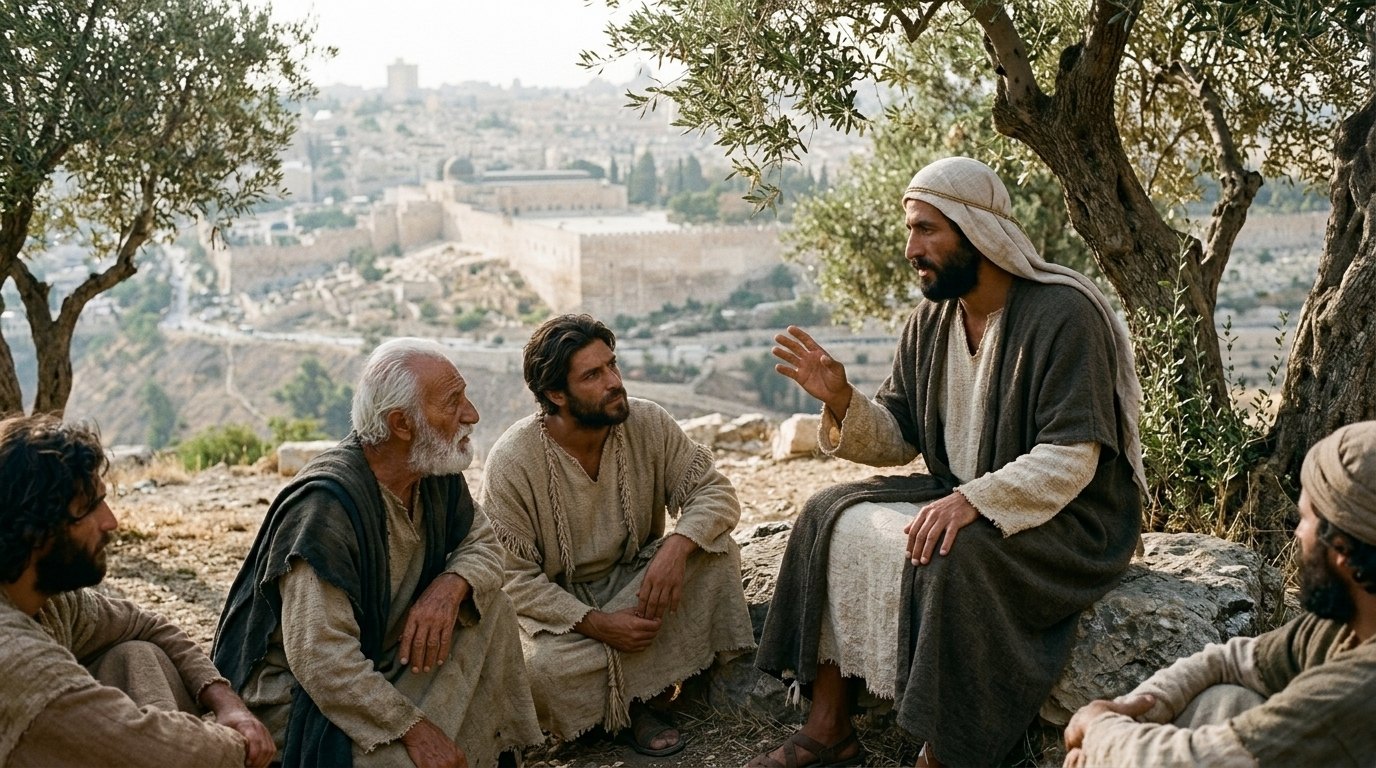
Matthew 24:4-5
4 Jesus answered: “Watch out that no one deceives you.
5 For many will come in my name, claiming, ‘I am the Messiah,’ and will deceive many.
New International Version (NIV)
The answer
Rastafarianism—usually called Rastafari—is a Bible-influenced religion and Pan-African social movement that began in Jamaica in the 1930s. It is not simply reggae music, dreadlocks or cannabis use.
It developed among communities confronting slavery’s legacy, racism and colonial rule. Marcus Garvey’s Pan-African teaching strongly influenced it. Its name comes from Ras Tafari, the name of the Ethiopian emperor later crowned Haile Selassie I in 1930, whom early Rastafari leaders identified as the promised redeemer.
Common beliefs and practices
- Jah and Haile Selassie: God is commonly called Jah. Traditional Rastafari teaching identifies Haile Selassie as God incarnate or the Messiah. There is no formal universal creed, however, and modern adherents differ over how central that identification is.
- Babylon and Zion: Babylon represents oppressive colonial and Western social systems. Zion commonly means Ethiopia or Africa more broadly, understood as the homeland and place of liberation for people of the African diaspora.
- Livity: This means righteous or spiritually conscious everyday living. Practices vary but can include an Ital diet, dreadlocks, abstention from alcohol, communal chanting and drumming, and sacramental cannabis use.
- Global influence: Reggae music, especially Bob Marley’s work in the 1970s, carried Rastafari ideas around the world.
The verdict from Scripture
Although Rastafari uses biblical language, its characteristic teaching about Haile Selassie is incompatible with biblical Christianity. Jesus warned, “For many will come in my name, saying, ‘I am the Christ,’ and will lead many astray” (Matthew 24:5). He also said not to believe claims that the Christ had appeared in some particular place, because his coming would be unmistakable, like lightning flashing across the sky (Matthew 24:23-27). Identifying an Ethiopian emperor as Christ returned therefore contradicts Jesus’ own warning.
Salvation belongs to Jesus Christ alone: “There is salvation in no one else, for there is no other name under heaven that is given among men, by which we must be saved!” (Acts 4:12). Scripture confesses one God, the Father, and one Lord, Jesus Christ (1 Corinthians 8:6). Opposition to racism and injustice does not require accepting Rastafari’s claims about God; those claims must be tested—and here rejected—by Scripture.
Answered from Scripture · reviewed November 24, 2026
Rastafari Claims Tested by Scripture
Each row sets a central Rastafari teaching beside what Scripture says. On its characteristic claim about Haile Selassie, Rastafari cannot stand with biblical Christianity.
| Rastafari teaching | What Scripture says | |
|---|---|---|
| Who is Lord | Traditional teaching identifies Haile Selassie as God incarnate or the Messiah | One God, the Father, and one Lord, Jesus Christ |
| Claims to be Christ | Early leaders named Ras Tafari the promised redeemer | Jesus warned many would come in his name, saying 'I am the Christ' |
| Christ's coming | Christ said to have appeared as an Ethiopian emperor | Believe no claim of Christ in a place; his coming is unmistakable, like lightning |
| Salvation | Liberation looked for in Zion, Ethiopia or Africa | Salvation in no one else; no other name given by which we must be saved |
| Injustice | Babylon names oppressive colonial and Western systems | Opposing racism does not require accepting Rastafari's claims about God |
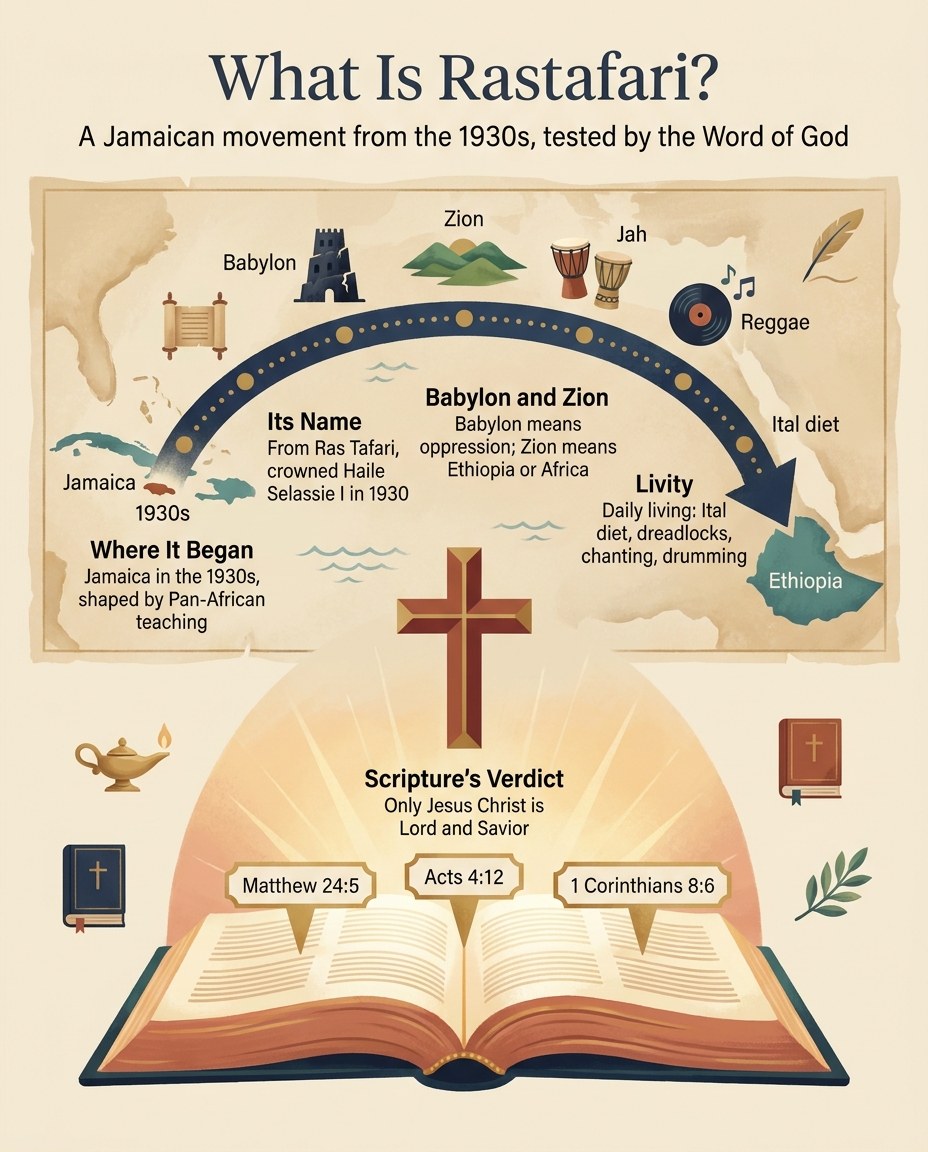
Rastafari is a twentieth-century religious and political movement born in Jamaica that weaves biblical language into a Pan-African framework of liberation. While it borrows scriptural terms and expresses legitimate longing for justice, its core identification of Ethiopian Emperor Haile Selassie as the Messiah or divine redeemer fundamentally departs from God's inspired Word.
Origins and Identification
No Other Name Beside Jesus Christ
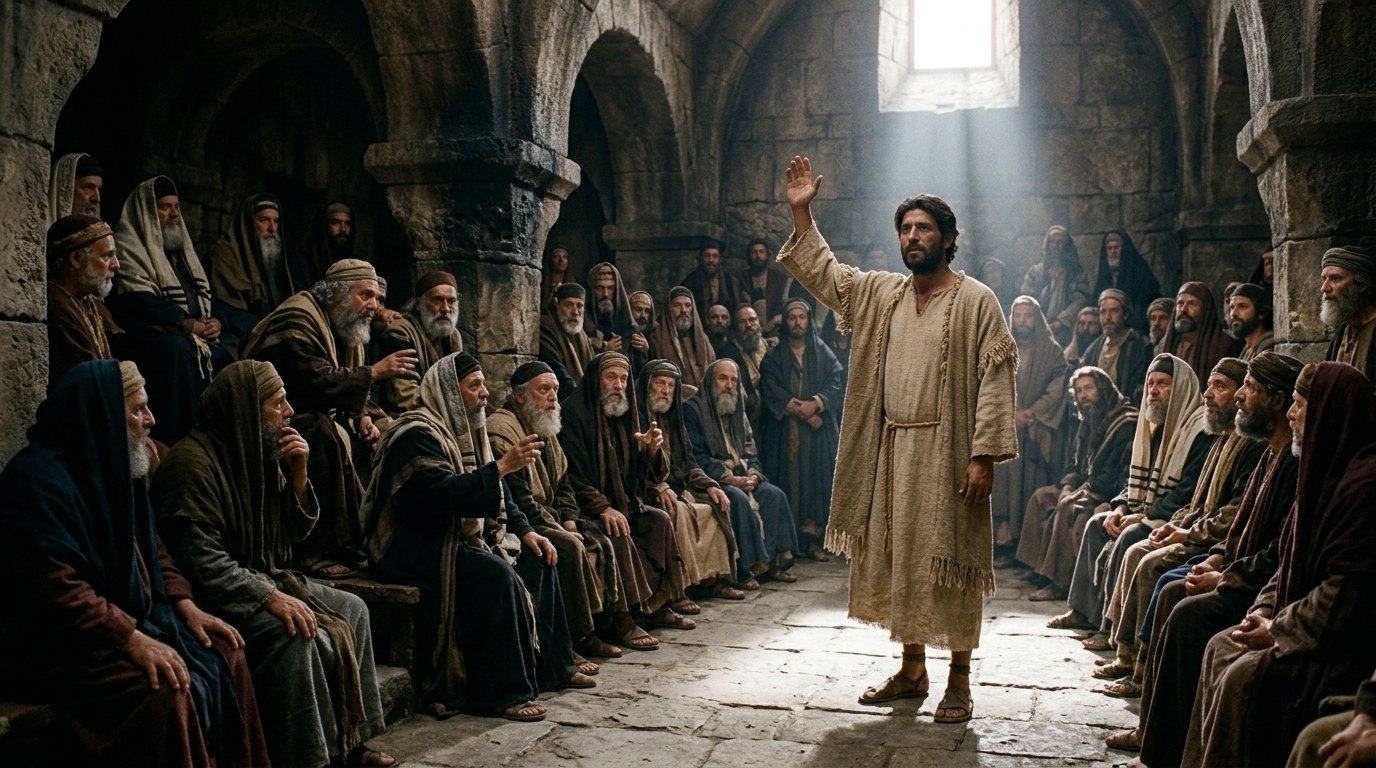
Salvation is found in no one else, for there is no other name under heaven given to mankind by which we must be saved.”
Acts 4:12 (NIV)
Peter proclaims unambiguously that salvation is found in no one other than Jesus Christ of Nazareth.
In Acts 4:12, the apostle Peter delivers an uncompromising verdict before the rulers of Jerusalem: there is salvation in no one else, for there is no other name under heaven given among men by which we must be saved. When twentieth-century Rastafari emerged in Jamaica, it fastened upon the coronation of Ras Tafari Makonnen (Emperor Haile Selassie I of Ethiopia) in 1930, interpreting his traditional monarchical titles through biblical prophecy and regarding him as the living God, the returned Christ, or the Black Messiah. Yet Scripture admits no rival and no secondary incarnations.
God’s Word consistently restricts redemption and divine lordship to the person of Jesus of Nazareth. Paul insists in 1 Corinthians 8:6 that for believers there is but one God, the Father, and one Lord, Jesus Christ, through whom all things exist and through whom we live. To divide this glory or reassign Christ’s sovereign identity to an earthly ruler dismantles the very foundation of the faith. As 1 Timothy 2:5 states with absolute clarity, there is only one mediator between God and men, the man Christ Jesus. Christ did not surrender His mediatorial throne to any monarch or political figure.
Furthermore, Philippians 2:9-11 records that God has highly exalted Jesus alone, bestowing upon Him the name that is above every name, so that at the name of Jesus every knee should bow. Hebrews 1:1-3 confirms that God’s final, complete speech to humanity is in His Son, who made purification for sins and sat down at the right hand of the Majesty on high. Emperor Haile Selassie was an adherent of the Ethiopian Orthodox Tewahedo Church who publicly denied being divine, pointing consistently to Jesus Christ. Only Christ bears the vesture seen in Revelation 19:16, inscribed with the supreme title King of kings and Lord of lords.
| Passage | What it says |
|---|---|
| Acts 4:12 | Proclaims there is no salvation or other name under heaven given among men by which we must be saved. |
| 1 Corinthians 8:6 | Affirms one God, the Father, and one Lord, Jesus Christ, through whom are all things and through whom we live. |
| 1 Timothy 2:5 | Declares there is one God and one mediator between God and men, the man Christ Jesus. |
| Philippians 2:9-11 | States God exalted Christ and bestowed the name above every name, before whom every knee shall bow. |
| Hebrews 1:1-3 | God has spoken definitively through His Son, Jesus Christ, who upholds all things and sits at the Father's right hand. |
| Revelation 19:16 | Jesus Christ alone carries the supreme title King of kings and Lord of lords upon His robe and thigh. |
Deceptions and False Christs
Jesus Warned Against Any Earthly Pretenders
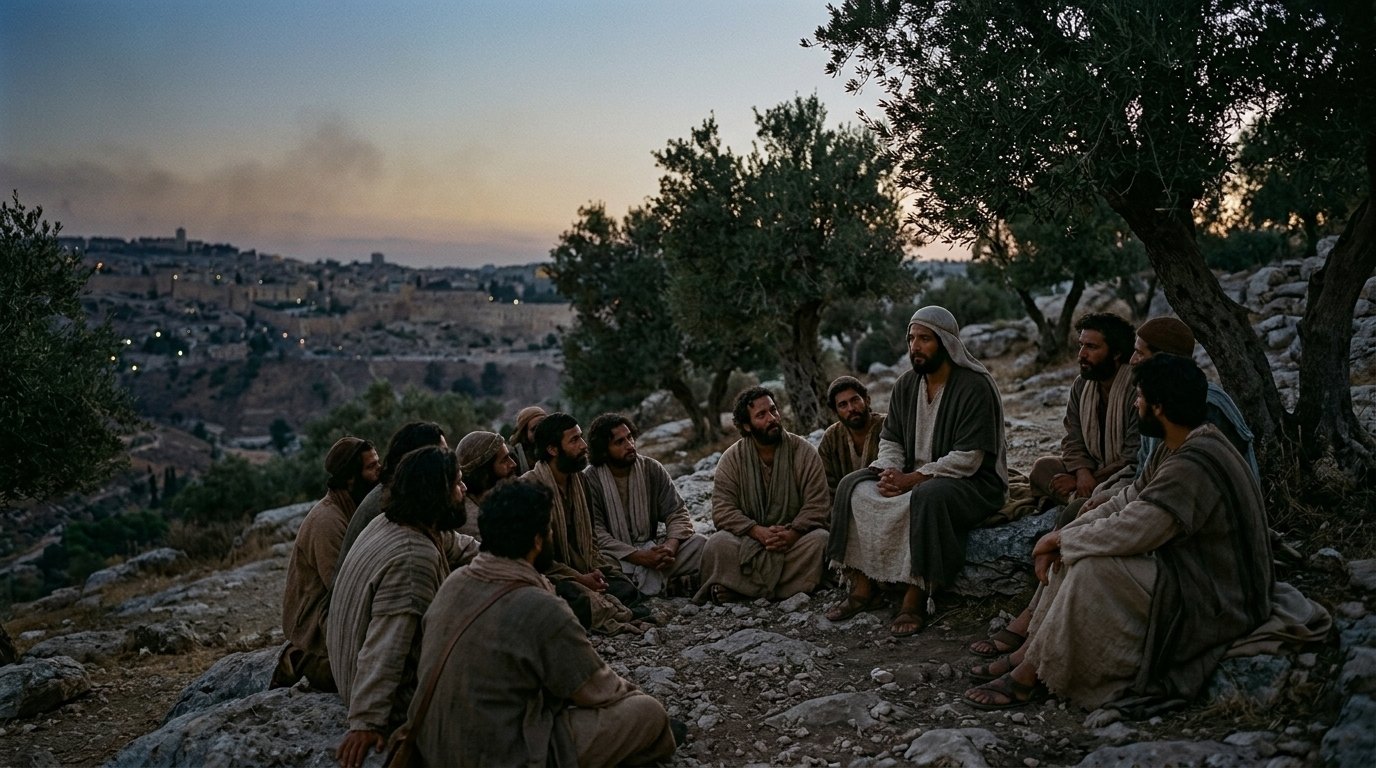
For many will come in my name, claiming, ‘I am the Messiah,’ and will deceive many.
Matthew 24:5 (NIV)
Jesus explicitly foretells that many will arise claiming the title of Christ to lead people astray.
In Matthew 24:5, the Lord Jesus gave a direct warning to His disciples regarding the course of this age: many will come in my name, saying, 'I am the Christ,' and they will lead many astray. Our Lord understood humanity’s perpetual vulnerability to messianic movements rooted in political longing, social oppression, or cultural nationalism. Rastafari arose amidst the profound suffering and lingering colonial injustice of the Caribbean, yet Jesus strictly forbade investing messianic hope in any human claimant.
Continuing His discourse in Matthew 24:23-27, Jesus warned believers never to go out when voices declare the Christ has appeared in a desert or in inner rooms, because His genuine coming will be as unmistakable and universally visible as lightning flashing from the east to the west. Mark 13:21-22 reiterates that false christs and false prophets will arise, performing signs to deceive, if possible, even the elect. Scripture therefore gives believers no license to accept novel redefinitions of the Messiah.
The apostolic epistles guard the flock with equal vigilance. In 1 John 4:1, the church is commanded to test the spirits to see whether they are from God, precisely because many false prophets have gone out into the world. Paul warns in Colossians 2:8 against being taken captive by empty deceit and human tradition rather than holding fast to Christ. In 2 Corinthians 11:3-4, he expresses deep fear that believers might tolerate someone preaching another Jesus whom we have not preached, or receiving a different gospel. Galatians 1:8-9 pronounces a solemn anathema on any message that departs from the historic gospel delivered once for all. True faith rests entirely upon the biblical Christ.
| Passage | What it says |
|---|---|
| Matthew 24:4-5 | Warns believers not to be led astray by those who arrive claiming to be the Christ. |
| Matthew 24:23-27 | Instructs not to believe reports of Christ in desert or secret places, as His return is like universal lightning. |
| Mark 13:21-22 | Warns of false christs and false prophets arising with signs seeking to lead astray even the elect. |
| 1 John 4:1 | Commands believers to test the spirits whether they are of God, because many false prophets have gone out. |
| Colossians 2:8 | Warns against being taken captive through human philosophy, vain deceit, and worldly traditions rather than Christ. |
| 2 Corinthians 11:3-4 | Paul warns against receiving another Jesus or another gospel contrary to the apostolic witness received by faith. |
| Galatians 1:8-9 | Any gospel preached that departs from the true apostolic gospel of Christ is under God's solemn anathema. |
The True Return
The Glorious Bodily Return of the Lord
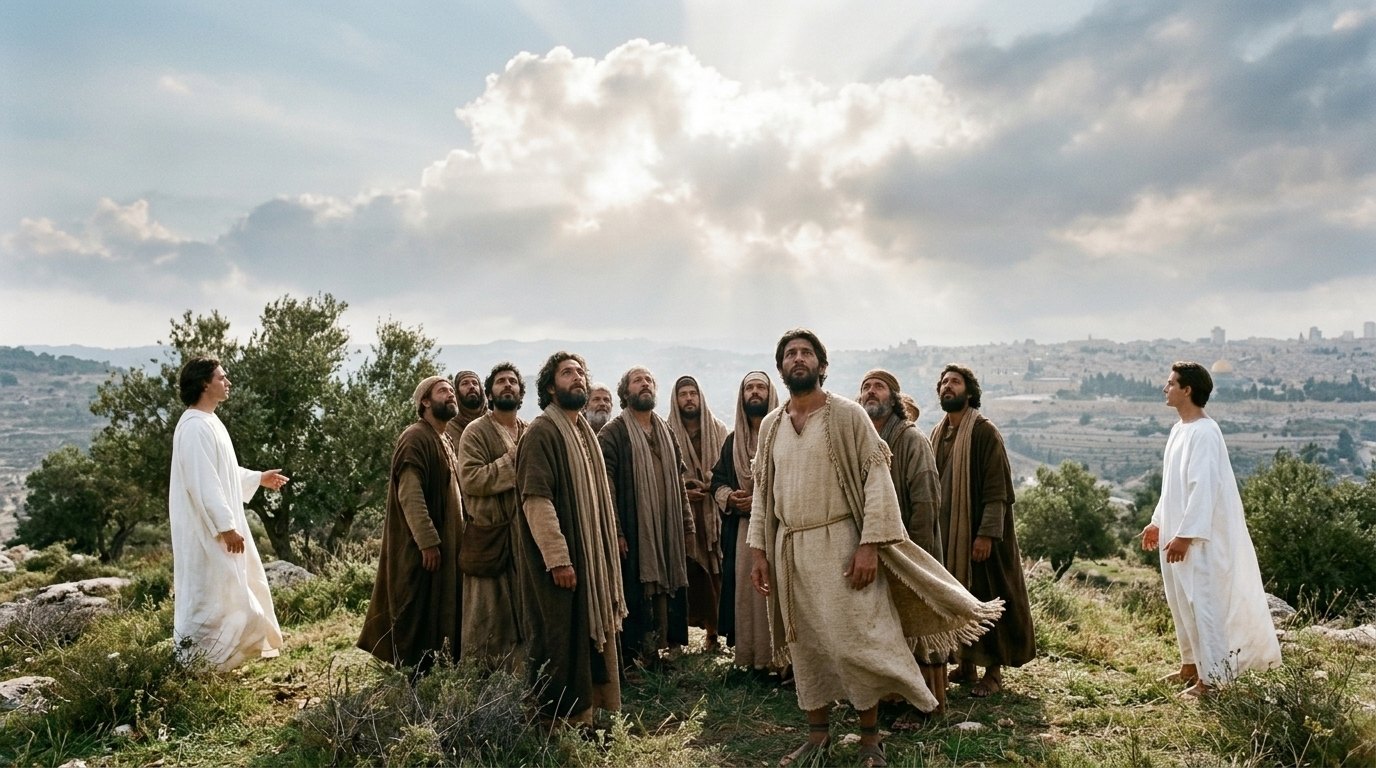
“Men of Galilee,” they said, “why do you stand here looking into the sky? This same Jesus, who has been taken from you into heaven, will come back in the same way you have seen him go into heaven.”
Acts 1:11 (NIV)
The angels testify that the very same bodily Jesus who ascended into heaven will return in like manner.
In Acts 1:11, two angelic messengers addressed the bewildered disciples who had just witnessed their Master taken up: this same Jesus, who was taken up from you into heaven, will come in the same way as you saw him go into heaven. The return of Christ is not a metaphorical awakening, a philosophical shift, or an earthly coronation in an African capital; it is the literal, personal, visible descent of the risen, glorified Son of Man.
Acts 1:9-10 emphasizes that the Lord Jesus ascended bodily, enveloped by a cloud before their eyes. The resurrection body that bore the wounds of the cross was received into celestial glory. Consequently, Revelation 1:7 announces that He is coming with the clouds, and every eye will see Him, even those who pierced Him, bringing universal reckoning. The secret rise and death of an earthly sovereign in Addis Ababa bears no resemblance to the catastrophic, glory-filled return prophesied by the apostles.
Paul describes this climactic event in 1 Thessalonians 4:16, declaring that the Lord Himself will descend from heaven with a cry of command, with the voice of an archangel, and with the sound of the trumpet of God. Titus 2:13 names this bodily advent our blessed hope: the appearing of the glory of our great God and Savior Jesus Christ. In 2 Thessalonians 2:1-4, Paul cautions the church not to be quickly shaken regarding the day of the Lord, reminding believers that any mortal man setting himself up as divine will be exposed and overthrown by the brightness of Christ’s actual coming. His return will leave no room for debate.
| Passage | What it says |
|---|---|
| Acts 1:9-11 | Records Jesus ascending bodily into the clouds and angels confirming He will return in the exact same manner. |
| Revelation 1:7 | Testifies that Christ is coming with the clouds and every eye will see Him, even those who pierced Him. |
| 1 Thessalonians 4:16 | Describes the Lord descending from heaven with a shout, the archangel's voice, and the trumpet of God. |
| Titus 2:13 | Directs believers to wait for our blessed hope, the appearing of the glory of our great God and Savior Jesus. |
| 2 Thessalonians 2:1-4 | The day of the Lord will not come without unmistakable signs, exposing any man proclaiming himself divine. |
Zion and True Justice
The Biblical Zion and Heavenly City
But you have come to Mount Zion, to the city of the living God, the heavenly Jerusalem. You have come to thousands upon thousands of angels in joyful assembly,
Hebrews 12:22 (NIV)
The author directs believers not to an earthly kingdom, but to Mount Zion, the heavenly Jerusalem.
In Hebrews 12:22, Scripture draws a vital line between the earthly types of the Old Covenant and their heavenly reality: you have come to Mount Zion and to the city of the living God, the heavenly Jerusalem. Rastafari heavily employs the biblical language of Zion, contrasting it with Babylon as a system of Western oppression and viewing physical repatriation to Ethiopia as redemption. Yet the New Testament consistently reveals that Zion is not a geographic plot of African or Middle Eastern soil, but the heavenly dwelling of God accessed through Christ.
Hebrews 12:22-24 explains that this true Zion is populated by innumerable angels in festal gathering and by Jesus, the mediator of a new covenant. Scripture does not overlook the cry of the oppressed; Micah 6:8 commands God's people to do justice, to love kindness, and to walk humbly with your God. However, true liberation from oppression is grounded in the cross, not in geographic migration or naturalistic mysticism. Revelation 5:9-10 shows Christ ransoming people for God by His blood from every tribe, language, people, and nation, making them a kingdom of priests.
This redeemed multitude looks forward not to an earthly empire, but to the promise of Revelation 21:1-4, where the holy city, New Jerusalem, descends from God, and He wipes away every tear from their eyes. Galatians 4:26 confirms that the Jerusalem above is free, and she is our mother. In this kingdom, as Romans 10:12-13 states, there is no distinction between Jew and Greek, for the same Lord is Lord of all, bestowing His riches on all who call on Him in repentance and faith.
| Passage | What it says |
|---|---|
| Hebrews 12:22-24 | Reveals Mount Zion as the city of the living God, the heavenly Jerusalem, and Jesus the mediator of a new covenant. |
| Micah 6:8 | States what the Lord requires: to do justice, to love mercy, and to walk humbly with God. |
| Revelation 5:9-10 | Declares that Christ purchased people for God from every tribe, language, people, and nation by His blood. |
| Revelation 21:1-4 | Foretells the holy city, New Jerusalem, where God dwells with His people and wipes away every tear. |
| Galatians 4:26 | The Jerusalem above is free and is the true spiritual mother of all who believe in Christ. |
| Romans 10:12-13 | There is no distinction between Jew and Gentile, for the same Lord richly blesses all who call upon Him. |
Sobriety and Holiness
Holy Living Surpasses Ritual Laws and Mind-Altering Rites

Be alert and of sober mind. Your enemy the devil prowls around like a roaring lion looking for someone to devour.
1 Peter 5:8 (NIV)
Scripture insists upon absolute sobriety and alertness of mind rather than chemical intoxication for spiritual communion.
The ritual use of cannabis, celebrated in Rastafari as a religious sacrament to attain meditative insight, directly counters Scripture's repeated command to exercise sober-minded vigilance. In 1 Peter 5:8, the apostle urges believers: "Be sober-minded; be watchful. Your adversary the devil prowls around like a roaring lion, seeking someone to devour." True communion with God demands an alert, unclouded mind that actively guards against deception, rather than seeking artificial transcendence or altered consciousness through psychoactive plants. Christian worship engages the rational mind under the direction of the Holy Spirit, never dulling the senses to achieve spiritual illumination.
This vigilance reflects the comprehensive sanctification required of every follower of Christ. In Romans 12:1-2, the Apostle Paul calls believers to present their bodies as living sacrifices, holy and acceptable to God, being transformed by the renewal of your mind rather than conformed to the patterns of this world. True spiritual worship does not depend on outward dietary rituals or sacred herbs, but on a mind submitted to God's truth. As Paul clarifies in Romans 14:17, "the kingdom of God is not a matter of eating and drinking but of righteousness and peace and joy in the Holy Spirit." External rituals cannot substitute for the inward fruit born of genuine repentance and faith.
Furthermore, the physical body is not an instrument for self-indulgent experiences, but a consecrated vessel. Writing in 1 Corinthians 6:19-20, Paul reminds the church that "your body is a temple of the Holy Spirit within you, whom you have from God. You are not your own, for you were bought with a price. So glorify God in your body." Because Christ purchased His people with His own blood, believers must honor Him through bodily self-control, fleeing any practice that impairs discernment or surrenders the mind to chemical mastery.
| Passage | What it says |
|---|---|
| 1 Peter 5:8 | Believers are commanded to be sober and watchful against spiritual adversaries, not seeking altered consciousness. |
| Romans 12:1-2 | Spiritual worship consists in renewing the mind in holiness before God rather than conforming to worldly practices. |
| Romans 14:17 | The kingdom of God is not about ceremonial eating or drinking, but righteousness, peace, and joy in the Holy Spirit. |
| 1 Corinthians 6:19-20 | The believer's body is the temple of the Holy Spirit, purchased with a price, to be kept holy to God. |
Where in the Bible
| Book | Passages |
|---|---|
| Micah | 1 · Micah 6:8 |
| Matthew | 2 · Matthew 24:4-5, Matthew 24:23-27 |
| Mark | 1 · Mark 13:21-22 |
| Acts | 2 · Acts 4:12, Acts 1:9-11 |
| Romans | 3 · Romans 10:12-13, Romans 12:1-2, Romans 14:17 |
| 1 Corinthians | 2 · 1 Corinthians 8:6, 1 Corinthians 6:19-20 |
| 2 Corinthians | 1 · 2 Corinthians 11:3-4 |
| Galatians | 2 · Galatians 1:8-9, Galatians 4:26 |
| Philippians | 1 · Philippians 2:9-11 |
| Colossians | 1 · Colossians 2:8 |
| 1 Thessalonians | 1 · 1 Thessalonians 4:16 |
| 2 Thessalonians | 1 · 2 Thessalonians 2:1-4 |
| 1 Timothy | 1 · 1 Timothy 2:5 |
| Titus | 1 · Titus 2:13 |
| Hebrews | 2 · Hebrews 1:1-3, Hebrews 12:22-24 |
| 1 Peter | 1 · 1 Peter 5:8 |
| 1 John | 1 · 1 John 4:1 |
| Revelation | 4 · Revelation 19:16, Revelation 1:7, Revelation 5:9-10, Revelation 21:1-4 |
The story in order
- God speaks through His Son (c. AD 60) · Hebrews 1:1-3 · Jesus Christ is God's final and definitive revelation.
- Warning against false Christs (c. AD 30) · Mark 13:21-22 · Jesus warned of many false messiahs and prophets.
- Jesus ascends bodily (AD 30) · Acts 1:9-11 · Angels confirmed Jesus' return would be visible and bodily.
- No salvation apart from Jesus (c. AD 30) · Acts 4:12 · Salvation is found only in the name of Jesus Christ.
- One God, One Mediator (c. AD 60) · 1 Timothy 2:5 · Jesus Christ is the sole mediator between God and humanity.
- Warning against worldly philosophies (c. AD 60) · Colossians 2:8 · Beware of human traditions and philosophies over Christ.
- The heavenly Jerusalem (c. AD 60) · Hebrews 12:22-24 · Believers belong to a heavenly city, not an earthly one.
- Christ's supreme title (c. AD 90) · Revelation 19:16 · Jesus alone is King of kings and Lord of lords.
- The Lord's return is visible (c. AD 90) · Revelation 1:7 · Christ's return will be seen by all.
False Christs vs. the True Christ
| False Claim | Biblical Warning | True Identity/Return | Passage |
|---|---|---|---|
| Claiming to be the Christ | Do not be led astray | Jesus warned of this | Matthew 24:4-5 |
| Secret appearances or desert claims | Do not believe reports | Return is like lightning | Matthew 24:23-27 |
| False prophets and signs | Test the spirits | Many false prophets have gone out | 1 John 4:1 |
| Another Jesus or gospel | Solemn anathema | The true apostolic gospel | Galatians 1:8-9 |
| Human philosophy and tradition | Beware of being taken captive | Christ alone | Colossians 2:8 |
| Claiming divine status | The day of the Lord will not come | Man proclaiming himself divine exposed | 2 Thessalonians 2:1-4 |
| Earthly Messiah/Redeemer | No other name for salvation | Jesus Christ, Lord of lords | Acts 4:12 |
| Bodily return of Haile Selassie | Jesus will return bodily | Jesus ascending and returning visibly | Acts 1:9-11 |
The Nature of True Worship and Justice
| Biblical Requirement | Rastafari Practice/Belief | Biblical Verdict | Passage |
|---|---|---|---|
| Do justice, love mercy, walk humbly | Focus on earthly justice and liberation | This is what the Lord requires | Micah 6:8 |
| Be sober and watchful | Use of mind-altering substances (ganja) | Commanded against seeking altered consciousness | 1 Peter 5:8 |
| Renewing the mind in holiness | Identification with Haile Selassie | Not conforming to worldly practices | Romans 12:1-2 |
| Righteousness, peace, joy in the Holy Spirit | Focus on earthly kingdom and emperor | The kingdom of God is not about ritual | Romans 14:17 |
| Body is the temple of the Holy Spirit | Identification with Haile Selassie as divine | Purchased with a price, to be kept holy | 1 Corinthians 6:19-20 |
Key words
- Messiah (Mashiach (Hebrew))
- Anointed one; the promised deliverer of the Jewish nation. · Acts 4:12
- Lord of lords (Adonai Adonim (Hebrew))
- Supreme title indicating absolute authority and sovereignty. · Revelation 19:16
- Mediator (Mesites (Greek))
- One who reconciles estranged parties; an intermediary. · 1 Timothy 2:5
- Zion (Tsiyon (Hebrew))
- A hill in Jerusalem; often refers to Jerusalem or the heavenly city. · Hebrews 12:22-24
- Sober (Sophron (Greek))
- Self-controlled, temperate, serious, and vigilant. · 1 Peter 5:8
Scripture honors the cry against human oppression, but genuine redemption cannot be founded on a created ruler or human philosophy. True liberation from sin, death, and systemic evil is found exclusively in Jesus Christ, the risen Lord who commands all people everywhere to repent and believe His Gospel.
28 passages, each cited once.
Scripture cited
- Matthew 24:23-27
- Acts 4:10-12
- 1 Corinthians 8:4-6