What were Tyre and Sidon in the Bible?
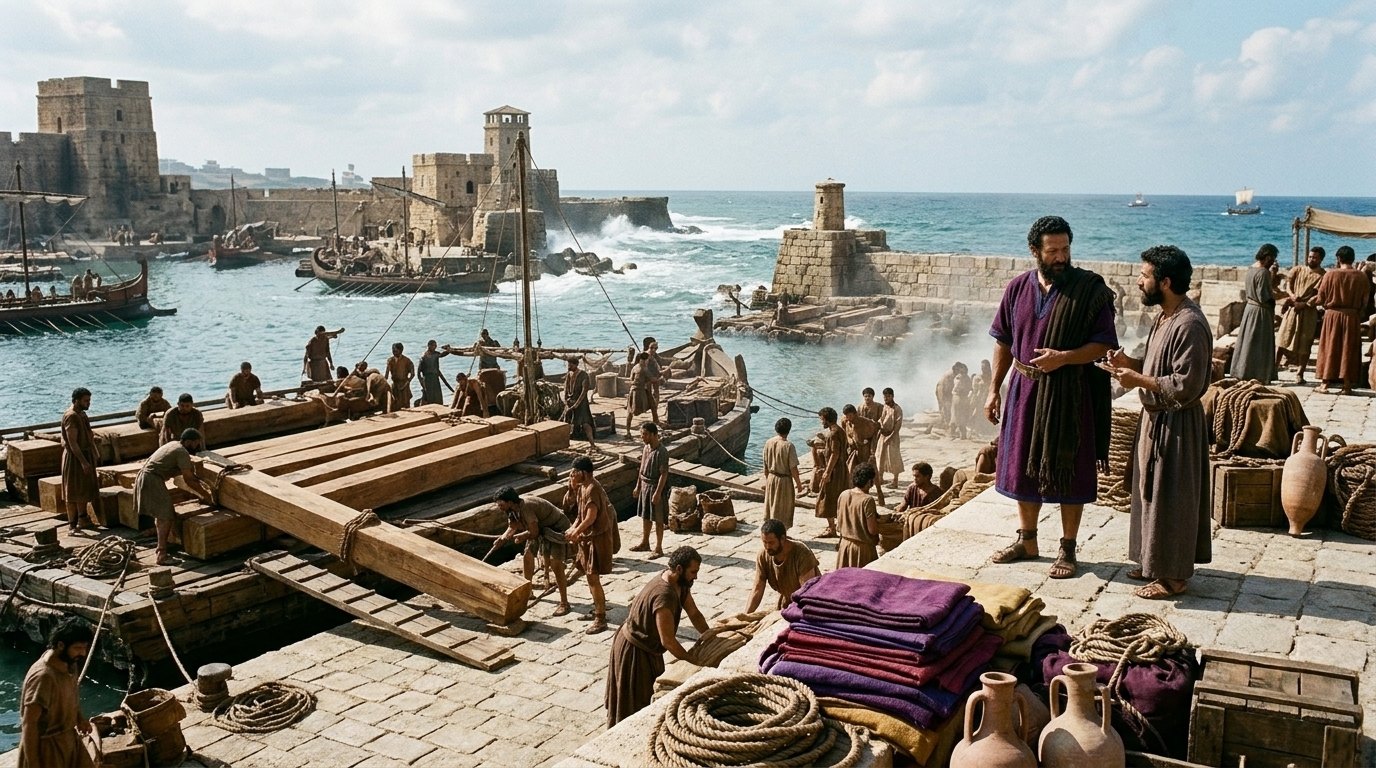
Matthew 11:21-22
21 “Woe to you, Chorazin! Woe to you, Bethsaida! For if the miracles that were performed in you had been performed in Tyre and Sidon, they would have repented long ago in sackcloth and ashes.
22 But I tell you, it will be more bearable for Tyre and Sidon on the day of judgment than for you.
New International Version (NIV)
The answer
Tyre and Sidon were ancient Phoenician port cities on the Mediterranean coast north of Israel, in the area of modern Lebanon. They were wealthy Gentile centres of shipping, trade and skilled craftsmanship. Scripture presents them as real historical cities, while also using them as warnings about pride, idolatry and refusing God's word.
Their Old Testament background
Sidon received its name from Sidon, Canaan's firstborn, and marked part of the Canaanites' territory (Genesis 10:15,19). It was the older city; Tyre later became especially powerful and prosperous. Tyre had both a mainland settlement and a strongly fortified island portion, and its merchants traded throughout the Mediterranean.
Their relationship with Israel was not always hostile. Hiram, king of Tyre, was friendly toward David and Solomon. When Solomon prepared to build the temple, he requested cedar from Lebanon, observing that nobody knew how to cut timber like the Sidonians. Hiram supplied cedar and cypress timber, Solomon supplied food for Hiram's household, and the two kings made a treaty (1 Kings 5:1-12).
Nevertheless, their wealth and prominence did not place them beyond God's judgment. Isaiah calls Tyre “the market of nations” and describes its merchants as princes, yet declares that Yahweh planned to humble its pride (Isaiah 23:3,8-9). Ezekiel likewise records God's prophecy of judgment against Sidon, so that its people would know that He is Yahweh (Ezekiel 28:21-24).
Why Jesus named them together
In Matthew 11:20-22, Jesus denounced Chorazin and Bethsaida because they had witnessed many of His mighty works but had not repented. He said that if those works had been done in Tyre and Sidon, “they would have repented long ago in sackcloth and ashes” (Matthew 11:21). Sackcloth and ashes were outward expressions of grief, humility and repentance; Job similarly said, “I abhor myself, and repent in dust and ashes” (Job 42:6).
Jesus then warned that judgment would be more tolerable for Tyre and Sidon than for the cities that had rejected Him (Matthew 11:22). His point was not that Tyre and Sidon were righteous, but that people who receive greater revelation and still refuse to repent bear greater responsibility.
They also appear in accounts of mercy
These cities were not merely symbols of wickedness. Jesus recalled that Elijah had been sent to a widow at Zarephath in the land of Sidon (Luke 4:25-26). Jesus Himself withdrew into the region of Tyre and Sidon, where a Canaanite woman pleaded for her demon-possessed daughter. He healed the daughter and told the mother, “Woman, great is your faith!” (Matthew 15:21-28). Later, Paul found disciples in Tyre, remained with them for seven days, and prayed with them on the beach before continuing his journey (Acts 21:3-6). The God who judged these cities' pride also showed mercy to people beyond Israel who believed.
Answered from Scripture · reviewed November 25, 2026
Tyre and Sidon Through Scripture
Read from top to bottom in the order Scripture records. These two Gentile port cities appear again and again, sometimes under God's warning of judgment and sometimes as places where He showed mercy to those who believed.
- Sidon named (Table of nations) · Sidon takes its name from Canaan's firstborn and marks part of the Canaanites' territory. · Genesis 10:15-19
- Hiram helps build the temple (Days of David and Solomon) · Hiram of Tyre sends cedar and cypress, Solomon sends food, and the two kings make a treaty. · 1 Kings 5:1-12
- Elijah sent to Zarephath (Days of Elijah) · Elijah is sent to a widow in the land of Sidon. Jesus later recalls this mercy. · Luke 4:25-26
- Tyre's pride humbled (Isaiah's prophecy) · Tyre is called the market of nations, yet the LORD plans to humble its pride. · Isaiah 23:3-9
- Judgment on Sidon (Ezekiel's prophecy) · God declares judgment on Sidon so that its people will know that He is the LORD. · Ezekiel 28:21-24
- A warning to Galilee (Jesus' ministry) · Tyre and Sidon would have repented. Judgment will be more tolerable for them than for cities that rejected Him. · Matthew 11:20-22
- A Canaanite woman's faith (Jesus' ministry) · In the region of Tyre and Sidon, Jesus heals a mother's daughter and praises her great faith. · Matthew 15:21-28
- Disciples in Tyre (Early church) · Paul stays seven days with the disciples in Tyre and prays with them on the beach. · Acts 21:3-6
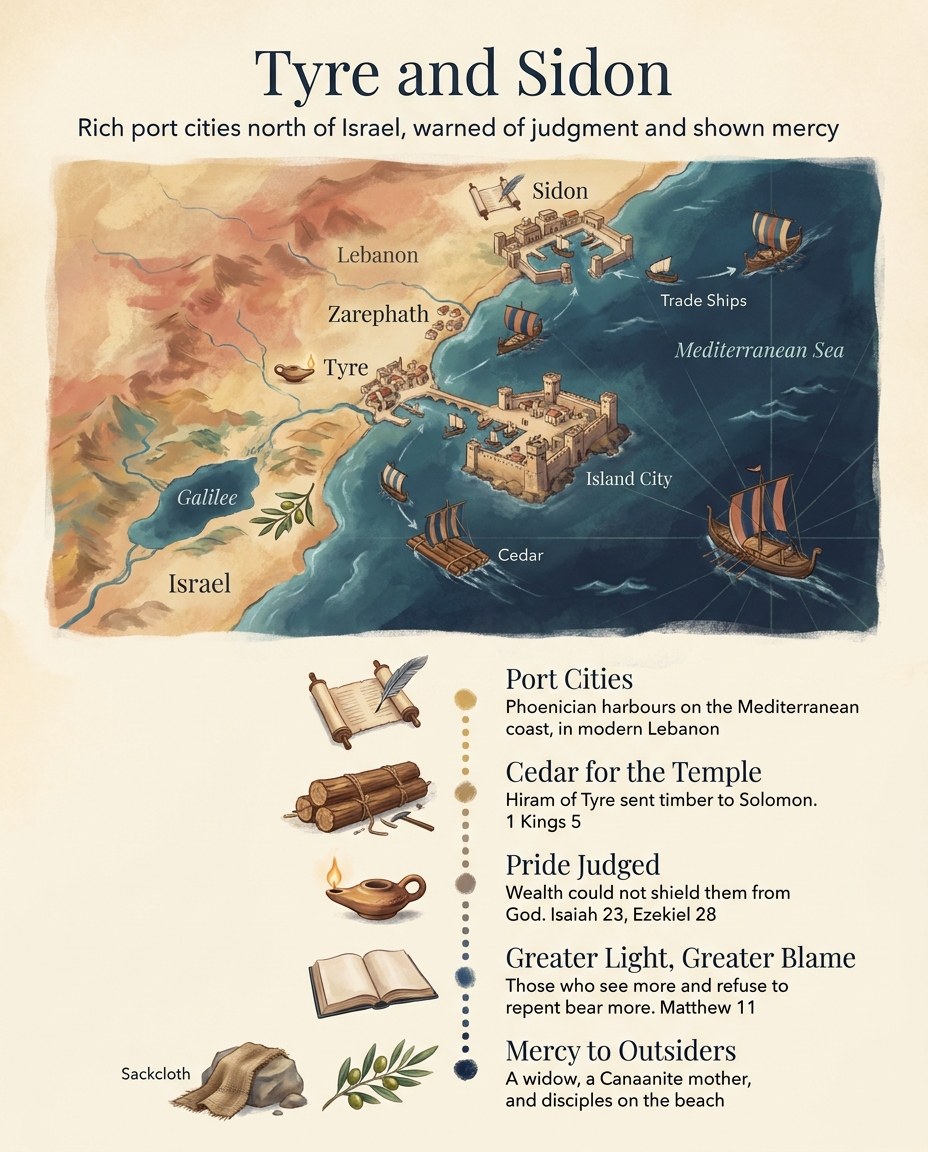
Tyre and Sidon were renowned Phoenician port cities on the Mediterranean coast north of Israel, celebrated for seafaring commerce, artisan craft, and immense wealth. Scripture records their historical interactions with Israel, exposes their catastrophic pride under divine judgment, and ultimately reveals them as recipients of God's sovereign mercy.
Ancient Origins and Boundaries
Phoenician Ports Born from Canaan's Coast
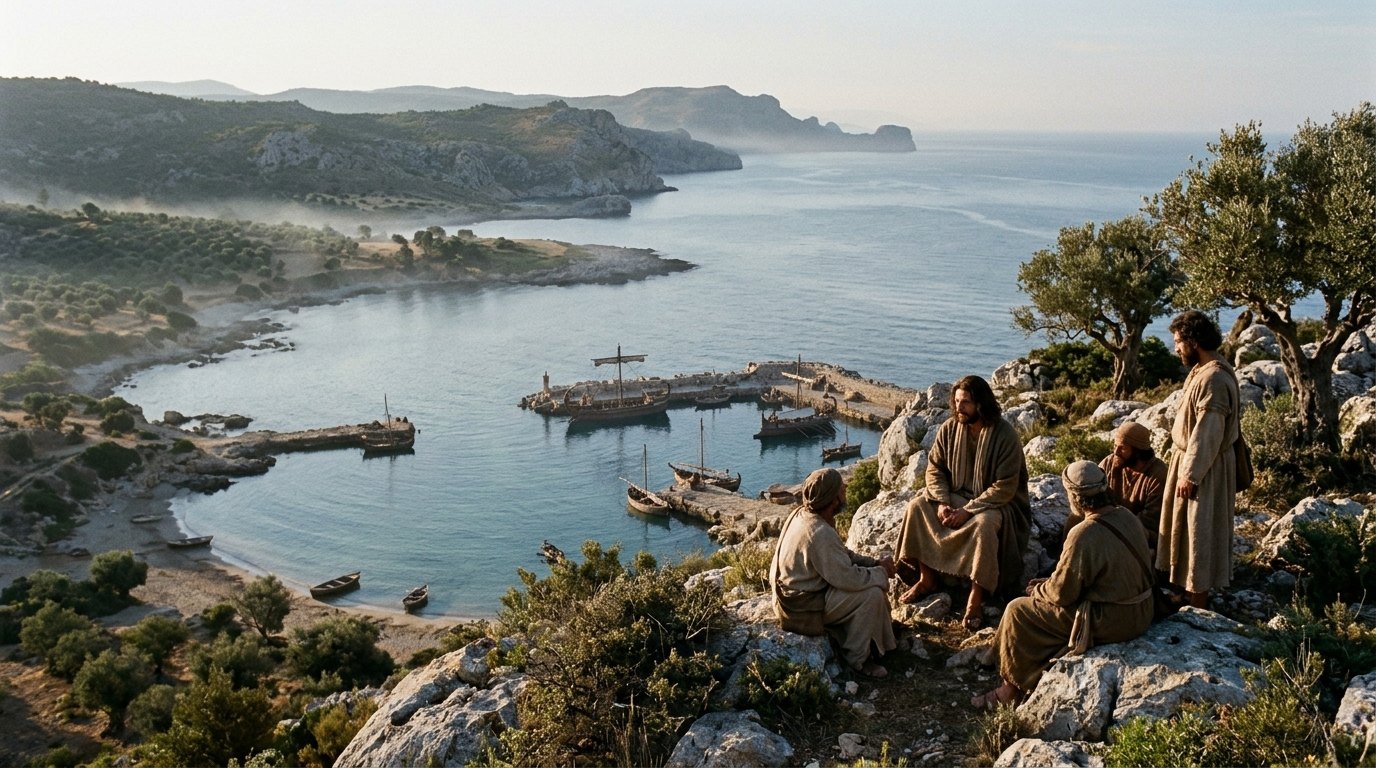
and the borders of Canaan reached from Sidon toward Gerar as far as Gaza, and then toward Sodom, Gomorrah, Admah and Zeboyim, as far as Lasha.
Genesis 10:19 (NIV)
Sidon establishes the northern territorial marker for the Canaanite peoples in the biblical table of nations.
The maritime prominence of Sidon begins in the table of nations, where Genesis 10:19 sets Sidon as the northern boundary marker of Canaanite territory. Sidon was the firstborn of Canaan (Genesis 10:15), establishing an ancient seafaring dynasty along the Levantine coast long before Israel entered the land. When the patriarch Jacob blessed his sons, he foresaw that Zebulun's maritime border would stretch toward Sidon (Genesis 49:13). During the conquest under Joshua, Israel pursued the northern Canaanite confederacy as far as "Greater Sidon" (Joshua 11:8). The Lord commanded Israel to dispossess the inhabitants of the hill country from Lebanon to Misrephoth-maim, including all the Sidonians (Joshua 13:6), and assigned Great Sidon and the fortified island stronghold of Tyre within the tribal allotment of Asher (Joshua 19:28-29).
Yet Asher compromised: Asher failed to drive out the inhabitants of Sidon, choosing instead to dwell among the Canaanite population (Judges 1:31). Consequently, God left the Sidonians alongside other nations to test Israel's faithfulness to His covenant (Judges 3:3). This failure brought recurring distress, as the Sidonians eventually oppressed Israel alongside their neighbours until the people cried out in repentance (Judges 10:12). The Danite spies noted the secure isolation of Laish, living safely at a distance from Sidonian protection (Judges 18:7). By the time of David's census, Joab's officers charted the nation's borders from Dan-jaan around to the "fortress of Tyre" and the cities of the Sidonians (2 Samuel 24:6), proving that these strategic Phoenician fortresses remained sovereign neighbours bordering the northern edge of the promised land.
| Passage | What it says |
|---|---|
| Genesis 10:15 | Canaan fathers Sidon, his firstborn son, identifying the ancestral origin of the ancient coastal city. |
| Genesis 10:19 | The territory of the Canaanites extends from Sidon in the north toward Gerar and Sodom. |
| Joshua 19:28 | Great Sidon is assigned as part of the inheritance boundary for the tribe of Asher. |
| Joshua 19:29 | The tribal boundary of Asher reaches as far as the fortified city of Tyre. |
| Judges 1:31 | Asher fails to drive out the inhabitants of Sidon, living alongside them instead. |
| Genesis 49:13 | Jacob prophesies that Zebulun's border shall reach toward Sidon. |
| Joshua 11:8 | Israel pursues the northern Canaanite coalition as far as Greater Sidon. |
| Joshua 13:6 | God promises to drive out all the inhabitants of the hill country from Lebanon to Misrephoth-maim, including all the Sidonians. |
| Judges 3:3 | The Sidonians are among the nations left to test Israel's obedience to God's commandments. |
| Judges 10:12 | The Lord reminds Israel how the Sidonians previously oppressed them when they cried out for deliverance. |
| Judges 18:7 | The Danite spies observe that the quiet people of Laish live far from the Sidonians and have no protector. |
| 2 Samuel 24:6 | Joab's census takers journey north to Dan-jaan and around to the fortress of Tyre and the Sidonian towns. |
Alliances and the Temple
Lebanon Cedars Supplied for the House of God
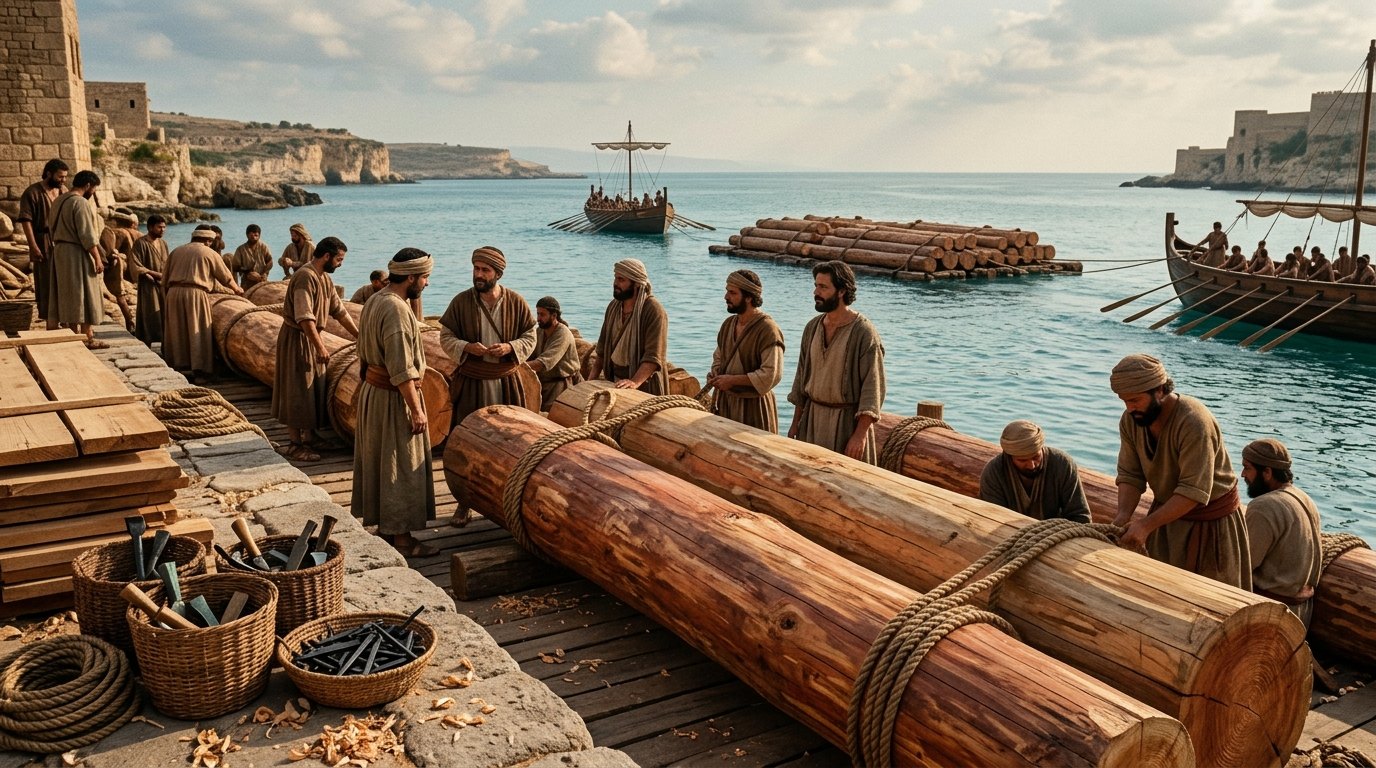
“So give orders that cedars of Lebanon be cut for me. My men will work with yours, and I will pay you for your men whatever wages you set. You know that we have no one so skilled in felling timber as the Sidonians.”
1 Kings 5:6 (NIV)
Solomon acknowledges the unparalleled skill of the Sidonians in harvesting cedar timber for the temple.
The relationship between Israel and Phoenicia shifted dramatically from border tension to royal alliance under David and Solomon. When David built his royal palace in Jerusalem, Hiram king of Tyre supplied cedar logs, masons, and carpenters (2 Samuel 5:11; 1 Chronicles 14:1). Because Hiram "always loved David" (1 Kings 5:1), David amassed vast stores of Tyrian and Sidonian timber for his son to construct the temple of Yahweh (1 Chronicles 22:4). Solomon recognized that "there is no one among us who knows how to cut timber like the Sidonians" (1 Kings 5:6), entering a formal treaty of peace and trade with Hiram (1 Kings 5:12; 2 Chronicles 2:3). Solomon even hired a Tyrian master craftsman named Huram, gifted in bronze, to forge the temple's two great pillars and sea basin (1 Kings 7:13). Solomon later ceded twenty Galilean cities to Hiram in exchange for gold and lumber (1 Kings 9:11).
Yet these commercial ties sowed deadly spiritual compromise. The worst came when King Ahab "married Jezebel the daughter of Ethbaal king of the Sidonians" (1 Kings 16:31), plunging the northern kingdom into institutional Baal worship. Following the Babylonian exile, faithful Israelites again purchased Lebanon cedar from Tyrians and Sidonians to rebuild the temple of God (Ezra 3:7). Even then, commercial greed remained an enticement; Nehemiah had to bar the city gates to stop Tyrian merchants from trafficking fish and merchandise within Jerusalem on the holy Sabbath (Nehemiah 13:16).
| Passage | What it says |
|---|---|
| 2 Samuel 5:11 | Hiram king of Tyre sends cedar trees, carpenters, and stonemasons to build David a house. |
| 1 Kings 5:1 | Hiram sends servants to Solomon upon his coronation, having always loved David. |
| 1 Kings 5:6 | Solomon requests cedar from Lebanon, commending the unique timber-cutting skill of the Sidonians. |
| 1 Kings 5:12 | Yahweh gives Solomon wisdom, and Solomon cuts a formal peace treaty with Hiram. |
| 1 Kings 7:13 | Solomon brings Huram from Tyre, a master craftsman in bronze whose father was Tyrian. |
| 1 Kings 9:11 | King Solomon grants Hiram king of Tyre twenty Galilean cities for supplying cedar, cypress, and gold. |
| 1 Kings 16:31 | Ahab marries Jezebel, daughter of Ethbaal king of the Sidonians, plunging Israel into Baal worship. |
| 1 Chronicles 14:1 | Hiram king of Tyre sends messengers, cedar logs, masons, and carpenters to build David's palace in Jerusalem. |
| 1 Chronicles 22:4 | David gathers vast quantities of cedar logs supplied by the Tyrians and Sidonians for Solomon's temple. |
| 2 Chronicles 2:3 | Solomon requests Huram king of Tyre to send materials and a skilled artisan to construct the temple. |
| Ezra 3:7 | Returning exiles give food, drink, and oil to Tyrians and Sidonians to float cedar logs down from Lebanon. |
| Nehemiah 13:16 | Men of Tyre living in Jerusalem sell fish and goods on the Sabbath until Nehemiah confronts them. |
Prophetic Warning and Wrath
Pride, Commerce, and Divine Judgment
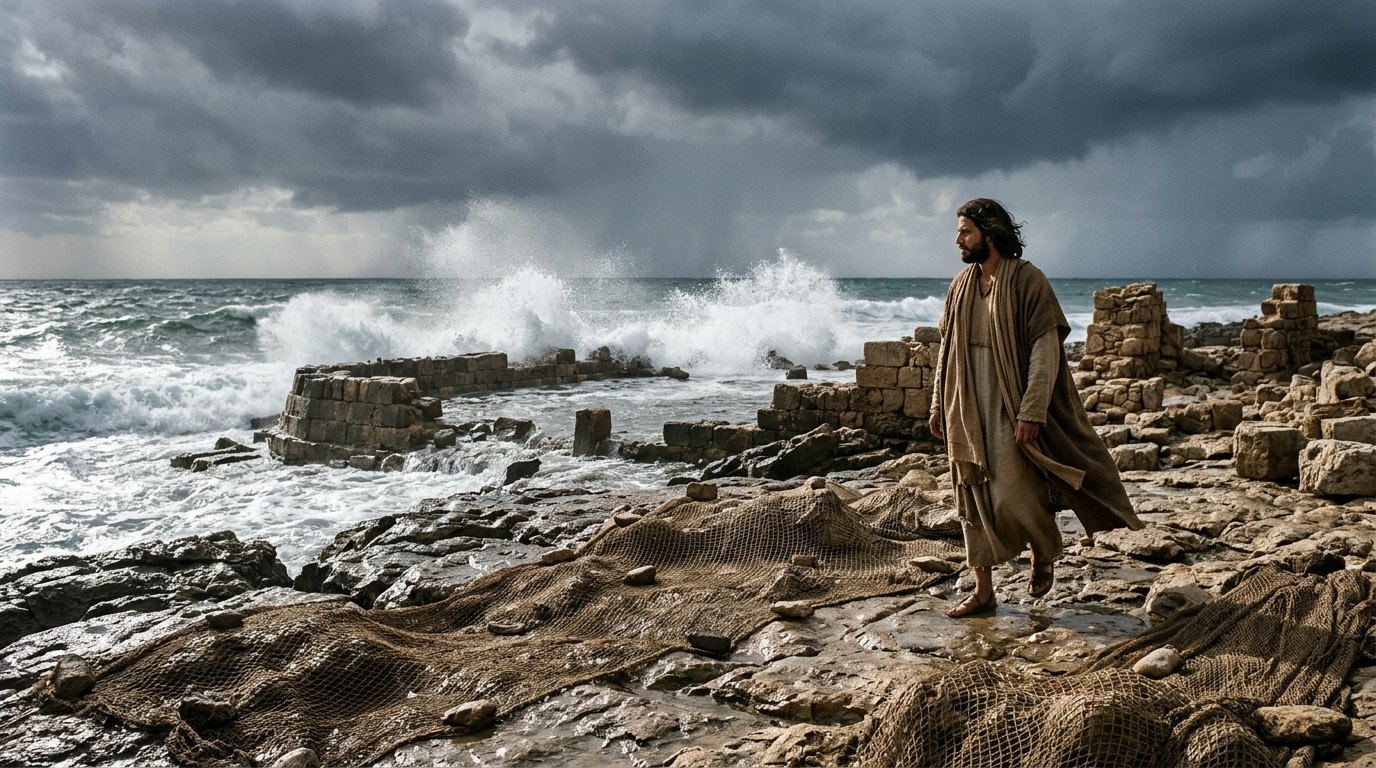
The LORD Almighty planned it, to bring down her pride in all her splendor and to humble all who are renowned on the earth.
Isaiah 23:9 (NIV)
The Lord of hosts purposed the ruin of Tyre to defile the pride of all glory.
Because Tyre and Sidon idolized commerce and celebrated Jerusalem's fall, God unleashed devastating prophetic indictments against them. Through Isaiah, God unmasked the source of Tyre's downfall: "The Lord of hosts has purposed it, to defile the pompous pride of all glory" (Isaiah 23:9). Though Tyre sat as a crowning empress whose merchants were princes (Isaiah 23:1, 8), Ezekiel warned that God was against her, pledging to bring many nations against her rocky fortress as waves break upon the coast (Ezekiel 26:3). Tyre boasted in its commercial fleet and "perfect beauty" (Ezekiel 27:3), yet Ezekiel prophesied it would become a bare rock, scraped clean for the spreading of fishermen's nets (Ezekiel 26:14).
This catastrophe struck at the root of spiritual idolatry: the prince of Tyre boasted in his heart, "I am a god, I sit in the seat of the gods" (Ezekiel 28:2), inviting total ruin for both Tyre and nearby Sidon (Ezekiel 28:22). Amos, Joel, and Zechariah condemned Tyre for human trafficking—selling covenant children into slavery to Edom and Greece after looting temple treasures (Amos 1:9; Joel 3:4; Zechariah 9:2). Jeremiah forced Tyre and Sidon to drink the cup of divine wrath (Jeremiah 25:22; 27:3; 47:4). Though Tyre conspired against Israel (Psalm 83:7), Scripture also prophesied a day when Tyrian royalty would honour the king's bride with gifts (Psalm 45:12) and Gentiles born in Tyre would be counted citizens of Zion by divine grace (Psalm 87:4).
| Passage | What it says |
|---|---|
| Isaiah 23:1 | An oracle against Tyre foretells the ruin of its harbour and ships of Tarshish. |
| Isaiah 23:8 | Tyre is described as the crowning city whose merchants are princes and world-renowned traders. |
| Isaiah 23:9 | The Lord of hosts purposes to humble the pomp and pride of Tyre's glorious trade. |
| Ezekiel 26:3 | The Lord declares He is against Tyre and will bring up many nations against her. |
| Ezekiel 28:2 | The prince of Tyre is denounced for pride because his heart boasts he is a god. |
| Ezekiel 28:22 | God declares judgment against Sidon so they will know that He is the Lord. |
| Amos 1:9 | Tyre is condemned for delivering a whole covenant community into captivity to Edom. |
| Psalms 45:12 | The daughter of Tyre brings gifts, and the richest of people seek the royal bride's favor. |
| Psalms 83:7 | Tyre conspires with Gebal, Ammon, and Amalek against God's covenant people. |
| Psalms 87:4 | God counts Philistia, Tyre, and Cush among those registered as born in Zion. |
| Jeremiah 25:22 | Jeremiah makes all kings of Tyre, Sidon, and the coastlands drink the cup of God's wrath. |
| Jeremiah 27:3 | God sends yokes to the kings of Tyre and Sidon warning them to submit to Nebuchadnezzar's rule. |
| Jeremiah 47:4 | The Lord destroys the Philistines and cuts off every remaining ally from Tyre and Sidon. |
| Ezekiel 26:14 | God declares Tyre will become a bare rock, a place for spreading nets, never to be rebuilt. |
| Ezekiel 27:3 | The prophet laments Tyre, merchant to the peoples on many coasts, boasting of perfect beauty. |
| Joel 3:4 | The Lord challenges Tyre and Sidon for plundering His treasures and selling Judeans into Greek slavery. |
| Zechariah 9:2 | Zechariah proclaims judgment on Hamath, Tyre, and Sidon despite their extraordinary worldly wisdom. |
The Measure of Light
Judgment Day and the Measure of Revelation
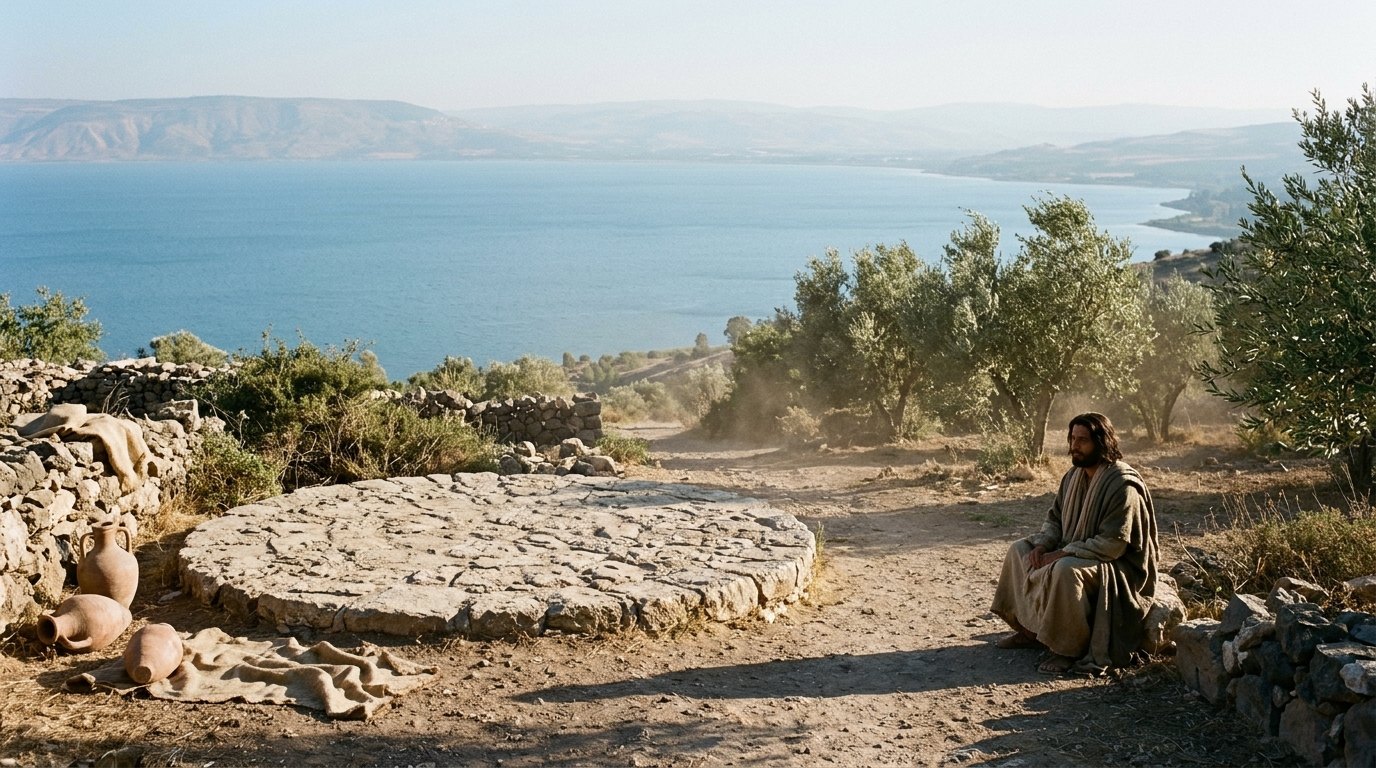
“Woe to you, Chorazin! Woe to you, Bethsaida! For if the miracles that were performed in you had been performed in Tyre and Sidon, they would have repented long ago in sackcloth and ashes.
Matthew 11:21 (NIV)
Jesus declares that Tyre and Sidon would have repented in dust and ashes had they seen His works.
In the New Testament, the judgment that once crushed Tyre and Sidon becomes the divine yardstick for measuring gospel accountability. As the Lord Jesus Christ walked through the cities of Galilee, He performed astounding miracles that revealed His deity and messianic kingdom. When those cities remained stubborn in their unbelief, Jesus confronted them with the historical reality of the Phoenician ports: "Woe to you, Chorazin! Woe to you, Bethsaida! For if the mighty works done in you had been done in Tyre and Sidon, they would have repented long ago in sackcloth and ashes" (Matthew 11:21; Luke 10:13).
Christ's warning exposes the terrifying gravity of rejecting clear revelation. While ancient Tyre and Sidon were utterly destroyed for their wickedness, violence, and insolent pride, they never had the Son of God walking their streets, healing their blind, and speaking the words of eternal life face to face. Therefore, Jesus declared with absolute divine authority, "It will be more bearable on the day of judgment for Tyre and Sidon than for you" (Matthew 11:22; Luke 10:14). Divine judgment is strictly measured according to the light received and rejected. The very pagan strongholds that Old Testament prophets condemned for unbridled arrogance will stand on the last day as witnesses against every religious hearer who saw Christ's works, heard His voice, and refused to repent.
| Passage | What it says |
|---|---|
| Matthew 11:20 | Jesus denounces the Galilean cities where most of His mighty works were done because they repented not. |
| Matthew 11:21 | Jesus pronounces woe on Chorazin and Bethsaida, stating Tyre and Sidon would have repented long ago. |
| Matthew 11:22 | Jesus warns it will be more tolerable on the judgment day for Tyre and Sidon than for them. |
| Luke 10:13 | Luke records Christ's warning that Tyre and Sidon would have repented in sackcloth and ashes. |
| Luke 10:14 | Tyre and Sidon face a more tolerable sentence than cities that rejected the firsthand gospel message. |
Gentile Faith and Grace
Mercy Extended to the Phoenician Coast
Then Jesus said to her, “Woman, you have great faith! Your request is granted.” And her daughter was healed at that moment.
Matthew 15:28 (NIV)
Jesus commends the great faith of a Canaanite woman in the region of Tyre and Sidon.
In Matthew 15:28, the Lord Jesus Christ speaks words of astonishing commendation to an outsider: “O woman, great is your faith! Be it done for you as you desire.” When Jesus withdrew to the district of Tyre and Sidon (Matthew 15:21), a Syrophoenician woman pleaded for her demon-possessed daughter, persistently pursuing the Messiah until her humble plea was answered in mercy. This divine outreach to Phoenicia was not unprecedented. Long before the incarnation, God sustained His prophet Elijah through a starving widow in Zarephath, a coastal village belonging to Sidon (1 Kings 17:9). Centuries later, Jesus provoked His hometown synagogue by recalling that during three and a half years of famine, Elijah was sent to no widow in Israel, but exclusively to a Gentile woman in the land of Sidon (Luke 4:26).
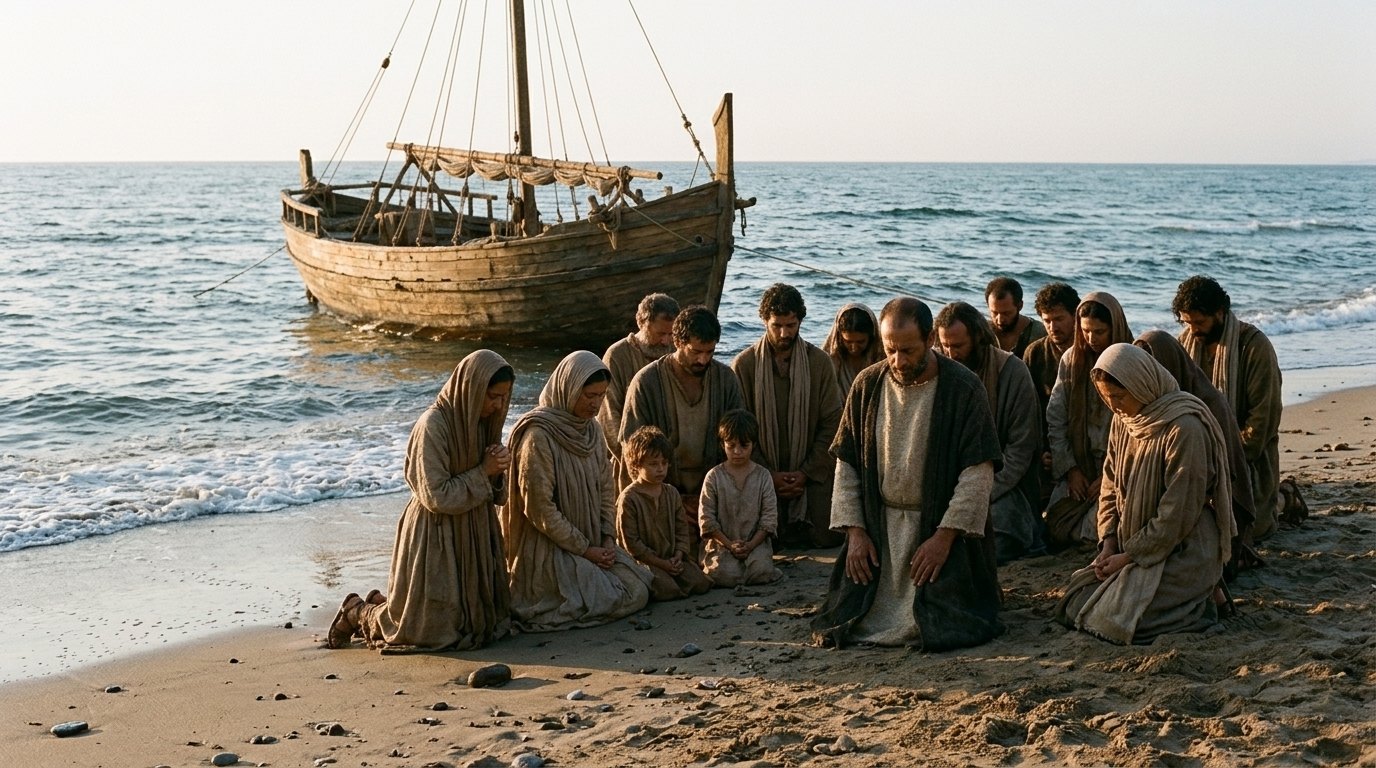
The ministry of Christ consistently drew souls from these pagan coastlands. Multitudes journeyed south from Tyre and Sidon to hear Jesus preach and receive healing for their diseases (Mark 3:8; Luke 6:17), after which the Lord Himself traveled directly through Tyre, Sidon, and the Decapolis (Mark 7:31). Although Tyre and Sidon remained vulnerable to regional political tensions, such as their economic dispute with Herod Agrippa I (Acts 12:20), the gospel bore enduring fruit along these shores. During his final voyage to Jerusalem, the apostle Paul landed at Tyre, where a thriving company of local disciples escorted him to the beach to kneel in prayer upon the sand (Acts 21:3, 5). When Paul was later transported to Rome as a prisoner, the ship touched at Sidon, where the centurion Julius permitted him to visit Christian companions and be refreshed by their hospitality (Acts 27:3). Through sovereign grace, cities once synonymous with haughty pride became vibrant outposts of the kingdom of God.
| Passage | What it says |
|---|---|
| 1 Kings 17:9 | Elijah is commanded to lodge with a widow in Zarephath, belonging to Sidon, during drought. |
| Luke 4:26 | Jesus highlights that Elijah was sent to no widow in Israel, but only to Sidon. |
| Matthew 15:21 | Jesus withdraws to the coastal district of Tyre and Sidon. |
| Matthew 15:28 | Jesus rewards the persistence and humble faith of the Canaanite woman by delivering her daughter. |
| Mark 7:31 | Jesus journeys from the region of Tyre through Sidon to the Sea of Galilee. |
| Acts 21:3 | Paul's ship lands at Tyre, where disciples gather to fellowship with the apostle. |
| Acts 21:5 | The disciples of Tyre and their families kneel and pray with Paul upon the seashore. |
| Mark 3:8 | A great multitude from around Tyre and Sidon comes to Jesus upon hearing of His miraculous deeds. |
| Luke 6:17 | Crowds from the seacoast of Tyre and Sidon assemble to hear Jesus teach and to be healed. |
| Acts 12:20 | The people of Tyre and Sidon sue for peace before Herod Agrippa I because their region depends on his country for food. |
| Acts 27:3 | Julius the centurion permits Paul at Sidon to visit his Christian friends and receive their care. |
Where in the Bible
| Book | Passages |
|---|---|
| Genesis | 3 · Genesis 10:15, Genesis 10:19, Genesis 49:13 |
| Joshua | 4 · Joshua 19:28, Joshua 19:29, Joshua 11:8, Joshua 13:6 |
| Judges | 4 · Judges 1:31, Judges 3:3, Judges 10:12, Judges 18:7 |
| 2 Samuel | 2 · 2 Samuel 24:6, 2 Samuel 5:11 |
| 1 Kings | 7 · 1 Kings 5:1, 1 Kings 5:6, 1 Kings 5:12, 1 Kings 7:13, 1 Kings 9:11, 1 Kings 16:31, 1 Kings 17:9 |
| 1 Chronicles | 2 · 1 Chronicles 14:1, 1 Chronicles 22:4 |
| 2 Chronicles | 1 · 2 Chronicles 2:3 |
| Ezra | 1 · Ezra 3:7 |
| Nehemiah | 1 · Nehemiah 13:16 |
| Psalms | 3 · Psalms 45:12, Psalms 83:7, Psalms 87:4 |
| Isaiah | 3 · Isaiah 23:1, Isaiah 23:8, Isaiah 23:9 |
| Jeremiah | 3 · Jeremiah 25:22, Jeremiah 27:3, Jeremiah 47:4 |
| Ezekiel | 5 · Ezekiel 26:3, Ezekiel 28:2, Ezekiel 28:22, Ezekiel 26:14, Ezekiel 27:3 |
| Joel | 1 · Joel 3:4 |
| Amos | 1 · Amos 1:9 |
| Zechariah | 1 · Zechariah 9:2 |
| Matthew | 5 · Matthew 11:20, Matthew 11:21, Matthew 11:22, Matthew 15:21, Matthew 15:28 |
| Mark | 2 · Mark 7:31, Mark 3:8 |
| Luke | 4 · Luke 10:13, Luke 10:14, Luke 4:26, Luke 6:17 |
| Acts | 4 · Acts 21:3, Acts 21:5, Acts 12:20, Acts 27:3 |
The story in order
- Canaan fathers Sidon (c. 2000 BC) · Genesis 10:15 · Identifies the ancestral origin of the ancient coastal city of Sidon.
- Asher's boundary reaches Sidon (c. 1400 BC) · Joshua 19:28 · Sidon is assigned as part of the inheritance boundary for the tribe of Asher.
- Sidonians oppress Israel (c. 1100 BC) · Judges 10:12 · The Lord reminds Israel of their past oppression by the Sidonians.
- Hiram supplies David's house (c. 1000 BC) · 2 Samuel 5:11 · Hiram king of Tyre sends materials to build David a house.
- Solomon requests temple materials (c. 960 BC) · 2 Chronicles 2:3 · Solomon requests cedar and skilled artisans from Tyre for the temple.
- Ahab marries Jezebel (c. 870 BC) · 1 Kings 16:31 · Ahab marries Jezebel, daughter of the king of Sidon, leading to Baal worship.
- Oracle against Tyre (c. 740 BC) · Isaiah 23:1 · Foretells the ruin of Tyre's harbor and ships due to its pride.
- Judgment on Tyre and Sidon (c. 586 BC) · Ezekiel 26:3 · The Lord declares His judgment against Tyre, bringing many nations against her.
- Woe to Chorazin and Bethsaida (c. AD 30) · Matthew 11:21 · Jesus states Tyre and Sidon would have repented if they had seen His miracles.
- Jesus encounters Canaanite woman (c. AD 30) · Matthew 15:21 · Jesus withdraws to the region of Tyre and Sidon and shows mercy.
- Paul lands at Tyre (c. AD 57) · Acts 21:3 · Paul visits Tyre, where disciples gather to fellowship with him.
- Tyre and Sidon sue for peace (c. AD 44) · Acts 12:20 · People of Tyre and Sidon seek peace with Herod Agrippa I due to economic dependence.
Prophetic Judgment on Tyre and Sidon
| Condemnation | Reason | Outcome | Passage |
|---|---|---|---|
| Pride and boasting of being a god | Commercial pride and wealth | Destruction and ruin | Ezekiel 28:2 |
| Plundering God's treasures and selling Judeans | Exploitation of covenant people | Divine judgment | Joel 3:4 |
| Delivering covenant community to Edom | Betrayal of fellow covenant members | Condemnation | Amos 1:9 |
| Pride in trade and beauty | Merchant to many nations | Become a bare rock, place for spreading nets | Ezekiel 27:3 |
Mercy to Gentile Faith
| Prophet/Jesus | Recipient | Action/Outcome | Passage |
|---|---|---|---|
| Elijah | Widow of Zarephath (Sidon) | Lodged and provided for during drought | 1 Kings 17:9 |
| Jesus | Canaanite woman | Delivered her daughter due to her faith | Matthew 15:28 |
| Jesus | Crowds from Tyre and Sidon | Taught and healed them | Luke 6:17 |
| Paul | Disciples in Tyre | Fellowshipped and prayed with them | Acts 21:3 |
Key words
- Sidon (ṣîdôn (צִידוֹן))
- An ancient Phoenician port city, north of Israel, known for seafaring and commerce. · Genesis 10:15
- Tyre (ṣôr (צוֹר))
- A wealthy and powerful Phoenician port city, renowned for its trade and maritime prowess. · Joshua 19:29
- Pride (gā'ôn (גַּאֲוָה))
- Arrogance and excessive self-esteem, often leading to defiance against God. · Ezekiel 28:2
- Judgment (mîšpāṭ (מִשְׁפָּט))
- Divine punishment for sin and disobedience. · Isaiah 23:1
- Mercy (ḥesed (חֶסֶד))
- God's compassion and kindness shown to those who do not deserve it. · Luke 4:26
The biblical account of Tyre and Sidon shows that no earthly wealth shields against God's judgment, nor does any Gentile heritage bar the door against His sovereign mercy. In Christ, the warning of these ancient ports calls every reader to humble repentance before the greater light of the gospel.
57 passages, each cited once.
Scripture cited
- Job 42:6
- Matthew 11:20-24
- Matthew 15:21-28
- 1 Kings 5:1-12
- Isaiah 23:1-12
- Genesis 10:15-19
- Acts 21:3-6
- Ezekiel 28:20-24
- Luke 4:25-26