Who was King Artaxerxes?

Nehemiah 2:1-8
1 In the month of Nisan in the twentieth year of King Artaxerxes, when wine was brought for him, I took the wine and gave it to the king. I had not been sad in his presence before,
2 so the king asked me, “Why does your face look so sad when you are not ill? This can be nothing but sadness of heart.” I was very much afraid,
3 but I said to the king, “May the king live forever! Why should my face not look sad when the city where my ancestors are buried lies in ruins, and its gates have been destroyed by fire?”
4 The king said to me, “What is it you want?” Then I prayed to the God of heaven,
5 and I answered the king, “If it pleases the king and if your servant has found favor in his sight, let him send me to the city in Judah where my ancestors are buried so that I can rebuild it.”
6 Then the king, with the queen sitting beside him, asked me, “How long will your journey take, and when will you get back?” It pleased the king to send me; so I set a time.
7 I also said to him, “If it pleases the king, may I have letters to the governors of Trans-Euphrates, so that they will provide me safe-conduct until I arrive in Judah?
8 And may I have a letter to Asaph, keeper of the royal park, so he will give me timber to make beams for the gates of the citadel by the temple and for the city wall and for the residence I will occupy?” And because the gracious hand of my God was on me, the king granted my requests.
New International Version (NIV)
The answer
King Artaxerxes in Nehemiah 2 was the Persian emperor whom Nehemiah served as cupbearer. He is generally identified historically as Artaxerxes I Longimanus, a ruler of the Persian Empire in the fifth century BC. Artaxerxes is the Greek form of a royal name borne by more than one Persian king, so the context matters.
In Nehemiah 2, Artaxerxes plays a decisive role in Jerusalem’s restoration:
- Nehemiah had access to him. As cupbearer, Nehemiah served wine to the king—a position of trust close to the throne. His audience came in Nisan, during Artaxerxes’ twentieth year (Nehemiah 1:11; Nehemiah 2:1).
- He noticed Nehemiah’s grief. When Nehemiah explained that Jerusalem, the city of his fathers’ tombs, lay waste with its gates burned, the king asked what he wanted. Nehemiah first prayed to God, then requested permission to go and rebuild the city (Nehemiah 2:2-5).
- He authorized and equipped the mission. Artaxerxes agreed to send Nehemiah, established a timeframe, provided letters for safe passage through the provinces, and ordered timber for the gates, wall, and Nehemiah’s house (Nehemiah 2:6-8).
Ezra had earlier led a company back to Jerusalem in Artaxerxes’ seventh year (Ezra 7:7); Nehemiah’s mission came later, in the king’s twentieth year. Artaxerxes therefore supplied the imperial authority and resources, but Nehemiah identified the ultimate cause of this favour: the king granted his requests because of “the good hand of my God on me” (Nehemiah 2:8). God used a foreign ruler’s decision to advance His purpose of restoring Jerusalem.
Answered from Scripture · reviewed November 25, 2026
How Artaxerxes Sent Nehemiah to Jerusalem
Read the steps in order. They show how a Persian king's decision, under the good hand of God, opened the way to rebuild Jerusalem.
- Ezra goes first · Ezra led a company back to Jerusalem earlier, in Artaxerxes' seventh year. · Ezra 7:7
- Nehemiah serves as cupbearer · Nehemiah served wine to the king, a trusted place close to the throne. · Nehemiah 1:11
- The king sees his grief · In Nisan, in the king's twentieth year, Artaxerxes noticed Nehemiah's sad face. · Nehemiah 2:1-2
- Nehemiah tells of Jerusalem · The city of his fathers' tombs lay waste, its gates burned. · Nehemiah 2:3
- Nehemiah prays, then asks · He prayed to God, then asked leave to go and rebuild the city. · Nehemiah 2:4-5
- The king sends him · Artaxerxes agreed to send Nehemiah and set a time for his return. · Nehemiah 2:6
- Letters and timber given · Letters for safe passage and timber for the gates, the wall and Nehemiah's house. · Nehemiah 2:7-8
- The good hand of God · Nehemiah gave the true cause: God's good hand was on him. · Nehemiah 2:8
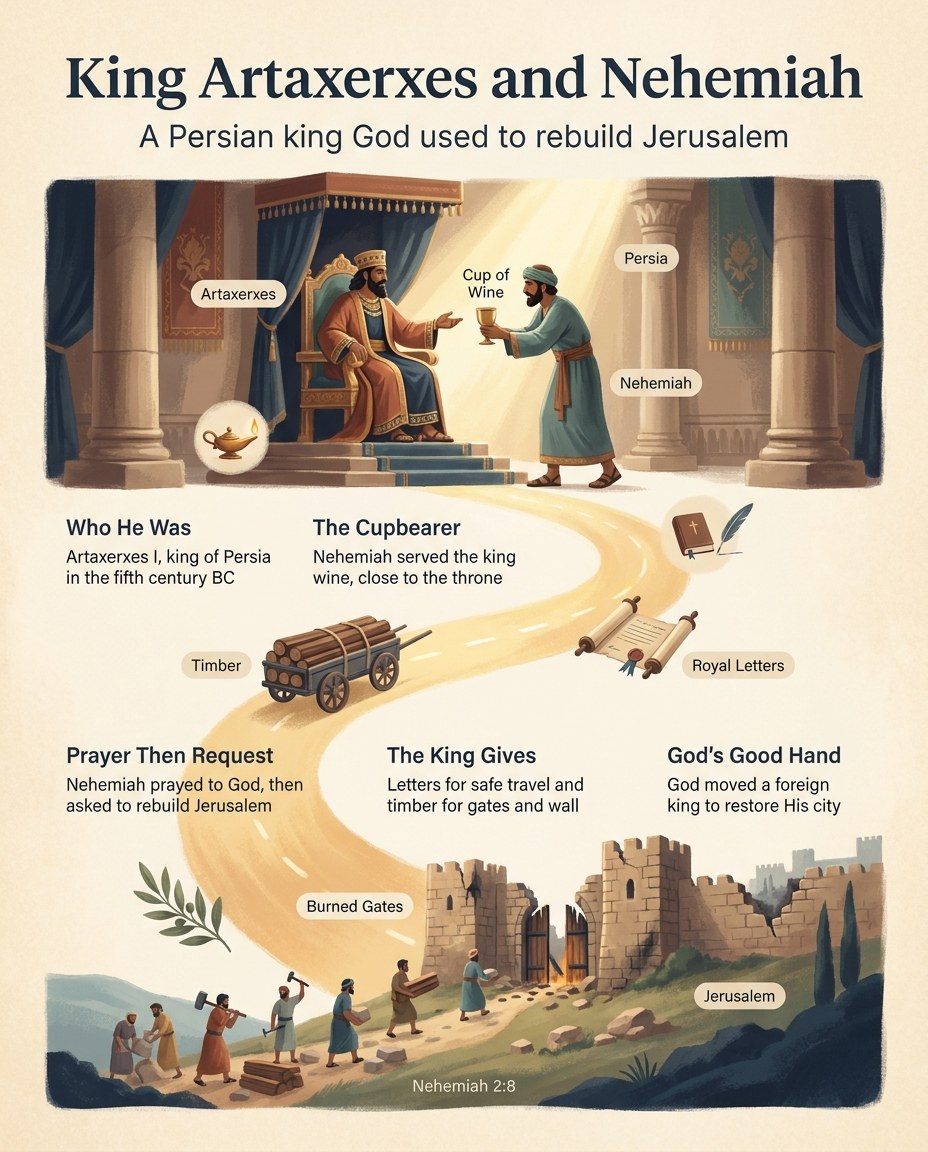
King Artaxerxes in Nehemiah 2 was the Persian monarch Artaxerxes I Longimanus, ruler of the Achaemenid Empire during the fifth century BC. Serving as his personal cupbearer in the royal palace at Susa, Nehemiah received from this emperor the official decrees, royal safe-conduct, and imperial timber required to rebuild Jerusalem’s broken walls. Through this pagan monarch's favour, Scripture displays the sovereign hand of God steering world empires to restore His covenant people.
The Imperial Throne
Artaxerxes Ruled the Mighty Persian Empire from Susa
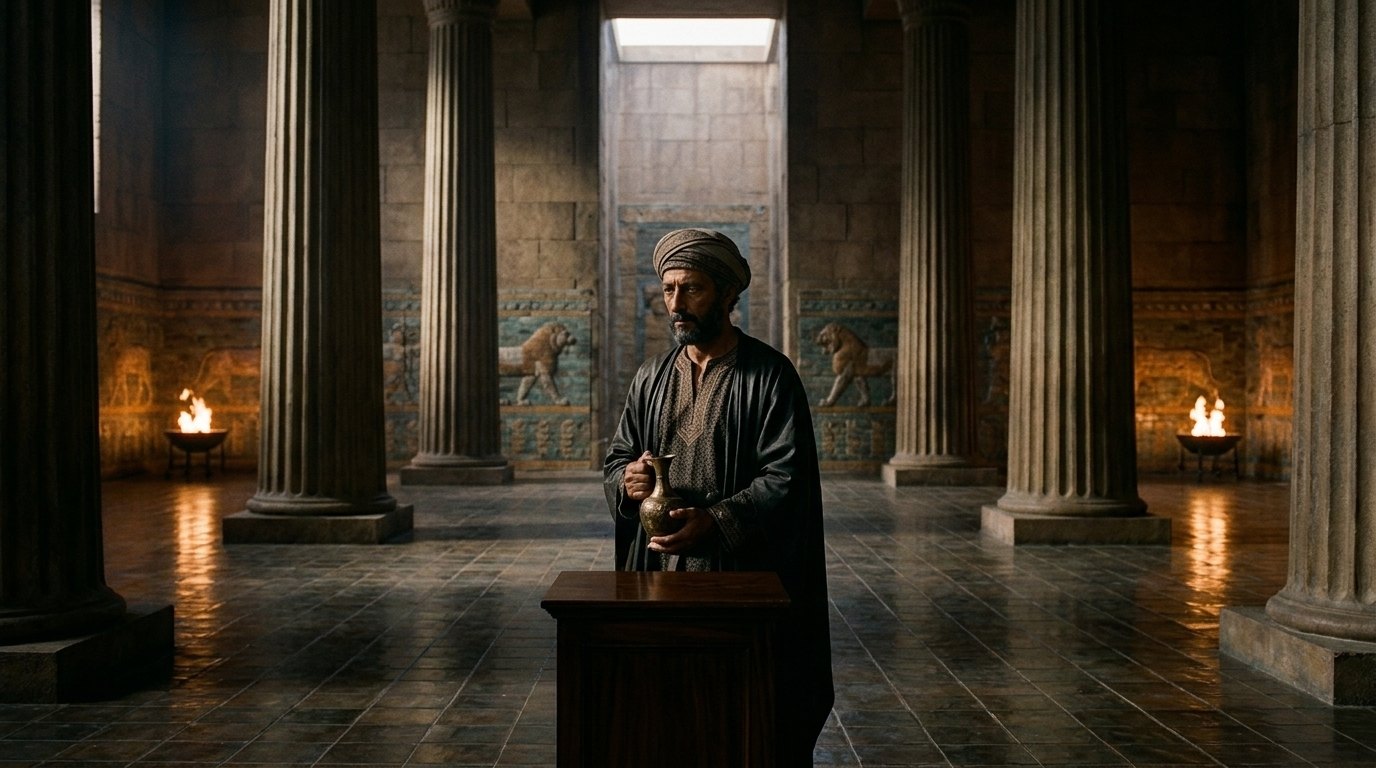
Lord, let your ear be attentive to the prayer of this your servant and to the prayer of your servants who delight in revering your name. Give your servant success today by granting him favor in the presence of this man.” I was cupbearer to the king.
Nehemiah 1:11 (NIV)
It shows the intimate imperial access Nehemiah enjoyed before Artaxerxes as royal cupbearer in the citadel of Susa.
Serving in the fortified citadel of Susa, Nehemiah stood in an extraordinary position of intimacy and administrative trust before the Persian emperor. In Nehemiah 1:11, he closes his desperate intercession with the humble acknowledgement, "For I was cupbearer to the king." This title belonged to an officer charged with safeguarding the monarch's life against court intrigue and poison. The chronological setting was fixed in Nehemiah 1:1 during the twentieth year of Artaxerxes I Longimanus, ruler over the vast Achaemenid Empire. The historic interaction in Susa was not the emperor's initial involvement with the returned Jewish remnant. Years earlier, in Ezra 7:1, Ezra led an expedition to Jerusalem to teach the law of God, setting out in the seventh year of Artaxerxes according to Ezra 7:7 under imperial decrees that funded sacrifices and granted magisterial authority. The sovereign relationship between Artaxerxes and Nehemiah endured across decades: Nehemiah 5:14 records Nehemiah's appointment as governor of Judah from the king's twentieth year until his thirty-second year, a span of twelve continuous years of administrative oversight. Even after returning to Artaxerxes in Babylon, as detailed in Nehemiah 13:6, Nehemiah retained such favour with the emperor that he was granted permission once more to journey back to Jerusalem to enforce covenant faithfulness.
| Passage | What it says |
|---|---|
| Nehemiah 1:1 | Nehemiah receives news regarding Jerusalem's distress while serving in the royal palace at Susa during the twentieth year. |
| Nehemiah 1:11 | Nehemiah identifies himself as the king's cupbearer and prays for mercy before the emperor. |
| Ezra 7:1 | Ezra journeys to Jerusalem during the earlier reign of the same Persian monarch Artaxerxes. |
| Ezra 7:7 | Records Ezra's return mission occurring in the seventh year of King Artaxerxes. |
| Nehemiah 5:14 | Nehemiah records his appointment as governor in Judah from Artaxerxes's twentieth year until his thirty-second year. |
| Nehemiah 13:6 | Nehemiah recounts returning to King Artaxerxes in Babylon in the king's thirty-second year before seeking leave again. |
The King's Inquiry
A Monarch Observes His Cupbearer's Sorrow and Listens
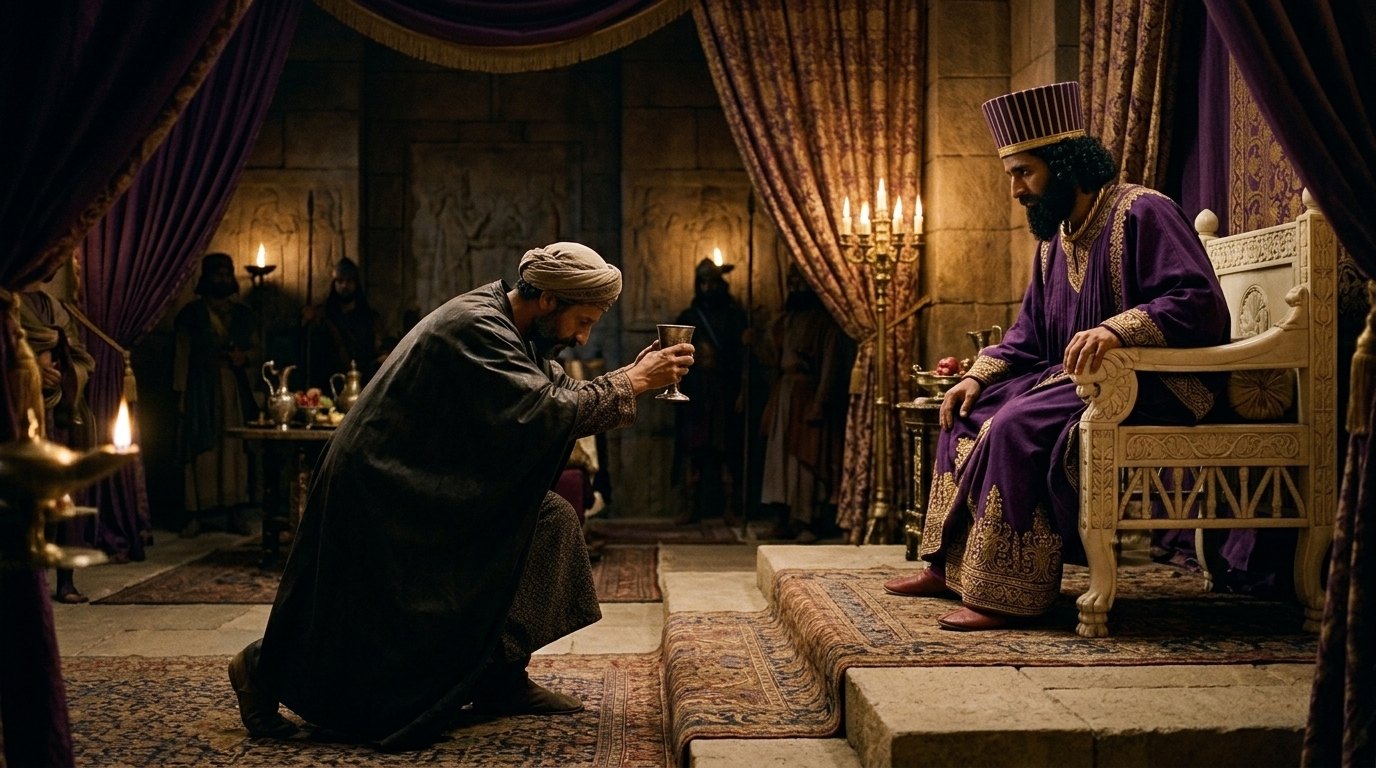
so the king asked me, “Why does your face look so sad when you are not ill? This can be nothing but sadness of heart.” I was very much afraid,
Nehemiah 2:2 (NIV)
The king detects genuine inward grief rather than bodily sickness, prompting Nehemiah's silent prayer and petition.
In the month of Nisan, the customary court protocol gave way to a moment of mortal vulnerability. Nehemiah 2:1 relates that Nehemiah brought wine before Artaxerxes, having never before appeared sorrowful in the monarch's presence, an offense that carried immediate suspicion of malice or disloyalty under Persian court custom. The king immediately caught the change in his countenance; in Nehemiah 2:2, Artaxerxes remarked, "Why is your face sad, since you are not sick? This is nothing but sorrow of heart." The shrewd perception of the king struck Nehemiah with great fear, for royal caprice could turn a question into an execution order. Yet Nehemiah answered plainly in Nehemiah 2:3, confessing that his grief stemmed from the desolation of Jerusalem, the city where his fathers were buried, its gates charred and its walls demolished. Rather than dismissing his cupbearer or taking offense at the solemn atmosphere, Artaxerxes demonstrated genuine concern and prompted a direct request in Nehemiah 2:4, asking what petition he wished to bring. Nehemiah uttered a swift, silent prayer to the God of heaven before uttering his request.
| Passage | What it says |
|---|---|
| Nehemiah 2:1 | In the month Nisan of Artaxerxes' twentieth year, Nehemiah serves wine before the king with uncharacteristic sadness. |
| Nehemiah 2:2 | Artaxerxes inquires why Nehemiah is downcast, discerning heart sorrow rather than physical illness. |
| Nehemiah 2:3 | Nehemiah explains that his distress stems from the ruined condition of his ancestral city. |
| Nehemiah 2:4 | The Persian monarch asks what petition Nehemiah wishes to present. |
Decrees and Provision
Royal Authority Grants Protection and Timber for Jerusalem
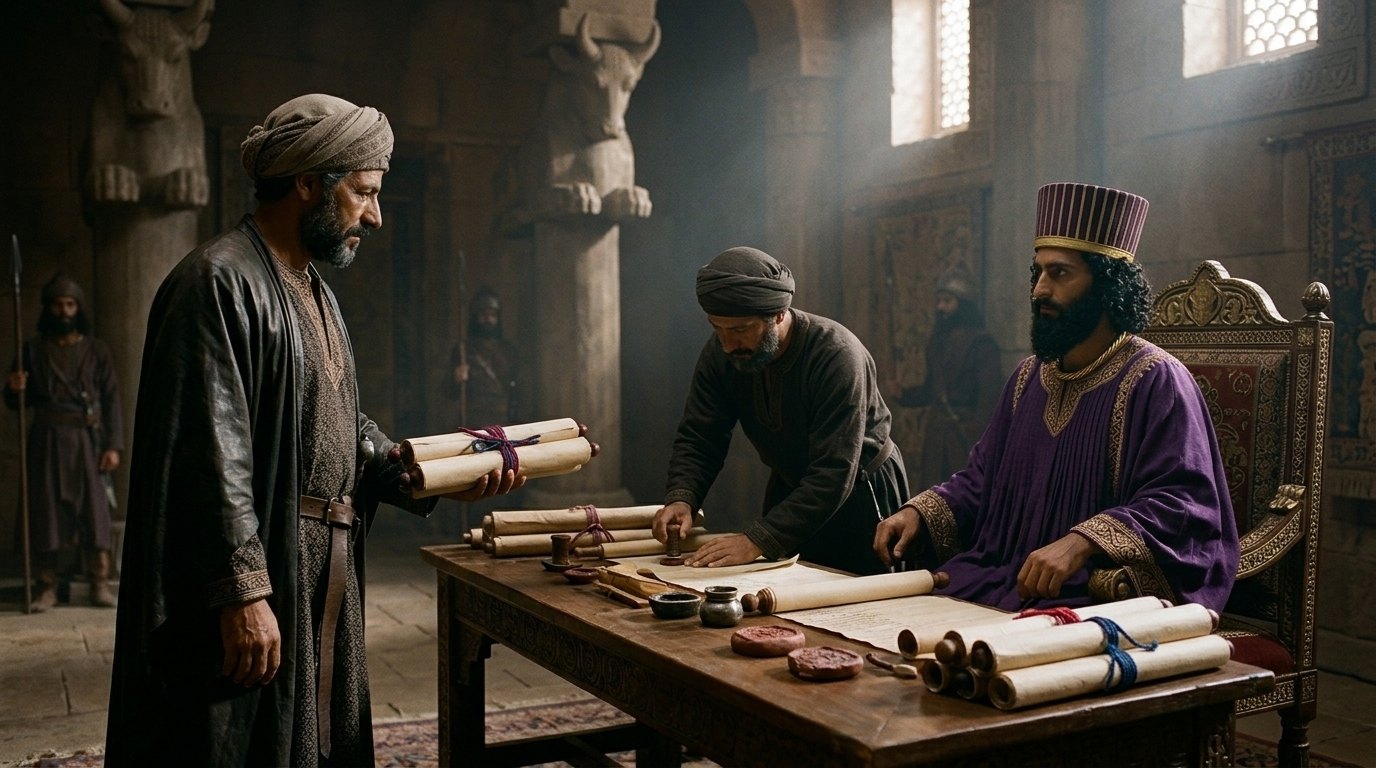
And may I have a letter to Asaph, keeper of the royal park, so he will give me timber to make beams for the gates of the citadel by the temple and for the city wall and for the residence I will occupy?” And because the gracious hand of my God was on me, the king granted my requests.
Nehemiah 2:8 (NIV)
It shows that behind the emperor's generous imperial decrees stood the sovereign good hand of God.
When Nehemiah made his bold request in Nehemiah 2:5 to be sent to Judah to rebuild the ruined city, King Artaxerxes responded with extraordinary imperial generosity. Sitting with the queen beside him, as noted in Nehemiah 2:6, the king asked how long the mission would take and formally ratified his journey. Seizing the open moment, Nehemiah requested official warrants in Nehemiah 2:7 to the governors of the Trans-Euphrates province guaranteeing him safe passage. In Nehemiah 2:8, Artaxerxes went further, drafting an imperial requisition order addressed to Asaph, the keeper of the king's forest, to supply heavy timbers for the citadel gates, the city walls, and the governor's residence. The cupbearer understood that this imperial generosity was not merely pagan goodwill, writing that "the king granted them to me according to the good hand of my God upon me." Artaxerxes placed imperial authority, state resources, and armed cavalry escorts at the disposal of his servant, fulfilling the divine purpose to rebuild Jerusalem's breached fortifications.
| Passage | What it says |
|---|---|
| Nehemiah 2:5 | Nehemiah requests permission from Artaxerxes to return to Judah and rebuild the city of his fathers. |
| Nehemiah 2:6 | With the queen beside him, Artaxerxes determines a timeframe and formally approves Nehemiah's departure. |
| Nehemiah 2:7 | Nehemiah asks the king for royal warrants guaranteeing safe conduct through the Trans-Euphrates province. |
| Nehemiah 2:8 | Artaxerxes issues orders for imperial timber because God's good hand rested upon Nehemiah. |
Opposition at Jerusalem
A Suspicious King Orders the Work to Cease
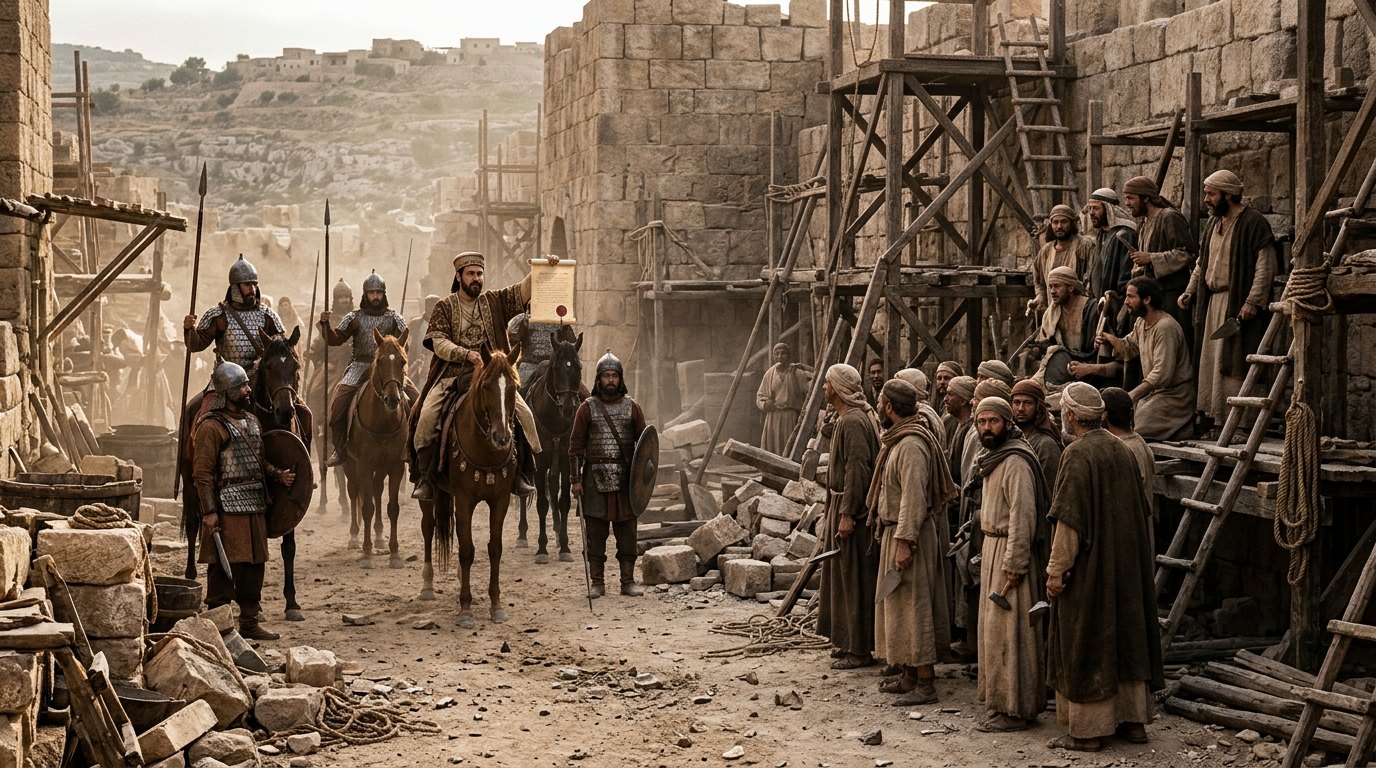
As soon as the copy of the letter of King Artaxerxes was read to Rehum and Shimshai the secretary and their associates, they went immediately to the Jews in Jerusalem and compelled them by force to stop.
Ezra 4:23 (NIV)
It shows Artaxerxes acting on administrative fear to halt the reconstruction of Jerusalem by royal command.
The relationship between Artaxerxes and the restoration of Jerusalem was marked by acute political tension prior to Nehemiah's personal appeal. Local adversaries in the province Across the River actively exploited imperial anxieties regarding sedition. In Ezra 4:7, Bishlam, Mithredath, and Tabeel drafted a formal accusation in Aramaic script against the Jewish population. This hostile initiative was intensified in Ezra 4:8 by Rehum the royal commander and Shimshai the scribe, who penned an urgent warning to Artaxerxes. Their missive in Ezra 4:11 described Jerusalem as a chronically rebellious and wicked city that, if rebuilt, would withhold tribute, toll, and customs, damaging imperial revenues. Swayed by administrative records of past Judean rebellions, Artaxerxes dispatched a decree in Ezra 4:17 commanding the construction to halt. Ezra 4:23 describes the harsh enforcement of this royal edict: "They went up in haste to Jerusalem to the Jews, and by force of arms made them cease." This earlier decree showed Artaxerxes acting as a suspicious ruler safeguarding imperial borders, making his later reversal under God's hand in Nehemiah 2 all the more striking.
| Passage | What it says |
|---|---|
| Ezra 4:7 | Bishlam, Mithredath, and Tabeel write a letter in Aramaic to King Artaxerxes opposing the Jewish reconstruction. |
| Ezra 4:8 | Rehum the commander and Shimshai the scribe write an accusation against Jerusalem to Artaxerxes the king. |
| Ezra 4:11 | The copy of the letter sent to Artaxerxes warns him that the rebellious city of Jerusalem is being rebuilt. |
| Ezra 4:17 | Artaxerxes issues a formal reply to Rehum, Shimshai, and their associates residing across the River. |
| Ezra 4:23 | Upon reading Artaxerxes's royal decree, the adversaries compel the Jews by force to halt building work. |
The Decree to Ezra
Artaxerxes Grants Lavish Support to Ezra the Scribe
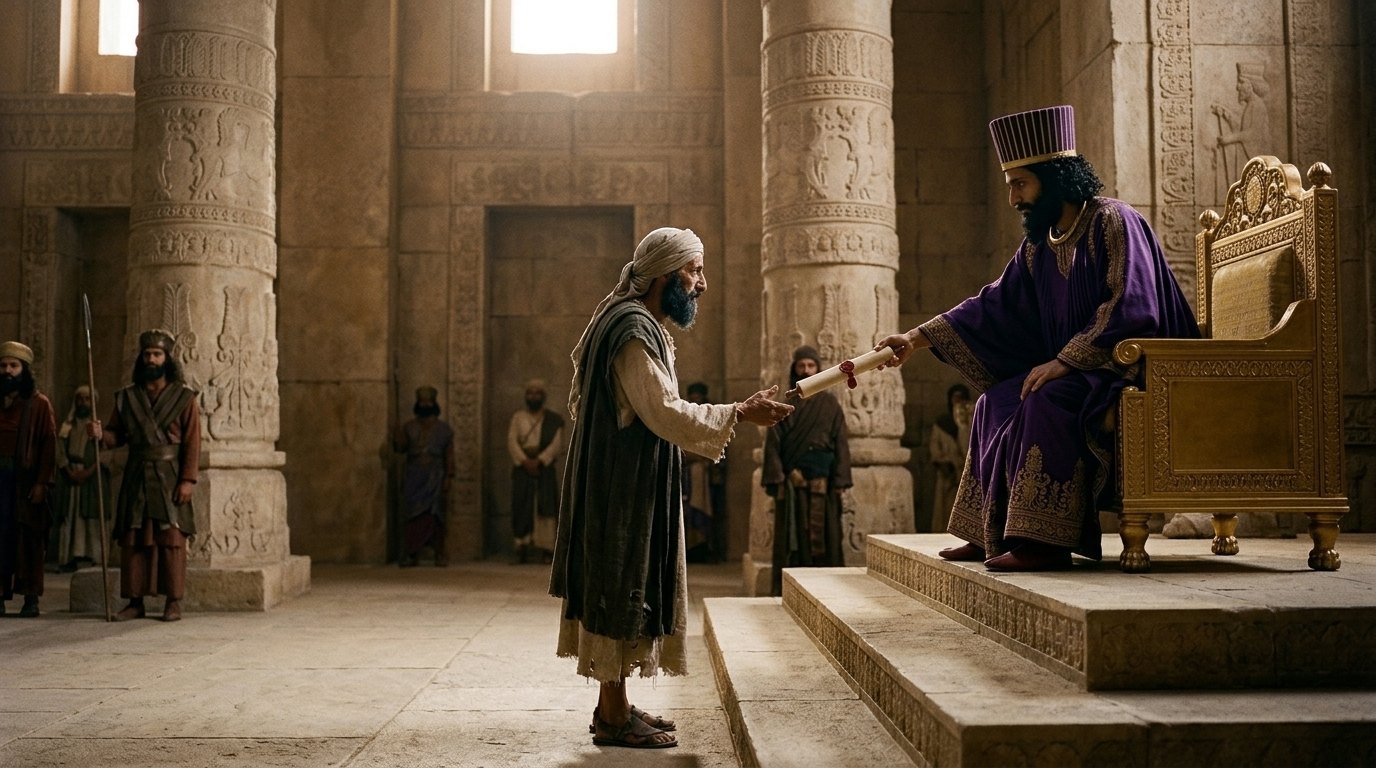
Artaxerxes, king of kings, To Ezra the priest, teacher of the Law of the God of heaven: Greetings.
Ezra 7:12 (NIV)
The Persian monarch identifies himself as 'king of kings' while honoring the God of heaven and commissioning Ezra.
In Ezra 7:12, the Persian emperor styles himself 'king of kings' while addressing Ezra as a priest and scribe of the law of the God of heaven. God moved the heart of an imperial pagan monarch to grant comprehensive authority and financial backing for the restoration of His people's worship. This historic edict highlights how the sovereign Lord directs secular rulers to accomplish His covenant purposes.
The royal letter recorded in Ezra 7:11 marks a major turning point, placing the administrative weight of the Persian Empire behind Ezra’s return to Jerusalem. Artaxerxes not only permitted the journey but actively funded the sanctuary. In Ezra 7:21, the king issues an unbending mandate to the imperial treasurers across the province Beyond the River, commanding them to deliver silver, wheat, wine, oil, and salt to Ezra without delay so that wrath would not fall on the realm. Armed with this sovereign decree, Ezra assembled the heads of the ancestral clans in Ezra 8:1, mobilizing hundreds of families from Babylonian exile back to the Promised Land under the royal safe-conduct of Artaxerxes.
| Passage | What it says |
|---|---|
| Ezra 7:11 | A copy of the decree given by Artaxerxes to Ezra the priest and scribe concerning the law. |
| Ezra 7:12 | Artaxerxes addresses Ezra as king of kings, extending peace to the scribe of God's law. |
| Ezra 7:21 | Artaxerxes commands all treasurers in the province Beyond the River to supply whatever Ezra requires. |
| Ezra 8:1 | Ezra lists the genealogical heads who returned with him from Babylon during the reign of Artaxerxes. |
Where in the Bible
| Book | Passages |
|---|---|
| Ezra | 11 · Ezra 7:1, Ezra 7:7, Ezra 4:7, Ezra 4:8, Ezra 4:11, Ezra 4:17, Ezra 4:23, Ezra 7:11, Ezra 7:12, Ezra 7:21, Ezra 8:1 |
| Nehemiah | 12 · Nehemiah 1:1, Nehemiah 1:11, Nehemiah 5:14, Nehemiah 13:6, Nehemiah 2:1, Nehemiah 2:2, Nehemiah 2:3, Nehemiah 2:4, Nehemiah 2:5, Nehemiah 2:6, Nehemiah 2:7, Nehemiah 2:8 |
The story in order
- Ezra returns to Jerusalem (c. 458 BC) · Ezra 7:7 · Artaxerxes's seventh year.
- Nehemiah serves as cupbearer (c. 445 BC) · Nehemiah 1:1 · Artaxerxes's twentieth year.
- Nehemiah's sorrow noted (c. 445 BC) · Nehemiah 2:2 · King Artaxerxes inquires about Nehemiah's sadness.
- Artaxerxes grants Nehemiah's request (c. 445 BC) · Nehemiah 2:8 · King provides timber for Jerusalem's walls.
- Opposition to Jerusalem's rebuilding (c. 445 BC) · Ezra 4:11 · Letter sent to Artaxerxes opposing the work.
- Artaxerxes orders work to cease (c. 445 BC) · Ezra 4:23 · King's decree halts construction.
- Nehemiah appointed governor (c. 445-433 BC) · Nehemiah 5:14 · Nehemiah's governorship under Artaxerxes.
- Nehemiah returns to Artaxerxes (c. 433 BC) · Nehemiah 13:6 · Nehemiah visits the king in Babylon.
Key words
- Artaxerxes (Artaxerxes)
- King of Persia, known for his interactions with Ezra and Nehemiah. · Nehemiah 1:1
- Cupbearer (māšqeh (מַשְׁקֶה))
- A trusted official who serves wine to the king, often with significant influence. · Nehemiah 1:11
- Persian Empire (Pāras (פָּרַס))
- A vast empire ruling over many peoples, including the Jews, during the time of Ezra and Nehemiah. · Ezra 7:1
- Governor (pāḥâ (פַּחָה))
- An official appointed to rule a province, in this case, Judah. · Nehemiah 5:14
King Artaxerxes held absolute imperial power across the ancient world, yet his throne ultimately served the purposes of the God of heaven. When believers face formidable worldly authority or seemingly impossible tasks, Scripture reminds us that God inclines the hearts of rulers according to His sovereign grace and faithful promises.
23 passages, each cited once.
Scripture cited
- Nehemiah 2:1-8
- Nehemiah 1:11
- Ezra 7:7