What is the Apostles' Creed?
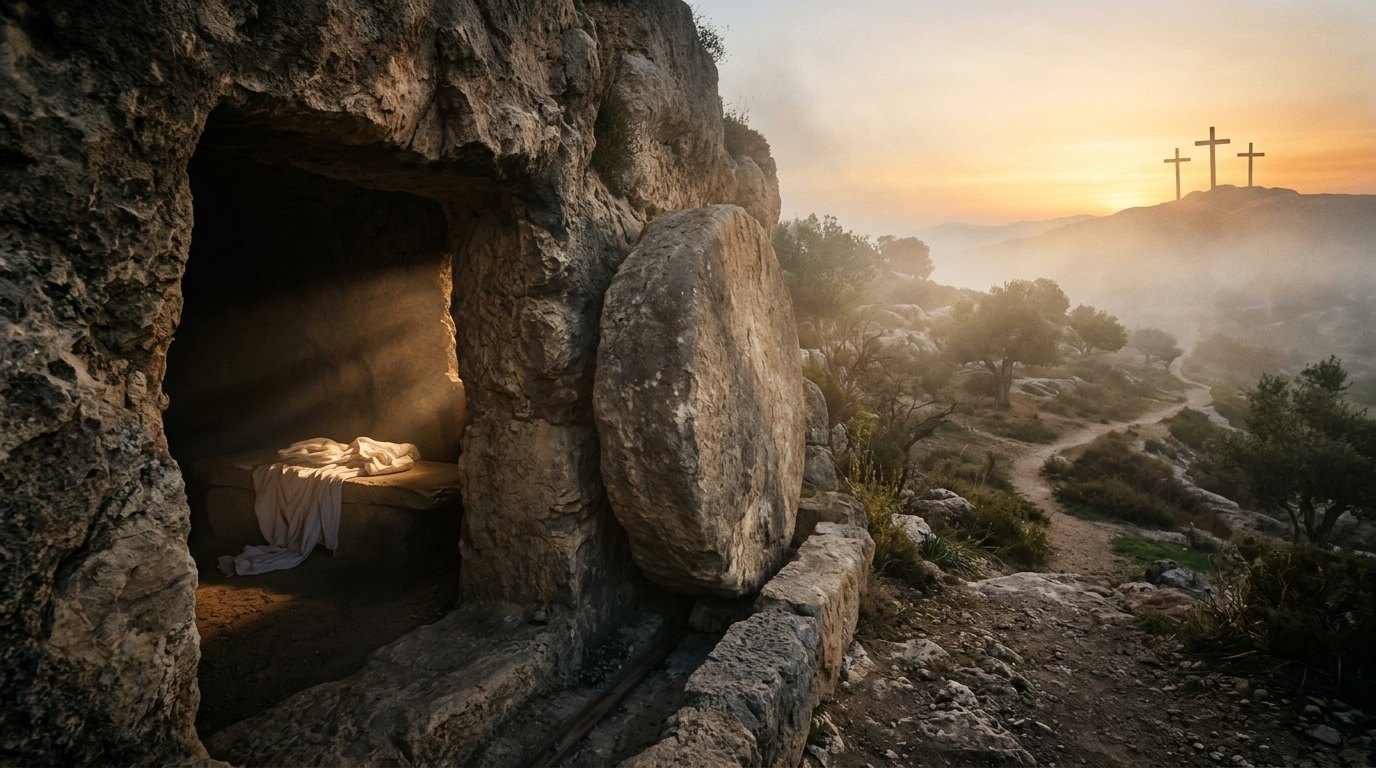
1 Corinthians 15:3-4
3 For what I received I passed on to you as of first importance: that Christ died for our sins according to the Scriptures,
4 that he was buried, that he was raised on the third day according to the Scriptures,
New International Version (NIV)
The answer
The Apostles’ Creed is an ancient, concise confession of the Christian faith, summarizing what Scripture teaches about God the Father, Jesus Christ, and the Holy Spirit. It has been widely used in Christian instruction and worship. It is called “Apostles’” because it summarizes apostolic teaching, not because it is itself part of Scripture.
Its center is the gospel: Christ died for our sins, was buried, and was raised on the third day, “according to the Scriptures” (1 Corinthians 15:3-4). His death was an atoning sacrifice—he “bare our sins in his own body on the tree” (1 Peter 2:24) and is “the propitiation for our sins” (1 John 2:2).
The Apostles’ Creed
I believe in God the Father Almighty, Maker of heaven and earth.
And in Jesus Christ, His only Son, our Lord; who was conceived by the Holy Ghost, born of the Virgin Mary; suffered under Pontius Pilate, was crucified, dead, and buried; He descended into hell; the third day He rose again from the dead; He ascended into heaven, and sitteth on the right hand of God the Father Almighty; from thence He shall come to judge the quick and the dead.
I believe in the Holy Ghost; the holy Catholic Church, the communion of saints; the forgiveness of sins; the resurrection of the body; and the life everlasting. Amen.
Understanding its older language
- “Holy Ghost” means the Holy Spirit.
- “The quick and the dead” means the living and the dead.
- “The holy Catholic Church” means Christ’s universal church, not merely the Roman Catholic Church or any single denomination.
- “The communion of saints” refers to the fellowship shared by God’s people.
- “The resurrection of the body” confesses the Christian hope of bodily resurrection, not merely the survival of the soul.
The Creed is therefore a useful summary of biblical truth, but Scripture remains the authority by which every creed is tested.
Answered from Scripture · reviewed November 11, 2026
The Apostles' Creed is the historic Western church's earliest concise summary of Christian faith, tracing back to early baptismal confessions grounded in the apostolic gospel. Structured in three parts around the Father, the Son, and the Holy Spirit, every line draws directly from the clear teaching of Scripture. Walking through its biblical foundations demonstrates how this ancient confession guards and transmits the faith once delivered to the saints.
The First Article
God the Father and Creator of All

In the beginning God created the heavens and the earth.
Genesis 1:1 (NIV)
It establishes the opening affirmation of the creed, declaring God alone as the sovereign Maker of heaven and earth.
The Apostles' Creed begins at the true foundation of reality: "In the beginning, God created the heavens and the earth" (Genesis 1:1). Long before the creed took written form, the opening sentence of the Hebrew Scriptures settled the absolute authority, uncreated being, and eternal power of the Lord. Nothing exists independently of his sovereign command; matter is not co-eternal with him, nor is the cosmos an accident of blind forces. This original creation reveals God not as a distant, indifferent architect, but as the purposeful Maker whose sovereign voice called light into the void.
The New Testament deepens this confession by naming this sovereign Creator as our Father. Paul reminds believers that "there is one God, the Father, from whom are all things and for whom we exist" (1 Corinthians 8:6). Creation is personal; the Lord who fashioned the cosmos brings redeemed people into a relationship of filial trust. Jesus taught his disciples to pray with intimate confidence, saying, "Our Father in heaven, hallowed be your name" (Matthew 6:9). He invites sinners redeemed by the cross to address the Maker of galaxies as their gracious Father.
This truth draws the praise of all creation across time. In the heavenly throne room, worship erupts because "you created all things, and by your will they existed and were created" (Revelation 4:11). The saints of the restoration captured this identical confession as they wept and worshiped in Jerusalem: "You are the Lord, you alone. You have made heaven, the heaven of heavens, with all their host, the earth and all that is on it, the seas and all that is in them" (Nehemiah 9:6). To profess faith in God the Father Almighty, Maker of heaven and earth, is to place one's entire existence beneath the loving hands of the sovereign Sovereign of all reality.
| Passage | What it says |
|---|---|
| Genesis 1:1 | God created the heavens and the earth in the beginning, displaying his almighty sovereign power. |
| 1 Corinthians 8:6 | There is one God, the Father, from whom are all things, and one Lord, Jesus Christ. |
| Revelation 4:11 | The Lord is worthy of glory and honour because he created all things by his will. |
| Matthew 6:9 | Jesus instructs his disciples to pray directly to God as Father. |
| Nehemiah 9:6 | Confirms the Lord as sole Maker of heaven, earth, seas, and all within them. |
Incarnation and Birth
Conceived by the Spirit and Born

The angel answered, “The Holy Spirit will come on you, and the power of the Most High will overshadow you. So the holy one to be born will be called the Son of God.
Luke 1:35 (NIV)
It explicitly unites the Holy Spirit's overshadowing power with the virgin birth of the Son of God.
The second article of the creed directs our gaze to the mystery of the Incarnation, turning on the angel's announcement to Mary: "The Holy Spirit will come upon you, and the power of the Most High will overshadow you; therefore the child to be born will be called holy—the Son of God" (Luke 1:35). The conception of Jesus Christ was not the product of human will or natural descent, but the direct supernatural operation of God the Spirit within the womb of a virgin.
This miraculous conception fulfilled centuries of inspired expectation. Centuries prior, the prophet declared, "Behold, the virgin shall conceive and bear a son, and shall call his name Immanuel" (Isaiah 7:14). When Joseph was troubled by Mary's pregnancy, the angel confirmed that ancient oracle: "That which is conceived in her is from the Holy Spirit" (Matthew 1:20). The miraculous entrance of the Son into human flesh was orchestrated by divine providence from before the foundation of the world.
By this miracle, God entered his own world without ceasing to be God. The eternal, uncreated Word did not merely appear to be human; "the Word became flesh and dwelt among us" (John 1:14). Paul marvels at the precision of God's redemptive timing, writing that "when the fullness of time had come, God sent forth his Son, born of woman, born under the law" (Galatians 4:4). Taking on genuine human nature, Jesus walked the earth in true flesh so that he might redeem sinners. This humble descent culminates in universal praise, as the church confesses that "Jesus Christ is Lord, to the glory of God the Father" (Philippians 2:11).
| Passage | What it says |
|---|---|
| Isaiah 7:14 | The prophet foretells that a virgin shall conceive and bear a son called Immanuel. |
| Matthew 1:20 | The angel reveals to Joseph that what is conceived in Mary is from the Holy Spirit. |
| Luke 1:35 | The Holy Spirit will come upon Mary, and the child born will be called the Son of God. |
| Galatians 4:4 | In the fullness of time, God sent forth his Son, born of a woman, under the law. |
| John 1:14 | Declares that the eternal Word became flesh and dwelt among us. |
| Philippians 2:11 | Confesses Jesus Christ as Lord to the glory of God the Father. |
Suffering and Death
Crucified Under Pontius Pilate
For what I received I passed on to you as of first importance: that Christ died for our sins according to the Scriptures,
1 Corinthians 15:3 (NIV)
It presents the core gospel truth that Christ died for our sins according to the Scriptures.
The heartbeat of the gospel rests on historical, sacrificial fact: "Christ died for our sins in accordance with the Scriptures" (1 Corinthians 15:3). Christianity is not an abstract philosophy or a collection of timeless myths; it is grounded in historical events that occurred at an exact moment and under a named governing authority. When the creed confesses that Jesus suffered under Pontius Pilate, it anchors the cross in the public records of human history.
Luke records that formal legal arraignment when the Jewish leaders arose and "brought him before Pilate" (Luke 23:1-4). Later, the Jerusalem church united in prayer, acknowledging the precise historical actors whose rebellion fulfilled God's eternal decree: "truly in this city there were gathered together against your holy servant Jesus, whom you anointed, both Herod and Pontius Pilate" (Acts 4:27). Paul urges Timothy to stand firm by pointing to this very event, noting that "Christ Jesus... in his testimony before Pontius Pilate made the good confession" (1 Timothy 6:13).
Yet the trial was merely the prelude to the cross. Jesus' suffering was not a tragic accident, but the willing sacrifice of the righteous for the unrighteous. He demonstrated supreme humility and "became obedient to the point of death, even death on a cross" (Philippians 2:8). On that Roman tree, the righteous wrath of God against human rebellion was fully turned away; "he himself bore our sins in his body on the tree, that we might die to sin and live to righteousness" (1 Peter 2:24). There, the Son offered himself up as the true propitiation, not only for the disciples standing near, but as "the propitiation for our sins, and not for ours only but also for the sins of the whole world" (1 John 2:2).
| Passage | What it says |
|---|---|
| Luke 23:1-4 | Jesus is brought before Pontius Pilate for formal Roman trial, anchoring his suffering in historical time. |
| Acts 4:27 | Herod and Pontius Pilate gathered against God's holy servant Jesus in the city of Jerusalem. |
| 1 Corinthians 15:3 | Paul delivered as first importance that Christ died for our sins according to the Scriptures. |
| 1 Peter 2:24 | Jesus bore our sins in his own body on the tree so we might live to righteousness. |
| 1 John 2:2 | Christ is the atoning sacrifice and propitiation for our sins and for the whole world. |
| 1 Timothy 6:13 | Notes Christ Jesus testifying the good confession before Pontius Pilate. |
| Philippians 2:8 | Describes Christ's obedience unto death, even death on a cross. |
Burial and Descent
Buried and Entering the Grave
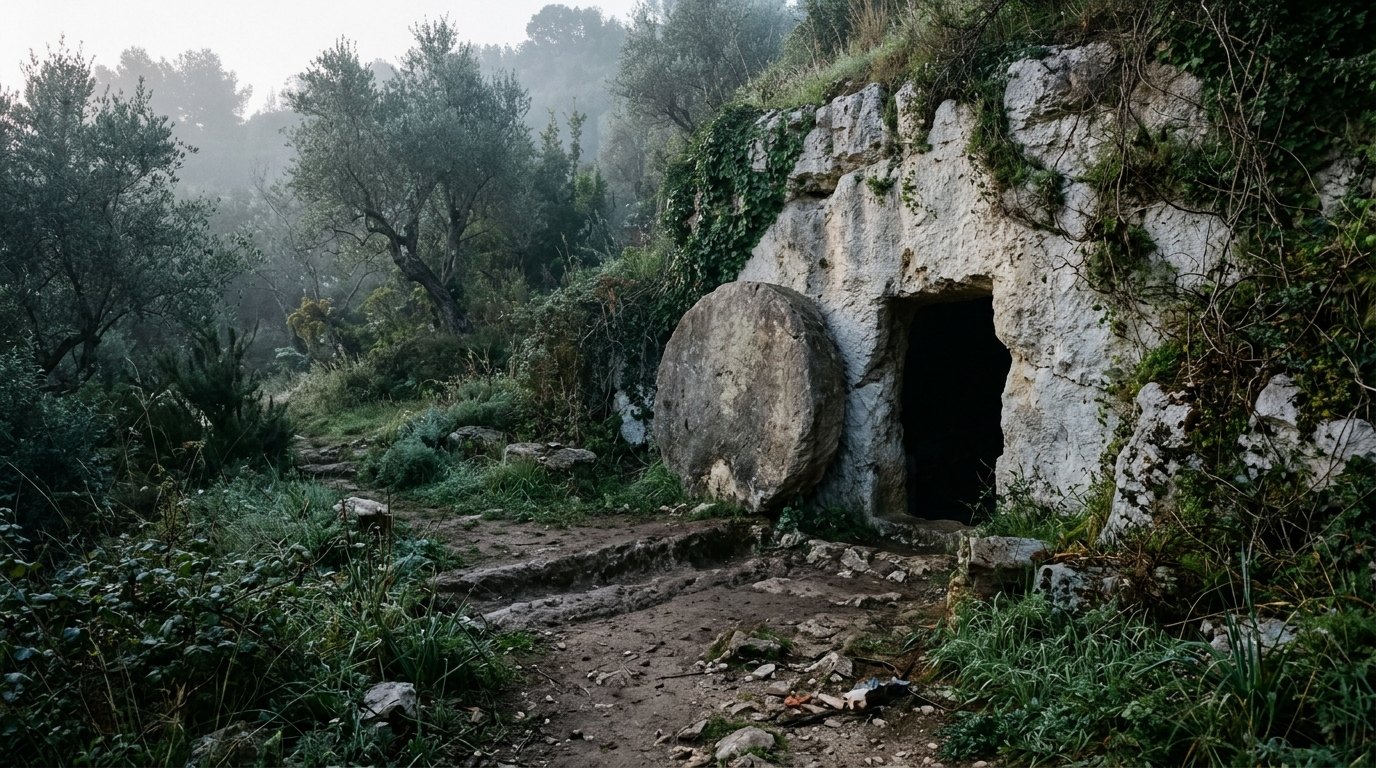
Seeing what was to come, he spoke of the resurrection of the Messiah, that he was not abandoned to the realm of the dead, nor did his body see decay.
Acts 2:31 (NIV)
It explains David's prophecy that Christ was not abandoned to Hades or death's realm.
The creed follows the Lord not only to the cross, but into the silence of the tomb, resting upon the apostolic witness: "He foresaw and spoke about the resurrection of the Christ, that he was not abandoned to Hades, nor did his flesh see corruption" (Acts 2:31). Jesus died a genuine, physical human death. His heart ceased beating, his breath stopped, and his body was carried to a rock-hewn grave to demonstrate that the penalty of death was fully borne.
The historical reality of his burial is meticulous and unmistakable. Joseph of Arimathea "took the body and wrapped it in a clean linen shroud and laid it in his own new tomb" (Matthew 27:59-60). By entering the grave, Christ sanctified the resting place of all who die in him. He truly entered the realm of death, fulfilling the prophetic longing of the Psalms where David declared in hope, "you will not abandon my soul to Hades, or let your Holy One see corruption" (Acts 2:27).
Christ's descent into death marks the threshold of his total victory. Scripture notes that in his incarnation and death, "he had also descended into the lower regions, the earth" (Ephesians 4:9), confronting the full reach of mortality. Having been "put to death in the flesh but made alive in the spirit" (1 Peter 3:18-19), he proclaimed his triumph over every hostile power that held sway over the realm of the dead. Believers need not fear the grave, for no person can or must "descend into the abyss' (that is, to bring Christ up from the dead)" (Romans 10:7); Christ has already entered, conquered, and emerged victorious.
| Passage | What it says |
|---|---|
| Matthew 27:59-60 | Joseph of Arimathea wrapped the body of Jesus and laid it in his own new tomb. |
| Acts 2:27 | David foretold that the Lord would not abandon his soul to Sheol or Hades. |
| Acts 2:31 | Peter proclaims that David spoke of the resurrection of Christ, not abandoned to Hades. |
| Ephesians 4:9 | Paul notes that Christ ascended only after he had also descended into the lower earthly regions. |
| 1 Peter 3:18-19 | Proclaims Christ put to death in the flesh and ministering to spirits in prison. |
| Romans 10:7 | Speaks of Christ being brought up from the deep or realm of the dead. |
Resurrection and Ascension
Risen and Exalted to the Father

that he was buried, that he was raised on the third day according to the Scriptures,
1 Corinthians 15:4 (NIV)
It defines the historical, physical third-day resurrection as an indispensable pillar of the Christian faith.
Paul identifies the physical resurrection as of first importance in 1 Corinthians 15:4, declaring that Christ was buried and raised on the third day in exact accordance with the prophetic Scriptures. This event was neither metaphorical nor unanticipated: during his earthly ministry, Jesus foretold in Matthew 20:19 that he would be condemned, mocked, scourged, crucified, and then rise again precisely on the third day. The resurrection is the decisive vindication of his divine Sonship and atoning work, establishing the bedrock truth upon which all apostolic preaching rests.
Following his post-resurrection appearances, Christ ascended bodily into heaven before his disciples' eyes. As recorded in Luke 24:51, while extending his hands in blessing, he parted from them and was carried up into the heavenly realm, an exaltation mirrored in Mark 16:19, which records that he was taken up and sat at the right hand of God. The writer of Hebrews 1:3 underscores the theological significance of this posture: after providing complete purification for sins through his sacrifice, the Son sat down at the right hand of the Majesty on high, demonstrating that his redemptive labor was finished. There, as Romans 8:34 assures the believer, the risen Christ continually exercises his royal priesthood, interceding on behalf of his people with all sovereign authority.
| Passage | What it says |
|---|---|
| Matthew 20:19 | Jesus predicted he would be handed over, mocked, crucified, and raised on the third day. |
| 1 Corinthians 15:4 | Christ was buried and was raised on the third day in accordance with the Scriptures. |
| Luke 24:51 | While blessing the disciples, Jesus parted from them and was carried up into heaven. |
| Hebrews 1:3 | After making purification for sins, the Son sat down at the right hand of the Majesty on high. |
| Mark 16:19 | Records Jesus received up into heaven and seated at God's right hand. |
| Romans 8:34 | Affirms the risen Christ sits at God's right hand interceding for believers. |
The Consummation
Returning to Judge All People
He commanded us to preach to the people and to testify that he is the one whom God appointed as judge of the living and the dead.
Acts 10:42 (NIV)
It directly states that God appointed Jesus Christ to be the judge of both the living and the dead.
In Acts 10:42, Peter testifies to Cornelius and his household that Jesus commanded the apostles to preach and testify that he is the one appointed by God to be judge of the living and the dead. The Creed's confession of Christ's return directly reflects this apostolic mandate. His departure was not an abandonment but the beginning of an interim that ends in his glorious appearing: as two angels announced in Acts 1:11, this same Jesus who was taken up into heaven will return in precisely the same bodily, visible manner in which he departed.
This final advent brings history to its appointed consummation before his royal tribunal. Writing with solemn urgency to a young pastor, Paul in 2 Timothy 4:1 charges Timothy in the presence of God and of Christ Jesus, who will judge both the living and the dead at his appearing and his kingdom. In Matthew 25:31-32, Jesus depicts this gathering of all nations before the throne of his glory, separating people as a shepherd divides the sheep from the goats. Peter reaffirms this certainty in 1 Peter 4:5, reminding believers that all who oppose the gospel must give an account to him who stands ready to execute righteous and final judgment.
| Passage | What it says |
|---|---|
| Acts 1:11 | Angels promise the disciples that this same Jesus will return in the same way he ascended. |
| Acts 10:42 | The apostles were commanded to preach that Christ is ordained by God as judge of living and dead. |
| 2 Timothy 4:1 | Paul charges Timothy before God and Christ Jesus, who will judge the living and the dead. |
| Matthew 25:31-32 | Depicts the Son of Man judging all nations upon his throne of glory. |
| 1 Peter 4:5 | Specifies that Christ stands ready to judge both the living and the dead. |
The Third Article
The Spirit, Church, and Eternal Life

Therefore go and make disciples of all nations, baptizing them in the name of the Father and of the Son and of the Holy Spirit,
Matthew 28:19 (NIV)
It grounds the Trinitarian pattern of the creed in the baptismal formula commanded by Christ.
The final article of the Creed gathers around the third person of the Trinity, rooted squarely in the Great Commission of Matthew 28:19, where the Lord directs his disciples to baptize into the singular name of the Father, the Son, and the Holy Spirit. Jesus described the Spirit in John 14:26 as the Helper whom the Father sends to teach and remind his people of all truth. Through this one Spirit, the shared life of the holy universal church is constituted, as Paul writes in Ephesians 4:4-5 that there is one body and one Spirit, one Lord, one faith, and one baptism, while Romans 8:9 affirms that whoever belongs to Christ possesses this indwelling divine presence.
Within this redeemed body, believers participate in the communion of saints, living out the fellowship, apostolic teaching, and breaking of bread described in Acts 2:42 and the rich spiritual fellowship with the Father and Son celebrated in 1 John 1:3. This fellowship rests upon real, objective cleansing: Colossians 1:14 proclaims redemption and the forgiveness of sins through Christ's blood, while 1 John 1:9 assures that God is faithful and just to cleanse us from all unrighteousness. Looking forward, the Creed concludes with the blessed hope of bodily resurrection and everlasting life. Jesus declared in John 11:25 that he is the resurrection and the life, and Paul reveals in 1 Corinthians 15:52 that at the last trumpet the dead will be raised imperishable, fulfilling the great promise of John 3:16 that whoever believes in him shall not perish but possess eternal life.
| Passage | What it says |
|---|---|
| Matthew 28:19 | Jesus commands his disciples to baptize in the singular name of the Father, Son, and Holy Spirit. |
| John 14:26 | Jesus promises the Holy Spirit, the Helper whom the Father will send in his name. |
| Ephesians 4:4-5 | There is one body, one Spirit, one hope, one Lord, one faith, and one baptism. |
| Colossians 1:14 | In the Son believers possess redemption through his blood, even the forgiveness of all sins. |
| 1 Corinthians 15:52 | The trumpet will sound, the dead will be raised imperishable, and our bodies will be changed. |
| John 3:16 | Whoever believes in God's only Son shall not perish but have everlasting life. |
| Romans 8:9 | Teaches the indwelling of the Spirit of God and Spirit of Christ. |
| Acts 2:42 | Presents the fellowship and communion of believers in doctrine and prayer. |
| 1 John 1:3 | Affirms the shared fellowship that believers possess with the Father and Son. |
| 1 John 1:9 | Promises faithfulness in forgiving our sins and cleansing from all unrighteousness. |
| John 11:25 | Proclaims Jesus as the resurrection and the life for all who believe. |
Where in the Bible
| Book | Passages |
|---|---|
| Genesis | 1 · Genesis 1:1 |
| Nehemiah | 1 · Nehemiah 9:6 |
| Isaiah | 1 · Isaiah 7:14 |
| Matthew | 6 · Matthew 6:9, Matthew 1:20, Matthew 27:59-60, Matthew 20:19, Matthew 25:31-32, Matthew 28:19 |
| Mark | 1 · Mark 16:19 |
| Luke | 3 · Luke 1:35, Luke 23:1-4, Luke 24:51 |
| John | 4 · John 1:14, John 14:26, John 3:16, John 11:25 |
| Acts | 6 · Acts 4:27, Acts 2:27, Acts 2:31, Acts 1:11, Acts 10:42, Acts 2:42 |
| Romans | 3 · Romans 10:7, Romans 8:34, Romans 8:9 |
| 1 Corinthians | 4 · 1 Corinthians 8:6, 1 Corinthians 15:3, 1 Corinthians 15:4, 1 Corinthians 15:52 |
| Galatians | 1 · Galatians 4:4 |
| Ephesians | 2 · Ephesians 4:9, Ephesians 4:4-5 |
| Philippians | 2 · Philippians 2:11, Philippians 2:8 |
| Colossians | 1 · Colossians 1:14 |
| 1 Timothy | 1 · 1 Timothy 6:13 |
| 2 Timothy | 1 · 2 Timothy 4:1 |
| Hebrews | 1 · Hebrews 1:3 |
| 1 Peter | 3 · 1 Peter 2:24, 1 Peter 3:18-19, 1 Peter 4:5 |
| 1 John | 3 · 1 John 2:2, 1 John 1:3, 1 John 1:9 |
| Revelation | 1 · Revelation 4:11 |
The story in order
- God creates all things (c. 4000 BC) · Genesis 1:1 · Establishes God as the sovereign Creator of the universe.
- Moses and the Law (c. 1450 BC) · Nehemiah 9:6 · God reveals His law, showing His character and requirements.
- Prophecy of Immanuel (c. 700 BC) · Isaiah 7:14 · Foretells the virgin birth of Jesus, God's Son.
- Jesus is born of a virgin (c. 4 BC) · Luke 1:35 · The Holy Spirit conceives Jesus, fulfilling prophecy.
- Jesus suffers under Pilate (AD 30) · Luke 23:1-4 · Jesus is formally tried and condemned, fulfilling Scripture.
- Jesus is crucified and buried (AD 30) · Matthew 27:59-60 · Christ dies for our sins and is laid in a tomb.
- Jesus is raised from the dead (AD 30) · 1 Corinthians 15:4 · The resurrection confirms Jesus' victory over death.
- Jesus ascends to heaven (AD 30) · Luke 24:51 · Jesus is exalted to the right hand of God.
- The Holy Spirit comes (AD 30) · Matthew 28:19 · The Spirit empowers the church and indwells believers.
- Jesus will return to judge (AD 30) · Acts 10:42 · Christ is ordained to judge the living and the dead.
- Eternal life for believers (AD 30) · John 3:16 · Belief in Jesus grants everlasting life.
Christ's work: death and resurrection
| Christ's Death | Christ's Resurrection | Passage |
|---|---|---|
| Died for our sins | Raised on the third day | 1 Corinthians 15:3-4 |
| Bore our sins in his body | Raised to life for righteousness | 1 Peter 2:24 |
| Atoning sacrifice for sins | Resurrection confirms his identity | 1 John 2:2 |
| Obedience unto death | Raised and seated at God's right hand |
Key words
- Father (Ab, אָב)
- The first person of the Trinity, Creator and sustainer of all. · Matthew 6:9
- Son (Huios, υἱός)
- Jesus Christ, the eternal Word made flesh, God's unique Son. · John 1:14
- Holy Spirit (Pneuma, πνεῦμα)
- The third person of the Trinity, God's presence and power. · Matthew 1:20
- Crucified (Stauroō, σταυρόω)
- Put to death by crucifixion, a Roman method of execution. · 1 Peter 2:24
- Buried (Taphos, τάφος)
- Placed in a tomb after death. · Matthew 27:59-60
- Resurrection (Anastasis, ἀνάστασις)
- Being raised from the dead. · 1 Corinthians 15:4
- Ascended (Epanychō, ἐπαναβαίνω)
- Went up into heaven. · Luke 24:51
- Judge (Krino, κρίνω)
- To evaluate and pass sentence. · Acts 10:42
Reciting the Apostles' Creed links believers today with generations of saints who held fast to the unchanging gospel. Because every line echoes the inerrant Word of God, it serves as a reliable anchor for personal faith, baptismal confession, and corporate worship. In confessing it, the church joyfully declares what God has done and will do through Jesus Christ our Lord.
46 passages, each cited once.
Scripture cited
- 1 Corinthians 15:3-4
- 1 Peter 2:24
- 1 John 2:2