What is the parable of the rich man and Lazarus about?
Luke 16:19-31
19 “There was a rich man who was dressed in purple and fine linen and lived in luxury every day.
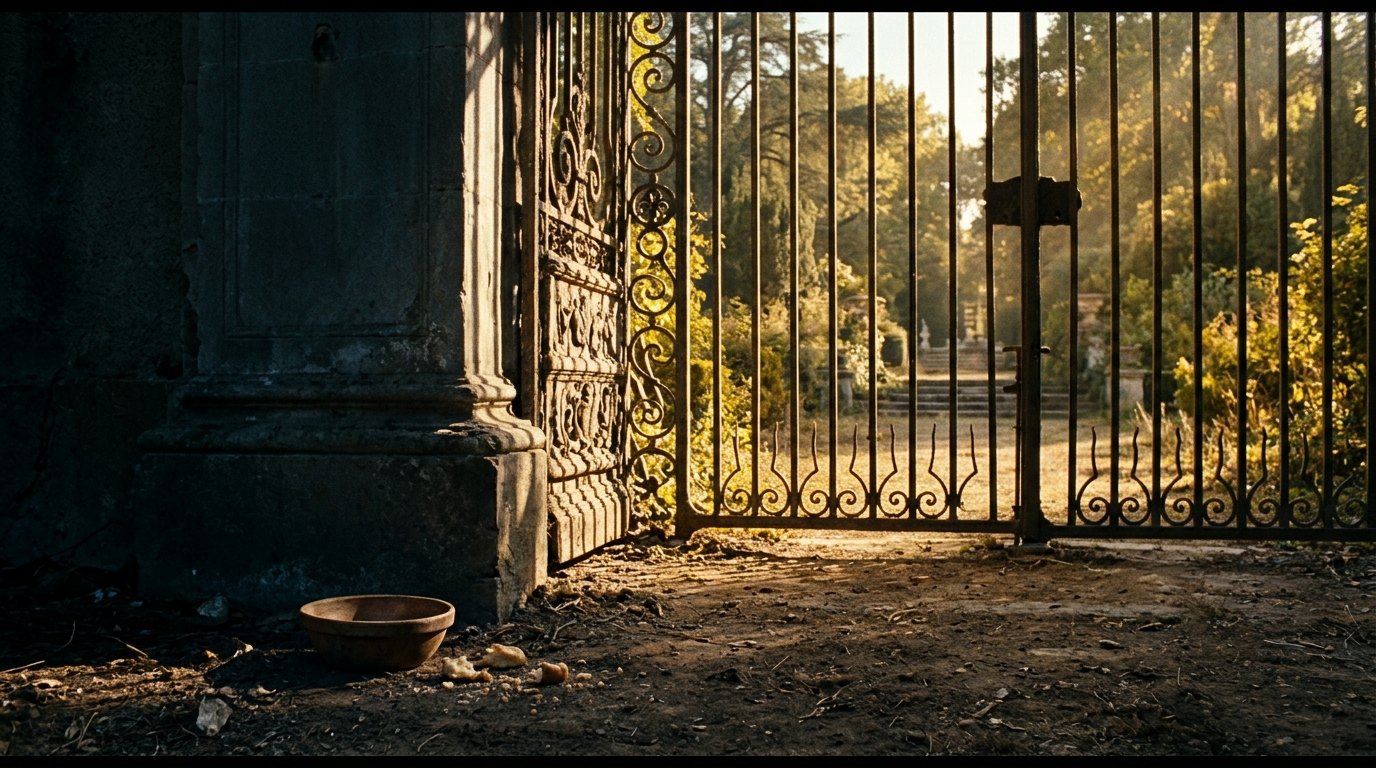
20 At his gate was laid a beggar named Lazarus, covered with sores
21 and longing to eat what fell from the rich man’s table. Even the dogs came and licked his sores.
22 “The time came when the beggar died and the angels carried him to Abraham’s side. The rich man also died and was buried.
23 In Hades, where he was in torment, he looked up and saw Abraham far away, with Lazarus by his side.
24 So he called to him, ‘Father Abraham, have pity on me and send Lazarus to dip the tip of his finger in water and cool my tongue, because I am in agony in this fire.’
25 “But Abraham replied, ‘Son, remember that in your lifetime you received your good things, while Lazarus received bad things, but now he is comforted here and you are in agony.
26 And besides all this, between us and you a great chasm has been set in place, so that those who want to go from here to you cannot, nor can anyone cross over from there to us.’
27 “He answered, ‘Then I beg you, father, send Lazarus to my family,
28 for I have five brothers. Let him warn them, so that they will not also come to this place of torment.’
29 “Abraham replied, ‘They have Moses and the Prophets; let them listen to them.’
30 “ ‘No, father Abraham,’ he said, ‘but if someone from the dead goes to them, they will repent.’
31 “He said to him, ‘If they do not listen to Moses and the Prophets, they will not be convinced even if someone rises from the dead.’ ”
New International Version (NIV)
The answer
The parable of the rich man and Lazarus (Luke 16:19-31) is about the danger of wealth without mercy, the certainty of judgment after death, and the sufficiency of God's Word to call people to repentance. Jesus tells it to warn that a life spent in self-indulgence while ignoring the suffering at one's gate ends in irreversible torment, and that Scripture itself — not miracles — is God's appointed means of bringing people to faith.
The setting: a warning to lovers of money
The parable does not stand alone. Just before it, Jesus teaches that no one can serve both God and money (Luke 16:13), and Luke records that "the Pharisees, who were lovers of money, also heard all these things, and they scoffed at him" (Luke 16:14). Jesus answers their scoffing with this story. It is aimed at people who are wealthy, self-satisfied, and confident that their prosperity proves God's favour.
Two lives, two deaths, two eternities
- The rich man lives in luxury every day, clothed in purple and fine linen (Luke 16:19). Nothing is said of him committing any crime; his sin is that he lives for himself while a suffering man lies at his own gate.
- Lazarus, a beggar covered in sores, longs for the crumbs from the rich man's table, and dogs lick his sores (Luke 16:20-21). He receives nothing.
- Both die. Lazarus is carried by angels to Abraham's bosom — a picture of comfort and fellowship with the people of God. The rich man is buried and finds himself in Hades, in torment (Luke 16:22-23).
The reversal is total. Abraham tells the rich man: "Son, remember that you, in your lifetime, received your good things, and Lazarus, in the same way, bad things. But here he is now comforted and you are in anguish" (Luke 16:25). The rich man's sin was not wealth itself but wealth used without compassion — the same charge God brought against Sodom, whose iniquity was "pride, fulness of bread, and abundance of idleness… neither did she strengthen the hand of the poor and needy" (Ezekiel 16:49).
Three sobering truths the parable teaches
1. Death fixes our eternal state. Between the two men "there is a great gulf fixed," and no one can cross it (Luke 16:26). There is no second chance after death, no relief, and no transfer from torment to comfort. The time for repentance is this life.
2. Riches are a spiritual danger. Jesus says elsewhere, "How hardly shall they that have riches enter into the kingdom of God!" (Luke 18:24-25). Wealth tends to make people self-sufficient and blind to others. James gives the same warning: "Go to now, ye rich men, weep and howl for your miseries that shall come upon you" (James 5:1-5). Money is not condemned as such, but trusting it and hoarding it while others suffer is.
3. God's Word is enough — and rejecting it is the real problem. The rich man begs Abraham to send Lazarus back from the dead to warn his five brothers. Abraham's answer is the climax of the parable: "They have Moses and the prophets. Let them listen to them" (Luke 16:29). When the rich man insists that a visitor from the dead would persuade them, Abraham replies: "If they don't listen to Moses and the prophets, neither will they be persuaded if one rises from the dead" (Luke 16:31).
That closing line is prophetic. Jesus Himself would rise from the dead, and another Lazarus would be raised (John 11:38-44) — yet many who refused the Scriptures refused Him still. The barrier to faith is not a lack of evidence but a heart that will not listen to what God has already said.
What it means for us
The parable presses two questions home. First, what am I doing with what God has given me? The poor and suffering are still "at our gate," and indifference to them is not neutral — it is the rich man's sin. Second, am I listening to God's Word? No spectacular sign will substitute for taking Scripture seriously and repenting now, while repentance is possible.
Answered from Scripture · reviewed November 11, 2026
The parable of the rich man and Lazarus is Jesus' sober warning on the deceitfulness of earthly wealth, the finality of divine judgment, and the absolute sufficiency of God's Word. Delivered to hearers who scoffed at His warnings against covetousness, the account pulls back the veil of eternity to reveal an irreversible reversal of fortunes between an indifferent man of luxury and a suffering beggar who trusted God. Across this striking narrative, Christ teaches that life's truest realities are settled not by temporal abundance, but by how one heeds the voice of Scripture.
Two Lives on Earth
Luxury and Misery Separated by a Gate

“There was a rich man who was dressed in purple and fine linen and lived in luxury every day.
Luke 16:19 (NIV)
It contrasts the rich man's daily indulgence in purple and fine linen with the reality of his utter spiritual bankruptcy.
In Luke 16:19, Jesus introduces a rich man clothed in purple and fine linen, living in lavish indulgence every single day. His extravagant outward splendor stood in jarring contrast to what lay just outside his front entrance. At his threshold lay Lazarus, a beggar covered in ulcerous sores, longing merely to satisfy his gnawing hunger with whatever scraps fell from the banquet table (Luke 16:20-21). While unclean street dogs licked the helpless man's wounds, the wealthy master stepped past him in willful blindness.
This devastating opening confronts the lethal complacency of a heart hardened by luxury. The Lord spoke these words directly to the Pharisees, who were lovers of money and sought to justify their pride before men (Luke 16:14-15). Such reckless disregard of the destitute was not a new sin in Israel. Centuries earlier, the prophet Amos had pronounced judgment upon those who lounged in ivory ease, feasting and singing while remaining utterly unmoved by the ruin of their brethren (Amos 6:4-6). God had likewise declared through Ezekiel that Sodom's core wickedness included abundant food and careless prosperous ease while withholding aid from the needy (Ezekiel 16:49). Scripture consistently warns that oppressing or ignoring the poor insults their Maker, whereas showing mercy honors Him (Proverbs 14:31). As the apostle Paul would later urge, believers must never anchor their confidence in uncertain riches, but instead be generous and rich in good deeds (1 Timothy 6:17-19). The rich man's sin was not his material abundance, but his total lack of love for God and neighbor.
| Passage | What it says |
|---|---|
| Luke 16:19 | A rich man lived clothed in purple and fine linen, indulging in luxury every day. |
| Luke 16:20 | A diseased beggar named Lazarus was laid at his gate, full of sores. |
| Luke 16:21 | Lazarus longed for table crumbs while street dogs licked his open sores. |
| Amos 6:4-6 | The prophet condemns those who feast comfortably upon couches while ignoring the ruin around them. |
| Ezekiel 16:49 | Sodom's guilt included abundant food and careless ease while failing to aid the poor and needy. |
| Luke 16:14-15 | Jesus introduces the theme of wealth and self-justification before God directly prior to telling the parable. |
| 1 Timothy 6:17-19 | Paul commands the wealthy to be rich in good works rather than setting their hopes on uncertain riches. |
| Proverbs 14:31 | Oppressing the poor insults their Maker, while being generous to the needy honors God. |
Death and Reversal
An Immediate and Eternal Transition
“The time came when the beggar died and the angels carried him to Abraham’s side. The rich man also died and was buried.
Luke 16:22 (NIV)
It shows angels carrying the destitute beggar directly to Abraham's side while the self-sufficient rich man simply dies and is buried.
In Luke 16:22, Jesus marks the sudden arrival of death and the profound reversal that immediately followed: the angels carried the destitute beggar to Abraham's side, while the rich man died and was buried. Earthly obsequies celebrate worldly power, but eternity strips away all pretense. The nameless beggar, who had received neither dignity nor an honorable burial on earth, received an escort of heavenly angels into the presence of the patriarch Abraham. Conversely, the wealthy magnate received an earthly funeral, only to find himself instantly conscious in the agonies of Hades, lifting his eyes in torment and seeing Abraham and Lazarus afar off (Luke 16:23).
This dramatic reversal reveals the terrifying speed with which earthly illusions vanish at death. Jesus had repeatedly cautioned that possessing riches creates a profound spiritual hazard, making entrance into the kingdom of God exceptionally difficult for the self-sufficient (Luke 18:24-25). Mary's song had foretold that God would scatter the proud, pull down princes, exalt the humble, and send the wealthy away empty-handed (Luke 1:52-53). In His foundational teachings, Christ declared the poor blessed as heirs of the kingdom, while pronouncing solemn woes upon those who cling to earthly comfort, having already received their full consolation (Luke 6:20-25). James echoed this warning with ferocious clarity, cautioning wanton oppressors that their hoarded wealth will testify against them in a coming day of slaughter (James 5:1-5). Death is not the extinction of consciousness, but the universal door through which every person passes to divine accountability. As the author of Hebrews declares, man is appointed to die once, and after that faces the righteous judgment of God (Hebrews 9:27).
| Passage | What it says |
|---|---|
| Luke 16:22 | Lazarus died and was carried by angels to Abraham's side; the rich man died and was buried. |
| Luke 16:23 | In Hades the rich man lifted his eyes in torment and saw Abraham and Lazarus far off. |
| Luke 18:24-25 | Jesus warns how difficult it is for those who possess riches to enter God's kingdom. |
| James 5:1-5 | James denounces rich oppressors who heap up earthly treasures and live in wanton pleasure for a day of slaughter. |
| Luke 1:52-53 | Mary's Magnificat proclaims God bringing down the mighty, exalting the humble, and sending the rich away empty. |
| Luke 6:20-25 | Jesus blesses the poor and pronounces woe upon the rich who have already received their consolation. |
| Hebrews 9:27 | Man is appointed to die once, and after that faces judgment. |
The Fixed Gulf
Judgment Without Remedy or Passage

And besides all this, between us and you a great chasm has been set in place, so that those who want to go from here to you cannot, nor can anyone cross over from there to us.’
Luke 16:26 (NIV)
It proclaims that an impassable gulf permanently divides the comforted righteous from the tormented wicked.
In Luke 16:26, Abraham answers the rich man's frantic cries with a statement of chilling permanence: between the righteous and the wicked a great gulf has been permanently fixed. In the misery of flame, the former master begged that Lazarus might dip the tip of his finger in water to cool his burning tongue (Luke 16:24). Even in torment, the rich man viewed Lazarus as a subordinate servant to run his errands, yet Abraham gently reminded him of the absolute finality of their positions. The earthly days of self-indulgent good things were over, and Lazarus, who had known only misery, was now comforted forever (Luke 16:25).
Abraham’s declaration dismantles every false hope of post-mortem repentance, purgation, or transition. The barrier dividing the comforted from the condemned cannot be crossed from either side; no mercy can reach across it, and no soul can escape its sentence. This aligns with Christ's solemn teaching regarding the final separation of humanity, where the wicked go away into eternal punishment while the righteous enter into eternal life (Matthew 25:46). Scripture knows nothing of second chances after the physical body dies. The apostle Paul confirms that those who refuse the gospel will suffer the penalty of eternal destruction, forever excluded from the glorious presence of the Lord (2 Thessalonians 1:8-9). The chasm fixed in eternity merely mirrors the chasm the rich man chose to establish in life between his own comfort and the neighbor starving outside his gate. God's righteous verdict ratifies that choice for all eternity, vindicating the afflicted and leaving the unrepentant without excuse or relief.
| Passage | What it says |
|---|---|
| Luke 16:24 | The rich man begged Abraham for Lazarus to dip a finger in water to cool his burning tongue. |
| Luke 16:25 | Abraham reminded him that he received good things in life, while Lazarus received bad, but now Lazarus is comforted. |
| Luke 16:26 | Abraham declares an unbridgeable gulf is fixed so that none can cross between the two places. |
| Matthew 25:46 | The wicked go away into eternal punishment, while the righteous enter into eternal life. |
| 2 Thessalonians 1:8-9 | Those who do not obey the gospel face eternal destruction separated from the presence of the Lord. |
The Sufficiency of Scripture
Moses and the Prophets Are Enough
“He said to him, ‘If they do not listen to Moses and the Prophets, they will not be convinced even if someone rises from the dead.’ ”
Luke 16:31 (NIV)
It delivers the climatic verdict that anyone who refuses God's written Word will not be persuaded even if someone rises from the dead.
In Luke 16:31, Jesus delivers the pinnacle of the entire narrative through Abraham’s decisive words: if people will not hear Moses and the Prophets, neither will they be convinced if someone should rise from the dead. Realizing his own doom was settled, the rich man pleaded that Lazarus be dispatched back to earth to warn his five surviving brothers, lest they also enter this place of agonizing torment (Luke 16:27-28). Abraham responded that they already possessed the written Scriptures and should listen to them (Luke 16:29). When the condemned man protested that a miraculous visitor from the grave would surely force their repentance, Abraham firmly rejected the premise (Luke 16:30-31).
This conclusion establishes the absolute sufficiency and supreme authority of God's revealed Word. Unbelief is not an intellectual problem caused by a shortage of signs, but a moral rebellion of the heart against God's plain voice. Moses had declared centuries earlier that the commandment of the Lord is neither hidden in heaven nor across the sea, but is already near in the mouth and the heart to be obeyed (Deuteronomy 30:11-14). Jesus rebuked the religious leaders of His day for failing to see that Moses wrote directly about Him; disbelieving the written Scriptures inevitably leads to rejecting the Messiah Himself (John 5:45-47). Even when Jesus later raised a man named Lazarus from the dead, and when Christ Himself rose triumphantly from the tomb, hard hearts doubled down in conspiracy and denial. As Paul taught, the sacred Scriptures alone are entirely sufficient to impart the wisdom that leads to salvation through faith in Christ (2 Timothy 3:15-17). Those who will not surrender to the witness of Scripture will not yield to any sign.
| Passage | What it says |
|---|---|
| Luke 16:27-28 | The rich man pleaded for Lazarus to be sent to his father's house to warn his five living brothers. |
| Luke 16:29 | Abraham answered that the brothers already possess Moses and the prophets and should listen to them. |
| Luke 16:30 | The rich man argued that if someone went from the dead, his brothers would repent. |
| Luke 16:31 | Abraham concluded that if they ignore Moses and the prophets, not even a resurrection will persuade them. |
| Deuteronomy 30:11-14 | The commandment of God is already near in the mouth and heart, needing no heavenly ascent. |
| John 5:45-47 | Jesus declares that Moses wrote of Him, showing that disbelieving Moses leads to rejecting Christ. |
| 2 Timothy 3:15-17 | The sacred writings are sufficient to make a person wise for salvation through faith in Jesus Christ. |
Where in the Bible
| Book | Passages |
|---|---|
| Deuteronomy | 1 · Deuteronomy 30:11-14 |
| Proverbs | 1 · Proverbs 14:31 |
| Ezekiel | 1 · Ezekiel 16:49 |
| Amos | 1 · Amos 6:4-6 |
| Matthew | 1 · Matthew 25:46 |
| Luke | 16 · Luke 16:19, Luke 16:20, Luke 16:21, Luke 16:14-15, Luke 16:22, Luke 16:23, Luke 18:24-25, Luke 1:52-53, Luke 6:20-25, Luke 16:24, Luke 16:25, Luke 16:26, Luke 16:27-28, Luke 16:29, Luke 16:30, Luke 16:31 |
| John | 1 · John 5:45-47 |
| 2 Thessalonians | 1 · 2 Thessalonians 1:8-9 |
| 1 Timothy | 1 · 1 Timothy 6:17-19 |
| 2 Timothy | 1 · 2 Timothy 3:15-17 |
| Hebrews | 1 · Hebrews 9:27 |
| James | 1 · James 5:1-5 |
The story in order
- Sodom's sin of ease (c. 586 BC) · Ezekiel 16:49 · Shows neglect of the poor alongside abundance.
- Prophet condemns luxury (c. 760 BC) · Amos 6:4-6 · Condemns those ignoring suffering while living in ease.
- Proverbs on generosity (c. 950 BC) · Proverbs 14:31 · Honoring God by caring for the needy.
- Jesus warns about riches (c. AD 30) · Luke 18:24-25 · Highlights the difficulty for the wealthy to enter God's kingdom.
- Mary's Magnificat (c. 5 BC) · Luke 1:52-53 · God exalts the humble and sends the rich away empty.
- Jesus blesses the poor (c. AD 30) · Luke 6:20-25 · Pronounces woe on the rich who have received their comfort.
- James denounces oppressors (c. AD 45) · James 5:1-5 · Denounces rich oppressors hoarding wealth for judgment.
- Paul on wealth and works (c. AD 65) · 1 Timothy 6:17-19 · Commands the wealthy to do good works.
- Rich man and Lazarus (c. AD 30) · Luke 16:19-31 · Parable of wealth, judgment, and the afterlife.
- Man dies, then judgment (c. AD 67) · Hebrews 9:27 · Establishes the certainty of death and subsequent judgment.
- Eternal punishment (c. AD 30) · Matthew 25:46 · The wicked face eternal punishment, the righteous eternal life.
- Eternal destruction (c. AD 52) · 2 Thessalonians 1:8-9 · Describes the fate of those who disobey the gospel.
Sufficiency of Scripture
| The Rich Man's Plea | Abraham's Response | Underlying Principle | Passage |
|---|---|---|---|
| Send Lazarus to warn my brothers | They have Moses and the Prophets | God's Word is sufficient | Luke 16:27-29 |
| If one goes from the dead, they will repent | If they do not listen to Moses and Prophets, they will not be convinced | Rejection of Scripture leads to rejection of truth | Luke 16:30-31 |
Key words
- Rich man
- One who lived in luxury and indifference to the poor. · Luke 16:19
- Lazarus
- A suffering beggar who trusted God and was comforted in death. · Luke 16:20-21
- Hades
- The place of the dead, depicted here as a place of torment for the rich man. · Luke 16:23
- Abraham's side
- A place of comfort and fellowship with God's people after death. · Luke 16:22
- Fixed gulf
- An unbridgeable separation between the place of torment and the place of comfort. · Luke 16:26
- Moses and the Prophets
- The authoritative body of Old Testament Scripture. · Luke 16:29
This parable leaves every reader with an urgent call to examine where their trust lies before eternity fixes the outcome. Earthly possessions cannot shield a soul from judgment, nor can signs and wonders convert a heart that rejects the written Word of God. Today, while the gate of mercy stands open, Scripture commands repentance and compassionate love toward our neighbor, pointing us solely to Christ.
27 passages, each cited once.
Scripture cited
- Luke 16:19-31
- Ezekiel 16:49
- Luke 18:24-25
- James 5:1-5
- Luke 16:1-18