What is worship music for, and does the style matter?

Psalms 95:1-7
1 Come, let us sing for joy to the LORD; let us shout aloud to the Rock of our salvation.
2 Let us come before him with thanksgiving and extol him with music and song.
3 For the LORD is the great God, the great King above all gods.
4 In his hand are the depths of the earth, and the mountain peaks belong to him.
5 The sea is his, for he made it, and his hands formed the dry land.
6 Come, let us bow down in worship, let us kneel before the LORD our Maker;
7 for he is our God and we are the people of his pasture, the flock under his care. Today, if only you would hear his voice,
New International Version (NIV)
The answer
Worship music is for praising God, thanking him, and letting Christ’s word teach and build up his people as they sing to him and to one another. Yes, style matters—but as a servant of those purposes, not as the essence of worship. Scripture does not make one musical genre the standard; it does govern the truth, understanding, reverence, excellence, and edification with which music is offered.
What worship music is for
- Praise and thanksgiving: Psalm 95:1-6 calls for songs, joyful shouts, thanksgiving, bowing, and kneeling because Yahweh is the great King, Creator, and Maker. Music gives congregational voice to who God is and what he has done.
- Singing to the Lord from the heart: Ephesians 5:19-20 joins singing and making melody in the heart to the Lord with continual thanksgiving to God. It is worship itself, not merely preparation for something more spiritual.
- Teaching and admonishing one another: Colossians 3:16 places “psalms, hymns, and spiritual songs” alongside letting Christ’s word dwell richly in his people. Sung words therefore carry truth to the congregation; they are not simply vehicles for a pleasant melody.
- A response that also listens: Psalm 95 moves from exuberant singing to humble kneeling and ends, “Today, oh that you would hear his voice!” (Psalm 95:7). Music should accompany responsive, obedient worship rather than replace hearing God.
How style matters
- Truth comes before musical appeal: Jesus says, “God is spirit, and those who worship him must worship in spirit and truth” (John 4:24). A moving arrangement cannot make false lyrics faithful worship, and emotional intensity cannot substitute for truth.
- Understanding and edification govern its use: 1 Corinthians 14:15 joins singing with the spirit to singing with the understanding. The purpose of gathered worship is then stated plainly in 1 Corinthians 14:26: “Let all things be done to build each other up.” Arrangements that obscure the words or reduce the congregation to spectators work against those purposes.
- Excellence serves God rather than self-display: Psalm 33:3 says, “Play skillfully with a shout of joy!” Musicians should offer their gifts well, while 1 Corinthians 14:40 also requires everything to be done “decently and in order.” Volume, complexity, and performance are not ends in themselves.
- Scripture allows considerable variety: Psalm 150:3-6 names trumpets, harps, lyres, tambourines, strings, flutes, and cymbals, then calls everything that has breath to praise. That breadth warns against identifying worship with one culture’s preferred sound. Old or new, simple or elaborate, quiet or loud does not by itself settle whether a song is faithful; every style remains under the tests of truth, understanding, reverence, and edification.
Answered from Scripture · reviewed November 11, 2026
Scripture commands believers to sing, not as an optional aesthetic preference, but as a primary means of exalting God and edifying his church. Music in biblical worship serves to glorify the Lord, anchor sound doctrine in human hearts, and foster humble obedience. The style and instrumentation remain subordinate servants to the eternal truth being sung.
Glorifying God
Singing Points Hearts Entirely to the Lord

Come, let us sing for joy to the LORD; let us shout aloud to the Rock of our salvation.
Psalms 95:1 (NIV)
It establishes that joyful song is directed squarely at the Lord, who is the rock of our salvation.
In Psalm 95:1, the psalmist summons God's people to make a joyful noise to the rock of their salvation, establishing that singing is fundamentally God-centered adoration. Music in Scripture is never self-indulgent entertainment or an emotional technique; it is a direct address to Yahweh. Psalm 95:2 immediately follows this command, urging worshippers to come into his presence with thanksgiving and make a joyful noise to him with songs of praise. In Psalm 81:1, Israel is commanded to sing aloud to God their strength, acknowledging that genuine spiritual vitality derives solely from the Lord.
This call to musical praise is neither localized nor temporary. Psalm 96:1 commands the whole earth to sing a new song unto the Lord, reflecting the global scope of divine glory. Psalm 96:2 demands that believers show forth his salvation from day to day, using vocal praise as a vehicle for public proclamation. Centuries earlier, David testified in 2 Samuel 22:47 that Yahweh lives, exalting the God of the rock of his salvation through song after deliverance from his enemies.
The New Testament elevates this pattern into the gathered assembly of the new covenant. In Hebrews 2:12, the author quotes the Messianic promise that Christ himself sings praise to the Father in the midst of the congregation. Consequently, Hebrews 13:15 commands believers to continually offer up a sacrifice of praise to God through him, which is the fruit of lips confessing his name. Christian song is therefore an act of holy priesthood, uniting the redeemed with their Savior in exalting the living God.
| Passage | What it says |
|---|---|
| Psalms 95:1 | Calls God's people to sing aloud with joy to Yahweh, the immovable rock of their deliverance. |
| Psalms 95:2 | Urges entering his presence with heartfelt thanksgiving and extolling his name through joyful psalms. |
| Psalms 81:1 | Commands singing aloud to God who provides divine strength to his covenant people. |
| Psalms 96:1 | Summons the entire earth to sing a new song of praise to Yahweh. |
| Psalms 96:2 | Commands blessing his name and proclaiming the good news of his salvation day after day. |
| 2 Samuel 22:47 | Praises the living Lord and exalts God as the steadfast rock of salvation. |
| Hebrews 2:12 | Christ declares the Father's name to His brothers and sings praise in the midst of the congregation. |
| Hebrews 13:15 | Believers continually offer a sacrifice of praise to God through Christ, the fruit of lips acknowledging His name. |
Remembering His Works
Worship Recalls God's Creation and Sovereign Deliverance

For the LORD is the great God, the great King above all gods.
Psalms 95:3 (NIV)
It grounds corporate singing in the objective theological reality of God's majestic kingship over all.
Psalm 95:3 anchors corporate song in objective reality: the Lord is a great God and a great King above all gods. Biblical music is not detached from content; it actively rehearses the sovereign majesty of the Creator. In Psalm 95:4, the psalmist reminds the congregation that in his hand are the deep places of the earth, and the strength of the hills is his also. Psalm 95:5 continues this theological meditation, declaring that the sea belongs to him because he made it, and his hands formed the dry ground. Singing gives voice to these unshakeable truths about who God is and what he has made.
This deliberate remembrance characterizes biblical worship throughout redemptive history. In 1 Chronicles 16:9, David charges the Levites to sing psalms to the Lord and talk of all his wondrous works. When the children of Israel were delivered through the Red Sea, Exodus 15:1-2 records Moses and the congregation bursting into a song of triumph, confessing that Yahweh had become their strength and salvation.
This pattern culminates in the eternal praise of heaven. In Revelation 15:3-4, the victorious saints sing the song of Moses the servant of God and the song of the Lamb, proclaiming that great and marvelous are his works and righteous are his ways. Music functions throughout Scripture as an enduring monument to God's mighty acts of creation and redemption.
| Passage | What it says |
|---|---|
| Psalms 95:3 | Declares that Yahweh is the supreme King far above all false gods. |
| Psalms 95:4 | Celebrates God's sovereign ownership over the deepest places and highest mountain peaks. |
| Psalms 95:5 | Affirms his creative power in forming the vast seas and shaping the dry land. |
| 1 Chronicles 16:9 | Directs believers to sing psalms to him and recount all his wondrous works. |
| Exodus 15:1-2 | Moses and Israel sing to the Lord who triumphed gloriously over Egypt, celebrating Him as their strength and salvation. |
| Revelation 15:3-4 | The saints sing the song of Moses and the Lamb, declaring God's marvelous deeds and righteous judgments across all nations. |
Reverence and Hearing
Music Prepares the Soul for Humble Obedience

Come, let us bow down in worship, let us kneel before the LORD our Maker;
Psalms 95:6 (NIV)
It unites vocal adoration with bodily reverence and inward submission before our Maker.
Psalm 95:6 calls worshippers to bow down, kneel, and worship before the Lord our Maker, showing that corporate singing must lead directly to reverent submission. Joyful praise in Scripture never degenerates into flippant familiarity; it is tempered by a profound awareness of God's holiness. In Psalm 95:7, the psalmist reminds the people that they are the sheep of his hand, immediately followed by the sobering plea: today, if you will hear his voice. True musical worship cultivates a posture of receptive listening, preparing the heart to receive the authoritative Word of God.
Because music easily degenerates into empty externalism, Psalm 95:8 issues a stern warning against hardening the heart as Israel did in the wilderness. The biblical authors repeatedly insist that external melody without internal repentance is offensive to God. In Amos 5:23-24, the Lord fiercely rejects the noise of songs and the melody of harps where righteousness and justice are absent; God is not appeased by artistic skill detached from holy living.
Jesus reaffirms this enduring principle in John 4:23-24 when teaching the Samaritan woman about worship. The Father seeks those who worship him in spirit and in truth, transcending mere geographical or musical forms. The primary question of biblical worship is never whether the outward style matches human preference, but whether the inward heart bows in truthful, trembling obedience before the Maker.
| Passage | What it says |
|---|---|
| Psalms 95:6 | Exhorts believers to bow down and kneel in solemn worship before Yahweh their Maker. |
| Psalms 95:7 | Identifies believers as flock under his pasture and urges them to hear his voice today. |
| Psalms 95:8 | Warns the congregation against hardening their hearts as their ancestors did in rebellion. |
| John 4:23-24 | True worshipers worship the Father in spirit and truth, which the Father actively seeks above external forms. |
| Amos 5:23-24 | The Lord rejects the noisy melody of harps when unaccompanied by righteousness, justice, and genuine obedience. |
Mutual Edification
Singing Teaches Truth and Builds the Church

Let the message of Christ dwell among you richly as you teach and admonish one another with all wisdom through psalms, hymns, and songs from the Spirit, singing to God with gratitude in your hearts.
Colossians 3:16 (NIV)
It shows that corporate singing is a primary vehicle for letting the Word of Christ dwell richly among believers.
Colossians 3:16 reveals a vital corporate dimension of worship: believers are commanded to teach and admonish one another through psalms, hymns, and spiritual songs. Corporate singing is not merely an individual vertical experience; it is an act of mutual instruction. When the local church lifts its voice, the word of Christ dwells richly within the body, cementing sound doctrine into minds and affections with thankfulness in human hearts.
Paul reinforces this horizontal reality in Ephesians 5:19, directing the church to speak to one another in psalms and hymns and spiritual songs, singing and making melody in their hearts to the Lord. This vocal praise flows directly into continuous gratitude, as Ephesians 5:20 commands giving thanks always for all things unto God the Father in the name of the Lord Jesus Christ. Far from fostering self-assertion, Ephesians 5:21 connects this Spirit-filled singing directly to submitting to one another in the fear of God.
Because music exists to edify, clarity and doctrinal substance must govern its practice. In 1 Corinthians 14:15, Paul insists that he will sing with the spirit, and he will sing with the understanding also. He summarizes the regulative principle of corporate gatherings in 1 Corinthians 14:26, requiring that whenever believers come together, every psalm and teaching must be done for the spiritual building up of the body. Style remains entirely secondary; intelligible, biblical truth that equips the saints is primary.
| Passage | What it says |
|---|---|
| Colossians 3:16 | Commands teaching and admonishing one another through psalms, hymns, and spiritual songs with thankfulness. |
| Ephesians 5:19 | Instructs the gathered body to address one another in songs and make melody to the Lord. |
| Ephesians 5:20 | Directs continuous thanksgiving to God the Father in the name of the Lord Jesus Christ. |
| Ephesians 5:21 | Connects Spirit-filled worship to mutual submission among believers out of reverence for Christ. |
| 1 Corinthians 14:15 | Paul instructs that singing must be engaged with both the spirit and the mind so that understanding is present. |
| 1 Corinthians 14:26 | Whenever the church comes together, each contribution, including hymns, must be done for the spiritual building up of all. |
Instruments and Expression
God Welcomes Varied Instruments Dedicated to His Glory
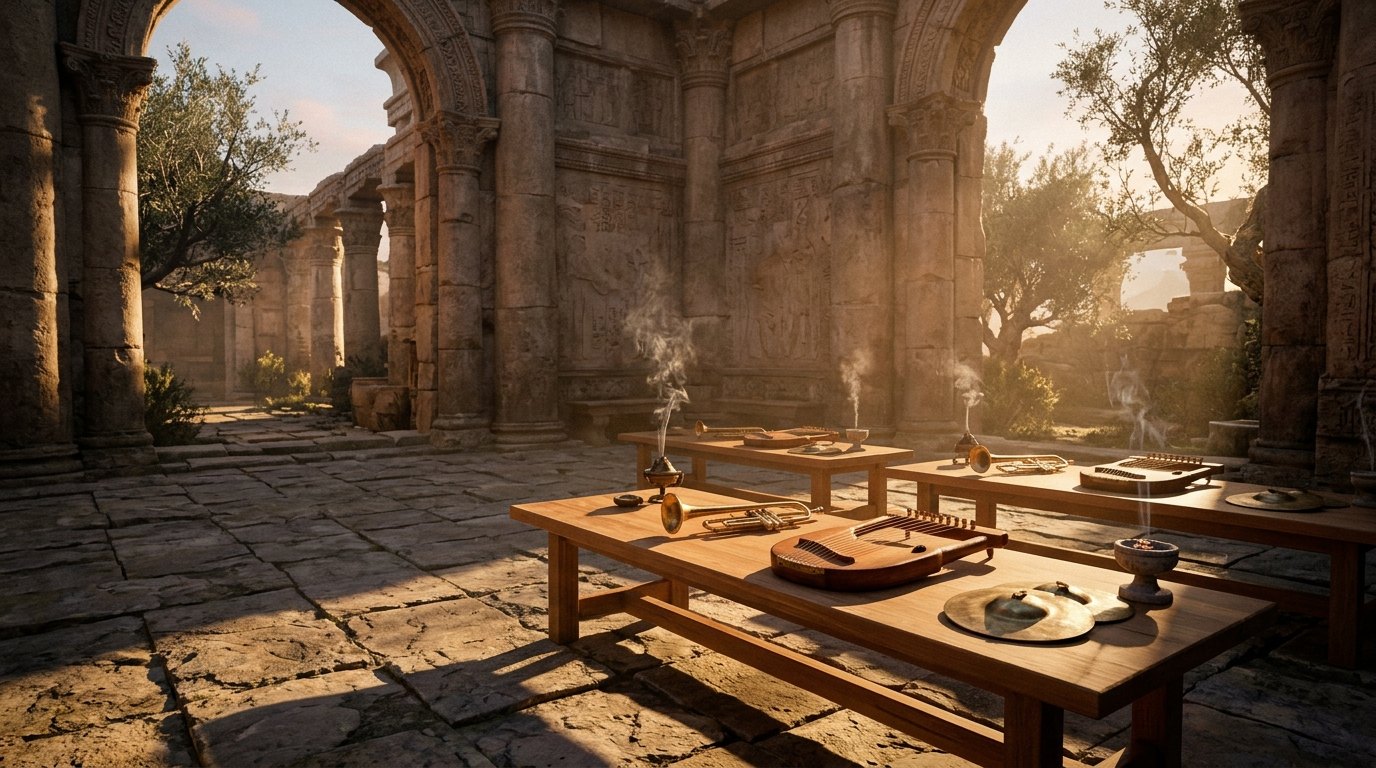
Praise him with the sounding of the trumpet, praise him with the harp and lyre,
Psalms 150:3 (NIV)
It illustrates how diverse instruments are summoned together to magnify the Lord's transcendent greatness.
The crescendo of the Psalter demonstrates that God mobilizes the whole auditory realm for his praise, culminating in Psalms 150:3 with the resonant blast of the trumpet alongside the delicate resonance of the lute and harp. This doxology leaves nothing out. Psalms 150:1 establishes the cosmic scope, commanding praise both in his earthly sanctuary and throughout his mighty firmament. The rationale follows immediately in Psalms 150:2, which directs adoration toward God's mighty deeds and his surpassing, infinite greatness. To honor such grandeur, the psalm enlists every category of sound: tambourines and joyful movement, strings and flutes in Psalms 150:4, alongside the clashing brilliance of high-sounding cymbals in Psalms 150:5. This symphony resolves in Psalms 150:6 with the all-encompassing command that every creature possessing breath must offer praise to Yahweh.
Such musical variety was not haphazard; it was organized with immense care in redemptive history. In 1 Chronicles 15:16, David appointed the Levites to accompany joyful singing with harps, lyres, and cymbals, demanding deliberate craftsmanship. Chenaniah was selected to oversee this ministry because he possessed skill and understanding in music, as recorded in 1 Chronicles 15:22. Centuries later, during national renewal, King Hezekiah reaffirmed this precise order in 2 Chronicles 29:25-28, stationing the Levites with their instruments in obedience to David's command while the entire assembly bowed, sang, and offered sacrifice. Similarly, Psalms 33:1-3 calls the upright to celebrate the Lord skillfully upon ten-stringed lyres with joyful shouts. Instruments in Scripture are never ends in themselves; they serve as dedicated, disciplined vessels that amplify the exalted worth of God.
| Passage | What it says |
|---|---|
| Psalms 150:1 | Calls for praise in God's sanctuary and in his mighty firmament above. |
| Psalms 150:2 | Commands praising God for his mighty deeds and his surpassing, infinite greatness. |
| Psalms 150:3 | Calls for the sound of trumpets, lutes, and harps to extol God. |
| Psalms 150:4 | Summons tambourines, joyful dancing, stringed instruments, and flutes into the praise of God. |
| Psalms 150:5 | Urges praise with sounding cymbals and high-sounding, clashing cymbals. |
| Psalms 150:6 | Demands that everything possessing breath unite in offering praise to Yahweh. |
| 1 Chronicles 15:16 | David appoints Levites to play harps, lyres, and cymbals with loud, joyful singing. |
| 1 Chronicles 15:22 | Chenaniah is designated to direct music because he possesses skill and understanding. |
| 2 Chronicles 29:25-28 | Hezekiah stations Levites with cymbals, harps, and lyres according to David's command as the whole assembly worships and sings. |
| Psalms 33:1-3 | The righteous are summoned to praise the Lord with lyre and harp, singing a new song skillfully with loud shouts. |
Suffering and Joy
Worship Anchors the Believer Through Trials and Joy
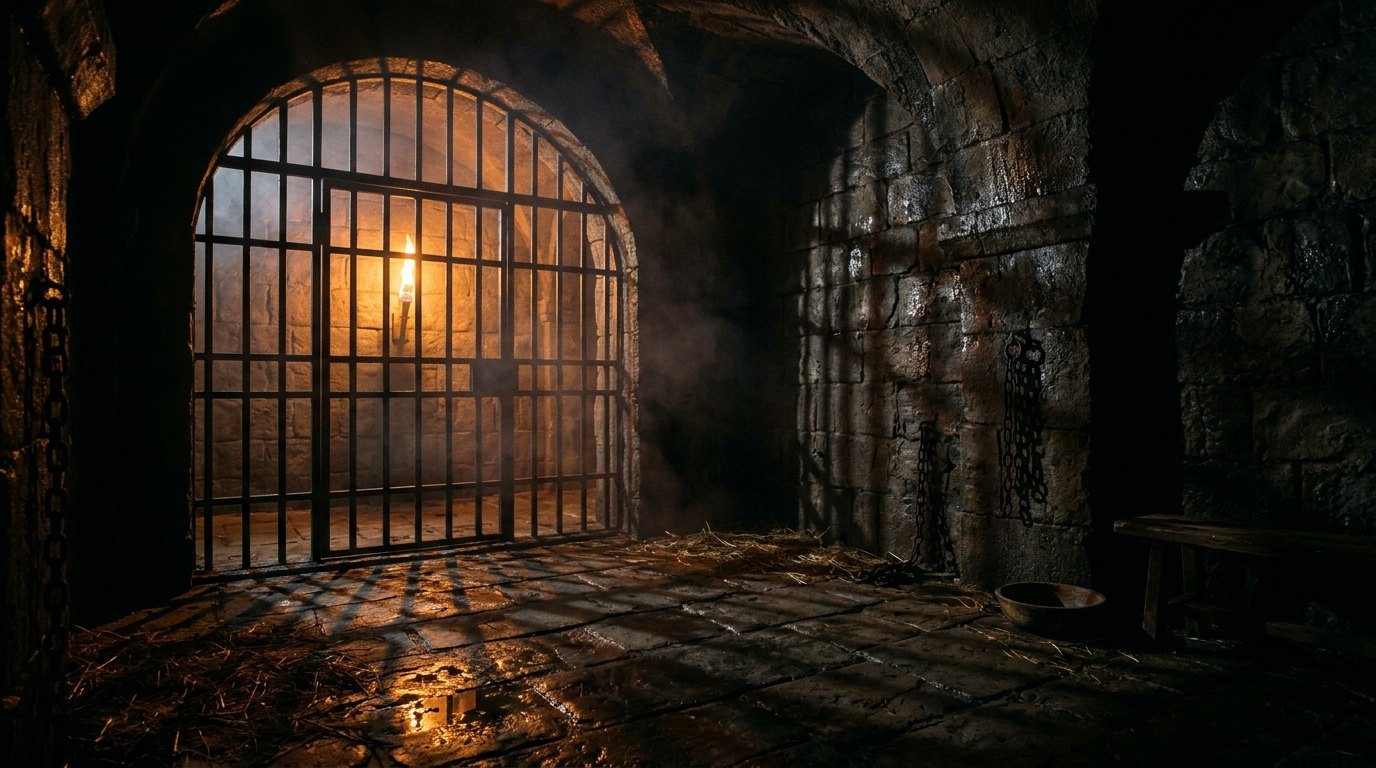
About midnight Paul and Silas were praying and singing hymns to God, and the other prisoners were listening to them.
Acts 16:25 (NIV)
It demonstrates that biblical singing is an act of resolute faith and witness in deep suffering, independent of outward circumstances.
Biblical singing does not depend on comfortable surroundings or emotional ease; it is an anchor of resolute faith during dark affliction. In Acts 16:25, Paul and Silas lay beaten in the depths of a Philippian dungeon, their feet locked in stocks. Yet at midnight, they prayed and sang hymns to God while the other prisoners listened in awe. Their song was not an escape from reality, but an unflinching proclamation of the living God in the middle of agony. The gospel produces a praise that remains unshakable because the character of God remains unchanged regardless of earthly suffering.
This balance characterizes the entire Christian life. In James 5:13, the apostle provides a clear pastoral pattern: whoever suffers must pray, and whoever is cheerful should sing praise. Singing is the appointed response to joy, sanctifying human gladness into holy gratitude. The ultimate model of this sacred resolve appears in Matthew 26:30. On the night of his betrayal, with the cross looming immediately before him, the Lord Jesus sang the traditional Passover Hallel with his disciples before walking out to the Mount of Olives. Even facing the cup of divine wrath, Christ lifted his voice in worship, showing that sacred song sustains obedience through the valley of the shadow of death.
| Passage | What it says |
|---|---|
| Acts 16:25 | Paul and Silas pray and sing hymns to God while imprisoned at midnight, and the other prisoners listen to them. |
| James 5:13 | James commands that anyone who is suffering should pray, and anyone who is cheerful should sing praise. |
| Matthew 26:30 | Jesus and His disciples sing a hymn together before departing for the Mount of Olives on the night He is betrayed. |
The Heavenly Chorus
Every Tongue and Nation Joins the Unending Song

And they sang a new song, saying: “You are worthy to take the scroll and to open its seals, because you were slain, and with your blood you purchased for God persons from every tribe and language and people and nation.
Revelation 5:9 (NIV)
It shows that God ordains worship from every culture and language, proving style must serve the redemption purchased by the Lamb.
The final destiny of all biblical worship is unveiled in the heavenly sanctuary, where the cross of Christ gathers an eternal choir from every culture and tongue. In Revelation 5:9, the living creatures and elders fall before the Lamb, singing a new song: 'Worthy are you to take the scroll and to open its seals, for you were slain, and by your blood you ransomed people for God from every tribe and language and people and nation.' This heavenly scene demolishes any ethnocentric demand for a single musical idiom. Because redemption is universal, style must always remain a flexible, reverent servant to the unchanging truth of the blood-bought gospel.
This glorious vision broadens further across John's apocalypse. Revelation 5:8-10 displays the worship of heaven mingling with the prayers of the saints as kings and priests reign upon the earth. In Revelation 7:9-10, an innumerable multitude from every ethnic heritage stands before the throne clothed in white robes with palm branches, crying out with a loud voice that salvation belongs entirely to our God and to the Lamb. Finally, Revelation 14:2-3 describes the majestic roar of heaven like the sound of many waters and rolling thunder, joined by the sweet melody of celestial harpists singing a new song that no one could learn except the redeemed. Earthly musical forms will pass away, but the pure adoration of the Lamb will echo without end across eternity.
| Passage | What it says |
|---|---|
| Revelation 5:8-10 | The four living creatures and elders sing a new song to the Lamb who was slain and redeemed people of every tongue. |
| Revelation 7:9-10 | A great multitude from every nation, tribe, and tongue cries out in worship before the throne and before the Lamb. |
| Revelation 14:2-3 | A voice from heaven sounds like harpists playing their harps, singing a new song before the throne. |
Where in the Bible
| Book | Passages |
|---|---|
| Exodus | 1 · Exodus 15:1-2 |
| 2 Samuel | 1 · 2 Samuel 22:47 |
| 1 Chronicles | 3 · 1 Chronicles 16:9, 1 Chronicles 15:16, 1 Chronicles 15:22 |
| 2 Chronicles | 1 · 2 Chronicles 29:25-28 |
| Psalms | 18 · Psalms 95:1, Psalms 95:2, Psalms 81:1, Psalms 96:1, Psalms 96:2, Psalms 95:3, Psalms 95:4, Psalms 95:5, Psalms 95:6, Psalms 95:7, Psalms 95:8, Psalms 150:1, Psalms 150:2, Psalms 150:3, Psalms 150:4, Psalms 150:5, Psalms 150:6, Psalms 33:1-3 |
| Amos | 1 · Amos 5:23-24 |
| Matthew | 1 · Matthew 26:30 |
| John | 1 · John 4:23-24 |
| Acts | 1 · Acts 16:25 |
| 1 Corinthians | 2 · 1 Corinthians 14:15, 1 Corinthians 14:26 |
| Ephesians | 3 · Ephesians 5:19, Ephesians 5:20, Ephesians 5:21 |
| Colossians | 1 · Colossians 3:16 |
| Hebrews | 2 · Hebrews 2:12, Hebrews 13:15 |
| James | 1 · James 5:13 |
| Revelation | 4 · Revelation 15:3-4, Revelation 5:8-10, Revelation 7:9-10, Revelation 14:2-3 |
The story in order
- Creation and Fall (c. 4000 BC) · Psalms 95:5 · God's sovereign ownership over creation is affirmed.
- Exodus and Red Sea (c. 1446 BC) · Exodus 15:1-2 · Israel sings of God's glorious triumph and deliverance.
- Wilderness Wanderings (c. 1400 BC) · Psalms 95:7-8 · Warning against hardened hearts and urging to hear God's voice.
- Davidic Kingdom (c. 1000 BC) · 1 Chronicles 15:16 · Levites appointed to lead music with joy and skill.
- Hezekiah's Reforms (c. 716 BC) · 2 Chronicles 29:25-28 · Levites lead worship with instruments and singing.
- Prophetic Rebuke (c. 750 BC) · Amos 5:23-24 · God rejects music lacking righteousness and justice.
- Jesus' Ministry (AD 30) · Matthew 26:30 · Jesus and disciples sing a hymn before His betrayal.
- Apostolic Church (c. AD 50) · Acts 16:25 · Paul and Silas sing hymns in prison.
- Paul's Epistles (c. AD 60) · Colossians 3:16 · Singing to teach, admonish, and build up the church.
- John's Revelation (c. AD 95) · Revelation 5:8-10 · Saints sing a new song of redemption.
Key words
- Praise (yādâ (Hebrew))
- To extol God's greatness and recount His mighty deeds. · Psalms 96:2
- Sing (rānān (Hebrew))
- To utter words of worship and praise musically. · Psalms 95:1
- Sacrifice of Praise (thusia ainéseōs (Greek))
- The continual offering of praise through Christ, acknowledging His name. · Hebrews 13:15
- Spirit and Truth (pneúmati kai alētheia (Greek))
- Worship offered genuinely from the heart and in accordance with God's word. · John 4:23-24
- Edification (oikodomē (Greek))
- The building up of the church in faith and knowledge through worship. · 1 Corinthians 14:26
Biblical worship music is neither a performance to entertain listeners nor an argument over cultural forms, but a sacred sacrifice of praise. As we sing the truth of Christ to the Father through the Spirit, our hearts are shaped to revere him and love our brothers and sisters. True worship ends not when the song ceases, but when transformed believers walk out in humble obedience.
41 passages, each cited once.
How the major Christian traditions read this
All Christian traditions agree that worship music exists to glorify God, offer heartfelt praise and thanksgiving, and build up the church in the truth of Christ (Psalm 95:1-2; Colossians 3:16).
Catholic
In the Catholic Church, sacred music forms an integral part of the liturgical action rather than mere accompaniment. Its purpose is the glory of God and the sanctification of the faithful. Style matters profoundly: music must possess holiness, beauty, and universality to serve the sacred mysteries of the Mass. While the Church treasures Gregorian chant and sacred polyphony as having pride of place because of their reverent solemnity, other forms are welcomed if they preserve reverence, faithfully render the sacred liturgical texts, and foster prayerful participation before the Lord in His presence (Psalm 96:1-2; Ephesians 5:19).
Scripture: Psalms 96:1-2, Ephesians 5:19
Orthodox
In the Orthodox Church, liturgical music is sacred prayer, uniting the gathered faithful with the unending worship of the angels before the heavenly throne. We sing the divine services using the human voice alone without instrumental accompaniment, following the historic apostolic practice of the Church. The voice is the natural instrument created by God to proclaim theological truth with the mind and the heart in harmony (1 Corinthians 14:15). Style matters immensely: Byzantine or Slavic chant disciplines earthly passions, preserves the sacred dogmas intact, and draws the worshiper into solemn awe before the Holy Trinity (Psalm 95:6).
Scripture: 1 Corinthians 14:15, Psalms 95:6
Lutheran
We view music as a precious gift of God next to theology, serving to proclaim the Gospel and comfort wounded consciences. Style matters, but music is an adiaphoron—a matter of Christian freedom—so long as it serves the Word of God rather than human vanity. We treasure rich congregational hymnody where theology is sung, teaching the faithful and letting Christ's word dwell richly among us (Colossians 3:16). Whether supported by organ, orchestra, or other instruments, musical style must maintain reverence, ensure clear proclamation of the text, and keep the focus squarely on Christ crucified and risen for sinners (Psalm 150:3-6).
Scripture: Colossians 3:16, Psalms 150:3-6
Reformed & Presbyterian
We hold to the regulative principle of worship, which confesses that God alone determines how He is to be praised through His revealed Word (Westminster Confession 21.1). Music exists strictly to honor God and edify His church in spirit and truth (John 4:24). Musical style must remain sober, reverent, and free from worldly theatricality. Because the Word of God must dwell richly in the assembly (Colossians 3:16), many in our heritage practise exclusive psalmody or strict metrical hymnody, ensuring that the text is paramount, congregationally accessible, and undistracted by performance or elaborate instrumentation (1 Corinthians 14:26).
Scripture: John 4:24, Colossians 3:16, 1 Corinthians 14:26
Anglican & Episcopal
We see worship music as an essential servant of liturgical prayer, weaving together Scripture, common prayer, and song to lift the soul into the beauty of holiness (Psalm 96:1-2). Style matters insofar as it maintains reverence, order, and edification under the authority of Scripture (1 Corinthians 14:40). We value a broad heritage that includes choral evensong, majestic hymnody, and contemporary praise, provided the music remains faithful to biblical truth, supports common prayer, and enables the whole congregation to join their voices in joyful thanksgiving to God (Psalm 95:1-2).
Scripture: Psalms 96:1-2, Psalms 95:1-2, 1 Corinthians 14:40
Baptist
We believe worship music is an offering of praise from the gathered assembly and a means of teaching sound doctrine (Colossians 3:16). God calls us to sing from transformed hearts with understanding (1 Corinthians 14:15). Musical style is a servant to the text: whether traditional hymns or contemporary praise songs, the lyrics must be biblically accurate and the music must encourage full congregational singing rather than passive spectating. While local congregations have freedom regarding musical genres, style matters because it must never eclipse the cross of Christ or promote worldly self-glory (Psalm 95:1-3).
Scripture: Colossians 3:16, 1 Corinthians 14:15, Psalms 95:1-3
Methodist & Wesleyan
For us, singing has always been a vital means of grace and spiritual formation, teaching theology that warms the heart and stirs holy living. Charles Wesley's hymns exemplified how song instructs the mind and fuels devotion. Style matters because it must serve heartfelt adoration and sincere faith (Ephesians 5:19). We embrace musical forms that are lively, earnest, and accessible to the common person, while insisting that the words proclaim the universal love of God, the call to repentance, and growth in holiness under the Spirit's guidance (Psalm 81:1; Colossians 3:16).
Scripture: Ephesians 5:19, Psalms 81:1, Colossians 3:16
Pentecostal & Charismatic
We understand worship music as a dynamic, Spirit-filled encounter with the living God, where praise prepares the way for God's manifest presence and the release of spiritual gifts (Psalm 100:1-4). Style matters because it should foster freedom, passion, and wholehearted engagement of body and soul—lifting hands, shouting joyfully, and singing in the Spirit (1 Corinthians 14:15). Using modern arrangements, drums, and celebratory instrumentation (Psalm 150:3-6), music is not mere routine or spectator entertainment, but a vibrant sacrifice of praise that exalts Jesus and welcomes the moving of the Holy Spirit.
Scripture: Psalms 100:1-4, 1 Corinthians 14:15, Psalms 150:3-6
Non-denominational & Evangelical
We see worship music as an authentic, biblical expression of love and gratitude toward God, fulfilling the command to sing praises to the rock of our salvation (Psalm 95:1). Style is culturally flexible: whether acoustic, modern band, or classic hymnody, what matters is biblical fidelity in lyrics, authenticity in the heart, and edification of the body (Colossians 3:16; 1 Corinthians 14:26). We seek arrangements that help the congregation actively worship Jesus in spirit and truth (John 4:24), rejecting performance-driven commercialism while utilizing modern musical expressions to connect contemporary believers with God.
Scripture: Psalms 95:1, Colossians 3:16, 1 Corinthians 14:26, John 4:24
Where they differ
Use of musical instruments
- Catholic
- Favors organ while permitting other reverent instruments.
- Orthodox
- Strictly forbids instruments, requiring human voice alone.
- Lutheran
- Welcomes instruments as good gifts serving the Gospel.
- Reformed & Presbyterian
- Historically restricted or restrained them to guard spiritual simplicity.
- Anglican & Episcopal
- Employs organs and diverse instruments to enhance liturgy.
- Baptist
- Permits instruments to support robust congregational singing.
- Methodist & Wesleyan
- Uses instruments freely to aid joyful, earnest praise.
- Pentecostal & Charismatic
- Employs full modern bands to foster exuberant worship.
- Non-denominational & Evangelical
- Widely uses contemporary instrumentation to engage modern culture.
Scripture: Psalms 150:3-6, 1 Corinthians 14:15
Governing authority over musical style
- Catholic
- Governed by historic liturgical norms and sacred suitability.
- Orthodox
- Bound strictly to sacred chant traditions and ancient liturgy.
- Lutheran
- Treated as Christian freedom under biblical and doctrinal order.
- Reformed & Presbyterian
- Ruled strictly by the biblical regulative principle.
- Anglican & Episcopal
- Shaped by common prayer and liturgical decorum.
- Baptist
- Determined by local church elders under scriptural warrant.
- Methodist & Wesleyan
- Valued for theological instruction and heart-warming evangelistic power.
- Pentecostal & Charismatic
- Directed by spontaneous sensitivity to the Holy Spirit.
- Non-denominational & Evangelical
- Adapted freely for contextual relevance and active participation.
Scripture: John 4:24, 1 Corinthians 14:40
Your pastor can tell you where your church stands.
Scripture cited
- Psalms 95:1-7
- Colossians 3:16
- Ephesians 5:18-20
- Psalms 150
- 1 Corinthians 14:15
- John 4:23-24
- 1 Corinthians 14:26
- 1 Corinthians 14:40
- Psalms 33:1-3