What should I do when I don't feel God's presence?

Psalms 139:7-12
7 Where can I go from your Spirit? Where can I flee from your presence?
8 If I go up to the heavens, you are there; if I make my bed in the depths, you are there.
9 If I rise on the wings of the dawn, if I settle on the far side of the sea,
10 even there your hand will guide me, your right hand will hold me fast.
11 If I say, “Surely the darkness will hide me and the light become night around me,”
12 even the darkness will not be dark to you; the night will shine like the day, for darkness is as light to you.
New International Version (NIV)
The answer
Your feeling of God's absence does not match reality, and the path through the feeling is to trust His word over what you sense. God has promised to be present in the dark exactly as in the light, and the Bible calls that promise the ground you stand on when feelings say otherwise.
Step 1: Set the feeling beside the truth
God's presence is not a mood — it is a fact about Him. Psalm 139:7-8 asks, "Where could I go from your Spirit? Or where could I flee from your presence? If I ascend up into heaven, you are there. If I make my bed in Sheol, behold, you are there!" The very Psalm that asks the question tells you the answer first: there is nowhere you can go. Psalm 139:12 then adds that "the darkness doesn't hide from you, but the night shines as the day. The darkness is like light to you." If God is fully present in the darkest place He can see, He is fully present in your darkness too — even when you cannot feel it.
Step 2: Bring what you feel to God, honestly
Don't pretend the feeling isn't there. Psalm 42:5-6 records the sons of Korah asking their own souls, "Why are you in despair, my soul? Why are you disturbed within me? Hope in God!" — and telling themselves the truth out loud. The same man who cried "My tears have been my food day and night, while they continually ask me, 'Where is your God?'" (Psalm 42:3) ends by calling God "the saving help of my countenance, and my God" (Psalm 42:11). The remedy is not to manufacture a feeling but to keep speaking truth to your soul. Pour out what you feel — in prayer, in writing, in a word to a trusted friend.
Step 3: Rehearse the promise when feelings contradict it
Psalm 139:10 says, "Even there your hand will lead me, and your right hand will hold me." You may not feel the hand — but the psalm is unambiguous that the hand is there. Hebrews 13:5 repeats the same promise to God's people: "I will never leave you nor forsake you." The dark night is the time to take these verses into your mouth and speak them out loud, even as a counter-voice to what you sense. Isaiah 41:10 is also built for this hour: "Fear not, for I am with you; be not dismayed, for I am your God; I will strengthen you, I will help you, I will uphold you with my righteous right hand."
Step 4: Stay in the means of grace — especially when you least feel like it
This is the moment to keep showing up in the Word, in prayer, in gathered worship, at the Lord's Table. Hebrews 10:24-25 warns against "forsaking our meeting together" — and the times you most want to withdraw are usually the times you need it most. Reading the Psalms aloud, taking communion, singing with the church, and asking a faithful brother or sister to pray with you are not ways to make yourself feel something. They are the ordinary means by which the Lord sustains His people in the dark, the way a parent carries a child who is too tired to walk (Isaiah 46:3-4).
Step 5: Trust the God who came near in Christ
The deepest answer to "I don't feel God's presence" is the gospel: in Christ, God has come to us. He is not a distant God to be found; He is Immanuel, "God with us" (Matthew 1:23). Christ promised, "I am with you always, even to the end of the age" (Matthew 28:20). The same Christ who walked the road to Emmaus with two disciples who could not recognize Him (Luke 24:13-35) is walking the road with you now — His presence is no different because your eyes are dim. Faith is not getting the feeling back; faith is keeping step with the One who is already there.
A verse to carry
Hebrews 13:5-6 — "I will never leave you nor forsake you. So that with good courage we say, 'The Lord is my helper; I will not fear. What can man do to me?'"
Answered from Scripture · reviewed November 7, 2026
Scripture never equates the reality of God's presence with emotional perception. When subjective feelings signal absence, God's objective Word assures believers of His constant, active nearness. Walking faithfully through spiritual dryness requires confronting our emotions with eternal truth, praying honest laments, resting upon unconditional promises, and remaining anchored in corporate grace.
The Objective Reality
God is present everywhere regardless of our feelings

Where can I go from your Spirit? Where can I flee from your presence? If I go up to the heavens, you are there; if I make my bed in the depths, you are there. If I rise on the wings of the dawn, if I settle on the far side of the sea, even there your hand will guide me, your right hand will hold me fast. If I say, “Surely the darkness will hide me and the light become night around me,” even the darkness will not be dark to you; the night will shine like the day, for darkness is as light to you.
Psalms 139:7-12 (NIV)
David confesses that neither the heights of heaven, the depths of Sheol, nor utter darkness can hide a believer from God's presence.
King David confronts human perception with absolute theological fact in Psalm 139:7-12, asking where he could possibly flee from God's Spirit or where he could hide from His presence. If he ascends into heaven, God is there; if he makes his bed in Sheol, God is there; even if he takes the wings of the morning or dwells in the uttermost parts of the sea, the Lord's hand guides and holds him fast. David recognizes that even darkness cannot veil a creature from the Creator, for the night is as bright as day to Him. God's omnipresence is an unchanging attribute of His nature, independent of our fragile human emotional state.
The prophetic testimony reinforces that God fills all reality. In Jeremiah 23:23-24, the Lord rebukes those who think He is merely a local deity, demanding, "Do not I fill heaven and earth?" There is simply no secret place where a person can hide from His sight. Solomon observed this same boundless majesty at the dedication of the temple in 1 Kings 8:27, declaring that neither heaven nor the highest heaven can contain Him. Similarly, Proverbs 15:3 reminds the reader that the eyes of the Lord remain in every place, watching the evil and the good continually.
When the apostle Paul preached to the philosophers at the Areopagus in Acts 17:27-28, he announced that God is not far from every one of us, for in Him we live and move and exist. Feelings of detachment can never overturn this baseline reality of creation. Even when the prophet sought to escape divine calling in Jonah 1:3-4, boarding a ship for Tarshish to get away from the presence of the Lord, God's sovereign hand pursued him instantly through the storm. God's presence is not an emotional atmosphere that evaporates during personal difficulty; it is the inescapable reality that sustains every breath.
| Passage | What it says |
|---|---|
| Psalms 139:7-12 | God's Spirit fills all places, and the deepest darkness is as bright as day to Him. |
| Jeremiah 23:23-24 | The Lord declares He fills heaven and earth, leaving no secret place hidden from His sight. |
| Acts 17:27-28 | God is not far from each of us, for in Him we live and move and exist. |
| Jonah 1:3-4 | Jonah attempted to flee from the Lord's presence, yet God remained sovereignly near. |
| 1 Kings 8:27 | Solomon acknowledges that neither heaven nor the highest heaven can contain God, affirming His boundless presence everywhere. |
| Proverbs 15:3 | The eyes of the Lord are in every place, beholding the evil and the good unceasingly. |
Honest Lament
Bring felt absence directly to the Lord

Why, my soul, are you downcast? Why so disturbed within me? Put your hope in God, for I will yet praise him, my Savior and my God. My soul is downcast within me; therefore I will remember you from the land of the Jordan, the heights of Hermon—from Mount Mizar. Deep calls to deep in the roar of your waterfalls; all your waves and breakers have swept over me. By day the LORD directs his love, at night his song is with me— a prayer to the God of my life. I say to God my Rock, “Why have you forgotten me? Why must I go about mourning, oppressed by the enemy?” My bones suffer mortal agony as my foes taunt me, saying to me all day long, “Where is your God?” Why, my soul, are you downcast? Why so…
Psalms 42:5-11 (NIV)
The psalmist models addressing his downcast soul directly while boldly pleading his thirst and sorrow before God.
When subjective senses report that God is absent, the biblical response is not pious denial or cynical despair, but honest, covenantal lament. In Psalm 42:5-11, the psalmist directly preaches to his own downcast heart: "Why are you cast down, O my soul, and why are you in turmoil within me? Hope in God; for I shall again praise him, my salvation and my God." Earlier, in Psalm 42:1-4, his soul pants for God like a deer thirsting for flowing streams, his tears serving as food day and night while mockers ask where his God is. Scripture sanctifies the raw ache of felt absence by teaching us to take that pain directly to God.
David pours out identical grief in Psalm 13:1-6, asking four consecutive times, "How long, O Lord? Will you forget me forever? How long will you hide your face from me?" Yet this raw grief does not end in rebellion; David resolves to trust in God's steadfast love and rejoice in His salvation. In Psalm 22:1-5, the sufferer cries out by day without an answer and through the night finds no rest, yet simultaneously confesses, "Yet you are holy, enthroned on the praises of Israel." In Psalm 10:1, the petitioner openly questions why the Lord stands far away and hides Himself in times of trouble.
Even righteous Job experienced this disorientation. In Job 23:8-10, he laments that he looks forward and backward, left and right, without perceiving God's work, yet he anchors himself in the truth that God knows the way he takes. Similarly, in Psalm 77:7-12, Asaph asks whether the Lord has forgotten to be gracious, before deliberately choosing to remember the wondrous deeds of the Lord from ancient days. Even the unrelieved darkness of Psalm 88:1-18 demonstrates that bringing our grief to God in prayer, without pretense, is an act of real faith.
| Passage | What it says |
|---|---|
| Psalms 42:1-11 | A thirsty soul questions God's apparent distance while commanding itself to hope in God. |
| Psalms 13:1-6 | David cries out asking how long God will seem to hide His face, yet resolves to trust. |
| Psalms 22:1-5 | The sufferer cries by day and night without answer, yet affirms God's holiness and faithfulness. |
| Job 23:8-10 | Job searches forward and backward without perceiving God, yet knows God knows his way. |
| Psalms 88:1-18 | The psalmist cries out day and night in darkness and seeming abandonment, concluding his prayer without a neat resolution. |
| Psalms 10:1 | The psalmist asks why the Lord stands far away and hides Himself in times of trouble. |
| Psalms 77:7-12 | Asaph wonders if the Lord will reject forever, then resolves to remember the ancient deeds of the Lord. |
Unshakable Promises
Rehearse God's covenant pledges over conflicting emotions

Keep your lives free from the love of money and be content with what you have, because God has said, “Never will I leave you; never will I forsake you.” So we say with confidence, “The Lord is my helper; I will not be afraid. What can mere mortals do to me?”
Hebrews 13:5-6 (NIV)
God binds Himself with an absolute fivefold negative never to leave nor forsake His people.
Faith lives by divine promises rather than personal impressions. The author of Hebrews anchors the believer's courage in the absolute pledge of Scripture in Hebrews 13:5-6, citing God's solemn declaration: "I will never leave you nor forsake you." In the original Greek, this pledge employs an emphatic string of negatives that leaves no possibility of abandonment. Because God cannot break His word, the believer can confidently confess that the Lord is their helper, refusing to fear what mere man can do. Emotional seasons fluctuate constantly, but God's covenant oath remains entirely immovable.
This steadfast commitment runs throughout the Old Testament. Moses prepared the nation of Israel for battle and wilderness journeys in Deuteronomy 31:6, charging them to be strong and courageous because the Lord goes with them and will not fail them or forsake them. God reiterated that identical guarantee to the new leader in Joshua 1:5, assuring Joshua that just as He was with Moses, so He would be with him without failure. Centuries later, through the prophet Isaiah, the Lord spoke tenderly to His weary people in Isaiah 41:10, commanding them not to fear or be dismayed, for He is their God who will strengthen, help, and uphold them with His righteous right hand.
God renews this pledge in Isaiah 43:1-2, promising that when His redeemed pass through deep waters and walk through blazing fires, the rivers will not overwhelm them and the flames will not consume them, for He is with them. In Isaiah 46:3-4, He vows to carry and deliver His people from their mother's womb to their gray hairs. Before ascending to heaven, Jesus sealed this truth for all disciples in Matthew 28:20, declaring, "Behold, I am with you always, to the end of the age." Even when our confidence wavers, 2 Timothy 2:13 settles the matter: "if we are faithless, he remains faithful—for he cannot deny himself."
| Passage | What it says |
|---|---|
| Hebrews 13:5-6 | The Lord guarantees He will never leave or forsake us, making Him our constant helper. |
| Isaiah 41:10 | God commands believers not to fear, promising His presence, strength, help, and righteous hand. |
| Isaiah 43:1-2 | The Lord assures His redeemed that He will be with them through rivers and fires. |
| Isaiah 46:3-4 | God promises to uphold, carry, and deliver His people from their birth to old age. |
| Matthew 28:20 | Jesus promises His disciples that He is with them always, even to the end of the age. |
| Deuteronomy 31:6 | Moses charges Israel to be strong and courageous, for the Lord will not leave them nor forsake them. |
| Joshua 1:5 | The Lord assures Joshua that just as He was with Moses, He will not fail him nor forsake him. |
| 2 Timothy 2:13 | Paul declares that if we are faithless, Christ remains faithful, for He cannot deny Himself. |
Means of Grace
Remain steadfast in fellowship, Scripture, and prayer

And let us consider how we may spur one another on toward love and good deeds, not giving up meeting together, as some are in the habit of doing, but encouraging one another—and all the more as you see the Day approaching.
Hebrews 10:24-25 (NIV)
Believers are instructed not to forsake gathered worship, especially when temptation encourages isolation.
When feelings of divine intimacy diminish, the primary temptation is to withdraw into isolation and silence. Scripture counters this by directing believers to the ordinary means of grace that God established to sustain faith. In Hebrews 10:24-25, the community is commanded to consider how to stir one another up to love and good deeds, specifically warning believers not to neglect meeting together as is the habit of some. Spiritual dryness requires drawing nearer to the gathered body of Christ where the Word is faithfully proclaimed and shared.
Our inner feelings do not produce faith; rather, as Romans 10:17 explains, faith comes from hearing, and hearing through the word of Christ. When personal affections feel dull, listening to the public reading and preaching of Scripture feeds the soul. The early church modeled this steadfast perseverance in Acts 2:42, devoting themselves continually to the apostles' teaching, the fellowship, the breaking of bread, and the prayers. They did not wait for an emotional surge to participate in these practices; they practiced them as the very lifeblood of their spiritual communion.
Participation in the ordinances offers tangible reassurance when personal feelings falter. In 1 Corinthians 11:23-26, the Lord's Supper sets the broken bread and the cup before our physical senses, proclaiming the Lord's death until He comes and certifying our union with Christ. Furthermore, in Galatians 6:2, Christians are called to bear one another's burdens, allowing the spiritual strength of brothers and sisters to carry someone through seasons of numbness. Paul encourages this steadfast posture in Philippians 4:6-7, instructing believers to bring everything to God in prayer with thanksgiving, which releases the peace of God to guard both hearts and minds. Finally, Colossians 3:16 bids the word of Christ dwell richly within believers as they sing psalms, hymns, and spiritual songs with thankfulness, letting corporate worship revive what private emotions cannot.
| Passage | What it says |
|---|---|
| Hebrews 10:24-25 | Christians must gather continually to stir one another up to love and good deeds. |
| Romans 10:17 | Faith comes by hearing, and hearing by the Word of God. |
| Acts 2:42 | The early disciples devoted themselves to apostolic teaching, fellowship, breaking of bread, and prayers. |
| 1 Corinthians 11:23-26 | The Lord's Supper proclaims Christ's death and real covenantal communion until He comes. |
| Galatians 6:2 | Believers fulfill the law of Christ by bearing one another's burdens in times of trial. |
| Philippians 4:6-7 | Paul exhorts believers to bring every request to God in prayer with thanksgiving to receive peace beyond understanding. |
| Colossians 3:16 | Believers are instructed to let the word of Christ dwell richly among them, teaching and singing with grace. |
Christ Our Nearness
Trust the Savior who endured abandonment for us
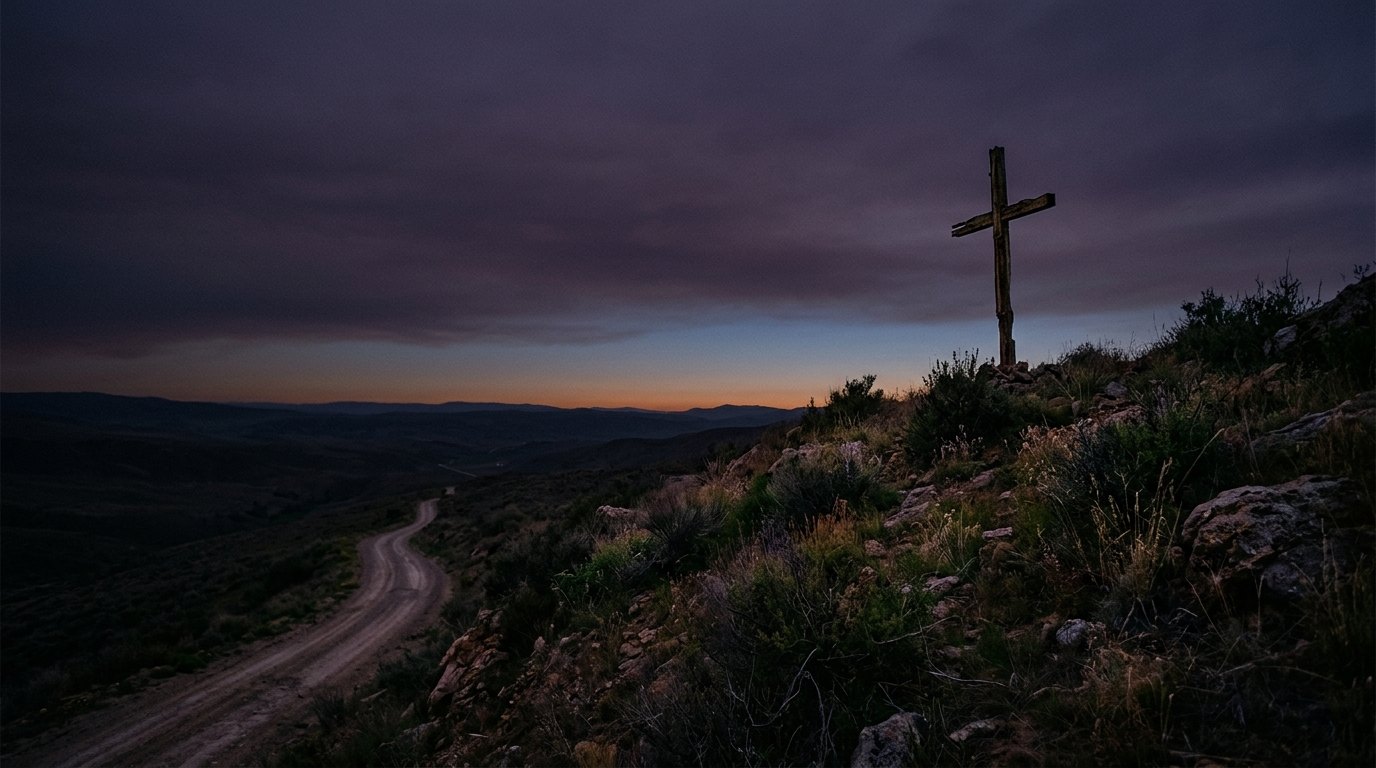
Who shall separate us from the love of Christ? Shall trouble or hardship or persecution or famine or nakedness or danger or sword? As it is written: “For your sake we face death all day long; we are considered as sheep to be slaughtered.” No, in all these things we are more than conquerors through him who loved us. For I am convinced that neither death nor life, neither angels nor demons, neither the present nor the future, nor any powers, neither height nor depth, nor anything else in all creation, will be able to separate us from the love of God that is in Christ Jesus our Lord.
Romans 8:35-39 (NIV)
Paul proclaims that neither death, hardship, nor any power can separate us from Christ's love.
In Romans 8:35-39, the apostle Paul proclaims that nothing in all creation can separate us from the love of God in Christ Jesus. Hardship, persecution, famine, peril, and the deepest emotional desolation cannot sever the covenant bond forged by Christ. Believers frequently measure God's nearness by the warmth of their feelings, yet the foundation of divine presence is not our emotional stability but the finished cross of Calvary. On that hill, Jesus hung beneath a blackened sky and cried out, "My God, my God, why have you forsaken me?" (Matthew 27:45-46). Christ bore the genuine, agonizing horror of divine abandonment in our place so that no child of God would ever experience absolute separation from the Father. Because Jesus stepped into the deepest darkness of human grief and divine wrath, He serves as no distant or cold spectator. According to Hebrews 4:15-16, we have a great High Priest who sympathizes with our weaknesses, inviting us to approach the throne of grace with boldness to receive mercy in our hour of need. When Christ departed bodily to heaven, He did not leave His people bereft; He promised, "I will ask the Father, and he will give you another Helper... I will not leave you as orphans; I will come to you" (John 14:16-18). The Holy Spirit permanently abides within every believer, establishing an objective union that outlasts every season of silence.
| Passage | What it says |
|---|---|
| Romans 8:35-39 | No distress, persecution, darkness, or created thing can sever believers from God's love in Christ. |
| Matthew 27:45-46 | Jesus cried out in forsakenness on the cross, taking our judgment so we are never abandoned. |
| Hebrews 4:15-16 | Our High Priest sympathizes with our weaknesses, inviting us to draw near for timely grace. |
| John 14:16-18 | Jesus promises the indwelling Holy Spirit as another Comforter, refusing to leave believers as orphans. |
Faith Beyond Sight
Walking By Faith When Senses Fail

Who among you fears the LORD and obeys the word of his servant? Let the one who walks in the dark, who has no light, trust in the name of the LORD and rely on their God.
Isaiah 50:10 (NIV)
It directly addresses the obedient believer walking in darkness, commanding trust in God's name rather than relying on felt light.
Isaiah 50:10 speaks directly to the servant of God who obeys His voice yet walks in complete darkness: let him trust in the name of the Lord and rely on his God. Walking in darkness is not necessarily a symptom of rebellion or backsliding; it is often the sovereign crucible through which authentic faith matures. Paul reminds the church that "we walk by faith, not by sight" (2 Corinthians 5:7). Sight belongs to immediate perception, tangible sensations, and comforting spiritual goosebumps, but faith rests on the enduring veracity of God's character when the senses report absence. The prophet Habakkuk exemplified this posture when facing utter desolation; even if the fig tree fails to blossom, the vines yield no fruit, and the stalls stand empty of cattle, "yet I will rejoice in the Lord; I will take joy in the God of my salvation" (Habakkuk 3:17-19). Scripture defines faith precisely as the assurance of things hoped for, the conviction of things not seen (Hebrews 11:1). As Peter comforted early believers facing severe trials, "Though you have not seen him, you love him. Though you do not now see him, you believe in him and rejoice with joy that is inexpressible and filled with glory" (1 Peter 1:8-9). True faith rejoices not in felt sight, but in the unshakable certainty of Christ's Word.
| Passage | What it says |
|---|---|
| 2 Corinthians 5:7 | Paul declares that believers walk by faith and not by sight, anchoring hope in what is unseen. |
| Isaiah 50:10 | The prophet instructs whoever walks in darkness with no light to trust in the name of the Lord. |
| Habakkuk 3:17-19 | Even when the fig tree does not blossom and fields produce no food, Habakkuk resolves to rejoice in the Lord. |
| Hebrews 11:1 | Faith is the assurance of things hoped for and the conviction of things not seen. |
| 1 Peter 1:8-9 | Peter praises believers who love and believe in Christ though they do not currently see Him. |
Clearing the Path
Self-Examination and Seeking Restoration

Come near to God and he will come near to you. Wash your hands, you sinners, and purify your hearts, you double-minded.
James 4:8 (NIV)
It pairs the gracious promise that God will draw near with the practical call to repent and purify the heart.
James 4:8 extends both a gracious invitation and a piercing command: draw near to God, and he will draw near to you. While spiritual dryness is often a normal trial of faith, Scripture also teaches that unconfessed, cherished sin can create an apparent gulf between the soul and God. As the prophet warns, "your iniquities have made a separation between you and your God, and your sins have hidden his face from you so that he does not hear" (Isaiah 59:1-2). When God feels distant, wisdom calls the believer to quiet self-examination rather than bitter complaint. Like David, we pray with vulnerability, "Search me, O God, and know my heart! Try me and know my thoughts! And see if there be any grievous way in me, and lead me in the way everlasting" (Psalms 139:23-24). Drawing near requires that we "cleanse your hands, you sinners, and purify your hearts, you double-minded" (James 4:8). This cleansing is never an impossible self-reformation; it is the gift of repentance. When the Spirit reveals compromise, the believer does not despair, for if we confess our sins, he is faithful and just to forgive us our sins and to cleanse us from all unrighteousness (1 John 1:9). Repentance dissolves the relational barrier and restores the joy of walking openly before the Lord.
| Passage | What it says |
|---|---|
| Psalms 139:23-24 | David invites God to search his heart, test his thoughts, and lead him in the everlasting way. |
| Isaiah 59:1-2 | Isaiah warns that iniquities can make a separation between people and their God, hiding His face. |
| James 4:8 | James urges believers to draw near to God, cleanse their hands, and purify their double-minded hearts. |
| 1 John 1:9 | John promises that confessing sins leads to faithful forgiveness and cleansing from all unrighteousness. |
Where in the Bible
| Book | Passages |
|---|---|
| Deuteronomy | 1 · Deuteronomy 31:6 |
| Joshua | 1 · Joshua 1:5 |
| 1 Kings | 1 · 1 Kings 8:27 |
| Job | 1 · Job 23:8-10 |
| Psalms | 8 · Psalms 139:7-12, Psalms 42:1-11, Psalms 13:1-6, Psalms 22:1-5, Psalms 88:1-18, Psalms 10:1, Psalms 77:7-12, Psalms 139:23-24 |
| Proverbs | 1 · Proverbs 15:3 |
| Isaiah | 5 · Isaiah 41:10, Isaiah 43:1-2, Isaiah 46:3-4, Isaiah 50:10, Isaiah 59:1-2 |
| Jeremiah | 1 · Jeremiah 23:23-24 |
| Jonah | 1 · Jonah 1:3-4 |
| Habakkuk | 1 · Habakkuk 3:17-19 |
| Matthew | 2 · Matthew 28:20, Matthew 27:45-46 |
| John | 1 · John 14:16-18 |
| Acts | 2 · Acts 17:27-28, Acts 2:42 |
| Romans | 2 · Romans 10:17, Romans 8:35-39 |
| 1 Corinthians | 1 · 1 Corinthians 11:23-26 |
| 2 Corinthians | 1 · 2 Corinthians 5:7 |
| Galatians | 1 · Galatians 6:2 |
| Philippians | 1 · Philippians 4:6-7 |
| Colossians | 1 · Colossians 3:16 |
| 2 Timothy | 1 · 2 Timothy 2:13 |
| Hebrews | 4 · Hebrews 13:5-6, Hebrews 10:24-25, Hebrews 4:15-16, Hebrews 11:1 |
| James | 1 · James 4:8 |
| 1 Peter | 1 · 1 Peter 1:8-9 |
| 1 John | 1 · 1 John 1:9 |
The story in order
- God's omnipresence declared (c. 960 BC) · 1 Kings 8:27 · Solomon acknowledges God's boundless presence, not confined to the temple.
- Jonah flees God's presence (c. 760 BC) · Jonah 1:3-4 · Jonah's attempt to escape God shows God's inescapable presence.
- God's presence fills all (c. 700 BC) · Jeremiah 23:23-24 · The Lord declares His presence fills heaven and earth.
- David's lament and trust (c. 970 BC) · Psalms 13:1-6 · David questions God's seeming absence but resolves to trust.
- Job's search for God (c. 1800 BC) · Job 23:8-10 · Job cannot perceive God but knows God knows his path.
- Asaph remembers God's deeds (c. 950 BC) · Psalms 77:7-12 · Remembering God's past actions helps in times of doubt.
- Jesus promises the Spirit (AD 30) · John 14:16-18 · Jesus promises the Holy Spirit as a permanent Comforter.
- Paul on faith and sight (AD 56) · 2 Corinthians 5:7 · Believers walk by faith, not by what they see or feel.
- Early church fellowship (AD 33) · Acts 2:42 · The early church devoted themselves to fellowship and teaching.
- Jesus' promise of presence (AD 30) · Matthew 28:20 · Jesus promises to be with His disciples always.
- Hebrews on drawing near (AD 65) · Hebrews 4:15-16 · Jesus sympathizes with weakness and invites us to approach God.
- Confession and forgiveness (AD 90) · 1 John 1:9 · Confessing sins leads to God's faithful forgiveness.
God's Presence: Promise and Reality
| God's Promise | Felt Reality | Scriptural Response | Passage |
|---|---|---|---|
| God is always near, never leaving or forsaking. | Feeling distant or abandoned. | Trust God's promise of presence. | Hebrews 13:5-6 |
| God is with us through trials. | Facing overwhelming difficulties. | Remember God's faithfulness and power. | Isaiah 43:1-2 |
| Jesus is with us always. | Feeling alone or unsupported. | Recall Jesus' promise and the Spirit's presence. | Matthew 28:20 |
| God will never leave you. | Experiencing spiritual dryness. | Hold onto God's unchanging character. | Deuteronomy 31:6 |
Walking by Faith
| Command | Reason | Action in Dryness | Passage |
|---|---|---|---|
| Trust in the Lord. | No light to guide your steps. | Rely on God's name. | Isaiah 50:10 |
| Rejoice in the Lord. | Economic hardship and lack of provision. | Find joy in God despite circumstances. | Habakkuk 3:17-19 |
| Walk by faith. | Cannot see or perceive God's immediate presence. | Believe in the unseen reality of God. | 2 Corinthians 5:7 |
| Love and believe in Christ. | You do not see Him now. | Affirm your conviction in Him. | 1 Peter 1:8-9 |
Key words
- Presence (Hebrew: shakan, Greek: parousia)
- God's active, real nearness to His people. · Jeremiah 23:23-24
- Lament (Hebrew: tefillah)
- An honest cry to God expressing sorrow, pain, or questioning. · Psalms 13:1-6
- Faith (Hebrew: 'emunah, Greek: pistis)
- Confident belief in God and His promises, especially when unseen. · Hebrews 11:1
- Promise (Hebrew: 'imrah, Greek: epaggelia)
- A solemn pledge or assurance given by God. · Isaiah 41:10
- Fellowship (Greek: koinonia)
- Communion and shared life with other believers. · Acts 2:42
- Abandonment (Greek: kataleipo)
- The state of being forsaken or left alone. · Matthew 27:46
Spiritual darkness cannot extinguish the unchanging truth of God's covenantal nearness. Grounding your troubled heart in His Word, speaking honestly in lament, and receiving Christ through His church will carry you through every dry season. Trust the Lord who entered the darkest depths on the cross so that He would never abandon you.
41 passages, each cited once.
Scripture cited
- Psalms 139:7-12
- Psalms 42