What was the early church like?
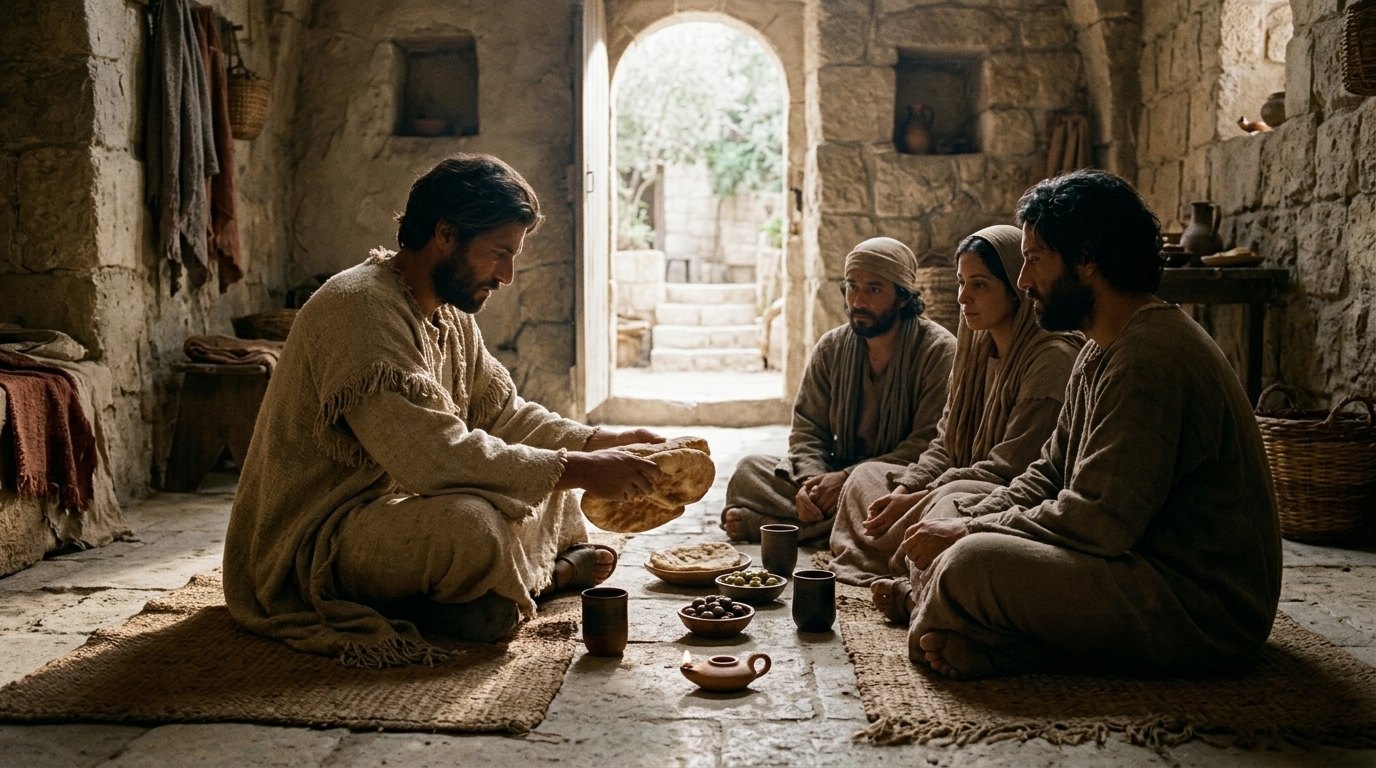
Acts 2:42-47
42 They devoted themselves to the apostles’ teaching and to fellowship, to the breaking of bread and to prayer.
43 Everyone was filled with awe at the many wonders and signs performed by the apostles.
44 All the believers were together and had everything in common.
45 They sold property and possessions to give to anyone who had need.
46 Every day they continued to meet together in the temple courts. They broke bread in their homes and ate together with glad and sincere hearts,
47 praising God and enjoying the favor of all the people. And the Lord added to their number daily those who were being saved.
New International Version (NIV)
The answer
The early church was a household network of believers who kept four practices together, gave away their wealth to the needy, ate joyfully, and grew daily.
Acts 2:42 gives the rhythm of their life: they "continued steadfastly in the apostles' teaching and fellowship, in the breaking of bread, and prayer." Four things, not one: teaching (they were instructed), fellowship (they shared life), the breaking of bread (they ate together, including the Lord's Supper), and prayer. These were not occasional; they "continued steadfastly" in them.
What their fellowship looked like
- They were together and shared everything. Acts 2:44 says "All who believed were together, and had all things in common." That's not a slogan but a description of their practice.
- They sold possessions to meet need. Acts 2:45: "They sold their possessions and goods, and distributed them to all, according as anyone had need." This is the pattern the early church set as the norm for caring for the poor — and it is the root of what we now call alms (Matthew 5:42; Matthew 6:1-4).
- They met daily, in the temple and in homes. Acts 2:46 says they continued "with one accord in the temple, and breaking bread at home, eating their meat with gladness and singleness of heart." Both public worship and ordinary meals in homes.
- They praised God and earned goodwill with outsiders. Acts 2:47: "praising God and having favor with all the people." Their fellowship was visible enough that non-believers noticed it.
- God did the growing. The same verse says "The Lord added to the assembly day by day those who were being saved." The church grew by His grace, not by marketing.
The fear of God was on them
Acts 2:43: "Fear came on every soul, and many wonders and signs were done through the apostles." Reverence for God ran through it all — their meetings were not merely pleasant social occasions.
Why it matters for us
- Community was not optional. Hebrews 10:25 commands it: "Not forsaking the assembling of ourselves together, as the manner of some is; but exhorting one another." The early church needed each other for mutual encouragement — the Greek idea behind "exhorting" is calling out to one another, speaking a word of life.
- Fellowship with God comes first. 1 John 1:3 says our fellowship "is with the Father, and with his Son Jesus Christ," and 1 John 1:7 says that walking in the light produces fellowship with one another and cleansing through Christ. The church is a company of reconciled people, not a club for the reconciled-looking.
- It was a pattern for the ordinary week. Acts 2:46 shows the church at home over meals — the same pattern Paul followed in Troas, where the disciples came together to break bread on the first day of the week and he preached until midnight (Acts 20:7). The early church's Sunday rhythm was the Word, the breaking of bread, and time spent together.
A word of warning
Acts 1:14 shows this began even before Pentecost: the believers "continued with one accord in prayer and supplication, with the women, and Mary the mother of Jesus, and with his brethren." The church's first instinct, in waiting, was to pray together.
What Scripture pictures is not a program to copy but a pattern of grace: teach the word, share life and goods, break bread, pray, and let God add the saved.
Answered from Scripture · reviewed November 11, 2026
The early church was not a formal weekly assembly or an impersonal institution, but a vibrant household network bound together by the gospel of Jesus Christ. Filled with the Holy Spirit after Pentecost, the first believers established an enduring daily rhythm of sound doctrine, fervent prayer, radical generosity, and sincere fellowship. Examining their life together reveals God's timeless design for His people: a holy community walking in reverent awe, mutual love, and steady kingdom fruitfulness.
The Foundation
United in Prayer Awaiting the Spirit
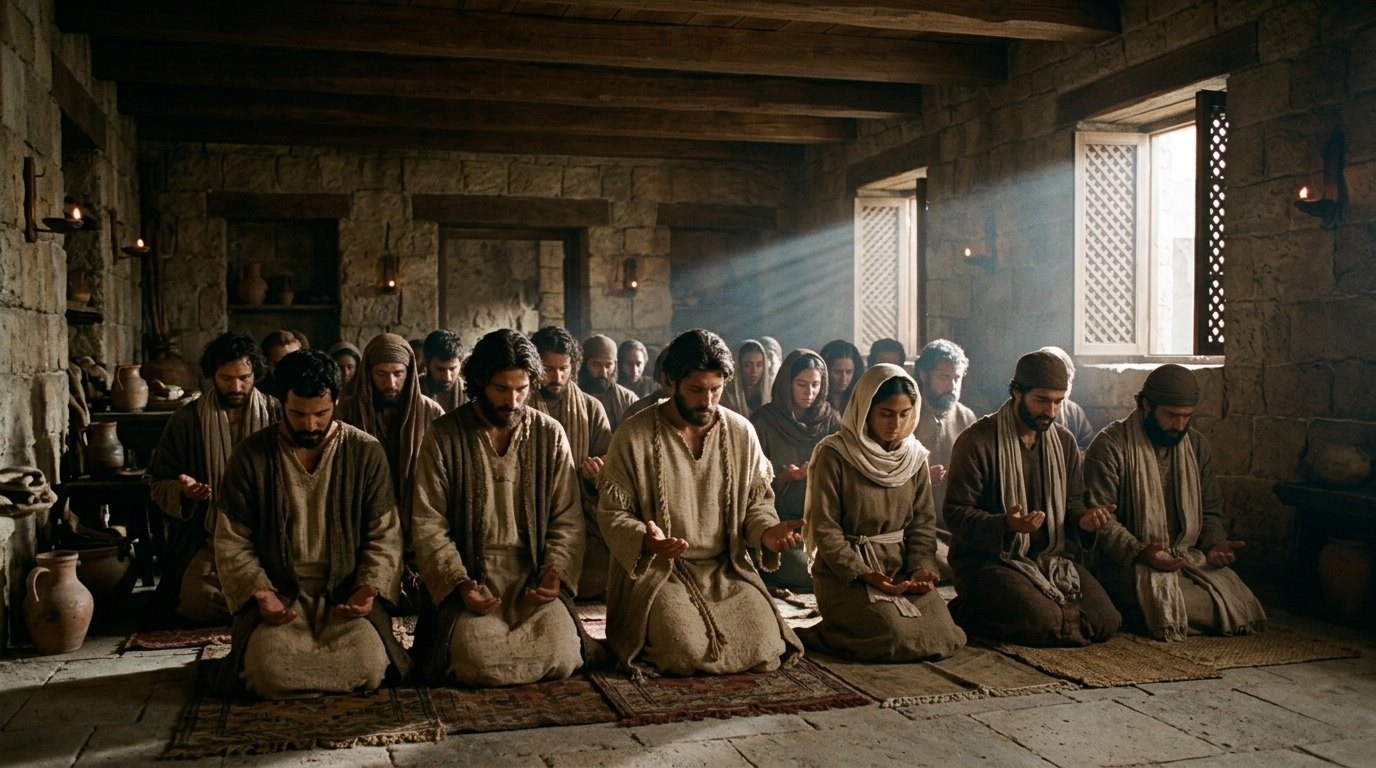
They all joined together constantly in prayer, along with the women and Mary the mother of Jesus, and with his brothers.
Acts 1:14 (NIV)
It shows the church born in sustained, unified prayer among the apostles, women, and the family of Jesus.
Before the church walked out into the streets of Jerusalem, it knelt together in an upstairs room. Acts 1:14 shows the community born in sustained, unified prayer, recording that the apostles, the women who followed Christ, Mary His mother, and His brothers "all continued with one accord in prayer and supplication." They did not rush ahead into public ministry with human strategies. Instead, they anchored their expectations entirely upon the promise of their risen Lord. In Acts 1:8, Jesus had declared that they would receive power when the Holy Spirit came upon them, commissioning them to be His witnesses in Jerusalem, throughout Judea and Samaria, and to the uttermost parts of the earth.
That promised enablement required utter dependence. When the feast of Pentecost arrived in Acts 2:1, the disciples were still found "with one accord in one place." Their unity was not an incidental harmony of temperament, but a shared longing for God to accomplish His declared purpose. Scripture records the decisive divine answer in Acts 2:4, where they were all filled with the Holy Spirit and began to speak in other tongues as the Spirit gave them utterance. This miraculous outpouring demonstrated that the church’s life, courage, and vocal witness stem solely from God's living presence, moving through believers who wait together upon His Word in faith.
| Passage | What it says |
|---|---|
| Acts 1:14 | The disciples and the women continued with one accord in steadfast prayer and supplication. |
| Acts 2:1 | When the day of Pentecost arrived, the believers were gathered together in one place with one accord. |
| Acts 1:8 | Jesus promises the apostles power when the Holy Spirit comes upon them to be witnesses to the ends of the earth. |
| Acts 2:4 | The believers are all filled with the Holy Spirit and speak in other tongues as the Spirit gives utterance. |
The Four Pillars
Devoted to Doctrine, Fellowship, Bread, and Prayer
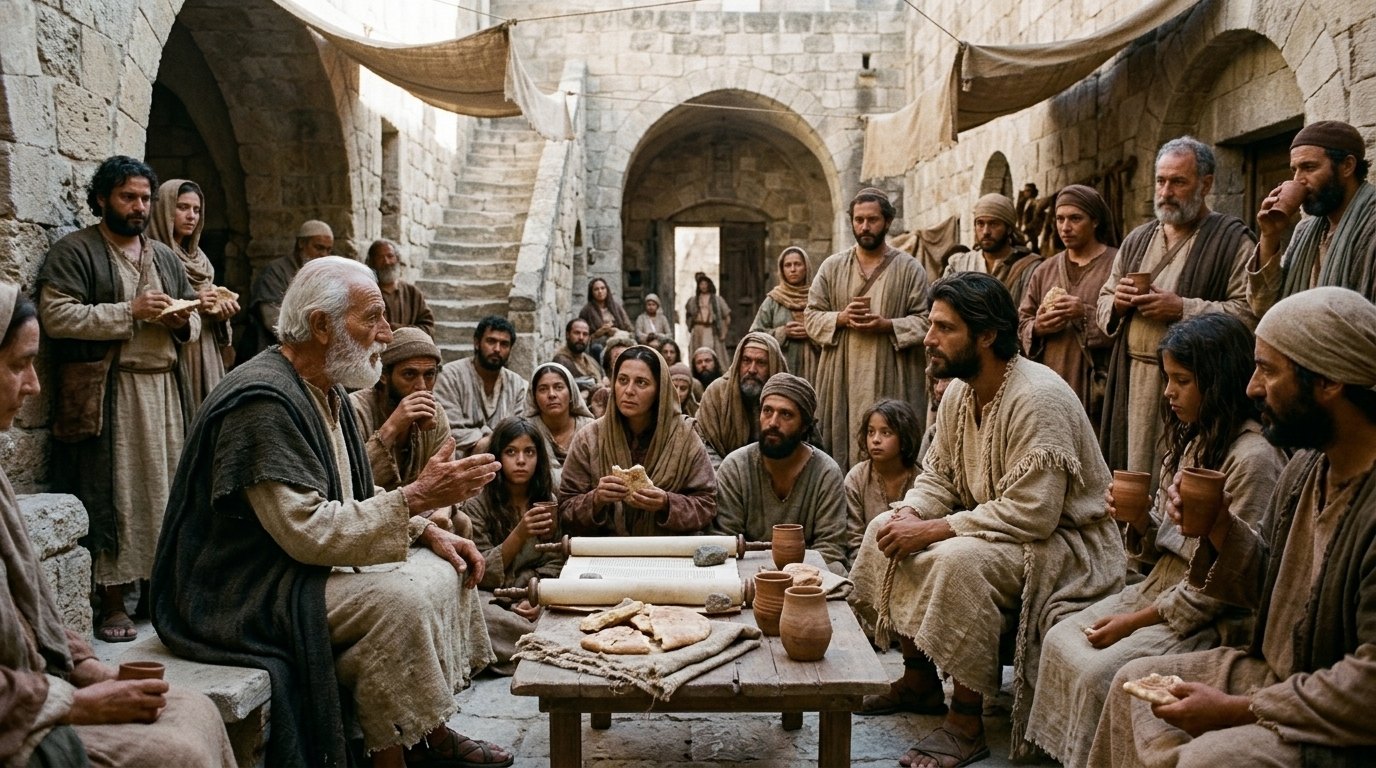
They devoted themselves to the apostles’ teaching and to fellowship, to the breaking of bread and to prayer.
Acts 2:42 (NIV)
It names the four non-negotiable spiritual disciplines that shaped the daily life of the apostolic community.
The early believers did not disperse into fragmented, private spiritualities once thousands were baptized; they established a steadfast daily rhythm. Acts 2:42 names the four foundational commitments that anchored their corporate life: "they continued steadfastly in the apostles' doctrine and fellowship, in the breaking of bread, and in prayers." Sound biblical teaching from the apostles formed their minds, deep covenantal fellowship bound their lives together, the breaking of bread kept Christ's sacrificial death at the heart of their tables, and united prayer fueled their boldness before God.
This devotion defined the rhythm of the growing church throughout the apostolic age. When the disciples gathered at Troas in Acts 20:7, they assembled upon the first day of the week specifically to break bread and hear prolonged preaching of the Word, establishing the enduring pattern of the Lord's Day. Corporate prayer was their instinctive reflex in crisis. In Acts 4:31, when threatened by civil authorities, the church prayed until the place was shaken, all were refilled with the Holy Spirit, and they spoke the word of God with unshrinking boldness. Similarly, in Acts 12:5, when Peter was bound between soldiers in prison, constant, fervent prayer was offered up to God by the church on his behalf, proving that corporate intercession was their vital lifeline.
| Passage | What it says |
|---|---|
| Acts 2:42 | The believers steadfastly maintained apostolic teaching, shared fellowship, broke bread together, and devoted themselves to prayers. |
| Acts 20:7 | Disciples gathered upon the first day of the week to break bread and receive prolonged preaching of the Word. |
| Acts 4:31 | After corporate prayer, the place is shaken, all are filled with the Holy Spirit, and they speak God's word boldly. |
| Acts 12:5 | Constant and earnest prayer is made by the church to God while Peter is kept in prison. |
Holy Reverence
Walking in the Awe of God
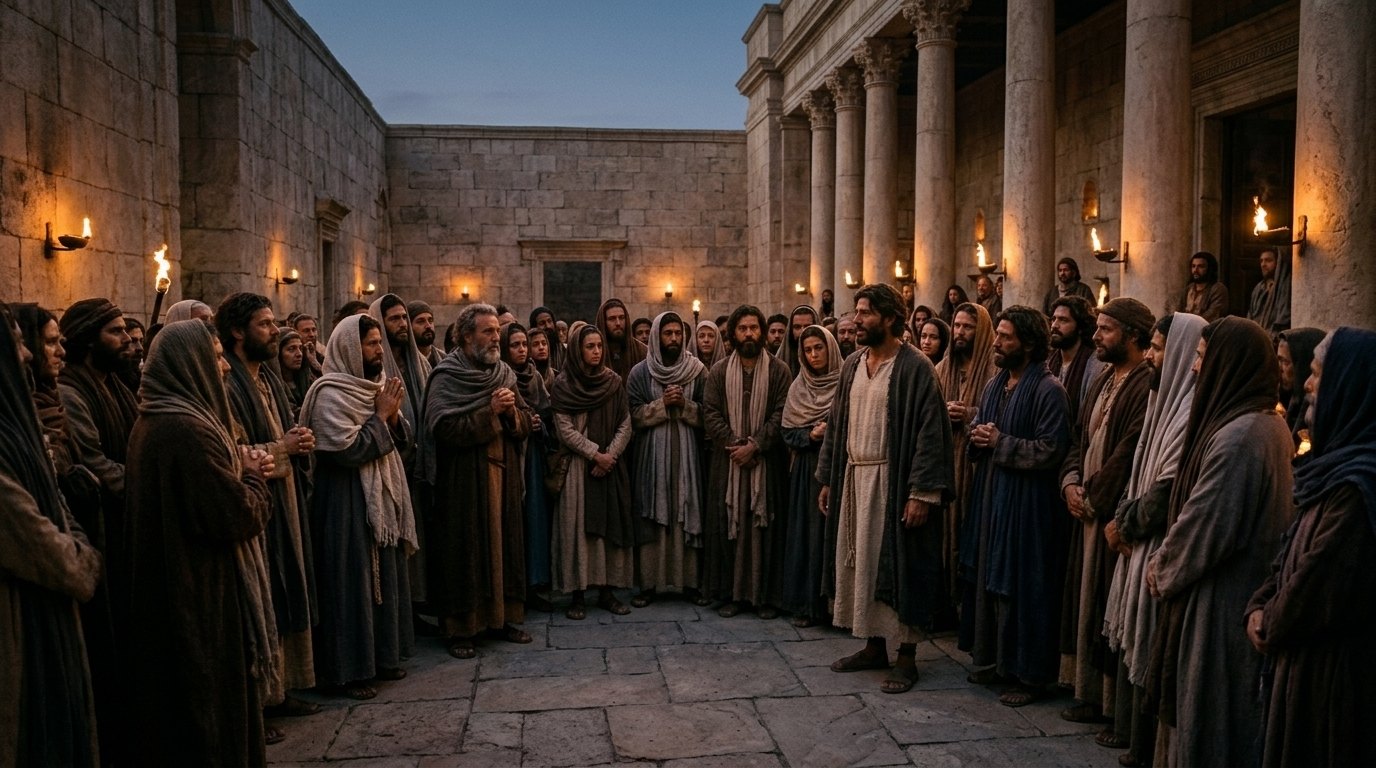
Everyone was filled with awe at the many wonders and signs performed by the apostles.
Acts 2:43 (NIV)
It reveals that the church's shared life was governed by holy fear rather than mere human sociability.
The atmosphere of the early church was characterized not by shallow entertainment, but by the profound holiness of God. Acts 2:43 declares that fear came upon every soul, as many wonders and signs were done through the apostles. This was not a paralyzing terror, but a deep, reverent awe produced by the manifest presence of the living Lord working among them. They understood that the church is the dwelling place of the Holy Spirit, demanding purity of heart, integrity of speech, and reverence before God's majesty.
God dramatically defended that sacred holiness when sin threatened to poison the assembly from within. In Acts 5:1, Ananias and Sapphira conspired to keep back part of their land's sale proceeds while lying to the Holy Spirit to project false piety. God struck them down instantly in righteous judgment, and Acts 5:11 records the sober result: "great fear came upon all the church and upon all who heard these things." Far from driving people away, this holy seriousness guarded the purity and power of the community. In Acts 9:31, Scripture summarizes this healthy spiritual climate, noting that the churches throughout Judea, Galilee, and Samaria enjoyed peace and grew steadily, "walking in the fear of the Lord and in the comfort of the Holy Spirit."
| Passage | What it says |
|---|---|
| Acts 2:43 | A deep sense of reverent awe came over every soul as the apostles performed many signs and wonders. |
| Acts 5:11 | Great fear gripped the entire church and all who heard about God's direct judgment on deceit. |
| Acts 5:1 | Ananias and Sapphira conspire to hold back a portion of their land's proceeds while lying to the Holy Spirit. |
| Acts 9:31 | The churches experience peace and multiplication while walking in the fear of the Lord and comfort of the Holy Spirit. |
Radical Generosity
Selling Goods to Meet Every Need
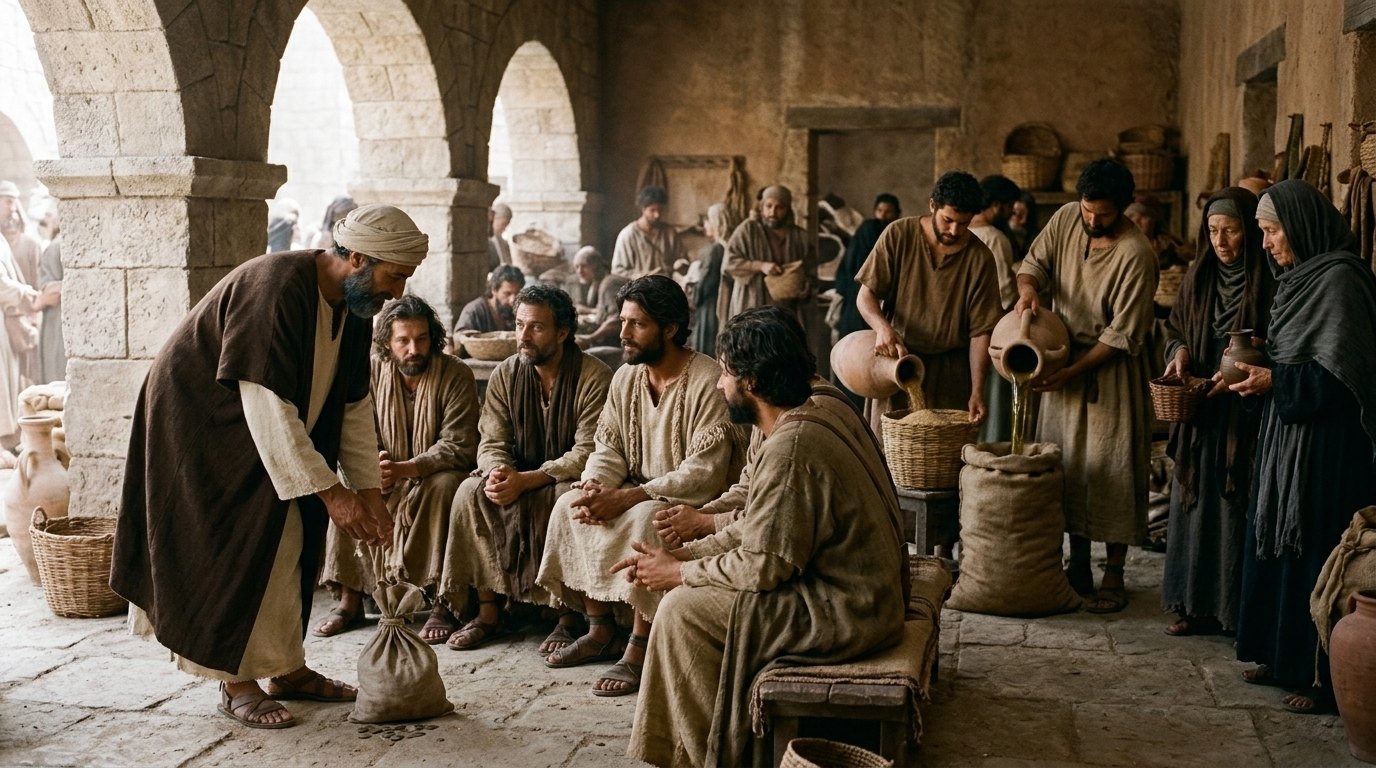
They sold property and possessions to give to anyone who had need.
Acts 2:45 (NIV)
It records the willing liquidation of personal property to ensure no believer suffered lack.
The gospel transformed how the early Christians viewed their material possessions, replacing self-protective ownership with spontaneous, sacrificial love. Acts 2:45 captures this radical generosity, recording that believers "sold their possessions and goods, and divided them among all, as anyone had need." In Acts 2:44, Luke notes that all who believed gathered together and held their goods in common, viewing their wealth as a stewardship to serve their brothers and sisters in Christ.
As the church expanded, this selfless care only deepened. Acts 4:32 records that the multitude of believers was "of one heart and one soul," and none claimed private ownership over what they possessed. The fruit of this grace was breathtaking: according to Acts 4:34, there was not a single needy person among them. Owners of lands and houses willingly sold them and laid the full proceeds at the apostles' feet (Acts 4:35) for distribution according to genuine need. Nor was this benevolence restricted to Jerusalem. In Acts 11:29, disciples in Antioch sent famine relief to Judea according to each member’s ability. Later, Paul rejoiced in 2 Corinthians 8:2 over the Macedonian churches, whose deep poverty and overflowing joy yielded rich generosity for the saints, proving that the cross produces cheerful, unrestrained giving throughout the body of Christ.
| Passage | What it says |
|---|---|
| Acts 2:44 | All who believed were gathered together and held their material possessions in common. |
| Acts 2:45 | Believers sold possessions and distributed proceeds to provide for anyone who had need. |
| Acts 4:32 | The multitude of believers was of one heart and soul, claiming nothing privately but sharing all things. |
| Acts 4:34 | There was not a needy person among them because owners of lands and houses sold them to assist others. |
| Acts 4:35 | Proceeds of sales were laid at the apostles' feet for distribution to each according to need. |
| Acts 11:29 | Disciples determine to send relief to the brothers living in Judea according to each member's ability. |
| 2 Corinthians 8:2 | Macedonian believers exhibit an abundance of joy and extreme poverty that overflows in rich generosity. |
Daily Hospitality
Breaking Bread in Homes with Glad Hearts
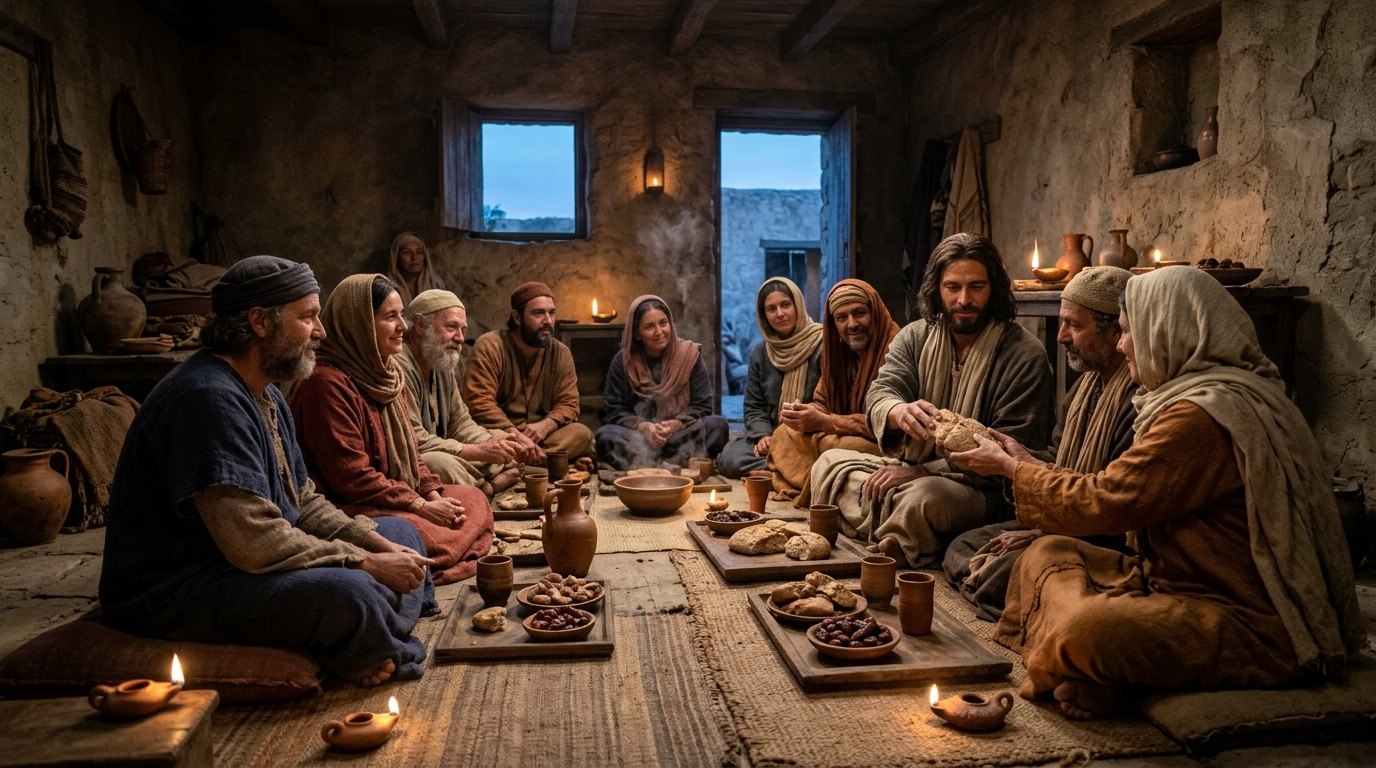
Every day they continued to meet together in the temple courts. They broke bread in their homes and ate together with glad and sincere hearts,
Acts 2:46 (NIV)
It portrays the seamless integration of public worship in the temple courts and shared meals in private homes.
In Acts 2:46, we see the rhythmic heartbeat of apostolic life: believers walked together in daily temple attendance and “breaking bread from house to house, did eat their meat with gladness and singleness of heart.” Faith in Christ was not sequestered into an isolated weekly ceremony. Instead, authentic discipleship wove the majesty of public worship together with the intimate hospitality of the family table. Shared meals were marked by unpretentious joy, gratitude, and sincere affection, making every hearth a sanctuary of fellowship.
This continuous lifestyle of shared meals and constant instruction defined their public witness. Acts 5:42 records that “daily in the temple, and in every house, they ceased not to teach and preach Jesus Christ.” Living rooms and domestic courtyards became vibrant centers of ministry. The gospel invaded ordinary spaces, turning hospitality into an engine for community care and steady theological formation.
The apostolic epistles reinforce this posture as standard Christian obedience. In Romans 12:13, Paul commands believers to be “distributing to the necessity of saints; given to hospitality.” Meeting practical needs and receiving brothers and sisters into one’s living quarters was considered a natural reflex of saving grace. Likewise, Philemon 1:2 mentions Apphia, Archippus, and “the church in thy house,” demonstrating that throughout the Greco-Roman world, the local assembly gathered right at the domestic table. By opening their doors, early believers shielded the vulnerable, nourished the hungry, and mirrored the welcoming mercy of Jesus.
| Passage | What it says |
|---|---|
| Acts 2:46 | Believers gathered daily in the temple courts and shared ordinary meals across homes with joy and sincere hearts. |
| Acts 5:42 | Every day, in the temple and from house to house, they never ceased teaching and preaching Jesus Christ. |
| Romans 12:13 | Believers are instructed to contribute to the needs of the saints and practice hospitality continually. |
| Philemon 1:2 | Paul sends greetings to Apphia, Archippus, and the local church meeting regularly in Philemon's house. |
Divine Multiplication
Praising God and Finding Favor
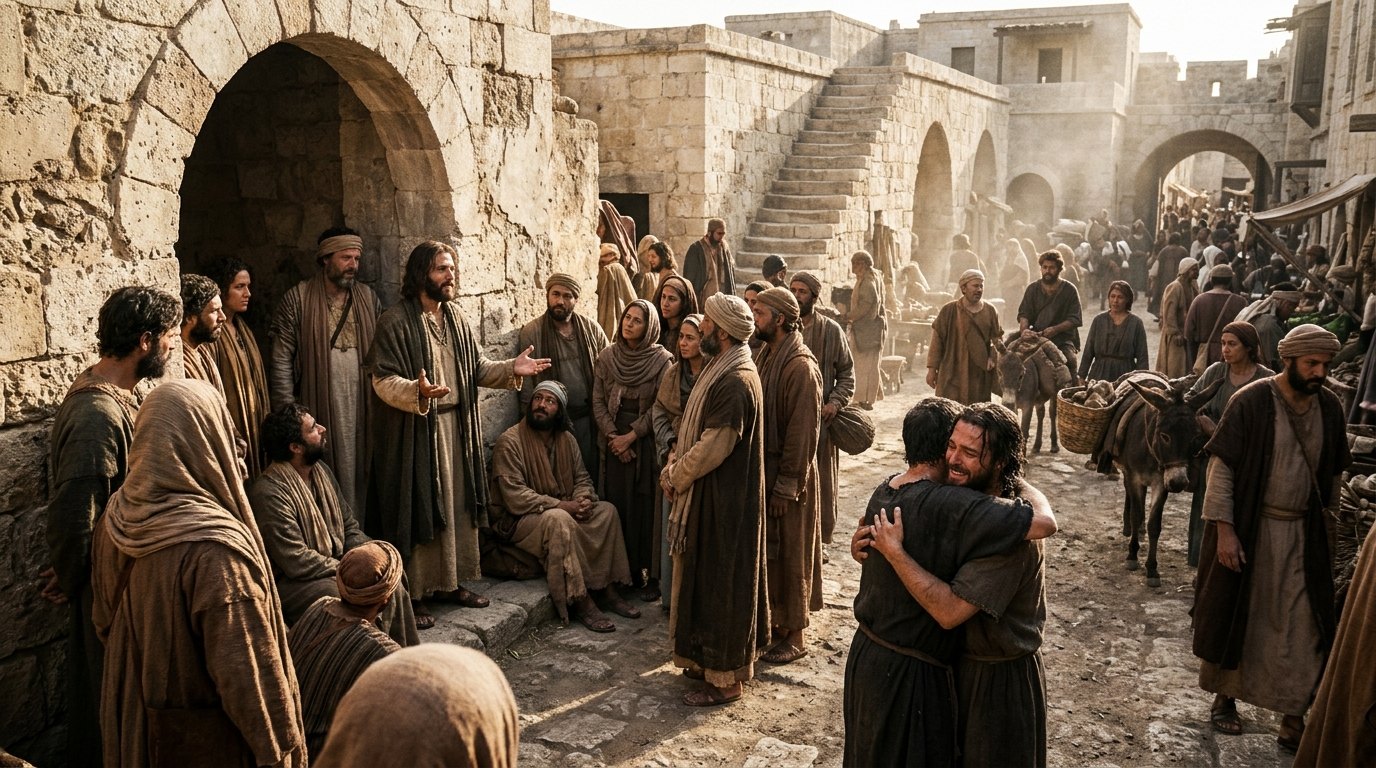
praising God and enjoying the favor of all the people. And the Lord added to their number daily those who were being saved.
Acts 2:47 (NIV)
It shows that kingdom growth is the direct work of the Lord adding to a faithful, praising community.
The vibrant spiritual life of the early disciples produced undeniable, harvest-yielding evangelism. As Acts 2:47 declares, they lived “praising God, and having favour with all the people. And the Lord added to the church daily such as should be saved.” Scripture makes clear that true kingdom expansion is never manufactured through mere human marketing or worldly compromise; it is the sovereign Lord who adds living stones to His redeemed family as His people walk in worship and moral purity.
As the church preserved faithful order and sound doctrine, this supernatural harvest surged forward. Acts 6:7 recounts that “the word of God increased; and the number of the disciples multiplied in Jerusalem greatly; and a great company of the priests were obedient to the faith.” Even those deeply entrenched in religious traditionalism were converted by the prevailing power of the Word. Spiritual growth was deep, transforming individuals and overturning hard hearts across the holy city.
Opposition and trials could not stifle this sovereign momentum. When fierce hardship struck, Acts 8:4 observes that “they that were scattered abroad went every where preaching the word.” Persecution merely broadcast the seed of the gospel into unreached fields throughout Judea and Samaria. Later, in Acts 13:2, as the Antioch church “ministered to the Lord, and fasted, the Holy Ghost said, Separate me Barnabas and Saul for the work whereunto I have called them.” Out of deep corporate worship, God launched cross-cultural missionary movements to summon the nations into His salvation.
| Passage | What it says |
|---|---|
| Acts 2:47 | The church continually praised God, enjoyed popular goodwill, and the Lord added daily those being saved. |
| Acts 6:7 | The word of God spread, disciples multiplied exceedingly in Jerusalem, and many priests became obedient to the faith. |
| Acts 8:4 | Believers scattered abroad by persecution preach the word everywhere they go throughout Judea and Samaria. |
| Acts 13:2 | The church at Antioch worships and fasts as the Holy Spirit directs them to set apart Barnabas and Saul. |
The Call to Gather
Exhorting One Another as the Day Approaches
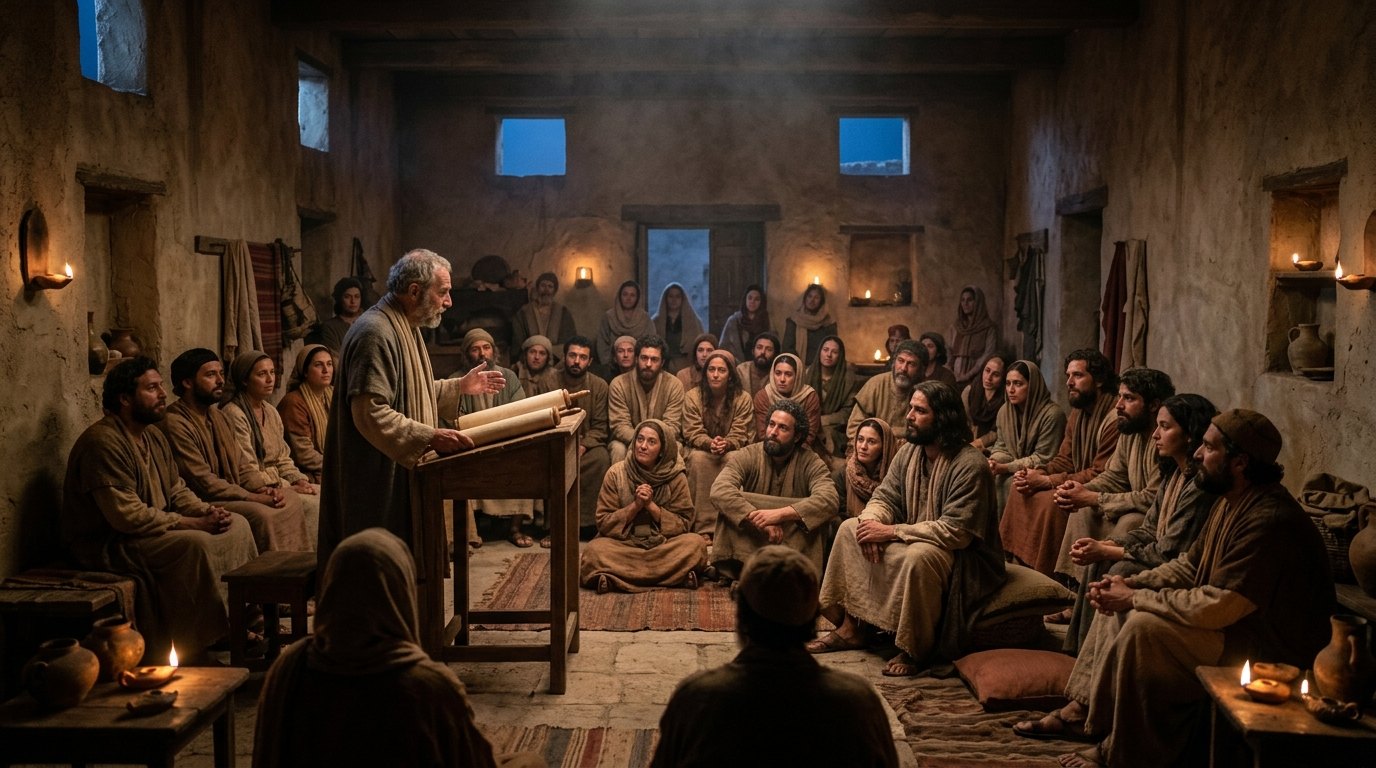
not giving up meeting together, as some are in the habit of doing, but encouraging one another—and all the more as you see the Day approaching.
Hebrews 10:25 (NIV)
It commands believers never to abandon physical corporate assembly, stressing urgent mutual exhortation.
Scripture issues an unyielding summons to regular, embodied Christian assembly. The writer of Hebrews 10:25 delivers an emphatic command: “Not forsaking the assembling of ourselves together, as the manner of some is; but exhorting one another: and so much the more, as ye see the day approaching.” Gathering physically with other saints is never an optional preference for the Christian life. As the final day of judgment and Christ's glorious return nears, regular assembly remains God's ordained lifeline for spiritual survival, mutual encouragement, and perseverance.
This gathering has an intentional purpose. Hebrews 10:24 urges us to “consider one another to provoke unto love and to good works.” Believers are responsible to stimulate one another toward holy living and active obedience. This fellowship is not a superficial social club; as 1 John 1:3 teaches, apostolic fellowship unites us directly with the Father and His Son Jesus Christ. Furthermore, 1 John 1:7 reveals that walking in divine light enables true mutual fellowship, while the blood of Jesus cleanses us from all sin.
Corporate gatherings display the living interdependence of the household of faith. Paul explains in 1 Corinthians 12:12 that “as the body is one, and hath many members, and all the members of that one body, being many, are one body: so also is Christ.” Every believer belongs, and every member is needed. Therefore, when the church gathers, 1 Corinthians 14:26 requires that “all things be done unto edifying.” Prayers, songs, and biblical instruction exist to build up the saints in holy truth.
| Passage | What it says |
|---|---|
| Hebrews 10:24 | Believers are instructed to consider one another carefully to provoke love and good deeds. |
| Hebrews 10:25 | Scripture forbids forsaking our assembling together, urging believers to exhort each other as the Day draws near. |
| 1 John 1:3 | Apostolic testimony is proclaimed so that believers may share fellowship with the apostles, Father, and Son. |
| 1 John 1:7 | Walking in divine light grants mutual fellowship and ongoing cleansing from sin through the blood of Jesus. |
| 1 Corinthians 12:12 | The body is one with many members, depicting the spiritual interdependence of all believers in Christ. |
| 1 Corinthians 14:26 | When believers come together, every psalm, teaching, revelation, and interpretation is to be done for edification. |
Order and Oversight
God appoints servant leaders and elders to shepherd His flock.
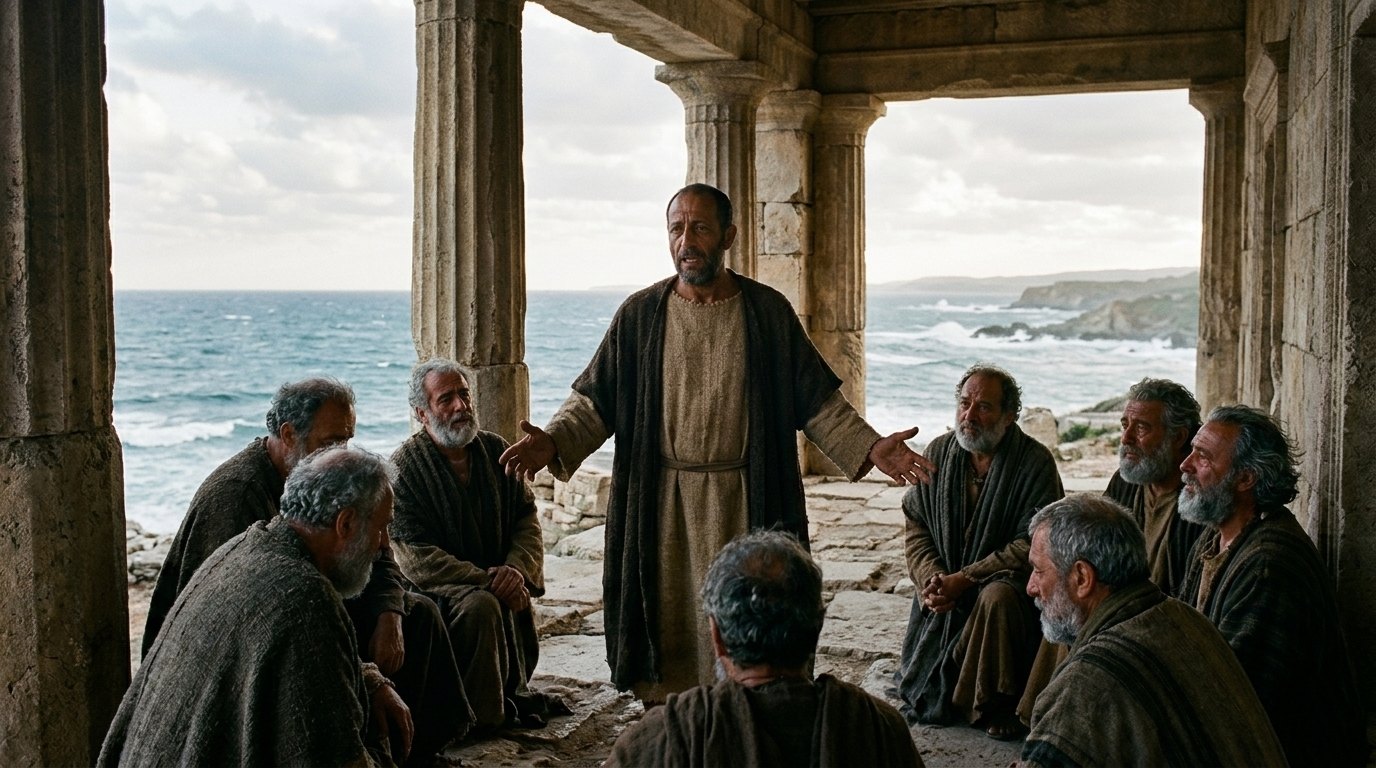
Brothers and sisters, choose seven men from among you who are known to be full of the Spirit and wisdom. We will turn this responsibility over to them
Acts 6:3 (NIV)
The appointment of the seven illustrates spiritual qualifications and church order serving pastoral and practical unity.
From its earliest days, the church preserved spiritual harmony through clear, Spirit-directed biblical order. In Acts 6:3, the apostles directed the congregation to “look ye out among you seven men of honest report, full of the Holy Ghost and wisdom, whom we may appoint over this business.” The church was never an unruly democracy or an authoritarian regime, but a Spirit-led body appointing qualified servant leaders to ensure that practical needs were met without neglecting the ministry of the Word.
This deliberate ordering arose directly out of practical necessity. In Acts 6:1, tensions flared when Greek-speaking widows were overlooked in the daily food distribution. Rather than dismissing the complaint or abandoning preaching to manage logistics, the apostles established practical leadership to defend the peace and unity of the church. This balance between gospel ministry and practical mercy secured the church against division.
As local assemblies sprouted across the Gentile world, apostolic practice established pastoral oversight in every city. Acts 14:23 records that Paul and Barnabas “ordained them elders in every church, and had prayed with fasting,” committing them to the Lord. In Acts 20:28, Paul delivered an urgent charge to the Ephesian elders: “Take heed therefore unto yourselves, and to all the flock, over the which the Holy Ghost hath made you overseers, to feed the church of God, which he hath purchased with his own blood.” These shepherds were charged to guard against false teachers and ravenous wolves. Later, Paul tasked Titus with the identical mandate in Titus 1:5, commanding him to set disordered affairs right and appoint blameless elders across Crete.
| Passage | What it says |
|---|---|
| Acts 6:1 | A dispute arises over the daily distribution of food to Grecian widows in the early Jerusalem church. |
| Acts 6:3 | The apostles direct the assembly to appoint seven men of good report, full of the Spirit and wisdom. |
| Acts 14:23 | Paul and Barnabas appoint elders in every church with prayer and fasting, committing them to the Lord. |
| Acts 20:28 | Paul warns the Ephesian elders to shepherd God's church, bought with His own blood, guarding against wolves. |
| Titus 1:5 | Paul leaves Titus in Crete to set in order remaining matters and appoint qualified elders in every city. |
Faith Amid Suffering
Persecution purifies and spreads the witness of Christ's steadfast church.
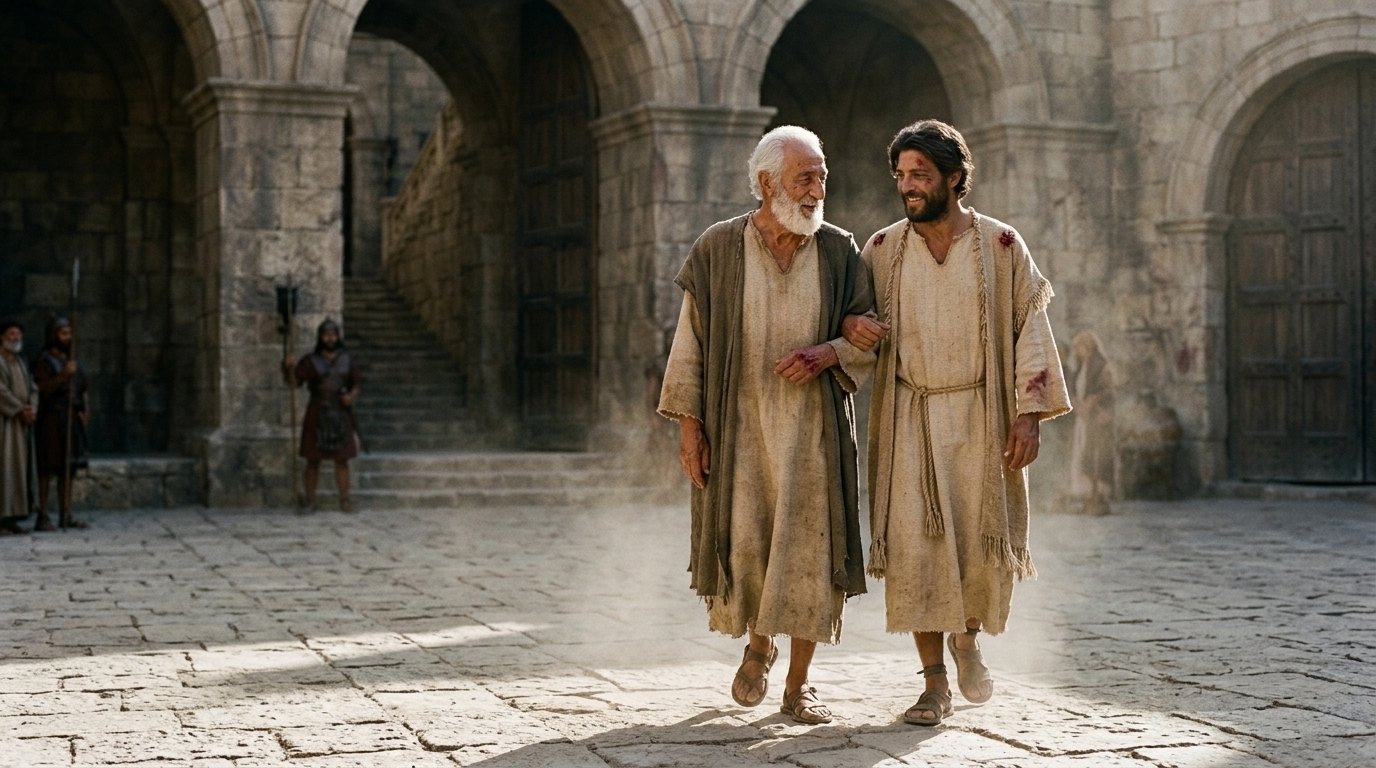
The apostles left the Sanhedrin, rejoicing because they had been counted worthy of suffering disgrace for the Name.
Acts 5:41 (NIV)
Suffering for Christ was received not as defeat, but as an honor that deepened apostolic joy.
When the apostles walked away from the council in Acts 5:41, their backs were bleeding from the lictor's rods, yet they rejoiced that they were counted worthy to suffer shame for His name. Suffering was neither a surprise nor an interruption to the early church; it was the crucible in which their testimony shone brightest. From the earliest days, the authorities sought to silence the message of the resurrection. In Acts 4:19, when commanded to cease proclaiming Christ, Peter and John answered plainly that they could not help speaking what they had seen and heard, choosing obedience to God over the threats of men. That unyielding conviction soon demanded the ultimate price. In Acts 7:59, Stephen knelt beneath a barrage of heavy stones, echoing his Savior by committing his spirit to Jesus and interceding for his executioners. Rather than extinguishing the witness of the saints, hatred merely scattered the embers into dry brush. Acts 8:1 records that when intense persecution erupted in Jerusalem, believers scattered throughout the regions of Judea and Samaria, preaching the word wherever they went. Even royal violence could not arrest the kingdom's advance: when Herod Agrippa executed James the brother of John with the sword in Acts 12:2 and seized Peter, the church responded not with retaliation or despair, but with earnest, unceasing prayer to God.
| Passage | What it says |
|---|---|
| Acts 4:19 | Peter and John insist they must obey God rather than men when forbidden to speak of Jesus. |
| Acts 5:41 | The apostles rejoice that they are counted worthy to suffer shame for the name of Jesus Christ. |
| Acts 7:59 | Stephen prays for his persecutors and commits his spirit to the Lord Jesus as he is stoned to death. |
| Acts 8:1 | A great persecution arises against the church in Jerusalem, scattering believers throughout Judea and Samaria. |
| Acts 12:2 | King Herod executes James the brother of John with the sword and arrests Peter to please the Jews. |
Jew and Gentile Reconciled
The gospel dismantles ethnic divisions into one unified body in Christ.
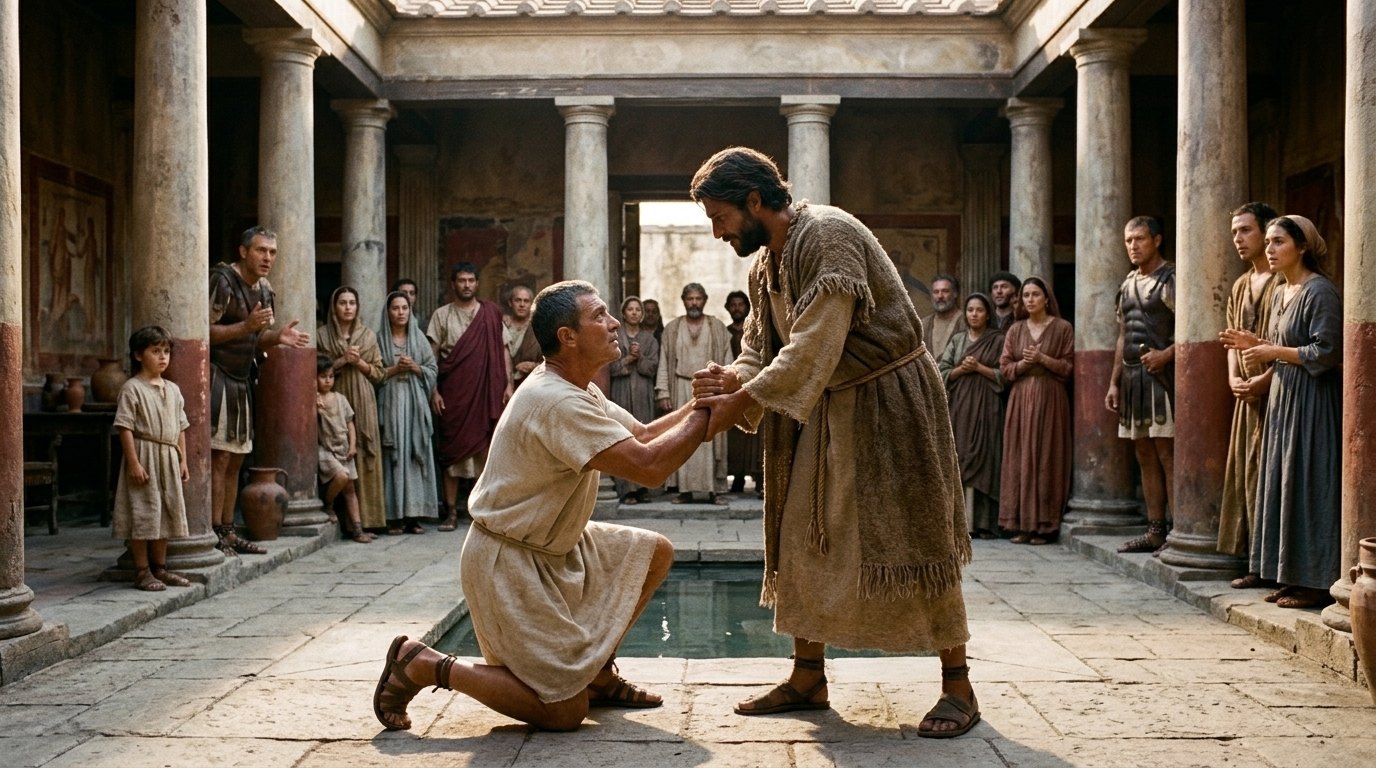
For he himself is our peace, who has made the two groups one and has destroyed the barrier, the dividing wall of hostility,
Ephesians 2:14 (NIV)
The early church visibly manifested Christ's reconciliation of divided peoples into a single, unified temple.
The breakthrough of the early church was not merely institutional expansion, but the supernatural demolition of ancient hostility. In Ephesians 2:14, the apostle Paul proclaims that Christ Himself is our peace, who has broken down the middle wall of separation. For centuries, the dividing wall in the temple courts had stood as a physical and spiritual barrier between Israel and the nations. God initiated the visible collapse of that boundary in Caesarea, where Acts 10:44 records that the Holy Spirit fell upon Cornelius and all the Gentiles gathered in his house while Peter was still speaking. When word reached the circumcised believers in Jerusalem, skepticism gave way to worship; in Acts 11:18, they held their peace and glorified God, realizing that He had granted repentance leading to life to the Gentiles as well. The doctrinal reality was formally affirmed at the Jerusalem Council in Acts 15:8, where Peter testified that God made no distinction between Jew and Gentile, cleansing all hearts through faith alone. This revolutionary unity formed the very identity of the local assemblies. As Paul declared in Galatians 3:28, cultural, social, and gender hierarchies were superseded in the household of God: all believers are established as full heirs and one new man in Jesus Christ.
| Passage | What it says |
|---|---|
| Acts 10:44 | The Holy Spirit falls upon all Gentiles hearing Peter preach the gospel in Cornelius's household. |
| Acts 11:18 | Jewish believers praise God after recognizing that He has granted repentance unto life to Gentiles also. |
| Acts 15:8 | Peter testifies at Jerusalem that God made no distinction between Jews and Gentiles, cleansing hearts by faith. |
| Galatians 3:28 | There is neither Jew nor Greek, slave nor free, male nor female, for all are one in Christ Jesus. |
| Ephesians 2:14 | Christ Himself is our peace, having broken down the barrier of hostility to unite Jew and Gentile. |
Where in the Bible
| Book | Passages |
|---|---|
| Acts | 36 · Acts 1:14, Acts 2:1, Acts 1:8, Acts 2:4, Acts 2:42, Acts 20:7, Acts 4:31, Acts 12:5, Acts 2:43, Acts 5:11, Acts 5:1, Acts 9:31, Acts 2:44, Acts 2:45, Acts 4:32, Acts 4:34, Acts 4:35, Acts 11:29, Acts 2:46, Acts 5:42, Acts 2:47, Acts 6:7, Acts 8:4, Acts 13:2, Acts 6:1, Acts 6:3, Acts 14:23, Acts 20:28, Acts 4:19, Acts 5:41, Acts 7:59, Acts 8:1, Acts 12:2, Acts 10:44, Acts 11:18, Acts 15:8 |
| Romans | 1 · Romans 12:13 |
| 1 Corinthians | 2 · 1 Corinthians 12:12, 1 Corinthians 14:26 |
| 2 Corinthians | 1 · 2 Corinthians 8:2 |
| Galatians | 1 · Galatians 3:28 |
| Ephesians | 1 · Ephesians 2:14 |
| Titus | 1 · Titus 1:5 |
| Philemon | 1 · Philemon 1:2 |
| Hebrews | 2 · Hebrews 10:24, Hebrews 10:25 |
| 1 John | 2 · 1 John 1:3, 1 John 1:7 |
The story in order
- Disciples await the Spirit (c. AD 30) · Acts 1:14 · United in prayer before Pentecost.
- Pentecost: Spirit fills believers (c. AD 30) · Acts 2:4 · Empowered to witness and speak God's word.
- Devoted to four pillars (c. AD 30) · Acts 2:42 · Doctrine, fellowship, breaking bread, prayer.
- Awe and fear of God (c. AD 30-33) · Acts 5:11 · God's judgment on deceit brings fear.
- Radical generosity shared (c. AD 30-33) · Acts 4:34 · No needy persons due to shared possessions.
- Daily hospitality and teaching (c. AD 30-33) · Acts 5:42 · Gathering daily in homes and temple courts.
- Church grows and multiplies (c. AD 33-34) · Acts 6:7 · Word spreads, disciples multiply, many believe.
- Persecution scatters believers (c. AD 34-36) · Acts 8:1 · Witness spreads throughout Judea and Samaria.
- Gentiles receive the Spirit (c. AD 36-37) · Acts 10:44 · God shows no distinction between Jew and Gentile.
- Apostles appoint elders (c. AD 47-49) · Acts 14:23 · Servant leaders appointed to shepherd the flock.
- Exhortation to gather (c. AD 60-65) · Hebrews 10:25 · Urging one another as the Day approaches.
Reconciliation: Jew and Gentile
| Barrier Broken | Unity Achieved | Outcome | Passage |
|---|---|---|---|
| Hostility between Jew and Gentile | Christ is our peace | One new man | Ephesians 2:14 |
| Ethnic distinctions | Neither Jew nor Greek | All are one in Christ Jesus | Galatians 3:28 |
| God made no distinction | Cleansing hearts by faith | Repentance unto life for Gentiles |
Key words
- Accord (homothymadon (ὁμοθυμαδόν))
- Agreement in opinion or action; unity. · Acts 1:14
- Fellowship (koinonia (κοινωνία))
- Sharing in common; intimate participation; community. · Acts 2:42
- Awe (phobos (φόβος))
- A feeling of reverential respect mixed with fear or wonder. · Acts 2:43
- Generosity (metriotēs (μετριότης))
- The quality of being kind and generous; willingness to give. · 2 Corinthians 8:2
- Hospitality (philoxenia (φιλοξενία))
- Friendly and generous reception and entertainment of guests. · Romans 12:13
- Edification (oikodomē (οἰκοδομή))
- The process of building up or strengthening, especially spiritually. · 1 Corinthians 14:26
- Shepherd (poimainō (ποιμαίνω))
- To care for, guide, and protect a flock. · Acts 20:28
The pattern established in the early church demonstrates that true Christian community is never optional or secondary for the believer. Because our fellowship is rooted in the Father and His Son through the cross, we are called to daily love, selfless generosity, and steadfast gathering. As we hold fast to sound doctrine and share life with gladness and singleness of heart, the Lord continues to build His church and draw the lost to salvation.
48 passages, each cited once.
Scripture cited
- Hebrews 10:25
- Acts 1:14
- 1 John 1:3
- Acts 2:46
- 1 John 1:7
- Acts 20:7