What were the seven last words of Jesus on the cross?

Luke 23:34
34 Jesus said, “Father, forgive them, for they do not know what they are doing.” And they divided up his clothes by casting lots.
New International Version (NIV)
The answer
The seven last words of Jesus are seven sayings he spoke from the cross, gathered from Matthew, Mark, Luke and John. No single Gospel records all seven; this is their traditional order:
- Jesus prays in Luke 23:34: “Father, forgive them, for they don’t know what they are doing.”
- To the criminal who asked to be remembered, Jesus says in Luke 23:43: “Assuredly I tell you, today you will be with me in Paradise.”
- In John 19:26-27, Jesus says to his mother, “Woman, behold, your son!” and then to the beloved disciple, “Behold, your mother!”
- Matthew 27:46 and Mark 15:34 record his cry: “My God, my God, why have you forsaken me?”
- John 19:28 records Jesus saying: “I am thirsty!”
- After receiving the vinegar, Jesus declares in John 19:30: “It is finished!”
- Finally, in Luke 23:46, Jesus cries with a loud voice: “Father, into your hands I commit my spirit!” He then breathes his last.
Answered from Scripture · reviewed November 11, 2026
Gathered across all four Gospels, the seven last sayings of Jesus on the cross trace the complete arc of redemption from agony to triumph. No single Gospel records all seven, yet harmonized together they reveal Christ interceding for his executioners, opening paradise to the penitent, and fulfilling the Scriptures in his final breath.
The First Word
Christ Prays for His Executioners
Jesus said, “Father, forgive them, for they do not know what they are doing.” And they divided up his clothes by casting lots.
Luke 23:34 (NIV)
Even as Roman soldiers nail his limbs and divide his garments, Jesus opens his suffering by interceding for their pardon.
Luke 23:34 captures the astounding opening petition of the Crucifixion: "Father, forgive them, for they know not what they do." As Roman iron pierced his hands and feet, Jesus did not call down retributive fire or summon legions of angels. Instead, he made immediate intercession for his murderers, fulfilling the ancient prophecy of Isaiah 53:12 that the suffering Servant would bear the sin of many and intercede for transgressors.
This dying utterance demonstrated that Christ's earlier ethical demands were no mere theoretical ideals. In Luke 6:27-28, he had charged his disciples to love their enemies, bless those who curse them, and pray for those who mistreat them, an instruction echoed in the Sermon on the Mount in Matthew 5:44. On the tree, Jesus practiced precisely what he preached, embodying pure divine charity at the apex of human malice.
Peter later observed this flawless posture in 1 Peter 2:23, recording that when reviled, Christ did not revile in return, but entrusted himself wholly to him who judges righteously. The power of this intercession immediately shaped the early church; when Stephen fell under a hail of stones outside Jerusalem, he knelt and prayed in Acts 7:60 with his master's exact spirit, asking the Lord not to lay the sin to his executioners' charge.
| Passage | What it says | Fulfilled |
|---|---|---|
| Isaiah 53:12 | Prophesies that the suffering Servant would bear the sin of many and make intercession for the transgressors. | Luke 23:34 |
| Luke 23:34 | Jesus petitions the Father to forgive his executioners because they do not understand the gravity of their deed. | |
| Luke 6:27-28 | Jesus commands his disciples to love their enemies, bless those who curse them, and pray for their abusers. | |
| Matthew 5:44 | Christ instructs his followers in the Sermon on the Mount to pray for those who persecute them. | |
| Acts 7:60 | Stephen echoes Christ's dying prayer while being stoned, asking the Lord not to hold this sin against them. | |
| 1 Peter 2:23 | Peter records that while reviled, Christ did not revile in return, but entrusted himself to him who judges righteously. |
The Second Word
Salvation Promised to the Penitent Thief

Jesus answered him, “Truly I tell you, today you will be with me in paradise.”
Luke 23:43 (NIV)
Jesus bestows immediate, unearned entrance into heavenly rest to a dying criminal who appeals to his kingship.
In Luke 23:43, Jesus turns to a condemned felon to issue a staggering declaration of grace: "Truly, I say to you, today you will be with me in Paradise." Moments earlier, as recorded in Luke 23:39-41, both executed criminals hung beside him, but one was seized with repentance. Rebuking the blasphemies of his companion, this dying thief confessed his own guilt, acknowledged Jesus' absolute righteousness, and demonstrated extraordinary faith by looking upon a dying man and seeing the rightful King of the universe.
His humble petition in Luke 23:42—"Jesus, remember me when you come into your kingdom"—received far more than a distant remembrance. Jesus promised him immediate, personal fellowship in glory that very day. The thief possessed no time to make restitution, perform works of righteousness, or undergo ritual washings; his salvation rested entirely upon the unmerited favor of the Savior beside him.
The word "Paradise" points directly to the heavenly presence of God. Paul describes this celestial realm in 2 Corinthians 12:4 as the glorious abode into which he was caught up, and Jesus himself promises in Revelation 2:7 that the conqueror will eat of the tree of life flourishing in the paradise of God. In his second word, the King threw wide the gates of life to an unworthy sinner.
| Passage | What it says |
|---|---|
| Luke 23:39-41 | One criminal mocks Jesus, while the other rebukes him, confessing their guilt and acknowledging Jesus' utter innocence. |
| Luke 23:42 | The repentant thief asks Jesus to remember him when he enters into his royal kingdom. |
| Luke 23:43 | Jesus assures the thief that today he will be with him in Paradise. |
| 2 Corinthians 12:4 | Paul refers to Paradise as the presence of God into which he was caught up. |
| Revelation 2:7 | Christ promises that the conqueror will eat of the tree of life in the paradise of God. |
The Third Word
Filial Devotion and the Household of Faith
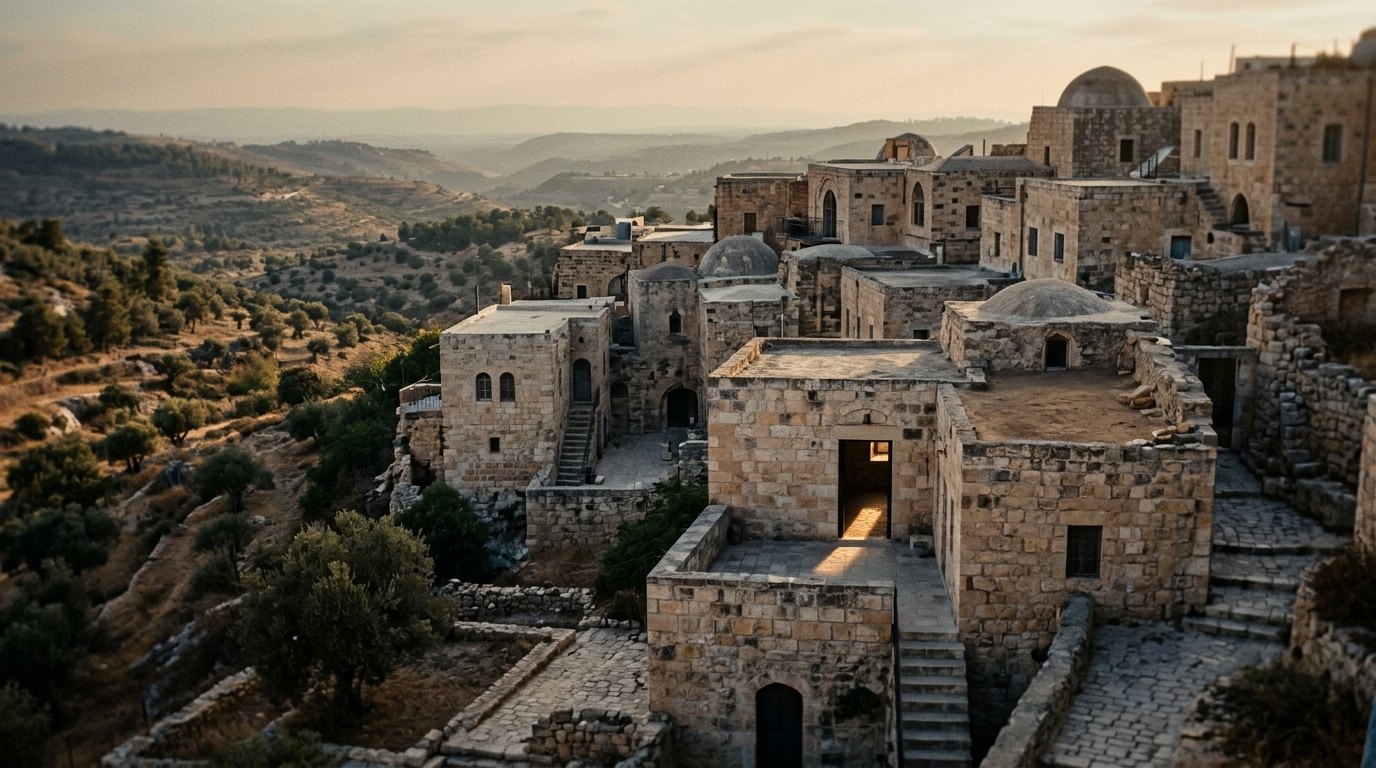
When Jesus saw his mother there, and the disciple whom he loved standing nearby, he said to her, “Woman, here is your son,” and to the disciple, “Here is your mother.” From that time on, this disciple took her into his home.
John 19:26-27 (NIV)
From the cross, Jesus honors his earthly mother by entrusting her lifelong care to the beloved disciple John.
John 19:26-27 records the third word from the cross, where Jesus addresses his grieving mother: "Woman, behold, your son!" and to John, "Behold, your mother!" Standing near the site of execution amid the mocking crowds were Mary, her sister, Mary the wife of Clopas, and Mary Magdalene, as noted in John 19:25. As Mary watched her firstborn suffer, the long-foretold prophecy of Simeon in Luke 2:34-35 reached its bitter realization: a sword was piercing through her very soul.
Even while bearing the cosmic weight of human redemption, Jesus did not neglect the Fifth Commandment given in Exodus 20:12 to honor father and mother. As the eldest son, likely fatherless since Joseph's early passing, Jesus held the legal and moral duty to secure Mary's provision. Because his earthly brothers did not yet believe in him, he entrusted her into the care of the beloved disciple, who took her into his own home from that hour.
This act underscores the foundational Christian duty articulated in 1 Timothy 5:8, where Paul teaches that anyone who fails to provide for his relatives has denied the faith. In this tender exchange, Jesus established a profound household bond, demonstrating that the family of faith constitutes an enduring communion forged at the foot of the cross.
| Passage | What it says |
|---|---|
| Exodus 20:12 | The Fifth Commandment directs children to honor father and mother that their days may be long. |
| Luke 2:34-35 | Simeon prophesies to Mary that a sword will pierce her own soul on account of her son. |
| John 19:25 | Mary the mother of Jesus, her sister, Mary the wife of Clopas, and Mary Magdalene stand near the cross. |
| John 19:26-27 | Jesus says to Mary, 'Woman, behold your son,' and to John, 'Behold your mother,' establishing their household bond. |
| 1 Timothy 5:8 | Paul teaches that anyone who fails to provide for his relatives, especially family members, has denied the faith. |
The Fourth Word
The Dark Cry of Substitutionary Abandonment

About three in the afternoon Jesus cried out in a loud voice, “Eli, Eli, lema sabachthani?” (which means “My God, my God, why have you forsaken me?”).
Matthew 27:46 (NIV)
At the ninth hour of supernatural darkness, Jesus cries out in Aramaic, bearing the full weight of divine judgment for sin.
Matthew 27:46 records the terrifying zenith of the cross: "Eli, Eli, lama sabachthani? that is, 'My God, my God, why have you forsaken me?'" As Matthew 27:45 describes, from the sixth hour until the ninth hour, an unnatural, supernatural darkness engulfed the entire land, signaling divine judgment. At the close of those three hours of blackness, Jesus cried out this piercing lament, preserved identically in Mark 15:34 in the original Aramaic phrasing.
This cry is a direct quotation of Psalms 22:1, where David foresaw the righteous sufferer crying out to God while experiencing the agony of abandonment. On Golgotha, David's prophetic song reached its terrible literal fulfillment. For the first and only time in the Gospels, Jesus did not address God as "Father," but as "My God," entering into the desolate isolation that sin demands.
Here the mystery of the atonement is laid bare. As Paul explains in 2 Corinthians 5:21, God made him who knew no sin to be sin for us, so that we might become the righteousness of God. Christ was not abandoned through any moral fault, but because he became a curse in our place, as Galatians 3:13 declares. He absorbed the full wrath of holy justice against human rebellion so that his people might never be forsaken.
| Passage | What it says | Fulfilled |
|---|---|---|
| Psalms 22:1 | David cries out asking why God has forsaken him and remained far from his groaning. | Matthew 27:46, Mark 15:34 |
| Matthew 27:45 | Supernatural darkness falls across all the land from the sixth hour until the ninth hour. | |
| Matthew 27:46 | Jesus cries out with a loud voice, 'Eli, Eli, lama sabachthani?' meaning, 'My God, my God, why have you forsaken me?' | |
| Mark 15:34 | Mark preserves the Aramaic cry of Jesus at the ninth hour of darkness in identical terms. | |
| 2 Corinthians 5:21 | Paul explains that God made him who knew no sin to be sin for us, so that we might become God's righteousness. | |
| Galatians 3:13 | Christ redeemed us from the law's curse by becoming a curse for us on the tree. |
The Fifth Word
The Physical Thirst of the Crucified
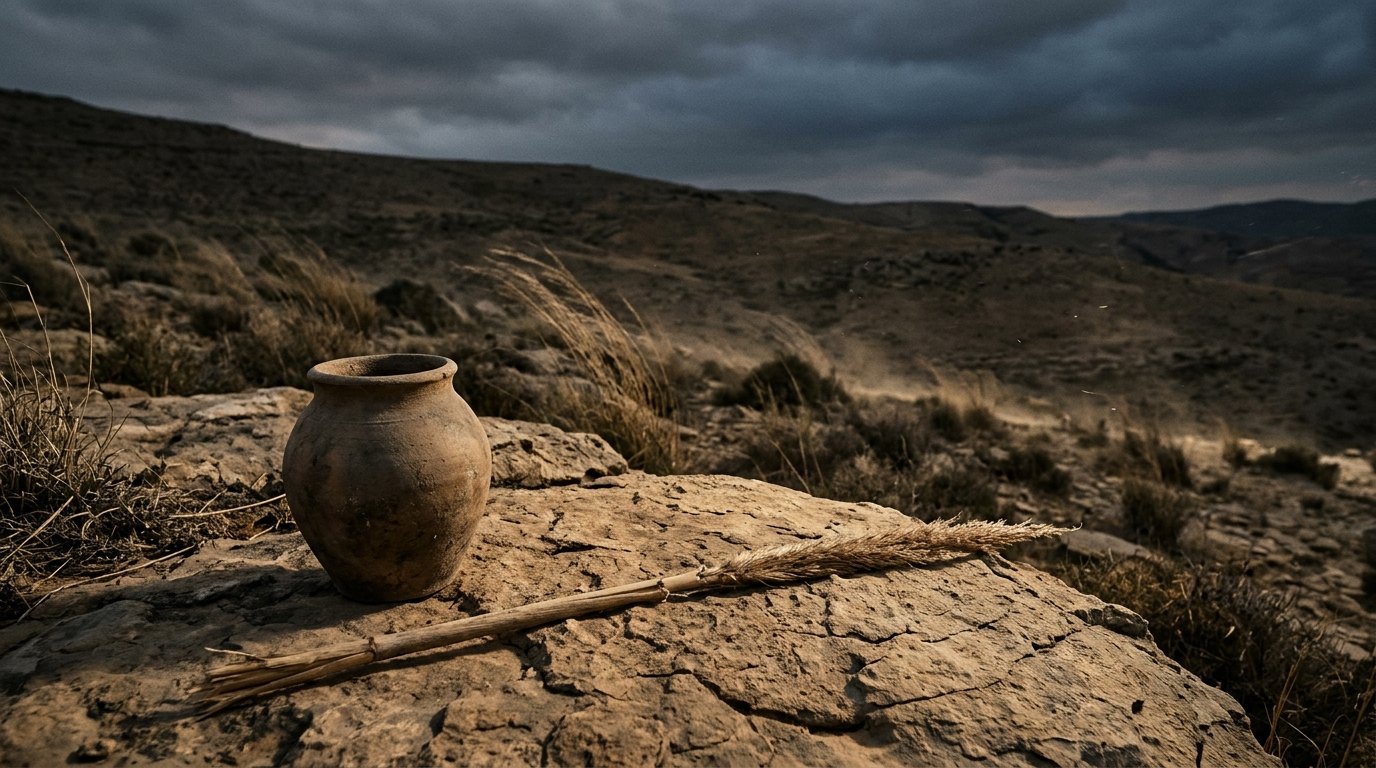
Later, knowing that everything had now been finished, and so that Scripture would be fulfilled, Jesus said, “I am thirsty.”
John 19:28 (NIV)
In two words, Jesus demonstrates his genuine human embodiment and intentionally fulfills Davidic prophecy.
In John 19:28, the fifth saying of Jesus brings the intense physical reality of the crucifixion into full view: knowing that all was now finished, Jesus said, 'I thirst.' The Apostle John specifically notes that this cry was uttered to bring the prophetic Scriptures to their appointed goal. Centuries earlier, David had foretold this visceral torment in Psalm 22:15, declaring that his strength was dried up like a piece of broken pottery and his tongue clung to his jaws. Similarly, Psalm 69:21 prophesied that adversaries would offer vinegar and gall for thirst, a word fulfilled precisely as soldiers hoisted a sponge filled with sour wine on a hyssop stalk to his lips in John 19:29. Yet this cry is far more than a physical reflex; it is a profound theological declaration. As Hebrews 2:17 makes clear, Jesus had to be made like his brothers in every respect, suffering authentic human deprivation so that he might serve as a merciful, faithful High Priest who has borne our full grief.
| Passage | What it says | Fulfilled |
|---|---|---|
| Psalms 22:15 | The Psalmist foretells that his strength is dried up like a potsherd and his tongue sticks to his jaws. | John 19:28 |
| Psalms 69:21 | David prophesies that his adversaries gave him poison for food and sour wine to quench his thirst. | John 19:28, John 19:29 |
| John 19:28 | Knowing that all things were now completed, Jesus says, 'I thirst,' in order to fulfill the Scripture. | |
| John 19:29 | Bystanders place a sponge soaked with sour wine upon a hyssop branch and lift it to his mouth. | |
| Hebrews 2:17 | Affirms that Christ had to be made like his brothers in every respect to become a merciful and faithful high priest. |
The Sixth Word
The Triumphant Cry of Consummation

When he had received the drink, Jesus said, “It is finished.” With that, he bowed his head and gave up his spirit.
John 19:30 (NIV)
Christ's declaration 'It is finished' proclaims the complete satisfaction of the law, sacrificial types, and sin's debt.
When Jesus received the sour wine in John 19:30, he cried out a single Greek word, tetelestai, proclaiming: 'It is finished.' Far from a defeated gasp, this was a triumphant declaration of absolute consummation. Psalm 22:31 anticipated this very moment, ending its vision of the suffering servant with the resounding verdict that 'he has done it.' Jesus had already anticipated this culmination in his high priestly prayer in John 17:4, affirming that he had glorified the Father by accomplishing the exact work assigned to him. With this cry, every shadowy sacrifice of the Old Testament found its end, because Christ is the culmination of the law for righteousness, as Romans 10:4 teaches. As the author of Hebrews celebrates, Jesus did not offer recurring, temporary blood, but entered the heavenly holy places once for all by his own blood (Hebrews 9:12), perfecting for all time those who are being sanctified through a single, all-sufficient offering (Hebrews 10:14).
| Passage | What it says | Fulfilled |
|---|---|---|
| Psalms 22:31 | The prophetic psalm of crucifixion concludes with the proclamation of God's righteousness: 'he has done it.' | John 19:30 |
| John 17:4 | Jesus prayed to the Father that he had glorified him on earth, finishing the work given him to accomplish. | |
| John 19:30 | When Jesus received the sour wine, he said, 'It is finished,' and bowed his head and yielded his spirit. | |
| Romans 10:4 | Paul writes that Christ is the end and culmination of the law for righteousness to everyone who believes. | |
| Hebrews 9:12 | Christ entered once for all into the holy places by means of his own blood, securing eternal redemption. | |
| Hebrews 10:14 | By a single offering Christ has perfected for all time those who are being sanctified. |
The Seventh Word
Commending His Spirit to the Father

Jesus called out with a loud voice, “Father, into your hands I commit my spirit.” When he had said this, he breathed his last.
Luke 23:46 (NIV)
With his final breath, Jesus deliberately commits his spirit into his Father's keeping, dying in sovereign serenity.
Luke 23:46 captures the final word of the Savior: calling out with a loud voice, Jesus said, 'Father, into your hands I commit my spirit.' Here Christ took the evening prayer of Israelite childhood recorded in Psalm 31:5—where David committed his spirit to the faithful God of redemption—and crowned it with the intimate title 'Father.' The timing and manner of his departure underscored his royal authority; as he had insisted in John 10:17–18, no human power could seize his life, but he laid it down entirely of his own sovereign accord. The immediate cosmological and theological answer followed without delay: Matthew 27:50–51 records that as he yielded up his spirit, the massive temple curtain tore in two from top to bottom, throwing wide the entrance into God's presence. Watching this holy, deliberate end, the Roman centurion was compelled to glorify God, professing in Luke 23:47 that this executed man was utterly innocent.
| Passage | What it says | Fulfilled |
|---|---|---|
| Psalms 31:5 | David expresses faithful surrender into the Lord's hand: 'Into your hand I commit my spirit; you have redeemed me.' | Luke 23:46 |
| Luke 23:46 | Calling out with a loud voice, Jesus says, 'Father, into your hands I commit my spirit!' and breathes his last. | |
| John 10:17-18 | Jesus stated that no one takes his life from him, but that he lays it down of his own accord. | |
| Matthew 27:50-51 | When Jesus yields up his spirit, the curtain of the temple is torn in two from top to bottom. | |
| Luke 23:47 | Seeing how Jesus died, the Roman centurion praises God and declares that this man was innocent. |
Where in the Bible
| Book | Passages |
|---|---|
| Exodus | 1 · Exodus 20:12 |
| Psalms | 5 · Psalms 22:1, Psalms 22:15, Psalms 69:21, Psalms 22:31, Psalms 31:5 |
| Isaiah | 1 · Isaiah 53:12 |
| Matthew | 4 · Matthew 5:44, Matthew 27:45, Matthew 27:46, Matthew 27:50-51 |
| Mark | 1 · Mark 15:34 |
| Luke | 8 · Luke 23:34, Luke 6:27-28, Luke 23:39-41, Luke 23:42, Luke 23:43, Luke 2:34-35, Luke 23:46, Luke 23:47 |
| John | 7 · John 19:25, John 19:26-27, John 19:28, John 19:29, John 17:4, John 19:30, John 10:17-18 |
| Acts | 1 · Acts 7:60 |
| Romans | 1 · Romans 10:4 |
| 2 Corinthians | 2 · 2 Corinthians 12:4, 2 Corinthians 5:21 |
| Galatians | 1 · Galatians 3:13 |
| 1 Timothy | 1 · 1 Timothy 5:8 |
| Hebrews | 3 · Hebrews 2:17, Hebrews 9:12, Hebrews 10:14 |
| 1 Peter | 1 · 1 Peter 2:23 |
| Revelation | 1 · Revelation 2:7 |
The story in order
- Creation and Fall (c. 4000 BC) · Genesis 1:1 · God creates all things good.
- Abrahamic Covenant (c. 2000 BC) · Genesis 12:1-3 · God promises a great nation and blessing.
- Exodus from Egypt (c. 1446 BC) · Exodus 14:21-31 · God delivers his people from slavery.
- Davidic Kingdom (c. 1000 BC) · 2 Samuel 7:12-16 · God promises an everlasting dynasty.
- Prophetic Warnings (c. 700 BC) · Isaiah 53:12 · The Suffering Servant will intercede.
- Jesus' Ministry Begins (c. AD 27) · Luke 3:21-22 · Jesus is baptized and affirmed by the Father.
- Jesus' Crucifixion (AD 30) · Luke 23:34 · Jesus' first word from the cross.
- Jesus' Resurrection (AD 30) · Matthew 28:1-10 · Christ is raised from the dead.
- The Day of Pentecost (AD 30) · Acts 2:1-4 · The Holy Spirit empowers the church.
- Stephen's Martyrdom (c. AD 35) · Acts 7:60 · Stephen echoes Jesus' prayer for forgiveness.
- Apostolic Teaching (c. AD 55) · Romans 10:4 · Christ is the culmination of the law.
- Revelation of Paradise (c. AD 95) · Revelation 2:7 · Paradise is God's presence.
Jesus' Words on the Cross and Old Testament Fulfillment
| Jesus' Word | Old Testament Scripture | Fulfillment | Passage |
|---|---|---|---|
| Father, forgive them. | Isaiah 53:12 | Jesus prays for his executioners. | Luke 23:34 |
| Today you will be with me in Paradise. | 2 Corinthians 12:4 | Jesus promises paradise to the thief. | Luke 23:43 |
| Woman, behold your son! Behold your mother! | Exodus 20:12 | Jesus provides for his mother. | John 19:26-27 |
| My God, my God, why have you forsaken me? | Psalms 22:1 | Jesus cries out in substitutionary abandonment. | Matthew 27:46 |
| I thirst. | Psalms 69:21 | Jesus experiences physical thirst. | John 19:28 |
| It is finished. | John 17:4 | Jesus declares the completion of his work. | John 19:30 |
| Father, into your hands I commit my spirit! | Psalms 31:5 | Jesus commends his spirit to the Father. | Luke 23:46 |
Key words
- Paradise (paradeisos, παράδεισος)
- The presence of God, a place of ultimate blessing and peace. · Luke 23:43
- Forgiveness (aphiēmi, ἀφίημι)
- Pardoning an offense, releasing the offender from punishment. · Luke 23:34
- Forsaken (egkataleipō, ἐγκαταλείπω)
- Abandoned or deserted by someone. · Matthew 27:46
- Thirst (dipsaō, διψάω)
- A strong desire or craving for water; a physical need. · John 19:28
- Finished (teleō, τελέω)
- Completed; brought to an end. · John 19:30
- Commit (paratithemi, παρατίθημι)
- To entrust someone or something to a person. · Luke 23:46
These seven utterances from Golgotha unveil the heart of the Savior as he accomplished the world's redemption. In his dying words, believers find absolute assurance: our sins are forgiven, the penalty is paid in full, and our eternal rest is secure in the Father's hands.
38 passages, each cited once.
Scripture cited
- Luke 23:34
- Luke 23:39-46
- John 19:25-30
- Matthew 27:45-50
- Mark 15:33-37