Who is the Antichrist?

2 Thessalonians 2:3-4
3 Don’t let anyone deceive you in any way, for that day will not come until the rebellion occurs and the man of lawlessness is revealed, the man doomed to destruction.
4 He will oppose and will exalt himself over everything that is called God or is worshiped, so that he sets himself up in God’s temple, proclaiming himself to be God.
New International Version (NIV)
The answer
The Antichrist is the coming, Satan-empowered enemy of Christ who opposes God, exalts himself as God, deceives people, and is destroyed by Jesus at His coming. The New Testament also speaks of many “antichrists” and a “spirit of the Antichrist” already active in false teaching. Scripture reveals his character and doom, not the name of a modern individual.
A personal, coming opponent
Paul calls him “the man of sin” and “the son of destruction” in 2 Thessalonians 2:3. He is revealed in connection with a rebellion against God. His defining arrogance is that he opposes everything called God or worshiped, even sitting “as God in the temple of God, setting himself up as God” (2 Thessalonians 2:4).
His power is real but Satanic. He comes with “power and signs and lying wonders” and deceives those who refuse to love the truth. Those who reject the truth and take pleasure in unrighteousness come under God’s judgment (2 Thessalonians 2:9-12).
Antichrists already at work
John distinguishes between the coming Antichrist and many antichrists already present: “the Antichrist is coming, even now many antichrists have arisen” (1 John 2:18). He then identifies their Christ-denying teaching: “Who is the liar but he who denies that Jesus is the Christ? This is the Antichrist, he who denies the Father and the Son” (1 John 2:22).
The same spirit denies that Jesus Christ has come in the flesh. John says this spirit was already in the world in his day (1 John 4:1-3), and 2 John 1:7 calls those spreading this deception “the deceiver and the Antichrist.” Antichrist is therefore not merely someone who opposes religion in general, but one who opposes and counterfeits Christ while denying the truth about Him.
His certain destruction
The Antichrist’s apparent triumph is temporary. The Lord Jesus will kill him with the breath of His mouth and destroy him by the manifestation of His coming (2 Thessalonians 2:8). Revelation likewise shows the beast and the false prophet defeated and thrown alive into the lake of fire (Revelation 19:20).
The safeguard against antichrist deception is not guessing personalities or dates. It is testing every message by its confession of Jesus Christ, remembering that impressive signs do not authenticate teaching that denies Him (1 John 4:1-3; 2 Thessalonians 2:9-10).
Answered from Scripture · reviewed November 11, 2026
Scripture reveals the Antichrist not by giving a personal name, but by cataloguing his character, his deceptive power, his blasphemous claims, and his sudden doom. Across both Testaments, the prophets and apostles unveil a climactic adversary—the man of sin, the beast, the little horn—while warning that his spirit of rebellion is already at work in the world. Knowing what God's Word declares about him guards the believer against deception and fixes the church's hope entirely on Jesus Christ, who will consume him at His coming.
The Old Testament Visions
Prophets foresee a blasphemous king rising against God
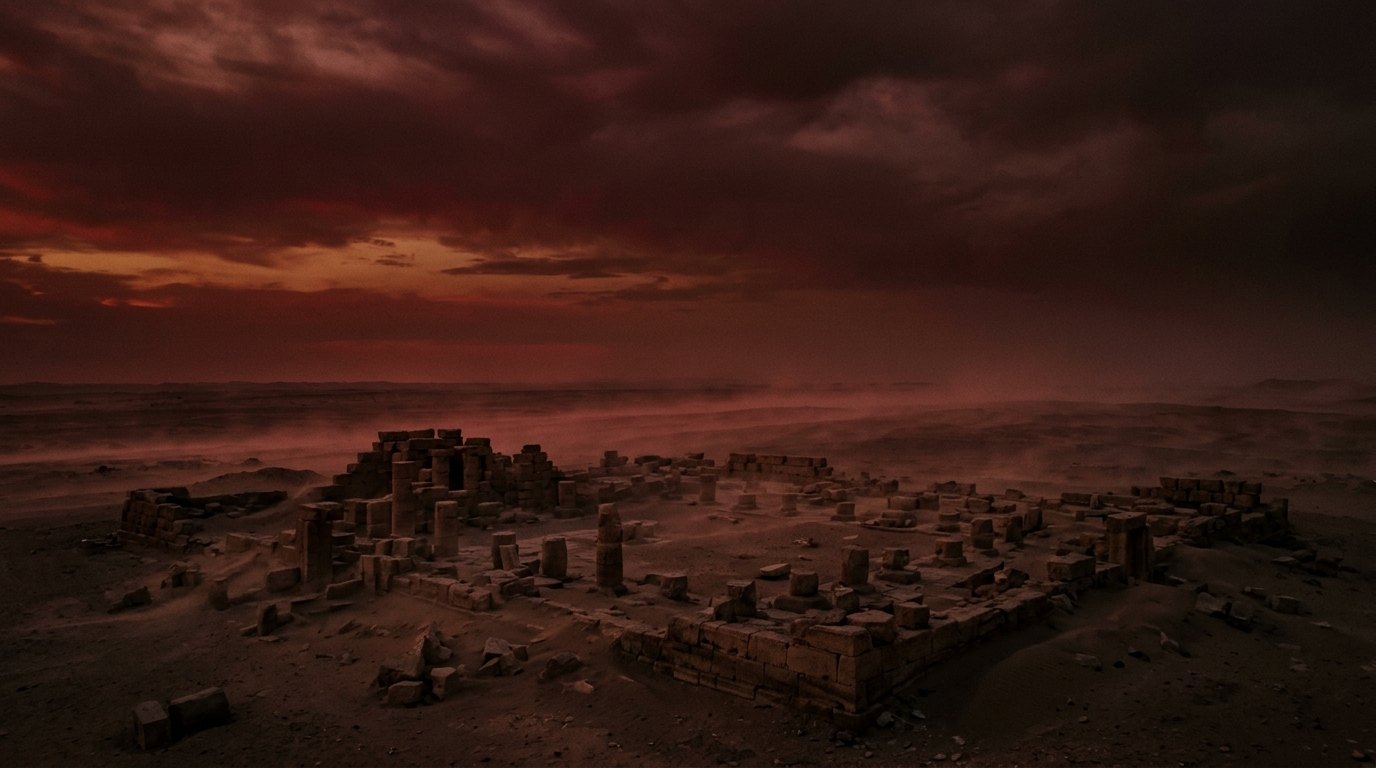
He will speak against the Most High and oppress his holy people and try to change the set times and the laws. The holy people will be delivered into his hands for a time, times and half a time.
Daniel 7:25 (NIV)
This verse establishes the precise character of the final adversary as one who speaks against God, persecutes the saints, and rules for a limited season.
The prophet Daniel provides the foundational architecture for the Bible's doctrine of the final adversary. In Daniel 7:25, the Scripture outlines his unmistakable portrait: he speaks defying words against the Most High, wears out the saints of the highest places, and intends to alter appointed seasons and divine law, wielding dominion for a strictly measured period of three and a half times. The vision begins earlier in Daniel 7:8, where Daniel watches a little horn arise among ten, bearing eyes like human eyes and a mouth boasting arrogant things. This insolent ruler surpasses his peers in defiance (Daniel 7:20), waging open warfare against the holy people and prevailing against them until the Ancient of Days sits in cosmic judgment (Daniel 7:21). He emerges out of a coalition of ten kings, overthrowing three rivals to consolidate his tyrannical empire (Daniel 7:24).
Daniel’s subsequent visions deepen this prophetic profile. In Daniel 8:9, a little horn expands exceedingly toward the south, the east, and the glorious land of Israel. His audacity reaches toward heaven itself, trampling spiritual powers (Daniel 8:10) and challenging the Prince of the heavenly host by revoking daily sacrificial worship (Daniel 8:11), casting truth to the ground while his wicked craft prospers (Daniel 8:12). At the climax of earthly empires, this fierce-faced monarch, skilled in dark intrigues, comes to power (Daniel 8:23). Operating through superhuman might not his own, he corrupts through deceit and corrupt prosperity (Daniel 8:24), standing against the Prince of princes only to be shattered without human hands (Daniel 8:25).
This desolating work focuses squarely on the sanctuary. In Daniel 9:27, this coming ruler confirms a covenant with many for one seven-year unit, only to halt sacrifices mid-period and erect an abomination that desolates until his decreed doom pours out. He profanes the fortress temple, terminating perpetual offerings and planting the desolating sign (Daniel 11:31; Daniel 12:11). As a completely willful autocrat, he exalts himself above every god, blaspheming the Lord God of gods (Daniel 11:36). Disregarding ancestral piety and natural affections (Daniel 11:37), he honors only military power with vast treasure (Daniel 11:38; Daniel 11:39), establishing his regal encampment between the seas and Mount Zion before meeting his sudden, unassisted end (Daniel 11:45).
| Passage | What it says |
|---|---|
| Daniel 7:8 | Daniel beholds a little horn emerging with eyes like a man and a mouth uttering great, boastful words. |
| Daniel 7:20 | The horn possesses eyes and a speaking mouth, appearing greater than its fellows and waging defiant war. |
| Daniel 7:21 | This blasphemous horn makes war with the saints of God and prevails against them until judgment is executed. |
| Daniel 7:24 | A final king arises after ten others, distinct from them, who subdues three kings and seizes dominion. |
| Daniel 7:25 | The king speaks against the Most High, oppresses the saints, attempts to alter times and laws, and reigns for three and a half times. |
| Daniel 8:23 | In the latter time of kingdoms, a insolent king skilled in intrigue and deception arises to power. |
| Daniel 8:24 | His mighty power operates by external strength, destroying extraordinarily, prospering, and ruining the mighty and holy people. |
| Daniel 8:25 | Through his deceit he exalts himself, destroys many in their complacency, opposes the Prince of princes, and is broken without human hand. |
| Daniel 9:27 | A ruler confirms a covenant for one week, halts sacrifice mid-week, and sets up an abomination until decreed destruction pours out. |
| Daniel 11:36 | The willful king exalts and magnifies himself above every god, blaspheming the God of gods until wrath is accomplished. |
| Daniel 11:37 | He regards neither the gods of his fathers nor the desire of women, magnifying himself above all powers. |
| Daniel 11:38 | He honors a foreign god of fortresses with gold, silver, precious stones, and costly treasures instead of traditional worship. |
| Daniel 8:9 | A little horn emerges and grows exceedingly great toward the south, east, and the glorious land. |
| Daniel 8:10 | The horn grows up to the host of heaven, casting down stars and trampling them. |
| Daniel 8:11 | He magnifies himself against the Prince of the host and stops the regular sacrifice. |
| Daniel 8:12 | Transgression causes truth to be cast to the ground while the power prospers. |
| Daniel 11:31 | Forces profane the temple fortress, abolish regular sacrifice, and erect the desolating abomination. |
| Daniel 11:39 | He acts against strong fortresses with a foreign god, distributing land for gain. |
| Daniel 11:45 | He pitches palatial tents between the seas and the glorious holy mountain to his end. |
| Daniel 12:11 | From the removal of regular worship to the desolating abomination spans 1,290 days. |
Christ's Warnings on Deception
Jesus warns that deceivers precede the final desolation

“So when you see standing in the holy place ‘the abomination that causes desolation,’ spoken of through the prophet Daniel—let the reader understand—
Matthew 24:15 (NIV)
Jesus explicitly points His disciples to Daniel's prophecy of the abomination of desolation standing in the holy place as the supreme sign of peril.
During the Olivet Discourse, the Lord Jesus Christ warned His followers that the road leading to the end of the age would be lined with pervasive spiritual deceit. Pointing back to the prophet Daniel, Jesus commanded vigilance in Matthew 24:15: when you see the abomination of desolation standing in the holy place, the reader must understand that the hour of supreme peril has arrived. Mark records the identical warning concerning this sacrilegious horror standing where it ought not, prompting an immediate flight from Judea into the mountains (Mark 13:14). Our Lord clarified that the ultimate desecration does not emerge in a vacuum; it is heralded by an intensifying wave of counterfeit claimants who prepare the world for darkness.
Jesus repeatedly warned His disciples to be on guard against seductive pretenders. In Matthew 24:4 and Luke 21:8, Christ's opening command is never to let any deceiver lead them astray. Seducers will arrive claiming messianic dignity, boldly declaring, "I am the Christ," and leading multitudes into spiritual ruin (Matthew 24:5; Mark 13:6). Believers must reject breathless rumors announcing that the Messiah has returned in secluded wilderness camps or hidden inner chambers (Matthew 24:23; Matthew 24:26; Mark 13:21).
The danger of this deception lies in its supernatural plausibility. Jesus warned that false christs and false prophets will perform astonishing signs and wonders, aimed at seducing, if possible, even God’s chosen elect (Matthew 24:24; Mark 13:22). This vulnerability stems from fallen humanity’s tragic rejection of the true Savior. In John 5:43, Jesus exposed the tragic irony of human pride: although Israel and the nations refused the eternal Son coming humbly in His Father’s name, they will readily embrace an arrogant pretender who comes solely in his own name.
| Passage | What it says |
|---|---|
| Matthew 24:4 | Jesus warns the disciples to take heed that no deceiver leads them astray in the last days. |
| Matthew 24:5 | Many false claimants will arrive in Christ's name declaring themselves the Messiah and deceiving multitudes. |
| Matthew 24:15 | Jesus warns believers to watch for the abomination of desolation spoken by Daniel standing in the holy place. |
| Matthew 24:24 | False christs and false prophets will show great signs and wonders to deceive, if possible, even the elect. |
| Mark 13:14 | Mark records Christ's command to flee Judea when the abomination of desolation is seen standing where it ought not. |
| John 5:43 | Jesus announces that though Israel rejected Him coming in His Father's name, they will receive another coming in his own name. |
| Matthew 24:23 | Christ commands disciples not to believe false declarations claiming the Messiah has appeared. |
| Matthew 24:26 | Disciples are warned against seeking false deliverers in wilderness hideouts or inner rooms. |
| Mark 13:6 | Many will come claiming Christ's identity and authority, leading vast multitudes astray. |
| Mark 13:21 | Jesus warns believers never to heed announcements of false messianic appearances. |
| Mark 13:22 | False christs and prophets will perform deceptive signs to lead away God's elect. |
| Luke 21:8 | Jesus warns believers not to follow deceivers claiming the time has drawn near. |
The Pauline Portrait
Paul unmasks the lawless man enthroned as God

Don’t let anyone deceive you in any way, for that day will not come until the rebellion occurs and the man of lawlessness is revealed, the man doomed to destruction.
2 Thessalonians 2:3 (NIV)
Paul reveals that the Day of the Lord will not come until the apostasy takes place and the man of sin is uncovered.
The apostle Paul systematically unmasks the coming adversary in his second letter to Thessalonica, answering the believers' anxiety concerning the Day of the Lord. In 2 Thessalonians 2:3, Paul states with total clarity that that day will not dawn until the great apostasy arrives and the man of sin, the son of destruction, is unveiled. This coming dictator represents the absolute zenith of human rebellion. He brazenly opposes and exalts himself above every object of worship, taking his physical seat in the temple of God and publicly proclaiming himself to be deity (2 Thessalonians 2:4).
Paul explains that this diabolical emergence follows a divine timetable. A restraining power currently holds the adversary back so that he may be disclosed only at his appointed hour (2 Thessalonians 2:6). While the hidden mystery of lawlessness is already actively churning beneath the surface of the present age, the man of sin cannot step into the light until the restrainer steps aside (2 Thessalonians 2:7). When the lawless one is finally manifested, his spectacular reign will be cut short; the Lord Jesus will slay him with the mere breath of His mouth and annihilate him by the sheer splendor of His glorious appearing (2 Thessalonians 2:8).
Until that sudden overthrow, the adversary’s arrival will mirror the activity of Satan himself. He will deceive the earth through counterfeit signs, wonders, and every kind of unrighteous deception (2 Thessalonians 2:9; 2 Thessalonians 2:10). Those who deliberately reject the love of the saving truth will be handed over by God to a strong delusion to believe the lie (2 Thessalonians 2:11; 2 Thessalonians 2:12). Both Paul and the broader apostolic witness urge believers never to be swept away by vain words or deceitful spirits (Ephesians 5:6; 1 Timothy 4:1), but to stand firm on divine truth.
| Passage | What it says |
|---|---|
| Ephesians 5:6 | Believers are warned not to be deceived with empty words, because God's wrath comes upon the sons of disobedience. |
| 1 Timothy 4:1 | The Spirit explicitly states that in later times some will depart from the faith, devoting themselves to deceitful spirits. |
| 2 Thessalonians 2:3 | The day of Christ will not dawn until the great rebellion comes and the man of sin, the son of destruction, is revealed. |
| 2 Thessalonians 2:4 | He opposes and exalts himself above every god, seating himself in God's temple and publicly displaying himself as divine. |
| 2 Thessalonians 2:6 | Paul reminds the church that a restraining influence holds back the adversary until his appointed time of revelation. |
| 2 Thessalonians 2:7 | The mystery of lawlessness is already actively operating, waiting only until the current restrainer is taken out of the way. |
| 2 Thessalonians 2:8 | The lawless one will be revealed, whom the Lord Jesus will consume with His breath and abolish at His appearing. |
| 2 Thessalonians 2:9 | The coming of the lawless adversary corresponds to the activity of Satan with all power, signs, and lying wonders. |
| 2 Thessalonians 2:10 | He deceives those perishing who refused the love of the truth that would have saved them. |
| 2 Thessalonians 2:11 | God sends a strong delusion upon unbelievers so they actively believe the lie. |
| 2 Thessalonians 2:12 | Condemnation falls on all who refused truth and instead delighted in wicked unrighteousness. |
The Spirit of Antichrist
John exposes the doctrinal denial of the Son

Dear children, this is the last hour; and as you have heard that the antichrist is coming, even now many antichrists have come. This is how we know it is the last hour.
1 John 2:18 (NIV)
John connects the coming singular Antichrist with the many antichrists already present, proving the end times have begun.
The apostle John alone employs the actual title "Antichrist" in the New Testament, using it both to identify a future climactic individual and to expose a present spiritual reality. In 1 John 2:18, he writes with urgent pastoral gravity: you have heard that Antichrist is coming, and even now many antichrists have appeared, proving conclusively that the world has entered the last hour. John explains that the spirit animating the final deceiver is not confined to the end of history; it is actively operating wherever false teachers subvert the gospel of Jesus Christ.
John provides an exact doctrinal litmus test to unmask this adversarial spirit. The antichrist is defined fundamentally by his denial of historical and theological truth. In 1 John 2:22, John asks, "Who is the liar but he who denies that Jesus is the Christ? He is antichrist who denies the Father and the Son." To reject Jesus is to forfeit any relationship with God the Father (1 John 2:23). Furthermore, this deception directly attacks the incarnation. In 1 John 4:3 and 2 John 1:7, John declares that every spirit that refuses to confess that Jesus Christ has come in the physical flesh is not of God, but belongs entirely to the deceiver and the antichrist.
By contrast, the Holy Spirit consistently confesses that Jesus Christ is truly God manifest in genuine human flesh (1 John 4:2). John also comforts the church regarding the origins of these false teachers. In 1 John 2:19, he observes that these antichrists went out from the apostolic assembly because they never truly belonged to it; their departure made it evident that they were not of the household of faith. While the world awaits the final adversary, believers overcome the spirit of antichrist through steadfast confession of the incarnate Son.
| Passage | What it says |
|---|---|
| 1 John 2:18 | John writes that the Antichrist is coming, and that the emergence of many antichrists proves it is the last hour. |
| 1 John 2:22 | The liar and Antichrist is anyone who denies that Jesus is the Christ and rejects both the Father and the Son. |
| 1 John 4:3 | Every spirit that fails to confess Jesus Christ has come in the flesh belongs to the spirit of the Antichrist. |
| 2 John 1:7 | Many deceivers have entered the world who refuse to confess Christ's bodily coming; such a person is the deceiver and antichrist. |
| 1 John 2:19 | Antichrists departed from the apostolic fellowship because they never truly belonged to it. |
| 1 John 2:23 | Whoever denies Jesus the Son possesses neither fellowship with nor acceptance from the Father. |
| 1 John 4:2 | The Spirit of God confesses Jesus Christ came physically in the flesh. |
The Beast and His Doom
Revelation depicts the world ruler destroyed by the Lamb

The beast was given a mouth to utter proud words and blasphemies and to exercise its authority for forty-two months.
Revelation 13:5 (NIV)
John identifies the beast as a blasphemous world ruler permitted by God to exercise global dominion for forty-two months.
In Revelation 13:5, the Apostle John receives a terrifying vision of the final tyrant: the beast is given a mouth uttering haughty blasphemies and authority to act for forty-two months. John first sees this beast rising out of the sea with ten horns, seven heads, and blasphemous names (Revelation 13:1), receiving his throne, authority, and power directly from the dragon (Revelation 13:2). An apparently fatal wound is healed (Revelation 13:3), astonishing the fallen world so that men cry out in idolatrous awe, asking who can wage war against him (Revelation 13:4). For three and a half years, he slanders God’s name, His dwelling, and the hosts of heaven (Revelation 13:6), wielding authority over every tribe and nation while making war upon the saints and overcoming them (Revelation 13:7), even slaying God's two witnesses when he ascends from the abyss (Revelation 11:7). All unregenerate inhabitants of the earth worship him, excluded from the Lamb's book of life (Revelation 13:8).
This global tyranny operates through supernatural deception and total economic coercion. A second beast rises from the earth with lamb-like horns who speaks like a dragon, functioning as the false prophet (Revelation 13:11). He compels worship of the first beast (Revelation 13:12), calling down fire from heaven (Revelation 13:13) and animating an image of the beast to execute dissenters (Revelation 13:14–15). Every person is pressured to receive a mark on the right hand or forehead (Revelation 13:16), without which none can buy or sell, marked by the number of a man: 666 (Revelation 13:17–18). Yet God announces terrifying judgment: angels proclaim that whoever worships the beast or receives his mark will drink unmixed divine wrath, tormented forever with no rest (Revelation 14:9–11).
Divine retribution unfolds swiftly through history and eternity. Grievous sores strike those bearing the mark (Revelation 16:2), and the fifth bowl plunges the beast’s throne into agonizing darkness (Revelation 16:10). Three demonic spirits gather the earth’s armies (Revelation 16:13), joined by ten allied kings who yield their authority to the beast for one hour (Revelation 17:11–13). This eighth ruler, ascending from the pit only to head into perdition (Revelation 17:8), rallies earth's armies to fight Christ (Revelation 17:14; Revelation 19:19). The confrontation ends instantly: the beast is captured alongside the false prophet and thrown alive into the lake of fire (Revelation 19:20), where the devil eventually joins them in everlasting torment (Revelation 20:10).
| Passage | What it says |
|---|---|
| Revelation 13:1 | John sees a beast rise out of the sea with ten horns, seven heads, ten crowns, and blasphemous names. |
| Revelation 13:4 | Mankind worships the dragon who gave authority to the beast, asking who can wage war against him. |
| Revelation 13:5 | The beast is given a mouth uttering haughty blasphemies and authority to act for forty-two months. |
| Revelation 13:6 | He opens his mouth in blasphemies against God, slandering His name, His dwelling, and heavenly dwellers. |
| Revelation 13:7 | He receives permission to wage war on the saints, overcome them, and exercise authority over every tribe, people, and nation. |
| Revelation 13:8 | All inhabitants of the earth worship him, except those whose names are written in the Lamb's book of life. |
| Revelation 17:8 | The beast was, is not, and will ascend from the bottomless pit, astonishing earth's dwellers before going to destruction. |
| Revelation 19:19 | The beast and kings of the earth assemble their armies to wage war against Christ and His army. |
| Revelation 19:20 | The beast is captured alongside the false prophet and thrown alive into the lake of fire burning with sulfur. |
| Revelation 11:7 | The beast ascending from the bottomless abyss makes war upon God's two witnesses. |
| Revelation 13:2 | The dragon grants the beast his personal power, regal throne, and immense authority. |
| Revelation 13:3 | One mortal head wound is healed, causing the whole earth to marvel. |
| Revelation 13:11 | A second beast rises with two lamb-like horns, speaking with a dragon's voice. |
| Revelation 13:12 | The second beast compels the earth to worship the first healed beast. |
| Revelation 13:13 | The false prophet performs signs, making fire descend from heaven before men. |
| Revelation 13:14 | Deceptive miracles lead the world to erect an image honoring the beast. |
| Revelation 13:15 | Breath is given to the image, decreeing death for all who refuse worship. |
| Revelation 13:16 | All people are forced to receive a mark on hand or forehead. |
| Revelation 13:17 | No one can buy or sell without the mark, name, or number. |
| Revelation 13:18 | Wisdom calculates the beast's number as the number of a man: 666. |
| Revelation 14:9 | An angel warns of severe wrath awaiting anyone who worships the beast. |
| Revelation 14:10 | Beast worshippers drink unmixed divine wrath, tormented before holy angels and Lamb. |
| Revelation 14:11 | The smoke of beast worshippers' torment ascends forever without day or night rest. |
| Revelation 16:2 | Grievous sores break out on men who bear the beast's mark. |
| Revelation 16:10 | The fifth bowl plunges the beast's throne and kingdom into agonizing darkness. |
| Revelation 16:13 | Demonic spirits like frogs emerge from dragon, beast, and false prophet mouths. |
| Revelation 17:11 | The beast that was and is not constitutes an eighth ruler destined for perdition. |
| Revelation 17:12 | Ten allied kings receive royal authority with the beast for one hour. |
| Revelation 17:13 | The allied kings unite their mind, yielding power and authority to the beast. |
| Revelation 17:14 | These rulers wage war against the Lamb, but the Lamb conquers them. |
| Revelation 20:10 | The devil joins the beast and false prophet in eternal lake torment. |
Where in the Bible
| Book | Passages |
|---|---|
| Daniel | 20 · Daniel 7:8, Daniel 7:20, Daniel 7:21, Daniel 7:24, Daniel 7:25, Daniel 8:23, Daniel 8:24, Daniel 8:25, Daniel 9:27, Daniel 11:36, Daniel 11:37, Daniel 11:38, Daniel 8:9, Daniel 8:10, Daniel 8:11, Daniel 8:12, Daniel 11:31, Daniel 11:39, Daniel 11:45, Daniel 12:11 |
| Matthew | 6 · Matthew 24:4, Matthew 24:5, Matthew 24:15, Matthew 24:24, Matthew 24:23, Matthew 24:26 |
| Mark | 4 · Mark 13:14, Mark 13:6, Mark 13:21, Mark 13:22 |
| Luke | 1 · Luke 21:8 |
| John | 1 · John 5:43 |
| Ephesians | 1 · Ephesians 5:6 |
| 2 Thessalonians | 9 · 2 Thessalonians 2:3, 2 Thessalonians 2:4, 2 Thessalonians 2:6, 2 Thessalonians 2:7, 2 Thessalonians 2:8, 2 Thessalonians 2:9, 2 Thessalonians 2:10, 2 Thessalonians 2:11, 2 Thessalonians 2:12 |
| 1 Timothy | 1 · 1 Timothy 4:1 |
| 1 John | 6 · 1 John 2:18, 1 John 2:22, 1 John 4:3, 1 John 2:19, 1 John 2:23, 1 John 4:2 |
| 2 John | 1 · 2 John 1:7 |
| Revelation | 31 · Revelation 13:1, Revelation 13:4, Revelation 13:5, Revelation 13:6, Revelation 13:7, Revelation 13:8, Revelation 17:8, Revelation 19:19, Revelation 19:20, Revelation 11:7, Revelation 13:2, Revelation 13:3, Revelation 13:11, Revelation 13:12, Revelation 13:13, Revelation 13:14, Revelation 13:15, Revelation 13:16, Revelation 13:17, Revelation 13:18, Revelation 14:9, Revelation 14:10, Revelation 14:11, Revelation 16:2, Revelation 16:10, Revelation 16:13, Revelation 17:11, Revelation 17:12, Revelation 17:13, Revelation 17:14, Revelation 20:10 |
The story in order
- Daniel's vision of a horn (c. 600 BC) · Daniel 7:8 · Foretells a blasphemous king rising against God.
- Daniel's vision of a king (c. 600 BC) · Daniel 7:24 · Describes a final king subduing others.
- Daniel's vision of a horn (c. 600 BC) · Daniel 8:9 · Shows a horn growing great and opposing the host.
- Daniel's prophecy of a king (c. 600 BC) · Daniel 11:36 · Details a willful king blaspheming God.
- Daniel's prophecy of desolation (c. 600 BC) · Daniel 9:27 · Predicts a covenant, halted sacrifice, and abomination.
- Temple desecration (c. 600 BC) · Daniel 11:31 · Foretells profaning the temple and setting up an abomination.
- Jesus warns of deceivers (c. AD 30) · Matthew 24:4 · Christ cautions against those who lead astray.
- Jesus warns of false christs (c. AD 30) · Matthew 24:5 · Many will claim to be the Messiah.
- Jesus warns of the abomination (c. AD 30) · Matthew 24:15 · Believers should watch for the abomination of desolation.
- Jesus warns of false prophets (c. AD 30) · Matthew 24:24 · False prophets will perform signs to deceive.
- Paul warns of the lawless one (c. AD 50) · 2 Thessalonians 2:3 · The man of sin will be revealed before the Lord's day.
- Paul describes the lawless one (c. AD 50) · 2 Thessalonians 2:4 · He exalts himself as God in God's temple.
- Paul describes the mystery of lawlessness (c. AD 50) · 2 Thessalonians 2:7 · The spirit of lawlessness is already at work.
- John warns of the Antichrist (c. AD 90) · 1 John 2:18 · Many antichrists show it is the last hour.
Key words
- Antichrist (antichristos, ἀντίχριστος)
- One who opposes Christ, denying His deity or humanity. · 1 John 2:18
- Man of sin (anthropos tes anomias, ἄνθρωπος τῆς ἀνομίας)
- A title for the ultimate adversary who opposes God's law. · 2 Thessalonians 2:3
- Son of destruction (huios tes apoleias, υἱὸς τῆς ἀπωλείας)
- Designation indicating the adversary's ultimate ruin and perdition. · 2 Thessalonians 2:3
- Lawless one (anomos, ἄνομος)
- The adversary characterized by rebellion against God's authority. · 2 Thessalonians 2:7
- The beast (therion, θηρίον)
- A powerful, blasphemous world ruler empowered by Satan. · Revelation 13:1
- Abomination of desolation (shiqquṣ shomem, שִׁקּוּץ שׁוֹמֵם)
- An object or act of sacrilege causing ruin and divine judgment. · Daniel 9:27
- False prophet (pseudoprophetes, ψευδοπροφήτης)
- A deceptive religious leader who promotes the beast's worship. · Revelation 13:11
The biblical witness concerning the Antichrist is never meant to foster speculative fear, but to anchor believers in watchful holiness and steadfast endurance. While this adversary will claim supreme authority and practice lying wonders, his days are strictly measured and his destruction is absolute. The church stands secure knowing that the true King has already triumphed, and every power raised against God will perish before the breath of Christ's mouth.
81 passages, each cited once.
How the major Christian traditions read this
All Christians confess that an enemy of Christ opposes God's truth, deceives many through false teaching and pride, and will be utterly destroyed by the Lord Jesus at His glorious return (2 Thessalonians 2:8; 1 John 2:18).
Catholic
We look for a singular, personal figure who will arise before Christ's final return, leading a supreme religious deception that offers human solutions at the price of apostasy. He is the "man of sin" foretold in 2 Thessalonians 2:3-4, who exalts himself against God. Along with this final personal adversary, the Church recognizes that the "spirit of antichrist" is already present whenever secular messianism or false doctrines deny Christ's incarnation and lordship (1 John 4:2-3). His doom is sealed when Christ returns in majesty to judge the living and the dead (2 Thessalonians 2:8; Revelation 19:20).
Scripture: 2 Thessalonians 2:3-4, 2 Thessalonians 2:8, 1 John 4:2-3, Revelation 19:20
Orthodox
We expect the Antichrist to be an individual human being energized by Satan who appears at the end of history. Holy Tradition, resting upon 2 Thessalonians 2:3-10, teaches that he will claim divine authority, work deceptive wonders, and persecute the faithful remnant of the Church. At the same time, we heed John's warning that many antichrists have already gone out into the world (1 John 2:18), manifested in every heresy that distorts the divine-human person of Jesus Christ (1 John 4:3). His reign is brief, and Christ will consume him with the breath of His mouth at His second coming.
Scripture: 2 Thessalonians 2:3-10, 1 John 2:18, 1 John 4:3
Lutheran
In our confessions, we distinguish between the spirit of antichrist operating through history and its distinct institutional manifestation. Following 2 Thessalonians 2:4, we identify the papacy historically as having taken the characteristics of the Antichrist by usurping Christ's unique role as Head of the Church and obscuring the pure gospel of justification by faith with human merit. Yet Scripture also points to a broader, ongoing rebellion against the Word of God, culminating in the final overthrow of all demonic deception by Christ's direct appearance on the Last Day (2 Thessalonians 2:8; 1 John 2:22).
Scripture: 2 Thessalonians 2:4, 2 Thessalonians 2:8, 1 John 2:22
Reformed & Presbyterian
Our historic standards, including the Westminster Confession (25.6), identify the Antichrist primarily with the papal office that exalted itself within the visible church against the supreme headship of Christ (2 Thessalonians 2:3-4). Today, many of us also emphasize the broader scriptural teaching that antichrist describes any false system, leader, or deceptive spirit that actively opposes Christ and denies His unique work of redemption (1 John 2:18-22; 1 John 4:3). In every era, the Lord protects His elect, and Christ will destroy all antichristian power at His final coming (2 Thessalonians 2:8).
Scripture: 2 Thessalonians 2:3-4, 2 Thessalonians 2:8, 1 John 2:18-22, 1 John 4:3
Anglican & Episcopal
We hold to Scripture as our sufficient rule, finding in it both the warning of a coming "man of sin" (2 Thessalonians 2:3-4) and the present danger of many false teachers who deny the Father and the Son (1 John 2:18-22). While historic Anglican reformers saw the papal system as fulfilling the scriptural description of antichristian usurpation, our common confession focuses on vigilance against all worldly powers and spiritual heresies that seek to overthrow the true gospel of Jesus Christ. His total destruction at Christ's coming is certain (2 Thessalonians 2:8).
Scripture: 2 Thessalonians 2:3-4, 2 Thessalonians 2:8, 1 John 2:18-22
Baptist
While the 1689 Baptist Confession historically applied 2 Thessalonians 2:3-4 to the papacy, most Baptists today understand the Antichrist primarily as an individual political and religious dictator who will arise in the end times. Empowered by Satan, he will deceive the nations, demand personal worship in the temple, and persecute believers (Daniel 7:25; Revelation 13:4-7). We also recognize the active "spirit of the antichrist" in any denial of Jesus' incarnation and deity (1 John 4:3). Ultimately, Jesus will slay him at His glorious return (2 Thessalonians 2:8).
Scripture: 2 Thessalonians 2:3-4, 2 Thessalonians 2:8, 1 John 4:3, Daniel 7:25, Revelation 13:4-7
Methodist & Wesleyan
We center our understanding on John's pastoral admonitions: anyone who denies that Jesus is the Christ or that He came in the flesh is an antichrist (1 John 2:22; 2 John 1:7). While John Wesley and early Methodist leaders saw prophecy fulfilled in the corruptions of the Roman hierarchy, we primarily view the Antichrist as the embodiment of pride, apostasy, and resistance to the grace and holiness of God. Whether understood as an end-time person or an enduring spirit of rebellion (2 Thessalonians 2:3-7), Christ's victory over him remains assured (2 Thessalonians 2:8).
Scripture: 1 John 2:22, 2 John 1:7, 2 Thessalonians 2:3-8, 2 Thessalonians 2:3-7, 2 Thessalonians 2:8
Pentecostal & Charismatic
We generally hold a premillennial view, reading the Antichrist as a literal person—the "beast" of Revelation 13:1-8 and the "man of sin" of 2 Thessalonians 2:3-4—who will head a global system during the final tribulation. Working through signs, lying wonders, and counterfeit power (2 Thessalonians 2:9), he will demand absolute allegiance. Believers must remain filled with the Holy Spirit to discern and resist the spirit of antichrist already active in worldly deception (1 John 4:1-4), knowing Christ will vanquish him completely when He returns (Revelation 19:20).
Scripture: 2 Thessalonians 2:3-4, 2 Thessalonians 2:9, 1 John 4:1-4, Revelation 13:1-8, Revelation 19:20
Non-denominational & Evangelical
Most in our churches expect the Antichrist to be an actual world ruler who emerges in the final days before Christ returns, aligning with the "man of sin" (2 Thessalonians 2:3-4) and the beast of Revelation 13:5-8. He will enforce a false peace, set himself up as God, and deceive those who perish. Concurrently, we heed the warning that "many antichrists" already operate by undermining the gospel (1 John 2:18; 1 John 4:3). Our hope rests on Christ's sudden return to destroy him with glory (2 Thessalonians 2:8).
Scripture: 2 Thessalonians 2:3-4, 2 Thessalonians 2:8, 1 John 2:18, Revelation 13:5-8, 1 John 4:3
Where they differ
Identity of the Antichrist
- Catholic
- A literal, final individual who deceives humanity before the Last Day.
- Orthodox
- A single future person energized by Satan who claims divine status.
- Lutheran
- Historically embodied in the papal office and seen in final apostasy.
- Reformed & Presbyterian
- Historically the papal usurpation, though also understood as an end-time enemy.
- Anglican & Episcopal
- Understood broadly as false spiritual authority, apostasy, and an end-time adversary.
- Baptist
- Predominantly a future political ruler who leads an end-time global rebellion.
- Methodist & Wesleyan
- Primarily any spirit or system that actively opposes Christ and holiness.
- Pentecostal & Charismatic
- A literal end-time world dictator performing lying wonders before Christ returns.
- Non-denominational & Evangelical
- A literal future global leader who demands worship during the tribulation.
Scripture: 2 Thessalonians 2:3-4, 1 John 2:18, Revelation 13:5-8
Historical institution versus future individual
- Catholic
- Rejects identifying the papacy as Antichrist; expects a future personal deceiver.
- Orthodox
- Rejects institutional identification; anticipates an individual human opponent at the end.
- Lutheran
- Historically confesses the papal office as fulfilling the antichristian marks.
- Reformed & Presbyterian
- Historic confessions identify the papal office; modern members often stress personal adversary.
- Anglican & Episcopal
- Historic texts warned of papal pretensions; present emphasis focuses on theological apostasy.
- Baptist
- Historic confession named the pope; modern view heavily emphasizes a future individual.
- Methodist & Wesleyan
- Historic leaders identified Rome, but today emphasizes general heresy and personal rebellion.
- Pentecostal & Charismatic
- Focuses overwhelmingly on a coming personal beast rather than historic institutions.
- Non-denominational & Evangelical
- Almost exclusively views the figure as a coming future individual world leader.
Scripture: 2 Thessalonians 2:4, 1 John 2:22, 1 John 4:3
Your pastor can tell you where your church stands.
Scripture cited
- 2 Thessalonians 2:3-4
- 1 John 2:18
- 2 Thessalonians 2:3-12
- 1 John 2:18-23
- 1 John 4:1-3
- 2 John 1:7
- Revelation 19:19-20