Who was Mary, the mother of Jesus?
Luke 1:26-38
26 In the sixth month of Elizabeth’s pregnancy, God sent the angel Gabriel to Nazareth, a town in Galilee,
27 to a virgin pledged to be married to a man named Joseph, a descendant of David. The virgin’s name was Mary.
28 The angel went to her and said, “Greetings, you who are highly favored! The Lord is with you.”
29 Mary was greatly troubled at his words and wondered what kind of greeting this might be.
30 But the angel said to her, “Do not be afraid, Mary; you have found favor with God.
31 You will conceive and give birth to a son, and you are to call him Jesus.
32 He will be great and will be called the Son of the Most High. The Lord God will give him the throne of his father David,
33 and he will reign over Jacob’s descendants forever; his kingdom will never end.”
34 “How will this be,” Mary asked the angel, “since I am a virgin?”
35 The angel answered, “The Holy Spirit will come on you, and the power of the Most High will overshadow you. So the holy one to be born will be called the Son of God.
36 Even Elizabeth your relative is going to have a child in her old age, and she who was said to be unable to conceive is in her sixth month.
37 For no word from God will ever fail.”
38 “I am the Lord’s servant,” Mary answered. “May your word to me be fulfilled.” Then the angel left her.
New International Version (NIV)
The answer
Mary was the virgin of Nazareth whom God chose to bear Jesus, the Son of God. Luke 1:26-27 introduces her as a virgin betrothed to Joseph, who belonged to David’s house.
The angel Gabriel greeted her as “highly favored” and announced that she would conceive and give birth to a son named Jesus. Her child would be the promised Davidic King, whose kingdom would never end (Luke 1:28-33). When Mary asked how this could happen while she was still a virgin, Gabriel explained that the Holy Spirit would come upon her and the power of the Most High would overshadow her; therefore, the holy child born from her would be called the Son of God (Luke 1:34-35). She was also a relative of Elizabeth, whose own miraculous pregnancy confirmed that nothing spoken by God is impossible (Luke 1:36-37).
Mary’s defining response was humble, trusting obedience: “Behold, the servant of the Lord; let it be done to me according to your word” (Luke 1:38). She is therefore remembered as Jesus’ mother and a faithful servant who surrendered herself to God’s word and purpose.
Answered from Scripture · reviewed November 11, 2026
Mary was a young Jewish virgin from Nazareth in Galilee, betrothed to Joseph of David's house, whom God chose by sovereign grace to bear the Messiah into the world. Her calling reveals both the miraculous intervention of the Holy Spirit and the beauty of quiet, submissive faith before the living God.
Identity and Betrothal
A humble virgin of David's royal line
to a virgin pledged to be married to a man named Joseph, a descendant of David. The virgin’s name was Mary.
Luke 1:27 (NIV)
It establishes Mary's virginity, her betrothal to Joseph of David's house, and her quiet life in Galilee.
Luke 1:27 introduces a quiet village life turned upside down by eternity: God sent an angel to a virgin betrothed to a man whose name was Joseph, of the house of David; and the virgin's name was Mary. Here Scripture grounds the incarnation in verifiable time and geography. Mary lived in Nazareth, a town of little earthly repute in Galilee, yet she was bound by marriage contract to a descendant of Israel's royal dynasty.
Luke 1:26 notes the precise mission of the angel Gabriel, dispatched directly by God into northern Israel. In Matthew 1:16, the royal genealogy of the Messiah preserves this exact truth, carefully altering its formula to state that Joseph was the husband of Mary, of whom was born Jesus, who is called Christ—guaranteeing the legal lineage through David while protecting the virgin birth. Matthew 1:18 reveals the tension of their betrothal, showing that before they came together, Mary was found to be with child of the Holy Spirit.
When imperial decree demanded an empire-wide census, Luke 2:4 records that Joseph traveled from Nazareth up to Judea, to the city of David called Bethlehem, taking his betrothed wife with him. Even decades later, as John 1:45 shows, people recognized Jesus' earthly family ties, speaking of Him as Jesus of Nazareth, the son of Joseph. In every detail, Mary stands as a real historical woman, chosen from obscurity yet anchored in the royal promises given to David.
| Passage | What it says |
|---|---|
| Luke 1:26 | Gabriel is sent by God to Nazareth in Galilee to deliver a divine message. |
| Luke 1:27 | Mary is introduced as a virgin betrothed to Joseph of David's house. |
| Matthew 1:16 | The genealogy concludes by identifying Mary as the woman of whom Jesus was born. |
| Luke 2:4 | Joseph travels from Nazareth to Bethlehem because of his Davidic lineage. |
| John 1:45 | Philip identifies Jesus as the son of Joseph from Nazareth in Galilee. |
| Matthew 1:18 | Mary is found to be with child of the Holy Spirit while betrothed to Joseph. |
The Annunciation
Gabriel announces the birth of the King
He will be great and will be called the Son of the Most High. The Lord God will give him the throne of his father David,
Luke 1:32 (NIV)
It discloses the identity and destiny of Mary's son as David's everlasting heir and Son of the Most High.
Luke 1:32 announces the cosmic identity of the child Mary was summoned to carry: He will be great, and will be called the Son of the Most High; and the Lord God will give Him the throne of His father David. Gabriel's words to this young woman linked her impending motherhood directly to the eternal covenant God had sworn centuries earlier to David's seed.
The heavenly encounter began with an unexpected greeting in Luke 1:28, when Gabriel addressed her as highly favored, declaring that the Lord was with her. Luke 1:29 records Mary's natural human response: she was deeply troubled by his speech and considered what manner of greeting this might be. Gabriel calmed her fears in Luke 1:30, assuring her that she had found favor with God, not through personal merit, but through God's gracious choosing.
Then the specific promise fell upon her ears. Luke 1:31 told her she would conceive in her womb, give birth to a son, and name Him Jesus, which means the Lord saves. In Luke 1:33, Gabriel unveiled the boundless horizon of His dominion: this child will reign over the house of Jacob forever, and of His kingdom there will be no end. Mary was chosen to bear the long-awaited King of kings into human history.
| Passage | What it says |
|---|---|
| Luke 1:28 | Gabriel greets Mary as highly favored, declaring the Lord is with her. |
| Luke 1:29 | Mary is deeply troubled by the angel's greeting and ponders its meaning. |
| Luke 1:30 | Gabriel comforts Mary, telling her she has found favor with God. |
| Luke 1:31 | The angel announces that she will conceive, bear a son, and name Him Jesus. |
| Luke 1:32 | Her son will be great, called the Son of the Most High, and receive David's throne. |
| Luke 1:33 | Jesus will reign over Jacob's house forever in an everlasting kingdom. |
Conception and Submission
Overshadowed by the Spirit in holy surrender

The angel answered, “The Holy Spirit will come on you, and the power of the Most High will overshadow you. So the holy one to be born will be called the Son of God.
Luke 1:35 (NIV)
It defines the virgin conception as the direct, supernatural work of the Holy Spirit.
Luke 1:35 answers the mystery that human understanding could not grasp: The Holy Spirit will come upon you, and the power of the Most High will overshadow you; therefore the child to be born will be called holy—the Son of God. The virgin birth was not the result of human will or natural generation, but the direct, sovereign, and miraculous creation of the Spirit of God.
When Gabriel spoke of conception, Mary asked candidly in Luke 1:34 how this could be, seeing she was a virgin. Her question was not the unbelief of Zechariah, but a humble desire to understand how God's promise would unfold. Gabriel answered by pointing to the overshadowing presence of God, echoing the Spirit's creative work at the dawn of the world. To strengthen her heart, Gabriel pointed in Luke 1:36 to her elderly relative Elizabeth, who had conceived a son in her barren old age, demonstrating that divine grace had already broken into her family line.
In Luke 1:37, Gabriel sealed the explanation with an absolute truth: nothing will be impossible with God. Mary's response in Luke 1:38 remains the supreme pattern of humble obedience: she declared herself the servant of the Lord and asked that it be done to her according to His word. In holy trust, she surrendered her reputation, her body, and her future to God's eternal plan.
| Passage | What it says |
|---|---|
| Luke 1:34 | Mary asks how conception can happen since she is a virgin. |
| Luke 1:35 | The Spirit will overshadow her, so the child will be called the holy Son of God. |
| Luke 1:36 | Gabriel points to Elizabeth's pregnancy in old age as proof of God's power. |
| Luke 1:37 | The angel declares that nothing spoken by God will ever be impossible. |
| Luke 1:38 | Mary submits completely as the Lord's servant, asking that His word be fulfilled. |
Blessing and Praise
Honored among women as the servant of God

Blessed is she who has believed that the Lord would fulfill his promises to her!”
Luke 1:45 (NIV)
It pronounces a blessing upon Mary specifically for her faith in the Lord's promises.
Luke 1:45 rings with the Holy Spirit's benediction upon humble faith: Blessed is she who believed that there would be a fulfillment of what was spoken to her from the Lord. When Mary traveled into the hill country of Judea, she was welcomed by Elizabeth, who recognized Mary's blessedness not simply because of the physical child she carried, but because she took God at His word.
Luke 1:39-41 describes Mary's journey and her arrival, where the sound of her greeting caused the unborn John the Baptist to leap for joy in Elizabeth's womb, filled with the Holy Spirit. Elizabeth cried out with a loud voice in Luke 1:42, exclaiming that Mary was blessed among women and her fruit blessed, and in Luke 1:43-44 marvelled that the mother of her Lord should visit her. Mary's soul then poured forth in the Magnificat, opening in Luke 1:46-47 as she magnified the Lord and rejoiced in God her Savior—confessing her own need of the salvation her Son would accomplish.
In Luke 1:48, she foresaw that all generations would call her blessed because the Mighty One had done great things for her. Luke 1:49-55 shows Mary rehearsing God's mercy to those who fear Him, His judgment upon the proud, and His eternal covenant faithfulness to Abraham and his offspring. Luke 1:56 concludes this sacred refuge, noting she stayed with Elizabeth about three months before returning home.
| Passage | What it says |
|---|---|
| Luke 1:42 | Elizabeth cries out that Mary is blessed among women and her fruit is blessed. |
| Luke 1:45 | Elizabeth declares Mary blessed because she believed what the Lord told her. |
| Luke 1:46 | Mary responds with the Magnificat, magnifying the Lord who regarded her humble state. |
| Luke 1:48 | Mary acknowledges that all generations will call her blessed because of God's work. |
| Luke 1:39-41 | Mary visits Elizabeth in Judea, and the unborn John leaps in Elizabeth's womb. |
| Luke 1:43-44 | Elizabeth calls Mary the mother of her Lord upon hearing Mary's greeting. |
| Luke 1:47 | Mary rejoices in God her Savior in the opening of the Magnificat. |
| Luke 1:49-55 | Mary magnifies God's mercy, holy power, and faithfulness to Abraham and his seed. |
| Luke 1:56 | Mary remains with Elizabeth about three months before returning to her home. |
Joseph's Obedience
An Angel Directs Joseph to Take Mary Home
But after he had considered this, an angel of the Lord appeared to him in a dream and said, “Joseph son of David, do not be afraid to take Mary home as your wife, because what is conceived in her is from the Holy Spirit.
Matthew 1:20 (NIV)
God confirms to Joseph the supernatural origin of Mary's conception by the Spirit.
In Matthew 1:20, the supernatural origin of Mary's pregnancy is settled forever by the angel of the Lord: that which is conceived in her is of the Holy Spirit. Before this revelation, Mary’s betrothed, Joseph, faced a grievous dilemma. Being a righteous man unwilling to expose her to public disgrace and the severe penalties of the law, he planned to send her away secretly (Matthew 1:19). Yet God stepped directly into his crisis. Through an angelic dream, Joseph was commanded not to fear taking Mary as his lawful wife, for her child was destined to save His people from their sins (Matthew 1:20-21). Matthew observes that this miraculous intervention was no sudden improvisation; it stood as the direct fulfillment of Isaiah's ancient oracle, declaring that a virgin would conceive and bear a son called Immanuel, God with us (Matthew 1:22-23). Waking from his sleep, Joseph demonstrated prompt, unquestioning obedience. He took Mary into his home as his wife, shielding her reputation under his patriarchal care while keeping her a virgin until she brought forth her firstborn Son, whom he named Jesus in faithful accord with the heavenly command (Matthew 1:24-25).
| Passage | What it says |
|---|---|
| Matthew 1:19 | Joseph considers quietly divorcing Mary to spare her public disgrace. |
| Matthew 1:20-21 | An angel tells Joseph not to fear taking Mary as his wife. |
| Matthew 1:22-23 | The virgin birth fulfills Isaiah's prophecy of Immanuel. |
| Matthew 1:24-25 | Joseph takes Mary as wife but keeps her a virgin until Jesus is born. |
The Nativity
Mary Delivers Her Firstborn Son in Bethlehem
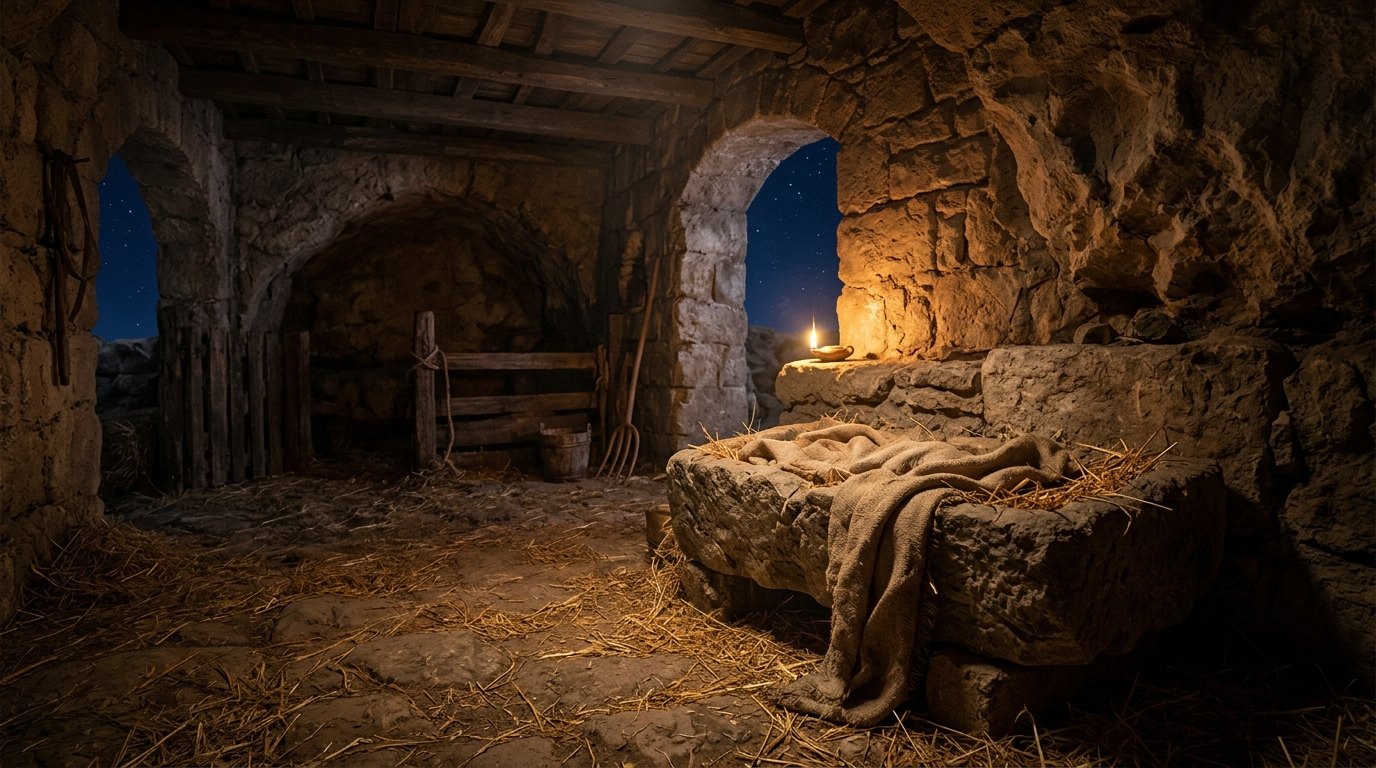
But Mary treasured up all these things and pondered them in her heart.
Luke 2:19 (NIV)
Mary shows deep contemplative faith as she ponders the events surrounding Jesus' birth.
Luke 2:19 captures the quiet depth of Mary’s faith, noting that she treasured up all these things and pondered them in her heart. The circumstances surrounding the birth of the Messiah were marked by severe humility. Caesar Augustus issued a decree requiring all the Roman world to be registered, compelling Joseph to journey from Nazareth south to Bethlehem, the historic city of David, accompanied by Mary who was heavily pregnant (Luke 2:1-5). While they were lodged there, her full time arrived. She brought forth her firstborn Son, wrapped Him tightly in swaddling cloths, and laid Him in a feeding trough, because there was no guest room available for them (Luke 2:6-7). The glorious reality of who this infant was did not remain hidden. Rough shepherds hurried in from night fields, breathless with wonder, and recounted the angelic host that had filled the sky proclaiming the Savior's birth (Luke 2:15-18). While the surrounding crowd marveled at their tale, Mary internalized every word, weighing the majesty of God amidst the poverty of the manger.
| Passage | What it says |
|---|---|
| Luke 2:1-5 | Joseph travels from Nazareth to Bethlehem with Mary, who is great with child. |
| Luke 2:6-7 | Mary gives birth to her firstborn son, wraps Him, and lays Him in a manger. |
| Luke 2:15-18 | Shepherds visit the stable and report what angels told them about the child. |
| Luke 2:19 | Mary treasures up all these words and ponders them in her heart. |
Temple Dedication
Simeon Prophesies of a Piercing Sword
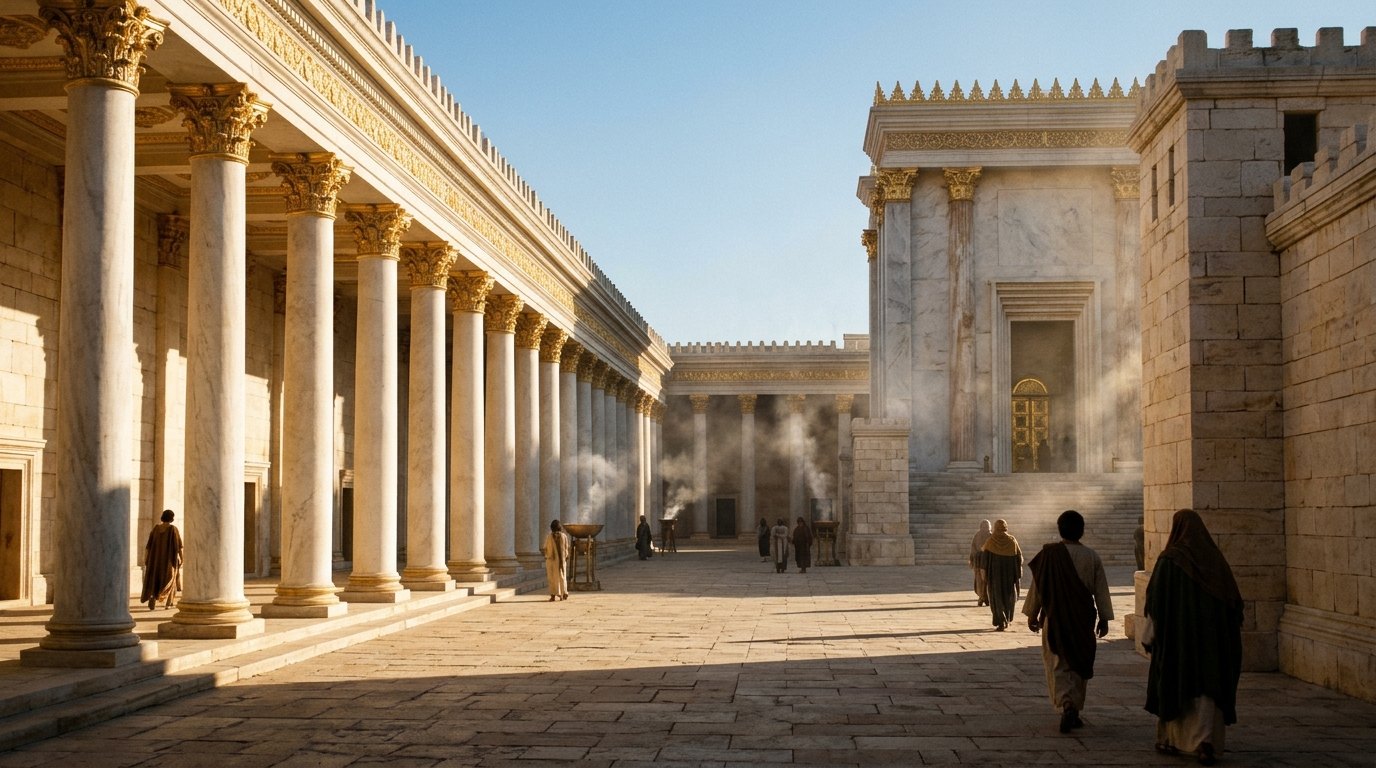
Then Simeon blessed them and said to Mary, his mother: “This child is destined to cause the falling and rising of many in Israel, and to be a sign that will be spoken against, so that the thoughts of many hearts will be revealed. And a sword will pierce your own soul too.”
Luke 2:34-35 (NIV)
Simeon foretells the sorrow Mary will bear as Christ's mission unfolds.
The shadow of the cross fell across Mary's joy in Luke 2:34-35, when the aged prophet Simeon declared that a sword will pierce through your own soul also. Mary and Joseph were scrupulously obedient to the covenant, having the child circumcised on the eighth day and naming Him Jesus as instructed before His conception (Luke 2:21). When the days of Mary's purification according to the Law of Moses were completed, they brought the infant to the temple in Jerusalem to present Him before the Lord, offering the sacrifice appointed for the poor—a pair of turtledoves or two young pigeons (Luke 2:22-24). There, the righteous Simeon took the infant into his arms, praising God for the salvation prepared for all peoples, leaving His mother and earthly father marveling at what was spoken of Him (Luke 2:33). Yet Simeon warned Mary that her Son was appointed for the fall and rising of many in Israel, and that maternal grief would one day wound her deeply as the thoughts of many hearts were revealed (Luke 2:34-35). Having faithfully performed all things according to the Law, the family returned to their home in Nazareth of Galilee (Luke 2:39).
| Passage | What it says |
|---|---|
| Luke 2:21 | Jesus is circumcised on the eighth day and named by His parents. |
| Luke 2:22-24 | Mary and Joseph present Jesus at the temple according to the Law of Moses. |
| Luke 2:33 | Mary and Joseph marvel at what Simeon prophesies concerning the infant Jesus. |
| Luke 2:34-35 | Simeon blesses them and tells Mary a sword will pierce her own soul. |
| Luke 2:39 | The family returns to Galilee and Nazareth after fulfilling the Law's requirements. |
Flight to Egypt
Protecting the Child from Herod's Wrath
On coming to the house, they saw the child with his mother Mary, and they bowed down and worshiped him. Then they opened their treasures and presented him with gifts of gold, frankincense and myrrh.
Matthew 2:11 (NIV)
The Magi recognize Jesus' divine royalty in the presence of His mother Mary.
Matthew 2:11 records a profound moment of global adoration, where the eastern Magi entered the house and fell down and worshiped the young Child with Mary His mother. These wealthy seekers opened their treasures, presenting the royal infant with gold, frankincense, and myrrh. Yet the peace was quickly shattered by the violent jealousy of King Herod. Warned by an angel in a night vision that Herod sought to destroy the child, Joseph rose immediately and fled by night with Mary and the young child into the safety of Egypt (Matthew 2:13-14). Mary thus shared the hardships of political exile, walking the desert road to protect the Promised Seed until the tyrant died. After Herod’s death, the angel instructed Joseph to return the family to the land of Israel (Matthew 2:19-21). However, learning that Herod's brutal son Archelaus ruled Judea, Joseph turned aside to the district of Galilee under divine warning, establishing their home in the modest village of Nazareth so that the prophetic witness concerning the Messiah would stand fulfilled (Matthew 2:22-23).
| Passage | What it says |
|---|---|
| Matthew 2:11 | Magi fall down and worship the young child with Mary His mother. |
| Matthew 2:13-14 | Joseph flees with Mary and the child into Egypt to escape Herod. |
| Matthew 2:19-21 | Joseph brings the child and His mother back to Israel after Herod dies. |
| Matthew 2:22-23 | The family settles in Nazareth of Galilee in fulfillment of prophetic words. |
Boyhood in Jerusalem
Mary Finds Jesus in His Father's House
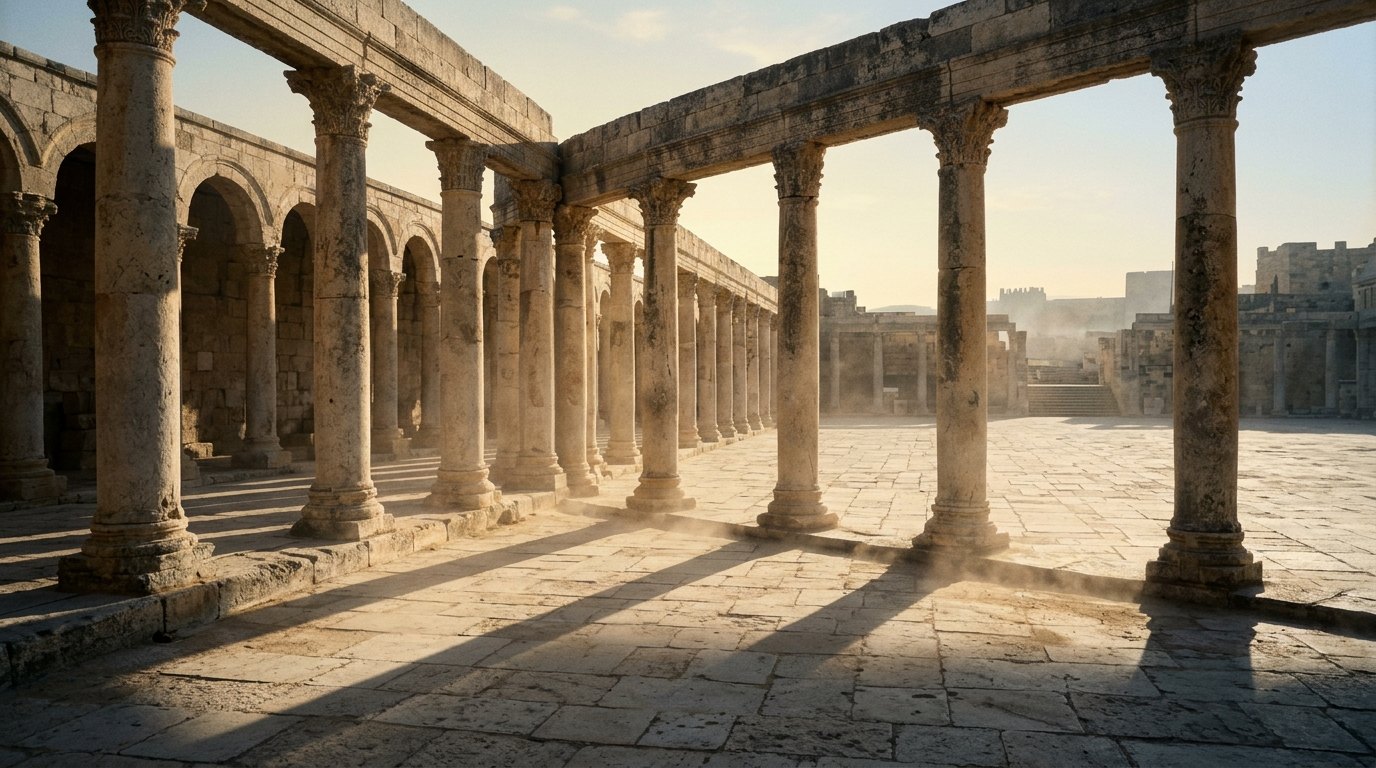
Then he went down to Nazareth with them and was obedient to them. But his mother treasured all these things in her heart.
Luke 2:51 (NIV)
Mary continues to guard and ponder the revelation of her Son's unique divine calling.
In Luke 2:51, Scripture records that His mother kept all these sayings in her heart, showing that Mary continued to ponder the unfolding mystery of her Son's identity with patient reverence. The episode marks the only inspired glimpse into the youth of Christ. At twelve years of age, Jesus traveled with Mary and Joseph to Jerusalem for the Feast of the Passover according to custom (Luke 2:41-45). When the caravan departed for Galilee, Mary and Joseph assumed Jesus was among the kinsfolk, only to discover after a full day's journey that He was absent. Returning in great distress, they searched the city for three days.
They finally discovered Him in the temple courts (Luke 2:46-47), sitting peacefully among the rabbis, listening intently and asking questions that astonished all who heard His understanding. When Mary voiced a mother's natural ache—asking why He had treated them so while His father and she searched sorrowing—Jesus offered an answer that gently redefined His primary allegiance (Luke 2:48-50). He asked why they sought Him, declaring that He must be about His Father's business in His Father's house. Although they did not immediately grasp the full scope of His reply, Jesus voluntarily went down with them to Nazareth and remained subject to their parental authority, growing in wisdom, stature, and favor with God and men (Luke 2:51-52). Mary did not dismiss the moment; she guarded these wonders, recognizing that her child belonged first and finally to heaven.
| Passage | What it says |
|---|---|
| Luke 2:41-45 | Mary and Joseph search for the missing twelve-year-old Jesus in Jerusalem. |
| Luke 2:46-47 | They find Jesus sitting among the teachers in the temple, asking questions. |
| Luke 2:48-50 | Mary questions Jesus, and He replies He must be in His Father's house. |
| Luke 2:51-52 | Jesus returns to Nazareth in subjection, while Mary treasures all these things. |
The Wedding at Cana
Mary Prompts Jesus' First Public Miracle
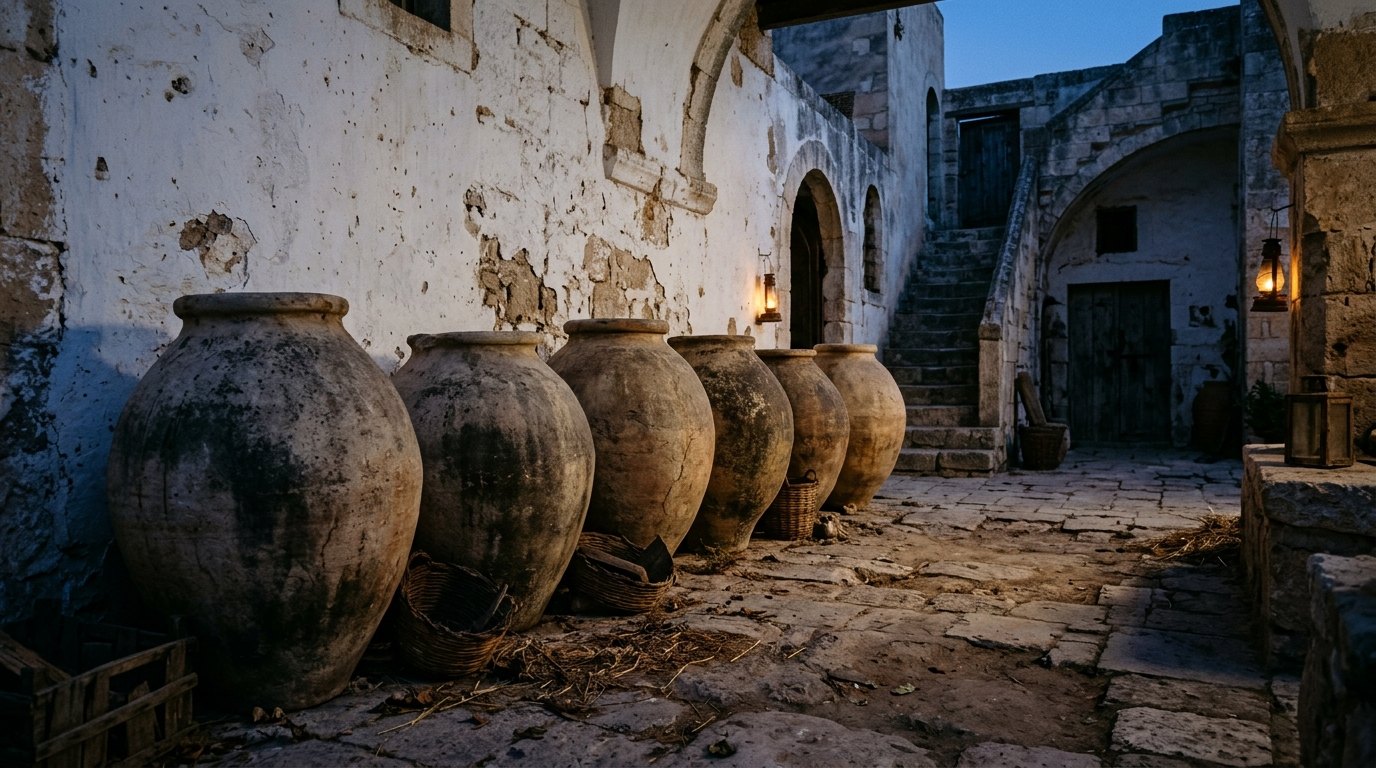
His mother said to the servants, “Do whatever he tells you.”
John 2:5 (NIV)
Mary's final recorded words in John's Gospel summon total obedience to Christ.
In John 2:5, Mary speaks her final recorded words in the Fourth Gospel: "Whatever He saith unto you, do it." This simple directive captures the heart of true faith, pointing all human attention away from herself and entirely toward the authority of Jesus Christ. The scene unfolds at a wedding feast in Cana of Galilee, where Mary observed that the wine had failed, threatening severe social shame for the newly married couple (John 2:1-3). Bringing the dilemma directly to her Son, Mary demonstrated instinctive confidence in His ability to help, even before He had performed any public sign.
Jesus' response in John 2:4—addressing her respectfully yet distantly as "Woman" and asking what that had to do with Him because His hour was not yet come—established that His public ministry would unfold strictly according to the Father's timetable, not familial persuasion. Mary embraced this boundary without hesitation, instructing the household servants to render unqualified obedience to whatever Christ commanded (John 2:5). When Jesus miraculously turned six stone jars of water into prime wine, He manifested His divine glory and confirmed the faith of His disciples (John 2:11-12). Following this initial manifestation of His power, Mary traveled down to Capernaum with Jesus, His brothers, and His disciples, witnessing the dawn of His public messianic work.
| Passage | What it says |
|---|---|
| John 2:1-3 | Mary notices the wine has run out at Cana and presents the need to Jesus. |
| John 2:4 | Jesus responds regarding His hour, establishing His divine timetable over earthly ties. |
| John 2:5 | Mary directs the servants to do whatever Jesus tells them to do. |
| John 2:11-12 | After the miracle, Jesus travels to Capernaum with His mother and brothers. |
Family and Public Ministry
Spiritual Kinship Takes Priority over Flesh
He replied, “Blessed rather are those who hear the word of God and obey it.”
Luke 11:28 (NIV)
Jesus directs honor away from mere physical lineage to faithful obedience to God's word.
When a woman in the crowd cried out a blessing on the womb that bore Him, Jesus replied in Luke 11:28, "Yea rather, blessed are they that hear the word of God, and keep it." Throughout His public ministry, our Lord made plain that physical kinship with Him yields no automatic spiritual privilege. When Mary and His brothers stood outside seeking an audience while He taught a crowded house, Jesus gestured toward His disciples and asked who His mother and brothers were (Matthew 12:46-50; Mark 3:31-35). He answered that whoever does the will of God belongs to His eternal family, a truth Luke likewise records when Jesus declared that His true mother and brothers are those who hear and obey God's word (Luke 8:19-21).
This principle brought both challenge and comfort: Mary was indeed blessed, not primarily because her body formed His human flesh, but because she believed and kept God's revelation. Furthermore, the familiarity of Mary's household became a stumbling block to unbelievers. In Nazareth, skeptics rejected His divine mission because they recognized His earthly family, scoffing that He was merely the carpenter's son whose mother was named Mary and whose brothers and sisters lived nearby (Matthew 13:55-56; Mark 6:3). In Jerusalem, critics argued against His heavenly origin on identical grounds, claiming they knew His father and mother (John 6:42). Unbelief looked only at Mary's humble home, failing to see the incarnate Son of God.
| Passage | What it says |
|---|---|
| Matthew 12:46-50 | Jesus declares those doing God's will are His brother, sister, and mother. |
| Mark 3:31-35 | Mary and Jesus' brothers seek Him, prompting a redefinition of spiritual family. |
| Luke 8:19-21 | Jesus affirms that His mother and brothers are those who hear and do God's word. |
| Luke 11:27-28 | Jesus pronounces greater blessing on those who hear God's word than Mary's physical maternity. |
| Matthew 13:55-56 | Nazareth townsfolk identify Jesus as the carpenter's son whose mother is named Mary. |
| Mark 6:3 | Villagers describe Jesus as the carpenter, the son of Mary. |
| John 6:42 | Jews question Jesus' descent from heaven since they know His father and mother. |
At the Cross
Jesus Entrusts Mary to John at Calvary

When Jesus saw his mother there, and the disciple whom he loved standing nearby, he said to her, “Woman, here is your son,” and to the disciple, “Here is your mother.” From that time on, this disciple took her into his home.
John 19:26-27 (NIV)
In His dying moments, Jesus provides loving, filial care for His mother.
As Christ hung in agony between heaven and earth, John 19:26-27 records that He saith unto His mother, Woman, behold thy son! Then saith He to the disciple, Behold thy mother! Even amid the unspeakable weight of bearing the wrath of God for human sin, the Lord Jesus fulfilled the fifth commandment with perfect filial love. Mary stood faithfully near the Roman cross, enduring the terrible fulfillment of Simeon's prophecy that a sword would pierce her own soul also (John 19:25). She did not abandon Him in His hour of deepest public humiliation, but remained a steadfast witness to His suffering alongside a small company of devoted women and the apostle John.
With His earthly life draining away, Jesus looked down upon Mary and the disciple whom He loved, establishing a covenant of sacred care between them. Jesus entrusted Mary's physical welfare and protection not to His unbelieving half-brothers, but to John, who took her into his own home from that very hour (John 19:27). This act displays the tenderness of the Savior and the reality that the household of faith forms an unbreakable bond anchored in the cross. At Calvary, Mary stood not as a dispenser of grace or an object of worship, but as a grieving mother and a redeemed believer gazing upon the sacrifice of her own Savior and Lord.
| Passage | What it says |
|---|---|
| John 19:25 | Mary stands faithfully near the cross as Jesus hangs in crucifixion. |
| John 19:26-27 | Dying on the cross, Jesus entrusts Mary to the beloved disciple John. |
The Early Church
Mary Prays with the Apostolic Church
They all joined together constantly in prayer, along with the women and Mary the mother of Jesus, and with his brothers.
Acts 1:14 (NIV)
Mary is depicted as a faithful worshiper united in prayer with the nascent church.
In Acts 1:14, Mary appears for the last time in the biblical record, gathered in an upper room in Jerusalem united in steadfast prayer with the apostles, the women who followed Christ, and His once-skeptical brothers. This brief yet moving glimpse establishes her not as an object of adoration, but as a humble disciple and fellow worshiper awaiting the promised Holy Spirit alongside the nascent church. The young mother who once wrapped the infant King in swaddling cloths now kneels in reverent communion with the community bought by His blood, witnessing the dawning of the new covenant age.
Her singular contribution to redemptive history is subsequently summarized doctrinally by the apostle Paul in Galatians 4:4, where he declares that in the fullness of time, God sent forth His Son, born of a woman, born under the law. This essential phrase anchors the true humanity of Jesus Christ in the historical reality of Mary's motherhood, fulfilling the ancient promise of the seed of the woman who would redeem those trapped under the condemnation of the law.
| Passage | What it says |
|---|---|
| Acts 1:14 | Mary joins the apostles and Jesus' brothers in steadfast prayer in Jerusalem. |
| Galatians 4:4 | Paul affirms that God sent forth His Son, born of a woman under the Law. |
Where in the Bible
| Book | Passages |
|---|---|
| Matthew | 12 · Matthew 1:16, Matthew 1:18, Matthew 1:19, Matthew 1:20-21, Matthew 1:22-23, Matthew 1:24-25, Matthew 2:11, Matthew 2:13-14, Matthew 2:19-21, Matthew 2:22-23, Matthew 12:46-50, Matthew 13:55-56 |
| Mark | 2 · Mark 3:31-35, Mark 6:3 |
| Luke | 38 · Luke 1:26, Luke 1:27, Luke 2:4, Luke 1:28, Luke 1:29, Luke 1:30, Luke 1:31, Luke 1:32, Luke 1:33, Luke 1:34, Luke 1:35, Luke 1:36, Luke 1:37, Luke 1:38, Luke 1:42, Luke 1:45, Luke 1:46, Luke 1:48, Luke 1:39-41, Luke 1:43-44, Luke 1:47, Luke 1:49-55, Luke 1:56, Luke 2:1-5, Luke 2:6-7, Luke 2:15-18, Luke 2:19, Luke 2:21, Luke 2:22-24, Luke 2:33, Luke 2:34-35, Luke 2:39, Luke 2:41-45, Luke 2:46-47, Luke 2:48-50, Luke 2:51-52, Luke 8:19-21, Luke 11:27-28 |
| John | 8 · John 1:45, John 2:1-3, John 2:4, John 2:5, John 2:11-12, John 6:42, John 19:25, John 19:26-27 |
| Acts | 1 · Acts 1:14 |
| Galatians | 1 · Galatians 4:4 |
The story in order
- Gabriel visits Mary (c. 5 BC) · Luke 1:26 · God chooses a virgin to bear the Messiah.
- Mary conceives by the Spirit (c. 5 BC) · Matthew 1:18 · The Holy Spirit's miraculous intervention is confirmed.
- Mary visits Elizabeth (c. 5 BC) · Luke 1:39-41 · Elizabeth recognizes Mary as the mother of her Lord.
- Joseph takes Mary as wife (c. 5 BC) · Matthew 1:24-25 · Joseph obeys God and protects Mary and the child.
- Jesus is born in Bethlehem (c. 4 BC) · Luke 2:6-7 · Mary gives birth to her firstborn Son.
- Simeon's prophecy (c. 4 BC) · Luke 2:34-35 · Simeon foretells the sorrow Mary will experience.
- Flight to Egypt (c. 4 BC) · Matthew 2:13-14 · Mary protects the child Jesus from Herod's wrath.
- Jesus is found in the temple (c. AD 8) · Luke 2:46-47 · Jesus shows His awareness of His divine mission.
- Wedding at Cana (c. AD 27) · John 2:1-3 · Mary prompts Jesus' first public miracle.
- Jesus redefines His family (c. AD 28) · Mark 3:31-35 · Spiritual kinship is prioritized over physical ties.
- Mary at the cross (AD 30) · John 19:25 · Mary faithfully witnesses Jesus' crucifixion.
- Mary prays with the church (c. AD 30) · Acts 1:14 · Mary is part of the early praying community.
Key words
- Highly favored (kecharitōménē (κεχαριτωμένη))
- Endowed with divine grace and approval. · Luke 1:28
- Son of the Most High (hyios Hypsistou (υἱὸς Ὑψίστου))
- Designation indicating divine sonship and supreme authority. · Luke 1:32
- Holy Spirit (pneuma hagion (πνεῦμα ἅγιον))
- The third person of the Trinity, agent of divine power and conception. · Luke 1:35
- Magnificat (Magnificat anima mea (Latin))
- Mary's song of praise, beginning with 'My soul magnifies the Lord'. · Luke 1:46
- Sword will pierce your soul (rhomphaia tēs psychēs sou (ῥομφαία τῆς ψυχῆς σου))
- Prophecy of profound sorrow and suffering for Mary. · Luke 2:35
- Carpenter's son (ho tou tektōnos huios (ὁ τοῦ τέκτωνος υἱός))
- A description of Jesus based on Joseph's earthly trade. · Matthew 13:55
Mary's life reminds every believer that God delights to work through the humble, the lowly, and those who simply take Him at His word. In her willing submission, we see what genuine faith looks like when confronted with the immense and gracious purposes of God.
62 passages, each cited once.
How the major Christian traditions read this
All Christian traditions confess that Mary was the virgin chosen by God to give birth to Jesus Christ, the Son of God and Saviour of the world, through the miraculous overshadowing of the Holy Spirit (Luke 1:30-35).
Catholic
Mary is the Mother of God (Theotokos) and the Mother of the Church, preserved free from all stain of original sin from her conception by God's unique grace (Luke 1:28). She remained perpetually a virgin before, during, and after Christ’s birth. At the cross, our Lord entrusted her as mother to the beloved disciple and thus to all the faithful (John 19:26-27). She was assumed bodily into heavenly glory, where she reigns as Queen and continually intercedes for the saints on earth (Revelation 12:1). We offer her highest veneration (hyperdulia), honoring her supreme obedience to the Father (Luke 1:38, Luke 1:48).
Scripture: Luke 1:28, Luke 1:38, Luke 1:48, John 19:26-27, Revelation 12:1
Orthodox
Mary is the Theotokos, the Birth-giver of God, whose womb contained Him whom the heavens cannot contain. We confess her as Ever-Virgin (Aeiparthenos) and praise her as more honorable than the cherubim and beyond compare more glorious than the seraphim (Luke 1:42-43). Elizabeth addressed her with reverent awe as the mother of her Lord (Luke 1:43). Mary is the supreme model of deification (theosis) and human cooperation with divine will through her humble consent (Luke 1:38). We regularly seek her heavenly intercession in prayer and celebrate her Dormition and translation to heaven, while not formulating a dogma of immaculate conception.
Scripture: Luke 1:38, Luke 1:42-43, Luke 1:48, Luke 1:43
Lutheran
We honor Mary as the blessed virgin mother of our Lord and gladly call her the Mother of God, as the Son of God took true human nature from her womb (Luke 1:31-35; Galatians 4:4). Her song of praise, the Magnificat, directs all honor to God our Savior, acknowledging her humble state and the mercy shown to her (Luke 1:46-49). She is the preeminent example of faith and grace, receiving God's word with pure trust (Luke 1:38). While historical Lutheran confessions affirm her perpetual virginity, we reject invocations of Mary or prayers addressed to her, since Scripture teaches that Christ alone is our Mediator (1 Timothy 2:5).
Scripture: Luke 1:31-35, Luke 1:38, Luke 1:46-49, Galatians 4:4, 1 Timothy 2:5
Reformed & Presbyterian
We confess Mary as the virgin mother through whom the eternal Son assumed true human flesh and blood, of David's seed, yet without sin (Luke 1:35; Romans 1:3). She is blessed among women and an outstanding pattern of obedient faith (Luke 1:38, Luke 1:42). In her own song she rejoices in 'God my Savior,' acknowledging her own need of the Redeemer (Luke 1:47). Scripture gives no ground for praying to Mary, venerating her image, or assigning her a mediatorial role; Jesus Christ is our only Mediator and Advocate before the Father (1 Timothy 2:5; Hebrews 7:25).
Scripture: Luke 1:35, Luke 1:38, Luke 1:47, Romans 1:3, 1 Timothy 2:5
Anglican & Episcopal
We honor the Blessed Virgin Mary as the mother of Jesus Christ, our incarnate Lord and God, fulfilling Isaiah's prophecy (Isaiah 7:14; Luke 1:31-35). She is the model of faithful discipleship, keeping all these things and pondering them in her heart (Luke 2:19). Anglican formularies uphold her unique blessing and celebrate her major feasts in the church calendar. While Anglo-Catholics often ask her prayers and affirm historic traditions of her perpetual virginity, the broader communion maintains that prayer is offered to God through Jesus Christ alone, avoiding any excess that detracts from Christ's sole mediation (1 Timothy 2:5).
Scripture: Isaiah 7:14, Luke 1:31-35, Luke 2:19, 1 Timothy 2:5
Baptist
Mary was a godly, humble Jewish virgin chosen by sovereign grace to give birth to our Lord and Savior Jesus Christ (Luke 1:26-31). Her pregnancy was a miraculous work of the Holy Spirit without human father (Luke 1:34-35). Like all human beings, she was born under sin and needed redemption, which is why she rejoiced in 'God my Savior' (Luke 1:47). After Jesus’ birth, she and Joseph entered into normal marital relations and had other children, Jesus' brothers and sisters named in Scripture (Matthew 13:55-56). We venerate only God, and we pray to the Father through the Son alone (1 Timothy 2:5).
Scripture: Matthew 13:55-56, Luke 1:34-35, Luke 1:47, 1 Timothy 2:5, Luke 1:26-31
Methodist & Wesleyan
Mary was the virgin chosen to bear the incarnate Son of God, demonstrating profound surrender to God's will (Luke 1:38). We look to her as an exemplar of holy living, quiet devotion, and complete consecration to God. Her song of praise highlights God's justice, lifting up the humble and feeding the hungry (Luke 1:46-53). While honoring her blessed role in the history of salvation, we maintain that salvation and mediation belong exclusively to Jesus Christ (Acts 4:12; 1 Timothy 2:5). We do not pray to Mary or ascribe to her sinlessness, for Christ alone is without sin (Hebrews 4:15).
Scripture: Luke 1:38, Luke 1:46-53, Acts 4:12, 1 Timothy 2:5, Hebrews 4:15
Pentecostal & Charismatic
Mary was a righteous handmaiden who walked in faith and was overshadowed by the power of the Holy Spirit to conceive the Son of God (Luke 1:35, Luke 1:38). She was among the early disciples gathered in prayer in the Upper Room awaiting the Holy Spirit on the Day of Pentecost (Acts 1:14). We celebrate her faith, her obedience, and her yieldedness to the Spirit. However, Scripture gives no warrant for praying to Mary or elevating her above other believers; she is our sister in Christ, and Jesus is the sole baptizer in the Spirit and mediator (1 Timothy 2:5; Acts 2:33).
Scripture: Luke 1:35, Luke 1:38, Acts 1:14, Acts 2:33, 1 Timothy 2:5
Non-denominational & Evangelical
Mary was a faithful young woman whom God blessed and chose to be the earthly mother of Jesus Christ through a genuine virgin birth (Luke 1:26-35). She demonstrated remarkable faith when she said, 'let it be to me according to your word' (Luke 1:38). Scripture paints her as a real disciple who rejoiced in God her Savior (Luke 1:47) and later raised a family with Joseph (Matthew 1:24-25; Mark 6:3). We respect her greatly as a model of obedience, but we worship and pray only to God through Jesus, our sole mediator (John 14:6; 1 Timothy 2:5).
Scripture: Matthew 1:24-25, Mark 6:3, Luke 1:38, Luke 1:47, 1 Timothy 2:5
Where they differ
Praying to Mary and seeking her intercession
- Catholic
- We ask Mary to pray and intercede for us before her Son.
- Orthodox
- We ask the Theotokos for her ceaseless prayers and heavenly intercession.
- Lutheran
- We pray only to God, rejecting prayers to Mary or the saints.
- Reformed & Presbyterian
- We reject prayers to Mary because Christ alone is our mediator.
- Anglican & Episcopal
- General liturgy directs all prayer to God through Christ alone.
- Baptist
- We do not pray to Mary; prayer belongs to God alone.
- Methodist & Wesleyan
- We pray exclusively to God through the one mediator, Jesus Christ.
- Pentecostal & Charismatic
- We direct all prayers to God through Jesus in the Spirit.
- Non-denominational & Evangelical
- We pray only to God the Father through Jesus Christ.
Scripture: 1 Timothy 2:5, Hebrews 7:25
Mary's perpetual virginity after Jesus' birth
- Catholic
- Mary remained a virgin before, during, and perpetually after Christ's birth.
- Orthodox
- Mary remained ever-virgin throughout her entire life.
- Lutheran
- Confessions affirm perpetual virginity, though it is not a test of faith.
- Reformed & Presbyterian
- Scripture emphasizes the virgin conception; later virginity is not taught as doctrine.
- Anglican & Episcopal
- Held traditionally by many, but not required as necessary doctrine.
- Baptist
- Mary and Joseph had marital relations and other children after Jesus.
- Methodist & Wesleyan
- Scripture suggests Mary had subsequent children with Joseph after Jesus' birth.
- Pentecostal & Charismatic
- Mary and Joseph had other children, who were Jesus' earthly siblings.
- Non-denominational & Evangelical
- Mary had other children with Joseph as Scripture plainly indicates.
Scripture: Matthew 1:24-25, Matthew 13:55-56
Mary's sinlessness and need of a Savior
- Catholic
- Mary was immaculately conceived without original sin and remained sinless.
- Orthodox
- Mary inherited ancestral mortality but lived in exceptional personal purity.
- Lutheran
- Mary was a redeemed sinner who needed Christ as her Savior.
- Reformed & Presbyterian
- Mary was born in original sin and needed Christ's redeeming grace.
- Anglican & Episcopal
- Mary is an example of grace, but Christ alone is sinless.
- Baptist
- Mary was a sinner saved by grace who needed a Savior.
- Methodist & Wesleyan
- Mary rejoiced in God her Savior as a redeemed human being.
- Pentecostal & Charismatic
- Mary was a human sinner saved by grace through faith.
- Non-denominational & Evangelical
- Mary needed salvation like every other human being born under sin.
Scripture: Luke 1:46-47, Romans 3:23
Your pastor can tell you where your church stands.
Scripture cited
- Luke 1:26-27
- Luke 1:28-33
- Luke 1:34-35
- Luke 1:36-37
- Luke 1:38