Why are there four different accounts of the resurrection?
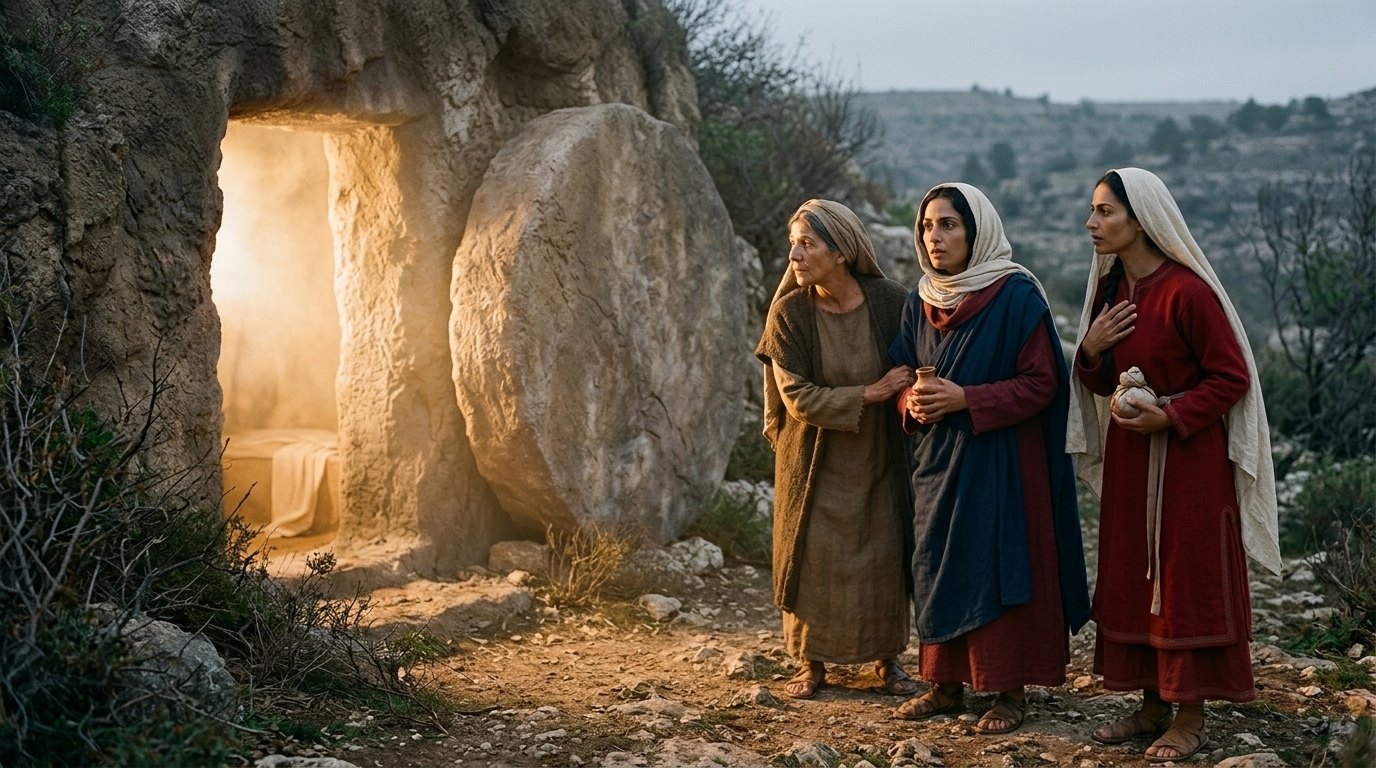
Luke 24:1-12
1 On the first day of the week, very early in the morning, the women took the spices they had prepared and went to the tomb.
2 They found the stone rolled away from the tomb,
3 but when they entered, they did not find the body of the Lord Jesus.
4 While they were wondering about this, suddenly two men in clothes that gleamed like lightning stood beside them.
5 In their fright the women bowed down with their faces to the ground, but the men said to them, “Why do you look for the living among the dead?
6 He is not here; he has risen! Remember how he told you, while he was still with you in Galilee:
7 ‘The Son of Man must be delivered over to the hands of sinners, be crucified and on the third day be raised again.’ ”
8 Then they remembered his words.
9 When they came back from the tomb, they told all these things to the Eleven and to all the others.
10 It was Mary Magdalene, Joanna, Mary the mother of James, and the others with them who told this to the apostles.
11 But they did not believe the women, because their words seemed to them like nonsense.
12 Peter, however, got up and ran to the tomb. Bending over, he saw the strips of linen lying by themselves, and he went away, wondering to himself what had happened.
New International Version (NIV)
The answer
There are four accounts because God gave the church four inspired Gospels, each faithfully recording the same bodily resurrection through complementary details and testimony. They are not competing versions. Since “Every Scripture is God-breathed” (2 Timothy 3:16), all four are true, and their different emphases provide a fuller witness to what happened.
What all four establish
Read together, Matthew 28:1-10, Mark 16:1-8, Luke 24:1-12, and John 20:1-31 establish that women came to the tomb on the first day of the week, the stone had been removed, Jesus’ body was gone, heavenly messengers announced His resurrection, and the news reached His disciples. Luke records the central announcement: “He isn’t here, but is risen” (Luke 24:6).
Paul proclaims the same event: Christ died for our sins, was buried, and was raised on the third day. He also lists appearances to Cephas, the twelve, more than five hundred brothers at once, James, all the apostles, and Paul himself (1 Corinthians 15:3-8). The resurrection therefore rests on many witnesses, not one isolated report.
What each account contributes
- Gospel — Details emphasized
- Matthew 28:1-10 — The earthquake, the angel rolling away the stone, the terrified guards, and Jesus meeting the women and sending them to tell His brothers.
- Mark 16:1-8 — The women’s concern about the stone, the young man in white announcing the resurrection, and the message specifically naming Peter alongside the disciples.
- Luke 24:1-12 — The call to remember Jesus’ earlier prediction, the women’s report to the apostles, the apostles’ initial unbelief, and Peter finding the linen strips.
- John 20:1-31 — Mary Magdalene’s experience, Peter and the other disciple examining the tomb, Jesus’ appearance to Mary, and His later appearances to the disciples and Thomas.
Why do the details differ?
Each writer selects particular people, moments, and details without denying what another writer includes.
- The women: Matthew names Mary Magdalene and the other Mary; Mark also names Salome; Luke names Mary Magdalene, Joanna, Mary the mother of James, and explicitly mentions other women; John concentrates on Mary Magdalene. Naming some members of a group does not mean that no others were present.
- The angels: Matthew describes the angel who rolled away the stone, Mark describes a young man in a white robe inside the tomb, and Luke describes two men in dazzling clothing. John places Mary’s sight of two angels after Peter and the other disciple had returned home. These accounts include different descriptions and moments rather than requiring every writer to mention everything.
- The purposes: Luke explains that he carefully investigated what the eyewitnesses had delivered so that his reader could have certainty (Luke 1:1-4). John expressly says that Jesus did many other signs that were not written in his book; his selection was made so that readers would believe in Jesus and receive life in His name (John 20:30-31).
This abundance of testimony also fits Scripture’s principle that a matter is established through two or three witnesses rather than through one alone (Deuteronomy 19:15). The fourfold witness invites the response John states: believe that Jesus is the Christ, the Son of God, and receive life in His name (John 20:31).
Answered from Scripture · reviewed November 11, 2026
The four Gospel accounts of the resurrection exist not because the resurrection was invented four different ways, but because multiple real witnesses approached the empty tomb at dawn from distinct vantage points. Inspired by the Holy Spirit, each Evangelist faithfully records what those genuine witnesses saw and heard, producing complementary testimonies that authenticate history rather than a manufactured conspiracy.
The Witnesses
Different women recorded from multiple vantage points
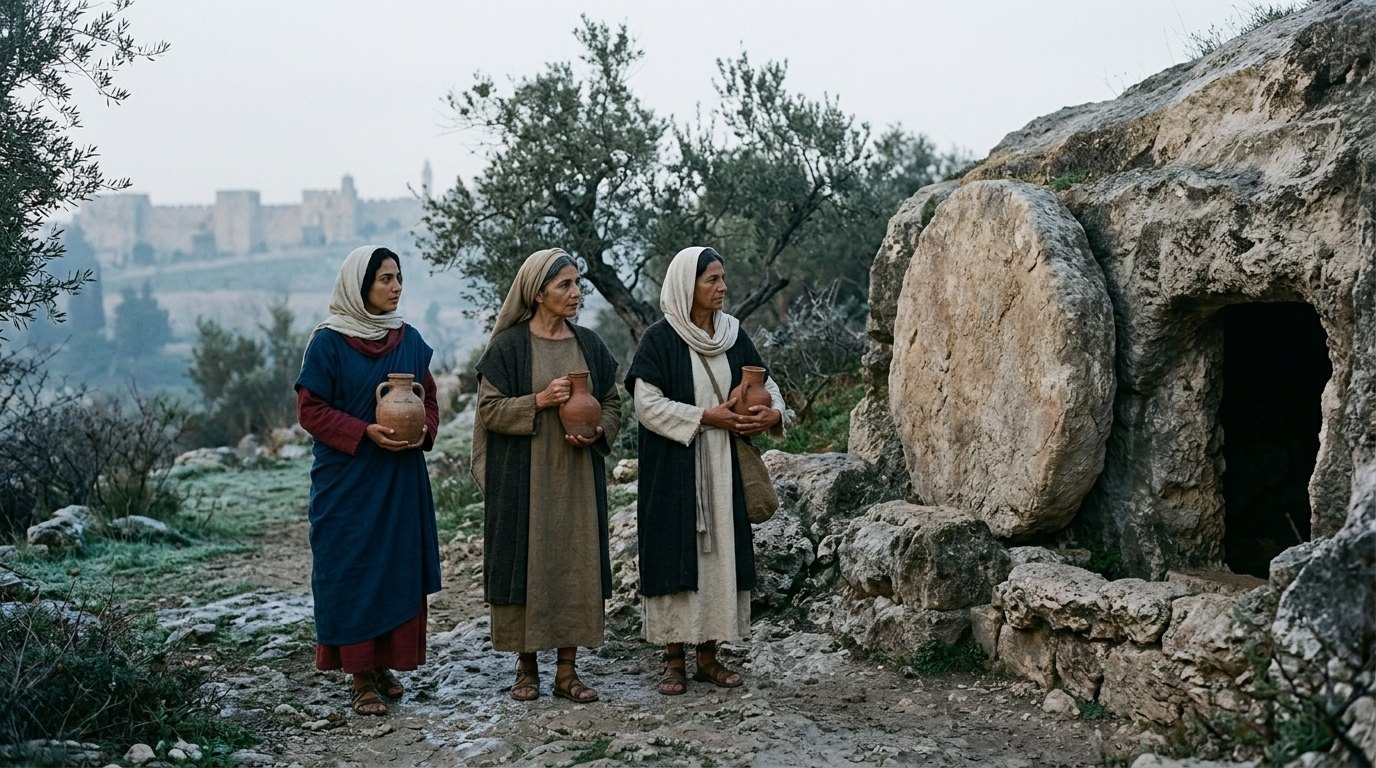
It was Mary Magdalene, Joanna, Mary the mother of James, and the others with them who told this to the apostles.
Luke 24:10 (NIV)
Luke explicitly identifies the wider circle of faithful Galilean women who visited the tomb together and reported what they saw to the apostles.
Luke 24:10 brings into sharp focus the wide circle of eyewitnesses who stood at the center of the resurrection morning: "It was Mary Magdalene, Joanna, Mary the mother of James, and the other women with them, who told these things to the apostles." Rather than a single voice fabricating a polished tale, Scripture records genuine historical encounters preserved across multiple vantage points.
The accounts deliberately ground themselves in eyewitness continuity. On Friday evening, Matthew 27:61 and Mark 15:47 record Mary Magdalene and the other Mary sitting opposite the sepulchre, carefully watching where Joseph of Arimathea laid the Lord's body. Luke 23:55-56 confirms that the Galilean women observed the tomb intently before resting on the Sabbath according to the commandment, guaranteeing that no mistaken burial site was involved.
When the Sabbath concluded, love impelled their immediate return. Mark 16:1 notes that Mary Magdalene, Mary the mother of James, and Salome bought aromatic spices to anoint Him. John 20:1 highlights Mary Magdalene stepping out while it was yet dark, noticing that the stone had already been removed. Matthew 28:1 and Luke 24:1 explain that as dawn broke, these women reached the sepulchre carrying their prepared ointments. Each Evangelist names the specific individuals his account follows, demonstrating the authenticity of independent, truthful testimony inspired by the Holy Spirit.
| Passage | What it says |
|---|---|
| John 20:1 | Mary Magdalene comes early to the tomb while it is still dark and sees the entrance stone already taken away. |
| Matthew 28:1 | Mary Magdalene and the other Mary come at dawn to observe the sepulchre. |
| Mark 16:1 | Mary Magdalene, Mary the mother of James, and Salome purchase spices to go and anoint Jesus' body. |
| Luke 23:55-56 | The Galilean women observe how the Lord's body was laid before preparing spices and resting on the Sabbath. |
| Luke 24:1 | The women arrive at early dawn carrying prepared spices to the tomb accompanied by other female disciples. |
| Luke 24:10 | Mary Magdalene, Joanna, Mary the mother of James, and other women report the angelic announcement to the apostles. |
| Matthew 27:61 | Mary Magdalene and the other Mary sit opposite the tomb watching where Jesus is buried, establishing why they knew the exact site. |
| Mark 15:47 | Mary Magdalene and Mary the mother of Joses observe where Jesus was laid by Joseph of Arimathea. |
The Heavenly Messengers
Angels announce the victory over death
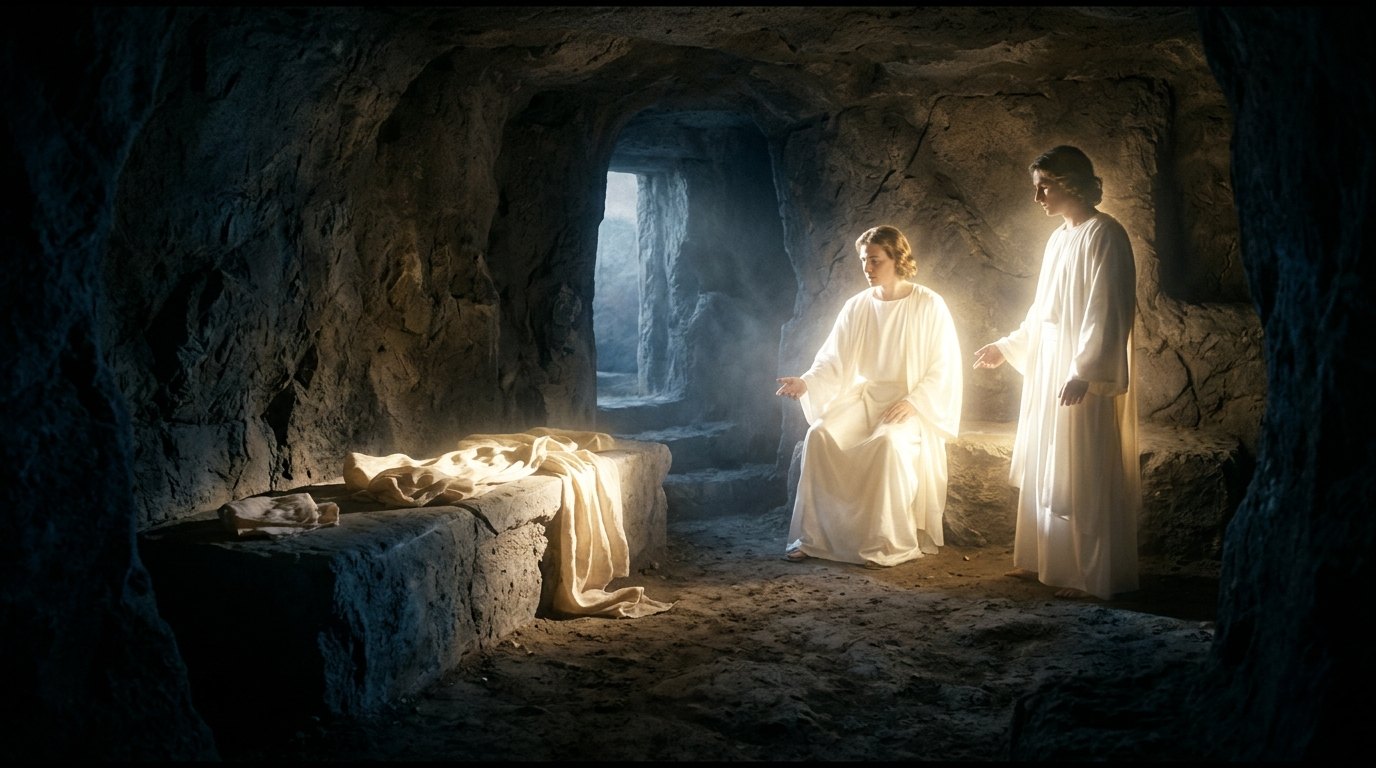
In their fright the women bowed down with their faces to the ground, but the men said to them, “Why do you look for the living among the dead? He is not here; he has risen! Remember how he told you, while he was still with you in Galilee:
Luke 24:5-6 (NIV)
The messengers state the foundational proclamation that Christ is alive and that seeking Him among the dead is fundamentally misplaced.
In Luke 24:5-6, the heavenly messengers deliver the decisive verdict that changes human history: "Why do you seek the living among the dead? He is not here, but is risen!" Every Gospel highlights angelic testimony as heaven's official attestation to the empty sepulchre, varying only by the specific moment and detail observed.
Matthew 28:2-4 reveals the cosmic rupture that preceded the women's arrival: a great earthquake shook the ground as an angel of the Lord descended from heaven, rolled away the stone, and sat upon it in lightning brilliance, striking the hardened Roman sentries with paralyzing dread. In Matthew 28:5-7, this messenger calms the trembling women, reveals the vacant ledge where Christ had lain, and commands them to tell His disciples that He precedes them to Galilee.
Mark 16:5-7 describes the women stepping inside the tomb chamber and seeing a young man robed in white seated on the right side, repeating the glorious proclamation. Luke 24:2-4 adds that as they stood perplexed, two men suddenly stood beside them in dazzling attire, reminding them in Luke 24:7 of Christ's own prophecy concerning His crucifixion and third-day resurrection. Later, in John 20:11-13, a weeping Mary Magdalene peers into the inner recess to behold two angels in white sitting where the head and feet of Jesus had rested. Across every account, angelic heralds declare Christ victorious over death.
| Passage | What it says |
|---|---|
| Matthew 28:2-4 | An angel descends with a great earthquake, rolls back the heavy stone, sits on it, and paralyzes the Roman guards. |
| Matthew 28:5-7 | The angel calms the women, announces Jesus has risen, shows the empty place, and sends them to Galilee. |
| Mark 16:5-7 | Entering the tomb, the women see a young man dressed in white who proclaims Jesus is risen and precedes them to Galilee. |
| Luke 24:2-4 | The women discover the stone rolled away and encounter two men standing beside them in dazzling garments. |
| Luke 24:5-7 | The angels ask why they seek the living among the dead and remind them of Jesus' own prophecies. |
| John 20:11-13 | Weeping outside the tomb, Mary stoops in and sees two angels in white sitting where Jesus' body had lain. |
The Apostles' Response
Slow belief confirms the accounts were unvarnished
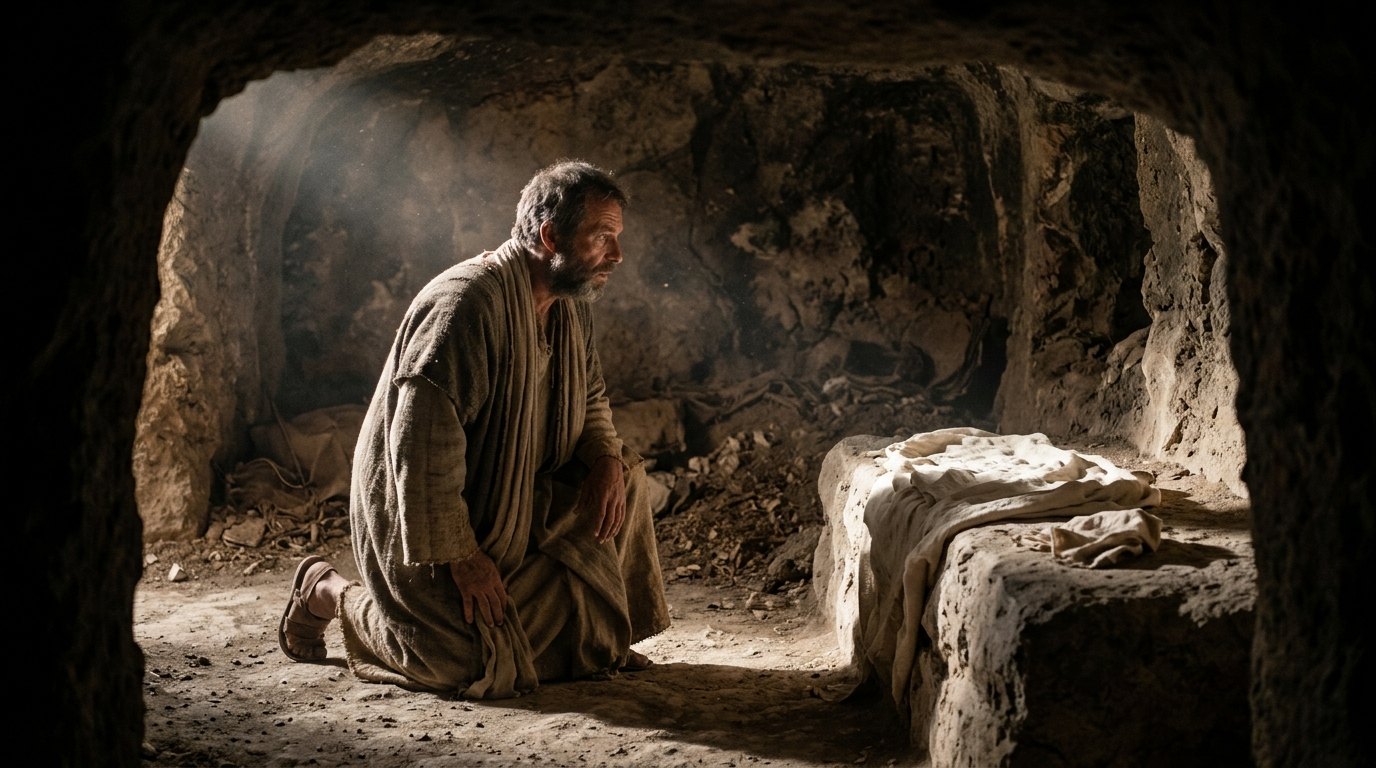
But they did not believe the women, because their words seemed to them like nonsense. Peter, however, got up and ran to the tomb. Bending over, he saw the strips of linen lying by themselves, and he went away, wondering to himself what had happened.
Luke 24:11-12 (NIV)
The apostles' initial dismissal shows they were not gullible conspirators looking to invent a resurrection myth.
Luke 24:11-12 captures the unvarnished reality of the apostles' skepticism: "And their words seemed to them like idle tales, and they did not believe them." The biblical writers make no attempt to romanticize the Eleven as eager mythmakers; instead, they faithfully document their hard-hearted bewilderment.
When the women remembered the Lord's words and hurried back from the sepulchre to report everything to the Eleven and the rest (Luke 24:8-9), their urgent testimony was met with outright doubt. Mark 16:8 notes that the women initially fled the tomb with trembling and astonishment, overwhelmed by holy awe. Yet Peter rose and ran straight to the sepulchre, as Luke 24:12 relates, stooping down to inspect the linen cloths lying by themselves, departing in sheer amazement.
John 20:2-8 provides the vivid firsthand detail of that race: Peter and the beloved disciple sprinting side by side, John outrunning Peter to arrive first at the open doorway, peering in, and then Peter charging past him directly into the tomb. Upon seeing the orderly placement of the graveclothes and the folded facecloth, John believed, though John 20:9-10 frankly confesses that they did not yet understand the Scripture that He must rise from the dead. Meanwhile, Matthew 28:11-15 exposes the corrupt desperation of the chief priests, who bribed the Roman guards to fabricate a theft story, further proving the historical reality of the empty tomb.
| Passage | What it says |
|---|---|
| Luke 24:8-9 | The women remember Christ's prophetic words and return from the tomb to announce all these things to the Eleven. |
| Luke 24:11 | The testimony of the women appears as an idle tale to the apostles, and they do not believe them. |
| Luke 24:12 | Peter runs to the tomb, peers in to see the discarded linen cloths alone, and marvels in bewilderment. |
| John 20:2-8 | Peter and John run together toward the sepulchre; John arrives first, but both inspect the grave clothes and believe. |
| Mark 16:8 | Trembling and astonished, the women depart the sepulchre quickly, overcome with initial reverent fear. |
| John 20:9-10 | The disciples still did not understand the Scripture that He must rise from the dead, returning to their homes in wonder. |
| Matthew 28:11-15 | Roman guards report the angel to the chief priests, who bribe them to spread a false story of stolen remains. |
Personal Appearances
The risen Lord reveals Himself to His disciples
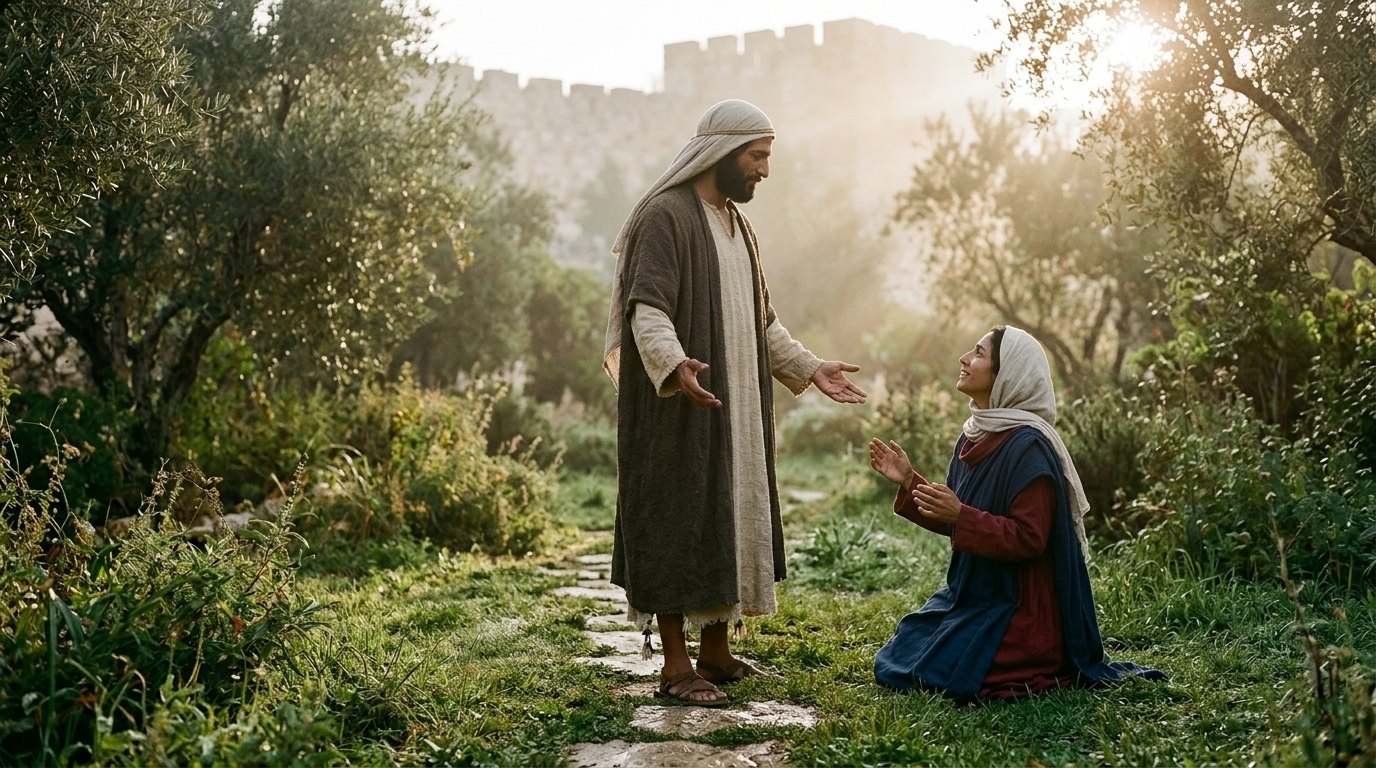
Jesus said to her, “Mary.” She turned toward him and cried out in Aramaic, “Rabboni!” (which means “Teacher”). Jesus said, “Do not hold on to me, for I have not yet ascended to the Father. Go instead to my brothers and tell them, ‘I am ascending to my Father and your Father, to my God and your God.’ ”
John 20:16-17 (NIV)
Jesus speaks Mary's name directly in the garden, commissioning her to announce His coming ascension to His brothers.
John 20:16-17 records the tender, transformative climax in the garden: "Jesus said to her, 'Mary!' She turned and said to Him, 'Rabboni!'" The resurrection was not an abstract idea or a spiritual vision; it was the bodily, personal manifestation of the living Lord to His disciples.
Matthew 28:8-10 shows Jesus meeting the women on the path, greeting them as they fell before Him, clasping His physical feet in reverent worship. John 20:14-18 details how Mary Magdalene turned from weeping to behold Him, mistaking Him for the gardener until His voice revealed His presence, commissioning her to tell His brethren. Though Mark 16:9-13 notes persistent unbelief among the disciples, Jesus broke through their despair, walking with Cleopas on the road to Emmaus and opening the Scriptures before revealing Himself in the breaking of bread (Luke 24:13-35).
That same evening, Luke 24:36-49 and John 20:19-23 record Jesus appearing among them behind locked doors, displaying His pierced hands and feet, eating broiled fish to prove His physical flesh and bone, and breathing the Holy Spirit upon them. Eight days later, He graciously offered His wounds to Thomas, prompting the climactic confession: "My Lord and my God!" (John 20:24-29). From the lakeshore of Galilee (John 21:1-14) to the mountain of the Great Commission (Matthew 28:16-20), the living Christ proved His victory over death with infallible proofs.
| Passage | What it says |
|---|---|
| Matthew 28:8-10 | Jesus meets the running women on the path; they grasp His feet in worship and receive His commission. |
| John 20:14-17 | Mary Magdalene mistakes Jesus for the gardener until He calls her by name, revealing His bodily resurrected presence. |
| John 20:18 | Mary Magdalene announces directly to the mourning disciples that she has seen the Lord and speaks His words. |
| Mark 16:9-11 | Jesus appears first to Mary Magdalene, who tells the mourning disciples, but they still refuse to believe. |
| Mark 16:12-13 | Jesus appears in another form to two disciples walking into the country, who report it to the rest. |
| Luke 24:13-35 | The risen Christ walks with Cleopas and his companion to Emmaus, opening the Scriptures before breaking bread. |
| Luke 24:36-49 | Jesus stands among the disciples in Jerusalem, showing His hands and feet, eating broiled fish, and opening their understanding. |
| John 20:19-23 | Jesus appears behind shut doors on the evening of the first day, imparting peace and breathing the Holy Spirit on them. |
| John 20:24-29 | Eight days later, Jesus offers His hands and side to Thomas, who confesses Him as Lord and God. |
| Matthew 28:16-20 | The eleven meet Jesus on the mountain in Galilee where He commands the Great Commission and promises His continual presence. |
| John 21:1-14 | Jesus manifests Himself by the Sea of Tiberias, providing the miraculous catch of fish and breakfast on the shore. |
The Purpose of Multiple Witnesses
Multiple independent witnesses provide historical certainty and life
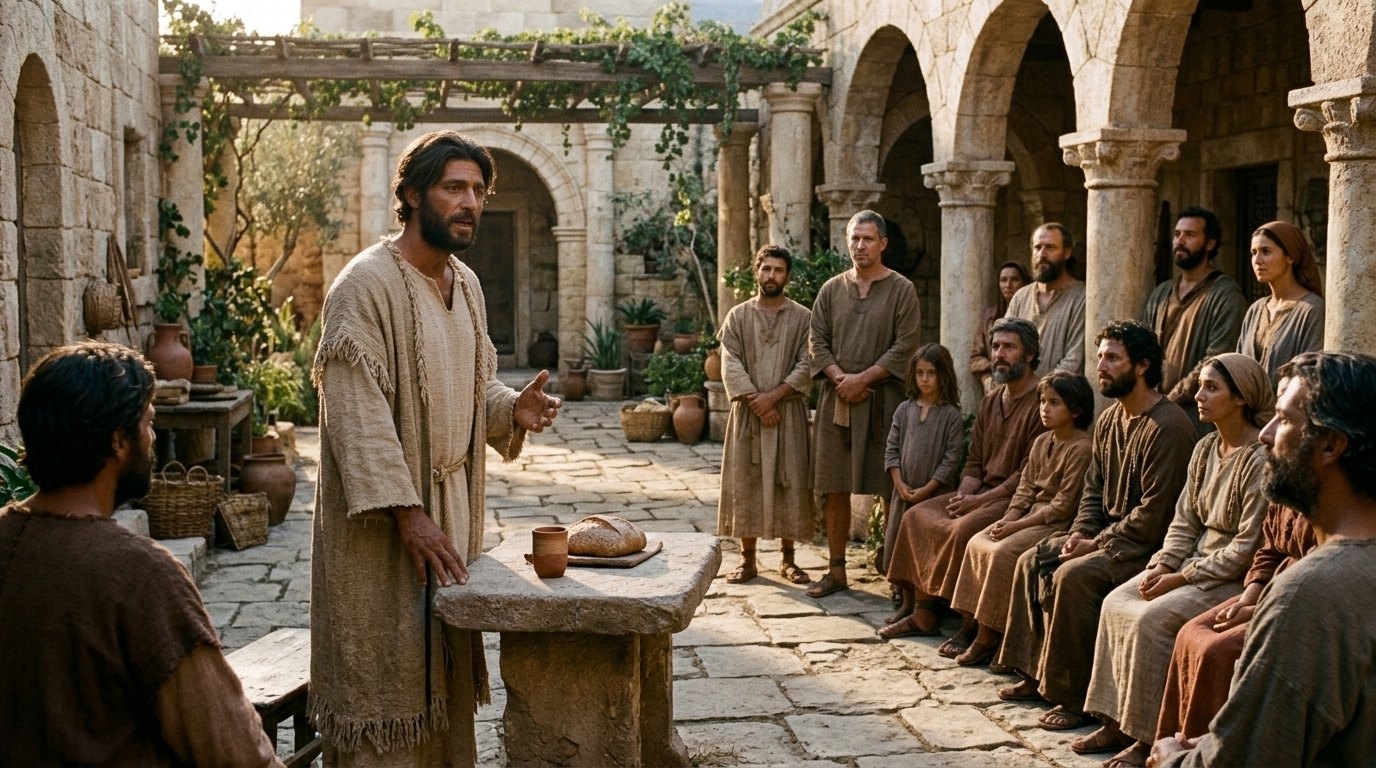
For what I received I passed on to you as of first importance: that Christ died for our sins according to the Scriptures, that he was buried, that he was raised on the third day according to the Scriptures, and that he appeared to Cephas, and then to the Twelve. After that, he appeared to more than five hundred of the brothers and sisters at the same time, most of whom are still living, though some have fallen asleep. Then he appeared to James, then to all the apostles, and last of all he appeared to me also, as to one abnormally born.
1 Corinthians 15:3-8 (NIV)
It shows that multiple complementary eyewitness testimonies were the deliberate, verifiable foundation of the early church's proclamation.
Paul anchors the entire Christian faith upon verified history in 1 Corinthians 15:3-8, delivering what he received: that Christ died for our sins according to the Scriptures, was buried, and was raised on the third day. Rather than offering an unverifiable myth or an isolated vision, Paul lists the living chain of witnesses—Cephas, the Twelve, more than five hundred brethren at once (most still alive to be questioned), James, all the apostles, and finally Paul himself. The early proclamation deliberately appealed to public, verifiable encounters that could be tested by any inquirer.
This deliberate abundance of testimony runs throughout the apostolic record. In Acts 1:1-3, Luke explains that Jesus did not slip away into shadows, but presented Himself alive by many infallible proofs, appearing to the disciples over forty days and speaking concerning the kingdom of God. This was not a private apparition; the risen Lord walked, talked, and gave unmistakable evidence of physical victory over death. Peter confirms this reality in Acts 10:40-42, declaring to Cornelius that God showed Jesus openly, not to all the people indiscriminately, but to witnesses chosen beforehand who ate and drank with Him after He arose from the dead. The distinct perspectives of the four Gospels reflect this exact pattern: genuine witnesses encountering a living Lord from varied vantage points.
Ultimately, the varied accounts are not preserved merely to satisfy curiosity, but to ground saving faith. As the apostle writes in John 20:30-31, Jesus performed many other signs that are not recorded, but these are written that you may believe that Jesus is the Christ, the Son of God, and that believing you may have life in His name. The fourfold testimony stands together as an unbreakable historical cord, calling every reader to trust the living Savior.
| Passage | What it says |
|---|---|
| 1 Corinthians 15:3-8 | Paul records the formal apostolic confession of Christ's resurrection appearances to Cephas, the Twelve, five hundred brethren, James, all the apostles, and himself. |
| Acts 1:1-3 | Luke records that Jesus presented Himself alive after His suffering by many infallible proofs over forty days, speaking of God's kingdom. |
| Acts 10:40-42 | Peter preaches that God raised Jesus on the third day and showed Him openly to chosen witnesses who ate and drank with Him. |
| John 20:30-31 | John declares the purpose of recording these signs: that readers may believe Jesus is the Christ, the Son of God, and have life. |
Where in the Bible
| Book | Passages |
|---|---|
| Matthew | 7 · Matthew 28:1, Matthew 27:61, Matthew 28:2-4, Matthew 28:5-7, Matthew 28:11-15, Matthew 28:8-10, Matthew 28:16-20 |
| Mark | 6 · Mark 16:1, Mark 15:47, Mark 16:5-7, Mark 16:8, Mark 16:9-11, Mark 16:12-13 |
| Luke | 10 · Luke 23:55-56, Luke 24:1, Luke 24:10, Luke 24:2-4, Luke 24:5-7, Luke 24:8-9, Luke 24:11, Luke 24:12, Luke 24:13-35, Luke 24:36-49 |
| John | 10 · John 20:1, John 20:11-13, John 20:2-8, John 20:9-10, John 20:14-17, John 20:18, John 20:19-23, John 20:24-29, John 21:1-14, John 20:30-31 |
| Acts | 2 · Acts 1:1-3, Acts 10:40-42 |
| 1 Corinthians | 1 · 1 Corinthians 15:3-8 |
The story in order
- Women prepare spices (c. AD 30) · Luke 23:55-56 · Women observe burial and prepare spices, noting the tomb's location.
- Women visit the tomb (AD 30) · Matthew 28:1 · Multiple women arrive at dawn from different vantage points.
- Angel announces resurrection (AD 30) · Matthew 28:5-7 · Heavenly messengers declare Jesus is risen and direct women to Galilee.
- Women report to apostles (AD 30) · Luke 24:10 · Women share the angelic news with the apostles.
- Apostles disbelieve (AD 30) · Luke 24:11 · The disciples initially dismiss the women's testimony as unbelievable.
- Peter and John investigate (AD 30) · John 20:2-8 · Peter and John run to the tomb and see the grave clothes, beginning to believe.
- Jesus appears to women (AD 30) · Matthew 28:8-10 · The risen Christ meets the women, who worship Him.
- Jesus appears to Mary Magdalene (AD 30) · John 20:14-17 · Jesus reveals Himself to Mary Magdalene by calling her name.
- Jesus appears to two disciples (AD 30) · Mark 16:12-13 · Christ appears in another form to two disciples on the road.
- Jesus appears on Emmaus road (AD 30) · Luke 24:13-35 · Jesus opens the Scriptures and breaks bread with Cleopas and companion.
- Jesus appears to disciples in Jerusalem (AD 30) · Luke 24:36-49 · Jesus shows His wounds, eats, and opens their understanding of Scripture.
- Jesus appears to Thomas (AD 30) · John 20:24-29 · Jesus appears eight days later, inviting Thomas to touch His wounds.
- Jesus commissions disciples (AD 30) · Matthew 28:16-20 · The eleven meet Jesus in Galilee for the Great Commission.
- Apostolic confession of resurrection (c. AD 55) · 1 Corinthians 15:3-8 · Paul records the core belief in Christ's resurrection appearances.
Key words
- Resurrection (anastasis, ἀνάστασις)
- The act of rising from the dead; Christ's rising from the grave. · 1 Corinthians 15:3-8
- Witness (martys, μάρτυς)
- One who has seen or heard something and testifies to it. · Acts 1:8
- Believe (pisteuō, πιστεύω)
- To accept something as true; to have faith in. · John 20:30-31
- Empty tomb (kenos taphos, κενὸς τάφος)
- The sepulchre where Jesus was laid, found vacant. · John 20:1-10
- Grave clothes (othonia, ὀθόνια)
- The linen wrappings in which Jesus' body was buried. · John 20:5-7
Rather than undermining our confidence, the interwoven testimonies of the four Gospels demonstrate the unvarnished reality of the resurrection. Together they confirm the central anchor of Christian faith: the tomb is empty, death has lost its sting, and Christ is risen indeed.
36 passages, each cited once.
Scripture cited
- Luke 24:1-12
- Mark 16:1-8
- Matthew 28:1-10
- John 20:1-31
- Luke 1:1-4
- 1 Corinthians 15:3-8
- Deuteronomy 19:15
- 2 Timothy 3:16